KWEICHOW MOUTAI(600519)

Search documents
茅台回应黄牛用插件抢茅台,29天拦截异常行为4.26亿次
Di Yi Cai Jing· 2026-01-29 09:37
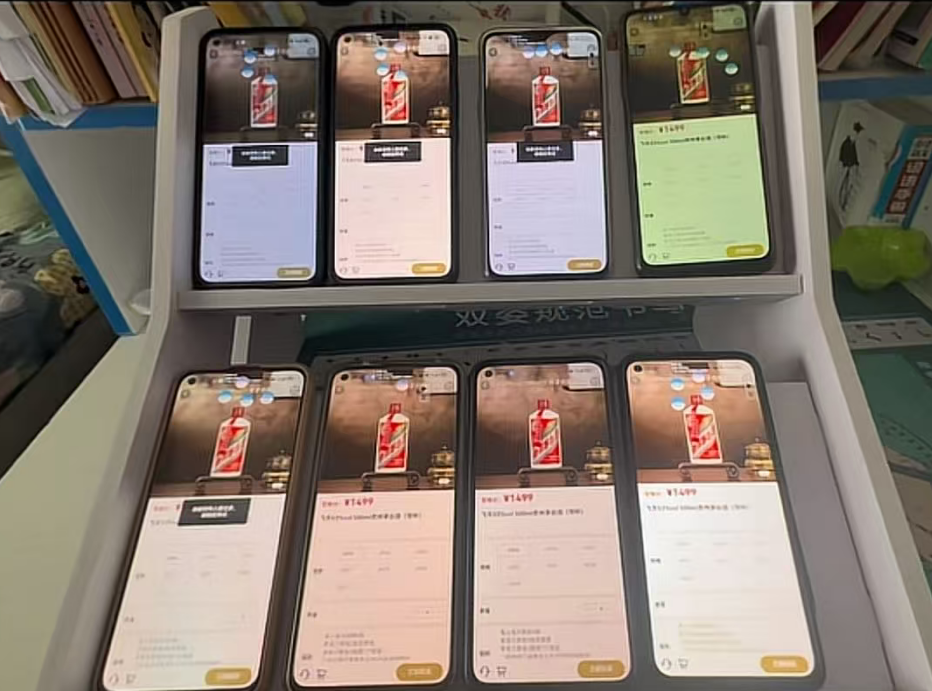
此前记者在部分二手平台上,各种代抢茅台服务的报价从20元到50元/单不等。有黄牛宣称"包中",并晒出大量代抢成功的订单。据 黄牛透露,较高的命中率背后有"科技与狠活":一方面依靠人工凭经验操作,另一方面也借助辅助软件和脚本。在黄牛晒出的视频 中,多部手机摆在一起,通过执行脚本自动刷新购买页面、抢购商品。此外,也有黄牛兜售提前入场插件等"辅助抢茅台工具"。 茅台称用"科技与狠活"抢茅台涉嫌违法,保留采取法律手段追责的权利。 "i茅台"连续29日出现秒空现象,记者了解到,由于"i茅台"的购买价格与市场价格存在一定的套利空间,黄牛们使出了自动抢购、提 前入场等脚本和软件这类"科技与狠活"来抢茅台。今日"i茅台"发布公告回应称,2026年1月1日至今,已成功拦截各类异常行为4.26 亿次。 对此,茅台称已经注意到有商家通过网络平台公开售卖所谓i茅台APP"抢购外挂"等软件,有网友晒出非i茅台官方通知的批量成交记 录。以上售卖、使用该类软件的行为,对公平的市场秩序造成了不良社会影响,涉嫌违反《中华人民共和国民法典》《中华人民共 和国网络安全法》《中华人民共和国消费者权益保护法》。茅台已在收集和固化相关证据,并保留采取法 ...


2025Q4机构持仓总结:食饮获配比例回落,乳品、零食板块加配
GUOTAI HAITONG SECURITIES· 2026-01-29 09:34
Investment Rating - The report rates the food and beverage sector as "Overweight" [4][6]. Core Insights - The allocation ratio for the food and beverage sector has decreased quarter-on-quarter, with significant reductions in the allocation for both liquor and non-liquor segments. Conversely, other segments such as beverages, dairy products, and snacks have seen an increase in allocation [2][16]. - The report suggests focusing on five main investment lines, emphasizing opportunities arising from supply-demand clearing. Recommended stocks include Guizhou Moutai, Wuliangye, and Luzhou Laojiao for liquor; Eastroc Beverage and Nongfu Spring for beverages; and various companies in the snack and food processing sectors [6][32]. Summary by Sections 1. Sector Allocation Trends - The allocation ratio for food and beverage stocks among actively managed equity mutual funds has continued to decline for seven consecutive quarters, reaching 4.04% in Q4 2025, ranking ninth among all sectors [8][11]. - The allocation for liquor stocks decreased to 2.92%, driven by declines in leading brands such as Wuliangye and Shanxi Fenjiu [16][18]. 2. Sub-Sector Performance - Liquor and non-liquor segments saw a reduction in allocation, while other segments like snacks and dairy products experienced increases. The allocation for snacks rose to 0.26%, and dairy products to 0.44% [16][17]. - Specific stock movements include a decrease in holdings for major liquor brands, while dairy leaders like Yili and Mengniu saw increases in their allocation ratios [23][24]. 3. Individual Stock Analysis - Major liquor stocks such as Guizhou Moutai and Wuliangye experienced significant reductions in their mutual fund holdings, with Moutai down by 0.8% and Wuliangye down by 13.2% [19][20]. - In the beverage sector, Eastroc Beverage's holdings decreased by 4.16%, while Yili's increased by 3.42% [23][24]. - Snack companies like Wancheng Group and Ximai Foods saw increases in their allocation ratios, indicating a positive trend in the snack segment [26][27]. 4. Valuation and Earnings Forecast - The report includes a section on earnings forecasts and valuations, indicating a cautious outlook for the food and beverage sector amidst changing consumer preferences and market dynamics [32].





白酒爆发,17股涨停!吃喝板块午后暴拉,食品饮料ETF(515710)飙涨7.1%连收4根均线!
Xin Lang Cai Jing· 2026-01-29 09:30
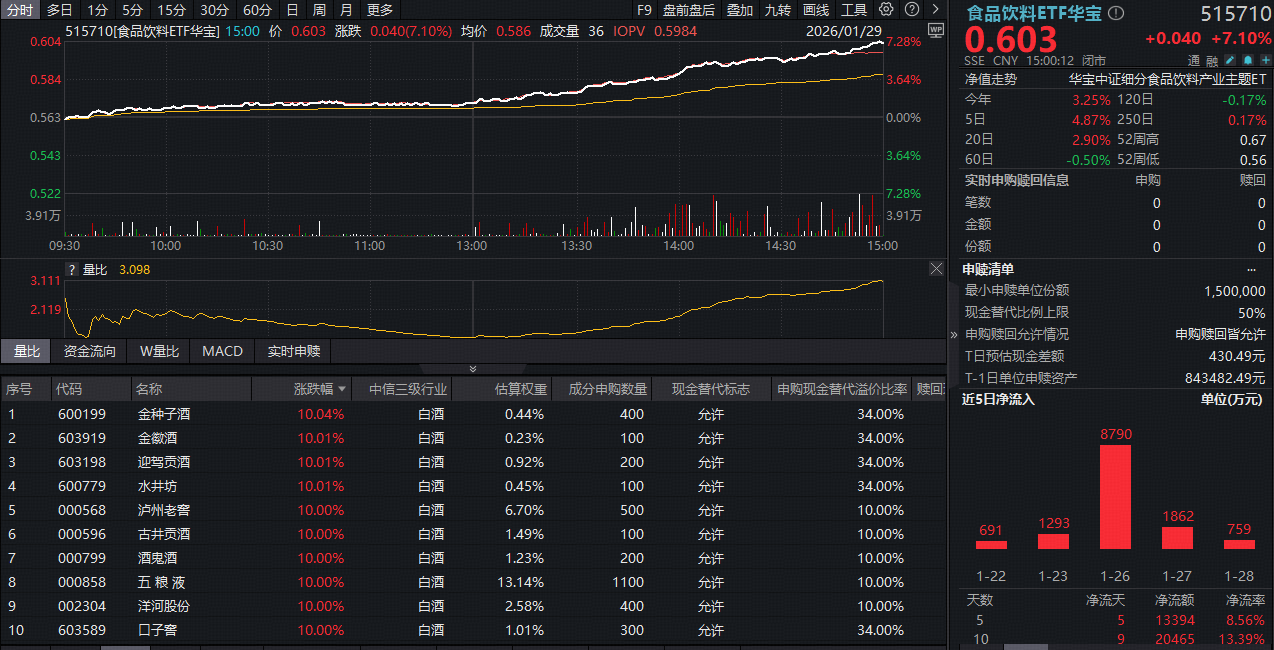
Core Viewpoint - The liquor sector experienced a significant surge on January 29, leading to an overall rise in the food and beverage sector, with the Huabao Food and Beverage ETF (515710) increasing by 7.1% by the end of the trading day, recovering multiple moving averages [1][4]. Group 1: Liquor Stock Performance - A wave of涨停 (limit-up) occurred among liquor stocks, with major players like Wuliangye, Luzhou Laojiao, and Yanghe all hitting the limit, while Kweichow Moutai surged by 8.61% [2]. - The price of various Flying Moutai products has seen notable increases since January 26, with the 2026 Flying Moutai original box (53 degrees/500ml) rising by 55 yuan, and the 2025 version also increasing by 55 yuan [4]. Group 2: Market Drivers - The recent recovery in Moutai sales is attributed to two main factors: the demand for high-end liquor during the Spring Festival and effective supply-demand adjustments by iMoutai, which has reached new consumer groups [4]. - The overall valuation of the food and beverage sector remains low, with the price-to-earnings ratio of the Huabao Food and Beverage ETF at 19.09 times, placing it in the 1.37% percentile of the last decade, indicating a favorable long-term investment opportunity [4]. Group 3: Future Outlook - According to Guojin Securities, the most challenging period for the liquor industry has passed, and external constraints on consumption are expected to ease, leading to a gradual stabilization in sales post-2026 Spring Festival [6]. - The Huabao Food and Beverage ETF is recommended for investors looking to gain exposure to core assets in the food and beverage sector, with approximately 60% of its portfolio allocated to leading high-end and mid-range liquor stocks [6].

茅台酱香酒与美团闪购升级合作:近3000家官方门店上线年货补贴
Xin Lang Cai Jing· 2026-01-29 09:28
Core Viewpoint - The collaboration between Guizhou Moutai Sauce Wine Marketing Co., Ltd. and Meituan Flash Purchase aims to enhance the distribution and accessibility of authentic Moutai Sauce Wine through a significant increase in certified stores and a focus on consumer experience [1] Group 1: Partnership and Expansion - Guizhou Moutai has upgraded its partnership with Meituan Flash Purchase, expanding the number of official certified stores from over 1,000 to nearly 3,000, covering 245 cities nationwide [1] - The collaboration is part of a strategy to build an instant retail network and drive channel transformation for Moutai Sauce Wine [1] Group 2: Consumer Engagement and Promotions - The partnership will focus on core values of "genuine products and exceptional service," with plans to implement source tracing, official authentication, and one-on-one urgent delivery services by 2026 [1] - A joint subsidy activity will be launched during the traditional peak season for purchasing liquor, particularly around the Spring Festival [1]

茅台发布声明
第一财经· 2026-01-29 09:28
据"小茅i茅台"官方公众号, i茅台平台1月29日发布声明: 近日,我们注意到有商家通过网络平台公开售卖所谓i茅台APP"抢购外挂"等软件,有网友晒出非i茅台官方通知的批量成交记录。以上售卖、使用该类软 件的行为,对公平的市场秩序造成了不良社会影响,涉嫌违反《中华人民共和国民法典》《中华人民共和国网络安全法》《中华人民共和国消费者权益保 护法》。消费者使用该类软件存在信息与财产安全风险,请广大消费者注意提升防范意识,切勿轻信以免造成损失。我们已在收集和固化相关证据,并保 留采取法律手段追究相关主体责任的权利,以维护市场秩序和消费者合法权益。 自2022年3月31日上线以来,i茅台已稳定运行近四年,构建形成了多层级、多策略、成熟的风险防控体系,包括机器行为识别、风险设备判断、异常行 为拦截、团伙风险防控等。2026年1月1日至今,已成功拦截各类异常行为4.26亿次,平台商品交易过程不存在单一用户批量非常规消费行为成交,不存 在多用户集中批量非常规消费行为成交。我们将持之以恒提升技术水平,不断增强平台的风险防控能力,努力为广大消费者营造公平、有序的消费环境。 感谢大家的关心与支持。 编辑 | 钉钉 ...
茅台酱香酒与美团闪购扩大合作:入驻官方门店增至近3000家
智通财经网· 2026-01-29 09:17
Core Insights - Guizhou Moutai Sauce Aroma Liquor Marketing Co., Ltd. announced an upgraded partnership with Meituan Flash Purchase to enhance its distribution network [1] - The number of official stores on Meituan Flash Purchase has rapidly increased to nearly 3,000, covering 245 cities nationwide [1] - By 2026, the partnership aims to establish capabilities focused on "genuine products, extreme service," including source tracing, official authentication, and one-on-one urgent delivery [1] Summary by Categories - **Partnership Development** - The collaboration with Meituan Flash Purchase is aimed at expanding the reach of Moutai's products through a significant increase in official store presence [1] - **Market Expansion** - The official store count has grown from over 1,000 to nearly 3,000, indicating a strong market penetration strategy [1] - **Future Goals** - The partnership will focus on creating a premium purchasing experience with features like genuine product assurance and immediate delivery services by 2026 [1]
段永平:茅台真的不贵!食品饮料ETF天弘(159736)标的指数大涨超5.5%
Mei Ri Jing Ji Xin Wen· 2026-01-29 09:11
Group 1 - The core viewpoint of the articles highlights a significant rise in the consumer sector, particularly in the food and beverage ETF, which saw a 5.58% increase in its index and a trading volume of 73.1867 million yuan [1] - The food and beverage ETF Tianhong (159736) has experienced a net inflow of 38.9837 million yuan over the last ten trading days, with its latest scale reaching 5.3 billion yuan, making it the largest in its category [1] - The CS Food and Beverage Index is characterized by low concentration among the top ten stocks, allowing for diversified investments across various sectors, which helps mitigate single-track risks [1] Group 2 - Guosen Securities forecasts a positive outlook for the food and beverage sector in 2026, suggesting four main investment themes: cost benefits, operational efficiency, innovation-driven growth, and opportunities from industry reversals [2] - Donghai Securities emphasizes the potential for consumer demand to be released under domestic demand expansion policies, identifying structural opportunities in the industry, particularly in the restaurant supply chain and dairy sectors [2] - The upcoming Spring Festival is expected to act as a significant catalyst for the industry, with the imminent introduction of national standards for prepared dishes also providing a favorable environment [2]
大切换 | 谈股论金
水皮More· 2026-01-29 09:07
Market Overview - The A-share market showed mixed performance today, with the Shanghai Composite Index rising by 0.16% to close at 4157.98 points, while the Shenzhen Component Index fell by 0.30% to 14300.08 points, and the ChiNext Index decreased by 0.57% to 3304.51 points [2][9] - The total trading volume in the Shanghai, Shenzhen, and Beijing markets reached 32,597 billion, an increase of 2,671 billion compared to the previous day [2][9] Sector Performance - Despite adjustments by large institutions targeting the CSI 300 ETF and the SSE 50 ETF, these ETFs performed well, with the SSE 50 ETF rising by 1.85% and the CSI 300 ETF increasing by 0.91% [3] - The liquor sector, particularly Kweichow Moutai and Wuliangye, saw significant gains, with many stocks in this sector hitting the daily limit [3] - The "three barrels of oil" nearly reached new highs, while the banking sector rose by 1.82%, the securities sector by 1.08%, and the insurance sector surged by 3.44% [3] - The precious metals sector experienced a surge, driven by international gold prices exceeding $5,500 per ounce, leading to a wave of limit-up stocks [3] - The real estate sector unexpectedly saw a limit-up trend, and AI application sectors also showed a resurgence with several stocks hitting the daily limit [3] Market Dynamics - The market exhibited a clear divergence, with 1,744 stocks rising and 3,398 stocks falling, indicating a split sentiment among investors [4] - The Shanghai Composite Index and the CSI 300 Index both showed upward movement, while the ChiNext 50 Index experienced a decline of over 3% [4] - The market's trading volume remained around 30 trillion, suggesting that it has not yet entered a cooling phase, although the intensity of individual stock speculation appears to be waning [5] Capital Flow - There was a significant net outflow of 90 billion in main funds today, with a trend of "more outflows than inflows" across sectors [6] - The liquor sector led in capital inflow with 8.6 billion, followed by the cultural media sector with 7.4 billion, while the semiconductor sector saw the highest outflow of 22.4 billion [6] - The electronic components sector experienced an outflow of 9.89 billion, and even the previously strong precious metals sector saw a net outflow of 5.1 billion [6] Conclusion - The market is characterized by structural volatility, with a need for investors to adapt their strategies to avoid potential pitfalls [5] - The performance of the Hang Seng Index, which reached a new high, may provide guidance for the future trends of the A-share market [6]

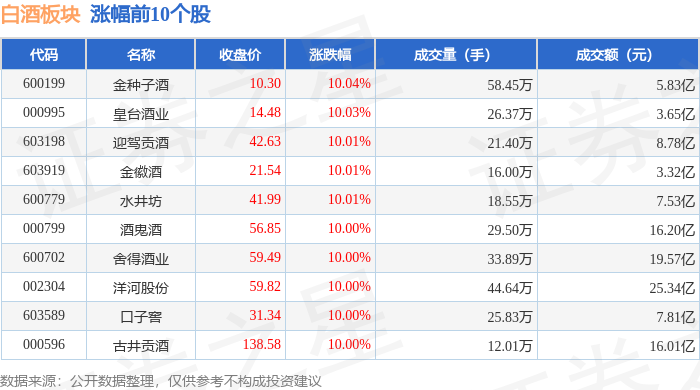
白酒板块1月29日涨9.16%,金种子酒领涨,主力资金净流入83.24亿元
Zheng Xing Xing Ye Ri Bao· 2026-01-29 09:03
Group 1 - The liquor sector experienced a significant increase of 9.16% on January 29, with Jinzhongzi Liquor leading the gains [1] - The Shanghai Composite Index closed at 4157.98, up 0.16%, while the Shenzhen Component Index closed at 14300.08, down 0.3% [1] - Key stocks in the liquor sector showed substantial price increases, with Jinzhongzi Liquor rising by 10.04% to a closing price of 10.30 [1] Group 2 - The main capital inflow into the liquor sector was 8.324 billion yuan, while retail investors saw a net outflow of 2.849 billion yuan [1] - Major stocks such as Moutai and Wuliangye had mixed capital flows, with Moutai experiencing a net outflow of 33.37 million yuan from main funds [2] - Wuliangye saw a net inflow of 1.703 billion yuan from main funds, representing 16.29% of its total capital flow [2]


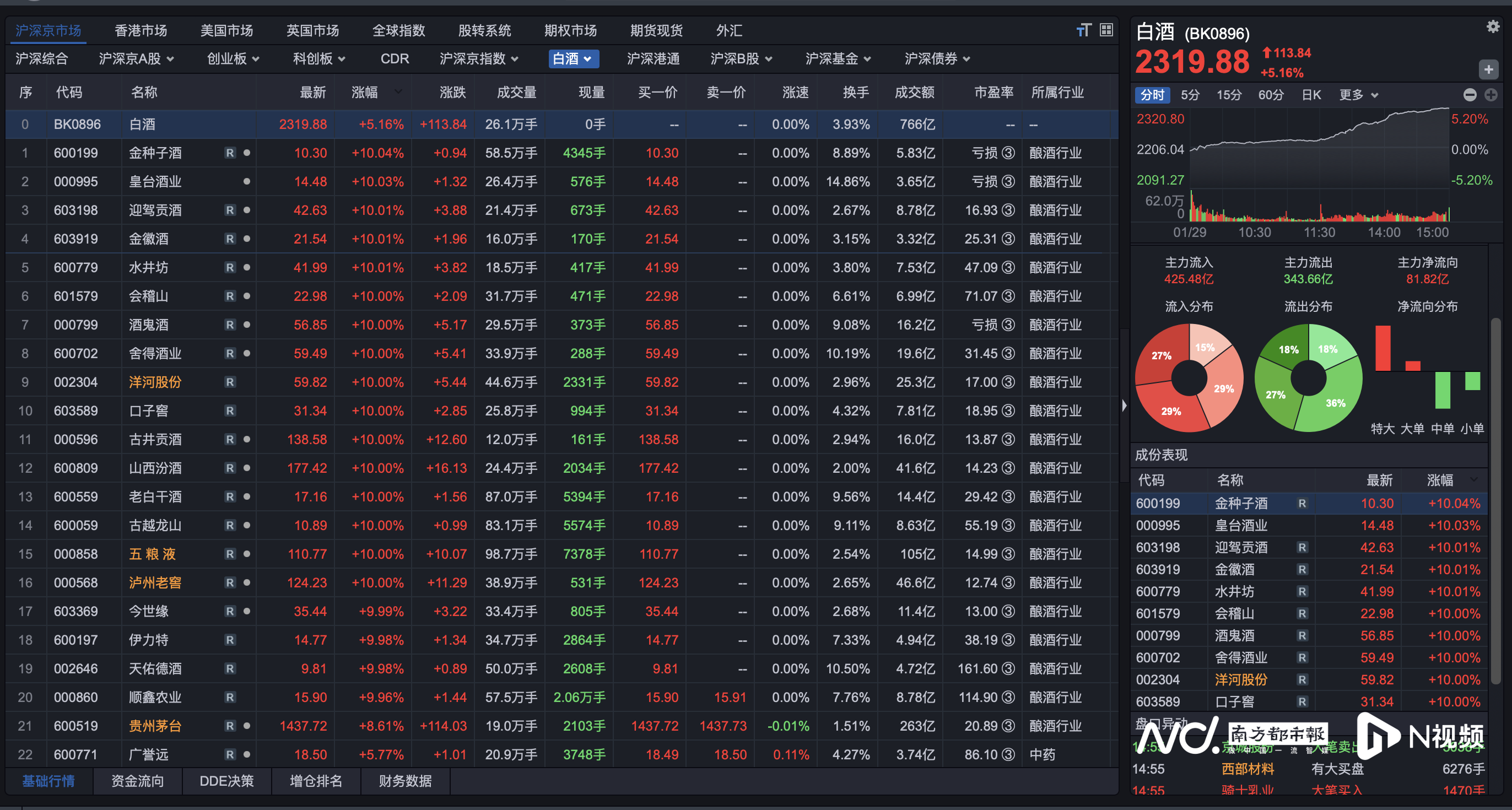
贵州茅台罕见暴涨!白酒股大面积涨停!“拐点”真的来了?
Nan Fang Du Shi Bao· 2026-01-29 08:57
Core Viewpoint - The surge in the A-share liquor sector, particularly in major brands like Kweichow Moutai and Wuliangye, is attributed to a combination of market sentiment release and macroeconomic "expectation repair," indicating a potential recovery in consumer demand, especially ahead of the Spring Festival [1][11]. Group 1: Market Performance - On January 29, the liquor sector saw a significant increase, with Kweichow Moutai closing at 1437.72 CNY per share, up 8.61% [1]. - Over ten liquor companies, including Wuliangye and Luzhou Laojiao, reached their daily price limits, reflecting a broad market rally in the sector [1][2]. - The liquor index rose by 5.16%, indicating strong investor interest and confidence in the sector [2]. Group 2: Macroeconomic Factors - Analysts highlight that macroeconomic measures, such as relaxed real estate policies and local government consumption vouchers, are expected to boost social consumption and business banquets, which are crucial for liquor sales [3]. - Local governments are prioritizing consumption enhancement as a key annual task, with various initiatives aimed at increasing consumer capacity and optimizing supply [3]. Group 3: Seasonal Demand and Pricing - The demand for Kweichow Moutai is reportedly strong ahead of the Spring Festival, with some distributors indicating that their quotas for January and February have already sold out [6]. - Analysts suggest that the price increase for Moutai is driven by both seasonal demand and the company's market control measures, aimed at stabilizing prices [8]. Group 4: Industry Outlook - Despite the recent surge, the actual recovery in liquor sales during the Spring Festival remains uncertain, with analysts noting a mixed inventory situation among different brands [9][10]. - The current valuation of leading liquor companies, such as Kweichow Moutai and Wuliangye, is considered low compared to the broader market, suggesting potential investment opportunities [10]. - However, there are concerns about the performance of some liquor companies, with significant profit declines expected for several firms, indicating that the sector may still face challenges [11].