SA(601021)

Search documents
春秋航空(601021.SH):已回购4075.58万元公司股份
Ge Long Hui A P P· 2025-12-01 09:39
Group 1 - The company, Spring Airlines (601021.SH), announced a share buyback of 744,550 shares, representing 0.0761% of its total share capital, to be completed by November 28, 2025 [1] - The maximum buyback price is set at RMB 55.99 per share, while the minimum price is RMB 53.99 per share [1] - The total amount of funds allocated for the buyback is RMB 40.7558 million, excluding transaction commissions and transfer fees [1]

春秋航空:累计斥资4075.58万元回购0.0761%股份
Xin Lang Cai Jing· 2025-12-01 09:27
春秋航空公告称,公司于2025年8月27日启动股份回购,回购期限至2026年8月26日,预计回购3亿元-5 亿元股份用于员工持股计划。因2025年半年度权益分派,回购价格上限由不超65元/股调整为不超64.57 元/股。截至11月28日,公司累计回购744,550股,占总股本0.0761%,回购价格53.99元/股-55.99元/股, 使用资金4075.58万元。 ...
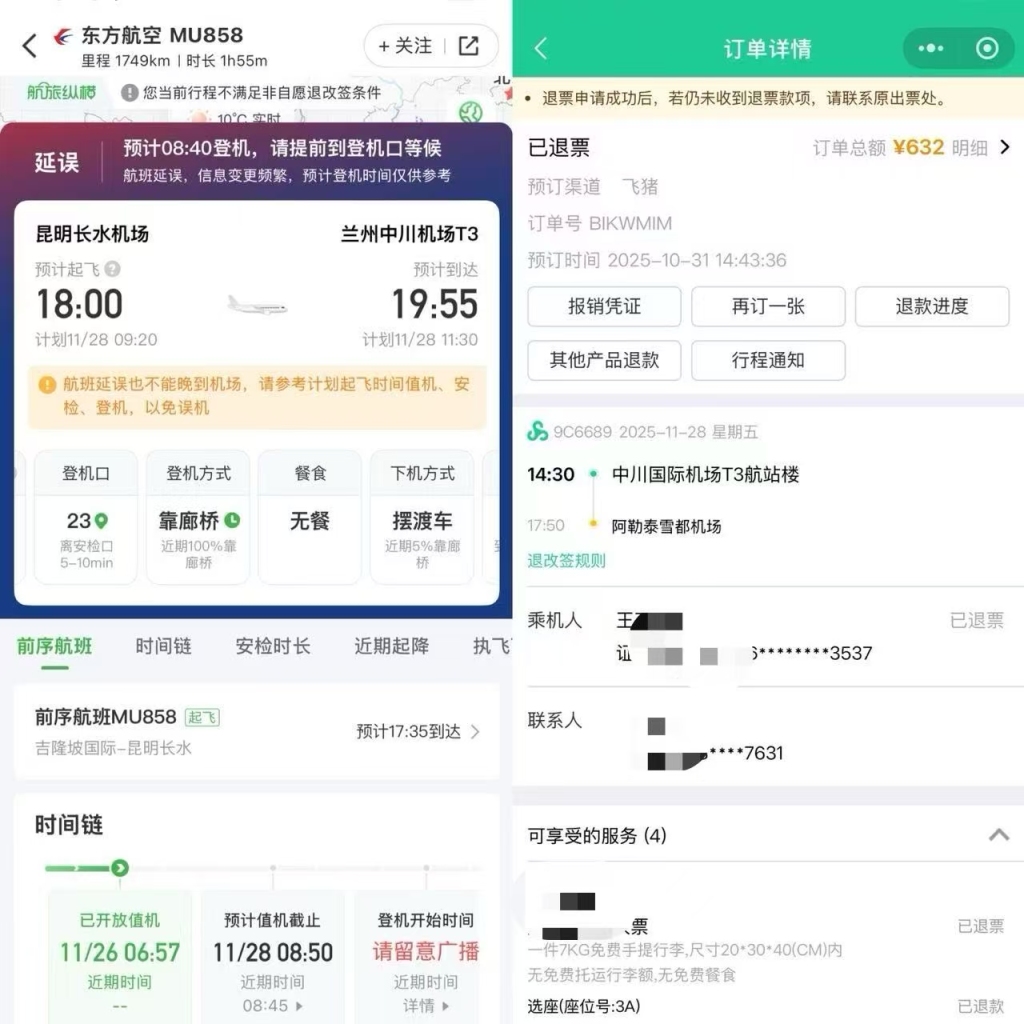
前序航班延误致第二段行程被迫取消,旅客损失该谁承担?
Xin Lang Cai Jing· 2025-12-01 05:20
Core Viewpoint - The case highlights the issue of responsibility and compensation in the airline industry when flight delays occur due to uncontrollable factors, raising questions about consumer rights and airline obligations [1][10]. Group 1: Incident Overview - A consumer, Mr. Wang, faced a flight delay on Eastern Airlines (MU858) due to weather conditions, which caused him to miss a connecting flight with Spring Airlines [3][4]. - Mr. Wang was informed that he would have to bear the cancellation fee for the second leg of his journey because Eastern Airlines and Spring Airlines do not have an agreement [4][5]. Group 2: Airline Responses and Regulations - Eastern Airlines stated that they could only cover the refund fees for their own flight and not for the subsequent flight operated by Spring Airlines, as the delay was due to uncontrollable weather conditions [1][10]. - According to legal experts, airlines are only responsible for their own segments and must assist passengers in communicating with other airlines if there is a connection involved [8][10]. Group 3: Consumer Experience and Industry Implications - Mr. Wang's experience is not unique, as many travelers face similar issues with flight delays and cancellations, leading to unexpected financial losses and disrupted travel plans [6]. - The third-party booking platform eventually covered Mr. Wang's cancellation fee, indicating a potential area for improvement in customer service and communication within the airline industry [6][10].


交通运输行业周报:原油运价波动上行,前10月邮政行业收入历史首超电信行业-20251201
Bank of China Securities· 2025-12-01 02:42
Investment Rating - The transportation industry is rated as "Outperform" [2] Core Insights - The report highlights an upward trend in crude oil freight rates, with the China Import Crude Oil Index (CTFI) reaching 2520.07 points, an increase of 8.4% from November 20 [3][13] - The postal industry revenue surpassed the telecommunications industry for the first time in history, reaching 1.47 trillion yuan, compared to 1.467 trillion yuan for telecommunications [3][24] - The civil aviation sector showed growth in both passenger and cargo transport volumes in October, with international routes performing particularly well [3][17] Summary by Sections Industry Hot Events - Crude oil freight rates are rising, with the Middle East route seeing a 10.76% increase in rates [13] - Qifly Aviation signed a procurement agreement for 105 eVTOL aircraft with three companies in the Guangdong-Hong Kong-Macao Greater Bay Area, focusing on low-altitude logistics [15][16] - The postal industry revenue for January to October 2025 reached 1.47 trillion yuan, marking a significant milestone [24][25] High-Frequency Data Tracking - The Baltic Air Freight Price Index decreased month-on-month but increased year-on-year [26] - Domestic freight flights in October 2025 increased by 0.32% year-on-year, while international flights rose by 11.12% [32] - The express delivery business volume in October 2025 increased by 7.90% year-on-year, with total revenue reaching 131.67 billion yuan [50] Investment Recommendations - Focus on the equipment and manufacturing export chain, recommending companies like COSCO Shipping and China Merchants Energy [5] - Attention to low-altitude economy investment opportunities, particularly in companies like CITIC Offshore Helicopter [5] - Consider investment opportunities in the express delivery sector, recommending SF Express and Jitu Express [5]





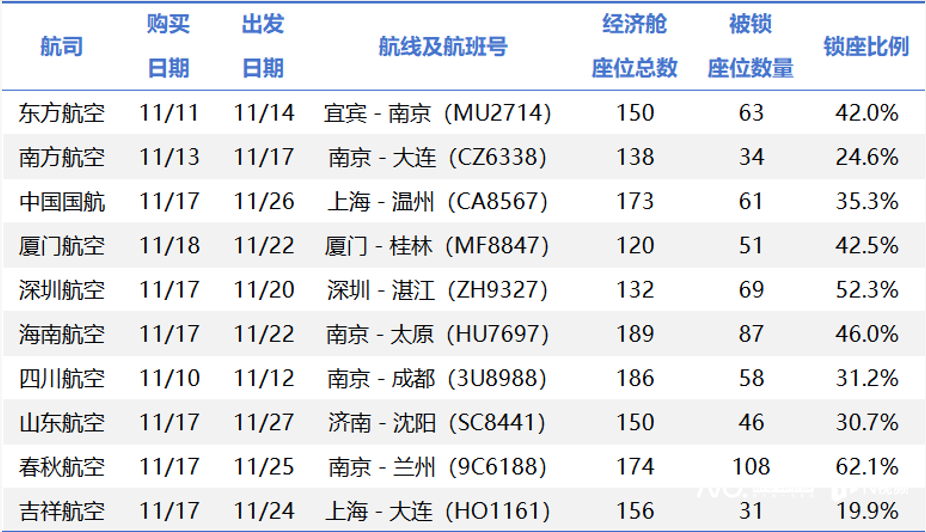
十家航司被约谈后,消费者仍受“锁座”困扰
Nan Fang Du Shi Bao· 2025-11-30 10:34
Core Viewpoint - The long-standing and controversial airline "seat locking" phenomenon is expected to undergo rectification following a special investigation by the Jiangsu Provincial Consumer Protection Committee, which has interviewed ten domestic airlines and requested written responses regarding corrective actions [1][5]. Group 1: Investigation Findings - The Jiangsu Provincial Consumer Protection Committee conducted an investigation into the "seat locking" practices of ten major airlines, revealing that the proportion of locked seats during the purchasing phase ranged from 19.9% to 62.1%, with an average of 38.7% [2][3]. - Notably, Spring Airlines' Nanjing-Lanzhou route had a seat locking rate exceeding 60%, while Shenzhen Airlines' Shenzhen-Zhanjiang route exceeded 50% [2][3]. - Other airlines like Hainan Airlines, Eastern Airlines, and Xiamen Airlines had locking rates between 40% and 46%, while Lucky Air had a relatively low rate of less than 20% [2][3]. Group 2: Reasons for Seat Locking - Airlines provided various justifications for seat locking, including reserving seats for special passengers, ensuring emergency seat availability, and maintaining flight load balance [4]. - The investigation identified common issues with the "seat locking" phenomenon, including a lack of clear communication regarding seat locking rules, vague explanations, differential resource allocation based on membership levels, and unilateral rights granted to airlines [4]. Group 3: Consumer Feedback and Reactions - Consumers expressed dissatisfaction with the differentiation of paid and free seating areas in economy class, indicating that such practices increase travel costs and lead to a frustrating experience [6][10]. - Feedback highlighted that many passengers were unaware of the specific rules regarding seat locking, leading to limited seat choices, especially for families traveling together [10][11]. Group 4: Regulatory Actions and Implications - The Jiangsu Provincial Consumer Protection Committee has mandated that the airlines submit written corrective actions within 15 working days, including self-inspections and revisions of unfair terms related to "seat locking" [5][15]. - Legal experts have commented that the "seat locking" practice infringes on consumer rights and may violate consumer protection laws, suggesting that the committee's actions could serve as a model for regulatory oversight in other regions [15][16].



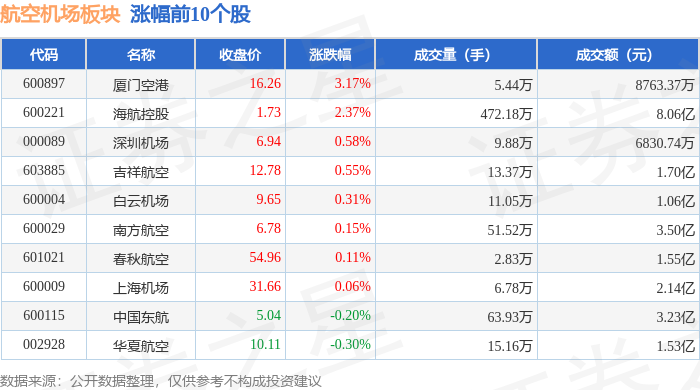
航空机场板块11月28日涨0.26%,厦门空港领涨,主力资金净流出7280.69万元
Zheng Xing Xing Ye Ri Bao· 2025-11-28 09:08
Core Insights - The aviation and airport sector experienced a slight increase of 0.26% on November 28, with Xiamen Airport leading the gains [1] - The Shanghai Composite Index closed at 3888.6, up 0.34%, while the Shenzhen Component Index closed at 12984.08, up 0.85% [1] Stock Performance - Xiamen Airport (600897) closed at 16.26, up 3.17% with a trading volume of 54,400 shares and a transaction value of 87.63 million yuan [1] - Hainan Airlines (600221) closed at 1.73, up 2.37% with a trading volume of 4.72 million shares and a transaction value of 806 million yuan [1] - Shenzhen Airport (000089) closed at 6.94, up 0.58% with a trading volume of 99,880 shares and a transaction value of 68.31 million yuan [1] - China Eastern Airlines (600115) closed at 5.04, down 0.20% with a trading volume of 639,300 shares and a transaction value of 323 million yuan [1][2] Capital Flow - The aviation and airport sector saw a net outflow of 72.81 million yuan from institutional investors, while retail investors contributed a net inflow of 103 million yuan [2] - The detailed capital flow indicates that Hainan Airlines had a net inflow of 96.67 million yuan from institutional investors, while retail investors had a net outflow of 51.95 million yuan [3] - Xiamen Airport experienced a net outflow of 1.69 million yuan from institutional investors, but a net inflow of 4.48 million yuan from retail investors [3]


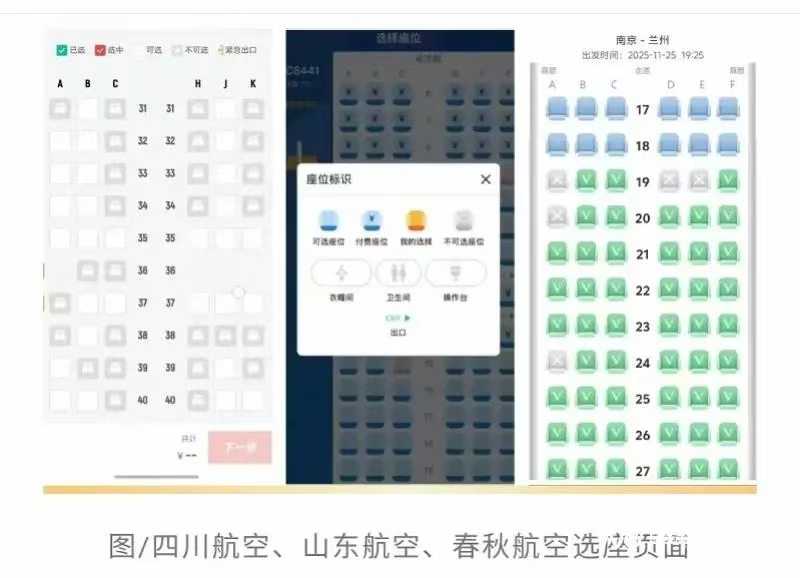
10家航司因“过度锁座”被约谈背后:飞机选座到底该不该收费?
Di Yi Cai Jing· 2025-11-27 10:24
Core Viewpoint - The Jiangsu Consumer Protection Committee has raised concerns regarding the practice of "seat locking" by ten major airlines, highlighting issues of transparency and fairness in the selection of seats during the ticket purchasing process [1][2]. Group 1: Issues Identified - The investigation revealed four main problems with seat locking, including excessive locking of premium seats, disguised fees for unlocking seats, and a lack of transparency in the information provided to consumers [1]. - The average seat locking rate among the ten airlines surveyed was found to be 38.7%, with rates ranging from 19.9% to 62.1% for economy class [1]. Group 2: Reasons for Seat Locking - Airlines lock seats for several reasons, including the need for paid selection or mileage redemption, service assurance, and balancing passenger load [2][4]. - Some airlines do not clearly indicate whether locked seats are unavailable due to airline restrictions or prior selection by other passengers, leading to confusion among consumers [2]. Group 3: Historical Context and Compliance - The practice of charging for seat selection began around 2014, following trends set by international airlines, with many domestic airlines now implementing similar fee structures [5][6]. - Current practices of seat selection fees and baggage fees have been reported to relevant civil aviation authorities and are considered compliant with regulations, reflecting a shift towards diversified service offerings in the airline industry [6]. Group 4: Consumer Recommendations - Consumers suggest that airlines should clearly present seat selection options and associated costs at the time of booking to enhance transparency and consumer choice [7]. - Industry experts recommend that at least half of the seats should remain available for free selection, particularly those that are window or aisle seats, to meet basic passenger needs [7].
今日1389只个股突破五日均线
Zheng Quan Shi Bao Wang· 2025-11-27 07:32
Market Overview - The Shanghai Composite Index closed at 3875.26 points, above the five-day moving average, with a change of 0.29% [1] - The total trading volume of A-shares reached 1,723.17 billion yuan [1] Stocks Performance - A total of 1,389 A-shares have surpassed the five-day moving average, with notable stocks showing significant deviation rates [1] - The stocks with the highest deviation rates include: - Mingguan New Materials (15.93%) - Tianyi New Materials (15.92%) - Liande Equipment (15.78%) [1] - Other stocks with smaller deviation rates that just crossed the five-day moving average include: - Beikang Technology - Spring Airlines - High-Explosive Mining [1] Notable Stocks - The top three stocks with the highest daily gains are: - Mingguan New Materials: +20.03% with a turnover rate of 10.50% [1] - Tianyi New Materials: +20.04% with a turnover rate of 12.35% [1] - Liande Equipment: +20.01% with a turnover rate of 19.65% [1] - Other significant gainers include: - Huazhi Technology: +20.00% [1] - Penghui Energy: +14.64% [1]




十家航司被约谈 直指“锁座”乱象
Jing Ji Guan Cha Wang· 2025-11-27 05:00
飞机"锁座"及有偿选座服务问题近日引发社会广泛关注。江苏省消费者权益保护委员会(以下简称"江 苏省消保委")一纸调查,直指航司"锁座"乱象,将国内10家主流航空公司推到了风口浪尖。 11月21日,江苏省消保委线上约谈了东方航空、南方航空(600029)、中国国航(601111)等10家主流 航空公司。11月26日,通过公众号发布有关调查结果,详细列举了机票锁座服务市场中存在的诸多问 题,亮明对"锁座"现象长期存在的"零容忍"态度,并要求各公司在15个工作日内将整改情况以书面形式 提交。 专家认为,航司"锁座"行为锁的不仅是座位,还有旅客的知情权和公平交易权。"付费选座"等霸王条款 还可能涉嫌违反《消费者权益保护法》,侵害旅客的自主选择权,属于典型变相收费行为,让旅客暗吃 了不少"哑巴亏"。长此以往,"锁座"行为最终损害的是旅客对航司服务的信任,不利于航空服务业的高 质量发展。 近四成座位被锁 所谓飞机"锁座",是指航司将经济舱前排、靠窗、靠过道等较为便利舒适的座位单独锁定,要么无法选 择,要么需额外付费或用积分兑换。从范围来看,锁定范围高度集中于经济舱前排、靠窗及靠过道等消 费者偏好的优质座位,仅开放中间区域 ...
媒体视角 | 超60家沪市公司集体释放积极信号 合同订单、研发利好不断
申万宏源证券上海北京西路营业部· 2025-11-27 02:53
Group 1 - Over 20 positive announcements were released by companies listed on the Shanghai Stock Exchange as of November 23, indicating a trend of share buybacks and operational improvements [1] - China Petroleum & Chemical Corporation (Sinopec) completed its share buyback plan, repurchasing 89.35 million shares for approximately 500 million yuan, with a significant portion occurring in November [2] - Several companies, including Spring Airlines and Hongta Securities, have also announced their share buyback progress, with amounts reaching 400 million yuan and 120 million yuan respectively [2] Group 2 - At least 14 companies on the Sci-Tech Innovation Board reported buyback progress and positive contract orders, showcasing a commitment to shareholder value [3] - JinkoSolar announced the mass production of its Tiger Neo 3.0 solar module, achieving a production efficiency of over 24.8% and a power output of up to 670W, with significant orders signed [3] - Shanshi Network Technology reported progress in the development of its ASIC security chip, which has successfully passed internal testing and is entering the mass production phase, with market sales expected to begin in Q1 2026 [4][5]