SERES(601127)

Search documents
研报掘金丨甬兴证券:维持赛力斯“买入”评级,看好公司新车型周期,发力具身智能业务
Ge Long Hui A P P· 2025-11-13 08:46
Core Viewpoint - The report indicates that the company has experienced year-on-year growth in both revenue and profit for the first three quarters, with a notable increase in sales in September 2025 [1] Group 1: Sales Performance - In September 2025, the company sold 48,286 units, representing a year-on-year increase of 8.33%, with 41,249 units sold for the AITO brand, marking a 15.14% increase [1] Group 2: New Product Launch - The all-new AITO Wenjie M7 was officially launched in September 2025, with a starting price of 279,800 yuan, featuring Huawei's Qian Kun intelligent driving ADS 4 and Harmony ALPS cockpit [1] Group 3: Strategic Partnerships - On October 9, 2025, the company signed a cooperation agreement with Huoshan Engine in Beijing to collaborate on embodied intelligence, leveraging each other's strengths for end-to-end business development [1] - The partnership will focus on projects related to "multi-modal cloud-edge collaborative intelligent robot decision-making, control, and human-machine enhancement technology," establishing a closed-loop mechanism for technology research and scene validation [1] Group 4: Investment Outlook - The company is optimistic about the new model cycle and the development of embodied intelligence business, maintaining a "buy" rating [1]

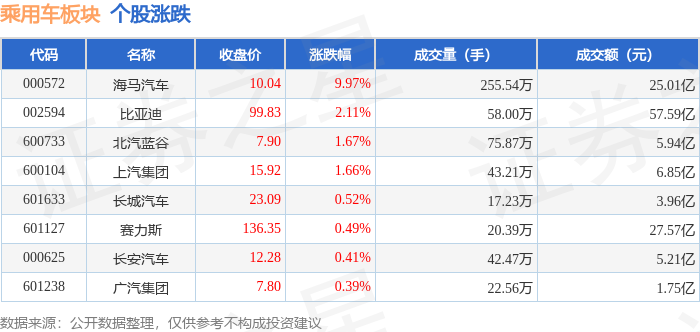
乘用车板块11月13日涨1.36%,海马汽车领涨,主力资金净流入13.55亿元
Zheng Xing Xing Ye Ri Bao· 2025-11-13 08:44
Core Viewpoint - The passenger car sector experienced a rise of 1.36% on November 13, with Haima Automobile leading the gains, while the Shanghai Composite Index closed at 4029.5, up 0.73% [1]. Group 1: Market Performance - The Shenzhen Component Index closed at 13476.52, increasing by 1.78% [1]. - The passenger car sector saw a net inflow of 1.355 billion yuan from main funds, while retail investors experienced a net outflow of 530 million yuan [1]. Group 2: Individual Stock Performance - Haima Automobile (000572) closed at 10.04 yuan, with a significant increase of 9.97% and a trading volume of 2.5554 million shares, amounting to a transaction value of 2.501 billion yuan [1]. - BYD (002594) closed at 99.83 yuan, rising by 2.11% with a trading volume of 580,000 shares, totaling 5.759 billion yuan [1]. - Great Wall Motors (601633) closed at 23.09 yuan, with a modest increase of 0.52% and a transaction value of 396 million yuan [1]. - SAIC Motor (600104) closed at 15.92 yuan, up by 1.66%, with a trading volume of 432,100 shares, resulting in a transaction value of 685 million yuan [1]. Group 3: Fund Flow Analysis - Main funds showed a net inflow of 817 million yuan for Haima Automobile, while retail funds had a net outflow of 434 million yuan [2]. - BYD experienced a net inflow of 607 million yuan from main funds, but retail funds saw a net outflow of 208 million yuan [2]. - Great Wall Motors had a net inflow of 35.9479 million yuan from main funds, while retail funds experienced a net outflow of 65.7917 million yuan [2].







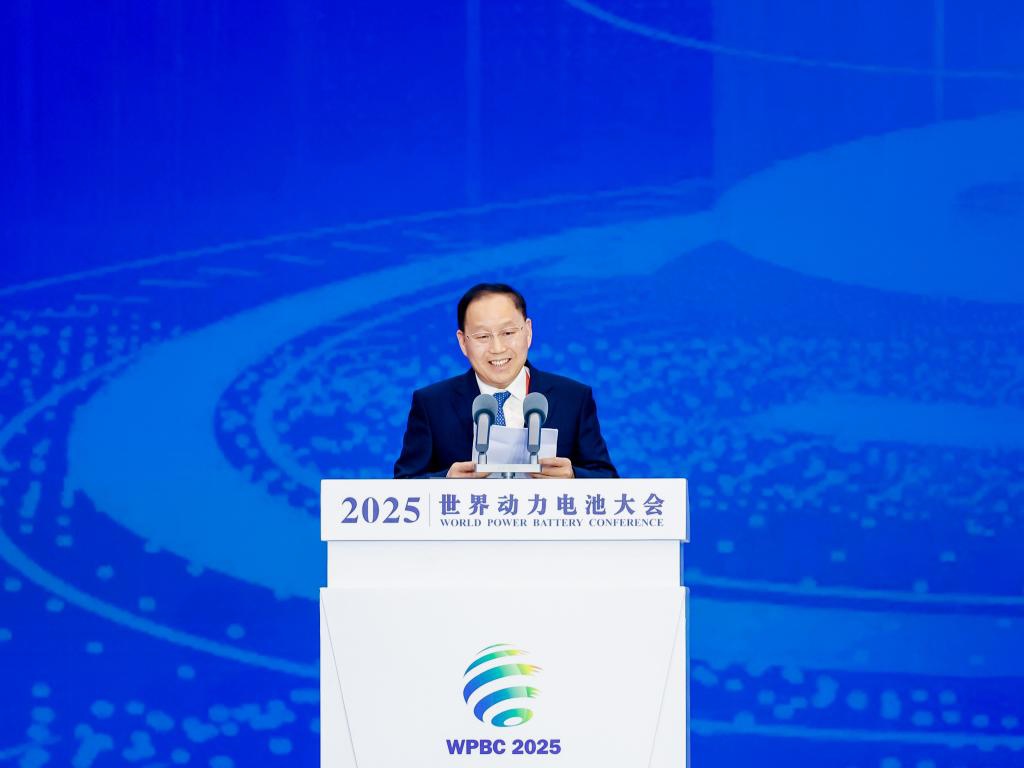
张兴海:以满足用户需求为出发点 推动多元电动技术路线发展
Yang Guang Wang· 2025-11-13 05:41
Core Insights - The transition from fuel vehicles to new energy vehicles is a critical period for China, with the company focusing on user needs and adopting a dual technology route of pure electric and range-extended vehicles [1][3] Group 1: User Demand and Technology - User research indicates varying opinions and needs regarding power forms across different regions, highlighting the importance of flexible solutions in the current landscape where charging infrastructure is not fully developed [3] - The company's smart range-extended electric technology revitalizes traditional power systems while leveraging the advantages of new energy technologies, providing users with more flexible and reassuring travel options [3] - Cumulative sales of the company's vehicles have reached 850,000 units, with 70% of smart range-extended models operating in electric mode and 30% in generator mode, reflecting strong user acceptance of this technology route [3] Group 2: Policy and Safety Recommendations - The company suggests that policies should continue to support diverse technology routes, granting range-extended and other hybrid technologies equal road rights as pure electric vehicles to meet diverse user needs [3] - Emphasizing safety as a top priority, the industry should aim for "zero self-ignition" and integrate safety measures throughout all vehicle usage scenarios, including charging, parking, and driving [3] Group 3: Future Outlook - The smart range-extended electric technology route is seen as a viable option for transitioning from fuel vehicles to new energy vehicles and is expected to maintain strong relevance for a considerable time [4] - The company has developed its own Magic Cube technology platform, which accommodates various power forms including pure electric, range-extended, and super hybrid, significantly enhancing product development efficiency and offering users more choices [4]
赛力斯港股上市开启国际化新篇甬兴证券看好成长动能维持“买入”评级
Quan Jing Wang· 2025-11-13 04:21
Core Insights - Company successfully listed on Hong Kong Stock Exchange on November 5, marking a significant step in its international capital strategy as the fourth profitable electric vehicle manufacturer globally [1] - Strong performance in the first three quarters of the year, with new model market expansion yielding significant results, indicating robust growth momentum for the new cycle [1][2] Financial Performance - From January to October, the company sold a total of 356,085 electric vehicles, enhancing profitability alongside increased production and sales scale [2] - For the first three quarters of 2025, the company reported revenue of 110.534 billion yuan and a net profit attributable to shareholders of 5.312 billion yuan, reflecting a year-on-year growth of 31.56% [2] - Forecasts indicate double-digit revenue growth over the next three years, with earnings per share (EPS) projected to rise from 5.78 yuan in 2025 to 8.65 yuan in 2027, while the price-to-earnings ratio (PE) is expected to gradually decline, enhancing valuation attractiveness [2] Competitive Positioning - The company's high-end strategy has successfully established significant competitive barriers within the 300,000 to 500,000 yuan price range, with the "Wenjie" brand achieving a cumulative delivery of over 850,000 units [2] - The Wenjie M9 and M8 models lead the luxury segment sales charts, while the new Wenjie M7 model achieved over 90,000 pre-orders within 41 days of launch, demonstrating strong product appeal [2] - With a market share of 32.7%, the company showcases premium capabilities supported by product strength, brand power, and user reputation, contributing to its unique value in the capital market [2] Global Expansion - The recent listing on the Hong Kong Stock Exchange accelerates the company's global expansion efforts, particularly in Europe, the Middle East, and Africa, positioning it as a Chinese electric vehicle brand with global outreach capabilities [3] - The combination of "scale + profitability" solidifies the company's development foundation, while its foothold in the high-end market builds a competitive moat [3] - The market and capital's continued optimism is based not only on current strong performance but also on a firm belief in the company's long-term value [3]

增程“二次战争”:技术派车企开始接管战场?
Tai Mei Ti A P P· 2025-11-13 00:44
Core Insights - The article discusses the evolution of range-extended electric vehicles (REEVs) in the automotive industry, highlighting a shift from the initial focus on alleviating range anxiety to enhancing user experience through advanced technology integration [2][3][12] - The competition in the REEV market is now characterized by a deeper emphasis on technical capabilities, energy efficiency, and adaptability to various driving scenarios, rather than merely extending driving range [4][5][12] Summary by Sections First War vs. Second War - The first phase of the REEV market addressed the issue of range anxiety, providing consumers with a flexible solution that combined electric and fuel options, thus proving the viability of REEVs [3][12] - The second phase, marked by the entry of technology-driven companies, focuses on optimizing user experience and integrating advanced technologies into REEV systems [5][12] Technological Advancements - Companies like Xiaopeng and Leap Motor are now competing on the basis of their ability to balance integration, energy consumption, and spatial efficiency, moving beyond simple functionality [4][5] - The introduction of advanced materials and AI in control systems signifies a shift towards higher technical barriers in the REEV market, emphasizing the importance of R&D capabilities [5][12] Market Strategies - There is a notable divergence in technical strategies, with some companies opting for "large battery + small fuel tank" configurations aimed at urban users, while others prefer "large battery + large fuel tank" setups to cater to long-distance travel needs [6][7] - The strategic choice of configurations reflects a deeper understanding of user scenarios and market demands, particularly in international markets where charging infrastructure may be lacking [8][9] Global Expansion - Several Chinese brands view REEVs as a gateway to international markets, leveraging their unique features to address the challenges posed by inadequate charging facilities in many regions [9][12] - The article notes that while REEVs are perceived as a transitional technology in China, they offer a practical solution in diverse global markets, providing users with a "zero-anxiety" electric driving experience [9][12] Challenges Ahead - The article highlights potential challenges in the global expansion of REEVs, including consumer understanding, regulatory risks, and the need for localization in different markets [10][11] - Despite these challenges, the rise of REEVs represents a victory for practical solutions that meet the immediate needs of consumers, balancing the benefits of electric vehicles with the realities of current infrastructure [11][12]


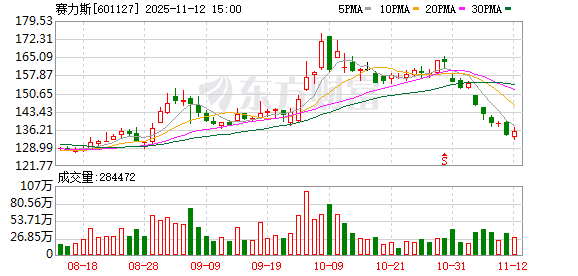
赛力斯大宗交易成交5.00万股 成交额678.45万元
Zheng Quan Shi Bao Wang· 2025-11-13 00:33
Group 1 - The core transaction on November 12 involved a block trade of 50,000 shares of Sais, with a total transaction value of 6.7845 million yuan and a transaction price of 135.69 yuan per share [2][3] - The buyer of this block trade was Guotai Junan Securities Co., Ltd. headquarters, while the seller was Huatai Securities Co., Ltd. Shanghai Wuding Road Securities Business Department [2] - In the last three months, Sais has recorded a total of 16 block trades, amounting to a cumulative transaction value of 73.6319 million yuan [3] Group 2 - Over the past five days, two institutions have rated Sais, with the highest target price set by Huachuang Securities at 195.80 yuan, as reported on November 6 [3] - The block trade on November 12 had a premium of 0% compared to the closing price on that day [3]
上市车企10月销量:整车销量超231万辆北汽蓝谷、蔚来等销量增速加快
Xin Lang Cai Jing· 2025-11-13 00:05
Core Insights - In October 2025, 20 major A and H-share listed automotive manufacturers reported a total vehicle sales of 2.3166 million units, representing a year-on-year increase of 8.82% and a month-on-month increase of 5.97% [1][2] - The total sales of new energy vehicles (NEVs) reached approximately 1.3078 million units, marking a year-on-year increase of 15.63% and a month-on-month increase of 9.68%, with a penetration rate of about 57.48% [1][3] Group 1: Overall Vehicle Sales - The top-selling company in October 2025 was SAIC Motor, with sales of 454,000 units, reflecting a year-on-year growth of 12.96% [2] - Other notable manufacturers included BYD, Geely, and Changan, which followed closely in sales figures [2] - Companies like Beiqi Blue Valley and Qianli Technology saw their sales growth exceed 100% year-on-year, while NIO and XPeng also experienced significant growth [2] Group 2: New Energy Vehicle Sales - The leading companies in NEV sales for October 2025 were BYD, SAIC Motor, and Geely, with sales of 441,700 units, 206,700 units, and 177,900 units respectively [3] - Beiqi Blue Valley's NEV sales growth exceeded 100% year-on-year, while NIO and XPeng also saw substantial increases in their sales growth rates compared to September [3] - BYD's total sales for the year up to October reached 3.7019 million units, showing a year-on-year increase of 13.88% [3]


张兴海:问界销量达85万辆 增程车型充电行驶里程达70%
Quan Jing Wang· 2025-11-12 09:55
Core Insights - The transition from fuel vehicles to new energy vehicles is a critical period for China, with the company focusing on user needs and adopting a dual technology route of pure electric and range-extended vehicles [1][2] - The company emphasizes the importance of intelligent range-extended electric technology, which allows for flexibility and reassurance in travel choices, especially in areas where charging infrastructure is not fully developed [1] - The cumulative sales of the company's vehicles have reached 850,000 units, with 70% of intelligent range-extended models operating on electric power and 30% on generated power, indicating strong user acceptance of this technology route [1] Industry Recommendations - The company suggests that policies should continue to support diverse technology routes, granting range-extended and other hybrid technologies equal road rights as pure electric vehicles to meet varied user demands [1] - There is a call for the continuous collaborative development of batteries, vehicles, and charging networks to enhance user experience [1] - Safety is highlighted as a paramount concern, with the industry urged to prioritize safety measures to achieve a goal of "zero self-ignition" across all vehicle usage scenarios [1]

赛力斯今日大宗交易平价成交5万股,成交额678.45万元
Xin Lang Cai Jing· 2025-11-12 09:34
Group 1 - On November 12, a block trade of 50,000 shares of Seres was executed, with a transaction amount of 6.7845 million yuan, accounting for 0.18% of the total trading volume for the day [1] - The transaction price was 135.69 yuan, which was flat compared to the market closing price of 135.69 yuan [1][2] - The buying brokerage was Guotai Hongwan Operations Co., while the selling brokerage was not specified [2]

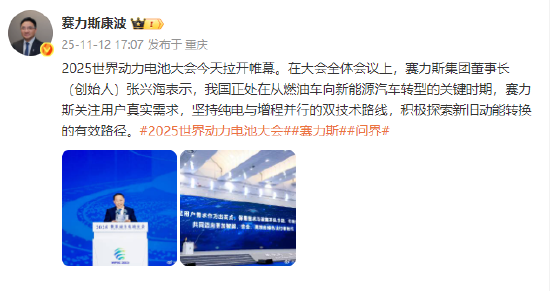
赛力斯张兴海:坚持纯电与增程并行的双技术路线
Xin Lang Ke Ji· 2025-11-12 09:13
Core Insights - The 2025 World Power Battery Conference has commenced, highlighting the transition from fuel vehicles to new energy vehicles in China [1] - The chairman of Seres Group, Zhang Xinghai, emphasized the importance of addressing real user needs and maintaining a dual technology approach of pure electric and range-extended vehicles [1] - The company is actively exploring effective pathways for the transformation of old and new driving forces in the industry [1] Industry Trends - China is at a critical juncture in the shift from traditional fuel vehicles to new energy vehicles [1] - The focus on user needs indicates a market-driven approach to innovation in the electric vehicle sector [1] - The dual technology strategy suggests a balanced development of both pure electric and hybrid solutions to cater to diverse consumer preferences [1]