SHCI(601225)

Search documents
关注煤炭板块的“看涨期权”价值
Orient Securities· 2026-02-01 09:44
Investment Rating - The coal industry is rated as "Positive" and the recommendation is maintained [5]. Core Viewpoints - The value of "call options" in the coal sector is gaining attention, with expectations that coal prices may rise beyond current market reactions due to overseas disturbances [3][8]. - The valuation of quality coal companies is expected to evolve towards a "debt-like" structure combined with "coal price call options," indicating potential for price increases [3][8]. - The coal sector has shown resilience, with the coal mining index rising 7.6% since the beginning of 2026, outperforming both the CSI 300 index and the ChiNext index [8][60]. Summary by Sections Investment Recommendations and Targets - Recommended stocks include China Shenhua (601088, Buy), China Coal Energy (601898, Buy), Shaanxi Coal and Chemical Industry (601225, Buy), and Jinneng Holding (601001, Buy) [3][63]. Industry Fundamentals - The coal inventory at ports has significantly decreased, with a reported drop to 24.66 million tons as of January 30, 2026, a decrease of 6.2% month-on-month and 6.8% year-on-year [8][36]. - The price of low-sulfur coking coal has increased to 1,630 RMB/ton, reflecting a week-on-week rise of 12 RMB/ton and a year-on-year increase of 290 RMB/ton [8][22]. - The coal mining operating rate is at a median level for the same period, indicating stable supply conditions [27][28]. Price Trends - The price of thermal coal at Qinhuangdao port has shown a recovery, while the prices of imported coal from Australia and Indonesia have also increased [8][22][20]. - The overall energy prices, including oil and gas, have risen significantly, with European natural gas prices up 37% and Brent crude oil prices up 16% since the beginning of the year [8][22]. Market Performance - The coal sector has consistently outperformed the broader market indices, with the coal mining index showing a 7.6% increase compared to the 1.7% and 4.5% increases in the CSI 300 and ChiNext indices, respectively [8][60]. - The current price-to-book ratio (PB) for the coal industry is 1.52, indicating a historically low relative valuation compared to the broader market [8][60].




全球能源价格普涨,关注煤炭配置机会
ZHONGTAI SECURITIES· 2026-01-31 14:46
Investment Rating - The report maintains an "Accumulate" rating for the coal industry, indicating a positive outlook for investment opportunities in this sector [5]. Core Insights - The report highlights a favorable supply-demand dynamic in the coal market, with expectations of stable to increasing coal prices due to ongoing high demand and tightening supply conditions [7][8]. - The report emphasizes the importance of strategic investments in coal companies with strong dividend yields and low valuations, particularly in light of the anticipated recovery in coal prices [8]. Summary by Sections 1. Industry Overview - The coal industry comprises 37 listed companies with a total market capitalization of approximately 19,847.47 billion yuan and a circulating market value of about 19,430.80 billion yuan [2]. 2. Company Performance Tracking - Key companies such as China Shenhua, Shanxi Coking Coal, and Yancoal Energy are highlighted for their robust operational performance and strategic growth plans [12][13]. - China Shenhua is expected to achieve a net profit of 495-545 billion yuan in 2025, while Shanxi Coking Coal anticipates a significant decline in profits due to market pressures [8]. 3. Coal Price Tracking - The report notes that the price of thermal coal at the port has seen a slight increase, with the average price at the Qinhuangdao port reported at 698 yuan per ton, reflecting a week-on-week increase of 8 yuan [8]. - The international coal price has also risen, with Newcastle coal futures closing at 111.75 USD per ton, marking a daily increase of 2.43% [8]. 4. Supply and Demand Dynamics - The report indicates that the daily coal consumption across 25 provinces in China reached 6.648 million tons, showing a year-on-year increase of 36.48% [8]. - Supply constraints are expected as many private coal mines prepare for seasonal shutdowns, leading to a reduction in overall coal supply [8]. 5. Investment Opportunities - The report suggests focusing on companies with strong dividend policies and growth potential, such as China Shenhua, Yancoal Energy, and others, which are expected to benefit from the anticipated recovery in coal prices [8][12]. - It also highlights the potential for companies like Lu'an Huanneng and Pingmei Shenma to rebound as market conditions improve [8].


煤价趋稳反弹,节前小幅上涨,看好节后行情
Guolian Minsheng Securities· 2026-01-31 12:10
Investment Rating - The report maintains a "Buy" rating for the coal sector, with specific recommendations for several companies [2][3]. Core Insights - Coal prices have stabilized and rebounded slightly before the holiday, with expectations for a stronger market post-holiday. Supply has tightened due to the upcoming holiday and production targets being met, while demand has increased due to cold weather affecting power plant consumption [10][11]. - The report forecasts that coal prices may return to a seasonal fluctuation range of 750-1000 RMB/ton, driven by domestic capacity reductions and a significant decrease in Indonesia's production targets for 2026 [10][11]. - Investment recommendations focus on companies with high spot market exposure and strong balance sheets, particularly those in Shanxi province, which are less affected by production limits [10][15]. Summary by Sections Company Earnings Forecasts, Valuation, and Ratings - Recommended companies include: - Jin控煤业 (Jin控 Coal Industry): EPS forecast of 1.68 RMB for 2024, with a PE ratio of 9 [2]. - 山煤国际 (Shan Coal International): EPS forecast of 1.14 RMB for 2024, with a PE ratio of 10 [2]. - 潞安环能 (Luan Environmental Energy): EPS forecast of 0.82 RMB for 2024, with a PE ratio of 17 [2]. - 华阳股份 (Huayang Co.): EPS forecast of 0.62 RMB for 2024, with a PE ratio of 15 [2]. - 兖矿能源 (Yankuang Energy): EPS forecast of 1.44 RMB for 2024, with a PE ratio of 10 [2]. - 中国神华 (China Shenhua): EPS forecast of 2.95 RMB for 2024, with a PE ratio of 14 [2]. - 陕西煤业 (Shaanxi Coal): EPS forecast of 2.31 RMB for 2024, with a PE ratio of 10 [2]. - 中煤能源 (China Coal Energy): EPS forecast of 1.46 RMB for 2024, with a PE ratio of 9 [2]. - 中广核矿业 (CGN Mining): EPS forecast of 0.04 HKD for 2024, with a PE ratio of 113 [2]. - 新集能源 (Xinjie Energy): EPS forecast of 0.92 RMB for 2024, with a PE ratio of 8 [2]. - 淮北矿业 (Huaibei Mining): EPS forecast of 1.80 RMB for 2024, with a PE ratio of 7 [2]. - 兰花科创 (Lanhua Sci-Tech): EPS forecast of 0.49 RMB for 2024, with a PE ratio of 13 [2]. Market Performance - The coal sector has outperformed the broader market, with a weekly increase of 4.0% compared to a 0.1% increase in the CSI 300 index [17][20]. - Notable performers include 陕西黑猫 (Shaanxi Black Cat) with a 14.50% increase and 盘江股份 (Panjiang Coal) with a 13.25% increase [23][24]. Industry Dynamics - The report highlights a tightening supply due to production limits and increased demand from power plants, leading to a potential price increase in the coal market [10][11]. - The focus on high dividend yield companies is emphasized as a defensive strategy amid uncertain international conditions [11].


煤炭:库存季节性偏低,煤价震荡上行
Huafu Securities· 2026-01-31 08:37
Investment Rating - The coal industry is rated as "stronger than the market" [7] Core Views - The report emphasizes that the fundamental goal is to reverse the Producer Price Index (PPI), with seasonal demand during the "peak winter" leading to a 1.3% increase in coal mining and washing prices, contributing to a 0.2% rise in PPI over three consecutive months [5][6] - The coal price is expected to stabilize due to its high correlation with PPI, with a potential low point for coal prices in 2025, influenced by policies aimed at reducing excessive competition [5] - The coal industry is undergoing a transformation driven by energy security demands, with limited supply elasticity due to strict capacity controls and increasing extraction difficulties, particularly in eastern regions [5][6] - Despite weak macroeconomic conditions affecting coal demand, the rigid supply and rising costs are expected to support coal prices, which are likely to maintain a volatile upward trend [5] Summary by Sections Coal Market Overview - As of January 30, the Qinhuangdao 5500K thermal coal price is 692 CNY/ton, up 7 CNY/ton week-on-week, with a year-on-year decline of 61 CNY/ton [3][31] - The average daily output of 462 sample coal mines is 5.329 million tons, down 81,000 tons week-on-week but up 1.77 million tons year-on-year [3][42] - The coal inventory index is slightly down to 180.4, indicating a minor decrease in coal stocks [3][53] Coking Coal - The main coking coal price at Jingtang Port is stable at 1800 CNY/ton, with a year-on-year increase of 340 CNY/ton [4][72] - The average daily output of 523 sample coking coal mines is 771,000 tons, reflecting a year-on-year increase of 64.2% [4][71] - The coking coal inventory stands at 2.672 million tons, down 7.2% week-on-week [4][71] Supply and Demand Dynamics - The daily consumption of the six major power plants has decreased to 847,000 tons, down 3.7% week-on-week but up 27.8% year-on-year [42][43] - The inventory of the six major power plants is 13.185 million tons, down 0.6% week-on-week [43][44] - The methanol and urea operating rates are at 91.2% and 88.3%, respectively, indicating a slight increase [47][48] Investment Opportunities - The report suggests focusing on companies with strong resource endowments and stable operating performance, such as China Shenhua, China Coal Energy, and Shaanxi Coal and Chemical [6] - Companies with production growth potential benefiting from the coal price cycle, such as Yanzhou Coal Mining, Huayang Co., and Gansu Energy, are also highlighted [6] - Firms with global resource scarcity attributes, like Huaibei Mining and Shanxi Coking Coal, are recommended for investment [6]


煤炭行业基金持仓 2025Q4 季报总结:Q4 基金持仓持续回升,板块拐点确认
GUOTAI HAITONG SECURITIES· 2026-01-30 05:36
Investment Rating - The report assigns an "Overweight" rating to the coal industry [5][27]. Core Insights - The coal sector's fund holdings have rebounded from historical lows, confirming the cyclical bottom in Q2 2025, with a reversal in the supply-demand dynamics now evident [3][5]. - The report recommends core stocks such as China Shenhua, Shaanxi Coal, and China Coal Energy, while also suggesting continued investment in Yanzhou Coal and Jinneng Holding [5][6]. Summary by Sections Fund Holdings - As of Q4 2025, the coal sector's fund holdings increased by 0.03% to 0.61%, with the top ten coal stocks' market value ratio rising from 0.49% in Q3 to 0.53% [5][9]. - The number of coal stocks in the top ten holdings decreased from 26 in Q3 2025 to 22 in Q4 2025, indicating a higher allocation to industry leaders with strong profit certainty [5][9]. Major Holdings - The top five coal stocks held by funds are China Shenhua (0.58%), Shaanxi Coal (1.70%), Yanzhou Coal (2.93%), Lu'an Environmental Energy (5.86%), and China Coal Energy (1.60%) [9][12]. - Notable increases in holdings were observed in Shanxi Coal International (5.00%), Pingmei Shenma (4.82%), and Hengyuan Coal Power (2.44%) [13]. Market Performance - The coal industry index outperformed the CSI 300 index in Q4 2025, indicating a positive market trend for coal stocks [6][18]. - The report highlights significant changes in holdings by the Shanghai-Hong Kong Stock Connect, with increased stakes in Jiangxi Tungsten, Zhengzhou Coal, and Kailuan Energy [13][14]. Valuation Metrics - The report provides valuation metrics for key coal companies, with China Shenhua's estimated PE ratio for 2025 at 15.50 and for 2026 at 14.62, indicating a favorable investment outlook [21][22].
打造安全管理“软防线” ——神木能源探索“安全+健康”融合管理新实践
Zhong Guo Hua Gong Bao· 2026-01-30 02:38
Core Viewpoint - The company emphasizes the integration of employee health management into safety management systems, viewing it as a necessary component rather than an optional addition [1][2]. Group 1: Health Management Integration - The company believes that improving the reliability of personnel is essential for enhancing safety levels in the calcium carbide and coal tar industries [2]. - Health management is now considered a mandatory part of the safety management system, as employees' physical and mental well-being directly impacts the effectiveness of safety protocols [2][3]. - The company has achieved a dual goal of 100% online training and qualification rates through the HSE365 platform, highlighting the importance of health status in safety management [2]. Group 2: Educational Framework - A collaboration with HSE365 is set to launch a health safety service module by 2025, incorporating health assessments into safety training programs [3]. - The training will include pre-employment health checks and psychological evaluations, specifically targeting high-risk health groups [3]. - The company aims to create a closed-loop system of "safety education—health monitoring—risk intervention—reinforcement of education," enhancing both safety awareness and health among employees [3]. Group 3: Practical Implementation - Since the implementation of the health and safety management collaboration, employee engagement in health management has significantly increased, with a health check completion rate of 98.7% and a psychological assessment participation rate of 86.4% [4]. - The company plans to further integrate health management into daily operations through various activities, including health education and psychological support [4]. - Future initiatives will focus on refining health risk assessments and adapting them to various workplace environments, aiming for employees to actively maintain their health [4].
煤炭行业热点事件复盘及投资策略系列深度:产能预计收紧、进口预期收缩,看好旺季煤价反弹
Shenwan Hongyuan Securities· 2026-01-29 14:41
Core Insights - The coal industry is undergoing a significant restructuring on the supply side, with policies aimed at controlling coal consumption in power generation and coal-to-gas projects, leading to a tighter supply environment. The emphasis on high-quality and compliant production capacity is expected to increase [4][6][10] - Demand for coal remains stable, driven by resilient electricity consumption and growth in the coal chemical sector, particularly in coal-to-oil and coal-to-olefins projects. Overall coal demand is projected to see slight growth in 2026 [4][6][10] - Investment recommendations include focusing on growth-oriented companies such as TBEA, Jinkong Coal, Huayang Co., Xinjie Energy, Huaihe Energy, and Yancoal Energy, as well as stable dividend-paying companies like China Shenhua, Shaanxi Coal, and China Coal Energy [4][10] - Contrary to common perceptions, the report argues that coal will maintain its strategic importance in energy supply, with a robust demand foundation supporting the industry's fundamentals. The cash-generating nature of the coal sector is expected to strengthen, with coal prices likely to remain at reasonable high levels, enhancing profitability and dividend capacity [4][10] Supply Side Analysis - The domestic coal production growth rate is slowing, with December 2025 coal production at 4.37 million tons, a year-on-year decrease of 1.0%. The overall production for 2025 is projected at 48.32 billion tons, a 1.2% increase year-on-year [22][24] - The report highlights that the supply-demand balance is tightening, with significant policy changes and production adjustments in key coal-producing regions [4][6][10] Demand Side Analysis - Industrial coal demand is showing a steady increase, while thermal power demand is experiencing temporary pressure. The chemical sector is emerging as a new growth driver, with coal consumption in chemical industries growing by 7% year-on-year in December [4][10] - The report indicates that the overall coal consumption is expected to stabilize and achieve slight growth in 2026, supported by ongoing electricity demand [4][10] Key Events and Policy Changes - Recent policy changes include the implementation of stricter safety regulations and the introduction of export tariffs by Indonesia, which are expected to impact global coal supply dynamics [6][10] - The report notes the establishment of a new coal transportation base in Guazhou, which is expected to enhance coal distribution efficiency and support national energy security [6][10] Price Dynamics - The seasonal adjustment of national railway freight rates is expected to influence coal price volatility, with price movements likely to accelerate during periods of freight rate adjustments [10] - The report anticipates that coal prices will rebound, particularly in the peak demand season, driven by improved demand and operational conditions [10]

煤炭开采板块1月29日涨0.45%,郑州煤电领涨,主力资金净流出4.75亿元
Zheng Xing Xing Ye Ri Bao· 2026-01-29 09:00
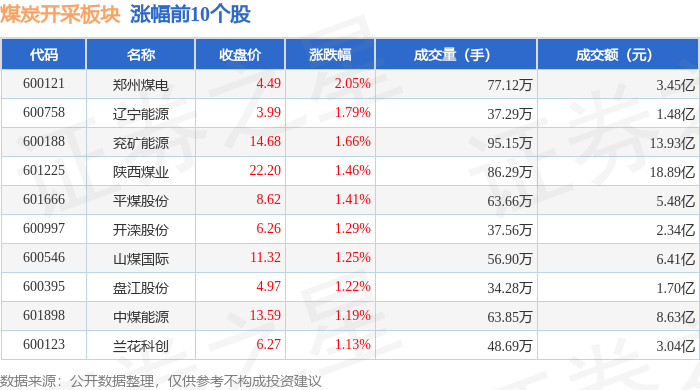
Group 1 - The coal mining sector increased by 0.45% on January 29, with Zhengzhou Coal Power leading the gains [1] - The Shanghai Composite Index closed at 4157.98, up 0.16%, while the Shenzhen Component Index closed at 14300.08, down 0.3% [1] - Key stocks in the coal mining sector showed various performance metrics, with Zhengzhou Coal Power closing at 4.49, up 2.05%, and trading volume of 771,200 shares [1] Group 2 - The coal mining sector experienced a net outflow of 475 million yuan from major funds, while retail investors saw a net inflow of 444 million yuan [2] - The table of individual stock performances indicates significant variations in trading volumes and price changes, with Jiangxi Tungsten Equipment showing the largest decline at -7.07% [2] - The overall market sentiment in the coal mining sector reflects mixed investor behavior, with major funds withdrawing while retail investors are actively buying [3]


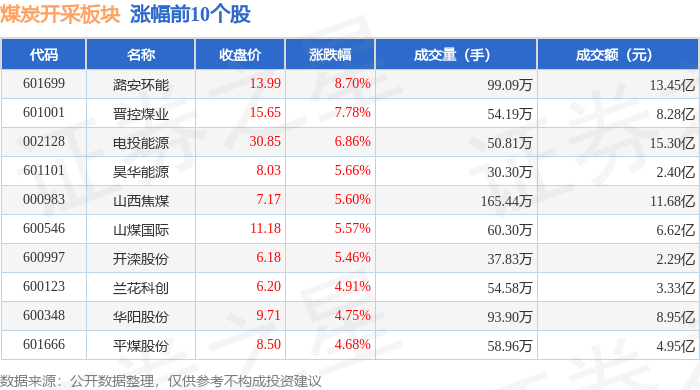
煤炭开采板块1月28日涨2.79%,潞安环能领涨,主力资金净流入7.96亿元
Zheng Xing Xing Ye Ri Bao· 2026-01-28 09:04
从资金流向上来看,当日煤炭开采板块主力资金净流入7.96亿元,游资资金净流出5252.34万元,散户资 金净流出7.44亿元。煤炭开采板块个股资金流向见下表: | 代码 | 名称 | 主力净流入(元) | 主力净占比 游资净流入 (元) | | 游资净占比 散户净流入(元) | | 散户净占比 | | --- | --- | --- | --- | --- | --- | --- | --- | | 600157 | 永泰能源 | 2.71亿 | 10.66% | -1.42 乙 | -5.56% | -1.30 Z | -5.10% | | 600348 | 天明服务 | 1.26 Z | 14.12% | -7234.67万 | -8.08% | -5408.74万 | -6.04% | | 000983 山西焦煤 | | C 1.01亿 | 8.62% | 1546.92万 | 1.32% | -1.16 Z | -9.94% | | 601225 | 陕西煤业 | 8144.38万 | 3.72% | 1.06亿 | 4.82% | -1.87 亿 | -8.54% | | 601898 中煤能源 | ...


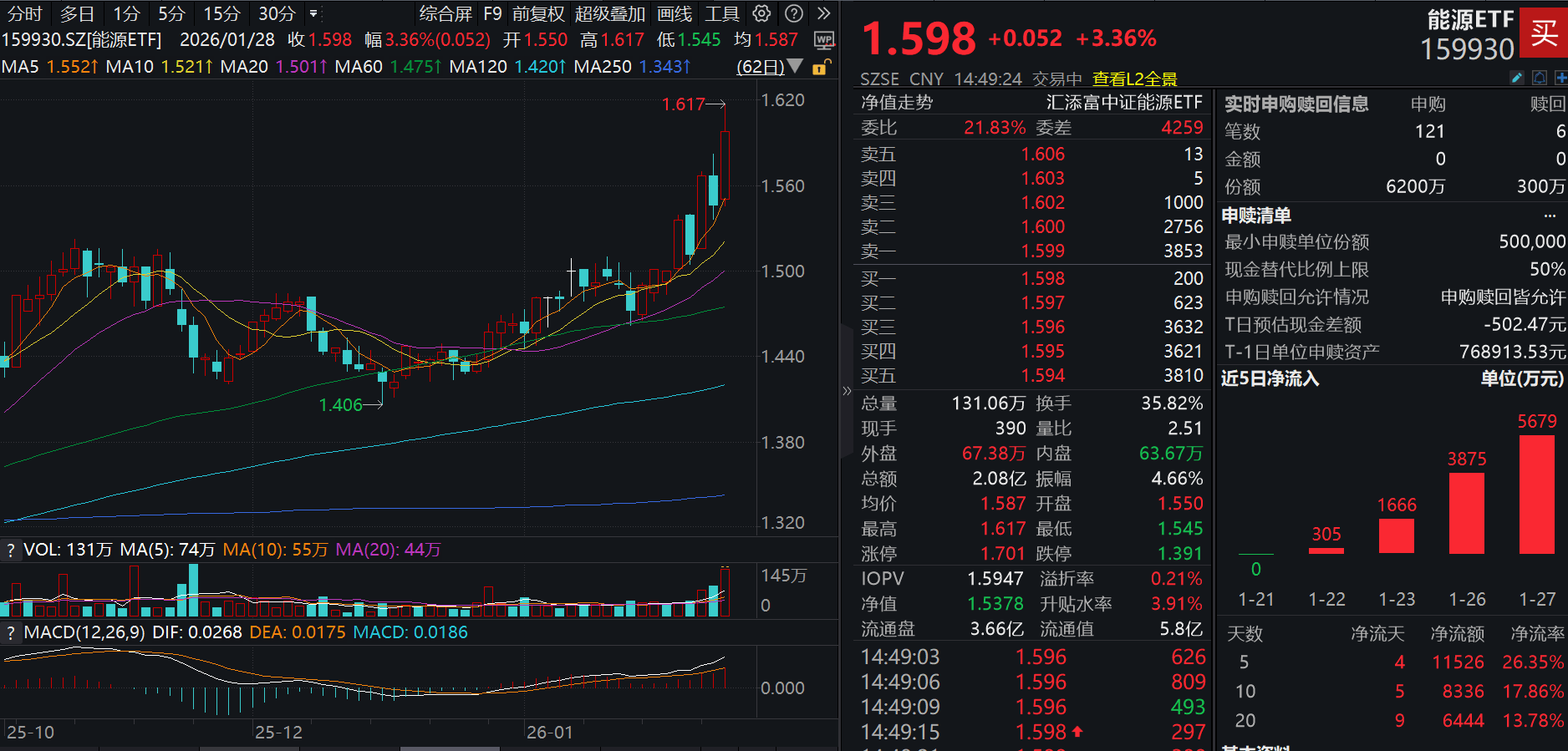
“三桶油”集体冲高,中国海油涨超7%再创新高,能源ETF(159930)飙升涨超3%,连续5日吸金超2亿元!机构:油价或已进入筑底反弹阶段!
Sou Hu Cai Jing· 2026-01-28 07:22
Core Viewpoint - The energy sector, particularly oil and coal, is experiencing significant upward momentum, with substantial capital inflows into energy ETFs, indicating strong investor interest and potential for growth [1][3]. Group 1: Market Performance - As of January 28, energy ETFs (159930) surged by 3.36%, attracting over 94 million yuan in capital, marking a total net inflow of over 200 million yuan over the past five days [1]. - Key stocks within the energy ETF saw varied performance, with China National Offshore Oil Corporation and Jereh Group both rising over 7%, while Shanxi Coking Coal and China Petroleum also posted gains [2][3]. Group 2: Component Stocks - The top ten component stocks of the energy ETF include: - China National Petroleum (3.16% increase, 15.06% weight) - China Shenhua Energy (1.43% increase, 14.26% weight) - China Petroleum & Chemical Corporation (0.16% increase, 12.09% weight) - Shaanxi Coal and Chemical Industry (2.76% increase, 10.82% weight) - Other notable stocks include Jereh Group and Shanxi Coking Coal, both showing significant gains [4]. Group 3: Oil Market Insights - According to Huatai Securities, geopolitical factors have led to a rebound in oil prices during the off-season, with Brent crude oil prices expected to average $65 per barrel by mid-2026, up from a previous estimate of $62 [5]. - The report suggests that energy companies with the ability to increase production and reduce costs may present attractive investment opportunities as oil prices stabilize [5]. Group 4: Coal Market Insights - According to Kaiyuan Securities, coal prices are at historical lows, providing room for a rebound, especially with supply-side policies constraining production and increased demand during the heating season [6]. - The report indicates that both thermal and coking coal prices have upward elasticity, with the coal sector poised for improvement as the market conditions shift [6].