CPIC(601601)

Search documents
大行评级丨高盛:上调中国太保目标价至34港元 维持“买入”评级
Ge Long Hui· 2025-11-10 07:31
Core Viewpoint - Goldman Sachs updated its forecasts following the third-quarter performance announcement of China Pacific Insurance, raising the net profit forecast for fiscal year 2025 by 11% [1]. Financial Performance - The profit forecasts for fiscal years 2026 and 2027 were adjusted slightly upward by 2% to 3% [1]. - The book value growth in the third quarter was below expectations, leading to a 2% downward revision of shareholder equity forecasts for fiscal years 2025 to 2027 [1]. New Business Value - The new business value forecasts for fiscal years 2025 to 2027 were increased by 7% to 11%, reflecting a sustained expansion in profit margins for fiscal year 2025 and a positive outlook for new policy sales in fiscal years 2026 and 2027 [1]. Target Price and Rating - The target price was raised from HKD 32.5 to HKD 34, while maintaining a "Buy" rating [1].

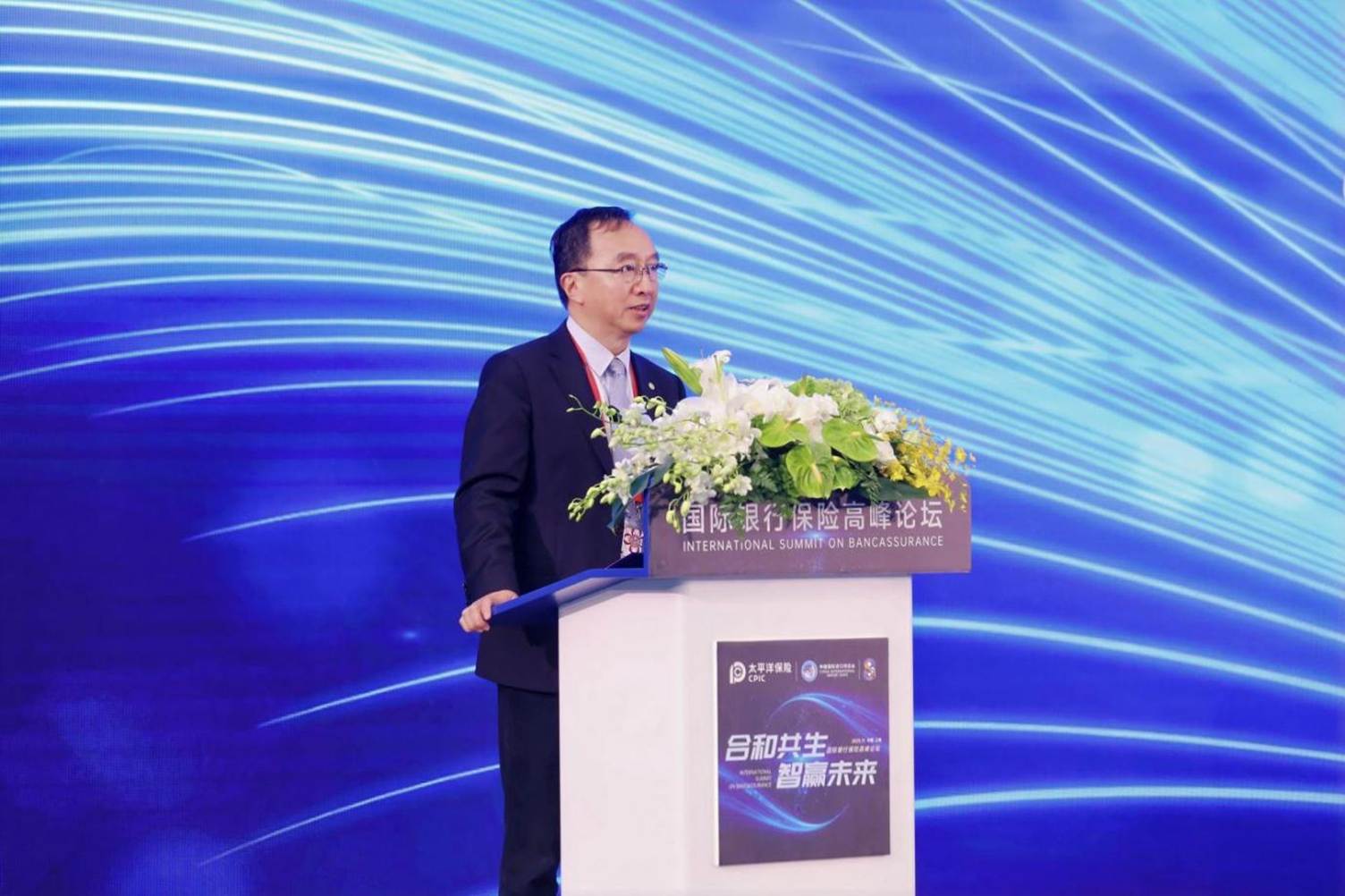
中国太保寿险在沪举办国际银行保险高峰论坛
Zhong Guo Jin Rong Xin Xi Wang· 2025-11-10 07:28
Core Insights - The forum focused on the integration of banking and insurance sectors, emphasizing high-quality development paths for collaboration in the context of building a strong financial nation [1][3] - China Pacific Insurance (CPIC) highlighted the significant contribution of the bancassurance channel, with personal insurance premiums exceeding 4 trillion yuan in recent years [1] Group 1: Strategic Collaboration - CPIC's Chairman Fu Fan advocated for a "symbiotic" strategic collaboration, leveraging the unique advantages of bancassurance to align with national strategies and meet public needs [3] - The shift in bancassurance cooperation from "channel collaboration" to "ecosystem integration" was emphasized, indicating broader development opportunities [3] Group 2: Service Innovations - CPIC launched the "China Pacific Bancassurance Service System," which includes the "Nanshan Residence" home care service brand and the "Jianxiangjia" insurance plus service model [5] - The "Nanshan Residence" service employs a multidisciplinary care approach, providing comprehensive home care through a team of various healthcare professionals [5] Group 3: Digital Transformation - The introduction of the "China Pacific Bancassurance Digital Customer Experience Solution" aims to enhance efficiency and customer experience by connecting online and offline touchpoints [5] - The forum featured insights from representatives of Swiss Re and Dutch global insurance groups on European bancassurance market trends and successful collaboration models [5]

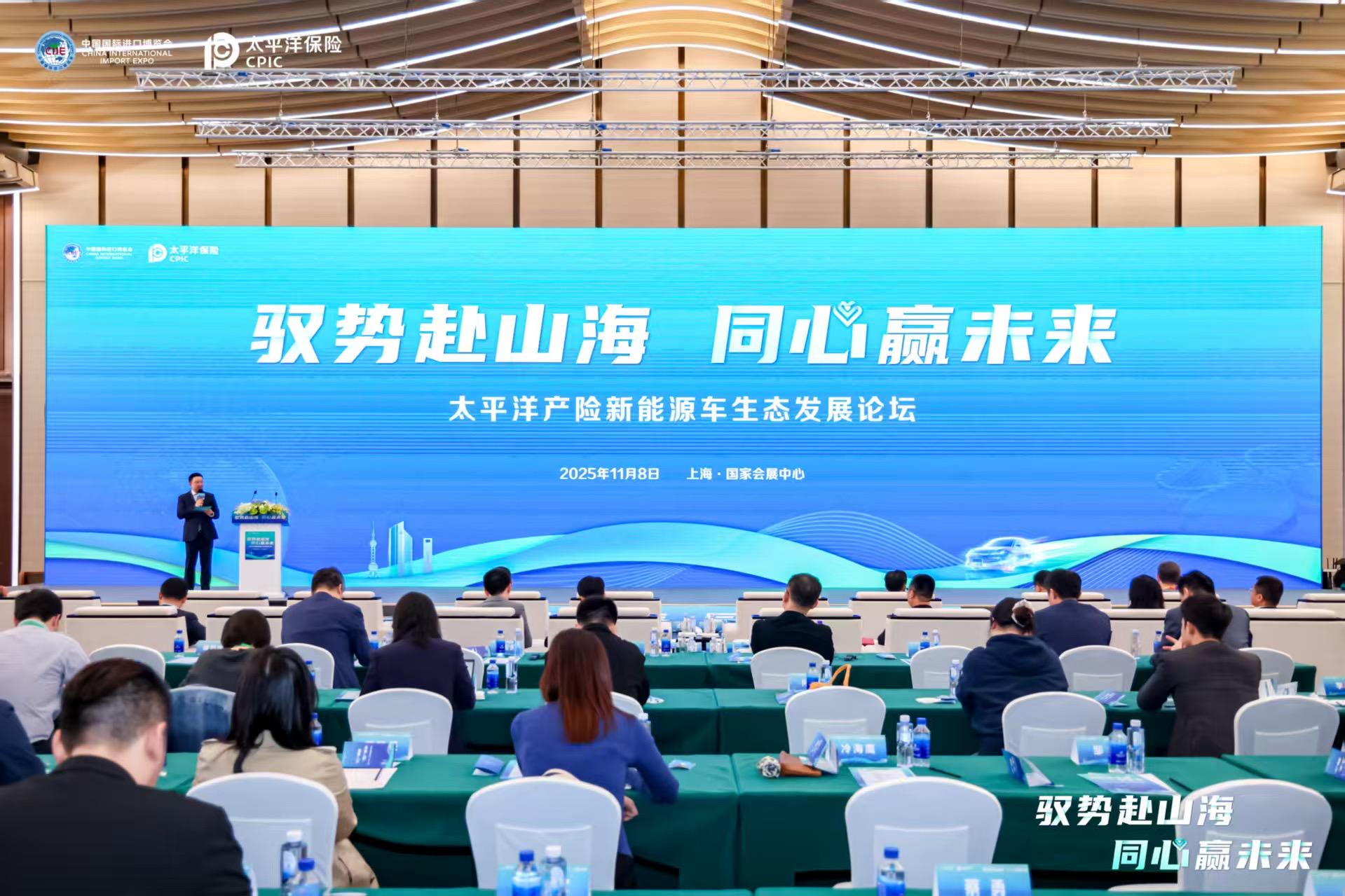
中国太保产险在沪举办新能源车生态发展论坛
Zhong Guo Jin Rong Xin Xi Wang· 2025-11-10 06:05
Core Viewpoint - The forum organized by China Pacific Insurance (CPIC) at the China International Import Expo focused on the development trends of the new energy vehicle (NEV) industry and the collaboration between the insurance sector and NEV companies to support their international expansion [1][3]. Group 1: Forum Highlights - The forum gathered representatives from automotive associations, vehicle manufacturers, insurance partners, and research institutions to discuss the overseas market expansion of Chinese NEVs, risk protection for intelligent driving, and the construction of a service ecosystem for vehicle owners [1][3]. - Key outcomes included the launch of the group standard for "Combination Driving Assistance and Conditional Autonomous Driving Accident Definition and Data Collaboration Technology Specification" and the introduction of CPIC's "Three Hearts" service [3]. - Strategic partnerships were formed with multiple collaborators, showcasing practical measures and positive results in empowering the industry through financial services and supporting international ventures [3]. Group 2: Industry Trends - The Chinese NEV industry is accelerating towards greening, intelligence, and internationalization, positioning itself as a significant representative of "Chinese Intelligent Manufacturing" [4]. - CPIC, as a leading comprehensive insurance group in China, aligns closely with industry innovation and global expansion trends by continuously innovating products, services, technologies, and cooperation models [4]. - The forum served as a high-level platform for industry dialogue, fostering consensus and actively supporting national strategies to assist Chinese NEV companies in their high-quality internationalization efforts [4].
华源证券:维持中国太保“买入”评级,看好26年全年和开门红的新单销售
Xin Lang Cai Jing· 2025-11-10 05:48
Core Viewpoint - China Pacific Insurance's revenue and net profit attributable to shareholders for Q3 2025 increased by 24.6% and 35.2% year-on-year, reaching 144.4 billion and 17.8 billion yuan respectively, indicating strong growth momentum [1] Financial Performance - The cumulative revenue and net profit attributable to shareholders for the first three quarters of 2025 grew by 11.1% and 19.3% year-on-year [1] - The cumulative operating profit attributable to shareholders as of the end of Q3 increased by 7.4%, showing an acceleration compared to the 7.1% growth rate reported in the mid-year [1] - As of the end of September, the group's net assets attributable to shareholders decreased by 2.5% from the beginning of the year to 284.2 billion yuan [1] Business Segments - The cumulative year-on-year growth rate of new business value (NBV) for life insurance in the first three quarters was 31.2% [1] - The comprehensive cost ratio for property insurance improved by 1 percentage point year-on-year to 97.6% [1] Market Outlook - The company is optimistic about the new single sales for the full year of 2026 and the "opening red" sales [1] - The current growth model for the company's agent channel is increasingly focused on wealth management and health protection needs for mid-to-high-end clients [1] - The current price-to-embedded value (PEV) ratios are 0.54, 0.48, and 0.43 times, maintaining a "buy" rating [1]
研报掘金丨华源证券:维持中国太保“买入”评级,看好26年全年和开门红的新单销售
Ge Long Hui A P P· 2025-11-10 05:48
Core Viewpoint - China Pacific Insurance's revenue and net profit attributable to shareholders for Q3 2025 are projected to grow by 24.6% and 35.2% year-on-year, reaching 144.4 billion and 17.8 billion yuan respectively, indicating a strong performance in the insurance sector [1] Financial Performance - For the first three quarters of 2025, cumulative revenue and net profit attributable to shareholders are expected to increase by 11.1% and 19.3% year-on-year [1] - The cumulative operating profit attributable to shareholders as of the end of Q3 grew by 7.4%, showing an acceleration compared to the 7.1% growth rate reported in the mid-year results [1] - As of the end of September, the group's net assets attributable to shareholders decreased by 2.5% from the beginning of the year, totaling 284.2 billion yuan [1] Business Segments - The cumulative year-on-year growth rate of new business value (NBV) for life insurance in the first three quarters is 31.2% [1] - The comprehensive cost ratio for property insurance improved by 1 percentage point to 97.6% year-on-year, reflecting better operational efficiency [1] Market Outlook - The company is optimistic about the new single sales for the full year of 2026 and the upcoming "opening red" period [1] - The primary growth model for the company's agent channel is currently focused on wealth management and health protection needs for high-net-worth clients [1] - The current price-to-embedded value (PEV) ratios are 0.54, 0.48, and 0.43, maintaining a "buy" rating for the stock [1]
A股保险股午后走强,新华保险涨超2%
Mei Ri Jing Ji Xin Wen· 2025-11-10 05:45
Group 1 - A-shares in the insurance sector experienced a strong afternoon rally on November 10, with New China Life Insurance rising over 2% [1] - Other concept stocks such as China Pacific Insurance, China Life Insurance, and China People's Insurance also saw widespread gains [1]


驭势赴山海,同心赢未来:中国太保产险 成功举办新能源车生态发展论坛
2 1 Shi Ji Jing Ji Bao Dao· 2025-11-10 05:32
Core Insights - The forum titled "Harnessing Trends for Future Success" focused on the development of the new energy vehicle (NEV) ecosystem, emphasizing the collaboration between the insurance industry and NEV manufacturers to support international expansion [1][3] - China Pacific Insurance (CPIC) aims to build a comprehensive risk protection system covering the entire NEV industry chain, aligning with national strategies and promoting high-quality economic development [1][3] Group 1: Forum Highlights - The forum gathered representatives from automotive associations, manufacturers, insurance partners, and research institutions to discuss trends in the NEV industry and explore financial insurance services for NEV internationalization [1][3] - Key outcomes included the launch of the "Guidelines for Defining Accidents Involving Combined Driving Assistance and Conditional Autonomous Driving" and the introduction of CPIC's "Three Hearts" service, showcasing the integration of financial services with industry needs [3] Group 2: Industry Collaboration - Discussions centered on the internationalization opportunities for NEVs and the collaborative ecosystem necessary for success, with insights shared on overseas market conditions and trends [3][4] - CPIC highlighted its technological innovations and service upgrades in the NEV insurance sector, demonstrating its commitment to supporting Chinese automotive companies in their global endeavors [3] Group 3: Customer Experience Innovation - The forum addressed the construction of a safety and service guarantee system that covers the entire lifecycle of users, focusing on enhancing customer experience from the perspective of automotive companies [3] - CPIC shared its innovative practices in customer management and service models, reflecting a customer-centric approach and systematic exploration of the insurance service framework [3]
驭势赴山海,同心赢未来:中国太保产险成功举办新能源车生态发展论坛
Guo Ji Jin Rong Bao· 2025-11-10 04:10
Core Insights - The forum titled "Harnessing Trends for Future Success" focused on the development of the new energy vehicle (NEV) ecosystem, emphasizing the collaboration between the insurance industry and NEV manufacturers to support international expansion [1][3] - China Pacific Insurance (CPIC) aims to build a comprehensive risk protection system covering the entire NEV industry chain, aligning with national strategies and promoting high-quality economic development [1][4] Group 1: Forum Highlights - The forum gathered representatives from automotive associations, manufacturers, insurance partners, and research institutions to discuss trends in the NEV industry and explore financial insurance services for NEV internationalization [1][3] - Key outcomes included the launch of the "Guidelines for Defining Accidents Involving Combined Driving Assistance and Conditional Autonomous Driving" and the introduction of CPIC's "Three Hearts" service, showcasing the integration of financial services with industry needs [3][4] Group 2: Industry Collaboration - Discussions centered on the opportunities for international development of NEVs and the collaborative ecosystem necessary for success, with insights shared on global market trends and challenges [3][4] - CPIC highlighted its commitment to supporting Chinese automotive companies in their global strategies through technological innovation and service upgrades in the NEV insurance sector [4]
2025年中国UBI车险行业定义、产业链、市场规模、竞争格局及趋势研判:车联网技术赋能保险创新,UBI车险市场前景广阔[图]
Chan Ye Xin Xi Wang· 2025-11-10 00:59
Core Insights - The UBI auto insurance industry in China is experiencing steady growth driven by both policy support and market demand for fair pricing and personalized services [1][10] - The market size is projected to grow from 10.238 billion yuan in 2021 to 13.249 billion yuan in 2024, with a compound annual growth rate (CAGR) of 8.97% [1][10] - By 2025, the market size is expected to reach 14.322 billion yuan, indicating UBI's role in optimizing the auto insurance market structure and upgrading services [1][10] Industry Overview - UBI auto insurance is defined as insurance based on driving behavior, utilizing connected devices to analyze driver habits, vehicle information, and environmental data for pricing [3][8] - The industry has evolved from basic mileage-based pricing to a comprehensive smart protection system that includes driving behavior analysis and real-time risk warnings [1][10] Market Dynamics - The Chinese government has implemented various policies to stimulate the automotive market, including tax exemptions and subsidies for new energy vehicles, which have increased car ownership from 172 million in 2015 to 353 million in 2024, with a CAGR of 8.32% [8][10] - The shift from traditional insurance pricing models to UBI products reflects the need for more accurate risk assessment based on actual driving behavior [8][10] Industry Chain - The UBI insurance industry chain includes hardware suppliers (sensors, OBD devices, GPS modules), traditional and internet insurance companies, and technology firms providing end-to-end solutions [8][9] - Sales channels have shifted towards online platforms, enhancing user experience with features like instant claims and accident detection [8][9] Competitive Landscape - The global UBI insurance market is dominated by major North American and European insurers, while Chinese companies like China Life, Ping An, and China Pacific Insurance are actively entering the UBI space [10][11] - The competitive landscape is characterized by three tiers: leading global insurers, large domestic firms, and numerous regional and emerging tech companies [10][11] Future Trends - The UBI industry is expected to undergo significant transformations, including multi-dimensional changes in technology, service models shifting towards platform ecosystems, and product innovations focusing on personalization and social engagement [14][15] - The integration of advanced data collection methods and real-time pricing models will enhance risk assessment and customer experience [14][15]


五大险企前三季赚4260亿增33.5% 总投资收益8875亿资产负债两端共振
Chang Jiang Shang Bao· 2025-11-09 23:27
Core Insights - The five major listed insurance companies in A-shares achieved a total operating income of 2.37 trillion yuan, a year-on-year increase of 13.6%, and a net profit attributable to shareholders of 426.04 billion yuan, growing by 33.5% compared to the same period last year [2][3] - In the third quarter alone, these companies reported a net profit of 247.8 billion yuan, marking a significant year-on-year growth of 68% [2][3] Investment Performance - The total investment income of the five major insurance companies reached 887.5 billion yuan in the first three quarters of 2025, reflecting a year-on-year increase of 35.64% [6] - As of September 2025, the total investment asset scale of these companies reached 20.26 trillion yuan [7] Life Insurance Sector - The new business value of life insurance maintained rapid growth, with notable increases in first-year premium income and business quality [8] - Companies are actively optimizing product structures and transitioning towards dividend insurance to balance interest rate risks and stabilize returns [8] Property Insurance Sector - The three major property insurance companies achieved a total premium income of 859.635 billion yuan, with a year-on-year growth of 3.8% [9] - The combined loss ratio for these companies improved, with respective ratios of 96.1%, 97%, and 97.6%, reflecting a year-on-year optimization [10]