PETROCHINA(601857)

Search documents
中国石油取得水驱前缘刻画方法专利
Sou Hu Cai Jing· 2026-01-30 03:20
Group 1 - The State Intellectual Property Office of China has granted a patent to China National Petroleum Corporation (CNPC) for a method, device, equipment, and medium related to "water drive front edge characterization," with the announcement number CN116927732B and an application date of April 2022 [1] - CNPC, established in 1990 and headquartered in Beijing, primarily engages in oil and natural gas extraction, with a registered capital of 48.69 billion RMB [1] - CNPC has made investments in 109 companies, participated in 5,000 bidding projects, holds 1,439 trademark records, and has 5,000 patent records, along with 28 administrative licenses [1] Group 2 - China National Petroleum Group Logging Company, founded in 2002 and located in Xi'an, focuses on extraction-related professional and auxiliary activities, with a registered capital of 223.498 million RMB [1] - The logging company has invested in 3 enterprises, participated in 5,000 bidding projects, holds 19 trademark records, and has 1,726 patent records, along with 558 administrative licenses [1]

港股开盘 | 恒指低开0.65% 油气板块走强 中国石油(00857)涨近2%
智通财经网· 2026-01-30 01:36
Group 1 - The Hang Seng Index opened down 0.65% and the Hang Seng Tech Index fell 0.88%, while the oil and gas sector showed strength with China Petroleum rising nearly 2% [1] - Huatai Securities noted that the Hang Seng Index reached a new high since 2021, surpassing 27,800 points, driven by a balance of new and old economy growth under the influence of both domestic and foreign capital [1] - The first quarter is expected to provide further space for the Hong Kong stock market, with a recommendation to adopt an investment mindset rather than a speculative one, particularly from the Lunar New Year to March [1] Group 2 - CITIC Securities indicated that the performance expectations adjustment that led to the decline of Hong Kong stocks in Q4 2025 has come to an end, with an average return of 2.4% during the spring rally from 2015 to 2025 [2] - The focus on the "14th Five-Year Plan" and the direction of the Central Economic Work Conference is recommended as local two sessions are held, with expectations for large-cap stocks to outperform before the Lunar New Year and small-cap stocks to perform better afterward [2] - China Merchants International highlighted that the beginning of the year is a performance vacuum period, with high growth expectations in the new economy boosting market confidence, and the appreciation of the RMB benefiting Hong Kong stocks [2]
渤海钻探井下技服公司提效能 井下作业公司激活创效动力
Zhong Guo Hua Gong Bao· 2026-01-30 01:28
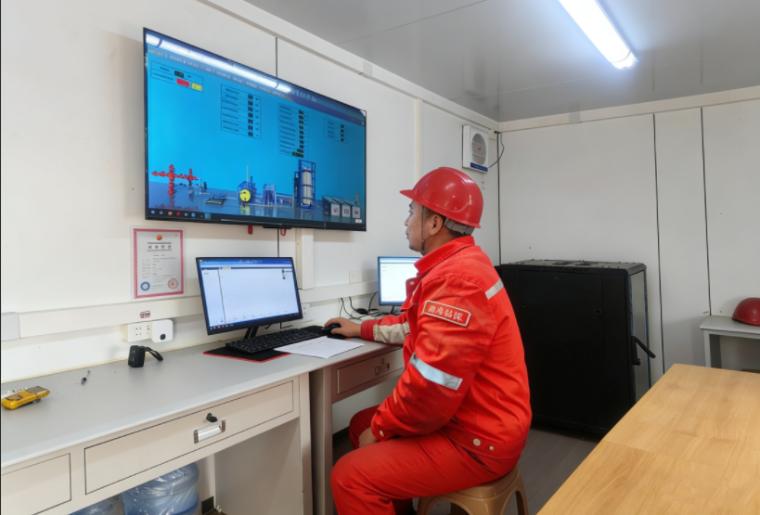
Core Viewpoint - The company is actively implementing cost reduction and efficiency enhancement strategies through various practical measures, including inventory management, equipment innovation, and digital platform utilization [1] Group 1: Cost Reduction Strategies - The company emphasizes a "tight budget" approach, focusing on maximizing resource utilization and minimizing costs through self-repair and resource activation [3] - By completing repairs on equipment such as heating furnace heads and sewage pumps, the company has avoided production disruptions and saved 18% on external repair and new equipment procurement costs [3] - The company plans to promote the "self-repair" model across all regions to optimize resource allocation and reduce operational costs [3] Group 2: Equipment Innovation - The company is enhancing safety and efficiency by optimizing equipment configurations, particularly in areas with high safety risks [4] - A total of 12 self-standing safety valve control systems have been replaced with electric controls, improving operational efficiency and standardization [4] - The implementation of a "separator trial + automatic liquid discharge device" combination process has reduced maintenance costs and addressed safety issues in pipeline operations [4] Group 3: Digital Management Advancement - The company is focusing on digital transformation by advancing the automation of testing and production platforms [5] - The successful application of an integrated measurement and control system in multiple platforms allows for precise liquid measurement and comprehensive environmental monitoring [5] - The system's integration with safety control units enhances emergency response efficiency by 30%, reducing labor intensity and improving safety levels [5] Group 4: Experience Sharing and Innovation - The company held a report meeting to share experiences on market expansion, technological innovation, and cost control among its grassroots units [6] - A resource-sharing and surplus material recovery system has been established to reduce redundancy and waste, leading to a reduction of 2.09 million yuan in material costs compared to the previous year [8] - The introduction of an integrated geological service model has significantly improved production and cost control in specific oil fields, gaining recognition from stakeholders [8]

股票市场概览:资讯日报:美联储维持利率不变,符合市场普遍预期-20260129
Guoxin Securities Hongkong· 2026-01-29 11:58
Market Overview - The Federal Reserve maintained the federal funds rate target range at 3.5%-3.75%, aligning with market expectations[9] - The Hang Seng Index closed at 27,827, down 2.58% for the day but up 8.57% year-to-date[3] - The S&P 500 index closed at 6,978, with a slight decrease of 0.01% for the day and a year-to-date increase of 1.94%[3] Stock Performance - Gold prices surged, with spot gold exceeding $5,280 per ounce, marking a monthly increase of over 22%[9] - Semiconductor stocks saw significant gains, with the Philadelphia Semiconductor Index rising by 2.34%[9] - Major tech stocks showed mixed results, with Intel up 11.04% and Microsoft down 6% post-earnings report[9] Sector Highlights - Oil stocks continued to rise, with Shanghai Petrochemical gaining over 5% due to geopolitical tensions driving oil prices up by 3%[9] - New consumer concept stocks performed well, with a snack retail chain soaring 69% on its debut[9] - Airline stocks faced pressure, with China Southern Airlines down 6.83% due to rising operational costs[9] Economic Indicators - The U.S. dollar index fell to 95.51, the lowest since February 2022, contributing to the rise in gold prices[9] - The Japanese yen strengthened, impacting export-related stocks negatively, with Toyota down 3.24%[13] - The Bank of Japan raised its policy rate to 0.75%, the highest in 30 years, indicating a cautious approach to future rate hikes[13]



太猛了!加快轮动了
Ge Long Hui· 2026-01-29 11:49
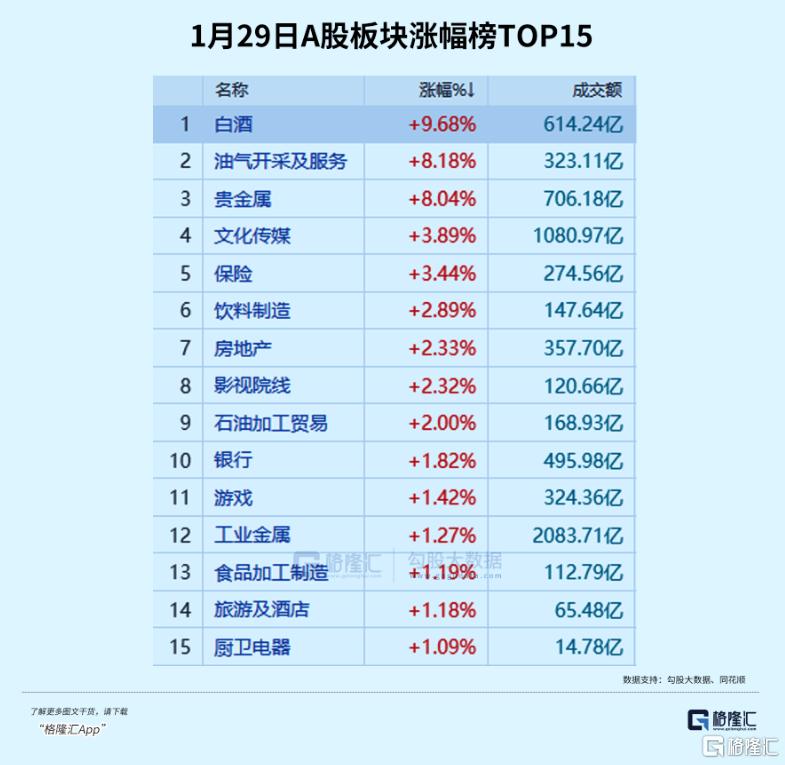
Group 1: Market Performance - The A-share liquor sector experienced a significant surge, with a rise of 9.68% on January 29, leading the market performance for the day [1][2] - The oil and gas extraction and service sector also saw a notable increase of 8.18%, with a total transaction volume of 32.31 billion [2] - The precious metals sector rose by 8.04%, with a transaction volume of 70.62 billion, indicating strong market interest [2] Group 2: Energy and Petrochemical Sector Dynamics - The energy and petrochemical sector's rise began in early January 2026, with domestic crude oil futures rebounding from 411 yuan/barrel to 475 yuan/barrel, a 15% increase [4] - The oil and gas extraction and service sector has accumulated a remarkable increase of 44.22% year-to-date, ranking second in market performance, only behind precious metals [7] - The petrochemical ETF (159731) has shown a cumulative increase of 14.71% since the beginning of the year, reflecting strong investor interest [9] Group 3: Geopolitical and Economic Influences - The recent surge in the petrochemical sector is driven by escalating geopolitical tensions, particularly between the U.S. and Iran, raising concerns over oil supply stability [11] - The market has priced in a risk premium of $3-8 per barrel due to fears of potential disruptions in oil supply from Iran, which produces approximately 3.3 million barrels per day [11] - The classic rotation pattern in commodity markets, where precious metals lead, followed by industrial metals and then energy, is being validated again [14][16] Group 4: Agricultural Sector Insights - The agricultural sector is expected to gain market attention as commodity prices rise, driven by increased costs in agricultural production due to higher energy prices [17][24] - The CPI and food prices have shown signs of recovery, with the CPI rising by 0.8% year-on-year, indicating a potential shift in consumer price dynamics [18] - The agricultural ETF (516810) tracks a comprehensive index covering the entire agricultural value chain, which may benefit from the rising commodity prices [26] Group 5: Industry Outlook - The petrochemical industry is at a turning point, with new policies aimed at preventing excessive competition and improving profitability [22] - The capital expenditure ratios in the refining and chemical sectors are showing a trend towards conservatism, indicating a strategic shift among companies [23] - The anticipated recovery in the petrochemical sector is supported by both geopolitical factors and the broader commodity market dynamics, suggesting a favorable outlook for industry leaders [24][25]



中国石油与国家电网股权合作获批
Zhong Guo Jing Ying Bao· 2026-01-29 10:36
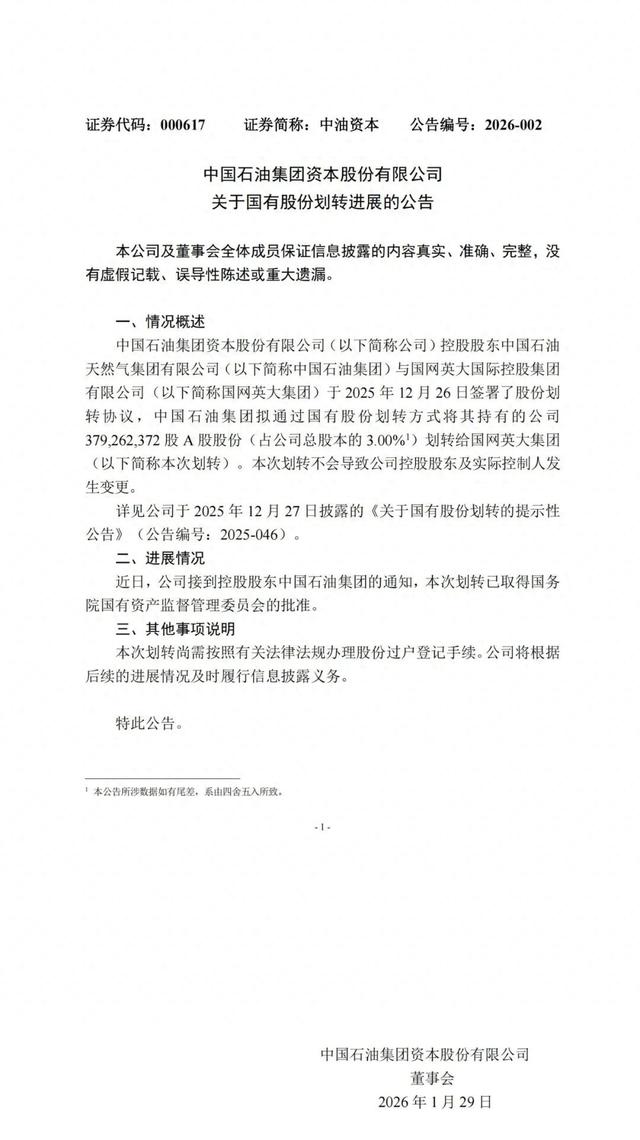
Group 1 - The core point of the article is the announcement by State Grid's financial subsidiary, State Grid Yingda (600517.SH), regarding the sale of its 100% stake in Yingda Futures to China National Petroleum Corporation Capital (000617.SZ) for 1.129 billion yuan [1] - The transaction has received approval from the State-owned Assets Supervision and Administration Commission of the State Council, but still requires approval from the China Securities Regulatory Commission for the qualification of China National Petroleum Corporation Capital as the controlling shareholder of Yingda Futures [1] - Prior to this transaction, a share transfer agreement was signed on December 26, 2025, between China National Petroleum Corporation and State Grid Yingda International Holdings Group, where 379 million A-shares (3.00% of total shares) of China National Petroleum Corporation Capital were transferred to State Grid Yingda International Holdings Group [1]


炼化及贸易板块1月29日涨1.06%,润贝航科领涨,主力资金净流出2.41亿元
Zheng Xing Xing Ye Ri Bao· 2026-01-29 09:00
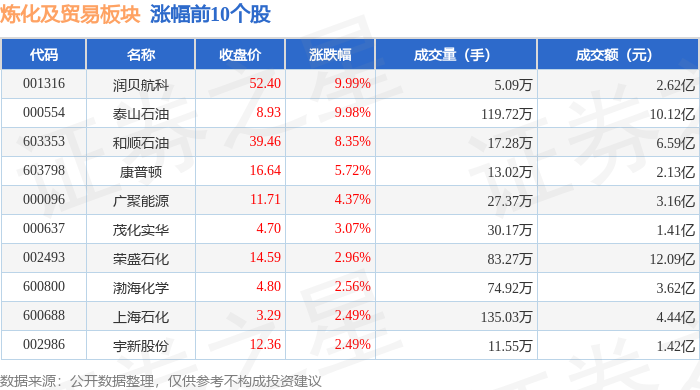
Group 1 - The refining and trading sector increased by 1.06% on January 29, with Runbei Hangke leading the gains [1] - The Shanghai Composite Index closed at 4157.98, up 0.16%, while the Shenzhen Component Index closed at 14300.08, down 0.3% [1] - Key stocks in the refining and trading sector showed significant price increases, with Runbei Hangke rising by 9.99% to a closing price of 52.40, and Taishan Petroleum increasing by 9.98% to 8.93 [1] Group 2 - The refining and trading sector experienced a net outflow of 241 million yuan from main funds, while retail funds saw a net inflow of 528 million yuan [2] - The stock performance of major companies showed varied results, with China Petroleum having a net inflow of 2.44 million yuan from main funds, while Rongsheng Petrochemical faced a net outflow of 1.35 million yuan [3] - Runbei Hangke had a significant net inflow of 84.16 million yuan from main funds, despite a net outflow of 48.39 million yuan from retail investors [3]

国资委批准中国石油与国家电网股权合作
Bei Jing Ri Bao Ke Hu Duan· 2026-01-29 07:52
Group 1 - The core point of the announcements is the progress of state-owned share transfer and the acquisition of 100% equity of Yingda Futures by China Petroleum Capital Co., Ltd. [1] Group 2 - China Petroleum Group, the controlling shareholder of China Petroleum Capital, signed a share transfer agreement with State Grid Yingda Group on December 26, 2025, to transfer 379,262,372 A-shares, representing 3.00% of the total share capital, to State Grid Yingda Group [1] - The share transfer has received approval from the State-owned Assets Supervision and Administration Commission of the State Council [1] Group 3 - China Petroleum Capital plans to acquire 100% equity of Yingda Futures from Yingda Securities Co., Ltd. for a price of RMB 1,129,286,232.00 [1] - The qualification of China Petroleum Capital as the controlling shareholder of Yingda Futures is subject to approval from the China Securities Regulatory Commission, indicating uncertainty regarding the successful implementation of the transaction [1]
2025年中国石油焦产量为3172.7万吨 累计下降2.8%
Chan Ye Xin Xi Wang· 2026-01-29 03:49
Core Viewpoint - The report highlights the trends and investment potential in China's petroleum coke industry from 2026 to 2032, indicating a projected increase in production despite a slight decline in cumulative output for 2025 [1] Industry Summary - According to the National Bureau of Statistics, China's petroleum coke production in December 2025 is expected to reach 2.96 million tons, representing a year-on-year growth of 9.1% [1] - The cumulative production of petroleum coke in China for the year 2025 is projected to be 31.73 million tons, showing a cumulative decrease of 2.8% [1] - The report is based on extensive industry research and aims to provide insights for investment decisions in the petroleum coke sector [1] Company Summary - Listed companies in the petroleum coke sector include Huajin Co., Ltd. (000059), Yuanxing Energy (000683), Shanghai Petrochemical (600688), Huaxi Energy (002630), Wanhua Chemical (600309), Hengli Petrochemical (600346), Rongsheng Petrochemical (002493), Xin'ao Co., Ltd. (600803), and China National Petroleum Capital (000617) [1]

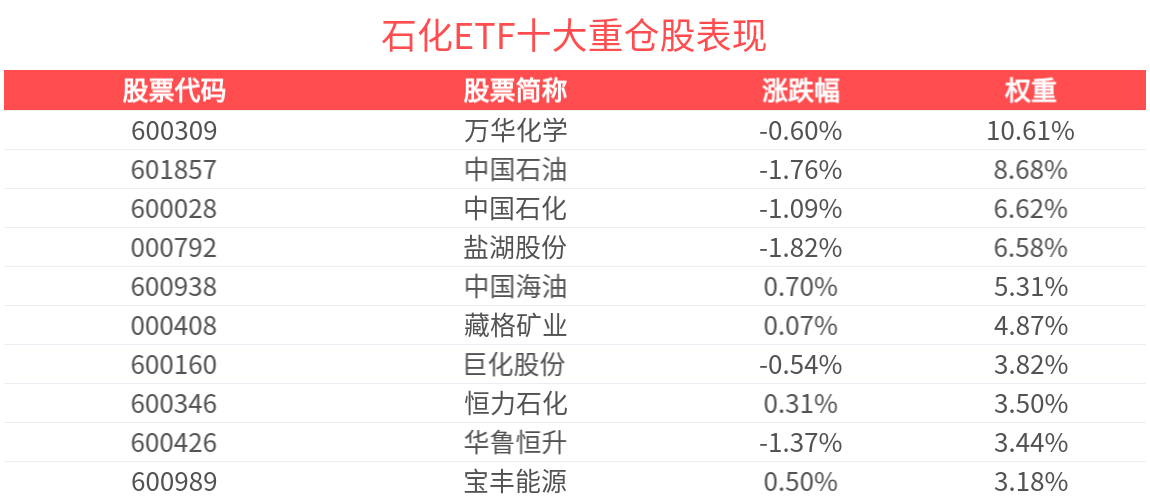
成交额超2亿元,石化ETF(159731)连续16天净流入
Sou Hu Cai Jing· 2026-01-29 02:16
Core Viewpoint - The petrochemical sector is experiencing mixed performance, with the China Petroleum and Chemical Industry Index showing a slight decline, while the Petrochemical ETF has seen significant inflows and growth in net value over the past two years [1][2]. Group 1: Market Performance - As of January 29, 2026, the China Petroleum and Chemical Industry Index decreased by 0.27%, with stocks like Sankeshu and Zhongfu Shenying leading gains, while companies like Hebang Bio and China Petroleum faced declines [1]. - The Petrochemical ETF (159731) fell by 0.47%, with a latest price of 1.05 yuan and a trading volume of 2.12 billion yuan, indicating active market participation with a turnover rate of 17.99% [1]. Group 2: Fund Flows and Performance Metrics - The Petrochemical ETF has seen continuous net inflows for 16 days, totaling 838 million yuan, with the latest share count reaching 1.106 billion and a total scale of 1.166 billion yuan, marking a new high [2]. - Over the past two years, the net value of the Petrochemical ETF has increased by 66.80%, with the highest single-month return recorded at 15.86% and the longest consecutive monthly gain spanning 8 months, achieving a maximum increase of 41.6% [2]. - The average return during the rising months of the Petrochemical ETF is 5.25%, and as of January 23, 2026, the one-year Sharpe ratio stands at 2.22 [2]. Group 3: Industry Trends and Outlook - According to Guosen Securities, the petrochemical sector is strictly implementing capacity reduction and replacement requirements for new refining projects, focusing on upgrading old facilities and demonstrating new technologies [2]. - The refining capacity in China is approaching the policy threshold of 1 billion tons, leading to the gradual consolidation and elimination of smaller capacities, while larger refineries are expected to increase their market share, optimizing the industry structure [2]. - With limited growth in refined oil demand, the transition towards "reducing oil and increasing chemicals" will be essential for refineries [2]. Group 4: Key Stocks in the Index - The top ten weighted stocks in the China Petroleum and Chemical Industry Index as of December 31, 2025, include Wanhua Chemical, China Petroleum, and China Petrochemical, collectively accounting for 56.73% of the index [2].