
Jiajiayue(603708)

Search documents
京东“七鲜小厨”首店日均订单超过1000单
Sou Hu Cai Jing· 2025-07-30 22:49
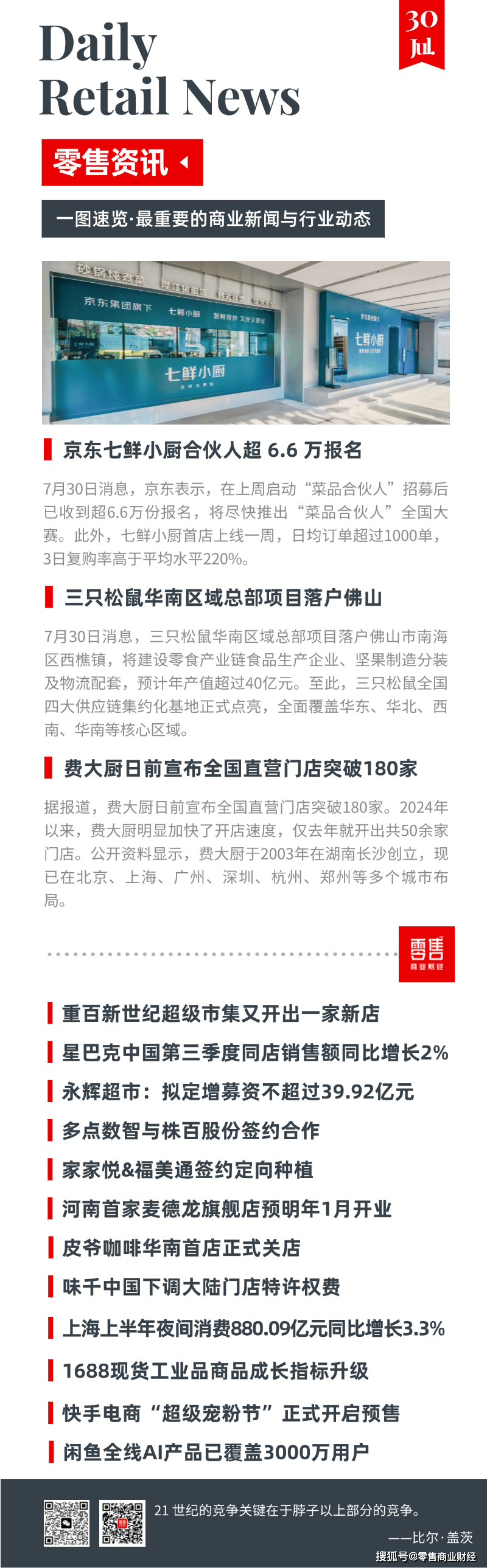
Group 1 - JD reported over 66,000 applications for its "Dish Partner" recruitment initiative, with the first store of Seven Fresh Kitchen achieving over 1,000 daily orders and a 220% higher repurchase rate than average within a week [6] - Three Squirrels established its South China regional headquarters in Foshan, aiming for an annual output value exceeding 4 billion yuan through the development of a snack industry supply chain [8] - Fei Dazhu announced it has surpassed 180 directly-operated stores nationwide, significantly accelerating its store opening pace with over 50 new stores launched last year [9] Group 2 - Chongqing Department Store's New Century Supermarket opened its 9th store in Yubei, showing significant customer traffic growth and improved efficiency metrics, validating the potential of its fresh discount store model [10] - Starbucks reported an 8% year-on-year revenue increase in China for Q3 2025, reaching $790 million, with same-store sales up 2% and a total of 7,828 stores [10] - Yonghui Supermarket plans to raise up to 3.992 billion yuan through a private placement to upgrade stores, enhance logistics, and supplement working capital [11] Group 3 - Multi-point Intelligence signed a cooperation agreement with Zhuba Co. in Zhuzhou, marking the start of a digital transformation project in the retail sector [14] - Jiajiayue Group partnered with Fumeitong for directional planting, ensuring quality control from farm to table for garlic products [16] - Metro's first flagship store in Henan is set to open in January 2026, with a total investment of 1.5 billion yuan [19] Group 4 - Peets Coffee closed its first store in South China located in Shenzhen after nearly four years of operation [20] - Ajisen China temporarily reduced its franchise fees in mainland China from 3,500 yuan to 2,500 yuan per month, effective until the end of 2026 [21] - Shanghai's night-time consumption reached 88 billion yuan in the first half of 2025, a 3.3% year-on-year increase, with dining, retail, and cultural entertainment contributing 78% [22] Group 5 - 1688 announced an upgrade to its industrial product growth system to enhance procurement efficiency for merchants [23] - Kuaishou e-commerce launched the "Super Pet Fan Festival" pre-sale, providing support for merchants through traffic incentives and consumer subsidies [24] - Xianyu's AI products have reached 30 million users, with 138 million items listed using AI and a total GMV exceeding 1.4 billion [25]





山东省烟台市食品安全抽检信息通告(2025年第九期)
Zhong Guo Zhi Liang Xin Wen Wang· 2025-07-28 08:44
Core Viewpoint - Yantai City conducted a food safety inspection, revealing that out of 757 products tested, 14 were found to be non-compliant with national food safety standards, highlighting issues such as pesticide residue, excessive use of food additives, microbial contamination, and discrepancies between quality indicators and label values [2][3][4][5]. Group 1: Non-compliance Issues - 14 out of 757 products tested were found to be non-compliant with food safety standards [2]. - Specific issues included pesticide residues exceeding limits, excessive use of food additives, and microbial contamination [2][5]. - Examples of non-compliant products include: - Homemade steamed buns from Jinbao Gold Mining Co., which contained benzoic acid exceeding the standard [3]. - Garlic-flavored sausages from Konnia Food Co., which did not meet safety standards [3]. - Self-disinfecting tableware from Shenghe Hotel, which showed coliform bacteria contamination [4]. Group 2: Regulatory Actions - Local market supervision authorities have mandated producers to trace the distribution of non-compliant products, recall, and remove them from shelves [5]. - Companies are required to analyze the causes of non-compliance and implement corrective measures [5]. - Consumers are encouraged to report any non-compliant products they encounter by calling the complaint hotline [6].

超市集体低迷 社区团购倒逼行业变革
Bei Jing Shang Bao· 2025-07-28 03:04
Core Insights - The community group buying model has significantly impacted the supermarket industry, leading to a decline in performance for many supermarkets in the first quarter [1][2] - Despite the challenges posed by community group buying, there is a recognition that it can complement physical supermarkets if managed correctly [1][6] - The rapid expansion of community group buying, fueled by capital investment, has led to a price war that undermines its original purpose of serving consumers and suppliers [3][6] Supermarket Performance - In the first quarter, 12 out of 13 supermarkets reported a year-on-year decline in revenue, with four experiencing double-digit declines [2] - Some supermarkets have noted a stabilization in sales performance compared to previous periods, despite the overall downturn [2] - The decline in foot traffic has been observed, although the average transaction value has increased, indicating a shift in consumer behavior [2][4] Community Group Buying Impact - Community group buying has introduced competitive advantages such as lower inventory and higher turnover rates, but the price differences between community group buying and supermarkets can be exaggerated due to capital influence [2][6] - The model has evolved into a low-price competition arena, which has led to conflicts with traditional supermarkets [3][6] - Regulatory interventions have started to bring some stability back to the community group buying sector [6] Consumer Behavior Changes - The pandemic has accelerated the shift towards online shopping, with consumers developing new purchasing habits [4][5] - Certain products, particularly those requiring sensory evaluation, continue to drive consumers to physical stores, highlighting the need for supermarkets to enhance their offerings [4][6] - Supermarkets are increasingly recognizing the importance of online sales and are adapting their strategies accordingly [4][6] Industry Adaptation - Supermarkets are adjusting their operations in response to the challenges posed by community group buying and e-commerce [5][6] - There is a focus on improving product offerings and service quality to better meet consumer needs [6][7] - The future of physical retail lies in differentiation rather than direct competition with e-commerce on standardized products [7]

家家悦超市屡曝食品安全问题 供货来源现“幽灵”供应商
Zhong Guo Xin Wen Wang· 2025-07-22 20:27
Core Viewpoint - Jiajiayue Group has faced multiple food safety issues this year, leading to its inclusion on market regulatory blacklists, particularly due to incidents involving "ghost" suppliers [1][6]. Group 1: Food Safety Violations - Jiajiayue's Weihai store sold products that failed to meet national food safety standards, resulting in administrative penalties [4]. - The Lai Zhou store was found to have pesticide residues exceeding legal limits in vegetables sourced from unverified suppliers, leading to a fine of 10,000 yuan [6][8]. - The company has been reported for over a dozen food safety violations in Shandong province alone in 2024, with complaints about agricultural residue being particularly prevalent [8]. Group 2: Regulatory and Compliance Issues - The current supplier admission system at Jiajiayue has significant regulatory loopholes, as stores procured problematic products without verifying supplier qualifications [8]. - There are indications of the company providing false documentation to regulatory authorities, reflecting a disregard for the Food Safety Law [7][8]. - Consumer complaints have surged, highlighting issues such as spoiled fresh produce and expired packaged goods, which align with regulatory findings of safety violations [8][10]. Group 3: Company Background and Industry Context - Jiajiayue Group, established in 1981 and listed in 2016, operates over a thousand stores across several provinces in China [10]. - The rapid expansion of the retail network raises challenges in maintaining consistent quality control across logistics and terminal inspections, a critical issue for the company and the broader retail industry [10].
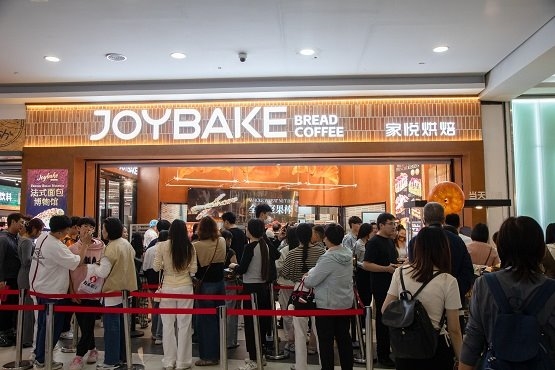
家悦烘焙“百店速度”:如何用一年重塑商超烘焙新生态
Zhong Guo Chan Ye Jing Ji Xin Xi Wang· 2025-07-14 03:53
Core Insights - The Chinese baking market is experiencing new development opportunities driven by consumer downturn and retail transformation, exemplified by the rapid expansion of the JiaYue Baking brand, which has opened its 100th store within a year [1] - JiaYue Baking's success is attributed to its unique "supermarket + baking" model, which has redefined consumer perceptions and provided a replicable success template for traditional retail transformation [1] Group 1: Quality and Competitive Advantage - JiaYue Baking emphasizes "freshly baked on the same day" as a direct commitment to quality, differentiating itself from pre-packaged products by having dedicated in-store bakeries with professional bakers [3] - Consumer feedback highlights the freshness of JiaYue Baking products as a key factor driving repeat purchases, establishing a significant competitive edge [3] Group 2: Pricing Strategy - The brand adheres to a "quality first" principle in raw material selection, using high-quality ingredients like Dutch Friesland royal butter for its signature "fresh milk butter toast," which, despite higher costs, has gained consumer recognition [4] - Market research indicates that JiaYue Baking's core products are generally priced lower than or on par with competitors, such as fresh milk toast at 6.9 yuan, butter croissant at 15.9 yuan, and crispy small cakes at 9.9 yuan, effectively appealing to consumers' desire for quality and affordability [4] Group 3: Market Positioning - JiaYue Baking targets everyday family consumption, offering affordable quality baking products, and differentiates itself from traditional supermarket baking sections through specialized product development and on-site production [6] - This "middle route" successfully opens a new market segment in the ready-to-eat category within supermarkets, combining convenience with a quality experience similar to that of professional bakeries [6] Group 4: Innovation and Future Outlook - Looking ahead, JiaYue Baking faces both opportunities and challenges, with increasing consumer demand for high-quality, cost-effective baking products amid a consumer downturn [7] - The brand plans to enhance single-store operational efficiency, deepen product innovation, and explore flexible store formats, such as community small specialty stores, to better meet diverse consumer needs [7]
中国超市百强榜单出炉:永辉跌出前三,胖东来暴涨 76%,9000 亿背后藏着行业大分化
3 6 Ke· 2025-07-11 03:53
Core Insights - The "2024 China Supermarket TOP100" list shows a slight increase in sales to approximately 900 billion yuan, up 0.3% year-on-year, while the total number of stores decreased by 9.8% to 25,200 stores, indicating challenges in the retail market and a trend towards industry differentiation [1][2][32]. Group 1: Top Enterprises - Walmart (China) continues to lead the list with a sales figure of 158.84 billion yuan, a 19.6% increase from 2023, supported by its strong global supply chain and efficient logistics [4][12]. - The second position is held by Dalian Wanda (RT-Mart) with sales of 76.41 billion yuan, showing a slight growth of 0.3% [2][12]. - Hema (Alibaba's new retail brand) ranks third with sales of 75 billion yuan, achieving a 10% year-on-year growth, reflecting its successful online-offline integration strategy [2][12]. Group 2: Industry Trends - The competition among mid-tier enterprises is intensifying, with some achieving rapid growth through innovative business models while others struggle due to poor management [8][18]. - The digital transformation of supermarkets is advancing, with companies like Walmart and Hema leveraging big data and IoT for improved efficiency and customer experience [31][32]. - The market is witnessing a "Matthew Effect," where top enterprises are gaining more market share, with the top 10 companies accounting for 66.6% of the total sales of the TOP100 list [15][32]. Group 3: Regional Insights - The East China region remains a key battleground for supermarkets, with strong demand for fresh and healthy products driving supply chain upgrades [30]. - The South China region is emerging as a hotspot for community-based enterprises like Qian Dama, which focuses on fresh produce and local consumer needs [30]. Group 4: Future Outlook - The industry is expected to see three major trends: a focus on quality and experience upgrades, deeper digital integration, and accelerated consolidation, with smaller players at risk of being eliminated if they cannot establish competitive advantages [31][32].


4家超市亏损6.49亿,怎么学完胖东来亏得更多了?
3 6 Ke· 2025-07-10 11:28
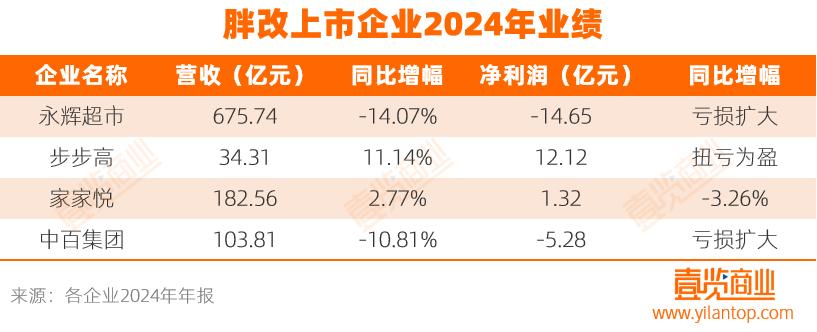
Core Insights - The article discusses the ongoing success of the Pang Donglai supermarket chain, which reported sales of 11.707 billion yuan in the first half of the year, with a daily revenue of approximately 64.68 million yuan, and a monthly sales figure of 1.68 billion yuan in June, indicating a strong potential to exceed 20 billion yuan in annual sales [1][2] - However, other listed supermarket companies attempting to emulate Pang Donglai's model are facing significant financial difficulties, with many reporting losses despite implementing similar strategies [2][4] Group 1: Company Performance - Pang Donglai's sales strategy focuses on exceptional service, strict quality control, and employee care, which has garnered consumer loyalty [1] - Other companies like Bubu Gao, Yonghui Supermarket, Zhongbai Group, and Jiajia Yue have attempted to adopt Pang Donglai's practices, including adjusting product structures, enhancing store layouts, and increasing employee compensation [2][4] - Despite these efforts, most of these companies are experiencing declining revenues and profits, with Yonghui Supermarket and Zhongbai Group reporting significant losses [4][12] Group 2: Financial Metrics - Yonghui Supermarket reported revenues of 67.574 billion yuan, a year-on-year decline of 14.07%, and a net loss of 1.465 billion yuan, which has worsened [4][12] - Bubu Gao achieved revenues of 3.431 billion yuan, an increase of 11.14%, and turned a profit of 1.212 billion yuan [4][12] - Jiajia Yue's revenue was 18.256 billion yuan, with a slight increase of 2.77%, but it reported a net profit of only 132 million yuan, down 3.26% [4][12] Group 3: Challenges Faced - The financial struggles of these companies are attributed to high renovation costs, which can exceed 8 million yuan per store, leading to significant cash flow pressures [6] - Many companies are experiencing a decline in gross profit margins, with an average around 20%, and cash reserves are dwindling, particularly for Yonghui Supermarket, which saw a 32.72% decrease in cash and equivalents [5][6] - Employee numbers have decreased across the board, indicating increased workloads for remaining staff, which may affect service quality [9] Group 4: Market Trends - The article highlights a systemic decline in the supermarket industry, with consumer behavior shifting towards e-commerce and specialized retail channels, making it difficult for traditional supermarkets to maintain profitability [10][13] - Despite significant investments in store renovations and employee compensation, these companies struggle to change consumer perceptions and replicate the unique customer experience offered by Pang Donglai [12][13] - The future of supermarkets lies not in imitation of Pang Donglai but in understanding their unique positioning and finding differentiated value propositions [13]

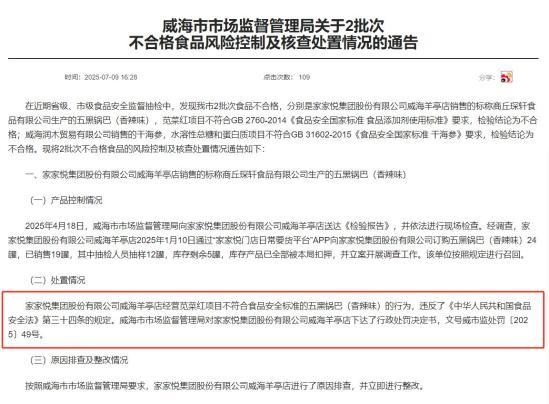
山东省威海市市场监督管理局关于2批次不合格食品风险控制及核查处置情况的通告
Zhong Guo Zhi Liang Xin Wen Wang· 2025-07-10 09:58
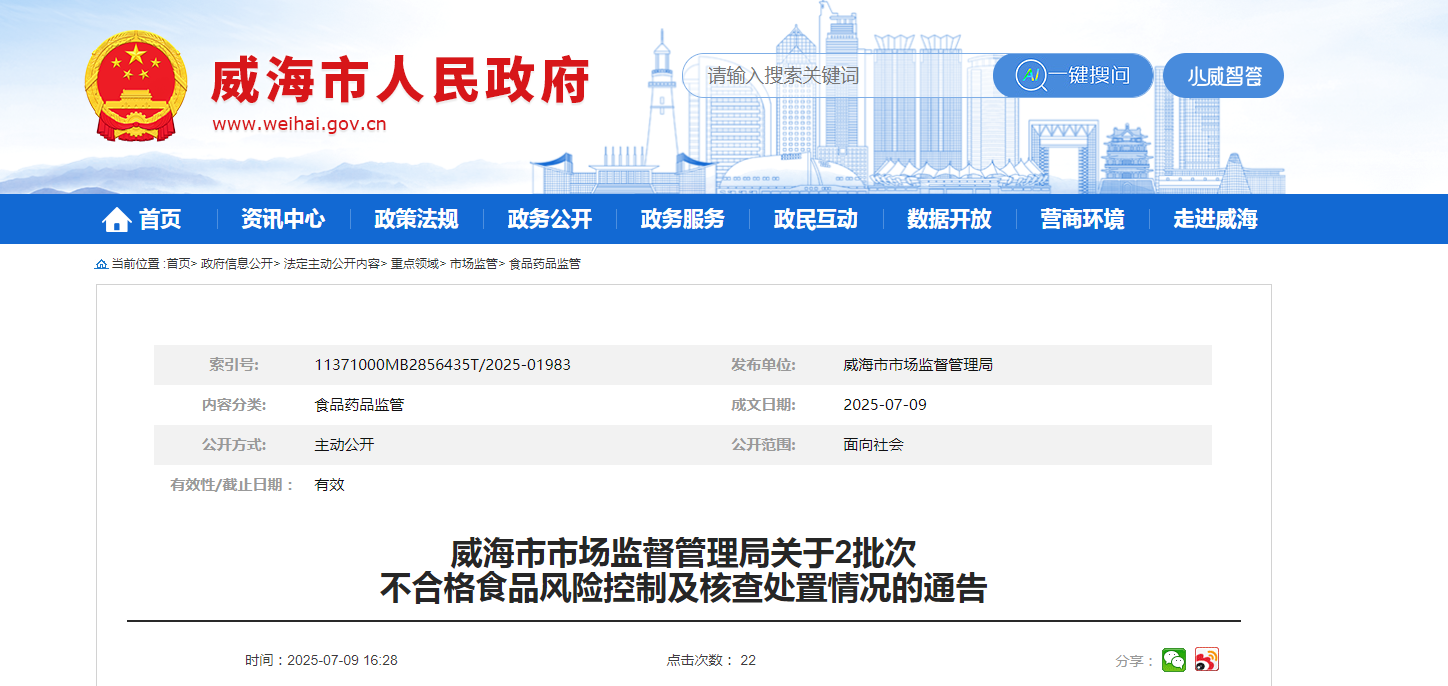
Core Viewpoint - Recent food safety inspections in Weihai revealed two batches of food products that did not meet safety standards, leading to administrative penalties for the involved companies [4][5][6] Group 1: Non-compliant Products - Two batches of food products were found non-compliant: Five Black Potatoes (Spicy Flavor) from Jiajiayue Group and dried sea cucumber from Weihai Runmu Trading Co., Ltd [4][5] - The Five Black Potatoes failed to meet the GB 2760-2014 standards for food additives, while the dried sea cucumber did not comply with GB 31602-2015 standards for dried sea cucumbers [4][6] Group 2: Company Actions and Penalties - Jiajiayue Group's Weihai Yangting store sold 19 cans of the non-compliant Five Black Potatoes, with 5 cans confiscated by the market supervision authority [4][5] - Weihai Runmu Trading Co., Ltd sold all three portions of the non-compliant dried sea cucumber without any remaining stock [6] - Both companies received administrative penalty notices for violating Article 34 of the Food Safety Law of the People's Republic of China [5][6]
家家悦: 家家悦集团股份有限公司关于2024年度权益分派实施后调整回购股份价格上限的公告
Zheng Quan Zhi Xing· 2025-07-07 16:13
Core Points - The company announced an adjustment to the maximum repurchase price of its shares following the implementation of the 2024 annual equity distribution, changing it from 10.00 CNY per share to 9.89 CNY per share, and later to 12.00 CNY per share [2][3] - The adjusted maximum repurchase price is set at 11.92 CNY per share, effective from July 15, 2025, which is the date of the equity distribution [4] Summary by Sections Share Repurchase Plan - The company plans to use between 1 billion CNY and 2 billion CNY of its own funds to repurchase shares through centralized bidding, with the initial maximum repurchase price set at 10.00 CNY per share [1] - The repurchase period is set for 12 months from the date of the board's approval of the repurchase plan [1] Adjustment of Repurchase Price - The repurchase price was adjusted due to the annual profit distribution plan, which includes a cash dividend of 0.80 CNY per 10 shares [2][3] - The adjustment formula for the repurchase price considers the cash dividend and the change in circulating shares, resulting in a new maximum price of 11.92 CNY per share [3] Other Information - Other aspects of the share repurchase plan remain unchanged, and the company will comply with relevant regulations during the repurchase process [5]
家家悦(603708) - 家家悦集团股份有限公司关于2024年度权益分派实施后调整回购股份价格上限的公告
2025-07-07 10:32
| 证券代码:603708 | 证券简称:家家悦 | 公告编号:2025-055 | | --- | --- | --- | | 债券代码:113584 | 证券简称:家悦转债 | | 家家悦集团股份有限公司 关于 2024 年度权益分派实施后调整回购股份价格上 限的公告 本公司董事会及全体董事保证本公告内容不存在任何虚假记载、误导性陈 述或者重大遗漏,并对其内容的真实性、准确性和完整性承担个别及连带责任。 重要内容提示: 一、回购股份的基本情况 家家悦集团股份有限公司(以下简称"公司")于2024年9月11日召开了第四 届董事会第二十九次会议、第四届监事会第二十二次会议,审议通过了《关于2024 年第二期回购公司股份方案的议案》,同意公司使用不低于人民币1亿元(含), 不超过人民币2亿元(含)的自有资金以集中竞价交易方式回购公司股份,回购 价格为不超过人民币10元/股(含本数),回购的公司股份拟用于转换公司发行的 可转换为股票的公司债券,回购期限为自董事会审议通过本次回购股份方案之日 起12个月内。上述具体内容详见公司2024年9月12日、2024年9月14日披露于上海 证券交易所网站(www.sse.co ...