Hygon Information Technology (688041)

Search documents
行业周报:台积电计划新建4座先进封装设施,CPU、存储、封测涨价
KAIYUAN SECURITIES· 2026-01-25 07:45
Investment Rating - The industry investment rating is "Overweight" (maintained) [2] Core Insights - The electronic industry index experienced a weekly change of +1.58%, with semiconductors rising by 2.7% and consumer electronics declining by 1.4% [4] - TSMC plans to build four advanced packaging facilities to enhance backend capacity, driven by strong demand for AI [6] - The AI hardware market is expected to see a surge in product launches, including OpenAI's AI audio headphones with projected shipments of 40-50 million units in the first year [5] Market Review - The semiconductor sector is witnessing a significant increase in demand, with TSMC's 3nm capacity fully booked until 2027 due to AI demand [6] - Major storage companies are entering a price increase cycle as they face unprecedented chip shortages, with Micron indicating that its HBM orders for 2026 are already filled [5] - The import value of key semiconductor equipment in China reached 15.5 billion yuan in December 2025, marking a 244% month-on-month increase [6] Industry Developments - AI infrastructure is rapidly developing, with domestic GPU manufacturers accelerating their self-sufficiency processes [5] - Companies like SK Hynix and Kioxia have reported that their chip and flash memory production capacities for 2026 are already sold out, exacerbating NAND supply pressures [5] - The Nasdaq index saw a slight decline of 0.06% this week, while notable gains were observed in companies like SanDisk (+14.56%) and AMD (+12.01%) [4]



计算机行业点评:CPU涨价能持续多久?
SINOLINK SECURITIES· 2026-01-25 02:53
Investment Rating - The report suggests a positive investment outlook for the industry, indicating a potential increase in value over the next 3-6 months, with expectations of growth exceeding the market by more than 15% [40]. Core Insights - The report highlights three core logic points driving the rigid demand for CPU in the Agent era, emphasizing the shift in computational load from GPU to CPU due to the complexity of tasks performed by Agents [11][16]. - The global Agent ecosystem is predicted to experience exponential growth, with active Agents expected to rise from approximately 28.6 million in 2025 to 2.216 billion by 2030, alongside a significant increase in task execution and token consumption [16][21]. - A supply-demand imbalance is emerging, with Intel shifting production capacity to server CPUs, leading to delivery issues in consumer electronics, while NVIDIA plans to enhance CPU core counts in response to bottlenecks [33][37]. Summary by Sections Section 1: Three Core Logics Revealing the Rigid Demand for CPU - The shift in computational load towards CPU is driven by the Multi-Agent architecture, which increases OS scheduling pressure due to the complex workflow of Agents [11]. - The challenge of long context scenarios necessitates KV Cache offloading to CPU, which increases CPU load due to the need for task scheduling and data transfer [11][12]. - High concurrency in tool usage by Agents leads to significant CPU consumption, as non-model inference tasks are primarily handled by CPUs [15]. Section 2: Expansion of the Agent Ecosystem Igniting CPU Performance Bottlenecks - The number of active Agents is projected to grow significantly, with task execution expected to increase from 44 billion in 2025 to 415 trillion by 2030, indicating a shift towards deeper reliance on Agents in business processes [16][17]. - Token consumption is anticipated to surge from 0.0005 PetaTokens in 2025 to 152,667 PetaTokens by 2030, reflecting the increasing complexity of tasks handled by Agents [17]. Section 3: Supply-Demand Imbalance and New Shortboards in Computing Power - Intel's urgent shift in production to server CPUs has resulted in a decline in consumer electronics delivery rates, while NVIDIA's new architecture aims to address CPU bottlenecks [33]. - Market data indicates a growth in global client CPU shipments, with a 7.9% quarter-on-quarter increase and a 13% year-on-year increase in the second quarter of 2025 [33][34]. Section 4: Related Companies - Key companies in the CPU sector include Haiguang Information, Zhongke Shuguang, He Sheng New Materials, China Great Wall, Longxin Zhongke, and others [4][38]. - Domestic computing power companies include Haiguang Information, Cambricon, Dongyangguang, and others, while overseas companies include Zhongji Xuchuang, New Yisheng, and others [4][38].


算力需求强劲,AI投资机会由点及面
Orient Securities· 2026-01-25 00:45
Investment Rating - The report maintains a "Positive" investment rating for the electronic industry, indicating a favorable outlook for the sector [5]. Core Insights - Strong demand for computing power driven by AI is creating investment opportunities across various segments of the industry [2][8]. - The report highlights a supply-demand imbalance in hardware related to AI, with significant growth expected in the semiconductor and storage sectors [7]. Summary by Sections Investment Recommendations and Targets - Key investment targets include: - **AI Computing Hardware**: - Wafer Manufacturing: SMIC (688981, Buy), Hua Hong Semiconductor (01347, Buy) - Testing and Packaging: Changdian Technology (600584, Buy), Tongfu Microelectronics (002156, Buy), and others - Server Storage: Lanke Technology (688008, Buy) - CPU: Haiguang Information (688041, Buy), Loongson Technology (688047, Not Rated), and others - Passive Components: Sanhua Group (300408, Buy), Fenghua Advanced Technology (000636, Not Rated) - Server Manufacturing: Industrial Fulian (601138, Buy), Huaqin Technology (603296, Buy) - Analog and Power Chips: Naxin Micro (688052, Buy), and others - Semiconductor Equipment: Zhongwei Company (688012, Buy), and others [3][8]. AI Applications and Edge Computing - Investment opportunities in edge AI applications are expected to grow, with significant advancements in hardware integration across consumer electronics like PCs, TVs, and smartphones [7][9]. - The report anticipates that major tech companies will launch innovative AI products, enhancing user interaction and creating new growth opportunities for related businesses [7].


计算机行业周报20260124:Token需求“通胀”:从CPU到云服务
Guolian Minsheng Securities· 2026-01-24 13:25
Investment Rating - The report maintains a "Recommended" rating for the industry [4] Core Insights - The demand for Tokens is driving inflation across the AI industry chain, with price increases being observed from storage to CPUs and now extending to cloud services, marking a significant shift in the pricing dynamics of the cloud computing sector [14][30] - AWS has initiated a price increase for its EC2 machine learning capacity blocks by approximately 15%, breaking a long-standing trend of declining prices in the cloud services industry, which may lead to a revaluation of cloud computing and related service providers [14] - The report highlights potential investment opportunities in cloud computing, CPUs, and databases, suggesting companies such as Alibaba, Kingsoft Cloud, and Inspur for cloud computing; Haiguang Information and Longxin for CPUs; and companies like StarRing Technology and DM Database for databases [30] Summary by Sections 1. Cloud Computing Price Trends - The report indicates that the AI industry chain is experiencing a price transmission trend, with cloud computing being the next area to see price increases following storage and CPU price hikes [14] - AWS's price adjustment reflects anticipated supply-demand dynamics, suggesting that successful price increases could lead to further adjustments in the future [14] 2. CPU Market Dynamics - The report notes a persistent supply-demand imbalance in the CPU market, particularly with Intel facing production limitations that may lead to continued shortages into 2026 [16] - The importance of CPUs is expected to rise significantly due to the increasing demand from AI applications, with the report emphasizing the need for optimization across both CPU and GPU resources [24][25] 3. Database Sector Growth - The report anticipates a rapid increase in the number of database PCU nodes driven by the demand for AI agents, which could lead to significant revenue growth for database providers [26] - The emergence of AI-native databases is highlighted as a key trend, with companies like Alibaba's PolarDB gaining traction in the market [29] 4. Investment Recommendations - The report suggests focusing on companies in the cloud computing sector such as Alibaba, Kingsoft Cloud, and UCloud, as well as CPU manufacturers like Haiguang Information and Longxin, and database firms like StarRing Technology and DM Database [30]




算力即国力:CPU 海外迎涨价,产业趋势有望传导
Changjiang Securities· 2026-01-24 07:46
Investment Rating - The report maintains a "Positive" investment rating for the industry [8] Core Insights - Intel, a leader in the global CPU market, has secured a significant contract worth up to $151 billion, which is nearly three times its projected revenue for 2024, indicating a strong demand outlook [2][11] - The supply chain dynamics are a crucial factor driving CPU price increases, with a tight supply situation exacerbated by high demand from major cloud service providers [11] - The AI era is expected to amplify the demand for CPUs, with new applications and technologies potentially widening the supply-demand gap [11] Summary by Sections Event Description - Intel's stock price increased by 33.59% from December 24, 2025, to January 20, 2026, while Nvidia's stock decreased by 5.89% during the same period [5] - On January 20, 2026, Intel announced it won a significant contract with the U.S. Department of Defense, which could contribute to its revenue growth [5] Market Dynamics - The CPU market is experiencing a supply crunch, with major players like AMD and Intel having sold out their server CPU capacities for the year due to high demand [11] - Both companies are planning to raise server CPU prices by 10-15% to address the supply-demand imbalance [11] Future Outlook - The report recommends focusing on the domestic CPU industry, particularly highlighting the potential for domestic manufacturers to gain market share as overseas prices rise [11] - The report emphasizes the long-term growth potential of the CPU market driven by AI applications, suggesting that companies like Haiguang Information could see significant performance improvements [11]
免疫StackWarp漏洞 海光C86开启国产算力“体系安全”新纪元
Mei Ri Jing Ji Xin Wen· 2026-01-24 04:19
StackWarp漏洞照出的"分水岭": 从技术追随到生态独立 2026年开年,德国CISPA亥姆霍兹信息安全中心披露的处理器漏洞"StackWarp",如同一颗投入平静湖面的石子,在全球算力产业激起了 巨大涟漪。该漏洞波及AMD Zen全系处理器。目前官方已经给出了修复方案。不过,在硬件级修复之前,部分防护措施需要以关闭同步 多线程为代价,对系统算力和部署成本造成影响。这也引发了业内的热议:安全与性能,究竟该如何兼得? 而国产处理器的安全能力也遭到了审视,尤其是获得x86永久授权和Zen架构的海光。但这场风波却意外成了照亮国产CPU自主化进程的 一束强光。据了解,海光信息(SH688041)的C86CPU已被验证对该漏洞实现"原生免疫"。在看似同源的X86技术河流中,以海光C86为代 表的国产CPU,早已悄然筑起独立的技术航道与坚固的安全堤坝。这背后,是中国芯片产业走过的一条从引进消化、到再创新、最终实 现技术路线分叉与生态独立的艰辛而清晰路径。海光所构建的不仅是一颗性能优异的CPU,更是一套从硅基物理层开始构筑的、深度融 入国家网络安全体系的内生安全架构。 StackWarp(CVE-2025-29943 ...

历史第二次!上证50指数,后市怎么走?
Zheng Quan Shi Bao Wang· 2026-01-24 00:35
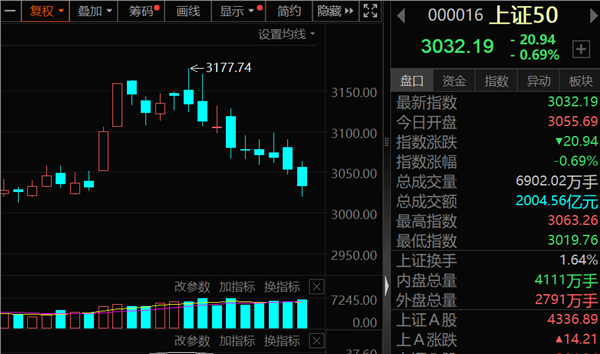
Core Viewpoint - The Shanghai 50 Index has experienced a rare nine consecutive days of decline, marking only the second occurrence in its history, with a total drop of 3.55% during this period [2][8]. Market Performance - As of January 23, the total market capitalization of the Shanghai 50 Index constituents exceeds 27 trillion yuan, accounting for over 20% of the total A-share market capitalization [2]. - The index's previous nine-day decline is compared to a similar event in 2013, which saw a cumulative drop of over 9% [2]. - The recent downturn has led to significant capital outflows from ETFs tracking the Shanghai 50 Index, with net outflows exceeding 41.9 billion yuan from January 13 to 23, primarily from the Huaxia Shanghai 50 ETF [4]. Historical Context - Historically, the Shanghai 50 Index has recorded 33 instances of consecutive declines lasting more than five days, with an average drop of nearly 8% in earlier years [6]. - The average decline during these periods has decreased over time, with the most recent occurrences since 2021 averaging a drop of 4.37% [6]. Future Outlook - Following a series of declines, there is a high probability of a rebound in the A-share market. Historical data indicates that after similar downturns, the Shanghai 50 Index has a greater than 78% chance of experiencing five or more days of gains within ten trading days [8]. - The recent nine-day decline is viewed as a result of style rotation and short-term sentiment release rather than a systemic deterioration of fundamentals [8]. Stock Performance - During the nine-day decline, over 80% of the Shanghai 50 Index constituents experienced at least five days of losses, with notable declines in stocks like Kweichow Moutai and Hengrui Medicine [10]. - Conversely, some stocks, including Langchao Technology and Zijin Mining, have shown resilience, with several companies expected to report positive earnings growth for 2025 [15][18]. - A total of 76 stocks in the electronic, power equipment, and non-ferrous metals sectors are projected to have positive earnings for 2025, with only 11 underperforming relative to the Shanghai Index's 23.4% increase since the beginning of 2025 [15].

再论CPU-海光信息-龙芯中科-中国长城
2026-01-23 15:35
Summary of CPU Industry Conference Call Industry Overview - The CPU iteration speed has significantly accelerated, reducing from a five-year cycle to a one-year cycle, driven by increasing data volumes and higher demands for CPU I/O interfaces and core counts [1][3] - CPU price increases are primarily driven by supply-side factors, with upstream foundries raising prices due to AI demand squeezing capacity, leading to price hikes in both consumer and server-grade CPUs [1][4] Key Insights - **Price Trends**: CPU prices are expected to continue rising, a trend anticipated to persist long-term. The price increase sequence starts with upstream foundries, followed by consumer CPUs, and server CPUs are expected to catch up in 2026 [3][4] - **AI Influence**: The development of AI has accelerated CPU upgrades and iteration speeds, necessitating more advanced I/O interfaces and core counts due to growing data requirements [3] - **Domestic Market Growth**: The domestic market for CPUs is experiencing a significant impact from the acceleration of domestic production, with steady increases in shipments of domestic server and PC CPUs since 2023, expected to accelerate in 2025 [1][6] Company-Specific Insights - **Haiguang Information**: Focuses on server CPUs, with an expected shipment of approximately 1-1.2 million server CPUs and 300,000-400,000 PC CPUs by 2025. The 7,580 model has seen large-scale procurement [1][7] - **Loongson Technology**: Utilizes a self-developed architecture, with successful launches of desktop models 3A6000, 3B6660, and server model 3C6000, showing significant cost-performance advantages and expected market share growth in 2026 [1][7] - **China Great Wall Technology**: Its subsidiary, Phytium, is a key competitor in the ARM CPU space, with models like S2500 gaining market attention. Expected shipment increases are anticipated as domestic capacity issues are resolved [2][7] Policy Impact - Government policies, such as the Ministry of Finance's Document No. 13, support the procurement of domestic products by government and affiliated units, effectively promoting the application of domestic CPUs in government and enterprises [6][8] - Continuous policy support since 2024 has accelerated the release and implementation of new products by relevant companies, addressing capacity bottlenecks and significantly enhancing overall shipment volumes [8]
StackWarp漏洞危机愈演愈烈背后:海光C86在X86生态中走出独立安全路线
经济观察报· 2026-01-23 11:44
Core Viewpoint - The independent evolution of the Haiguang C86 architecture provides a secure, controllable, and efficient choice for China's digital infrastructure construction, especially in the context of computing power becoming a fundamental infrastructure [1][38]. Group 1: StackWarp Vulnerability and Its Implications - The StackWarp vulnerability discovered in AMD's Zen series processors exposes a significant flaw in cloud computing's isolation capabilities, allowing attackers to modify running programs and data [2][3]. - The response from AMD to disable simultaneous multithreading (SMT) to mitigate the vulnerability results in a substantial reduction in processing power, halving the server's capacity to support virtual service instances [3][4]. - In contrast, Haiguang's C86 processors are inherently immune to the StackWarp vulnerability due to their architectural design, allowing users to maintain full computational performance without needing firmware upgrades or disabling features [4][10]. Group 2: Technical Differentiation - Haiguang's ability to defend against the StackWarp vulnerability stems from its fundamentally different virtualization technology compared to AMD, utilizing self-developed CSV3 technology to create a new defense mechanism [6][12]. - The C86 architecture has decoupled from the x86 technology route, replacing AMD's platform security processor (PSP) with Haiguang's self-developed security processor (HSC) [12][15]. - The C86 processor integrates a general-purpose C86 core and a dedicated security processor, ensuring a secure boot process and a chain of verification that maintains system integrity from the first line of code [13][14]. Group 3: Three-Layer Security System - Haiguang's C86 architecture features a three-layer security system: native cryptographic technology, proactive trusted computing, and isolated confidential computing [17][18]. - The first layer involves integrating a cryptographic co-processor (CCP) within the processor, allowing for high-speed encryption without the performance penalties associated with traditional software or external hardware solutions [20][21]. - The second layer, proactive trusted computing, extends security measures from system startup to runtime, utilizing TDM technology to continuously monitor and verify the integrity of critical system components [24][25]. - The third layer, isolated confidential computing, employs CSV technology to ensure real-time memory encryption for virtual machines, preventing unauthorized access and data leaks in cloud environments [28][29]. Group 4: Market Position and Applications - Haiguang's C86 architecture has been widely adopted in high-security scenarios, particularly in finance, telecommunications, and energy sectors, achieving a 50% share in trusted computing certified products [27][36]. - The architecture maintains full compatibility with the x86 ecosystem, allowing applications originally designed for Intel or AMD servers to migrate seamlessly to Haiguang platforms without code modifications [37]. - The independent evolution of Haiguang's technology mitigates risks associated with reliance on external architectures, ensuring stable performance and security in the face of global hardware vulnerabilities [38].
StackWarp漏洞危机愈演愈烈背后:海光C86在X86生态中走出独立安全路线
Jing Ji Guan Cha Wang· 2026-01-23 11:31
Core Insights - The article discusses a critical vulnerability named StackWarp affecting AMD's Zen series processors, which compromises the isolation capability essential for cloud computing services [1] - AMD's immediate solution involves disabling simultaneous multithreading (SMT), which significantly reduces processing power and efficiency for cloud service providers [2][3] - In contrast, Hygon's C86 processors are immune to the StackWarp vulnerability due to their fundamentally different architecture and security mechanisms [3][5] Group 1: Vulnerability and Impact - The StackWarp vulnerability allows attackers to exploit hardware design flaws, enabling unauthorized access to user data and programs in cloud environments [1] - Disabling SMT leads to a drastic reduction in server capacity, halving the number of virtual service instances a server can support, which poses significant costs for cloud service providers [3] - Hygon's C86 architecture does not require disabling SMT or upgrading firmware, allowing users to maintain full computational performance without the risk posed by the StackWarp vulnerability [3][4] Group 2: Hygon's Security Mechanisms - Hygon's ability to defend against the StackWarp vulnerability stems from its unique virtualization technology, which differs fundamentally from AMD's x86 architecture [5][6] - The C86 architecture restricts the host's ability to modify virtual machine memory mapping, preventing attackers from creating the conditions necessary for exploitation [7][8] - Hygon's self-developed CSV3 technology locks down the host's access to virtual machine page tables, ensuring that even with high system privileges, the core data remains untouched [8][9] Group 3: Technical Differentiation - Hygon's C86 architecture replaces AMD's platform security processor (PSP) with its own Hygon Security Processor (HSC), fundamentally restructuring the root of trust for enhanced security [15] - The architecture integrates a dedicated security processor with independent ROM and RAM, ensuring that the initial code executed is immutable and secure [16][17] - Hygon's approach to security includes a chain of verification from the firmware to the operating system, ensuring system integrity from the ground up [18] Group 4: Advanced Security Features - Hygon's processors incorporate a native cryptographic technology that enhances data privacy without sacrificing performance, unlike traditional software encryption methods [24][25] - The Trusted Key Management (TKM) module ensures that cryptographic keys are securely managed and stored, preventing unauthorized access even in physical attacks [28] - Hygon's Trusted Dynamic Measurement (TDM) technology extends security monitoring beyond system startup, actively scanning for integrity violations during operation [29][30] Group 5: Market Position and Future Outlook - Hygon's CSV technology is widely adopted in privacy computing, with significant partnerships established in the industry, indicating strong market presence [39] - The C86 architecture maintains compatibility with the x86 ecosystem, allowing seamless migration of applications from Intel or AMD servers without code modification [42] - Hygon's independent evolution from the x86 technology path positions it as a secure and efficient choice for China's digital infrastructure development [42]