
CHANGAN AUTOMOBILE-B(000625)

Search documents
汽车智能化11月投资策略:Robotaxi迈入新阶段,继续看好智能化主线
Soochow Securities· 2025-11-10 09:00
Core Conclusions - The market is expected to refocus on investment opportunities in smart vehicles in Q4, driven by the ongoing AI trend and the advancement of L4 capabilities in autonomous vehicles like Robotaxi [2][3] - Key catalysts for smart vehicle development in Q4 include Tesla's V14 release, XPeng's 2026 Robotaxi production plan, and the introduction of new autonomous vehicles by various companies [2] - The report anticipates a significant acceleration in the entry of core players into the L4 market by 2026, marking a pivotal year for Robotaxi [2] Comparison with Last Year - Similarities with last year's Q4 include the spread of AI applications, but this year emphasizes the evolution of AI logic rather than a resonance with automotive logic [3] - The focus has shifted from hardware opportunities and consumer sales to software opportunities and breakthroughs in B2B applications [3] Investment Recommendations - The report suggests a preference for Hong Kong stocks over A-shares, with a focus on software over hardware and B2B over B2C [6] - Recommended investment combinations include XPeng Motors, Horizon Robotics, and Cao Cao Mobility [6] - Key targets from the perspective of Robotaxi include integrated models (Tesla, XPeng, Qianli Technology) and technology providers (Horizon Robotics, Baidu, Pony.ai) [6] Smart Vehicle Market Overview - The report highlights the improvement in autonomous driving capabilities among various automakers, with XPeng, Huawei, and Li Auto leading the first tier [7] - The penetration rate of smart driving in urban areas reached 23.0% in August, with XPeng's smart driving penetration hitting 76.1% [7] - The report notes a significant increase in the sales of smart vehicles, with a projected growth in the Robotaxi market from 0-30% penetration by 2030 [15] Future Outlook - The core task for automotive intelligence from 2025 to 2027 is to achieve a penetration rate of 50%-80% for new energy vehicles [15] - By 2028-2030, Robotaxi is expected to achieve large-scale commercialization, marking a significant breakthrough in the automotive industry [15] Smart Vehicle Supply Chain Tracking - The report provides a detailed analysis of the smart vehicle supply chain, including hardware components (sensors, chips) and software solutions [10] - Key companies in the hardware segment include Sunny Optical, Nvidia, and Desay SV [10] - In the software segment, notable companies include WeRide, Momenta, and Pony.ai [10] Consumer Willingness to Pay - The report discusses consumer willingness to pay for smart features, indicating a growing acceptance of smart driving technologies [13] - The analysis includes projections for the domestic market size of Robotaxi, estimating significant growth in sales and market penetration [14]




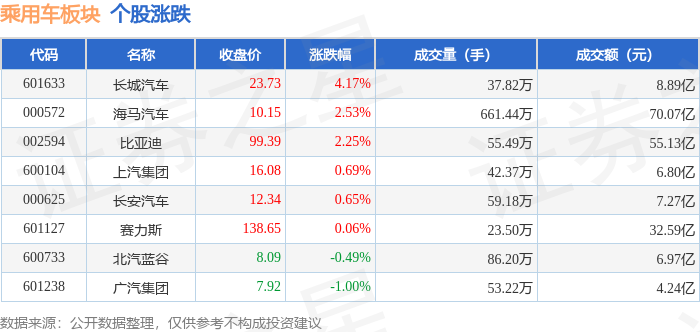
乘用车板块11月10日涨1.4%,长城汽车领涨,主力资金净流出6.23亿元
Zheng Xing Xing Ye Ri Bao· 2025-11-10 08:49
Core Insights - The passenger car sector experienced a 1.4% increase on November 10, with Great Wall Motors leading the gains [1] - The Shanghai Composite Index closed at 4018.6, up 0.53%, while the Shenzhen Component Index closed at 13427.61, up 0.18% [1] Passenger Car Sector Performance - Great Wall Motors (601633) closed at 23.73, up 4.17% with a trading volume of 378,200 shares and a transaction value of 889 million [1] - Other notable performers include: - Meizu Tianao (000572) at 10.15, up 2.53%, with a transaction value of 7 billion [1] - BYD (002594) at 99.39, up 2.25%, with a transaction value of 5.51 billion [1] - SAIC Motor (600104) at 16.08, up 0.69%, with a transaction value of 680 million [1] - Changan Automobile (000625) at 12.34, up 0.65%, with a transaction value of 727 million [1] Capital Flow Analysis - The passenger car sector saw a net outflow of 623 million from institutional investors, while retail investors contributed a net inflow of 615 million [1] - Specific stock capital flows include: - BYD (002594) had a net inflow of 5.87 billion from institutional investors, but a net outflow of 3.42 billion from speculative funds [2] - Great Wall Motors (601633) experienced a net inflow of 1 billion from institutional investors, with significant outflows from both speculative and retail investors [2] - Changan Automobile (000625) had a net inflow of 790 million from institutional investors, while experiencing outflows from speculative and retail investors [2]




【月度分析】2025年10月份全国乘用车市场分析
乘联分会· 2025-11-10 08:08
Core Insights - The article provides a comprehensive analysis of the Chinese passenger car market for October 2025, highlighting trends in retail, wholesale, production, and exports, particularly focusing on the performance of new energy vehicles (NEVs) and the competitive landscape among domestic and foreign brands [17][18][19]. Market Overview - In October 2025, retail sales of passenger cars reached 2.242 million units, a year-on-year decrease of 0.8% and a month-on-month decrease of 0.1%. Cumulative retail sales for the year reached 19.25 million units, up 7.9% year-on-year [17]. - The wholesale volume for October was 2.932 million units, marking a historical high for the month, with a year-on-year increase of 7.6% and a month-on-month increase of 4.9% [21]. - Production in October totaled 2.951 million units, a year-on-year increase of 11.4% and a month-on-month increase of 3.7% [20]. New Energy Vehicle (NEV) Market - NEV retail sales in October reached 1.282 million units, a year-on-year increase of 7.3%, while cumulative sales for the year reached 10.151 million units, up 21.9% [23]. - The penetration rate of NEVs in the domestic market was 57.2%, an increase of 4.3 percentage points year-on-year [27]. - NEV wholesale volume was 1.621 million units in October, up 18.5% year-on-year, with cumulative wholesale reaching 12.058 million units, an increase of 29.9% [23]. Export Performance - In October, total passenger car exports reached 568,000 units, a year-on-year increase of 27.7% and a month-on-month increase of 7.5%. Cumulative exports for the year reached 4.567 million units, up 14.2% [20]. - NEVs accounted for 44.2% of total exports in October, with 251,000 units exported, reflecting a year-on-year increase of 104% [28]. Competitive Landscape - Domestic brands achieved a retail volume of 1.55 million units in October, a year-on-year increase of 4%, capturing a market share of 68.7% [19]. - Traditional automakers like Geely, Changan, and Great Wall have shown significant improvements in market share, while joint venture brands faced challenges with a 10% decline in retail volume [19][20]. - The new energy segment saw strong performances from brands like BYD, which sold 436,856 units, and other domestic brands also reported robust sales figures [30][31]. Future Outlook - The market is expected to see continued growth in November due to year-end purchasing urgency driven by tax incentives and seasonal factors [33]. - The export momentum is likely to persist, supported by increasing recognition of Chinese NEV brands in international markets [34].


保洁阿姨当主播,为什么车企一定要直播?
汽车商业评论· 2025-11-09 23:06
Core Viewpoint - The automotive industry is rapidly adopting live streaming as a mainstream marketing strategy, significantly enhancing customer engagement and sales conversion rates [10][12][28]. Group 1: Live Streaming Growth and Impact - Live streaming for car sales has seen explosive growth, with monthly live streaming sessions increasing by over 408% and interaction rates rising by 263% within a year [10]. - Major automotive brands have integrated live streaming into their KPI assessment, with companies like Geely and Changan requiring frequent live broadcasts from their dealerships [10][11]. - In major cities, live streaming events can attract hundreds of thousands of viewers, with some events reaching up to 7.26 million views [10][11]. Group 2: Operational Changes in Dealerships - Dealerships are restructuring their teams to include dedicated live streaming personnel, moving away from a model where sales staff merely "guest host" [14][16]. - The average cost of setting up a live streaming operation is significantly lower than traditional marketing methods, with initial equipment costs ranging from 5,000 to 15,000 yuan [18]. - Many dealerships report that customers acquired through live streaming are more targeted, leading to shorter sales cycles, with average transaction times reduced from one month to about one week [11][27]. Group 3: Cost Structure and Efficiency - The primary costs associated with live streaming include personnel, equipment, and advertising expenses, with the average cost per lead typically falling within the range of tens of yuan [27][28]. - Compared to traditional lead acquisition methods, which can cost hundreds of yuan per lead, live streaming offers a more cost-effective solution with higher quality leads [27][28]. - Some dealerships have reported that live streaming promotions, such as exclusive discounts, can significantly boost viewer engagement and lead generation [27]. Group 4: Platform Utilization - The automotive industry primarily utilizes platforms like Douyin (TikTok), Kuaishou, Taobao, and JD.com for live streaming sales, each with distinct traffic distribution mechanisms [30][36]. - Douyin's algorithm-driven model allows for effective targeting of potential customers, with average lead acquisition costs ranging from 10 to 50 yuan [31][34]. - Kuaishou emphasizes social relationships and has introduced features like virtual hosts to enhance user engagement and extend live streaming hours [34][35]. Group 5: Market Trends and Future Outlook - The shift towards live streaming is becoming a standard practice in the automotive industry, with many brands recognizing its potential to capture consumer attention in a competitive market [41][43]. - As the market matures, live streaming is expected to evolve from a novel approach to a fundamental component of automotive marketing strategies, despite challenges such as rising competition and increased lead acquisition costs [44][45]. - The trend indicates that live streaming will continue to play a crucial role in the automotive sector, particularly as younger consumers increasingly prefer online interactions [42][43].

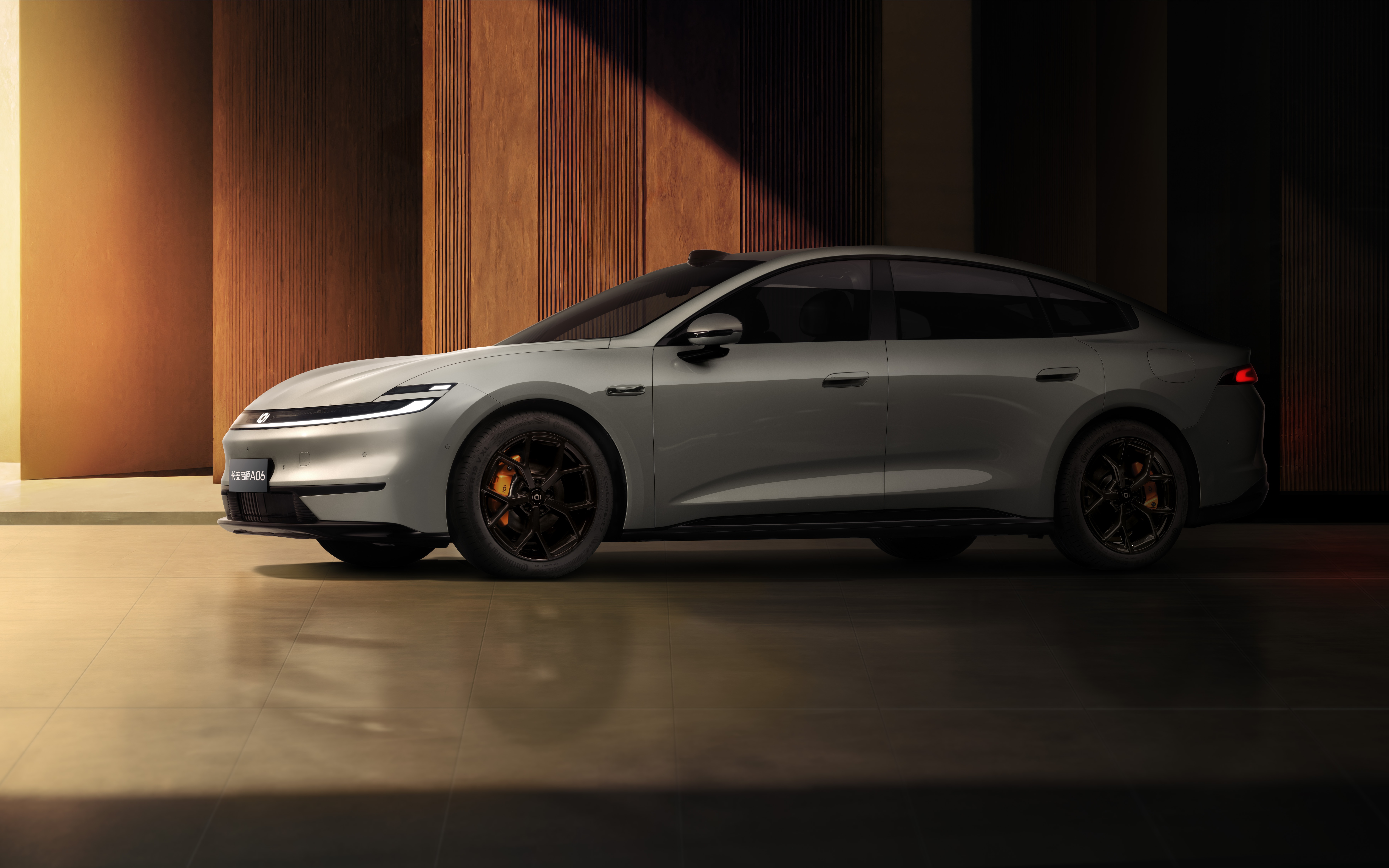
长安启源A06上市,狄智睿:启源用户已累计超30万
Bei Ke Cai Jing· 2025-11-09 15:49
Core Points - Changan Qiyuan A06 has officially launched with six pure electric models and two range-extended models, with prices ranging from 109,900 to 149,900 yuan for pure electric models and 119,900 to 129,900 yuan for range-extended models [1][5] - The CEO of Changan Qiyuan stated that the company has accumulated over 300,000 users since the first vehicle delivery [1] Group 1 - Changan Qiyuan A06 is the first pure electric sedan from Changan Automobile's intelligent vehicle super digital platform (SDA) [5] - The vehicle features an 800V silicon carbide high-voltage platform and 6C fast charging, allowing for a 330 km range increase with just 10 minutes of charging [5] - The A06 is equipped with the Tian Shu intelligent driving assistance system, which includes a feature to open the front and rear trunk with a tap [5] Group 2 - Changan Qiyuan has introduced a tax-related policy, stating that for users who lock in orders before November 30 but cannot receive their vehicles on time, the company will cover the tax difference [6]
长安汽车(000625):新能源和出口持续增长,Q3毛利率环比提升
Changjiang Securities· 2025-11-09 09:15
Investment Rating - The investment rating for the company is "Buy" and is maintained [7]. Core Insights - The company reported a revenue of 42.24 billion yuan in Q3 2025, representing a year-on-year increase of 23.4% and a quarter-on-quarter increase of 9.6%. The net profit attributable to shareholders was 760 million yuan, up 2.1% year-on-year but down 18.6% quarter-on-quarter. The non-recurring net profit was 540 million yuan, reflecting a year-on-year increase of 5.8% but a quarter-on-quarter decrease of 21.9% [2][4][10]. - The company has seen significant growth in its self-owned new energy vehicle sales, with a year-on-year increase of 81.2% in Q3 2025, accounting for approximately 38% of total sales. The total sales volume reached 711,000 vehicles, up 24.5% year-on-year [10][4]. - The gross margin for Q3 2025 was 15.7%, an increase of 0.5 percentage points from the previous quarter, primarily due to improved profitability of new energy products [10]. Summary by Sections Financial Performance - In Q3 2025, the company achieved total revenue of 42.24 billion yuan, with a gross margin of 15.7%. The net profit attributable to shareholders was 760 million yuan, while the non-recurring net profit was 540 million yuan [2][4][10]. - The total sales volume for Q3 2025 was 711,000 vehicles, with a significant contribution from new energy vehicles, which sold 272,500 units [10]. Strategic Developments - The company is accelerating its electric and intelligent transformation, with plans to launch 20 new models, including several new energy vehicles under its brands [10]. - The overseas expansion is progressing rapidly, with a focus on localizing production and enhancing brand positioning [10]. Market Outlook - The company expects to achieve a net profit of 4.63 billion yuan in 2025, corresponding to a price-to-earnings ratio of 26.8 times, maintaining a "Buy" rating [10].
长安汽车和复旦大学申请大模型部署相关专利,实现大模型的按需动态调整
Jin Rong Jie· 2025-11-08 06:26
Core Points - Chongqing Changan Automobile Co., Ltd. and Fudan University have applied for a patent titled "Method, Device, Equipment, Storage Medium, and Program Product for Large Model Deployment" with publication number CN120909607A, filed on August 2025 [1] Summary by Categories Patent Application - The patent application involves a method for deploying large models, which includes receiving current operational scenario information and resource usage information from terminals by a cloud server [1] - The method determines whether the current operational scenario and resource usage information are compatible with the specifications of the terminal's current large model [1] - If not compatible, the method utilizes multi-objective constraints and optimization to select a target large model from a model library based on the current operational scenario and resource usage information [1] - The target model's information is then sent to the terminal for deployment, allowing inference through the target large model [1]
长安汽车申请基于应用软件框架的仿真系统相关专利,提升多次仿真测试结果的一致性
Jin Rong Jie· 2025-11-08 05:05
Core Insights - Chongqing Changan Automobile Co., Ltd. has applied for a patent related to a simulation system for intelligent driving software, indicating a focus on enhancing simulation testing technology [1] Group 1: Patent Application - The patent titled "Simulation System, Method and Device Based on Application Software Framework for Intelligent Driving Software" was filed with a publication number CN120909152A, with an application date of July 2025 [1] - The simulation system includes a simulation manager, simulation controller, and task group scheduler, designed to improve the consistency of simulation test results [1] Group 2: Company Overview - Chongqing Changan Automobile Co., Ltd. was established in 1996 and is primarily engaged in the automotive manufacturing industry, with a registered capital of approximately 992.18 million RMB [2] - The company has invested in 119 enterprises and participated in 5,000 bidding projects, holding 3,129 trademark records and 5,000 patent records [2]
长安汽车申请车外温度获取相关专利,使车辆在非高速工况下也可获取车外温度
Jin Rong Jie· 2025-11-08 01:30
Group 1 - Chongqing Changan Automobile Co., Ltd. has applied for a patent titled "Method, Device, Equipment, Storage Medium, and Program Product for Obtaining External Temperature," with publication number CN120907689A, and the application date is July 2025 [1] - The patent involves a method for obtaining external temperature by utilizing vehicle speed, temperature memory values, and temperature measurements from sensors, allowing for accurate external temperature readings even at varying vehicle speeds [1] - The method updates the temperature memory values based on the rate of temperature change and update rate, which is proportional to the vehicle speed, enhancing the accuracy of temperature sensors [1] Group 2 - Chongqing Changan Automobile Co., Ltd. was established in 1996 and is primarily engaged in the automotive manufacturing industry, with a registered capital of approximately 992.18 million RMB [2] - The company has invested in 119 enterprises and participated in 5,000 bidding projects, holding 3,129 trademark records and 5,000 patent records, along with 1,053 administrative licenses [2]
重庆长安汽车股份有限公司 第九届董事会第四十七次会议决议 公告
Zhong Guo Zheng Quan Bao - Zhong Zheng Wang· 2025-11-08 00:26
Core Points - The company held its 47th meeting of the 9th Board of Directors on November 7, 2025, where a resolution regarding changes in senior management was approved [1][3] - Li Mingcai has resigned from his positions as Executive Vice President, General Counsel, and Chief Compliance Officer due to job changes, and he will no longer hold any position within the company [2][3] - Mi Mengdong has been appointed as the new General Counsel and Chief Compliance Officer, effective from the date of the board meeting until the end of the current board's term [2][3][4] Management Changes - Li Mingcai held 377,580 shares of the company's A-shares, which will be managed according to relevant regulations [3] - Mi Mengdong, who is currently the Vice President and has a background in engineering, holds 103,360 shares of the company's A-shares [4] - Mi Mengdong meets all qualifications for senior management positions and has no disqualifying factors [4]