
CHANGAN AUTOMOBILE-B(000625)

Search documents
15万元,智驾和车都可以不将就
36氪· 2025-09-19 13:42
Core Viewpoint - The article emphasizes the shift in the automotive market from price wars to technology competition, particularly in the realm of intelligent driving systems, with the launch of the new Deep Blue S07 marking a significant step towards making high-quality intelligent driving accessible to mainstream consumers [3][5][40]. Group 1: Intelligent Driving Technology - Intelligent driving features are no longer exclusive to high-end models, with advanced systems now available in vehicles priced as low as 70,000 to 100,000 yuan [3][5]. - The Deep Blue S07 is equipped with Huawei's QianKun Intelligent Driving ADS 4 SE system, which is positioned in the 150,000 yuan SUV market, offering a comprehensive suite of intelligent driving features without compromising on functionality [3][10]. - The ADS 4 SE system shares core algorithms and data with luxury vehicles, ensuring that users of the Deep Blue S07 benefit from proven technology and safety standards [13][14]. Group 2: Performance and Features - The ADS 4 SE system has demonstrated significant improvements, including a 50% reduction in end-to-end latency, a 20% increase in traffic efficiency, and a 70% improvement in emergency braking performance [10][12]. - The Deep Blue S07 offers advanced safety features, such as lateral collision avoidance and a UPA system that prevents unintended acceleration, enhancing overall user safety [16][17]. - In terms of driving assistance, the vehicle provides features like NCA for highway navigation and adaptive cruise control for urban commuting, making driving more convenient and less stressful [19][20]. Group 3: Market Positioning and Design - The Deep Blue S07 aims to redefine the perception that limited budgets necessitate compromises in driving experience, offering a luxurious interior and advanced technology at a competitive price point [5][24][30]. - The vehicle's design includes high-quality materials and modern aesthetics, with features like a dual-zone climate control system and a high-performance Qualcomm 8295P chip for smooth operation [25][28]. - The car's energy efficiency is notable, with a fuel consumption rate as low as 3.8L/100km and a pure electric range of 300km, showcasing its advanced engineering [29]. Group 4: Industry Implications - The collaboration between Huawei and Deep Blue represents a model for achieving technological inclusivity in the automotive industry, moving high-end technology into the mainstream market [33][40]. - The article highlights the importance of a systematic approach to technology development, emphasizing that true technological advancement should be sustainable and reliable, rather than merely promotional [36][41]. - The Deep Blue S07 is positioned to meet the needs of a new generation of consumers who prioritize technology and quality, breaking the traditional link between high-end features and high prices [40].


长安汽车以质量治理创新入选总局实践案例
Jing Ji Guan Cha Bao· 2025-09-19 10:16
Group 1 - The core viewpoint of the news is that Changan Automobile has been recognized for its innovative practices in product safety and recall management, becoming the only automotive company to receive this award at the Sixth China Quality Conference [1] - The award reflects the automotive industry's shift towards prioritizing quality and safety as core elements in the new era of "new quality productivity" [1] - Changan's President Zhao Fei shared insights on the company's modernization of quality governance, highlighting the establishment of a comprehensive governance system covering R&D, production, supply chain, and service processes [1] Group 2 - Changan has proposed a governance framework centered around "three major plans" and "four transformations," including strategic top-level organization, digital quality management, internal capability development, and collaborative ecological systems [2] - The company has achieved a significant reduction in vehicle failure rates by 91% over the past decade, with customer satisfaction increasing by 36% [2] - Changan aims to transition from a traditional automaker to a central enterprise technology platform, targeting a production and sales scale of 2.68 million vehicles in 2024, with over 80% of sales coming from new energy vehicles and a 51.2% year-on-year growth in overseas business [2] Group 3 - Changan has made three key proposals: to leverage quality through intelligent safety to stimulate new quality productivity, to strengthen governance foundations to boost market confidence, and to promote collaborative industry ecosystems for mutual benefits [2] - The company aspires to elevate quality governance to a new level across the industry, providing a model for the high-quality development of China's automotive sector [2]
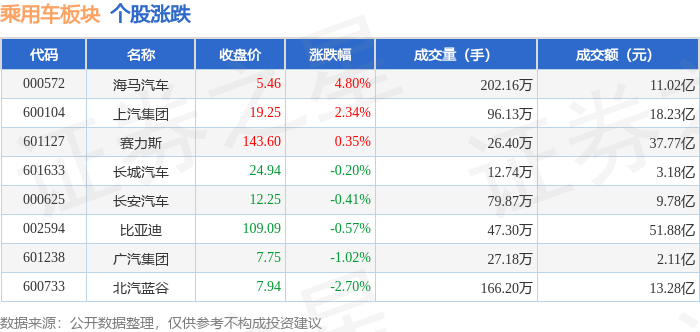
乘用车板块9月19日涨0.14%,海马汽车领涨,主力资金净流入6824.23万元
Zheng Xing Xing Ye Ri Bao· 2025-09-19 08:41
Group 1 - The passenger car sector increased by 0.14% on September 19, with Haima Automobile leading the gains [1] - The Shanghai Composite Index closed at 3820.09, down 0.3%, while the Shenzhen Component Index closed at 13070.86, down 0.04% [1] - Key stocks in the passenger car sector showed varied performance, with notable increases in stocks like Haima Automobile and SAIC Motor [1] Group 2 - The main capital inflow in the passenger car sector was 68.24 million yuan, while retail investors experienced a net outflow of 11.09 million yuan [1] - Major stocks such as SAIC Motor and Haima Automobile saw significant net inflows from institutional investors, while others like BYD and BAIC Blue Valley faced net outflows [2] - The trading volume and turnover for various stocks in the passenger car sector varied, with SAIC Motor achieving a turnover of 1.823 billion yuan [1][2]





8月微卡销3.1万辆增15%!五菱独食超5成份额 奇瑞/长安“激战”拼前二
第一商用车网· 2025-09-19 07:14
Core Viewpoint - The micro truck market in China has shown a fluctuating trend in sales, with a cumulative decline of 18% by the end of July 2025, despite a 15% year-on-year growth in August 2025, indicating a mixed performance in the industry [1][3][14]. Sales Performance - In August 2025, the overall truck market sold 271,600 units, a 17% year-on-year increase, while the micro truck market sold 30,800 units, reflecting a 15% year-on-year growth but a 6% month-on-month decline [3][6]. - The cumulative sales for micro trucks from January to August 2025 reached 285,900 units, marking a 15% decrease compared to the same period last year, which is the lowest in the past five years [5][10]. Market Trends - Over the past five years, the micro truck market has exhibited a pattern of alternating growth and decline in August, with three years of growth including the current year [5]. - The sales volume of 30,800 units in August 2025 ranks third in the last five years, indicating a moderate performance compared to previous years [5]. Company Rankings - In August 2025, SAIC-GM-Wuling led the micro truck market with sales of 15,900 units, capturing 51.74% of the market share, followed by Chery and Changan with 16.85% and 14.55% market shares respectively [6][9]. - A total of seven companies sold micro trucks in August, with four companies experiencing year-on-year growth and three facing declines [6][10]. Cumulative Market Share - For the cumulative sales from January to August 2025, three companies exceeded a 10% market share: Wuling (50.42%), Changan (18.34%), and Chery (13.53%) [12]. - The cumulative market share for the top six companies reached 99.74%, indicating a highly concentrated market [10]. Future Outlook - The micro truck market faces challenges in achieving growth by the end of 2025, with a cumulative decline of 18% and a net decrease of nearly 50,000 units compared to the previous year [14].


王辉出任阿维塔科技董事长,曾推动长安汽车与华为战略合作
Feng Huang Wang· 2025-09-19 06:53
Group 1 - The core viewpoint of the news is the appointment of Wang Hui as the chairman of Avita Technology, who will be responsible for the company's strategic planning, management, and global business expansion [1] - Wang Hui has over 20 years of experience in the automotive industry, covering key areas such as corporate strategy, capital operations, process research and development, overseas markets, and industrial collaboration [1] - Prior to joining Avita, Wang Hui held several important positions at Changan Automobile, where he led strategic collaborations with companies like Huawei and CATL, and was instrumental in the global strategy implementation [1] Group 2 - Avita brand will focus on a price range of 250,000 to 700,000 yuan and plans to launch a flagship model priced at one million yuan by 2026 [2] - By 2030, Avita aims to introduce a total of 17 new models, covering a diverse product matrix including sedans, SUVs, MPVs, and sports cars [2]
长安汽车协办“一带一路”国家新能源汽车标准化官员研修班
Qi Lu Wan Bao· 2025-09-19 05:57
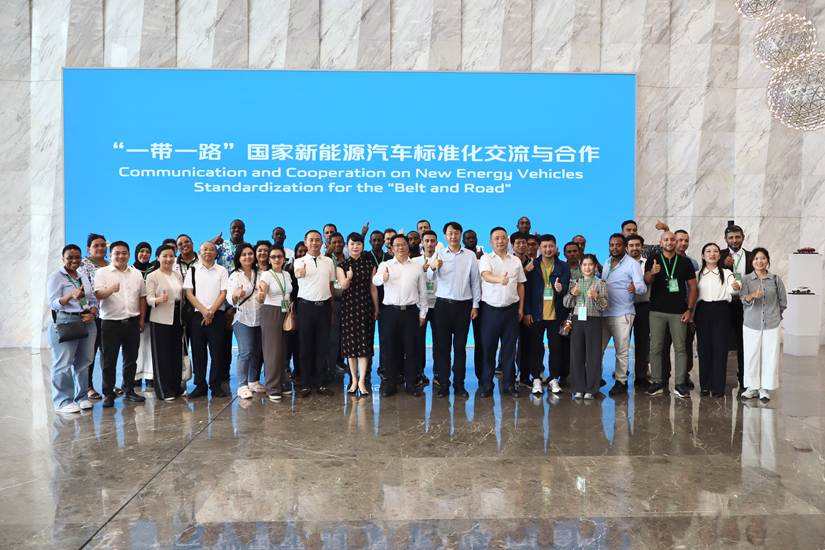
Core Viewpoint - The Chinese electric vehicle industry is accelerating its global expansion through innovation and standardization, with Changan Automobile playing a key role in promoting international cooperation in the sector [1][3]. Group 1: Event Overview - Changan Automobile co-hosted a training program for officials from Belt and Road Initiative countries, focusing on standardization in the electric vehicle sector, with nearly 40 officials participating [1][3]. - The training program was organized by the Ministry of Commerce and aimed to share China's modernization experiences while promoting Chinese standards and technologies in Belt and Road countries [3]. Group 2: Technological Showcase - During the visit, foreign officials toured Changan's intelligent manufacturing facility, witnessing the high efficiency and quality of "Made in China" products [5]. - Changan showcased its advanced electric vehicle products and core technologies, receiving high praise from international officials for its innovation and technical expertise [5]. Group 3: Standardization and Cooperation - Changan's representatives emphasized the importance of unified technical standards to break trade barriers and facilitate efficient product circulation in the rapidly developing electric vehicle industry [7]. - The event provided a platform for Chinese and foreign officials to enhance mutual understanding and cooperation in standardization, with a focus on practical collaboration in standard setting, testing, and talent training [7]. Group 4: Future Directions - Changan Automobile's leadership expressed commitment to the Belt and Road Initiative, focusing on not only exporting quality products but also on technology sharing and standard co-construction [11]. - The company aims to deepen standardization cooperation with partner countries to promote sustainable development in the electric vehicle industry, contributing to a shared future for humanity [11].
基金最新动向:走访这26家公司
Zheng Quan Shi Bao Wang· 2025-09-19 04:11
Group 1 - A total of 44 companies were investigated by institutions on September 18, with 26 companies specifically targeted by funds, indicating a strong interest in these firms [1] - The most popular company among funds was Lais Information, which had 13 participating funds, followed by Demingli and Rilian Technology, each with 12 funds [1] - The companies investigated are distributed across various sectors, with the electronics and banking sectors having the highest representation, each featuring three stocks [1] Group 2 - Among the companies investigated, three had a total market capitalization exceeding 50 billion yuan, with Ningbo Bank and Changan Automobile exceeding 100 billion yuan [1] - In terms of market performance, 15 stocks among the investigated companies saw an increase in the last five days, with the highest gains recorded by Meilixin (30.49%), Demingli (28.45%), and Mona Lisa (15.68%) [1][2] - Conversely, 11 stocks experienced declines, with the largest drops seen in Langxin Group (-9.86%), Qingdao Bank (-7.28%), and Ningbo Bank (-6.69%) [1][2] Group 3 - The net inflow of funds in the last five days was positive for eight stocks, with Lais Information receiving the highest net inflow of approximately 86.84 million yuan [2] - Other companies with significant net inflows included Mona Lisa (63.13 million yuan) and Oriental Electronics (45.62 million yuan) [2] - The detailed list of companies investigated includes their respective codes, number of funds participating, latest closing prices, and five-day price changes, providing a comprehensive overview of market interest [2][3]



深化标准合作、共谋绿色发展,长安汽车协办“一带一路”国家新能源汽车标准化官员研修班
Zhong Guo Qi Che Bao Wang· 2025-09-19 03:15
Core Viewpoint - The Chinese electric vehicle industry is accelerating its global expansion driven by innovation and standards, with Changan Automobile playing a key role in promoting cooperation and sharing experiences in the context of the Belt and Road Initiative [1][5][31]. Group 1: Event Overview - Changan Automobile co-hosted a training program for officials from Belt and Road countries focused on standardization in the electric vehicle sector, attended by nearly 40 officials [1][5]. - The training program was organized by the Ministry of Commerce and aimed to share China's modernization experiences while promoting the implementation of Chinese standards and technologies in Belt and Road countries [5][19]. Group 2: Technological and Standardization Efforts - During the visit, foreign officials observed Changan's highly automated and digitalized production processes, showcasing the company's efficiency and quality in manufacturing [11]. - Changan's Vice General Manager emphasized the importance of unified technical standards to break trade barriers and facilitate efficient circulation of products and services in the rapidly developing electric vehicle industry [15][23]. Group 3: Future Cooperation and Development - Changan Automobile is committed to the Belt and Road Initiative, focusing on not only exporting quality products but also on technology sharing, standard co-construction, and talent cultivation [31]. - The company aims to deepen standardization cooperation with partner countries to promote sustainable development in the electric vehicle industry, contributing to a shared future for humanity [31].

2030年保底400万辆,长安汽车在智能化上都有哪些新布局?
2 1 Shi Ji Jing Ji Bao Dao· 2025-09-18 14:38
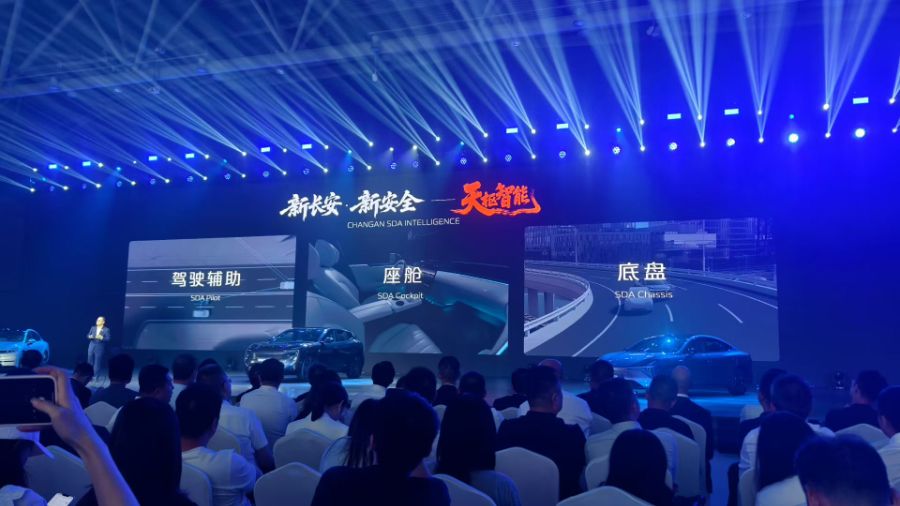
Core Viewpoint - Changan aims to establish itself as a representative Chinese automotive company in global competition, focusing on safety as the primary aspect of its new intelligent brand, Tian Shu Intelligent [1][3]. Group 1: Company Overview - Changan has transformed into a "new central enterprise" with 143 subsidiaries, 145,000 employees, and total assets of 308.7 billion yuan [1]. - The company targets an annual production and sales volume of 4 million vehicles by 2030, with a goal of 60% being new energy vehicles and 30% being sold overseas [1]. Group 2: Intelligent Brand Launch - The Tian Shu Intelligent brand was launched at the Changan Technology Ecological Conference, developed by 24,000 R&D engineers over five years [1][3]. - The brand's focus is on safety, addressing various safety aspects including passive, active, driving, health, psychological, privacy, and data security [4]. Group 3: Safety Concerns and Innovations - In the first half of 2025, 5.28 million vehicles were recalled in China, with over 40% of issues related to software defects, highlighting the increasing safety risks associated with technological advancements [4]. - Tian Shu Intelligent's system utilizes self-developed visual language action models and multi-sensor fusion perception to enhance driving safety, capable of responding in 0.1 seconds at high speeds [5]. Group 4: Future Plans and Product Launches - Changan plans to extend its intelligent technology beyond vehicles, with goals to produce a manned flying car by 2026, fully self-developed unmanned logistics vehicles by 2027, humanoid automotive robots by 2028, and expand into home service scenarios by 2030 [5]. - At the technology conference, Changan unveiled 10 new models, emphasizing the importance of efficiency and breakthroughs in the competitive landscape [7].
新能源乘用车第37周销量报告
Dong Zheng Qi Huo· 2025-09-18 14:15
1. Report Industry Investment Rating No information provided in the content. 2. Core Views of the Report - In the 37th week of 2025 (from September 8th to September 14th), the single - week retail sales of passenger cars were 453,000 units, a year - on - year decrease of 4.1%. Since the beginning of this year, the retail sales have reached 1.5182 million units, a year - on - year increase of 6.3%. The single - week retail sales of new energy passenger cars were 270,000 units, a year - on - year increase of 6.3%. Since the beginning of this year, the retail sales have reached 791,500 units, a year - on - year increase of 22.7%. The year - on - year growth rate has slowed down due to the high base and the termination of subsidies in some regions this year [1][11]. - The single - week penetration rate of new energy vehicles reached 59.6%, and the cumulative penetration rate for the year was 52.1%, showing a slow upward trend [1][21]. - The new energy vehicle market pattern is constantly changing. Traditional car companies such as Geely, Changan, and Chery are achieving excellent performance in new energy vehicle sales, and new brands like Xiaomi are bringing new variables to the market. Car companies like BYD, Tesla, and Li Auto have negative year - on - year growth, while XPeng, NIO, Leapmotor, Xiaomi, and Voyah maintain relatively high growth rates [2][27]. 3. Summary According to the Directory 3.1 Passenger Car Market Weekly Overview - In the 37th week of 2025, the single - week retail sales of passenger cars were 453,000 units, a year - on - year decrease of 4.1%. Since the beginning of this year, the retail sales have reached 1.5182 million units, a year - on - year increase of 6.3%. The single - week retail sales of new energy passenger cars were 270,000 units, a year - on - year increase of 6.3%. Since the beginning of this year, the retail sales have reached 791,500 units, a year - on - year increase of 22.7%. The growth rate has slowed down due to the high base and subsidy termination [1][11]. - By power type, in passenger cars, traditional fuel, hybrid, and new energy vehicles had retail sales of 167,000 units, 16,000 units, and 270,000 units respectively, with year - on - year changes of - 16.2%, - 15.1%, and 6.3%, accounting for 36.8%, 3.6%, and 59.6% of passenger cars respectively. In new energy passenger cars, pure - electric, plug - in hybrid, and extended - range vehicles had retail sales of 180,000 units, 68,000 units, and 23,000 units respectively, with year - on - year changes of 23.0%, - 14.5%, and - 21.3%, accounting for 66.5%, 25.1%, and 8.4% of new energy passenger cars respectively [22]. - By production attribute, in passenger cars, self - owned and joint - venture brands had retail sales of 307,000 units and 147,000 units respectively, with year - on - year changes of 2.9% and - 16.0%, accounting for 67.7% and 32.3% of passenger cars respectively. In new energy passenger cars, self - owned and joint - venture brands had retail sales of 243,000 units and 27,000 units respectively, with year - on - year changes of 7.9% and - 6.1%, accounting for 89.8% and 10.2% of new energy passenger cars respectively [24]. 3.2 Key New Energy Vehicle Companies' Sales Analysis - **Overall Situation**: In the 37th week, BYD sold 71,000 units, Geely Automobile 33,000 units, SAIC - GM - Wuling 19,000 units, Tesla (China) 15,000 units, Changan Automobile 14,000 units, Chery Automobile 10,000 units, and Hongmeng Zhixing 10,000 units. Among new - force car companies, Leapmotor sold 13,000 units, Xiaomi 10,000 units, Wenjie 9,000 units, XPeng and Li Auto 8,000 units each, and NIO 6,000 units [2][27]. - **BYD**: The weekly sales were 71,000 units. Since July, the year - on - year growth rate has turned negative. The cumulative sales this year reached 2.28 million units, with a year - on - year growth rate of 2.6%. The sales of pure - electric and plug - in hybrid (including extended - range) models are basically half and half. From January to August this year, the global cumulative sales were 2.864 million units, and the overseas cumulative sales of passenger cars and pick - up trucks were 630,000 units [31]. - **Geely Automobile**: The weekly sales were 49,000 units, including 33,000 new energy vehicles. The electrification rate of the car company is about 67%. The cumulative sales this year reached 1.591 million units, with a year - on - year growth of 48.2%, and the cumulative new energy sales were 942,000 units, with a year - on - year growth of 99.3% [33]. - **SAIC - GM - Wuling**: The overall weekly sales of passenger cars were 20,000 units, including 19,000 new energy vehicles. The electrification rate of the car company is as high as 91%. The cumulative sales this year reached 573,000 units, with a growth rate of 19.8%, and the new energy sales were 492,000 units, with a growth rate of 36.1%. Pure - electric models dominate the sales [36]. - **Changan Automobile**: The overall weekly sales of passenger cars were 23,000 units, including 14,000 new energy vehicles. The electrification rate of the car company is about 59%. The cumulative sales this year reached 821,000 units, with a year - on - year growth of 2.0%, and the new energy sales were 408,000 units, with a year - on - year growth of 18.7% [41]. - **Chery Automobile**: The overall weekly sales of passenger cars were 23,000 units, including 10,000 new energy vehicles. The electrification rate of the car company is about 43%. The cumulative sales this year reached 843,000 units, with a year - on - year growth of 24.0%, and the new energy sales were 302,000 units, with a year - on - year growth of 66.7% [46]. - **Tesla**: The weekly sales in China were 15,000 units. The cumulative sales this year reached 395,000 units, with a year - on - year negative growth of - 6.7%. The sales of Model 3, Model Y, and Model Y L were about 5,000 units, 9,000 units, and 1,000 units respectively. Tesla has launched multiple preferential activities this year, and the price of the long - range version of Model 3 has increased since July 1st [51]. - **Hongmeng Zhixing**: The weekly sales were 10,000 units, including about 9,000 units of Wenjie. The Shangjie H5, a new car in cooperation with SAIC, is planned to be officially launched in September [54]. - **New - Force Car Companies**: Leapmotor sold 13,000 units, Xiaomi 10,000 units, Wenjie 9,000 units, XPeng and Li Auto 8,000 units each, and NIO 6,000 units. XPeng, NIO, Leapmotor, Xiaomi, Voyah, etc. maintained relatively high year - on - year growth rates [62].



