
ZGXT(000831)

Search documents
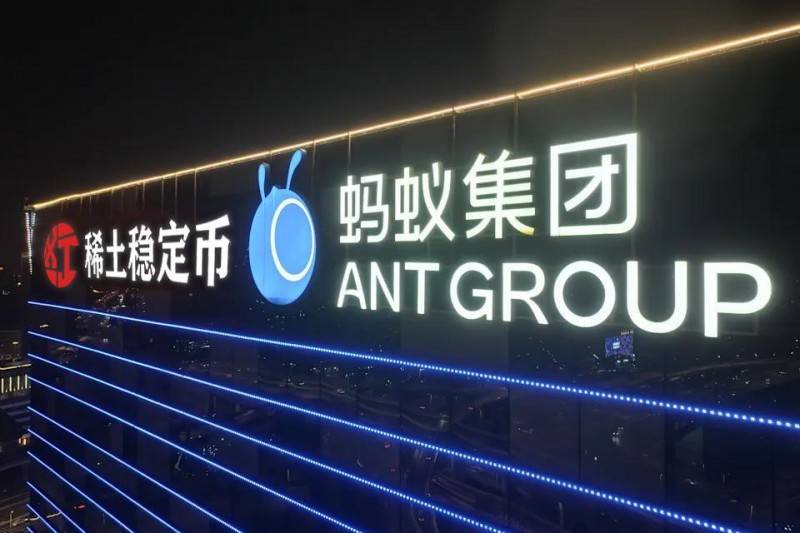
蚂蚁集团今日正式宣布,将投入首期资金100亿元人民币,与中国稀土稳定币项目全面达成战略合作
Sou Hu Cai Jing· 2025-08-10 12:30
Group 1 - Ant Group announces a comprehensive strategic cooperation with the Chinese rare earth stablecoin project to develop, test, and globally implement a "rare earth-backed RMB stablecoin" [1][3] - The rare earth stablecoin is a new type of digital currency supported by China's abundant rare earth resources, priced in RMB, and issued through blockchain technology [3] - This project is a significant step in promoting the application of digital RMB and financializing strategic resources, aiming to break the US dollar's monopoly on commodity pricing and accelerate the internationalization of the RMB [3] Group 2 - The implementation of the "Stablecoin Issuance and Regulation Regulations" in 2025 will provide institutional support for the rare earth stablecoin to enter sandbox testing [3] - Ant Group's involvement will enhance the project with core capabilities in blockchain technology, security risk control, and international payment networks [3] - Industry analysts believe that the rare earth stablecoin is likely to first land in countries along the "Belt and Road" initiative and other emerging markets, leveraging resource and financial synergies to accelerate the global de-dollarization process [4]


左手“商品” 右手“股票” 双维度演绎小金属红利
Zhong Guo Zheng Quan Bao· 2025-08-08 22:59
Core Viewpoint - The prices of minor metals such as cobalt, tungsten, antimony, and rare earths have been rising significantly this year, driven by supply changes and increasing demand, leading to strong performance in related A-share stocks [1][2][9]. Price Trends - As of August 8, 2023, the average prices for various minor metals have increased significantly compared to the beginning of the year: - Electrolytic cobalt: 265,000 CNY/ton (+55.43%) - Tungsten oxide: 317,500 CNY/ton (+32.02%) - Antimony ingot: 186,500 CNY/ton (+33.21%) - Molybdenum bar: 490 CNY/kg (+4.48%) - Bismuth: 118,500 CNY/ton (+61.22%) - Praseodymium-neodymium oxide: 521,500 CNY/ton (+31.03%) - Dysprosium oxide: 1,615,000 CNY/ton (+0.13%) - Terbium oxide: 7,020,000 CNY/ton (+25.13%) [2]. Company Performance - The non-ferrous metal sector has shown significant growth, with revenue and net profit for the sector increasing by 8.0% and 65.1% year-on-year in Q1 2025, respectively. Nearly 70% of listed companies in this sector have positive earnings forecasts for the first half of 2025 [3][4]. - Notable companies include: - Northern Rare Earth: Expected net profit growth of over 2000% year-on-year - Shenghe Resources: Expected net profit growth of over 600% year-on-year [3]. Market Performance - The non-ferrous metal sector has outperformed the broader market, with a cumulative increase of 32% this year, compared to the Shanghai Composite Index's 8.45% increase [4]. - Key stocks include Shenghe Resources and Guangsheng Nonferrous, both up over 120%, and several others showing significant gains [4]. Supply and Demand Dynamics - Changes in supply dynamics have been noted, particularly with cobalt, where the Democratic Republic of Congo has extended its export ban, leading to a significant decrease in imports of cobalt intermediate products in China [5][6]. - The global rare earth reserves are dominated by China, which holds 44 million tons, accounting for 40% of the total [6]. Future Demand Projections - The demand for rare earth materials, particularly neodymium-iron-boron magnets, is expected to grow significantly due to the rise of electric vehicles and renewable energy technologies. By 2026, the demand for high-performance neodymium-iron-boron materials is projected to reach 21.1 million tons, with a compound annual growth rate of approximately 14% [8][10]. - The commercialization of humanoid robots is anticipated to further increase demand for neodymium, with projections suggesting a growth rate of 75% from 2024 to 2035 [8]. Price Outlook - Analysts expect the upward price trend for minor metals to continue, driven by persistent demand expansion and supply disruptions. The price of antimony and cobalt is projected to rise due to supply constraints and increasing demand from sectors like electric vehicles [9][10].





中国稀土(00769.HK)接获联交所复牌指引
Ge Long Hui· 2025-08-08 12:51
Core Viewpoint - China Rare Earth (00769.HK) has received guidance from the Stock Exchange regarding the resumption of trading, which includes several requirements to address potential issues related to asset misappropriation and compliance with listing rules [1] Group 1: Investigation and Compliance - The company is required to conduct an independent forensic investigation to identify any potential asset misappropriation, unauthorized transactions, or non-compliance with listing rules, including allegations mentioned in complaint letters and issues identified by legal advisors [1] - The investigation must assess the impact on the company's operations and financial condition, publish the results, and implement appropriate remedial measures [1] - The company must demonstrate that there are no reasonable regulatory concerns regarding the integrity, capability, or character of the management and individuals significantly influencing the company's operations, to mitigate risks and restore market confidence [1] Group 2: Internal Controls and Disclosure - An independent internal control review is mandated to prove that the company has sufficient internal controls and procedures in place to comply with listing rules [1] - The company is also required to disclose all material information to allow shareholders and investors to evaluate the company's status [1]
稀土板块大涨!概念股盘点来了(名单)
Zheng Quan Zhi Xing· 2025-08-08 02:03
Industry Overview - The rare earth sector has seen a significant increase, with companies like Zhenghai Magnetic Materials and Aishichuang hitting the daily limit up, indicating strong market performance [1] - Rare earth elements are classified into light and heavy rare earths, with China being the sole source of heavy rare earth separation globally [1] - The rare earth industry is entering a traditional consumption peak season in August, leading to increased demand and procurement [1] Supply and Demand Dynamics - The demand for rare earth materials is expected to rise due to increased orders from major manufacturers, with some orders scheduled until mid-September [1] - The import volume of domestic rare earth products has significantly decreased due to factors like US-China tariff conflicts and political issues in Myanmar [1] - Recent price increases in rare earth materials are a key catalyst for the sector's heightened interest, with expectations of continued upward price momentum driven by strong demand [1][2] Applications of Rare Earth Materials - Rare earth permanent materials are crucial in the electric vehicle sector, with approximately 2 kilograms of rare earth used per vehicle [2] - The consumer electronics sector also shows stable growth in demand for high-performance permanent materials, used in devices like smartphones and computers [2] - Emerging industries, such as humanoid robotics, are projected to create substantial demand for rare earth materials, with estimates suggesting a potential market of $800 billion [2] Key Companies in the Rare Earth Sector - Northern Rare Earth: One of the largest suppliers of light rare earth products globally, with a target utilization rate of 90% for praseodymium and neodymium by 2025 [3] - Zhongke Magnetic Materials: A significant domestic producer of permanent magnetic materials, focusing on sintered neodymium-iron-boron and ferrite magnets [3] - China Rare Earth: The only listed platform for China Minmetals, specializing in ion-type rare earth separation and processing [3] - Galaxy Magnet: Engaged in the development and production of bonded neodymium-iron-boron magnets and samarium-cobalt magnets [3] - Inlohua: Produces neodymium-iron-boron permanent materials and serves major clients like Apple and Samsung [3] - Baotou Steel: Supplies rare earth concentrates and is known for its rich mineral resources [3] - Guangxi Rare Earth: A key player in the Guangdong rare earth industry, holding significant mining rights [4] - Xiamen Tungsten: Involved in rare earth permanent magnets with an annual production capacity of 4,000 tons [4]


研判2025!中国氧化铽行业产业链、价格及进出口分析:出口管制与资源战略双轮驱动,中国氧化铽市场成全球市场风向标[图]
Chan Ye Xin Xi Wang· 2025-08-08 01:29
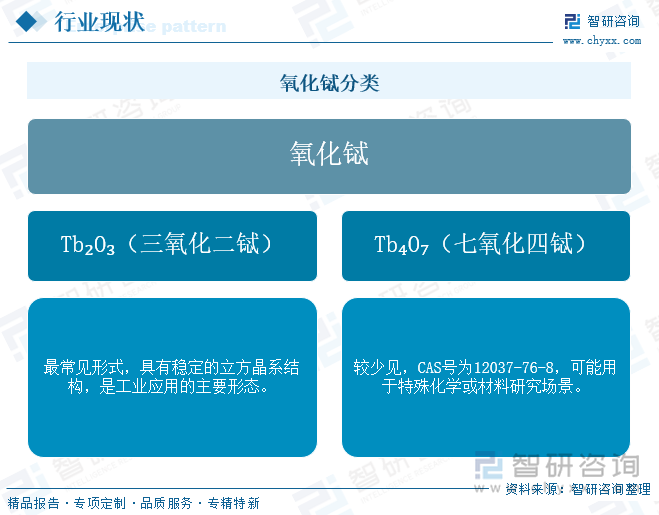
Core Viewpoint - China, as the world's richest country in rare earth resources, is leading in the terbium oxide industry in terms of resource reserves, production capacity, and technological development. The country is reshaping the global rare earth supply chain through policy regulation and market mechanisms, with terbium oxide being a key strategic resource whose price fluctuations are critical indicators of international geopolitical and industrial trends [1][8][17]. Industry Overview - Terbium oxide (Tb₂O₃) is a black-brown powder with unique optical and magnetic properties, relatively stable chemical characteristics, and is insoluble in water but soluble in acid [2]. - China's rare earth reserves are approximately 44 million tons, accounting for nearly half of the global proven reserves, with production reaching 270,000 tons in 2024, a year-on-year increase of 12.50% [6][8]. Industry Chain - The upstream of the terbium oxide industry includes rare earth mineral resources and various production equipment. The midstream involves the manufacturing of terbium oxide, while the downstream applications include fluorescent materials, magneto-optical materials, catalysts, electronic ceramics, and new energy materials [4]. Current Industry Status - In April 2025, China implemented export controls on seven types of medium and heavy rare earths, causing international market panic and leading to a spike in European terbium oxide prices to $3,000 per kilogram (approximately 2.181 million RMB per ton). By June 2025, the domestic price of terbium oxide reached 7.09 million RMB per ton, a year-on-year increase of 31.30% [1][10][12]. Key Enterprises' Performance - The Chinese terbium oxide industry is characterized by a competitive landscape dominated by state-owned enterprises, with significant advantages in production and market position. For instance, China Northern Rare Earth Group has a net profit increase of 727.3% in Q1 2025, while China Rare Earth Group has a production volume of 7,785.27 tons in 2024, a year-on-year increase of 107.27% [12][15]. Industry Development Trends 1. **Policy Regulation and Export Control**: The export control policy is expected to be a long-term strategic tool, significantly altering the global rare earth supply-demand structure. The average approval cycle for export licenses has been shortened by 30% [17]. 2. **Technological Innovation**: The industry is focusing on green transformation and high value-added production, with companies like Northern Rare Earth investing in zero wastewater discharge systems and achieving a 30% reduction in energy consumption per unit of output [19]. 3. **Market Demand Evolution**: The demand for terbium and dysprosium is expected to grow significantly due to high-end markets like robotics and new energy vehicles, although there are potential risks from alternative materials and geopolitical tensions [20].

研判2025!中国氧化镝行业产业链、价格及进出口分析:政策及技术革新重构市场,行业完成价格理性回归[图]
Chan Ye Xin Xi Wang· 2025-08-08 01:29
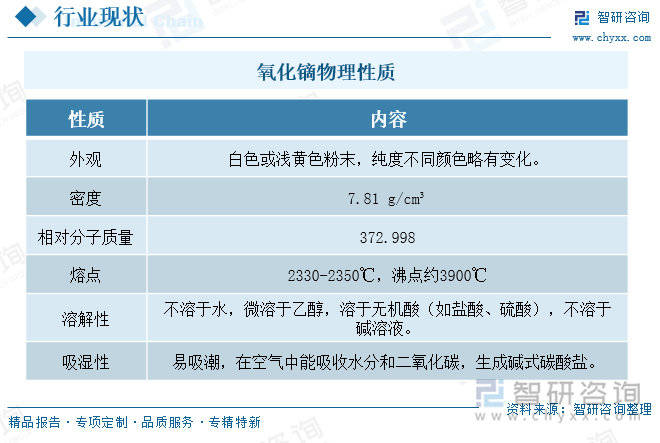
Industry Overview - The price of dysprosium oxide in China remained above 2 million yuan per ton from 2021 to 2023, driven by explosive growth in the global electric vehicle industry leading to supply-demand imbalances [1][7] - As a key additive in neodymium-iron-boron permanent magnets, the demand for dysprosium surged with the increase in electric vehicle production, while supply chain responses lagged, causing temporary supply shortages and irrational price increases [1][7] - By mid-2025, dysprosium prices fell to 1.615 million yuan per ton, a year-on-year decrease of 11.26%, due to multiple factors including increased global rare earth mining capacity and technological advancements reducing production costs [1][7] Industry Chain - The upstream of the dysprosium industry chain includes raw materials and production equipment, with raw materials primarily being rare earth mineral resources [4] - The midstream involves the production and manufacturing of dysprosium, while the downstream applications include magnetic materials, laser technology, electronics, new energy batteries, aerospace, and medical devices [4] Market Dynamics - Global rare earth reserves are approximately 90 million tons, with China holding 44 million tons, accounting for 48.9% of the total [6][7] - In 2024, China produced 270,000 tons of rare earths, representing 69.2% of global production, ensuring a stable supply for dysprosium production [6][7] Key Companies - China Rare Earth Group has an annual dysprosium production capacity of about 300 tons, with a product purity of 99.99% [11] - Guangsheng Nonferrous Metals, the only rare earth mining rights holder in Guangdong, produced 900 tons of dysprosium in 2023, expected to increase to 1,100 tons by 2025 [11] - Northern Rare Earth is a leading producer with a dysprosium output of 1,000 tons in 2023, projected to rise to 1,200 tons by 2025 [11] Industry Trends - The Chinese government is enhancing regulation of the rare earth industry, promoting integration and green transformation, with new policies aimed at protecting and rationally utilizing rare earth resources [17] - Technological innovations, such as the successful trial of the "physical vapor deposition combined with grain boundary diffusion method," have reduced dysprosium usage by 70% while improving magnetic properties [18][19] - The rapid development of global electric vehicles, wind power, and humanoid robots is creating new growth points for the dysprosium industry, with electric vehicles being a major demand driver [20]
直线拉升!一则利好,突然传来!
券商中国· 2025-08-07 09:17
Core Viewpoint - The rare earth permanent magnet sector is experiencing significant upward movement, driven by the successful launch of China's first intelligent demonstration line for rare earth disc motors, marking a key advancement in high-end rare earth permanent magnet motor development and industrialization [1][5][8] Group 1: Market Performance - On August 7, the rare earth permanent magnet sector saw a substantial increase, with the sector index rising over 4.5% at one point and closing with a gain of 3.69% [2][3] - Individual stocks such as Aoshichuang and Zhenghai Magnetic Materials hit the daily limit, while others like Benlang New Materials and Zhongke Magnetic Industry saw gains exceeding 15% and 10% respectively [2][4] Group 2: Technological Advancements - The newly established demonstration line has produced a micro rare earth permanent magnet motor with a power of 3 watts and a thickness of only 6mm, significantly reducing size and weight while maintaining high performance [5] - The motor achieves a rated speed of 4500-5500 RPM and over 70% efficiency, indicating a breakthrough in compact motor technology [5] Group 3: Supply and Demand Dynamics - In July, China exported 5,994.3 tons of rare earths, with a cumulative export of 38,563.6 tons from January to July, reflecting a year-on-year increase of 13.3% [6] - The supply of rare earths remains tight, with prices for various rare earth minerals showing significant increases, indicating strong cost support [6][7] - Demand is expected to grow, particularly in sectors such as electric vehicles and consumer electronics, which will drive the need for high-performance rare earth permanent magnets [7][8] Group 4: Investment Outlook - Analysts are optimistic about the rare earth industry chain, anticipating price increases driven by growing demand and supply constraints [6][8] - The implementation of the "Rare Earth Management Regulations" is expected to enhance the industry's supply-side reforms, benefiting leading state-owned enterprises and potentially leading to a dual increase in performance and valuation for the sector [7][8]


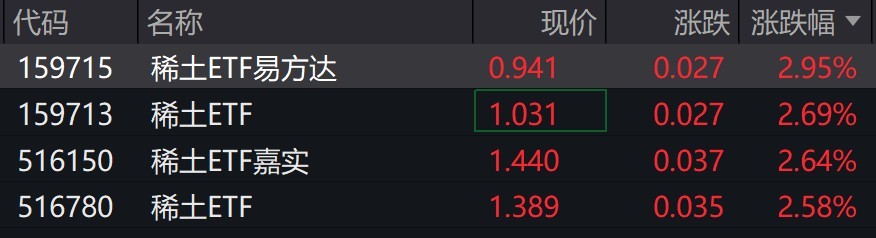
稀土概念股午后拉升,稀土相关ETF涨超2%
Mei Ri Jing Ji Xin Wen· 2025-08-07 06:43
Group 1 - Rare earth concept stocks surged in the afternoon, with Northern Rare Earth and Shenghe Resources rising over 5%, and China Rare Earth and Baotou Steel increasing over 2% [1] - The ETF tracking the CSI Rare Earth Industry Index rose over 2% due to market influence [1] - The CSI Rare Earth Industry Index includes listed companies involved in rare earth mining, processing, trading, and applications, reflecting the overall performance of the rare earth industry [2] Group 2 - Analysts indicate that rare earths are a strategically advantageous industry in China with significant pricing power and widespread downstream applications, leading to increased overall attention on the sector [2] - The "supply-side reform" policy catalyst, combined with the status of rare earths as a "national strategic resource," presents opportunities for value reassessment [2] - The permanent magnet sector benefits from the booming demand in humanoid robotics and the low-altitude economy [2]

百济神州:上半年净利润4.5亿元 同比扭亏为盈丨公告精选
2 1 Shi Ji Jing Ji Bao Dao· 2025-08-06 14:20
Group 1: Company Performance - BeiGene reported a net profit of 450 million yuan for the first half of 2025, marking a turnaround from losses in the previous year, with product revenue increasing by 45.8% to 17.36 billion yuan and total revenue rising by 46.0% to 17.52 billion yuan [1] - CITIC Securities announced that Huaxia Fund achieved an operating income of 4.258 billion yuan and a net profit of 1.123 billion yuan in the first half of 2025, with total comprehensive income of 1.106 billion yuan [3] - Shanghai Pudong Development Bank's net profit for the first half of 2025 was 29.737 billion yuan, reflecting a year-on-year growth of 10.19%, with total operating income of 90.559 billion yuan, up 2.62% [6] - Xianhe Co. plans to invest approximately 11 billion yuan in a new integrated high-performance paper-based material project, with an expected annual output value of about 5.15 billion yuan from the first phase [7] - Shengmei Shanghai reported a net profit of 696 million yuan for the first half of 2025, representing a year-on-year increase of 56.99% [14] Group 2: Regulatory and Corporate Actions - Sino Medical's subsidiary received breakthrough medical device designation from the FDA for its intracranial atherosclerosis treatment product, marking it as the first of its kind globally [2] - *ST Dongtong's actual controller and chairman is under investigation by the China Securities Regulatory Commission for suspected violations of information disclosure laws [8] - Tianyang Technology is planning to purchase equity in Tonglian Financial Services, with key transaction details still under negotiation [10] - Dongfang Guoxin's major shareholder reduced their stake by 2.68 million shares, decreasing their total shareholding from 27.06% to 26.82% [5] - Filinger's president reduced his holdings by 8,600 shares during a period of stock price volatility, while other executives did not sell shares [4]



百济神州:上半年净利润4.5亿元,同比扭亏为盈丨公告精选
2 1 Shi Ji Jing Ji Bao Dao· 2025-08-06 14:20
Group 1: Company Performance - BeiGene reported a net profit of 450 million yuan for the first half of 2025, marking a turnaround from losses in the previous year, with product revenue increasing by 45.8% to 17.36 billion yuan and total revenue rising by 46.0% to 17.52 billion yuan [1] - CITIC Securities announced that Huaxia Fund achieved a net profit of 1.123 billion yuan in the first half of 2025, with total operating income of 4.258 billion yuan and total comprehensive income of 1.106 billion yuan [1] - Shanghai Pudong Development Bank reported a net profit of 29.737 billion yuan for the first half of 2025, reflecting a year-on-year growth of 10.19%, with total operating income of 90.559 billion yuan, up 2.62% [4] - Xianhe Co., Ltd. plans to invest approximately 11 billion yuan in a new integrated high-performance paper-based material project, with an expected annual output value of about 5.15 billion yuan from the first phase [5] - Shunbo Alloy reported a net profit growth of 110.56% year-on-year for the first half of 2025 [12] Group 2: Regulatory and Corporate Actions - Sino Medical announced that its subsidiary received breakthrough medical device designation from the FDA for a new intracranial atherosclerosis treatment product, marking a significant milestone as the first of its kind globally [1] - *ST Dongtong's actual controller and chairman is under investigation by the China Securities Regulatory Commission for suspected violations of information disclosure laws [6][7] - Tianyang Technology is planning to purchase equity in Tonglian Jinfu and related companies, with key transaction details still under negotiation [8] - Filinger reported stock price fluctuations, with the president reducing his holdings by 8,600 shares during a period of abnormal trading activity [2] - Dongfang Guoxin's controlling shareholder reduced their stake by 2.68 million shares, decreasing their total shareholding from 27.06% to 26.82% [3]

