Workflow
ZGXT(000831)
icon
Search documents
为什么中国稀土王牌威力这么大?美国有破解的方法吗?
Sou Hu Cai Jing· 2025-10-12 09:27
Core Viewpoint - The recent export control regulations by China on rare earth materials and technologies significantly impact the semiconductor industry and other high-tech sectors in the U.S. [1][3][4] Group 1: New Regulations and Their Implications - On October 9, China's Ministry of Commerce announced new regulations that impose export controls on certain rare earth-related items and technologies containing Chinese components [1]. - The new rules require foreign manufacturers to obtain permission from China to sell rare earth magnets and semiconductor materials that contain 0.1% or more of Chinese heavy rare earth elements [1][3]. - The regulations particularly affect the semiconductor industry, as they require applications for the use of Chinese rare earth materials in the production of advanced chips and military-related AI technologies [3][4]. Group 2: Impact on Semiconductor Manufacturers - TSMC, the world's leading semiconductor foundry, relies heavily on rare earth elements for chip manufacturing, which are primarily imported from mainland China [4][6]. - If TSMC uses Chinese rare earth elements in producing chips below 14nm, it will need Chinese permission to sell these chips to U.S. companies like Apple and Intel [4][6]. - The potential inability to source these materials could lead to significant challenges for U.S. chip manufacturers, affecting their production capabilities [6]. Group 3: Broader Implications for U.S. Industries - The U.S. military and aerospace sectors also heavily depend on rare earth elements, which are critical for various advanced weapon systems and technologies [6][7]. - For instance, the F-35 fighter jet requires 417 kg of rare earth materials, and a Virginia-class submarine needs 4600 kg, highlighting the extensive reliance on these materials [6]. - The automotive industry, particularly electric vehicles like those produced by Tesla, also utilizes rare earth elements in their manufacturing processes [6]. Group 4: China's Dominance in Rare Earth Production - China accounts for approximately 70% of global rare earth production and over 90% of rare earth refining capacity, particularly in heavy rare earths, where it holds more than 98% of the global market share [10][11]. - The technical expertise in rare earth processing and purification is predominantly held by China, making it difficult for other countries to establish competitive production capabilities [12][14]. - The U.S. has been unable to significantly improve its rare earth production and technology despite efforts to develop its own supply chain since 2010 [18][20]. Group 5: Challenges for U.S. Rare Earth Initiatives - The U.S. faces significant challenges in re-establishing its rare earth supply chain due to high production costs and environmental risks associated with rare earth mining [21][22]. - Many U.S. companies are reluctant to invest in rare earth mining and processing due to the potential for high costs and environmental liabilities [21][22]. - Collaborative efforts with other countries to develop rare earth industries have been slow and may take decades to yield results, leaving the U.S. reliant on Chinese imports in the near term [23][24].
出口管制加码,稀土或再迎配置机会
East Money Securities· 2025-10-12 05:17
Investment Rating - The report maintains an "Outperform" rating for the non-ferrous metals industry, indicating a relative performance expectation above the market [1]. Core Viewpoints - The Chinese government has implemented comprehensive export controls on rare earth elements, which may create new investment opportunities in the sector [4]. - The tightening of supply chains for rare earths globally, particularly due to U.S. efforts to restructure its supply chain, enhances the strategic importance of China's rare earth products [4]. - The demand for rare earths is expected to grow due to the increasing production of new energy vehicles and wind power installations, supporting the market performance of the rare earth sector [4]. - Investment recommendations include focusing on rare earth production companies such as Northern Rare Earth, China Rare Earth, and Guangxi Nonferrous Metals, as well as permanent magnet material companies like Jieneng Permanent Magnet [4]. Summary by Sections Export Controls - Starting November 8, 2025, China will impose export controls on certain heavy rare earth items, related equipment, and technologies, expanding the scope of previous regulations [4]. Supply Chain Dynamics - The U.S. has been investing in domestic rare earth production, including a $400 million investment in MP Materials, which highlights the challenges of restructuring the rare earth supply chain outside of China [4]. Policy Impact - New policies aimed at regulating rare earth mining and refining are expected to enhance the traceability of rare earth products and combat smuggling, further stabilizing the supply side [4]. Demand Growth - The demand for rare earths is projected to benefit from the growth in new energy vehicles and wind power installations, with exports of rare earth permanent magnets showing a year-on-year increase of 15.4% as of August [4].
《纽约时报》:台积电因芯片含中国稀土,无法向美国出售任何半导体芯片
Xin Lang Cai Jing· 2025-10-12 04:25
Core Insights - The article outlines the implications of China's rare earth export controls as a response to U.S. technology restrictions, highlighting the ongoing tech rivalry between China and the U.S. [1] - The measures taken by China are seen as a legitimate counteraction to U.S. "long-arm jurisdiction," aiming to reshape global industry power dynamics [4][8] Summary by Sections - **U.S. Technology Restrictions** The U.S. has weaponized technology controls under the guise of national security, implementing chip export restrictions since 2022 and planning to blacklist 136 Chinese semiconductor entities by December 2024 [1][4] - **China's Rare Earth Controls** China's new regulations, effective from October 2025, will control not only rare earth materials but also any items with over 0.1% "Chinese content," particularly focusing on sensitive applications like chips below 14nm [4][5] - **Impact on Semiconductor Industry** The restrictions target critical components in the global semiconductor supply chain, affecting companies like ASML and TSMC, which rely on rare earth materials for high-end chip production [5][10] - **Strategic Response** China's measures are framed as a defense against the military use of sensitive technologies, contrasting with U.S. sanctions that often invoke "Taiwan-related" justifications [7][8] - **Legal Framework** China has established a legal framework centered around the Anti-Foreign Sanctions Law and Export Control Law, which further clarifies its operational pathways against U.S. sanctions [8][12] - **Global Supply Chain Dynamics** A RAND Corporation warning indicates that a 90-day disruption in China's rare earth supply could halt production for 78% of U.S. defense contractors, underscoring the importance of resource management in maintaining competitive advantage [10] - **Call for Cooperation** The article emphasizes that true technological competition should be based on open cooperation rather than zero-sum games, advocating for respect for sovereignty and adherence to rules in global tech governance [12]
贸易摩擦升级,再看稀土产业逻辑
Hu Xiu· 2025-10-12 00:25
Core Insights - Rare earth elements are essential in high-end manufacturing and defense technology, often referred to as "industrial vitamins" [1][9] - The demand for rare earth permanent magnets is expected to surge, particularly due to applications in humanoid robots [2][25] - China holds a critical position in the global supply chain of rare earths, leveraging its vast reserves and production capabilities amid escalating US-China trade tensions [3][4] Supply and Demand Dynamics - The recent export control policy implemented on October 9, 2025, is a significant catalyst for the rare earth sector, reshaping the global supply order [5] - China's strategic reserve of rare earths is set to increase by 25%, enhancing supply rigidity and control [6] - The combination of strong supply contraction and expanding high-end demand is projected to drive industry prosperity and elevate price levels [7] Industry Structure - The rare earth industry is characterized by a "North-South duopoly" structure, with major production concentrated in Baotou for light rare earths and Ganzhou for heavy rare earths [32][45] - China has completed the integration of its rare earth industry, with two major groups controlling 98% of the mining quotas, enhancing policy transmission efficiency and market regulation [47][57] Global Resource Distribution - As of 2024, global rare earth reserves are estimated at 90.88 million tons, with China accounting for 44 million tons, or 48.4% of the total [29][39] - The concentration of rare earth resources is primarily in China, Southeast Asia, Australia, Southern Africa, and the Americas [27] Technological and Competitive Advantages - China possesses a complete rare earth industry chain, from mining to refining to application, giving it unparalleled control in the global market [36][42] - Advanced separation and purification technologies, such as the low-temperature concentrated sulfuric acid roasting process, provide significant competitive advantages [43][44] Policy and Regulatory Environment - The new export control policy expands the range of controlled items and introduces "long-arm jurisdiction" principles, affecting global supply chains [65][70] - The policy aims to reshape the global rare earth supply chain and reinforce China's strategic dominance and pricing power in the sector [73][74] Key Companies in the Rare Earth Industry - **China Rare Earth**: Leading in heavy rare earths, with strategic advantages in resource security and industry pricing [76] - **Northern Rare Earth**: The largest supplier of light rare earths globally, with a complete industry chain and significant cost advantages [76] - **MP Materials**: The core of the US rare earth industry, moving towards vertical integration in magnet manufacturing [78] - **Lynas Rare Earths**: The largest rare earth separation producer outside China, crucial for Western efforts to establish an independent supply chain [78]
中国稀土新政出鞘,5种稀土+技术管制,特朗普紧急派两员大将应对
Sou Hu Cai Jing· 2025-10-11 17:50
Core Viewpoint - The recent announcement by China's Ministry of Commerce regarding rare earth export controls has heightened tensions in the U.S., prompting immediate action from the Trump administration to address the situation [1][3]. Group 1: China's Rare Earth Policy - The new rare earth management regulations set to be implemented in 2024 are based on a long-term strategy, establishing a traceability system for rare earth products that covers the entire supply chain from extraction to export [3]. - The new policy not only restricts raw material exports but also limits the dissemination of refining technologies, further solidifying China's control over the rare earth market [3]. - China currently dominates the global rare earth industry, producing 92% of the world's refining capacity and being the only country capable of fully producing all 17 rare earth elements [5]. Group 2: U.S. Response and Strategic Moves - The U.S. is attempting to mitigate its reliance on China by accelerating partnerships with countries like Canada and Australia, including the construction of rare earth separation plants [5]. - The U.S. Department of Defense has set a minimum price of $110 per kilogram for critical materials like neodymium and praseodymium, which is nearly double the market price, to secure military supply needs [3]. - The U.S. is also exploring a $200 billion currency swap agreement with Argentina to gain access to lithium and rare earth resources, although negotiations are complicated by Argentina's balancing act between the U.S. and China [3][10]. Group 3: Global Market Impact - China's export controls have triggered significant price fluctuations in the global market, with prices for dysprosium and terbium in Europe reportedly tripling [5]. - Major U.S. companies are beginning to stockpile inventory in response to supply chain risks, affecting production plans for companies like Tesla and Ford [5]. - Japan and the EU have initiated emergency measures in response to China's new regulations, but they face challenges in overcoming their dependence on Chinese refining technology [9]. Group 4: Future Outlook - Rebuilding a complete rare earth supply chain in the U.S. is estimated to require a decade and an investment of $300 billion [7]. - China's Ministry of Commerce has indicated that it will establish a "green channel" for expedited approval of compliant export applications, maintaining flexibility in its supply chain management [7][12]. - The military significance of rare earth elements complicates the geopolitical landscape, as new regulations restrict exports to foreign military users, impacting U.S. industries, including artificial intelligence [7][9].
一觉醒来稀土变天!0.1%也不行!中国稀土新规是对西方的重拳出击
Sou Hu Cai Jing· 2025-10-11 16:52
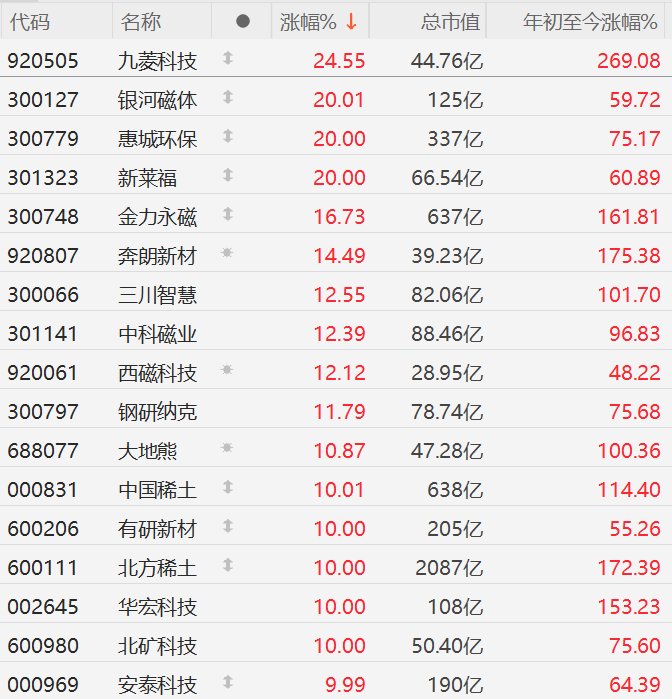
Core Viewpoint - China's recent upgrade of rare earth export controls has significantly impacted global supply chains, causing immediate reactions from countries like Japan and South Korea, as well as the United States [2][10]. Group 1: Policy Changes - On October 9, China's Ministry of Commerce announced that any product containing 0.1% rare earth elements will require a permit for export, a regulation stricter than previous measures [2][3]. - The new regulations also extend to superhard materials and rare earth equipment, effective November 8, further tightening control over the supply chain [2][3]. Group 2: Global Reactions - South Korean storage chip manufacturers are particularly affected, as their production relies heavily on Chinese rare earth materials, leading to urgent requests for leniency from the Chinese government [3][4]. - The U.S. is heavily dependent on China for rare earths, with 70% of its supply sourced from China, and the military's advanced weapon systems are also reliant on these materials [4][6]. Group 3: Strategic Implications - Rare earth elements are critical for various technologies, from smartphones to military applications, making them essential for both civilian and defense industries [6][12]. - The new regulations are seen as a strategic move by China to assert control over the global supply chain, especially in response to previous technology restrictions imposed by Western countries [10][14]. Group 4: Market Impact - Domestic companies like Zhongke Sanhuan and Jinli Permanent Magnet have seen their stock prices rise, indicating a positive market response to the new regulations [10][14]. - The shift in policy is expected to force a realignment of global supply chains, with countries scrambling to secure alternative sources and technologies [10][12].
2024年全球稀土产量分布:中国稀土产量占全球近70%!2020年至2023年美国从中国进口的稀土量占总进口量的70%
Ge Long Hui· 2025-10-11 05:29
格隆汇10月11日|美国地质调查局公布的数据显示,2024年中国稀土产量占全球近70%,2020年至2023 年美国从中国进口的稀土量占总进口量的70%。 亚洲时报近日文章称,中国在全球关键矿产市场占据领先地位,尤其是在稀土、锂、钴和镍领域。中国 控制着全球60%以上的稀土产量、约70%的锂精炼、近70%的钴加工以及超过90%的电池级石墨产量。 (责任编辑:宋政 HN002) 【免责声明】本文仅代表作者本人观点,与和讯网无关。和讯网站对文中陈述、观点判断保持中立,不对所包含内容 的准确性、可靠性或完整性提供任何明示或暗示的保证。请读者仅作参考,并请自行承担全部责任。邮箱: news_center@staff.hexun.com ...
中国稀土新政落地,惊动特朗普,他紧急回应,让两员大将马上处理
Sou Hu Cai Jing· 2025-10-10 14:02
Core Viewpoint - China's new rare earth regulations represent a significant shift in strategy, impacting not only raw material exports but also equipment and technical personnel, which has caused a strong reaction in the international market, particularly in the United States [1][3][5] Group 1: Impact on the U.S. Rare Earth Industry - The new regulations effectively block the U.S. from accessing essential equipment and technical services needed for rare earth processing, severely limiting its ability to develop its own rare earth industry [3][7] - U.S. Treasury Secretary Mnuchin proposed a $20 billion plan to secure rare earth mining rights in Argentina, but the Argentine government has not yet responded positively [5][11] - The U.S. is exploring partnerships with other countries like Pakistan and Turkey for alternative resources, but these options face significant challenges in terms of technology and quality [5][13] Group 2: Strategic Shift in China's Approach - China's new policy is part of a broader strategy that has been in development since 2023, transitioning from merely selling raw materials to controlling the entire value chain of rare earths [9][15] - The focus is now on building a "non-replaceable" position through technology, standards, and talent, moving from a resource-based economy to a technology-driven one [15][17] - This strategic shift indicates that China is no longer just a supplier of raw materials but is aiming to dominate the technology and processing aspects of the rare earth industry [15][19] Group 3: Long-term Implications for the U.S. - The U.S. military's significant demand for rare earth materials complicates the situation, as the government struggles with budget issues that hinder investment in domestic rare earth production [7][19] - The U.S. may resort to using the Defense Production Act to requisition civilian rare earth stocks to prioritize military needs, but this is only a temporary solution [17][19] - The competition is evolving from resource availability to technological superiority, with China leveraging its resource advantages to create a technological moat [15][19]
东莞证券2025年四季度股票组合
Dongguan Securities· 2025-10-10 10:59
Investment Themes - Recommended stocks include Huaxin Cement, China State Construction, and Ningde Times in the cyclical sector[2] - In the consumer sector, recommended stocks include Hengrui Medicine and Shanxi Fenjiu[2] - In the power equipment and new energy vehicle sector, recommended stocks include Ningde Times and Goldwind Technology[2] - In the TMT sector, recommended stocks include Longi Green Energy and Luxshare Precision[2] Market Performance - As of September 30, 2025, the Shanghai Composite Index rose by 12.73%, the Shenzhen Component Index by 29.25%, and the ChiNext Index by 50.40%[4] - The average gain of the recommended stock portfolio was 33.11%, significantly outperforming the CSI 300 Index's gain of 17.90%[4] - Key outperformers included Huaxin Cement and Ningde Times, with quarterly gains exceeding 50%[4] Economic Outlook - The macroeconomic environment remains stable, with a focus on "appropriate easing" in monetary policy to support growth[4] - The manufacturing PMI showed signs of recovery but remained in contraction territory as of September[4] - The report anticipates continued inflow of foreign capital due to the Federal Reserve's interest rate cuts, enhancing the attractiveness of equity assets[4] Company Highlights - Huaxin Cement's projected EPS for 2025 is 1.30, with a PE ratio of 14.27[6] - China State Construction's projected EPS for 2025 is 1.16, with a PE ratio of 4.68[12] - China Rare Earth's projected EPS for 2025 is 0.34, with a PE ratio of 150.92[25] - Hengrui Medicine's projected EPS for 2025 is 1.26, with a PE ratio of 56.90[33]
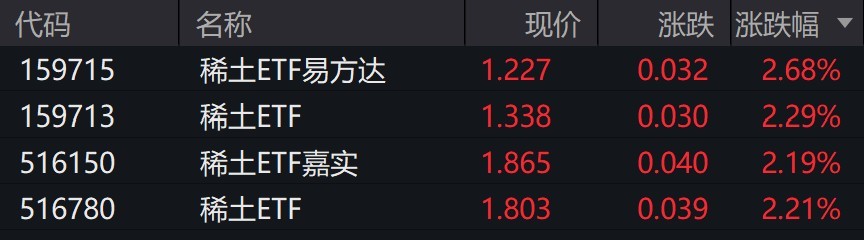
从物项管制到技术管制 中国“稀土锁”再收紧
Jing Ji Guan Cha Wang· 2025-10-10 10:55
Core Viewpoint - China's Ministry of Commerce has announced an upgrade in rare earth export controls, shifting from "item control" to "technology control," emphasizing the dual-use nature of rare earth materials and technologies [1][2][5]. Group 1: Export Control Changes - The new regulations prohibit the export of technologies related to rare earth mining, refining, and manufacturing without permission, expanding the definition of "export" to include various forms of transfer such as knowledge transfer and joint research [2][3]. - A "long-arm jurisdiction" mechanism has been introduced, requiring foreign organizations to obtain export licenses from China before exporting items containing Chinese rare earth components [2][3]. Group 2: National Security and Compliance - The measures are a response to illegal acquisition of rare earth technologies by foreign entities, which pose threats to China's national security and international stability [3][5]. - The export controls are not blanket restrictions; humanitarian-related exports will be exempt from licensing requirements [3][4]. Group 3: Global Market Position - China dominates the global rare earth supply chain, holding 48% of the world's rare earth reserves and contributing 69% of global production [4][6]. - The country possesses over 90% of rare earth refining and separation technology, achieving a purity level of 99.99%, which is a significant advantage over Western countries [4][6]. Group 4: Impact on Related Companies - Following the announcement, several companies in the rare earth sector saw significant stock price increases, indicating market optimism regarding the implications of the new regulations [7].