
ZGXT(000831)

Search documents
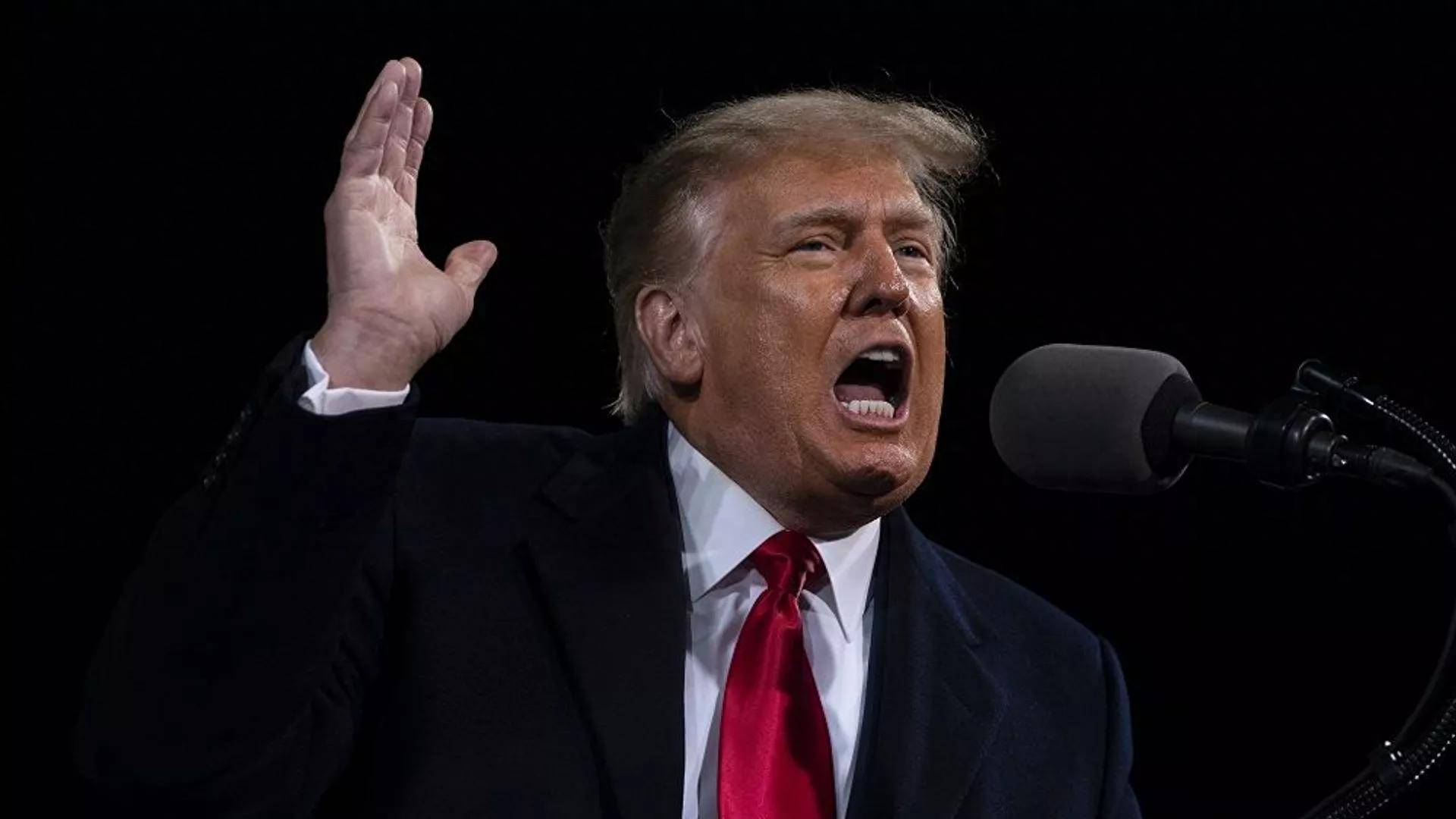
欧盟依赖中国稀土供应,明确告诉特朗普:会自主决定是否对华加税
Sou Hu Cai Jing· 2025-10-01 13:50
Group 1 - The core strategy of the Trump administration to impose tariffs on China has been effectively countered, as allies like Japan and the EU have rejected these demands [1][3] - The EU has asserted its autonomy in tariff decisions, indicating that U.S. requests are aimed at pressuring Russia rather than addressing trade issues with China [3] - China's dominance in critical resources, particularly rare earth metals, has created a significant dependency for the EU, which is reflected in a 21% increase in rare earth exports to the EU, reaching 2,582 tons in August [5][6] Group 2 - The EU's manufacturing sector is facing challenges due to supply shortages of critical materials, with seven production interruptions reported in August attributed to insufficient raw materials [5] - The EU's reliance on China for rare earth elements is stark, with nearly 100% of its rare earth imports coming from China, highlighting vulnerabilities in the supply chain [5][6] - In response to U.S. tariffs, China has implemented export controls on key rare earth materials, impacting European automotive manufacturers and leading to production delays [6][8] Group 3 - The geopolitical dynamics between the U.S., EU, and China are illustrated by the rare earth supply chain, as the EU must balance its industrial needs against U.S. pressure [8] - The EU's aspirations to be a significant player outside of U.S.-China relations are jeopardized if its high-end industries continue to suffer from external pressures [8]


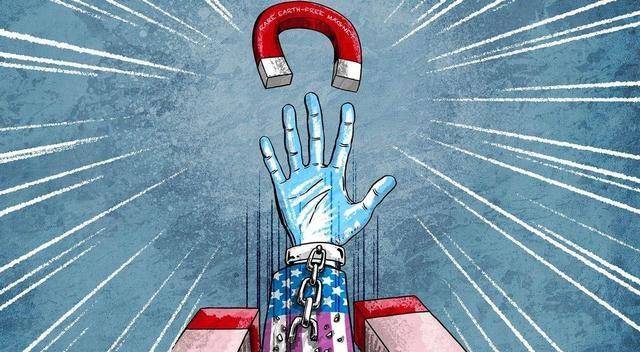
拿不到中国稀土,G7反其道而行,想把对付俄罗斯的老招搬出来?
Sou Hu Cai Jing· 2025-10-01 13:49
Core Viewpoint - G7's plan to impose a price cap on rare earths, similar to the previous measure against Russian oil, may backfire due to China's dominant position in the rare earth industry, which is significantly stronger than Russia's in oil [1][2]. Group 1: China's Dominance in Rare Earths - China produces over 60% of the world's rare earth minerals and accounts for more than 90% of the processing stages [2]. - China's smelting and separation technology is far superior, making it difficult for other countries to refine rare earths even if they have access to the raw materials [4]. - The West has experienced supply shortages due to China's previous export restrictions during trade tensions, highlighting the critical role of Chinese supply in high-end manufacturing [4]. Group 2: G7's Strategy and Implications - G7 believes that setting a price floor will help local rare earth companies in Australia and Canada become profitable and reduce reliance on China [7]. - G7's approach labels China's competitive pricing as "unfair," with leading Chinese company Northern Rare Earth's production cost below $30 per kilogram, compared to over $50 for Western counterparts [7]. - If China retaliates by tightening export controls, it could severely impact Western industries reliant on rare earths, such as electric vehicles and electronics [7]. Group 3: China's Response and Future Outlook - The Chinese government views export controls as necessary for national security and argues that unilateral price caps violate market principles [8]. - China is advancing in rare earth recycling and green smelting, positioning itself not only as a resource supplier but also as a leader in technology and standards [8]. - The increasing use of the renminbi in commodity transactions may lead to significant changes in global trade dynamics [8]. Group 4: Conclusion - G7's proposed rare earth price cap may ultimately harm their own interests rather than weaken China's position [9]. - A cooperative approach in competition is suggested as a more viable solution than policy-driven market distortions [9].

买不到就稳步下黑手,西方准备对中国稀土价格设限,G7欧盟闭门商讨
Sou Hu Cai Jing· 2025-10-01 07:04
Core Viewpoint - The recent tightening of rare earth export approvals by China has significant implications for global supply chains, particularly for Western countries that rely on these materials for technology and manufacturing [2][3]. Group 1: China's Export Control Measures - China has shifted from bulk export approvals to individual applications, implementing strict controls to prevent stockpiling and ensure transparency through blockchain technology [2][5]. - The new regulations clearly delineate military and civilian uses of rare earths, with severe penalties for violations, emphasizing resource security and market integrity [7][9]. Group 2: Western Response and Strategy - In response to China's actions, G7 and EU representatives are considering price caps and tariffs on Chinese rare earths, reflecting a complex mix of frustration and strategic maneuvering [3][5]. - Western nations are attempting to establish alternative supply chains, but face significant challenges in terms of time, investment, and environmental standards, indicating a reliance on Chinese resources in the short term [3][5]. Group 3: Market Implications - The uncertainty surrounding rare earth supply chains is leading to increased inventory accumulation and price volatility across various industries [5]. - The control measures are expected to slow down negotiations and complicate contract terms, thereby increasing the overall cost and risk in the market [5][9]. Group 4: Long-term Outlook - The ongoing confrontation over rare earths is likely to evolve into a prolonged strategic battle, with the ability to manage supply chains and adhere to regulations becoming critical for future industry positioning [9].
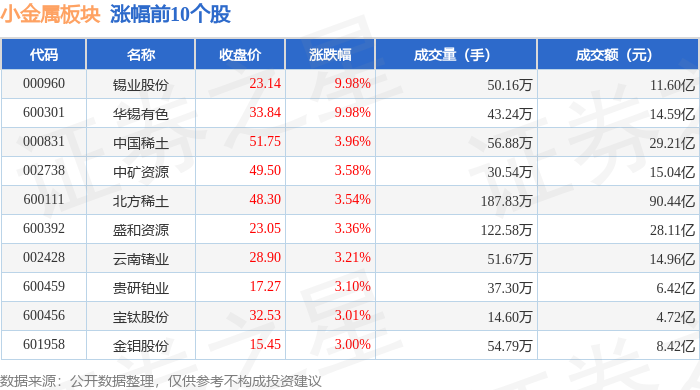
小金属板块9月30日涨3.39%,锡业股份领涨,主力资金净流入14.78亿元
Zheng Xing Xing Ye Ri Bao· 2025-09-30 08:42
Core Insights - The small metals sector experienced a significant increase of 3.39% on September 30, with Xiyang Co. leading the gains [1] - The Shanghai Composite Index closed at 3882.78, up 0.52%, while the Shenzhen Component Index closed at 13526.51, up 0.35% [1] Small Metals Sector Performance - Aluminum Co. (000960) saw a closing price of 23.14, with a rise of 9.98% and a trading volume of 501,600 shares, amounting to a transaction value of 1.16 billion [1] - Huaxi Nonferrous (600301) also increased by 9.98%, closing at 33.84 with a trading volume of 432,400 shares, resulting in a transaction value of 1.46 billion [1] - China Rare Earth (000831) closed at 51.75, up 3.96%, with a trading volume of 568,800 shares and a transaction value of 2.92 billion [1] - Other notable performers include Northern Rare Earth (600111) with a 3.54% increase, closing at 48.30, and a transaction value of 9.04 billion [1] Capital Flow Analysis - The small metals sector saw a net inflow of 1.478 billion in main funds, while speculative funds experienced a net outflow of 603 million, and retail investors had a net outflow of 875 million [2] - Northern Rare Earth (600111) had a main fund net inflow of 560 million, but speculative funds saw a net outflow of 210 million [3] - China Rare Earth (000831) recorded a main fund net inflow of 361 million, with speculative funds experiencing a net outflow of approximately 91.47 million [3]

渤海证券研究所晨会纪要(2025.09.30)-20250930
BOHAI SECURITIES· 2025-09-30 01:58
Macro and Strategy Research - In the first eight months of 2025, the profit of industrial enterprises above designated size increased by 0.9% year-on-year, indicating a stabilization in profitability [4][5] - The profit growth rate turned positive, with a significant monthly increase of 20.4% in August, driven by improved pricing stability and a narrowing decline in the Producer Price Index (PPI) [5][6] - The revenue profit margin for the same period was 5.24%, a year-on-year decrease of 1.9%, but the decline was less severe compared to previous months, contributing to the positive profit growth [5][6] Fixed Income Research - The report explores investment strategies for Real Estate Investment Trusts (REITs) in 2025, highlighting the effectiveness of initial public offering (IPO) selling strategies [8][9] - Historical data shows that selling on the first day of listing yields the highest success rate, while holding for longer periods results in diminishing returns [9][10] - The report emphasizes the importance of timing in REIT investments, with specific months showing higher success rates for buying and holding strategies [12] Company Research - The company, as a specialized platform for the China Rare Earth Group, saw significant improvement in performance in H1 2025 due to rising rare earth prices, with a notable increase in sales net profit margin [20][21] - Short-term demand for rare earths is expected to remain resilient, supported by policies and seasonal consumption peaks, while long-term prospects are bolstered by the strategic importance of rare earths [20][21] - The company is advancing its mining projects and has strong potential for asset injection from its parent group, which could enhance its production capacity significantly [21][23] Industry Research - The light industry sector is experiencing price increases for packaging paper, with multiple manufacturers raising prices by 30-50 yuan per ton, which is expected to positively impact downstream products [24][25] - Recent changes in U.S. tariff policies, including significant tariffs on imported furniture and building materials, are anticipated to have a limited long-term impact on the competitiveness of Chinese manufacturing [25] - The introduction of national standards for smart mattresses is expected to promote market regulation and consumer protection, supporting healthy industry development [25]
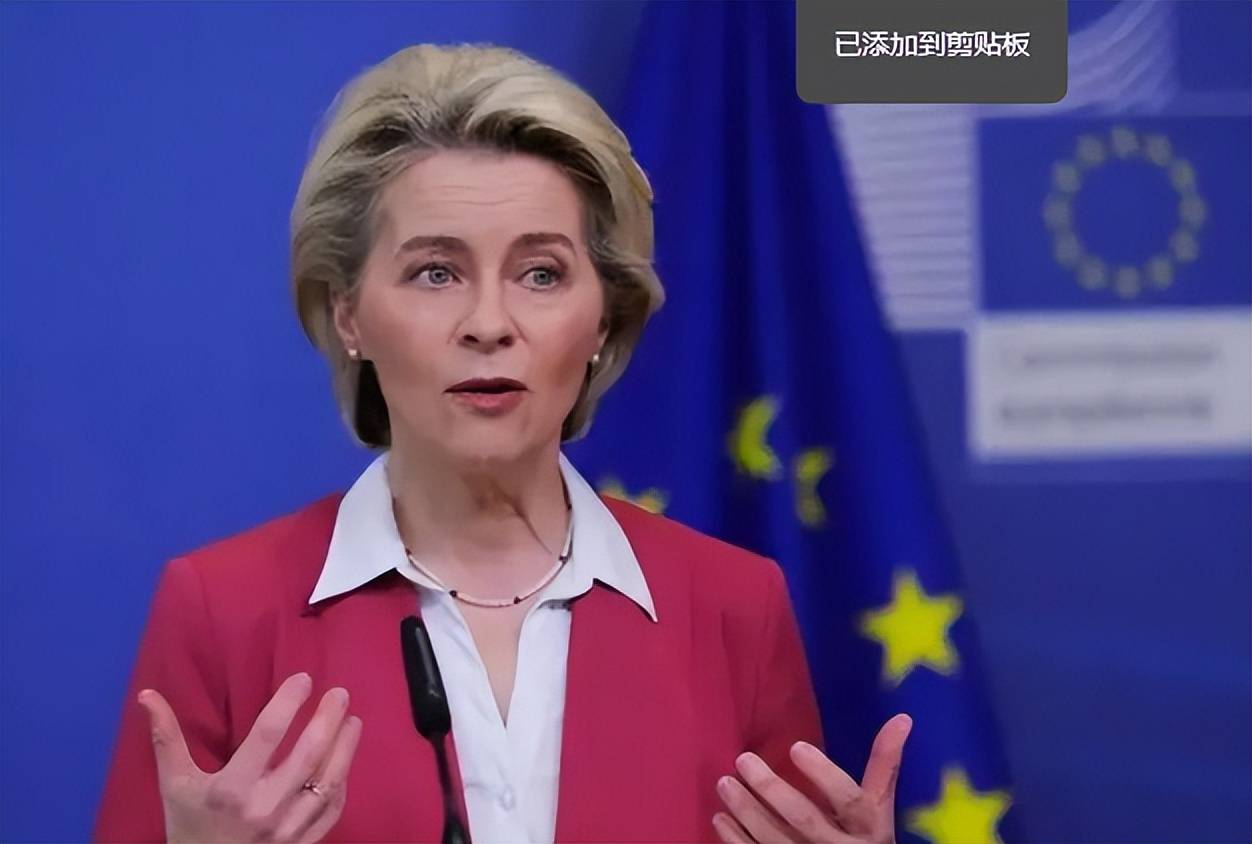
强如美国都妥协,欧盟竟想对中国稀土加税,中方送冯德莱恩两句话
Sou Hu Cai Jing· 2025-09-29 04:44
Core Viewpoint - The European Union (EU) is attempting to reduce its reliance on Chinese rare earths by considering imposing taxes on Chinese rare earth exports, which may backfire and worsen its own supply issues [1][3][7] Group 1: EU's Strategy and Challenges - The EU aims to create a protective framework to develop its own rare earth industry and reduce dependence on China, but this ambition faces significant challenges due to the complexity and time required to establish such an industry [5][7] - The EU's plan to tax Chinese rare earths could lead to a decrease in supply, exacerbating its existing reliance on China for these critical materials [7][9] Group 2: US-China Trade Dynamics - In the context of the US-China trade war, China's strategic use of rare earth supply restrictions has put pressure on both the US and the EU, highlighting the critical role of rare earths in high-tech industries [3][5] - The US has shown willingness to negotiate with China regarding rare earth supplies, indicating the high stakes involved in this sector [5][9] Group 3: Sino-European Relations - The relationship between China and the EU has been stable overall, with significant trade volume reaching over $780 billion last year, suggesting mutual interests despite political tensions [9][11] - China emphasizes the importance of communication and cooperation with the EU, urging the EU to avoid politicizing economic issues and to recognize the benefits of collaboration [9][11]
G7密谋对中国出口加税,设定稀土价格下限,废掉中国稀土这张王牌
Sou Hu Cai Jing· 2025-09-29 04:43
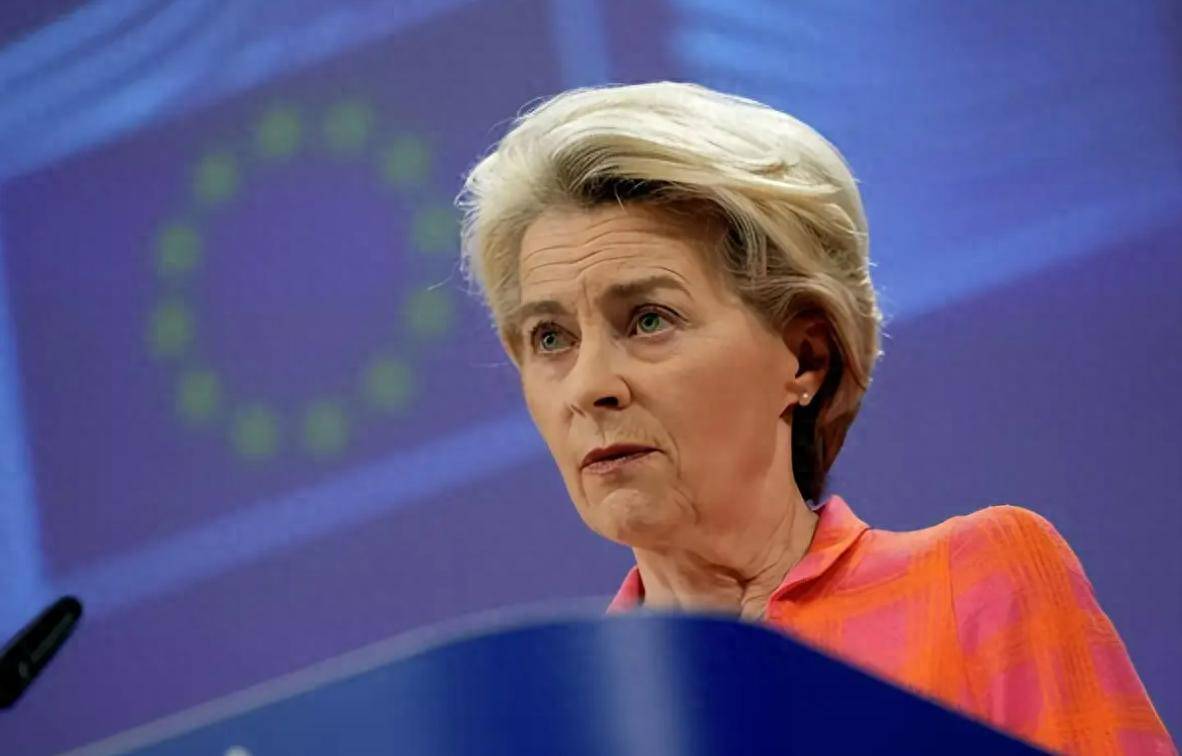
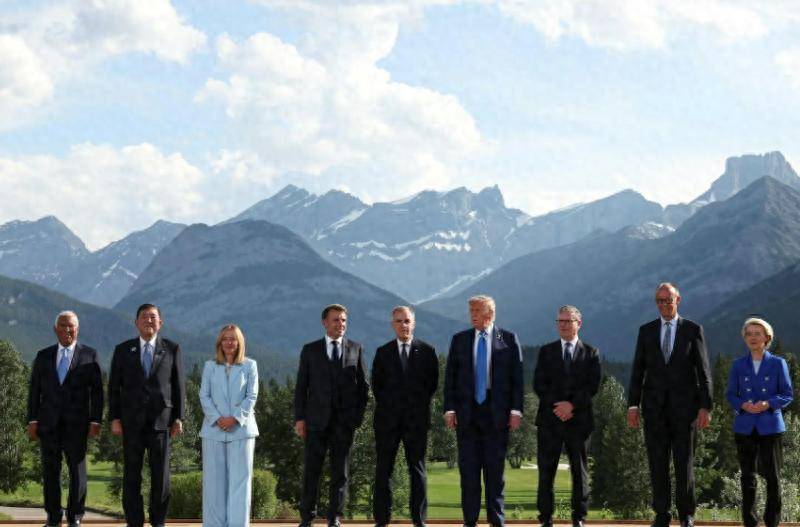
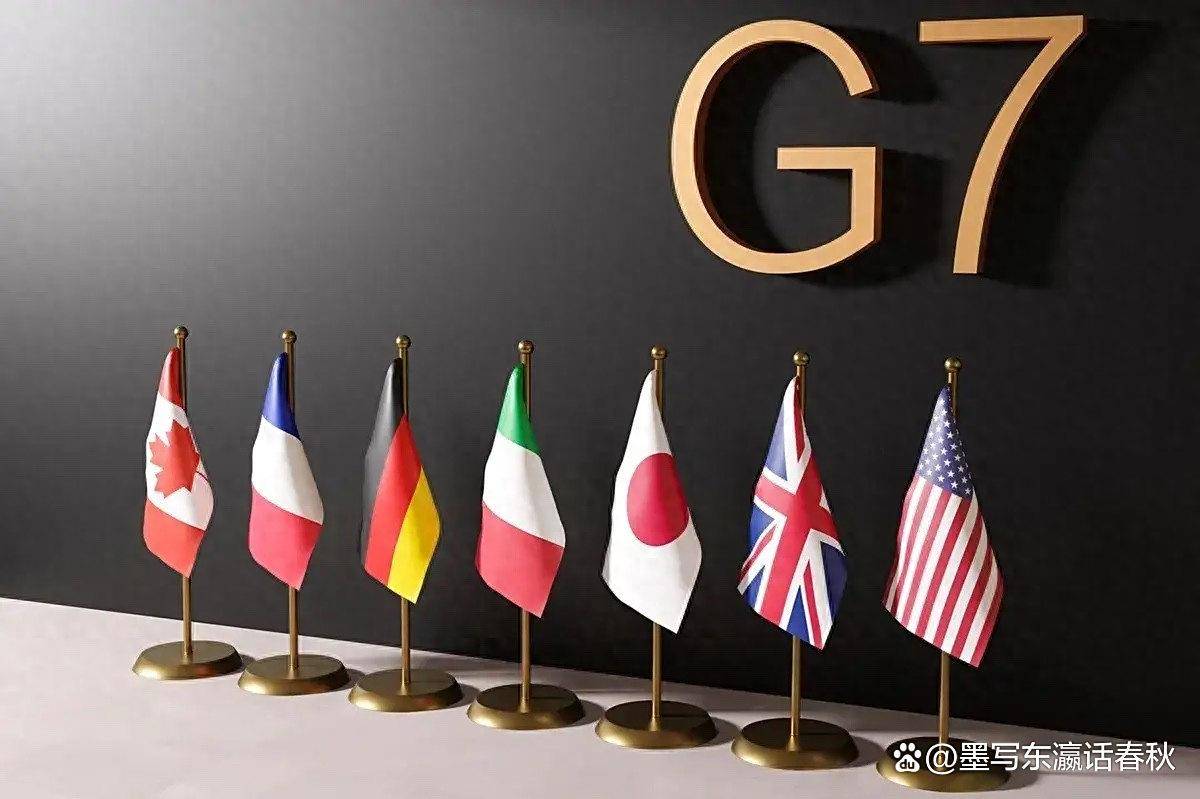
Group 1 - The G7 and EU are planning to counter China's influence in the rare earth market by setting a price floor and imposing tariffs on certain Chinese rare earth exports [1][3] - A recent meeting in Chicago focused solely on achieving self-sufficiency in the rare earth sector, with Australia also participating [1] - The G7 aims to protect profits for its rare earth companies while creating trade barriers to mitigate China's price advantage [1][3] Group 2 - There is a lack of consensus within the G7 and EU regarding foreign investment regulations in the rare earth sector and whether to exclude Chinese rare earth quotas from public procurement [3][5] - China's exports of rare earth magnets to the EU increased by 21% in August, while exports to the US decreased by 5%, highlighting the complexities of the current situation [3][5] - The G7 and EU face significant challenges in establishing a mature rare earth supply chain and determining pricing strategies, given China's dominant control over 92% of global rare earth processing [3][5] Group 3 - The EU relies entirely on China for certain rare earth types, complicating efforts to create a "rare earth national team" due to institutional limitations [5] - Even if the West successfully builds a self-sufficient rare earth supply chain, pricing remains a critical hurdle, as setting a price floor could lead to higher costs compared to Chinese rare earths [5][7] - The envisioned self-sufficiency by the G7 and EU may result in a situation where they cannot compete internationally with China's rare earths, potentially leading to adverse economic consequences [7]
全球铜矿供应趋紧!有色龙头ETF(159876)拉升1.5%!...
Xin Lang Cai Jing· 2025-09-29 02:12
Core Insights - The article highlights the strong performance of the non-ferrous metal sector, particularly the increase in the price of copper and aluminum, driven by supply disruptions and demand recovery [1][2] Group 1: Market Performance - The non-ferrous metal ETF showed a stable performance with a 1.5% increase in price and a transaction volume of 1.4755 million yuan, bringing the fund's total size to 303 million yuan [1] - Key stocks such as Baiyin Nonferrous, Guiyan Platinum, and Xingye Silver Tin saw significant gains of 3.6%, 3.23%, and 2.92% respectively, while Shenghe Resources experienced a decline of 1.41% [1] Group 2: Supply and Demand Dynamics - The Grasberg copper mine, the second largest globally, has halted production due to an accident, leading Freeport to project a significant decrease in copper sales by Q4 2025 and a potential 35% drop in production in 2026, exacerbating supply tightness [1] - The aluminum sector is witnessing a positive trend with successful technological advancements in aluminum alloy materials for automotive applications, recognized by high-end clients like BMW and Mercedes, which is expected to drive industry transformation [1] Group 3: Price Outlook - Tianfeng Securities indicates a bullish sentiment in the copper market, with prices expected to continue rising due to supply-demand dynamics and a favorable outlook for aluminum prices supported by inventory reductions and seasonal demand [1][2] - The cobalt sector is facing increased prices due to export bans and quota policies from the Democratic Republic of Congo, leading to a tightening of raw material supply [2]



31国联合起来对付中国稀土,不加量供应就要征收关税
Sou Hu Cai Jing· 2025-09-28 14:18
Core Viewpoint - The G7 and EU countries are attempting to challenge China's dominance in the rare earth market through various strategies, but these efforts may ultimately backfire and strengthen China's position [1][8]. Group 1: Strategies Employed by G7 and EU - The first strategy involves increasing regulatory thresholds for foreign investments to limit corporate investments in China, aiming to slow down China's potential monopoly on critical minerals like rare earths [3]. - The second strategy is to establish local content rules or limit procurement quotas for rare earths from China in public tenders, thereby reducing dependency on Chinese rare earths [3]. - The third strategy includes imposing tariffs or carbon taxes on China's rare earth and minor metal exports, increasing the cost of these exports to Western countries [4]. - The fourth strategy aims to set a price floor for rare earths, following a path previously practiced by the U.S., in an attempt to seize control over rare earth pricing [5]. Group 2: Challenges Faced by G7 and EU - Despite these strategies, the G7 and EU face significant challenges in establishing a non-China rare earth supply chain, making their efforts seem futile and likely to lead to failure [6][8]. - China's dominance in the rare earth sector is evident, with over 60% of global rare earth production and 92% of processing capacity being controlled by China, making it difficult for other countries to compete [6]. - Previous attempts by Western countries to reduce reliance on Chinese rare earths have consistently failed, highlighting the difficulty of overcoming China's established position in this market [8]. Group 3: Potential Outcomes - The current situation allows China to explore new rare earth markets and maintain strategic reserves, which could be beneficial in the long run [10]. - It is suggested that Western countries reconsider their approach, advocating for the removal of tariffs and trade barriers to restore normal trade relations as a more effective solution to the rare earth crisis [12].
有色金属周报:自由港铜矿超预期减产,看好铜板块机会-20250928
SINOLINK SECURITIES· 2025-09-28 08:25
Investment Rating - The report maintains a positive outlook on copper, aluminum, and precious metals, indicating a high level of market activity and potential for growth in these sectors [13][16]. Core Insights - Copper prices have surged due to unexpected production cuts, leading to significant supply shortages and rapid price increases [13]. - Aluminum is showing signs of recovery with inventory levels decreasing and downstream processing rates improving, suggesting a potential for sustained high profitability [15]. - Precious metals, particularly gold, are expected to rise further due to market anticipation of continuous interest rate cuts [16]. Summary by Sections Copper - This week, LME copper price increased by 2.09% to $10,205.00 per ton, while Shanghai copper rose by 3.20% to 82,500 yuan per ton [14]. - Supply side: The import copper concentrate processing fee index rose to -$40.36 per ton; national copper inventory decreased by 4,400 tons to 140,100 tons [14]. - Consumption side: Brass rod enterprises' operating rate was 48.49%, showing a slight increase of 0.71 percentage points [14]. Aluminum - This week, LME aluminum price decreased by 1.01% to $2,649.00 per ton, and Shanghai aluminum fell by 0.24% to 20,700 yuan per ton [15]. - Supply side: Electrolytic aluminum ingot inventory in major consumption areas dropped by 21,000 tons to 617,000 tons [15]. - Demand side: Downstream processing enterprises' operating rate increased by 0.8 percentage points to 63.0%, driven by pre-holiday stocking [15]. Precious Metals - This week, COMEX gold price rose by 0.23% to $3,789.80 per ounce, with SPDR gold holdings increasing by 5.15 tons to 1,005.72 tons [16]. - The market is experiencing fluctuations due to U.S. tariffs and escalating geopolitical risks, contributing to a volatile trading environment [16]. Rare Earths - The price of praseodymium and neodymium oxide decreased, while the export volume of magnetic materials saw significant growth [32]. - Domestic rare earth separation enterprises are preparing for production halts, indicating potential supply constraints [32]. Antimony - Antimony ingot price is at 174,900 yuan per ton, showing a decrease of 2.26% [33]. - The demand for antimony is expected to recover as the photovoltaic glass market stabilizes [33]. Molybdenum - Molybdenum concentrate price is 4,450 yuan per ton, with a slight decrease of 0.45% [34]. - The demand for molybdenum is expected to rise as major steel mills resume procurement [34]. Tin - Tin ingot price increased by 1.74% to 273,700 yuan per ton, with inventory decreasing by 6.14% [35]. - The supply-demand dynamics are favorable, supported by strong inventory levels and demand from the semiconductor sector [35].


