
CMSK(001979)

Search documents
超20万元/㎡!上海土拍持续火热,再创全国宅地单价新高
券商中国· 2025-07-25 23:21
Core Viewpoint - The recent land auction in Shanghai has shown a strong demand for residential land, with significant premium prices indicating a robust real estate market outlook for the city [5][12]. Summary by Sections Auction Results - On July 25, Shanghai's remaining three residential land parcels were sold for a total of 10.427 billion yuan, contributing to an overall auction total of 28.96 billion yuan for eight parcels [5][12]. - The auction attracted a total of 14 participating companies, including six state-owned enterprises and one private enterprise [11]. Notable Transactions - The Xu Hui Hengfu land parcel sold for 1.225 billion yuan, achieving a floor price of 200,257 yuan per square meter, with a premium rate of 22.38%, marking a new high for residential land prices in Shanghai and nationwide [2][8]. - The Hongkou District North Bund parcel was sold for 6.4719 billion yuan, with a floor price of 126,577 yuan per square meter and a premium rate of 46.33%, indicating high competition among bidders [3][10]. - The Pudong New District Tangzhen parcel sold for 2.7297 billion yuan, with a floor price of 52,360 yuan per square meter and a premium rate of 40% [4][11]. Market Trends - The auction results reflect a continued trend of high demand for quality land in Shanghai, with three parcels triggering stop prices during the bidding process [17]. - The overall auction performance suggests that the real estate market in Shanghai is likely to remain stable, supported by the accelerated supply of quality new housing [17].




4.06亿元资金今日流入房地产股
Zheng Quan Shi Bao Wang· 2025-07-25 09:18
Market Overview - The Shanghai Composite Index fell by 0.33% on July 25, with nine industries rising, led by electronics and computers, which increased by 1.37% and 1.26% respectively. The real estate sector ranked third in terms of gains [1] - The construction decoration and building materials sectors experienced the largest declines, with decreases of 2.06% and 1.69% respectively [1] Capital Flow Analysis - The main capital outflow from the two markets totaled 49.376 billion yuan, with four industries seeing net inflows. The computer industry led with a net inflow of 2.924 billion yuan, followed by the electronics sector with a net inflow of 2.348 billion yuan [1] - The non-ferrous metals industry had the largest net outflow, totaling 6.911 billion yuan, followed by the power equipment sector with a net outflow of 5.773 billion yuan [1] Real Estate Sector Performance - The real estate industry rose by 0.63% with a net capital inflow of 406 million yuan. Out of 102 stocks in this sector, 38 rose, including two that hit the daily limit, while 55 declined [2] - The top three stocks with the highest net inflow in the real estate sector were Zhangjiang Hi-Tech, with 743 million yuan, followed by Quzhou Development and New Town Holdings with 122 million yuan and 63.28 million yuan respectively [2] - The stocks with the largest net outflows included Hainan Airport, China Merchants Shekou, and Tibet Urban Investment, with outflows of 166.84 million yuan, 146.88 million yuan, and 75.17 million yuan respectively [3] Real Estate Capital Inflow Rankings - The top stocks in terms of capital inflow included: - Zhangjiang Hi-Tech: +10.00%, 8.56% turnover, 743.26 million yuan inflow - Quzhou Development: +2.37%, 1.99% turnover, 122.43 million yuan inflow - New Town Holdings: +2.88%, 1.26% turnover, 63.28 million yuan inflow [2] Real Estate Capital Outflow Rankings - The stocks with the largest capital outflows included: - Hainan Airport: +3.14%, 5.92% turnover, -166.84 million yuan outflow - China Merchants Shekou: +2.29%, 1.38% turnover, -146.88 million yuan outflow - Tibet Urban Investment: -6.74%, 7.12% turnover, -75.17 million yuan outflow [3]


中国城市运行周期跟踪(2025.Q2):量价回落,波动加剧
GUOTAI HAITONG SECURITIES· 2025-07-25 08:28
Investment Rating - The report assigns an "Accumulate" rating for the real estate industry [5]. Core Insights - The overall market in Q2 2025 shows weak transaction volumes, stable prices lacking trends, and increasing inventory with heightened de-stocking pressure [3]. - Only 19% of the 27 cities analyzed exhibit signs of market bottoming, indicating a general trend of "volume contraction, price stagnation, and inventory pressure" [12]. - The new housing market is experiencing a downturn, with first-tier cities showing a significant slowdown in sales growth, while the second-hand housing market demonstrates relative resilience but with increasing regional disparities [12][13]. Summary by Sections 1. Transaction Decline and Lengthening De-stocking - The report highlights that the real estate cycle varies significantly across cities due to localized policies and differing reliance on land finance [8]. - A comprehensive scoring model based on seven core indicators is used to assess the real estate cycle of each city, categorizing them into four stages: bottoming, rising, topping, and declining [8][9]. 2. Price Trends: Q2 New and Second-hand Housing Prices Decline - In Q2 2025, new housing prices experienced a slight decline after a period of stabilization, with 85% of cities unable to sustain price increases for more than two months [17]. - Second-hand housing prices also fell, with 78% of cities still in a downward trend by June [17][19]. 3. Transaction Volume: Weak Recovery and Increased Volatility - First-tier cities maintained an upward trend in new housing transactions until June, where a decline of 12% was noted [22]. - Second-tier cities saw a 15% year-on-year drop in new housing transactions in Q2, reflecting greater inventory pressure and declining buyer confidence [22][27]. 4. Demand Entering a Tug-of-War Phase Leading to Rising Inventory Cycles - The de-stocking cycle for first-tier cities increased to 20 months by June 2025, indicating intensified market supply-demand conflicts [29]. - Second-tier cities faced even longer de-stocking cycles, reaching 23 months, highlighting structural issues such as declining population attraction and excess land supply [29]. 5. Company Profit Forecasts - The report includes profit forecasts for key companies, with several companies rated as "Accumulate" based on their projected earnings per share (EPS) and price-to-earnings (PE) ratios [32].





上海浦东唐镇地块溢价40%成交
news flash· 2025-07-25 06:10
7月25日,上海2025年六批次土拍剩余3宗宅地出让,其中,浦东唐镇地块吸引了7家竞买人参与竞价, 经过62轮竞价到达中止价27.3亿元,进入竞高品质建设指标阶段,最终由招商蛇口(001979)和中旅投 资联合体以总价27.3亿元+商品住宅装修标准不低于4500元/㎡+公共服务设施200㎡+高端人才住房配建 比例0.7%竞得,成交楼面价52360元/㎡,溢价率40%。 ...
招商蛇口、中旅投资联合体27.3亿竞得浦东唐镇宅地 绿城64.7亿夺北外滩地块
news flash· 2025-07-25 05:23
招商蛇口、中旅投资联合体27.3亿竞得浦东唐镇宅地 绿城64.7亿夺北外滩地块 智通财经7月25日电,上海迎来今年第六批次土拍余下3宗宅地出让。其中,浦东唐镇地块经过62轮竞价 到达中止价,进入竞高品质建设指标阶段。最终,招商蛇口、中旅投资联合体以中止价27.297亿元+商 品住宅装修标准不低于4500元/平方米+公共服务设施200平方米(计容)+高端人才住房配建比例0.7%竞 得该地块,成交楼面价52360元/平方米,溢价率40%。虹口区北外滩地块被绿城以64.719亿元的价格摘 得,成交楼面价126577元/平方米,溢价率46.33%。(智通财经记者 王海春) ...
上半年50+重磅级高管变动,2025商业地产企业都在“大手笔”抢人!
3 6 Ke· 2025-07-25 02:36
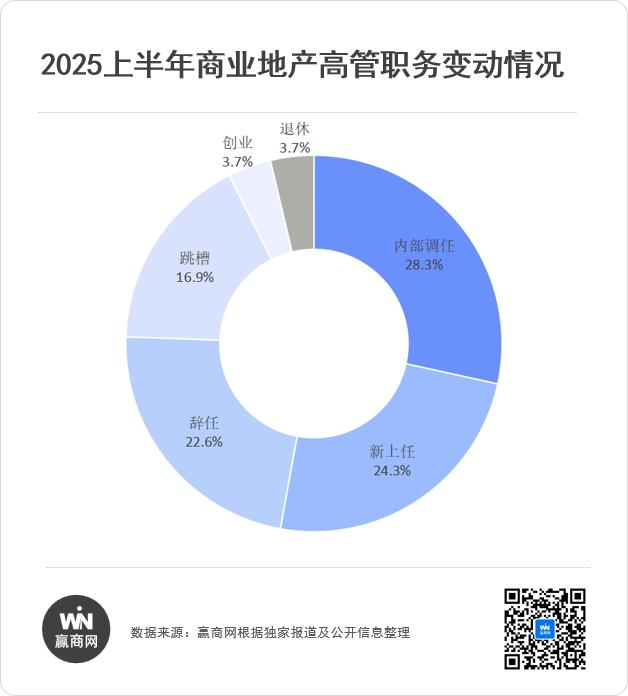
Group 1 - The core management teams of several major real estate companies, including Vanke and Swire Properties, are undergoing significant changes, with at least 53 personnel changes reported in the commercial real estate sector in the first half of 2025 [1][3] - Nearly 10 companies, including Vanke Group, China Resources Land, and Longfor Group, have initiated organizational transformations, focusing on strategic adjustments and streamlining operations [3][4] - Leading commercial management companies in mainland China are forming composite teams that excel in both commercial operations and asset management, achieving breakthroughs in organizational efficiency and product iteration [4] Group 2 - Vanke's commercial segment is transitioning from a "commercial operator" to a "market-oriented asset management platform," with significant organizational restructuring underway [5] - Joy City Holdings has upgraded its commercial management center to a commercial division, emphasizing refined operations and capital loop capabilities to enhance asset value [7] - Hong Kong-based companies are increasingly integrating with the mainland market, actively recruiting talent and adjusting their business strategies to focus on high-end commercial properties [8][9] Group 3 - Swire Properties is enhancing its retail business in mainland China by promoting local executives to key positions, reflecting the importance of the mainland market to its core business [9][11] - Hong Kong Land is accelerating its strategic transformation by hiring several key talents to strengthen its operations in the mainland commercial real estate sector [12][14] - The new strategy aims to recover up to $10 billion by 2035, focusing on high-end commercial assets and enhancing the company's long-term sustainable growth [14] Group 4 - Major players in the commercial real estate sector are prioritizing talent acquisition and development, recognizing that skilled personnel are crucial for driving business forward [15][16] - China Resources Vientiane Life has launched a talent recruitment plan aimed at attracting senior management in commercial and property management sectors, with a comprehensive onboarding program [16][18] - A trend of experienced executives starting their own ventures is emerging, with notable figures like Ling Changfeng and Tian Weilong establishing new companies focused on asset management and urban renewal [19][21] Group 5 - Ling Changfeng's new company, Ningpu Development, is focusing on light asset management and has secured partnerships for significant urban renewal projects [21] - Tian Weilong's Jinlou Group is targeting urban renewal and community commercial projects, with a strategic focus on asset securitization [22][24] - The competitive landscape is intensifying as top executives transition to new roles, with a notable increase in personnel changes within the commercial real estate sector [24][25]




地产持仓延续低配,龙头房企迎投资良机
Guolian Minsheng Securities· 2025-07-24 09:50
Investment Rating - Investment recommendation: Outperform the market (maintained) [9] Core Viewpoints - The real estate sector continues to see low allocation, with leading real estate companies presenting good investment opportunities. The total market value of heavy holdings in the real estate sector among public funds was 25.67 billion yuan in Q2 2025, a decrease of 11.3% quarter-on-quarter, with a holding ratio of 0.83%, which is 0.37 percentage points lower than the industry standard [4][10][17]. Summary by Sections Industry: Fund Holdings Decline, Low Allocation Trend Continues - In Q2 2025, the total market value of heavy holdings in the real estate sector among sample funds was 25.67 billion yuan, down 11.3% quarter-on-quarter. The holding ratio was 0.83%, a decrease of 0.12 percentage points, indicating a relative underweight of 0.37 percentage points compared to the industry standard [10][17]. Sector: Development and Service Sectors See Decline - In Q2 2025, the heavy holding ratios for the real estate development and service sectors were 0.74% and 0.09%, respectively, both showing a quarter-on-quarter decline of 0.11 and 0.02 percentage points [11][22]. Individual Stocks: Focus on State-Owned Enterprises and Commercial Real Estate - The top five heavy holdings in the real estate development sector were Poly Developments (4.902 billion yuan), China Merchants Shekou (3.193 billion yuan), and others. Notably, New Town Holdings and China Resources Land saw increases in holdings of 466 million yuan and 202 million yuan, respectively [12][24]. Funds: Northbound Funds Increase Holdings in Poly, Southbound Funds Add to Beike, Longfor, and Greentown - In Q2 2025, the top five companies with increased northbound fund holdings included Poly Developments (+1.37 percentage points) and others. Southbound funds increased holdings in Beike-W (+2.15 percentage points) and Longfor Group (+2.04 percentage points) [13][35]. Investment Recommendations: Continue to Recommend Leading State-Owned Enterprises and Improvement-Oriented Real Estate Companies - The real estate sector's valuation remains at historical lows, with policies supporting market stabilization. The report suggests focusing on leading state-owned enterprises and improvement-oriented real estate companies with strong land acquisition capabilities and high-quality products, such as Jianfa International Group and Greentown China [14][38].

2025年二季度主动基金重仓股追踪
ZHONGTAI SECURITIES· 2025-07-24 04:52
1. Report Industry Investment Rating - The report does not explicitly mention the overall industry investment rating 2. Core Viewpoints of the Report - In Q2 2025, the overall market value of A - share holdings of active equity - oriented funds decreased, while that of H - share holdings increased. The industry concentration of the top heavy - stock holdings of equity - oriented funds decreased. The communication, non - bank finance, and media industries saw significant increases in allocation ratios, while the steel, food and beverage, and coal industries had large reduction ratios [4][6]. - The structure of the top heavy - stocks of active equity - oriented funds changed. The overall number of large - market - cap leaders decreased, and the holdings of sub - industry leaders increased. The new high - growth technology stocks related to AI emerged, while traditional large - cap white - horse stocks were significantly reduced [4]. - In terms of industry leaders, the communication, non - bank finance, media, agriculture, forestry, animal husbandry, and beauty care industries were significantly increased, while the steel, coal, real estate, social services, and food and beverage industries were significantly reduced [21]. - The report suggests focusing on four investment themes: communication and hardware upstream under AI diffusion, non - bank finance, new consumption in the Hong Kong stock market, and national defense and military industry [26] 3. Summary by Relevant Catalogs 3.1 2025Q2 Active Fund Heavy - Stock Holding Structure Overview - **A - share and H - share holdings changes**: In Q2 2025, the total market value of active equity - oriented fund heavy - stock holdings was 1736.2 billion yuan, a 1.66% QoQ decrease. A - share holdings decreased by 2.79% QoQ to 1394.8 billion yuan, while H - share holdings increased by 3.20% QoQ to 341.3 billion yuan. Due to the complex macro - economic environment and market volatility, funds faced redemption pressure and tended to reduce large - cap stocks with poor liquidity [6]. - **Industry concentration decline**: From Q1 to Q2 2025, the industry concentration of the heavy - stock holdings of equity - oriented funds decreased. CR3 decreased by 0.56 percentage points to 38.37%, and CR5 decreased by 4.18 percentage points to 51.18%. The top five industries in terms of holding market value remained the same, but the proportion of the electronics industry increased, while the other four industries decreased [4][7]. - **Structural adjustment of industry holdings**: In Q2 2025, 12 industries saw an increase in the total market value of holdings. The communication, non - bank finance, and media industries had large increases in allocation ratios, rising by 75.88%, 64.62%, and 38.37% respectively. The steel, food and beverage, and coal industries had large reduction ratios, decreasing by 46.32%, 26.16%, and 23.99% respectively [9] 3.2 Q2 Active Fund Top Heavy - Stock Tracking - **Change in the structure of top heavy - stocks**: In Q2 2025, the structure of the top 20 heavy - stocks of active equity - oriented funds changed. The large - market - cap leaders decreased, and the sub - industry leaders increased. The market value of the top 20 heavy - stocks accounted for 20.72% of all heavy - stocks, a 2% decrease from Q1 [12]. - **Changes in the top five heavy - stocks**: The top five heavy - stocks remained the same, but the overall holdings decreased. New high - growth technology stocks such as New Fiber Optic Technology and Inphi Corporation quickly rose in the rankings, while traditional large - cap white - horse stocks such as Luxshare Precision Industry, Midea Group, and Contemporary Amperex Technology were significantly reduced [4]. - **Hong Kong stock market adjustment**: In the Hong Kong stock market, AI and Internet media leaders were reduced, while the pharmaceutical and new consumption sectors that performed well in Q2 were significantly increased [18] 3.3 Q2 Industry Leader Heavy - Stock Tracking - **Industry leader allocation changes**: In Q2 2025, the communication, non - bank finance, media, agriculture, forestry, animal husbandry, and beauty care industries were significantly increased, while the steel, coal, real estate, social services, and food and beverage industries were significantly reduced [21]. - **Communication industry focus**: Driven by the booming demand for AI hardware, the communication industry became the focus of funds. The optical module sector, which benefits from the expansion of AI capital expenditure, was the main area for increasing communication heavy - stocks. The profitability of communication equipment is expected to continue to improve in the second half of the year [22]. - **Non - bank finance sector highlights**: The leaders of the non - bank finance sector attracted attention. The holdings of Ping An Insurance and CPIC increased by 55% and 41% respectively, and securities leaders such as Citic Securities and Huatai Securities also saw over 30% increases. The brokerage sector's performance is expected to continue to improve [23] 3.4 Investment Recommendations - **AI diffusion - related communication and hardware upstream**: The significant increase in the holdings of optical module leaders reflects that funds are extending from AI software to computing infrastructure. AI capital expenditure is expected to drive the performance of upstream sectors in the second half of the year [26]. - **Non - bank finance sector**: The concentrated increase in holdings of leaders such as Citic Securities and Ping An Insurance reflects the positive expectations of the market for the profitability improvement of the brokerage and insurance sectors. The non - bank finance sector is expected to achieve a resonance of valuation repair and performance recovery [26]. - **Hong Kong stock new consumption theme**: After the correction in the AI sector, funds refocused on consumption structure highlights, especially in the Hong Kong stock market. Sub - sectors such as pets, toys, and emotional consumption have become important directions for heavy - stock allocation [26]. - **National defense and military industry safety theme**: The significant increase in the holdings of core military stocks reflects the high attention of institutions to the "national security + high - end manufacturing" theme. The military industry has policy support, order growth, and mid - report performance improvement expectations, with medium - term allocation value [27]





消失的房企区域公司
21世纪经济报道· 2025-07-23 15:00
Core Viewpoint - The restructuring of regional companies in the real estate sector is a strategic move by leading firms to enhance efficiency and adapt to changing market conditions, focusing on high-potential cities and reducing management layers [2][6][10]. Group 1: Restructuring of Regional Companies - Several state-owned enterprises have begun to eliminate regional companies, shifting to a two-tier management model where headquarters directly manage city companies [2][4]. - China Resources Land and Vanke are among the firms that have adjusted their management structures to streamline operations and improve efficiency [5][6]. - The trend started with Jinmao, which dissolved five regional companies and restructured into 14 regional companies, indicating a broader industry shift [4][6]. Group 2: Focus on Core Cities - Leading real estate firms are concentrating their investments in first-tier and strong second-tier cities, with a focus on around ten key cities [6][10]. - Jinmao's investment strategy shows that 94.7% of its new saleable area is concentrated in first and second-tier cities, with Beijing and Shanghai being primary targets [6][8]. - Similarly, China Overseas Land's sales in major cities like Beijing and Shanghai accounted for over half of its total sales, highlighting the trend of focusing on core urban markets [7][8]. Group 3: Implications of Organizational Changes - The reduction of regional companies is seen as a defensive measure rather than a sign of stagnation, as these firms remain among the top performers in the industry [6][10]. - The shift to a two-tier management model is viewed as a rational response to the current market environment, where many firms are adopting similar structures to enhance operational efficiency [10][11]. - Analysts suggest that while streamlining operations, firms must balance centralized control with local market sensitivity to maintain competitiveness [11].

消失的房企区域公司
2 1 Shi Ji Jing Ji Bao Dao· 2025-07-23 11:53
Core Viewpoint - The restructuring of regional companies in the real estate sector is a strategic move by leading firms to enhance efficiency and adapt to a changing market environment, shifting from a multi-tier management structure to a more streamlined two-tier model [1][2][4]. Group 1: Company Restructuring - Several major state-owned enterprises have begun to eliminate regional companies, transitioning to a two-tier management model where headquarters directly manage city companies [1][2]. - China Jinmao initiated this trend by dissolving five regional companies and restructuring into 14 regional companies at the beginning of the year [2]. - Other companies like China Merchants Shekou and Poly Developments have followed suit, consolidating their regional operations to improve management efficiency [2][3]. Group 2: Market Focus - Real estate firms are increasingly concentrating their investments in high-tier cities, with a focus on around ten key cities, rendering regional companies redundant [4][5]. - Jinmao's investment strategy highlights this shift, with 37.6% of its new saleable area concentrated in first-tier cities like Beijing and Shanghai [4]. - China Merchants Shekou reported that 90% of its investment was directed towards its "core 10 cities," with 59% of total investment in first-tier cities [5]. Group 3: Strategic Implications - The reduction of management layers is seen as a rational response to the concentration of sales contributions from a limited number of core cities [6]. - Companies like China Overseas Land & Investment have noted that over 60% of their sales come from just four cities, indicating a need for a more centralized decision-making process [6]. - The restructuring is viewed as a proactive measure to enhance operational efficiency and adapt to the shrinking real estate market [7].