
Yanghe(002304)

Search documents
茅台都扛不住了,这轮白酒寒冬还要持续多久?
3 6 Ke· 2025-09-23 03:44
Core Viewpoint - The Chinese liquor industry, particularly the baijiu sector, is experiencing a significant downturn characterized by declining prices, increased inventory, and shifting consumer preferences, indicating a deep adjustment phase rather than a temporary fluctuation [4][15][22]. Industry Overview - The baijiu industry is facing a dual decline in both volume and price, with a reported production volume of 191.59 million kiloliters in the first half of 2025, a year-on-year decrease of 5.8% [5]. - Approximately 60% of liquor companies are experiencing price inversion, where actual market prices fall below manufacturer guidance, particularly affecting the 800-1500 yuan price range [5]. - The average inventory turnover days for the industry reached 900 days in the first half of 2025, a 10% increase year-on-year, indicating a significant slowdown in sales [11]. Company Performance - Major companies like Moutai and Wuliangye are showing signs of slowing growth, with Moutai's revenue growth target for 2025 set at 9%, the lowest since 2016 [17]. - Wuliangye's revenue for the first half of 2025 was 527.71 billion yuan, with a year-on-year growth of only 4.19% [17]. - Liquor companies are increasingly resorting to price cuts to manage high inventory levels, creating a downward pressure on prices [12]. Consumer Trends - The primary consumer demographic for baijiu is undergoing a generational shift, with younger consumers (born after 1995) showing diverse preferences for alcoholic beverages, including wine and craft beer [24]. - Health consciousness among younger consumers is changing drinking habits, leading to a decline in traditional drinking culture [25]. - The rise of new sales channels, such as e-commerce and community group buying, is disrupting traditional distribution models and further compressing profit margins for liquor companies [25]. Market Opportunities - Despite the challenges, there are emerging structural opportunities in the market, particularly in the lower price segments (100-300 yuan) where demand is shifting [26]. - The focus on family and friend gatherings as primary consumption scenarios is creating new opportunities for products that cater to these social settings [33]. - Companies that can adapt to these changes by enhancing their product offerings and marketing strategies are likely to survive and thrive in the long term [26].







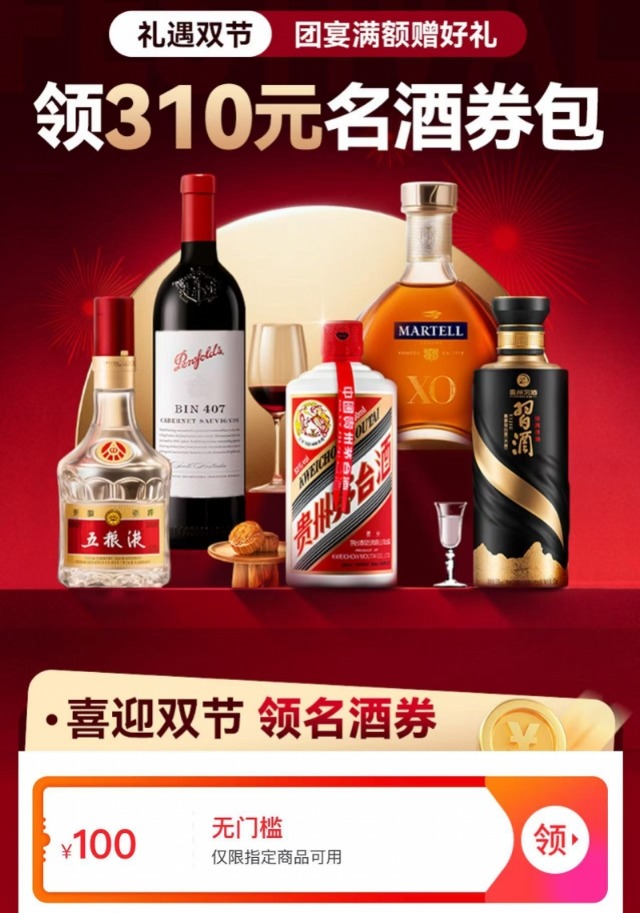
氛围感已加载99%,中秋团圆就要“洋”!
Zhong Jin Zai Xian· 2025-09-23 02:40
Core Viewpoint - The company emphasizes the importance of family reunions during the Mid-Autumn Festival, promoting its products as a means to enhance these gatherings and convey warmth and affection [1][15]. Product Promotion - The company has upgraded its product line, introducing the seventh generation of "Hai Zhi Lan" and the high-end "Meng Zhi Lan," which serve as excellent gifts to express sentiments during the festival [3]. - A new gift box, "Meng Zhi Lan·Happiness and Fulfillment," combines traditional elements with modern themes, symbolizing reunion and future exploration [7][8]. Consumer Engagement - Positive consumer feedback highlights the appeal of the company's products, with customers praising the upgraded "Hai Zhi Lan" for its exquisite packaging and rich flavor [5][12]. - The company is actively engaging consumers through tasting events and interactive promotions in 118 stores, enhancing the festive experience [10]. Brand Messaging - The company’s marketing campaign features the theme "Small Family Reunion, Big National Dream," integrating the spirit of family and national unity into its branding efforts [13].

饮酒思源系列(二十二):再论白酒周期及中秋复盘展望
Changjiang Securities· 2025-09-22 09:42
Investment Rating - The report maintains a "Positive" investment rating for the liquor industry [10] Core Insights - The liquor inventory cycle is gradually turning, with expectations of a demand recovery driven by ongoing economic policies and improved consumer confidence. The industry is entering a critical phase for left-side layout [2][8] - Current valuations and fund holdings in the liquor industry are at historical lows, indicating a favorable time for allocation. Leading liquor companies are showing strong dividend support [2][8] Summary by Sections Inventory Management - The liquor industry has clear inventory cycle fluctuations, with different phases affecting stock performance. The current phase indicates a shift from passive inventory accumulation to active inventory reduction, suggesting a more scientific and rational management approach by manufacturers [6][20][24] Demand Recovery - The demand for liquor is closely tied to macroeconomic conditions. Historical data shows that liquor industry revenue growth aligns with GDP growth, indicating potential for gradual recovery as the economy improves [36][39] Head Brand Concentration - The trend of market share concentration towards leading brands continues, with top companies maintaining stable growth despite overall market slowdowns. In 2024, listed liquor companies accounted for 28% of the total production, a historical high [42][44] Mid-Autumn Festival Performance Review - Historical performance around the Mid-Autumn Festival shows varying results for liquor stocks compared to the CSI 300 index. The fundamental performance remains the decisive factor for excess returns during this period [49][52]

白酒板块9月22日跌1.19%,*ST岩石领跌,主力资金净流出13.13亿元
Zheng Xing Xing Ye Ri Bao· 2025-09-22 08:46
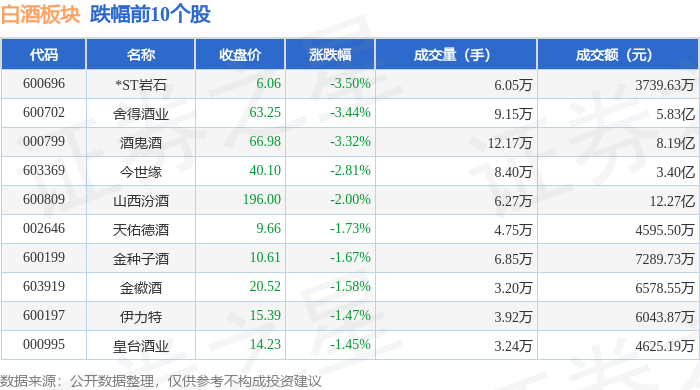
Market Overview - On September 22, the liquor sector declined by 1.19% compared to the previous trading day, with *ST Rock leading the decline [1] - The Shanghai Composite Index closed at 3828.58, up 0.22%, while the Shenzhen Component Index closed at 13157.97, up 0.67% [1] Individual Stock Performance - The following table summarizes the closing prices, percentage changes, trading volumes, and transaction amounts for key liquor stocks: - *ST Rock: Closed at 6.06, down 3.50%, with a trading volume of 60,500 and a transaction amount of 37.40 million [1] - Shede Liquor: Closed at 63.25, down 3.44%, with a trading volume of 91,500 and a transaction amount of 583 million [1] - Zhi Si Cha: Closed at 66.98, down 3.32%, with a trading volume of 121,700 and a transaction amount of 819 million [1] - Jin Shi Yuan: Closed at 40.10, down 2.81%, with a trading volume of 84,000 and a transaction amount of 340 million [1] - Si Xi Fen Jiu: Closed at 196.00, down 2.00%, with a trading volume of 62,700 and a transaction amount of 1.23 billion [1] Fund Flow Analysis - The liquor sector experienced a net outflow of 1.313 billion from institutional investors, while retail investors saw a net inflow of 982 million [1] - The following table details the fund flow for specific liquor stocks: - Tian You De Jiu: Institutional net inflow of 1.6124 million, retail net outflow of 828,900 [2] - Yang He Co.: Institutional net inflow of 291,500, retail net outflow of 8.5975 million [2] - Yi Li Te: Institutional net outflow of 3.4372 million, retail net inflow of 3.1047 million [2] - *ST Rock: Institutional net outflow of 4.3305 million, retail net inflow of 5.0205 million [2]


白酒板块午盘下跌 贵州茅台微跌0.75%
Bei Jing Shang Bao· 2025-09-22 03:59
Core Viewpoint - The liquor industry is experiencing a mixed performance as it enters the peak season, with demand showing improvement on a month-over-month basis but still facing a 10-20% shortfall year-over-year [1] Industry Summary - The Shanghai Composite Index rose by 0.07% to 3822.59 points, while the liquor sector closed at 2294.54 points, down 1.01% [1] - A total of 19 liquor stocks declined, with Shede Liquor leading the drop at 3.08% [1] - Major liquor companies such as Kweichow Moutai, Wuliangye, Shanxi Fenjiu, Luzhou Laojiao, and Yanghe Brewery saw varying stock price changes, with Kweichow Moutai closing at 1457.00 CNY per share, down 0.75% [1][1][1] Company Insights - According to a report from China Merchants Securities, the liquor industry is entering a peak season with overall feedback being tepid [1] - The report emphasizes the importance of focusing on supply-side changes at the enterprise level during this adjustment period, as leading companies like Moutai and Wuliangye are sending positive signals [1] - As the peak season unfolds, the direction of industry clearing will become clearer, and the bottom of the market will become increasingly evident [1]
解码食饮:迎又一年双节,如何展望旺季行情
2025-09-22 01:00
Summary of the Conference Call on the Baijiu Industry Industry Overview - The overall sales volume in the baijiu industry has declined, with distributors expecting a 20%-30% drop in sales during the upcoming double festival period. Sales volume decreased by 40%-50% in July and August [1][2] - High-end baijiu wholesale prices are weak, with Feitian Moutai priced around 1,780 RMB. Demand for baijiu in banquet scenarios remains stable, while mid-range products perform more consistently [1][4] Key Points and Arguments - **Sales Performance**: The baijiu industry is facing significant sales pressure, with actual sales declines exceeding previous market expectations. Most regions, except for Henan, are experiencing sales drops greater than anticipated [2] - **Inventory Levels**: From June to August, the average sales volume decreased by 50%, leading to a slight increase in inventory levels compared to last year. Most distributors have higher inventory levels than the same period last year [3] - **Price Trends**: High-end baijiu products like Feitian Moutai and Wuliangye are experiencing weak wholesale prices. Feitian Moutai's price is expected to fluctuate between 1,700 and 1,800 RMB during the double festival period [4][8] - **Company Performance Adjustments**: Guizhou Moutai has lowered its annual growth target but maintains a steady collection rate compared to last year. Wuliangye is also expected to adjust its growth target due to market conditions [6][9] Company-Specific Insights - **Guizhou Moutai**: The company is increasing promotional activities for its series of products and expects a slight downward adjustment in annual growth targets, which may benefit investors by releasing risks [8] - **Wuliangye**: The company is shifting its focus from absolute growth to long-term competitiveness, with a return rate of approximately 60%-70% [9][10] - **Luzhou Laojiao**: The company is implementing a price stabilization strategy and focusing on expanding its terminal market through targeted promotions [11] - **Shanxi Fenjiu**: The company is facing significant sales declines but is maintaining a stable price point due to good relationships with distributors [13] Investment Recommendations - The report suggests focusing on companies with potential for policy-driven growth and those that can adapt to market changes, such as Jiu Gui, She De, and Shui Jing Fang. Mid-range products like Gu Qing Gong and Ying Jia Gong are also highlighted for their recovery potential [5][7] - The overall sentiment is that the baijiu industry is currently at a low point, but there are opportunities for recovery and growth in specific segments and companies [27] Additional Considerations - The impact of external factors, such as government inspections and coal supply pressures, has affected consumption patterns in various regions [12][14] - The performance of next-tier baijiu products is weaker compared to high-end and mid-range products, indicating a need for careful monitoring of new product launches [21] This summary encapsulates the key insights and trends discussed in the conference call regarding the baijiu industry, highlighting both challenges and potential investment opportunities.


白酒行业25H1业绩综述、四季度策略:业绩压力如期释放,关注双节旺季配置窗口
ZHESHANG SECURITIES· 2025-09-20 12:01
Core Insights - The report highlights the performance pressure in the liquor industry, particularly in the first half of 2025, with a focus on the upcoming festive season as a potential opportunity for investment [1][2][3] Performance Summary - In the first half of 2025, the liquor industry experienced a revenue decline of 0.8% year-on-year, totaling 241.42 billion yuan, with the second quarter seeing a more significant drop of 4.9% to 88.06 billion yuan due to policy impacts [9][10] - High-end liquor maintained growth with a revenue increase of 6.2% in the first half and 3.4% in the second quarter, while mid-tier and regional brands faced substantial declines, with some experiencing drops as severe as 31.1% [10][12] - The overall net profit for the liquor industry decreased by 1.18% in the first half and 7.5% in the second quarter, indicating a challenging environment for profitability [20][28] Short-term Strategy - The report suggests focusing on the upcoming festive season, with expectations of improved sales performance despite ongoing pressures [2][3] - It emphasizes the need for liquor companies to balance market share and structural upgrades while managing pricing and sales dynamics [2][3] Long-term Outlook - The liquor index shows a strong correlation with the Producer Price Index (PPI), with a potential turning point noted in August 2025, which could signal a recovery phase for the industry [2][3] - The report indicates that the liquor sector possesses high return on equity (ROE) and dividend characteristics, with valuations currently positioned in the mid-to-lower range of the industry [2][3] Investment Recommendations - The report recommends focusing on brands that are expected to perform well during the festive season, including high-end brands like Guizhou Moutai and Shanxi Fenjiu, as well as mid-tier brands like Zhenjiu Lidong and Luzhou Laojiao [3][4] - It suggests that the current market conditions may present a buying opportunity as the industry approaches a potential bottom in performance expectations [3][4]

中秋国庆白酒“大战”开启!酒商以价换量 高端低度杀出重围
Nan Fang Du Shi Bao· 2025-09-20 06:13
Core Insights - The liquor market is experiencing increased activity as the Mid-Autumn Festival and National Day approach, with a notable acceleration in the sales of white liquor, although prices are declining [1][21] - High-end liquor products are seeing a price drop, while low-end products remain stable, prompting distributors to launch various promotional activities to clear inventory [1][21] Price Trends - In Guangzhou, 15 products have seen a decline in retail prices, including high-end brands like Moutai and Wuliangye, with price reductions ranging from several to dozens of yuan [2][3] - Moutai's average price is approximately 2065 yuan, down about 40 yuan from the previous period, while Wuliangye's price decreased by 11 yuan to around 910 yuan [2][3] - In Shenzhen, Moutai's average retail price is 2102.91 yuan, with significant price variations between online and offline channels [9][11] Sales Dynamics - Distributors report a noticeable shrinkage in demand compared to last year, leading to aggressive pricing strategies to stimulate sales [5][21] - High-end products are experiencing increased sales, while low-alcohol products are gaining popularity, indicating a shift in consumer preferences [21] Regional Insights - In Shenzhen, the price fluctuations have stabilized as demand increases, with expectations of a 20% rise in high-end product sales in September [10][21] - In Dongguan, the market shows a downward trend in mid-to-high-end product prices, with 14 out of 18 products experiencing price drops [17][19] Promotional Strategies - Liquor distributors are implementing various promotional strategies, such as discounts and bundled offers, to boost sales ahead of the festive season [3][21] - Some stores are offering promotions like "buy five boxes, get one free" to increase sales volume, contributing to the overall price decline [3][5]
15只白酒股上涨 贵州茅台1467.97元/股收盘
Bei Jing Shang Bao· 2025-09-19 08:15
Group 1 - The three major indices collectively declined, with the Shanghai Composite Index closing at 3820.09 points, down 0.30% [1] - The liquor sector closed at 2317.98 points, up 0.11%, with 15 liquor stocks rising [1] - Individual stock performance included Kweichow Moutai closing at 1467.97 CNY per share, unchanged; Wuliangye at 124.08 CNY, up 0.11%; Shanxi Fenjiu at 200.00 CNY, down 0.50%; Luzhou Laojiao at 134.85 CNY, up 0.86%; and Yanghe Brewery at 70.45 CNY, up 0.46% [1] Group 2 - Guosen Securities believes that liquor companies will focus on destocking and promoting sales in the short term [1] - In the medium to long term, there should be an increased emphasis on consumer engagement and consumption scenario cultivation, along with active internationalization and targeting younger demographics [1]
白酒板块午盘下跌 贵州茅台微跌0.15%
Bei Jing Shang Bao· 2025-09-19 04:53
Core Viewpoint - The liquor industry is experiencing a significant market adjustment, with second and third-tier companies facing substantial challenges, while leading companies show resilience, indicating a potential turning point for the industry [1] Industry Summary - On September 19, the Shanghai Composite Index fell by 0.03% to 3830.65 points, with the liquor sector closing at 2299.94 points, down 0.67% [1] - Among 15 liquor stocks, the majority declined, with Shui Jing Fang leading the drop at 2.20% [1] - Key liquor companies' stock performance included: - Kweichow Moutai: closed at 1465.71 CNY, down 0.15% - Wuliangye: closed at 123.45 CNY, down 0.40% - Shanxi Fenjiu: closed at 198.18 CNY, down 1.40% - Luzhou Laojiao: closed at 133.17 CNY, down 0.40% - Yanghe: closed at 70.25 CNY, up 0.17% [1] Company Summary - According to China Merchants Securities, the second quarter saw an accelerated market clearing in the liquor industry, with a thorough exit of second and third-tier companies [1] - Leading liquor companies are expected to show improved financial statements, which will serve as a critical signal for the industry's turning point, potentially reshaping market expectations across the industry, channels, and capital markets [1]