BYD(002594)

Search documents
3.2GWh!昌吉国投4个储能项目招标!要求宁德时代/海辰储能/亿纬锂能/中创新航等10家电芯厂商
Xin Lang Cai Jing· 2026-02-10 12:41
Core Viewpoint - Changji Guotou Xin Energy Development Co., Ltd. has announced a tender for four shared energy storage projects with a total scale of 800MW/3.2GWh, focusing on advanced battery technologies comparable to leading companies in the industry [2][3]. Group 1: Project Overview - The total scale of the energy storage projects is 800MW/3.2GWh, with specific projects including: - Changji Guotou Hutu Bih County: 200MW/800MWh - Changji Guotou Mulei County: 300MW/1200MWh - Changji Guotou Jimusaer County: 100MW/400MWh - Changji Guotou Qitai County: 200MW/800MWh [3][18][30]. - The tender includes a comprehensive range of equipment such as lithium iron phosphate battery storage, battery management systems (BMS), power conversion systems (PCS), energy management systems (EMS), and associated fire protection systems [3][18][30]. Group 2: Technical Requirements - The technical requirements for the battery cells are to be comparable to those of leading companies such as CATL, Hicharge Energy, Yiwei Lithium Energy, and others [2][9][21]. - The delivery period for the equipment is set to be completed within 90 calendar days from the issuance of the supply notice after the contract is signed [3][18][30]. Group 3: Tendering Process - The tender is open to independent legal entities registered in the People's Republic of China, with specific qualifications required for bidders, including experience in energy storage systems [7][20][30]. - A bid security of 500,000 yuan is required, and the tender documents can be downloaded from the Changji Public Resources Trading Network [23][31].






比亚迪起诉特朗普政府!
国芯网· 2026-02-10 12:25
Core Viewpoint - BYD has filed a lawsuit against the U.S. government, questioning the legality of tariffs imposed by the Trump administration and seeking a refund for all tariffs paid since April of the previous year [2][4]. Group 1: Legal Basis of the Lawsuit - BYD argues that the International Emergency Economic Powers Act (IEEPA) does not authorize the imposition of tariffs, as the term "tariff" is not mentioned in the text of the law [4]. - The lawsuit claims that the IEEPA is intended for financial sanctions and trade restrictions, not for the specific purpose of imposing tariffs [4]. - The core legal argument is that the Trump administration's use of IEEPA to impose tariffs on China may exceed its legal authority, which is the basis for BYD's request for a refund of paid tariffs [4]. Group 2: Context of the Lawsuit - BYD is the first Chinese automotive company to file a lawsuit regarding U.S. tariffs, joining thousands of global companies that have raised similar complaints [4]. - The case has been escalated to the U.S. Supreme Court, which will determine whether the President can impose comprehensive tariffs unilaterally under the IEEPA without Congressional approval [5]. - Previous rulings by the U.S. International Trade Court and the Federal Appeals Court have indicated that the tariffs lack legal authorization, and the Supreme Court's decision could significantly impact the legality of hundreds of billions in tariffs and refund issues [4][5].
比亚迪就关税起诉美国政府
Bei Jing Ri Bao Ke Hu Duan· 2026-02-10 12:08
Core Viewpoint - BYD has filed a lawsuit against the U.S. government seeking a refund of tariffs imposed on imported materials, marking the first time a Chinese automaker has taken such legal action regarding U.S. tariffs [1] Group 1: Legal Action and Context - BYD's lawsuit is part of a broader trend where numerous global companies, including Costco, Goodyear, Toyota, and Kawasaki Heavy Industries, have challenged the legality of tariffs imposed under the International Emergency Economic Powers Act (IEEPA) [1] - The lawsuit was initiated to ensure that BYD's U.S. subsidiary can secure refunds for tariffs before the Supreme Court makes a final ruling on the legality of the tariffs [1] - BYD's legal action not only addresses tariffs related to the V.O.S. case but also includes additional tariffs imposed on imports from Brazil and India after the V.O.S. case [1] Group 2: Business Operations and Financial Impact - BYD has established a manufacturing facility in Lancaster, California, which is one of the largest electric bus factories in North America, with an annual production capacity of approximately 1,500 units and over 750 local union workers employed [1] - The company's primary business in the U.S. focuses on electric buses and energy storage systems, providing products for municipal transit systems and utility projects across the country [1] - BYD's North American business generates annual revenue between $500 million and $1 billion, serving as a crucial market for showcasing its high-end manufacturing capabilities and enhancing its global brand influence [1]
比亚迪起诉美国政府
第一财经· 2026-02-10 12:08
Core Viewpoint - BYD has filed a lawsuit against the U.S. government, claiming that multiple tariff policies are illegal and seeking a refund for tariffs paid under the International Emergency Economic Powers Act (IEEPA) [3][4]. Group 1: Lawsuit Details - The lawsuit was initiated on January 26, 2026, targeting the IEEPA tariffs imposed on BYD's imported goods, asserting that these tariffs were levied without legal authority [3][4]. - BYD requests the court to rule that the IEEPA tariffs are unlawful, that all tariffs paid by BYD are unauthorized, and that the U.S. government must refund these tariffs along with legally authorized interest [4][5]. Group 2: Implications and Context - BYD has already paid IEEPA tariffs and believes that independent litigation is necessary to ensure the return of these unlawfully collected tariffs, as they continue to pay related tariffs for ongoing imports [5]. - The company operates a factory in Lancaster, California, which requires imported components for assembly, and its main business in the U.S. includes electric buses and energy storage networks [5]. - Over 1,000 companies, including major brands like Costco and Toyota, have also filed lawsuits against IEEPA tariffs, indicating a broader challenge to these tariff policies [5].
比亚迪起诉美国政府,要求其全额退还相关税款
Di Yi Cai Jing· 2026-02-10 11:55
Core Viewpoint - BYD has filed a lawsuit against the U.S. government, claiming that multiple tariff policies are illegal and seeking a refund of tariffs paid under the International Emergency Economic Powers Act (IEEPA) [1][2]. Group 1: Lawsuit Details - The lawsuit was initiated on January 26, targeting the IEEPA tariffs imposed on BYD's imported goods, with the company requesting the court to recognize these tariffs as unauthorized and to mandate a full refund of all related payments [1][2]. - BYD argues that the U.S. government lacks legal authority to impose these tariffs, violating the Administrative Procedure Act (APA), and that the actions taken were arbitrary [2]. - The company has already paid IEEPA tariffs and continues to incur these costs for ongoing imports, making the lawsuit necessary to ensure the recovery of unlawfully collected tariffs [2]. Group 2: Industry Context - Over 1,000 companies, including major firms like Costco, Goodyear, Toyota, and Kawasaki Heavy Industries, have also filed lawsuits against the IEEPA tariffs [3]. - BYD operates a factory in Lancaster, California, for electric buses but still requires the import of certain components for assembly [3]. - The company’s primary operations in the U.S. include electric buses, a North American headquarters in Los Angeles, and a forklift center in Rancho Dominguez, along with a network for energy storage [3].
比亚迪起诉美国政府
中国能源报· 2026-02-10 11:42
比亚迪美国子公司已提起诉讼,指控美国政府关税政策不合法,要求退还税款 。 End 据新加坡《联合早报》网站2月10日报道,中国电动汽车巨头比亚迪已加入一众企业行列,要求美国退还加征的关税。 多家媒体的报道显示,美国国际贸易法院披露,比亚迪的美国子公司于1月26日提起诉讼, 指控美国政府关税政策不合法,要求退还税 款 。 比亚迪方面在诉讼中称,该公司在美国设计和生产电动巴士和卡车,为维持业务运营,已为进口材料支付巨额关税。 美国最高法院正在审理特朗普关税措施的合法性问题。 众多企业均赶在关税清算之前提起相关诉讼,以免丧失退还税款的资格。 比亚迪的美国子公司在诉状中指出,由于无法确保在没有自身案件判决和司法救济的情况下获得退款,因此决定单独起诉。 目前已有超过1 0 00家企业实体提起类似诉讼 ,包括开市客、固特异轮胎、丰田、川崎重工等。 来源:参考消息 欢迎分享给你的朋友! 出品 | 中国能源报(c ne ne rgy) 编辑丨赵方婷 ...

比亚迪副总何志奇:我们能跻身智驾第一梯队,靠的是下“笨功夫”【附智能网联汽车行业市场分析】
Qian Zhan Wang· 2026-02-10 11:25
Core Viewpoint - BYD is positioned as a follower in the intelligent driving sector but aims to reach the forefront through diligent efforts in testing and technology development [2][4]. Group 1: Intelligent Driving Development - BYD has created a comprehensive testing database covering over 10,000 scenarios to enhance the reliability and safety of its intelligent driving systems [2]. - The company employs a rigorous approach to tackle technical challenges, exemplified by engineers spending two weeks at a specific intersection to optimize models for better risk prediction [2]. - As of the end of 2025, over 2.56 million BYD vehicles equipped with the "Tianshen Eye" intelligent driving system are expected to be on the road, generating over 160 million kilometers of driving data daily [4]. Group 2: Strategic Focus on Intelligentization - BYD's chairman, Wang Chuanfu, emphasizes that the first phase of the electric vehicle market is focused on electrification, while the second phase will be on intelligentization, which is expected to be transformative and accelerate over the next 2 to 3 years [4]. - The company is strategically shifting its focus towards intelligentization, aiming to cover all vehicle models with its "Tianshen Eye" technology, thereby implementing a strategy of "intelligent driving equality" [4]. Group 3: Market Competition - The Chinese intelligent connected vehicle market is highly competitive, with traditional automakers and new entrants like Tesla, NIO, and Xpeng all actively developing high-performance intelligent products [5]. - Traditional manufacturers such as Great Wall and SAIC are also accelerating their transformation by investing in intelligent driving and vehicle networking technologies [5]. Group 4: Industry Growth and Trends - The market for passenger cars with L2-level functions is projected to grow by 21.2% year-on-year by the third quarter of 2025, with a penetration rate expected to reach 66.1% by the end of that year [6]. - The intelligent connected vehicle industry in China is anticipated to exceed 2 trillion yuan by 2029, indicating strong growth potential [7]. - Intelligent connected vehicles are integrating various transformative technologies, positioning themselves as key nodes in the convergence of energy, transportation, and information communication [9].
A股重要信息回顾:十部门联合发布《低空经济标准体系建设指南》,财政部2026年新设、优化一揽子贷款贴息政策以财政金融协同促内需支持实体经济
Jin Rong Jie· 2026-02-10 10:38
Industry Insights - The Ministry of Industry and Information Technology and three other departments jointly issued the "Implementation Plan for Digital Transformation in the Automotive Industry," aiming to enhance the top-level design of digital transformation and promote high-quality development in the automotive sector [1] - The National Development and Reform Commission and four other departments released opinions on strengthening the construction of data element disciplines and digital talent teams, aiming to activate data elements to empower new productivity and promote the integration of education, talent, industry, and innovation chains in the data field [1] - Zhejiang Province has launched a major technological initiative for low-altitude economy, targeting key technologies in equipment manufacturing, operational support, and scenario applications over the next three years to support the development of a low-altitude economy [1] Company News - China Ocean Shipping Group signed contracts for 87 new ship orders with China Shipbuilding Group, with a total contract value of approximately 50 billion RMB, marking the highest single cooperation signing amount for domestic shipbuilding enterprises [1] - JD Logistics has launched its sixth-generation intelligent delivery vehicle in Saudi Arabia, which will collaborate with JoyExpress couriers to provide last-mile delivery services for local consumers [1] - Cainiao's Hong Kong eHub smart air cargo center has officially launched an automated stacking system, becoming the first in Hong Kong to achieve full-process automation from security inspection to grouping [1] - Deppon Express has created a "direct train" for Middle East logistics, opening air and sea transport routes connecting China to six countries including the UAE and Saudi Arabia, providing full-link logistics services to connect with the Middle East market [1] - Beijing Hualian Printing has introduced BYD's new energy forklifts, achieving a dual leap in environmental efficiency and operational efficiency [1] - Shenzhou Holdings has opened its flagship warehouse in South China, serving as a logistics center to empower the upgrade of fast-moving consumer goods in the South China region [1] - New Stone Technology has officially entered JD's self-operated mall, becoming the first unmanned vehicle brand to partner with a comprehensive e-commerce platform, exploring new paths for unmanned vehicle commercialization [1]

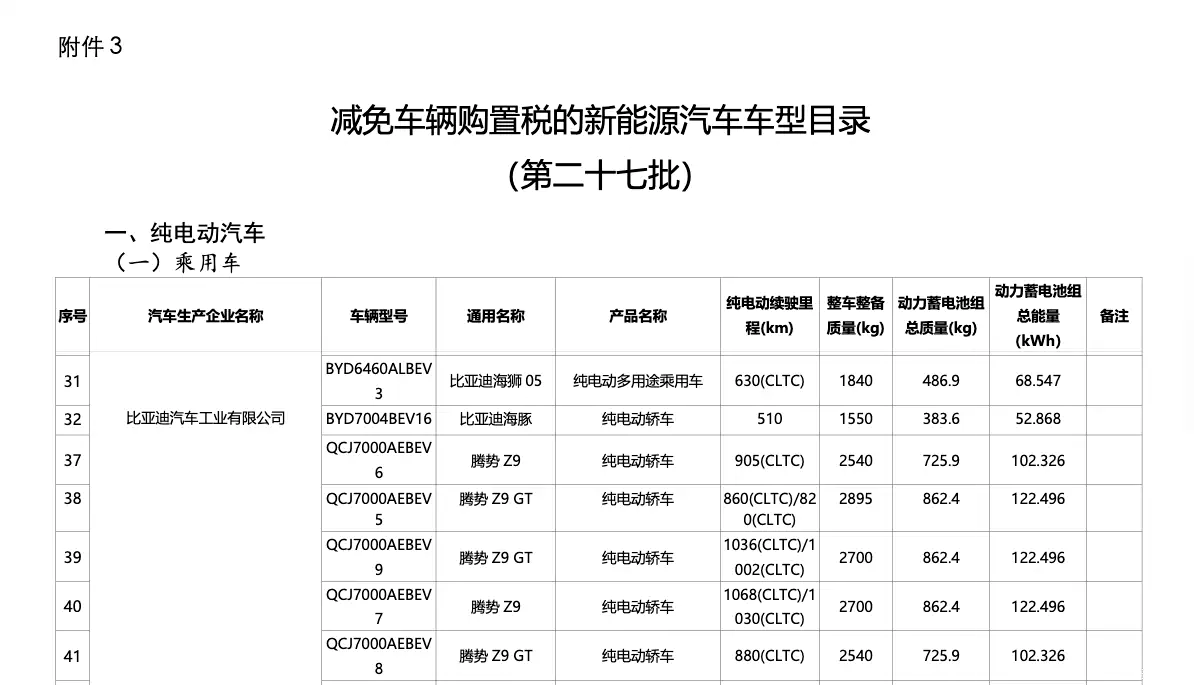
CLTC 最大纯电续航破千,新款腾势 Z9 / 腾势 Z9GT 续航信息申报
Xin Lang Cai Jing· 2026-02-10 10:24
Core Insights - The Ministry of Industry and Information Technology has released the application information for the new Tengshi Z9 and Z9GT models, highlighting their specifications and electric range [1]. Group 1: Vehicle Specifications - The new Tengshi Z9 will feature two battery options: 102.326 kWh and 122.496 kWh, with CLTC electric ranges of 905 km and 1068 km respectively [1][3]. - The Tengshi Z9GT will also offer the same battery capacities, with CLTC electric ranges of 820 km, 860 km, 880 km, 1002 km, and 1036 km [1][3]. - Both models will have a single motor version with a maximum power output of 370 kW, while the Z9GT will additionally offer a high-power three-motor version with outputs of 230 kW, 310 kW, and 310 kW [3][4]. Group 2: Design and Features - The Z9GT will feature an updated intelligent driving hardware layout, with the laser radar moved to the roof and the addition of a driving status indicator light [4]. - The exterior design continues the "Elegant Force" family language, incorporating a dual-star front light design and unique air intake shapes to enhance its sporty attributes [4]. - New design elements include 21-inch low rolling resistance silent wheels, integrated sports seats, and a new lava red interior color, along with a new fjord green exterior color [4]. Group 3: Dimensions and Performance - The dimensions of the new Tengshi Z9GT are 5195 (5180) mm in length, 1990 mm in width, and 1480 (1500) mm in height, with a wheelbase of 3125 mm [7]. - The rear design features high-recognition taillights and includes both active and fixed dual spoilers, enhancing the vehicle's aerodynamics [7].
超5.5GWh!海辰储能等5企订单最新披露
行家说储能· 2026-02-10 09:57
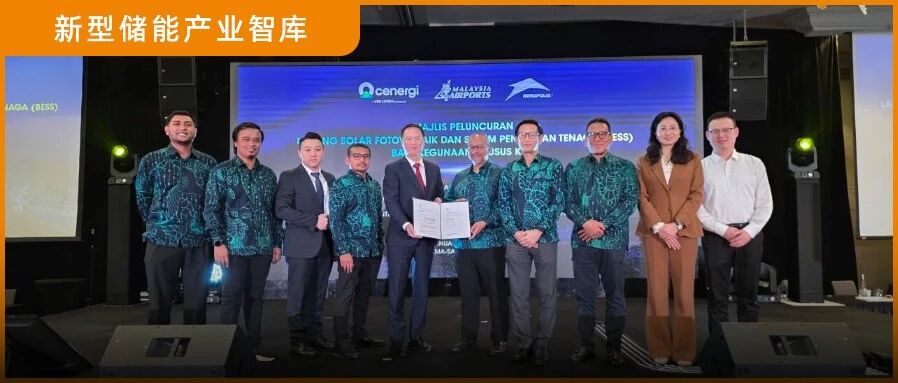
Group 1 - The global energy storage market is experiencing significant advancements, with multiple companies like HaiCheng Energy, BYD, Yiwei Lithium Energy, and others involved in projects totaling over 5.5 GWh in capacity [2] - HaiCheng Energy has signed a strategic cooperation framework agreement with KNESS Group to develop a 2 GWh energy storage project in Poland, focusing on the Ukrainian market [3] - BYD has entered into a supply agreement for 2 GWh of blade battery energy storage cells with Turkish distributor Solinved [4] - BYD's independent battery energy storage system (BESS) of 500 MWh has commenced operations in Bulgaria, showcasing its dual growth in orders and production capacity [7] - Yiwei Lithium Energy has signed a contract for a 36 MWh solar-storage integrated project at Kuala Lumpur International Airport, marking its first such project in Malaysia [10] Group 2 - Zhiguang Electric has signed a contract worth 1.004 billion yuan for energy storage systems, indicating a positive impact on its performance [11] - Zhiguang Electric has also secured multiple energy storage orders, including contracts totaling 1.19 billion yuan and 1.48 billion yuan with different companies [11] - Dongfang Risen has reported a quarterly signing volume of 1.5 GWh in the domestic commercial energy storage sector, with a year-on-year increase of 307.2% [14]