BYD(002594)

Search documents
美股三大指数收盘涨跌不一,闪迪跌超7%,中概指数涨0.87%
Ge Long Hui A P P· 2026-02-10 22:25
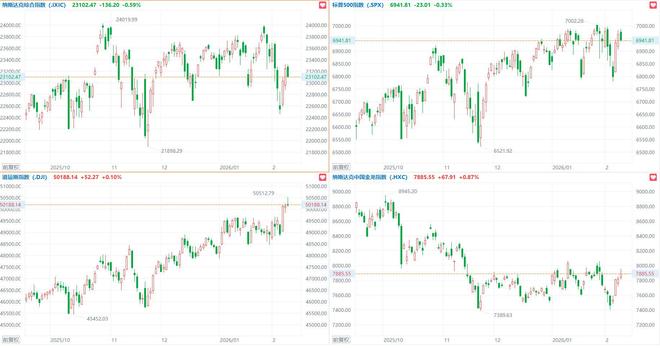
Core Viewpoint - The U.S. stock market showed mixed results with the Dow Jones increasing by 0.1%, while the Nasdaq and S&P 500 indices decreased by 0.59% and 0.33% respectively [1] Group 1: Stock Performance - Major technology stocks experienced varied performance, with Oracle rising over 2% and Tesla increasing more than 1%, while Google and Broadcom fell over 1% [1] - The residential construction, railway transportation, and tourism sectors saw significant gains, with Marriott Hotels rising over 8%, Hilton Hotels increasing over 3%, and Union Pacific up over 2% [1] - Storage and cryptocurrency-related stocks faced notable declines, with Western Digital dropping over 8%, SanDisk down over 7%, and Seagate Technology falling over 6% [1] Group 2: Chinese Stocks - The Nasdaq Golden Dragon China Index rose by 0.87%, with popular Chinese stocks such as Li Auto increasing by 2.9%, and BYD and Alibaba both rising over 2% [1] - Other Chinese companies like NIO, Xpeng, New Oriental, and JD.com saw increases of over 1%, while Tencent fell by 1.4% and Meituan dropped by 2.8% [1]





比亚迪起诉美国政府:关税争议下的权益捍卫之战
Sou Hu Cai Jing· 2026-02-10 17:57
Core Viewpoint - BYD has officially filed a lawsuit against the U.S. government, challenging the tariffs imposed by President Donald Trump and seeking a refund for all tariffs paid since April of the previous year [1]. Group 1: Legal Basis and Arguments - The Trump administration claims authority to impose tariffs under the International Emergency Economic Powers Act (IEEPA), which allows the president to regulate trade during a national emergency [2]. - In its lawsuit submitted to the U.S. International Trade Court, BYD's four U.S. subsidiaries argue that the Trump administration was not authorized to impose border taxes, asserting that the IEEPA does not mention "tariffs" or any equivalent terms [4]. - BYD cites a previous ruling from the U.S. Court of Appeals, which determined that the IEEPA does not grant the authority to impose the contested tariffs, strengthening its legal position [4]. Group 2: BYD's Claims and Current Situation - BYD is seeking compensation for both past and future tariffs, but the situation is complicated by a pending case in the U.S. Supreme Court regarding the authority of the executive branch to impose tariffs without congressional approval [5]. - The Supreme Court's ruling may only address the legality of tariffs against specific countries, not specific industries, meaning that even if the court rules against the Trump administration, BYD may only receive partial tariff relief [5]. - BYD emphasizes the necessity of this independent lawsuit to secure the right to refunds for illegally imposed tariffs, highlighting the company's determination and the challenges it faces in protecting its interests [5]. Group 3: BYD's U.S. Operations and Industry Context - Although BYD does not sell passenger vehicles in the U.S., it has a significant presence in the country, including operations in buses, commercial vehicles, batteries, energy storage systems, and solar panels [6]. - BYD North America employs 750 workers at its truck factory in Lancaster, California, contributing to local economic development [6]. - Over a thousand companies, including major players like Toyota and Costco, have filed similar lawsuits against the U.S. government, indicating widespread dissatisfaction with the tariff policies and a collective effort to defend legal rights [6].
比亚迪起诉美国
Zhong Guo Ji Jin Bao· 2026-02-10 16:39
Group 1 - BYD's U.S. subsidiary filed a lawsuit against the U.S. government on January 26, claiming that the tariff policy is illegal and seeking a refund of duties paid [1] - The company states that it designs and manufactures electric buses and trucks in the U.S. and has incurred significant tariffs on imported materials to maintain operations [1] - Over 1,000 companies, including Costco, Goodyear, Toyota, and Kawasaki Heavy Industries, have filed similar lawsuits to avoid losing eligibility for tax refunds before tariff settlements [1] Group 2 - The U.S. Supreme Court is currently reviewing the legality of Trump's tariff measures, prompting many businesses to file lawsuits [1][3] - BYD's U.S. subsidiary decided to sue separately due to concerns about not being able to secure refunds without a judgment or judicial relief in its own case [1]
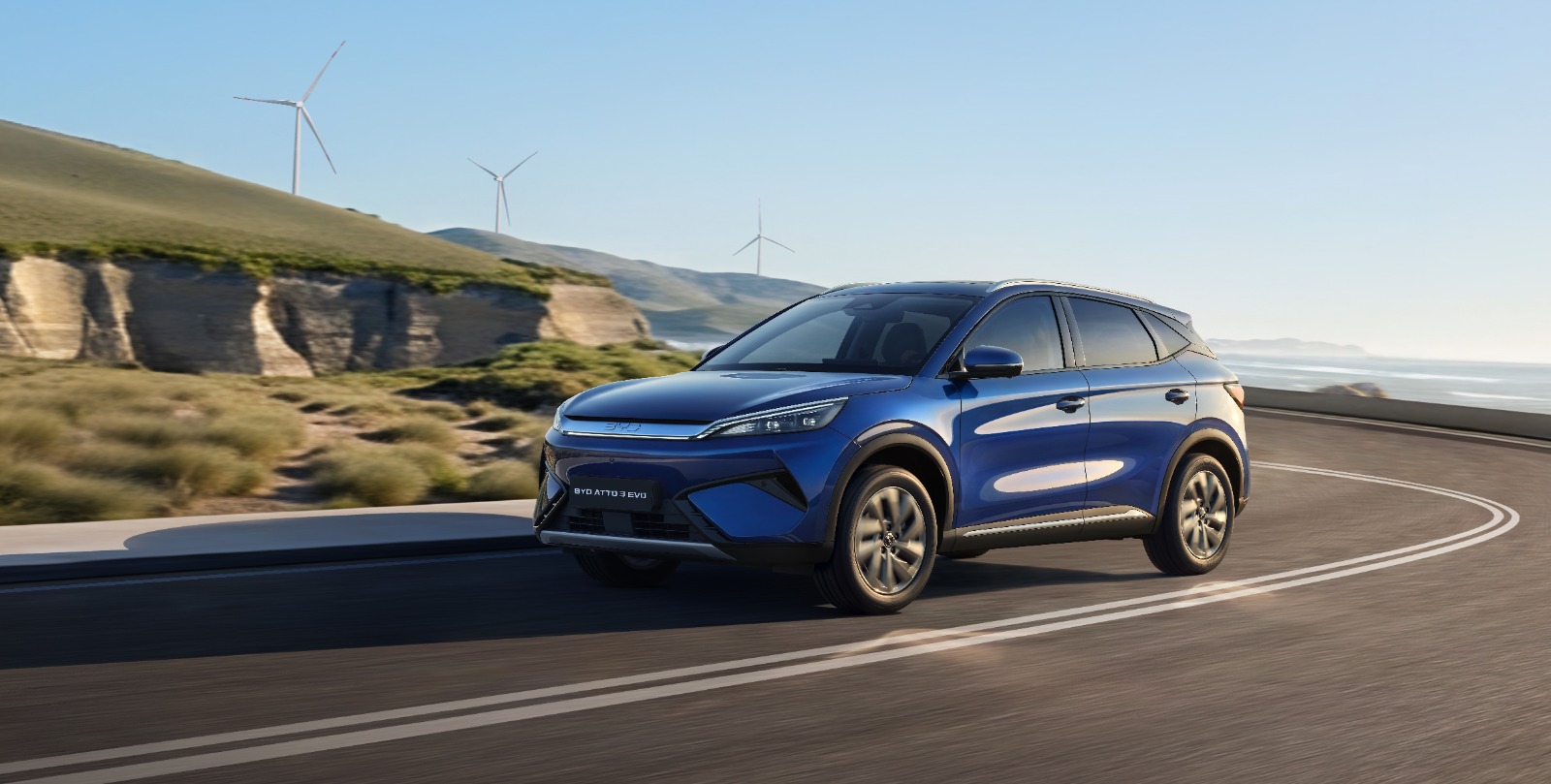
BYD presents ATTO 3 EVO, the new electric family SUV
Globenewswire· 2026-02-10 16:26
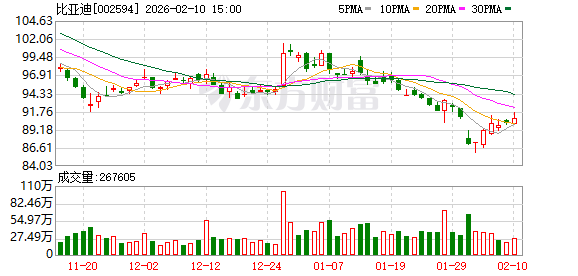
Core Insights - BYD has launched the ATTO 3 EVO, an all-electric family SUV that features enhanced power, a larger battery, extended range, and faster charging capabilities [1][7] Group 1: Product Features - The ATTO 3 EVO is equipped with a 74.8 kWh Blade Battery and utilizes BYD's latest e-Platform 3.0 along with an advanced 800V electrical architecture, enabling rapid DC charging at up to 220 kW, allowing the battery to recharge from 10% to 80% in just 25 minutes [3] - The SUV offers a WLTP combined range of up to 510 km, making it suitable for both long-distance travel and daily use [3] - The vehicle is available in both rear-wheel drive and all-wheel drive configurations, with the rear-wheel-drive version delivering 313 PS and accelerating from 0 to 100 km/h in 5.5 seconds, while the all-wheel-drive version produces 449 PS and achieves the same sprint in 3.9 seconds [4] Group 2: Design and Practicality - The ATTO 3 EVO maintains the same external dimensions as its predecessor but features improved interior packaging, with boot capacity increased to 490 litres, expandable to 1,360 litres with the rear seats folded, and a new 101-litre front trunk for additional storage [5] - The interior includes a redesigned layout with an 8.8-inch digital instrument cluster and a 15.6-inch central touchscreen, along with an updated BYD infotainment system that integrates Google services and an AI-enhanced voice assistant [6] Group 3: Market Positioning - The launch of the ATTO 3 EVO demonstrates BYD's significant advancements in electric vehicle technology within a short span of three years, reflecting the brand's commitment to innovation and customer satisfaction in the European market [2]
比亚迪,起诉美国政府!
DT新材料· 2026-02-10 16:05
Core Viewpoint - BYD has filed a lawsuit against the U.S. government, claiming that several tariff policies are illegal and seeking a refund of taxes paid [2][5]. Group 1: Lawsuit Details - The lawsuit specifically targets the tariffs imposed on BYD's imported goods under the International Emergency Economic Powers Act (IEEPA) [5]. - BYD requests the court to declare that all IEEPA tariffs levied on them are unauthorized and that the U.S. government should refund all related payments [6]. - The company has already paid IEEPA tariffs and believes that independent litigation is necessary to ensure the return of illegally collected tariffs [7]. Group 2: Background on IEEPA Tariffs - Since the Trump administration invoked the IEEPA in 2025, over 1,000 companies, including major corporations like Costco and Toyota, have filed lawsuits against these tariffs [4]. - Previous court rulings have indicated that the IEEPA does not authorize the President to impose such tariffs [7]. Group 3: BYD's Operations in the U.S. - BYD operates a significant electric bus factory in Lancaster, North America, with an annual production capacity of approximately 1,500 units, but still relies on imported components [8]. - The company is also involved in the energy storage market in the U.S., having deployed multiple large-scale storage projects exceeding 1 GWh [8]. Group 4: Market Context - The U.S. has become the largest and most competitive energy storage market globally, with battery manufacturers shifting to produce storage batteries due to the decline in electric vehicle sales [9]. - In 2025, BYD's total sales exceeded 4.6 million units, with overseas sales surpassing 1 million units for the first time, primarily driven by markets in Europe, Asia-Pacific, and Latin America [10].

比亚迪(002594):2026年1月销量点评:海外表现优异国内持续去库,蓄势待发迎接新周期
Changjiang Securities· 2026-02-10 14:41
Investment Rating - The investment rating for BYD is "Buy" and is maintained [6] Core Views - In January, BYD's total sales reached 210,000 vehicles, a year-on-year decrease of 30.1% and a month-on-month decrease of 50.0%. Passenger car sales were 206,000 units, down 30.7% year-on-year and 50.5% month-on-month [2][4] - The sales performance by brand in January showed that the Ocean series, Equation Leopard, and Tengshi sold 178,000, 22,000, and 6,000 units respectively, with year-on-year changes of -36.2%, +247.0%, and -48.8%, and month-on-month changes of -48.4%, -57.6%, and -66.9% [9] - Export sales remained strong, with 100,000 units exported in January, representing a year-on-year increase of 43.3% [9] Summary by Relevant Sections Sales Performance - BYD's overall sales in January were 210,000 vehicles, with a significant decline compared to the previous year and month [2][4] - The brand-specific sales figures indicate a mixed performance, with the Ocean series experiencing a notable decline while the Equation Leopard saw substantial growth [9] International Expansion - The company is actively expanding its overseas market presence, with local production accelerating in countries like Thailand, Uzbekistan, Brazil, and Hungary, contributing to record-high export sales [9] - The ongoing development of a diverse overseas vehicle lineup and the launch of plug-in hybrid models are expected to further enhance export volumes [9] Strategic Initiatives - BYD is focusing on high-end market penetration with the introduction of new models such as Z9GT, Z9, Leopard 8, N9, and N8L, which are anticipated to improve profitability per vehicle [9] - The company's strategy includes a commitment to smart technology and autonomous driving, which is expected to enhance data accumulation and improve driving capabilities [9] Financial Projections - The forecast for BYD's net profit attributable to shareholders is projected to reach 35 billion yuan in 2025, corresponding to a price-to-earnings ratio of 23 times, supporting the "Buy" rating [9]
比亚迪起诉特朗普政府:退钱!
Mei Ri Jing Ji Xin Wen· 2026-02-10 14:19
Core Viewpoint - BYD's subsidiaries in the U.S. have filed a lawsuit against the U.S. government, claiming that several tariff policies are illegal and seeking a refund of taxes paid [1][2]. Group 1: Lawsuit Details - The lawsuit specifically targets the tariffs imposed under the International Emergency Economic Powers Act (IEEPA), asserting that these tariffs were levied without proper authority [2]. - BYD is requesting the court to rule that all IEEPA tariffs imposed on its imports are unauthorized and that the U.S. government should refund all related payments, including interest [2][3]. - The company emphasizes the necessity of independent litigation to ensure the return of illegally collected tariffs, as it continues to pay related duties on ongoing imports [2][3]. Group 2: Context of Tariffs - The tariffs in question were enacted by the Trump administration in 2025 without congressional approval, leading to numerous legal challenges from various companies [1][8]. - Over 1,000 companies, including major firms like Toyota and Costco, have also filed lawsuits against the IEEPA tariffs [5]. - The U.S. Supreme Court has yet to make a ruling on the legality of these tariffs, which has left many companies in a state of uncertainty regarding their potential refunds [7][8]. Group 3: Implications for BYD - BYD operates an electric bus factory in Lancaster, California, but still relies on imported components, making the outcome of this lawsuit critical for its operations [4]. - The company has already paid multiple IEEPA tariffs, and the ongoing legal proceedings could significantly impact its financial situation if the tariffs are deemed illegal [3][4].

中国车企,要接受新车销量“仅微涨”的新常态
虎嗅APP· 2026-02-10 14:12
Core Viewpoint - The Chinese automotive market is experiencing a downturn in new car sales, with significant declines reported for major brands, while the used car market is thriving, indicating a shift in consumer preferences and market dynamics [2][3][24]. Group 1: New Car Market Trends - In January 2026, BYD's sales dropped by 30%, and Li Auto's sales fell by 7.55%, with Geely only seeing a slight increase of 1% due to strong overseas performance [2]. - The overall passenger car sales in China are projected to reach 24 million in 2026, with a growth rate slowing to 1% [2]. - The decline in consumer confidence, exacerbated by reduced subsidies and macroeconomic factors, is expected to keep consumer sentiment below the breakeven line [2]. Group 2: Used Car Market Dynamics - The used car market in China is booming, with a transaction volume of 20.1 million units in 2025, marking a year-on-year growth of 2.52% and a total transaction value of 1.28979 trillion yuan [3]. - The demand for used electric vehicles is expected to grow by over 50% [3]. - The trend of purchasing used cars is driven by practical needs, such as commuting and returning home during holidays, with a notable increase in cross-regional vehicle registrations [6][8]. Group 3: Consumer Preferences and Behavior - Consumers are increasingly opting for used cars due to price advantages, allowing them to afford better models compared to new cars [10]. - The introduction of new policies has increased the variety of available used car models, enhancing consumer choice [11]. - The demand for used cars is becoming more personalized, with consumers selecting vehicles based on specific needs such as fuel efficiency and durability [14]. Group 4: Implications for Automotive Companies - The rise in used car sales may negatively impact new car sales in the short term, as each additional used car sold could equate to one less new car sold [17]. - In the long term, a healthy used car market can stabilize the residual values of new cars, encouraging new car purchases [20]. - The growing interest in used cars among younger consumers may lead to future brand loyalty and new car purchases from the same manufacturers [21]. Group 5: Market Evolution and Future Outlook - The automotive market in China is maturing, with new car sales growth plateauing, while the used car market is expected to continue expanding [24]. - The automotive industry must adapt to this new normal by focusing on vehicle durability and reliability, rather than solely on sales volume [24]. - The overall automotive market is projected to exceed 10 trillion yuan in 2025, with significant implications for the aftermarket services sector [22].


比亚迪:公司推出“光储一体化”,致力于新能源的获取、存储和应用
Zheng Quan Ri Bao Wang· 2026-02-10 13:40
Core Viewpoint - BYD is committed to its mission of "cooling the Earth by 1°C" and is advancing the ecological recycling of renewable energy [1] Group 1: Company Initiatives - The company is actively promoting the integration of solar energy and storage, aiming to harness, store, and apply clean energy [1] - BYD emphasizes the importance of improving the conversion efficiency of photovoltaic technology, which is currently in the experimental stage and has a long way to go before mass production [1]
中国汽车强势“登陆”巴西,或改写南美汽车版图
Jin Tou Wang· 2026-02-10 13:11
Group 1 - In January, Chinese automotive exports to Brazil reached 16,800 units, surpassing Argentina's 13,400 units, marking the first time Argentina's long-standing dominance in exports to Brazil has been broken [3] - The export value of Chinese automobiles to Brazil skyrocketed to $375 million in January, over ten times the amount from the same period last year, accounting for approximately 65% of Brazil's total automotive imports for the month [3] - Chinese automakers are expanding in Brazil by investing in local production facilities, exemplified by BYD's investment of 5.5 billion reais (approximately $1.06 billion) to upgrade a Ford plant, and Geely's joint venture with Renault to invest 3.8 billion reais in developing electric vehicles [3] Group 2 - The Brazilian automotive market is experiencing a dual scenario, with rising local interest rates and credit tightening leading to declines in both production and sales in January [4] - Despite the challenges, electric vehicle sales in Brazil reached a record share of 16.8%, indicating a rapid increase in consumer acceptance of new energy vehicles [4] - While Brazil ranks fifth globally for Chinese automotive exports, behind Mexico, Russia, the UK, and the UAE, its market growth is a crucial part of China's global expansion strategy [6]