BYD(002594)

Search documents
2025年第51周:跨境出海周度市场观察
艾瑞咨询· 2025-12-31 00:04
Group 1 - Chinese commercial aerospace companies are actively expanding into overseas markets, utilizing "rideshare launch" models to reduce costs and attract international clients from countries like Egypt, Nepal, and the UAE. The domestic launch cost has decreased to 50,000-60,000 yuan per kilogram, but still lags behind SpaceX, which has a competitive edge due to its high-frequency launches and Starlink project [3][4]. - The home appliance and light manufacturing industries are expected to face pressure on both domestic and foreign sales in 2026, with a potential recovery in overseas sales in the latter half of the year. Emerging markets are anticipated to show stronger demand compared to developed markets, particularly in Latin America and Southeast Asia [5]. - China's automotive exports are projected to reach 5.859 million units in 2024, maintaining the top position globally, with a shift from vehicle exports to a more comprehensive output of technology, brand, and supply chain solutions. This transition reflects a move from "selling products" to "building brands" [6][7]. Group 2 - The development of autonomous driving technology in China is being propelled by high-quality growth initiatives and strategic policies, with companies like Baidu Apollo enhancing safety standards and promoting technology exports. The industry is evolving into a collaborative ecosystem that drives innovation and reliability [7][8]. - The Chinese潮玩 (trendy toy) industry is rapidly globalizing, with brands like Pop Mart and 52TOYS successfully entering overseas markets through localized strategies and partnerships. The market share of Chinese潮玩 in the overseas market is projected to grow from 3% in 2020 to 18% by 2025 [9]. - Chinese companies are increasingly investing in the European market, particularly in renewable energy and high-tech sectors, while facing challenges such as national security reviews and compliance issues. Differentiated strategies and localized investments are essential for success [10]. Group 3 - Amazon's global store initiative aims to cultivate 200 cross-border brands in Shandong over the next three years, focusing on AI-driven strategies and innovative measures to enhance logistics efficiency and support local sellers [11]. - The Chinese commercial vehicle sector is transitioning from product trade to a comprehensive service model, emphasizing lifecycle services and local adaptation. The export of Chinese commercial vehicles to the EU has seen a 42% year-on-year increase [18]. - The digital culture industry in China is experiencing rapid growth, with online games, films, and literature becoming key components of global cultural exchange. The industry is encouraged to enhance IP development and international collaboration to overcome cultural barriers [17].



政策再超预期,汽车以旧换新将延续,最高可享1.5万补贴
Xuan Gu Bao· 2025-12-30 23:49
Group 1 - The National Development and Reform Commission and the Ministry of Finance announced a policy to continue and optimize the vehicle trade-in program in 2026, supported by long-term special government bond funds for vehicle scrapping and replacement [1] - Consumers will receive subsidies for scrapping their old vehicles and purchasing new energy vehicles or fuel vehicles with an engine size of 2.0 liters or less, with subsidies of 12% (up to 20,000 yuan) and 10% (up to 15,000 yuan) respectively [1] - The policy is expected to drive sales growth in the automotive market, with predictions of a "front low and back high" trend in 2026, contributing to a strong start for the 14th Five-Year Plan [1] Group 2 - Major industry players such as BYD, Seres, BAIC Blue Valley, and Jianghuai Automobile are expected to benefit significantly from the new policies [2]



2025,“中国风”的世界回响
Ren Min Wang· 2025-12-30 21:57
Group 1: Core Insights - In 2025, China's global image has significantly improved, with the country being perceived as "cool" and innovative, driven by technological advancements and cultural exports [15][19][22] - The emergence of Chinese brands like DeepSeek and the popularity of cultural IPs such as Nezha and Labubu highlight China's growing influence in technology and pop culture [16][20][21] Group 2: Technological Innovations - DeepSeek's R1 model, launched in January 2025, surpassed ChatGPT in downloads, achieving this with a training cost of only $294,000, showcasing China's competitive edge in AI technology [16] - China has entered the top ten most innovative economies globally, with the highest number of top innovation clusters for three consecutive years [16] Group 3: Cultural Influence - The animated film "Nezha: The Devil's Child" became one of the top five highest-grossing films globally, marking a significant achievement for Chinese animation [19] - Labubu, a toy character, has gained international popularity, with sales exceeding 10 million RMB on its opening day in Thailand, indicating the global reach of Chinese design [20] Group 4: Market Expansion - BYD captured 18% of the global electric vehicle market in Q2 2025, while Mixue Ice Cream became the largest fast-food chain globally with over 46,000 stores [20][21] - The expansion of brands like Bawang Tea and Meituan reflects China's growing presence in international markets, with plans for significant overseas store openings [21] Group 5: Global Perception - A historical shift in global public opinion occurred in April 2025, with more people believing China will positively impact world affairs compared to the U.S. [23][24] - China's net favorability score reached 8.8, surpassing the U.S. for the first time, indicating a significant change in global perceptions of China [24]



中国汽车_2026 年展望- 衰退与重塑之年-China Autos & Shared Mobility-2026 Outlook – A Year of Recession and Reinvention
2025-12-30 14:41
Summary of the Conference Call on China's Auto Industry Outlook for 2026 Industry Overview - The conference call focuses on the **China auto industry** and its outlook for **2026**, highlighting cyclical and policy challenges that may lead to both risks and opportunities for technological advancements and market growth [1][2]. Key Forecasts and Trends - **Sales Decline**: Anticipated **7% year-over-year (YoY)** decline in auto sales for 2026, ending a three-year growth streak. This decline is attributed to market pessimism, which may lead to a relief rally if marginal improvements occur [2][3]. - **Subsidy Expectations**: Continued nationwide and local subsidies are expected to mitigate the impact of a **5% purchase tax hike**. The average subsidy per car is projected to decrease due to updated stimulus measures [3]. - **Quarterly Sales Projections**: - **1Q26**: Sales expected to fall **5-7% YoY** (or down **30%+ quarter-over-quarter (QoQ)**). - **2Q26**: Anticipated **3% YoY** decline. - **2H26**: Expected to see a **0-1% YoY** decline, with March/April potentially marking the fundamental trough for investors [3]. Volume and Market Share - **Wholesale Volume**: Forecasted **3% YoY** decline in **2026** for passenger vehicle (PV) wholesale volume, with a **7% YoY** decline in domestic sales [4][11]. - **New Energy Vehicles (NEV)**: NEV sales growth is expected to decelerate to **11%**, achieving **59% sales penetration**. Plug-in hybrid electric vehicles (PHEVs) are projected to grow **14%**, outpacing battery electric vehicles (BEVs) at **9%** growth [4][15]. - **Export Growth**: Exports are expected to grow by **16% YoY**, with significant growth in sales to Europe, ASEAN, and Latin America, each projected to grow **20-25% YoY** [4][12]. Investment Recommendations - **Preferred Stocks**: - For OEMs: **XPeng**, **Geely**, and **SAIC** are recommended for their resilient domestic and growing overseas sales, along with potential re-rating opportunities from non-auto initiatives. - Investors are advised to monitor **Li Auto**, **NIO**, and **BYD** for new launches in **2Q26** that may generate alpha against reduced expectations [6]. - **Auto Parts**: Preferred stocks include **Hesai**, **Minth**, and **Xingyu**. Among dealers, **Zhongsheng** is favored due to profit resurgence from stricter scrutiny on unfair auto price competition [6]. Additional Insights - **Technological Development**: The need for progressive development of non-auto initiatives, such as AI and humanoids, is emphasized for a potential re-rating of multiples in the capital market [5]. - **Market Sentiment**: The current market sentiment is characterized by a pessimistic bias, which may create opportunities for recovery if conditions improve [2]. Conclusion - The China auto industry is poised for a challenging year in **2026**, with expected declines in sales and volume. However, strategic investments in resilient companies and emerging technologies may provide opportunities for recovery and growth in the long term [1][2][6].




知情人士:仰望汽车自动驾驶解决方案供应商是Momenta
Di Yi Cai Jing· 2025-12-30 13:38
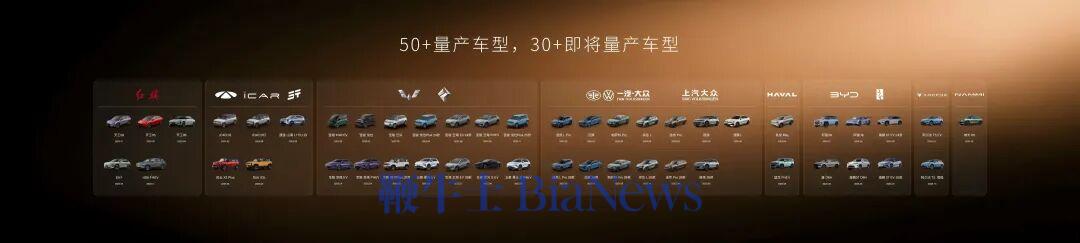
Group 1 - The core message of the news is that Zhuoyu, formerly known as DJI Automotive, celebrated its 10th anniversary and announced partnerships with over 50 mass-produced models and more than 30 upcoming models, including BYD's high-end brand Yangwang's U8 and U9 [1] - Zhuoyu's collaboration with various vehicle models indicates a significant presence in the automotive market, particularly in the high-end segment [1] - The Yangwang U8 and U9 are positioned in the new energy high-end market, with official prices exceeding 1 million yuan [4] Group 2 - A source close to BYD revealed that the autonomous driving solution provider for the Yangwang brand is Momenta, not Zhuoyu [3]
知情人士:仰望汽车自动驾驶解决方案供应商是Momenta
第一财经· 2025-12-30 13:23
Group 1 - The core viewpoint of the article highlights that Zhuoyu (formerly known as DJI Automotive) celebrated its 10th anniversary by announcing partnerships with over 50 mass-produced models and more than 30 upcoming models, including BYD's high-end brand Yangwang's U8 and U9 [1] - The Yangwang brand's autonomous driving solution is supplied by Momenta, not Zhuoyu, according to insiders close to BYD [3] - The official prices for the Yangwang U8 and U9 exceed one million yuan, targeting the high-end new energy market [4]

知情人士:仰望汽车自动驾驶解决方案供应商是Momenta,不是卓驭
Di Yi Cai Jing· 2025-12-30 13:03
Core Viewpoint - Zhuoyu, formerly known as DJI Automotive, celebrated its 10th anniversary and announced partnerships with over 50 mass-produced models and more than 30 upcoming models, including BYD's high-end brands Yangwang U8 and U9 [2] Group 1 - Zhuoyu's collaboration includes over 50 mass-produced models and more than 30 models set to be produced soon [2] - The Yangwang U8 and U9, which are part of BYD's high-end market strategy, have an official price exceeding 1 million yuan [2] - A source close to BYD indicated that the autonomous driving solutions for the Yangwang brand are provided by Momenta, not Zhuoyu [2]
China's EV market slows as price war deepens and overseas push accelerates
Invezz· 2025-12-30 11:05
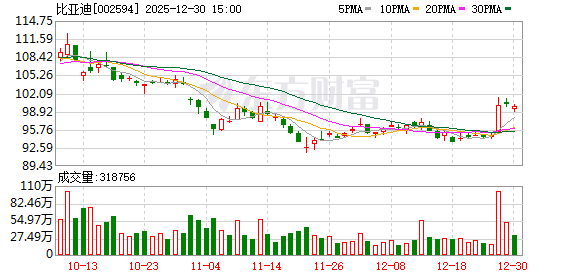
Core Insights - China's electric vehicle (EV) market is experiencing a downturn in 2025, with sales declining among major players due to intense competition and changing market dynamics [1] Sales Performance - Sales momentum weakened throughout the year, with Tesla's China sales dropping by 7.4% year-on-year from January to November, while BYD reported a 5.1% decline during the same period [2] - BYD's sales saw a significant drop of 26.5% in November compared to the previous year [2] - Newer entrants, such as models powered by Huawei software and vehicles from Xiaomi, recorded sales increases of over 90% in November, indicating a shift towards tech-driven competitors [3] Market Concentration - The top 10 manufacturers now account for approximately 95% of China's new energy vehicle market, a significant increase from 60-70% just two to three years ago [4] - Analysts anticipate further consolidation as consumers favor well-known brands amid increasing price pressures [4] Price Competition - Aggressive discounting has become prevalent, with significant price cuts reported, such as a 432,000 yuan reduction on the Mercedes-Benz EQS EV [5] - UBS predicts that the price war will persist for years, with potential policy changes in 2026 that could negatively impact growth [5] Sales Growth Forecast - UBS forecasts that China's EV sales growth rate may halve next year from around 20% in 2025, indicating a highly saturated market [6] - New energy vehicles accounted for 59.4% of new passenger car sales in November, suggesting limited room for further rapid expansion [6] International Expansion - Slowing domestic demand is prompting Chinese automakers to accelerate their overseas expansion, where profit margins are typically higher [8] - Geely reported that its EV exports quadrupled in the first half of the year, contributing to total vehicle exports of 184,000 [8] - BYD is also expanding internationally, with a new factory in Hungary set to increase production in 2026 and over 131,000 cars exported in November alone [9] Foreign Competition - Analysts expect intensified competition in Europe from Chinese manufacturers and battery makers, which may pressure US automakers and Tesla [9] - Volkswagen has established joint ventures with Xpeng and Horizon Robotics, delivering over 17 million vehicles in China in the first three quarters of 2025, marking an 8.5% year-on-year increase [10]


揭晓!2025国际汽车十大新闻!
Zhong Guo Qi Che Bao Wang· 2025-12-30 10:55
Group 1 - The global automotive industry is undergoing significant transformation and challenges, with electric and intelligent vehicle transitions accelerating, particularly for Chinese automakers who leverage technological advantages to penetrate global markets [2] - Traditional automotive powerhouses, especially in Germany, are facing severe pressures, including a wave of layoffs and the European Union's withdrawal of the "ban on combustion engines" [2][3] - Trade tensions and market fluctuations, such as the U.S. imposing tariffs on imported vehicles, are reshaping the global automotive landscape [4] Group 2 - Chinese automakers are increasingly focusing on overseas markets as a key growth engine, with exports expected to exceed 7 million vehicles in 2025, marking a historical high [6] - Significant investments and local production facilities are being established in regions like Latin America and Southeast Asia, with Brazil and Thailand becoming strategic hubs for Chinese automotive companies [6] Group 3 - The European Union has retracted its 2035 policy to ban the sale of new combustion engine vehicles, adjusting its emissions target to a 90% reduction from 2021 levels, allowing for a mix of vehicle types to remain in the market [8] - This policy shift is influenced by various factors, including the slow adoption of electric vehicles and pressure from major automotive manufacturers [8] Group 4 - Many multinational automotive companies are scaling back their electric vehicle ambitions in favor of hybrid technologies due to challenges such as high battery costs and insufficient infrastructure [10] - Companies like Honda and Ford are adjusting their strategies to focus more on hybrid models while delaying electric vehicle launches [10] Group 5 - 2025 is recognized as a pivotal year for humanoid robots, with significant advancements leading to mass production and integration into the automotive industry [12] - Major automotive companies are collaborating with robotics firms to enhance manufacturing efficiency through automation [12] Group 6 - Tesla's sales have been adversely affected by CEO Elon Musk's political involvement, leading to a decline in global sales figures [14] - In Europe, Tesla's sales dropped by 28% year-on-year, while in the U.S., sales fell by 23%, attributed to an aging product lineup and the cancellation of purchase subsidies [14] Group 7 - The German automotive industry is experiencing a "layoff wave," with employment numbers reaching a new low since 2011, driven by the transition to electric vehicles and competitive pressures [16] - Major companies like Volkswagen and Ford are planning significant job cuts, reflecting the industry's struggles amid rising costs and declining traditional vehicle sales [16] Group 8 - The hydrogen fuel cell vehicle market is facing significant challenges, with a decline in hydrogen stations and high costs hindering commercialization efforts [17] - Major automakers are withdrawing from hydrogen projects, indicating a shift in focus towards more viable alternatives [17] Group 9 - The commercialization of Robotaxi services is accelerating, with numerous projects being launched globally, particularly in major cities [19] - Companies like Waymo and various Chinese firms are expanding their Robotaxi operations, marking a significant step towards the integration of autonomous vehicles into everyday transportation [19] Group 10 - The Russian automotive market is in decline, with new car sales dropping by 19% year-on-year, largely due to increased taxes and tariffs on imported vehicles [20] - The shift in policy aims to promote local manufacturing, but the transition is causing supply chain disruptions and rising vehicle prices [20]

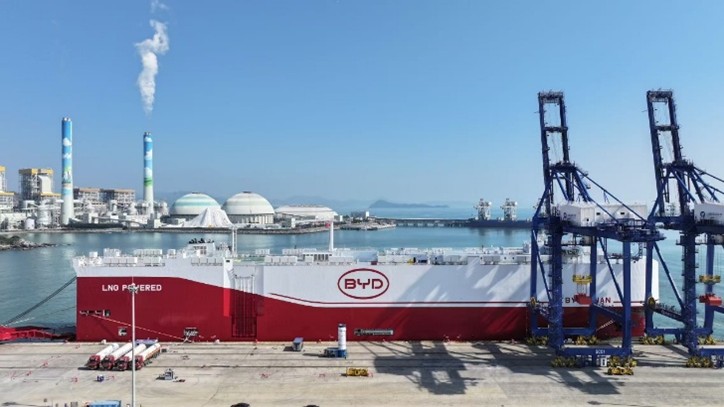
CBL International Facilitates Xiaomo Port's First LNG Bunkering for BYD in Shenzhen
Globenewswire· 2025-12-30 10:38
Core Insights - CBL International Limited has successfully completed Xiaomo Port's first LNG bunkering operation for BYD, marking a significant step in supporting maritime decarbonization efforts [2][3]. Company Overview - CBL International Limited, listed on NASDAQ as BANL, is a marine fuel logistics company established in 2015, focusing on providing comprehensive bunkering services across 65 major ports globally [5]. - The company is recognized for its expertise in coordinating complex fuel logistics transactions and serves nine of the world's top twelve container liner companies [4]. Industry Context - The global shipping industry is increasingly focused on decarbonization, with LNG emerging as a mainstream clean energy source that can reduce greenhouse gas emissions by approximately 20% and lower fuel costs by 25%-30% [3]. - This initiative aligns with international regulations such as FuelEU Maritime and the IMO 2030/2050 targets, promoting a transition towards cleaner energy solutions in maritime operations [3].