
Sungrow Power Supply(300274)

Search documents
品牌工程指数 上周收报1969.01点
Zhong Guo Zheng Quan Bao· 2025-12-21 22:07
Core Viewpoint - The market experienced fluctuations last week, with the China Securities Xinhua National Brand Engineering Index closing at 1969.01 points, indicating a mixed performance among various sectors, particularly strong performance in consumer stocks [1][2]. Group 1: Market Performance - The Shanghai Composite Index rose by 0.03%, while the Shenzhen Component Index fell by 0.89%, and the ChiNext Index decreased by 2.26%. The CSI 300 Index declined by 0.28%, and the Brand Engineering Index dropped by 1.15% [2]. - Notable consumer stocks showed strong performance, with Angel Yeast (600298) increasing by 9.32%, Wangfujing (600859) rising by 9.07%, and several others like Three Squirrels (300783) and Yilong Food (002557) also posting significant gains [3]. Group 2: Stock Performance Since 2025 - Since 2025, Zhongji Xuchuang (300308) has surged by 365.21%, leading the gains, followed by Sunshine Power (300274) with a 127.44% increase. Other notable performers include Zhaoyi Innovation (603986) and Anji Technology, both rising over 90% [4]. Group 3: Market Outlook - Looking ahead, institutions believe that market trading sentiment may remain relatively stable as the year-end approaches, with broad indices expected to fluctuate. The market is anticipated to transition from valuation recovery to performance-driven growth, with structural differentiation among sectors likely to converge [5]. - The technology sector is expected to continue being a focal point, with ongoing catalysts and a favorable long-term narrative despite uncertainties in dividend defensive and cyclical sectors [5].





品牌工程指数上周收报1969.01点
Zhong Guo Zheng Quan Bao· 2025-12-21 20:12
Group 1 - The market experienced fluctuations last week, with the China Securities Xinhua National Brand Engineering Index closing at 1969.01 points, reflecting a decline of 1.15% [1] - Consumer stocks showed strong performance, with Angel Yeast rising by 9.32%, Wangfujing by 9.07%, and several others like Three Squirrels and Yilong Food increasing by over 7% [1] - The overall market sentiment is expected to remain stable as the year-end approaches, with broad indices likely to experience fluctuations [2][3] Group 2 - Since 2025, Zhongji Xuchuang has seen a remarkable increase of 365.21%, leading the gains, followed by Sunshine Power at 127.44% [2] - The market exhibits clear structural characteristics, with expectations for a gradual recovery in corporate earnings next year, transitioning from valuation recovery to performance-driven growth [2] - The technology sector remains a priority for investment, with ongoing catalysts expected to sustain high-level fluctuations in the market [3]
一周主力丨电子板块遭抛售超260亿元 山子高科获加仓居首




Di Yi Cai Jing· 2025-12-21 13:33
(本文来自第一财经) 个股方面,本周山子高科获净流入9.29亿元居首,周涨幅达5.73%。深南电路、C优迅主力净流入分别为 7.54亿元、7.48亿元。净流出方面,阳光电源、宁德时代、平潭发展分别遭抛售31.05亿元、18.50亿元、 17.88亿元。 按申万一级行业来看,本周(12月15日至12月19日)五个交易日内,商贸零售、纺织服饰、美容护理行 业获得主力资金青睐。电子、电力设备、计算机、机械设备、有色金属、通信、医药生物等板块遭净流 出额居前。其中电子板块遭抛售超260亿元。 ...
电力设备与新能源行业周观察:全球储能有望迎高增,Ai电力产业链+机器人加速布局
HUAXI Securities· 2025-12-21 13:22
Investment Rating - Industry Rating: Recommended [6] Core Insights - The humanoid robot industry is expected to accelerate production due to breakthroughs in AI technology and increasing demand for cost reduction, with domestic companies likely to benefit significantly [1][14][15] - The global energy storage battery demand is entering a high-growth phase, driven by the maturation of the domestic energy storage market and frequent power shortages in overseas markets [2][18][20] - The photovoltaic industry is set for profitability recovery as the Ministry of Industry and Information Technology emphasizes capacity regulation and price monitoring to optimize supply-demand dynamics [3][27] - Wind turbine manufacturers are expanding into hydrogen production, enhancing their growth potential through the synergy of wind power and green hydrogen [4][29] Summary by Sections Humanoid Robots - The partnership between Mercado Libre and Agility Robotics aims to address labor shortages and automate repetitive tasks, indicating a significant market opportunity for humanoid robots [1][14] - Key components such as dexterous hands and lightweight designs are critical for commercialization, with domestic manufacturers expected to lead in technological advancements [1][15][17] Electric Vehicles - Ford plans to invest $2 billion to modify its battery plants for energy storage production, targeting over 20GWh annual capacity by 2027 [2][18] - The lithium battery supply chain is expected to recover as demand increases, particularly for lithium carbonate and lithium hexafluorophosphate, which are crucial for profitability [2][20][22] Renewable Energy - The Ministry of Industry and Information Technology's focus on capacity control and price regulation is anticipated to enhance profitability for leading companies in the photovoltaic sector [3][27] - Wind turbine companies are actively exploring hydrogen production, with significant investments in projects that integrate wind energy and hydrogen production [4][29] Power Equipment & AIDC - The demand for power equipment is experiencing a boom due to rapid development in AIDC and ongoing investments in grid construction [8][9] - Companies with strong channel resources and technological capabilities in developed markets are expected to benefit from this high-demand environment [8]



电力设备与新能源行业研究:太空光伏”,之于商业航天,正如电力供应之于AI算力
SINOLINK SECURITIES· 2025-12-21 09:36
Investment Rating - The report suggests a "Buy" rating for the "Space Photovoltaics" sector, emphasizing its high potential due to the unique energy supply needs in commercial space endeavors [1][5]. Core Insights - The report highlights the increasing importance of "Space Photovoltaics" as a critical energy source for various space applications, including low Earth orbit satellites and future lunar bases, driven by the urgency of U.S.-China competition and limited orbital resources [1][5]. - The report also expresses optimism for the wind power sector, particularly following Poland's successful auction for 3.4GW of offshore wind projects, which is expected to accelerate order releases in the coming years [2][10]. - The hydrogen and fuel cell sector is gaining traction, with significant contracts for green ammonia as a marine fuel, indicating a growing market for sustainable energy solutions [12][13]. Summary by Sections Space Photovoltaics - The report emphasizes the necessity of solar energy in space applications, likening its importance to electricity supply for AI computing [1][5]. - The potential for rapid fundamental catalysts in this sector is noted, suggesting it may outpace other emerging industries like nuclear fusion and robotics [1][5]. Wind Power - Poland's recent auction for 3.4GW of offshore wind capacity is expected to enhance visibility for long-term European offshore wind demand, with annual grid connection capacities projected to exceed 14GW by 2031-2032 [2][9]. - The report anticipates accelerated releases of orders for components such as piles and subsea cables due to this growing demand [2][10]. Hydrogen and Fuel Cells - A major shipping company has secured a long-term contract for 15.8 million tons of green ammonia, validating its use as a marine fuel and highlighting the commercial viability of green hydrogen solutions [12][13]. - The report notes the comprehensive capabilities of Chinese companies in the green ammonia supply chain, from production to certification and logistics [13]. Lithium Battery Sector - Ford has terminated a significant battery supply agreement with LG Energy, reflecting shifts in electric vehicle demand expectations and policy adjustments [17][18]. - The report indicates a strong upward trend in lithium carbonate prices, with futures contracts surpassing 110,000 yuan/ton, driven by supply constraints and limited inventories [17][41]. AIDC and Liquid Cooling - The report highlights a surge in sentiment within the AIDC sector, driven by significant partnerships and the increasing demand for liquid cooling solutions in data centers [20][21]. - It emphasizes the importance of domestic companies in enhancing their positions in the global liquid cooling market, suggesting a favorable outlook for investment opportunities [20][21]. Electrical Equipment and Grid - The report discusses the planned H-share issuance by a key electrical equipment company, aimed at enhancing R&D and international expansion, which is seen as a critical milestone for the company's growth strategy [22][23]. - It highlights the expected growth in demand for electrical transformers and high-voltage direct current (HVDC) systems, driven by ongoing upgrades in the global power grid [22][23].




尾盘主力资金抢筹6只个股
Zheng Quan Shi Bao Wang· 2025-12-19 11:45
Group 1 - The core point of the article highlights that the main funds in the two markets experienced a net outflow of 1.283 billion yuan at the end of the trading day on December 19 [1] - The industries that saw significant net inflows of main funds exceeding 100 million yuan include non-ferrous metals, basic chemicals, and national defense and military industry [1] - Specific stocks that attracted over 100 million yuan in net inflow of main funds during the closing period include Ganfeng Lithium, Luoyang Molybdenum, N Uxin, Salt Lake Industry, Sungrow Power Supply, and Northern Rare Earth [1]




「数据看盘」平潭发展龙虎榜现外资与量化博弈 多家实力游资集体出逃华人健康
Sou Hu Cai Jing· 2025-12-19 10:08
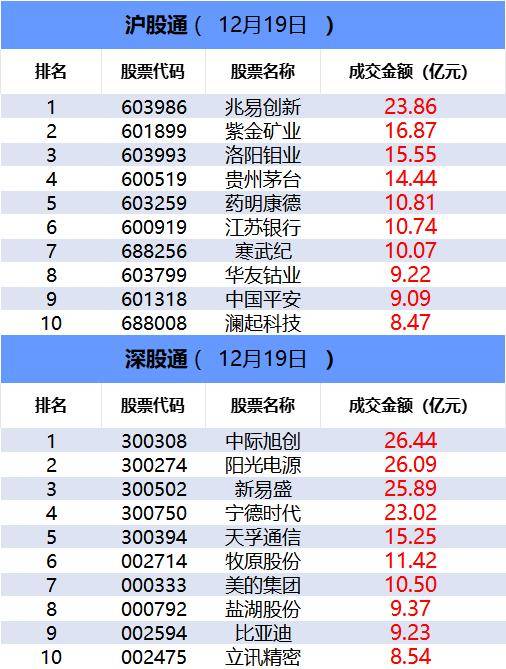
Group 1: Market Overview - The total trading amount for the Shanghai Stock Connect was 940.49 billion, while the Shenzhen Stock Connect reached 1,048.92 billion [2] - The top traded stocks on the Shanghai Stock Connect included Zhaoyi Innovation with 23.86 billion, followed by Sanfang Qianhe and Luoyang Copper with 16.87 billion and 15.55 billion respectively [3] - On the Shenzhen Stock Connect, the leading stock was Zhongji Xuchuang with 26.44 billion, followed by Sunshine Power and New Yisheng with 26.09 billion and 25.89 billion respectively [3] Group 2: Sector Performance - Sectors such as Hainan, dairy, and retail showed significant gains, while precious metals and semiconductors experienced declines [4] - The mechanical equipment sector led in net inflow of funds with 38.67 billion, followed by non-ferrous metals and transportation equipment with 35.32 billion and 31.28 billion respectively [5] - The electronic sector had the highest net outflow of funds at -57.70 billion, followed by semiconductors and pharmaceuticals with -30.20 billion and -17.73 billion respectively [6] Group 3: Individual Stock Activity - The top stocks with net inflow included Xue Ren Group with 13.84 billion, followed by N Youxun and Shanzi Gaoke with 13.69 billion and 10.55 billion respectively [7] - The stocks with the highest net outflow were Meinian Health at -9.05 billion, followed by Shenwei Electronics and C Muxi-U with -6.98 billion and -6.81 billion respectively [8] Group 4: ETF Trading - The top ETFs by trading amount included A500 ETF Huatai Baichuan with 133.655 billion, and Hong Kong Securities ETF with 104.353 billion, showing increases of 7.50% and 18.61% respectively [9] - The ETFs with the highest growth in trading amount compared to the previous trading day included Hengsheng Dividend Low Volatility ETF with 183.92% increase and Industrial Nonferrous ETF with 140.82% increase [10] Group 5: Futures Market - In the futures market, all four major index contracts (IH, IF, IC, IM) saw both long and short positions increase, with IF and IM contracts showing a higher number of short position increases [11] Group 6: Institutional and Retail Activity - Institutional activity showed a decrease compared to the previous day, with notable purchases in Aerospace Intelligence and Shanzi Gaoke, while significant sales were observed in Meinian Health and Xue Ren Group [12][13] - Retail investors were active, with significant buying in Xue Ren Group and Shanzi Gaoke, while selling was noted in Huaren Health and other stocks [14][15]




破“内卷”、立标准、向未来,光伏行业领袖共话行业生态重塑之道
中国能源报· 2025-12-19 08:42
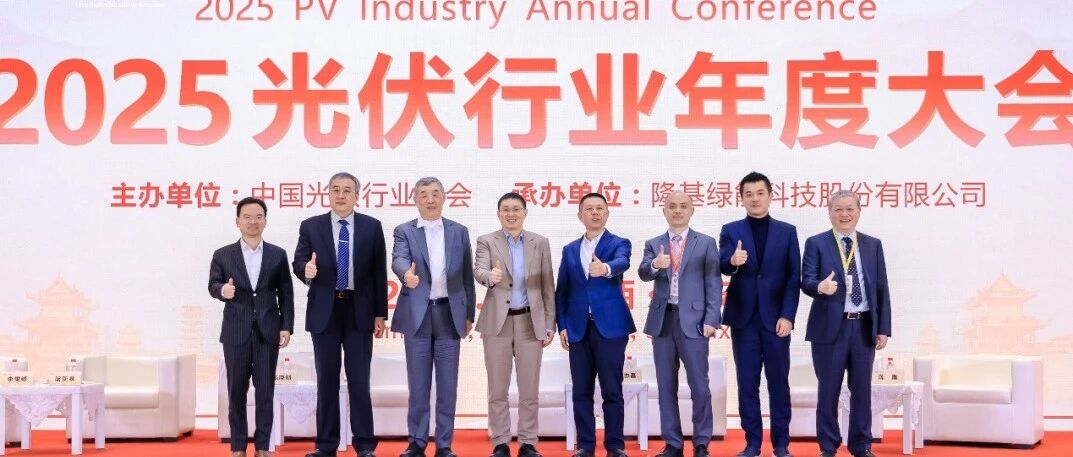
Core Viewpoint - The keyword "breaking the cycle" has become the strongest theme for the 2025 photovoltaic industry annual conference, emphasizing the need for high-quality development and the rejection of vicious competition in the industry [1][3]. Group 1: Industry Transformation - The photovoltaic industry is urged to move away from "involution" and focus on high-quality development, requiring collaboration among industry authorities, local governments, associations, media, and financial institutions [3]. - The essence of addressing "involution" is to promote competition based on technology and quality rather than price wars, as highlighted by industry leaders [3][4]. - There is a consensus that companies must rely on independent innovation and original technology to enhance product standards and quality, while the market should raise entry barriers to support advanced products [4][7]. Group 2: Global Supply Chain Resilience - The global trade environment is becoming increasingly complex, posing new challenges for Chinese photovoltaic companies as they seek to expand internationally [6]. - Companies are encouraged to shift from simple product output to creating value, building a more resilient global supply chain [6]. - Key agreements among industry leaders include raising export standards for photovoltaic products, integrating advanced technology and ESG performance into financial assessments, and establishing stricter quality standards with international recognition [7]. Group 3: Future Growth and Market Dynamics - The photovoltaic industry is transitioning from a phase of rapid installation to one focused on high-quality consumption and market-driven growth [9]. - The role of photovoltaic energy is becoming more prominent in the new power system, necessitating solutions for intermittency and demand-side response through "photovoltaic + energy storage" models [9]. - Despite current challenges, industry leaders maintain an optimistic outlook for the future, anticipating breakthroughs in quality and sustainability supported by policy and market forces [10].



两融余额较上一日减少34.80亿元 电子行业获融资净买入额居首
Sou Hu Cai Jing· 2025-12-19 01:48
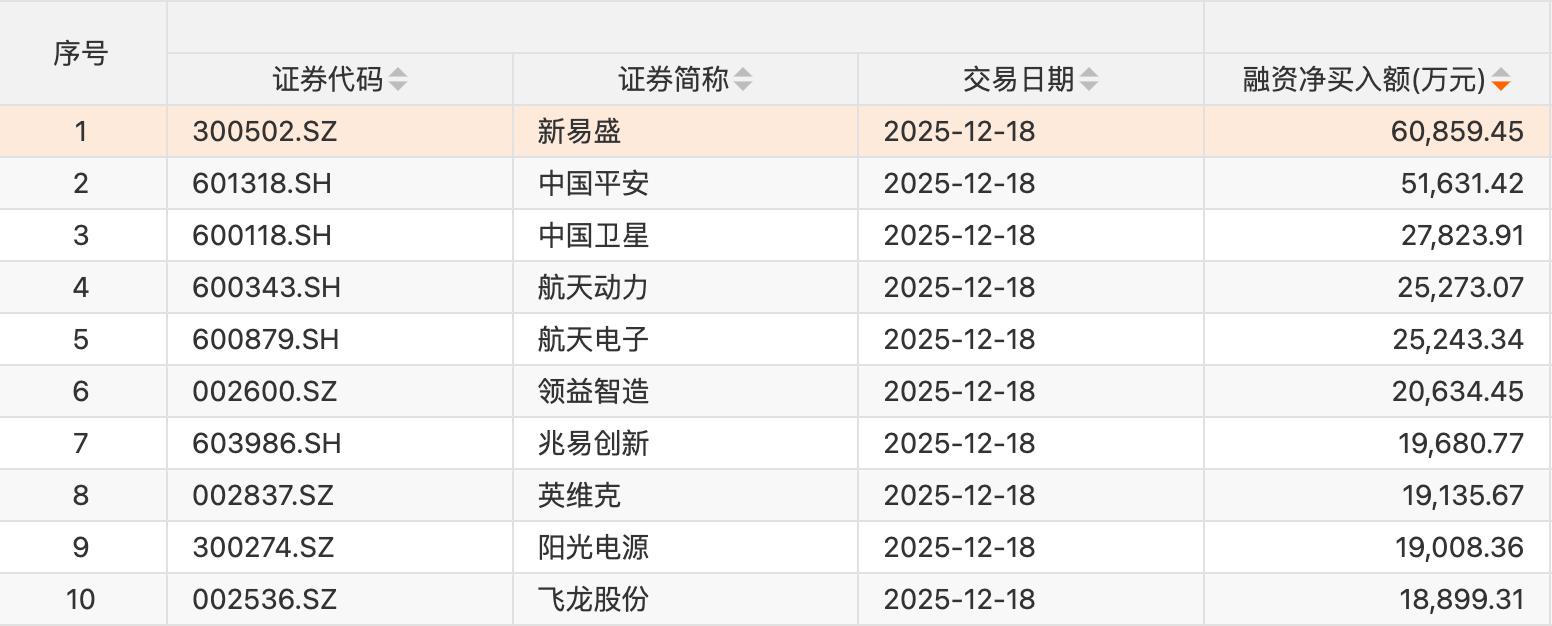
| 序号 | | | | | --- | --- | --- | --- | | | 证券代码 ◆ | 证券简称 ◆ | 交易日期 ◆ | | 1 | 300502.SZ | 新易盛 | 2025-12-18 | | 2 | 601318.SH | 中国平安 | 2025-12-18 | | 3 | 600118.SH | 中国卫星 | 2025-12-18 | | ব | 600343.SH | 航天动力 | 2025-12-18 | | 5 | 600879.SH | 航天电子 | 2025-12-18 | | 6 | 002600.SZ | 领益智造 | 2025-12-18 | | 7 | 603986.SH | 兆易创新 | 2025-12-18 | | 8 | 002837.SZ | 英维克 | 2025-12-18 | | 9 | 300274.SZ | 阳光电源 | 2025-12-18 | | 10 | 002536.SZ | 飞龙股份 | 2025-12-18 | 资金流向方面,申万31个一级行业中有14个行业获融资净买入,其中,电子行业获融资净买入额居首,当日净买入17.28亿元;获融资 ...




资金风向标|两融余额较上一日减少34.80亿元 电子行业获融资净买入额居首
Sou Hu Cai Jing· 2025-12-19 01:42
截至12月18日,A股两融余额为24993.66亿元,较上一交易日减少34.80亿元,占A股流通市值比例为2.61%。当日两融交易额为1718.86亿元,较上一交易日 减少134.06亿元,占A股成交额的10.23%。 上证报中国证券网讯(刘禹希 记者 徐蔚)截至12月18日,A股两融余额为24993.66亿元,较上一交易日减少34.80亿元,占A股流通市值比例为2.61%。当日 两融交易额为1718.86亿元,较上一交易日减少134.06亿元,占A股成交额的10.23%。 资金流向方面,申万31个一级行业中有14个行业获融资净买入,其中,电子行业获融资净买入额居首,当日净买入17.28亿元;获融资净买入居前的行业还 有国防军工、机械设备、通信、电力设备、非银金融等。 个股方面,29只个股获融资净买入额超1亿元。新易盛获融资净买入额居首,净买入6.09亿元;融资净买入金额居前的还有中国平安、中国卫星、航天动 力、航天电子、领益智造、兆易创新、英维克、阳光电源、飞龙股份等。 | 序号 | 证券代码 ◆ | 证券简称 ◆ | 交易日期 ◆ | | --- | --- | --- | --- | | 1 | 300 ...

