CATL(300750)

Search documents
加拿大总理因何盯上中国能源“三巨头”
Guan Cha Zhe Wang· 2026-01-23 10:16
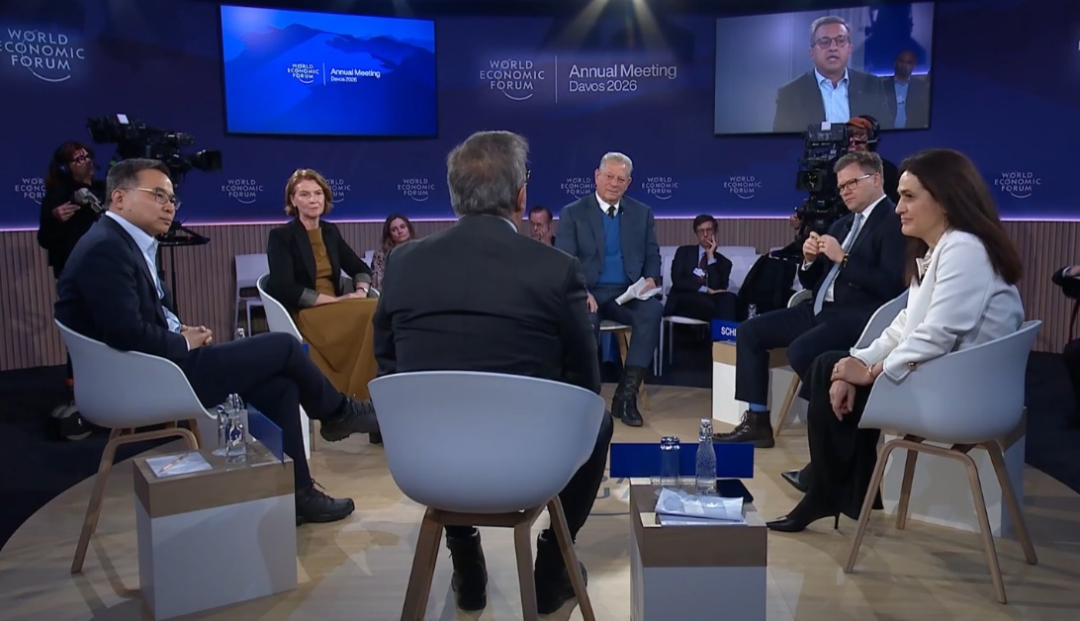
Core Viewpoint - The article discusses the rising global recognition of China's renewable energy sector as a vital contributor to energy transition, countering criticisms from the U.S. regarding unfair competition and overcapacity [1][2]. Group 1: China's Renewable Energy Position - Zhang Lei, Chairman of Envision Group, asserts that Chinese renewable energy represents a "civilizational output," akin to the steam engine during the Industrial Revolution, establishing a new energy infrastructure globally [1]. - Al Gore supports this view, highlighting that by 2025, the total value of green technology exported by China will exceed that of all fossil fuels exported by the U.S. by 50% [1]. - Countries like Nigeria, Kenya, and Zambia are experiencing a surge in solar installations, indicating a global shift towards renewable energy solutions [1]. Group 2: Canada-China Energy Cooperation - Canadian Prime Minister's recent visit to China marks a significant thaw in relations, focusing on cooperation in key areas such as energy and agriculture, which is crucial for both nations [2]. - Meetings between Canadian officials and major Chinese energy companies, including China National Petroleum Corporation, Envision Group, and CATL, are pivotal for reshaping the global energy landscape [2][5]. - The collaboration is seen as a strategic response to Canada's energy transition challenges, showcasing China's renewable energy capabilities [2][11]. Group 3: Challenges in Canada's Energy Sector - Canada faces a dilemma with over 95% of its oil and most natural gas reliant on the U.S. market, posing strategic security risks amid politicized U.S. energy policies [9]. - The aging electrical grid in Canada struggles to integrate renewable energy, falling short of the 2030 and 2035 renewable energy targets [10]. - A weak green industrial base and incomplete supply chains hinder Canada's ability to leverage its resource advantages, necessitating external technological support [11]. Group 4: Technological and Systemic Advantages of China - China's renewable energy industry has developed a comprehensive "scale-technology-system" model, providing a robust foundation for international cooperation [12]. - Envision Group's AI-powered energy systems exemplify this systemic advantage, addressing the complexities of renewable energy management and enhancing operational efficiency [13][15]. - The AI energy system's capabilities align with Canada's long-term energy system upgrade plans, indicating a deepening of technological collaboration [14][19]. Group 5: Future Implications of Cooperation - The partnership between Canada and China transcends mere product trade, evolving into a collaborative model for technology standards and industrial practices [14][20]. - This cooperation is expected to reshape global energy collaboration, allowing Chinese renewable technology standards to influence international markets and contribute to global carbon neutrality efforts [20].



世界经济论坛“AI应用之星”名单揭晓,中国案例占据半壁江山
Bei Ke Cai Jing· 2026-01-23 10:16
Core Insights - The World Economic Forum's 2026 Annual Meeting highlighted AI as a significant topic, with Chinese companies exemplifying successful AI applications [1] Group 1: AI Application Cases - A report by the World Economic Forum and Accenture identified 32 "AI application stars," with 15 cases from China, surpassing other countries [2] - The sectors represented by the Chinese cases include energy management (4), battery manufacturing (3), global health and medical (2), financial services (1), retail and consumer goods (1), chemical and scientific discovery (1), engineering and infrastructure (1), and advanced manufacturing (2) [2][4] Group 2: Energy Management Sector - In energy management, notable cases include: - Hongzhi Data Science and Dadi Quantum's AI weather prediction system, enhancing market prediction efficiency by 50,000 times [4] - Beijing Low Carbon Clean Energy Research Institute's integration of large models and time series forecasting, achieving a 95% reduction in energy consumption [4] - China Huaneng Group's AI monitoring system, improving defect detection accuracy by 90% [4] - State Grid Corporation's real-time AI coordination platform, enabling sub-minute control for over 15,000 users [4] Group 3: Battery Manufacturing Sector - In battery manufacturing, key contributions from CATL include: - A mixed AI system developed with Amperex Technology, reducing quality fluctuations by 50% and halving operator workload [5] - An automated design process for battery cells that shortens prototype development time by nearly half [5] - Tsinghua University and E-Lai Kede's use of physical-level AI simulation, compressing battery development cycles from years to weeks and reducing waste by 40% [5] Group 4: Healthcare and Financial Services - In healthcare, Ant Group's multi-modal AI health platform has been implemented in over 5,000 institutions, achieving over 90% diagnostic accuracy and an 80% increase in clinical research efficiency [6] - In financial services, Industrial and Commercial Bank of China deployed a financial model with 100 billion parameters, resulting in a profit increase of 500 million yuan and automating millions of daily decisions [6] Group 5: Retail, Chemical, and Infrastructure - In retail, Wumart Group and Duodian Smart integrated AI to optimize pricing and reduce product loss [6] - In chemical and scientific discovery, Deep Principles automated over half of material simulation processes, lowering experimental costs and shortening R&D cycles [6] - In engineering and infrastructure, Lenovo's AI coordination improved logistics accuracy by 30% and provided up to two weeks of advance warning for potential disruptions [6] Group 6: Advanced Manufacturing Sector - In advanced manufacturing, Foxconn and Boston Consulting deployed an AI ecosystem that automated 80% of decision-making processes, generating approximately $800 million in value [7] - Black Lake Technology established an AI-scheduled manufacturing platform, increasing factory utilization to 83% and reducing energy consumption by 18% [7]
锂电池产业链双周报(2026、01、09-2026、01、22):2025年全球储能电池出货同比增长超80%-20260123
Dongguan Securities· 2026-01-23 09:58
Investment Rating - The report maintains an "Overweight" rating for the lithium battery industry, expecting the industry index to outperform the market index by over 10% in the next six months [47]. Core Insights - Global energy storage battery shipments are projected to grow by over 80% year-on-year in 2025, with significant contributions from both the automotive and energy storage sectors [40]. - The lithium battery index has experienced a decline of 5.75% over the past two weeks, underperforming the CSI 300 index by 5.46 percentage points [12]. - The report highlights a robust demand for energy storage, driven by favorable policies and market dynamics, while the demand for power batteries may weaken in the short term due to seasonal factors [43]. Market Review - As of January 22, 2026, the lithium battery index has dropped 4.84% year-to-date, lagging behind the CSI 300 index by 6.87 percentage points [12]. - The report notes that the prices of lithium carbonate and lithium hydroxide have increased by 19.84% and 17.19% respectively over the past two weeks, indicating a rising trend in raw material costs [24][5]. Price Changes in the Lithium Battery Supply Chain - The average price of battery-grade lithium carbonate reached 166,100 CNY/ton, while lithium hydroxide (LiOH 56.5%) was priced at 160,200 CNY/ton as of January 22, 2026 [24][5]. - Prices for various cathode materials, including lithium iron phosphate and NCM materials, have also seen significant increases, with lithium iron phosphate for power applications rising by 16.60% [27][22]. Industry News - By the end of 2025, China's new energy storage capacity is expected to reach 144.7 GW, marking an 85% increase year-on-year [40]. - The report anticipates that global lithium battery production will reach 3,092 GWh in 2026, representing a year-on-year growth of 34.6% [40]. Company Announcements - Companies such as Penghui Energy and Defu Technology have reported significant expected increases in net profits for 2025, indicating a positive outlook for the industry [42]. - The report suggests monitoring companies like CATL and EVE Energy, which are expected to benefit from strong demand in both the automotive and energy storage sectors [44].



慧翰股份:数字化能源管理解决方案已深度切入换电及储能领域,核心客户包括宁德时代、亿纬锂能
2 1 Shi Ji Jing Ji Bao Dao· 2026-01-23 09:51
Core Viewpoint - The company, Huihan Co., has developed a digital energy management solution that integrates "end and cloud" technology, enhancing battery information capabilities and supporting a high-performance cloud platform for the entire battery lifecycle management [1] Group 1: Digital Energy Management Solution - The solution enables traceability, controllability, and optimization of batteries throughout their lifecycle [1] - It has been applied in key scenarios such as vehicle-battery separation management, battery leasing and sharing, digital operation of charging and swapping stations, V2G (Vehicle-to-Grid) bidirectional energy interaction, and energy digital trading [1] - The product configuration ratio is approximately 2.2 to 2.5 times the number of vehicles [1] Group 2: Market Penetration and Clientele - The company has deeply penetrated sectors including automotive power batteries, battery swapping systems, and grid energy storage systems [1] - It is also extending its reach into emerging scenarios such as electric shipping [1] - Core clients include leading battery manufacturers such as CATL (Contemporary Amperex Technology Co., Limited) and EVE Energy Co., Ltd. [1]
6亿日元一个的“28蓄电所”,中国厂商正在疯抢
3 6 Ke· 2026-01-23 09:41
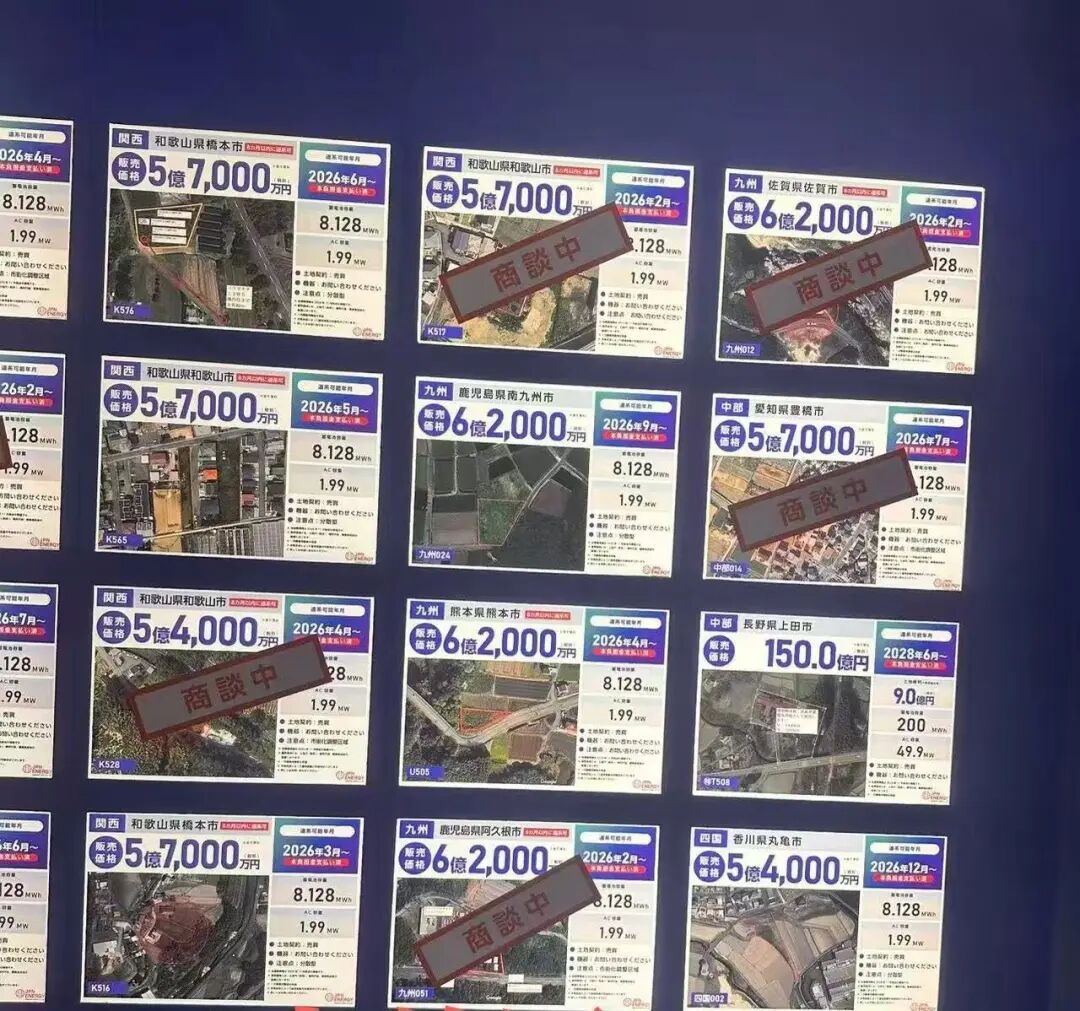
这些蓄电所大多数有着统一的规格:1.99MW/8.128MWh。 在日本出海圈,它们被简称为"28系统",是日本储能界供应量最大,最为主流的"硬通货"。 展位现场,金钱流动的声音清晰可见。 一边是有人在计算器上飞快地按着汇率,有人正对着手机那头的合伙人焦急地喊道:"路条价格又涨了!现在一张开发许可(路条)的售价基本都过亿了" 半年就回本,现在去日本还来得及吗 在今年东京国际智慧能源周(Smart Energy Week)上,出现了一个非常反差的画面。 本应是科技含量十足的展商化身新宿街头的房产推介,在展板上密密麻地贴出彩色的小传单,上面印着地块的卫星图、复杂的单线图,一大半还盖上了的 鲜红色印章:"商谈中"或"售完" 这些传单指向的是同一个主角:"蓄电所"。这是一个非常有日本风格的称呼,实际上就是国内的储能电站。 这让日本这个在大储领域毫无存在感的国家,忽然成为了海外资本和中国设备商的淘金地。 另一边则是海外来的投资商试图深入询问东电(TEPCO)或关电(KEPCO)的并网检讨细节。 这一切都来自于一个"全球最高收益"的神话。圈内疯传:2024-2025年,第一批"蓄电所"做到了半年多回本,IRR冲到了45% ...
123.23亿元主力资金今日抢筹电力设备板块
Zheng Quan Shi Bao Wang· 2026-01-23 09:36
资金面上看,两市主力资金全天净流出85.76亿元,今日有12个行业主力资金净流入,电力设备行业主 力资金净流入规模居首,该行业今日上涨3.50%,全天净流入资金123.23亿元,其次是有色金属行业, 日涨幅为2.73%,净流入资金为54.32亿元。 沪指1月23日上涨0.33%,申万所属行业中,今日上涨的有23个,涨幅居前的行业为电力设备、有色金 属,涨幅分别为3.50%、2.73%。电力设备行业位居今日涨幅榜首位。跌幅居前的行业为通信、银行, 跌幅分别为1.52%、0.90%。 主力资金净流出的行业有19个,电子行业主力资金净流出规模居首,全天净流出资金130.25亿元,其次 是通信行业,净流出资金为69.11亿元,净流出资金较多的还有机械设备、公用事业、建筑装饰等行 业。 电力设备行业今日上涨3.50%,全天主力资金净流入123.23亿元,该行业所属的个股共365只,今日上涨 的有313只,涨停的有28只;下跌的有51只。以资金流向数据进行统计,该行业资金净流入的个股有201 只,其中,净流入资金超亿元的有51只,净流入资金居首的是隆基绿能,今日净流入资金27.62亿元, 紧随其后的是金风科技、先导智能, ...



宁德时代放大招!推天行Ⅱ系列欲锁轻商定制化未来
Guo Ji Jin Rong Bao· 2026-01-23 09:33
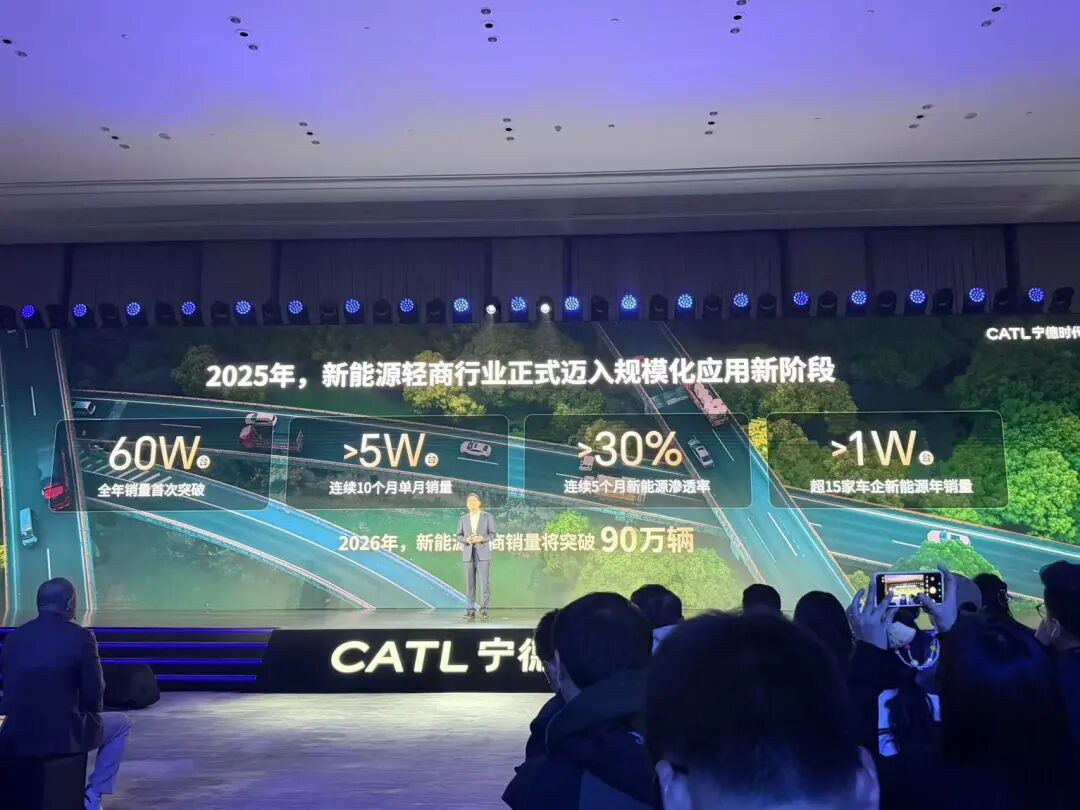
Core Insights - CATL launched the Tianxing II light commercial vehicle (LCV) series solutions and the industry's first intelligent battery management application, marking a shift towards customized battery technology for specific operational scenarios in the commercial vehicle sector [1][5] Group 1: Product Features - The Tianxing II light commercial series includes multiple versions tailored for different operational needs, such as high-frequency urban distribution and intercity operations, showcasing a shift towards refined operational strategies in the commercial vehicle market [1][5] - The Tianxing II LCV Super Charging version features significant upgrades in cold resistance, power output, and lifespan, with a charging time reduction of approximately 30%, allowing for 100 km/h operation under full load at -15°C [3] - The Long Range version incorporates a hybrid chemical system, achieving a maximum single battery capacity of 253 kWh, enabling a real-world range of 800 km and reducing vehicle weight by over 260 kg [3] - The High-Temperature Super Charging version supports peak charging rates of 4C, allowing for a 60% charge in just 18 minutes, and features a unique thermal management technology that reduces energy consumption by 5% [4] - The Low-Temperature version is the first mass-produced sodium-ion battery in the light commercial sector, maintaining over 92% usable capacity at -20°C and capable of operating in extreme cold conditions [4] Group 2: Market Position and Trends - The launch of the Tianxing II series reflects a broader industry trend from standardized supply to scenario-based services, addressing the diverse cost, efficiency, and safety needs of electric commercial vehicles [5] - By 2025, lithium iron phosphate batteries are projected to hold an 81.2% market share in the power battery sector, with CATL leveraging its technological expertise to secure partnerships with major commercial vehicle manufacturers [6] - CATL maintains a leading market share of 43.42%, excelling in both lithium iron phosphate and ternary lithium battery segments, while emphasizing the importance of customization capabilities in a competitive landscape [7] - The commercial vehicle sector is expected to see significant growth, with electric truck sales projected to increase by 246.0% year-on-year, driving the average battery capacity per vehicle to 55.2 kWh [6]
从长线重仓股看2025Q4基金权益配置变化
GF SECURITIES· 2026-01-23 09:28
- The report defines long-term heavy positions as stocks that appear in the top ten holdings of a fund for four or more consecutive reporting periods[9] - The report provides a list of stocks heavily held by funds in Q4 2025, including CATL, Tencent Holdings, Zijin Mining, Kweichow Moutai, and Midea Group[9][10] - The report calculates the termination ratio of long-term heavy positions for Q4 2025 using the formula: $$ \text{Termination Ratio} = \frac{\text{Number of funds terminating long-term heavy positions in Q4 2025}}{\text{Number of funds holding long-term heavy positions in Q3 2025}} $$[14] - The report identifies stocks with the highest and lowest termination ratios in Q4 2025, such as Xiaomi Group and Poly Developments with high termination ratios, and Baili Tianheng and Zijin Mining with low termination ratios[14][18] - The report also analyzes the termination ratios of long-term heavy positions by industry, noting that the media, food and beverage, and electrical equipment industries have relatively low termination ratios, indicating fund managers' optimism about these sectors[20][22]





【广发金工】从长线重仓股看2025Q4基金权益配置变化
广发金融工程研究· 2026-01-23 09:20
Group 1 - The core viewpoint of the article is the analysis of long-term heavy holdings by funds, identifying key stocks that are consistently held over multiple reporting periods, such as Ningde Times, Tencent Holdings, Zijin Mining, Kweichow Moutai, and Midea Group [4][5] Group 2 - In the long-term heavy holdings change, stocks like Xiaomi Group and Poly Developments have a high termination ratio in Q4 2025, while stocks like Baillie Tianheng and Zijin Mining have a low termination ratio [2][6] Group 3 - Industry-wise, the media, food and beverage, and electric equipment sectors show relatively low termination ratios for long-term holdings, indicating a positive outlook from fund managers for these sectors [3][9]


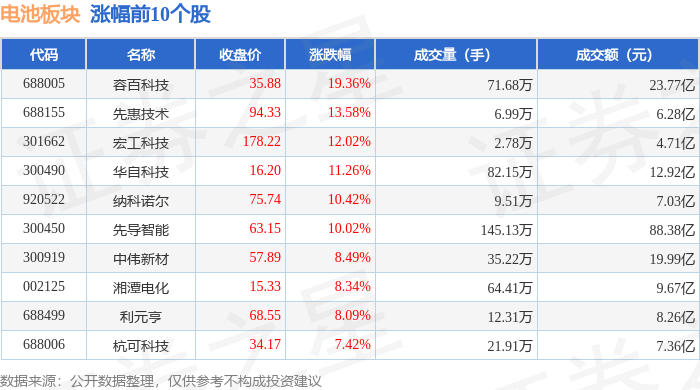
电池板块1月23日涨2.48%,容百科技领涨,主力资金净流入28.32亿元
Zheng Xing Xing Ye Ri Bao· 2026-01-23 09:12
Market Overview - The battery sector increased by 2.48% compared to the previous trading day, with Rongbai Technology leading the gains [1] - The Shanghai Composite Index closed at 4136.16, up 0.33%, while the Shenzhen Component Index closed at 14439.66, up 0.79% [1] Stock Performance - Rongbai Technology (688005) closed at 35.88, up 19.36% with a trading volume of 716,800 shares [1] - Xianhui Technology (688155) closed at 94.33, up 13.58% with a trading volume of 69,900 shares [1] - Honggong Technology (301662) closed at 178.22, up 12.02% with a trading volume of 27,800 shares [1] - Huazi Technology (300490) closed at 16.20, up 11.26% with a trading volume of 821,500 shares [1] - Naconor (920522) closed at 75.74, up 10.42% with a trading volume of 95,100 shares [1] - XianDao Intelligent (300450) closed at 63.15, up 10.02% with a trading volume of 1,451,300 shares [1] - Other notable stocks include Zhongwei New Materials (300919) and Xiangtan Electric (002125), which saw increases of 8.49% and 8.34% respectively [1] Capital Flow - The battery sector experienced a net inflow of 2.832 billion yuan from institutional investors, while retail investors saw a net inflow of 541 million yuan [2] - However, speculative funds recorded a net outflow of 3.373 billion yuan [2] Individual Stock Capital Flow - XianDao Intelligent (300450) had a net inflow of 1.139 billion yuan from institutional investors, but a net outflow of 698 million yuan from speculative funds [3] - Weilan Lithium Core (002245) saw a net inflow of 527 million yuan from institutional investors, while speculative funds had a net outflow of 200 million yuan [3] - Other stocks like Daoshi Technology (300409) and Gree Environmental (002340) also showed varying capital flows, with institutional inflows and speculative outflows [3]