
BABA(BABA)

Search documents
英特尔盘后跌近10%,阿里涨超5%,黄金白银创历史新高
2 1 Shi Ji Jing Ji Bao Dao· 2026-01-23 00:15
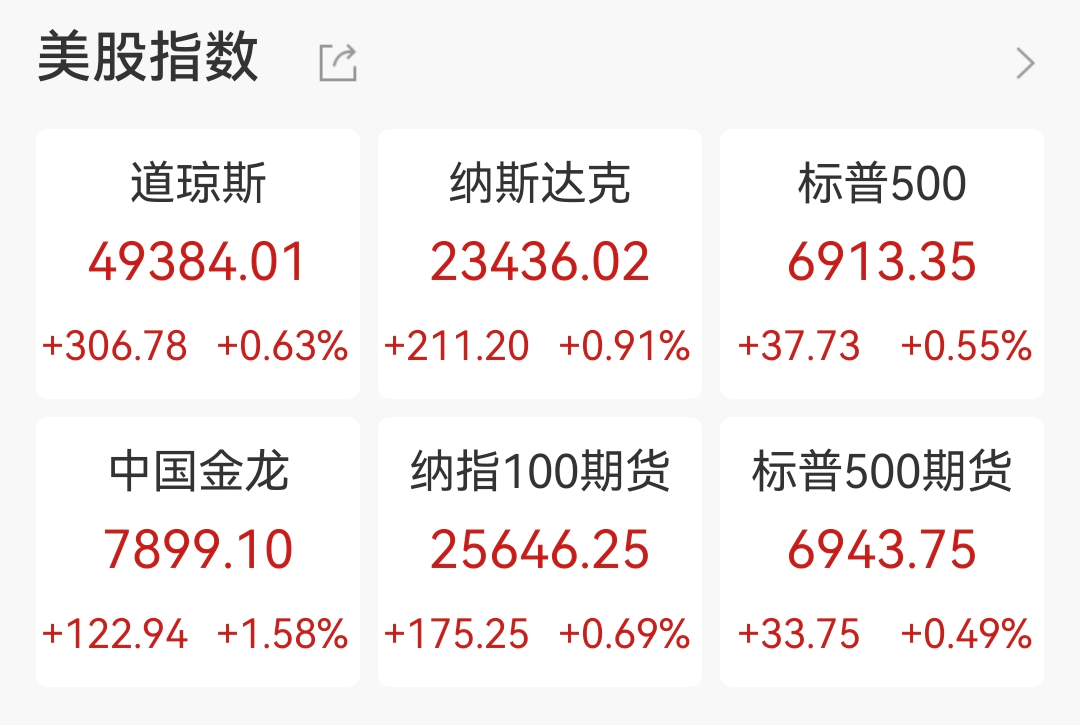
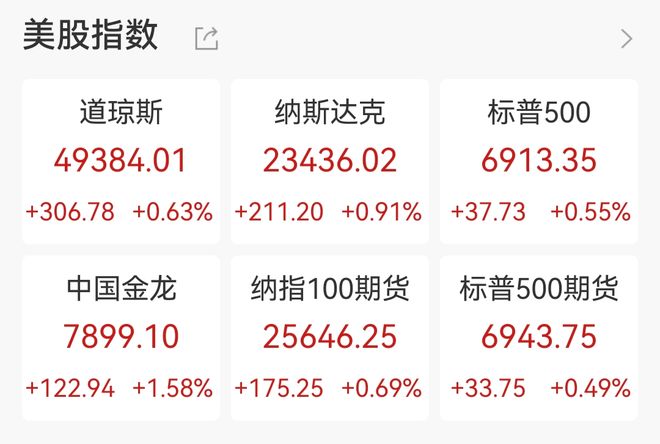
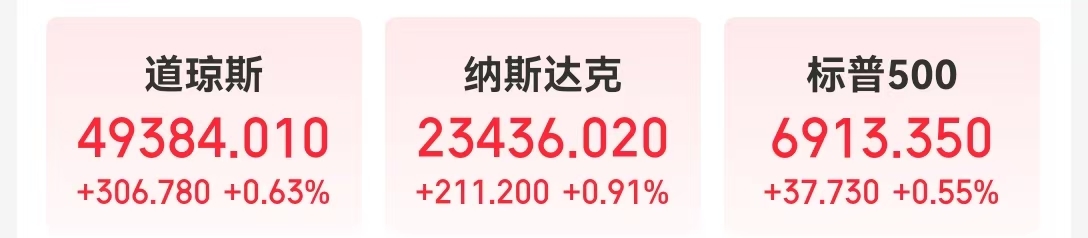
1月23日,美股三大指数收盘集体上涨,道指涨0.63%,纳指涨0.91%,标普500指数涨0.55%。 美国当天公布的一系列宏观数据整体偏强。地缘政治担忧消散,叠加美国经济数据强劲,提振风险偏好。美股主要股指连续第二个交易日上涨,完全收复 本周早些时候的失地。降息预期减弱下,短期美债承压。2年期美债收益率上行2.5个基点,10年期收益率则持平于昨日尾盘。美元下挫0.5%,逼近98关 口。 美股大型科技股普涨,万得美国科技七巨头指数上涨1.47%。个股方面,微软、亚马逊涨超1%,Meta收涨5.7%,创7月31日以来最大单日涨幅;甲骨文涨 超2%,AMD涨超1%。 特斯拉涨超4%,据智通财经,全球首富、特斯拉CEO埃隆·马斯克最新表示,特斯拉可能会在明年年底前开始向公众销售其人形机器人"Optimus"(擎天 柱)。当地时间周四(1月22日),马斯克在瑞士达沃斯举行的世界经济论坛年会上发表演讲时表示,特斯拉已经在工厂中使用部分擎天柱执行一些简单 任务。 英特尔盘后大跌近10%,报49.14美元。英特尔第四季度营收136.7亿美元,同比减少4.1%,市场预估134.3亿美元;第四季度调整后每股收益0.15美元,上 ...


陆家嘴财经早餐2026年1月23日星期五
Wind万得· 2026-01-23 00:13
Monetary Policy and Economic Measures - The central bank governor Pan Gongsheng stated that a moderately loose monetary policy will continue in 2026, with room for further cuts in reserve requirement ratios and interest rates to maintain ample liquidity [3] - The first batch of 936 billion yuan of ultra-long special government bonds has been allocated to support approximately 4,500 projects in various sectors, expected to drive total investment exceeding 460 billion yuan [4] - The People's Bank of China will conduct a 900 billion yuan MLF operation on January 23, net injecting 700 billion yuan into the market, marking the 11th consecutive month of increased operations [4] Consumer and Investment Trends - State-owned banks collectively announced the implementation of personal consumption loan interest subsidy policies, allowing some high-quality clients to enjoy effective interest rates in the "2%" range, lower than current housing loan rates [3] - Public funds have focused their fourth-quarter 2025 positions on core sectors such as electronics and power equipment, with Zhongji Xuchuang becoming the largest holding stock [3] Market Performance - The A-share market saw a slight increase, with the Shanghai Composite Index rising 0.14% to 4122.58 points, and the Shenzhen Component Index increasing by 0.5% [6] - The Hong Kong stock market also experienced minor fluctuations, with the Hang Seng Index rising 0.17% to 26629.96 points, and net inflows from southbound funds amounting to 5.166 billion HKD [6] Corporate Developments - Alibaba Group has decided to support its chip company "Pingtouge" for independent listing, with plans for restructuring to a mixed-ownership enterprise [7] - Xiaomi Group has initiated a stock repurchase plan of up to 2.5 billion HKD [9] - Nanjing Bank reported a net profit growth of 8.08% year-on-year for 2025 [9] Regulatory and Policy Updates - The State Administration for Market Regulation has issued a red card for the first time in the public utility sector, prohibiting a merger between two gas companies [10] - Nine departments jointly issued opinions to promote high-quality development in the pharmaceutical retail industry, encouraging mergers and acquisitions among retail pharmacies [10] Economic Indicators - The unemployment rate for urban labor aged 16-24 was reported at 16.5% in December 2025, while the rate for those aged 25-29 was 6.9% [5] - The National Bureau of Statistics reported a 28.1% year-on-year increase in sales revenue for the smart device manufacturing industry in 2025 [10]





1月23日早餐 | 阿里平头哥或筹划IPO;商业航天迎多个催化




Xuan Gu Bao· 2026-01-23 00:11
Market Overview - US stock market continues to rise, with Dow Jones up 0.63%, Nasdaq up 0.91%, and S&P 500 up 0.55% [1] - Meta shares increased by 5.66%, marking the largest single-day gain since July 31 [1] - Tesla shares rose by 4.15%, while Microsoft and Amazon saw increases of at least 1.31% [1] Company Developments - Intel's Q1 guidance is disappointing, leading to a post-market drop of over 10% [2] - Nvidia completed a $5 billion investment in Intel in Q4 [2] - Tesla plans to sell humanoid robots to the public by the end of this year or next year [3] - OpenAI is quietly developing humanoid robots with a team of 100 in San Francisco [4] - Meta's Threads platform has surpassed 400 million monthly active users and is launching ads globally [5] Commodity Insights - Goldman Sachs raised its gold price target to $5,400, indicating that wealthy individuals are competing with central banks for limited physical reserves [6] - COMEX gold futures rose by 1.97%, while silver futures increased by 4.05%, both reaching historical highs [7] - US natural gas futures prices surged by 81% within three days, reaching the highest level since December 2022 [7] Regulatory and Policy Updates - The People's Bank of China (PBOC) Governor Pan Gongsheng stated there is still room for further interest rate cuts and reserve requirement ratio reductions this year [8] - The Ministry of Commerce and other departments encourage horizontal mergers and acquisitions in the pharmaceutical retail sector [12] - The State Council's Food Safety Office is drafting national standards for prepared dishes and will seek public opinions soon [12] Industry Trends - The semiconductor industry is seeing significant developments, with Alibaba's T-HEAD planning for an independent IPO [10] - The prepared food sector is undergoing a transformation, with a focus on quality and safety in the supply chain [11] - The retail pharmacy industry is expected to accelerate consolidation, with a projected decrease in the number of pharmacies by nearly 20,000 since Q4 2024 [13] Financial Projections - Zhaoyi Innovation expects a net profit of approximately 1.61 billion yuan for 2025, a 46% increase year-on-year [17] - Shengmei Shanghai anticipates revenues between 6.68 billion and 6.88 billion yuan for 2025, reflecting a growth of 18.91% to 22.47% [18] - Runtu Co. forecasts a net profit of 600 million to 700 million yuan for 2025, representing a growth of 181.05% to 227.89% [18]
8点1氪丨错版“马年茅台”二手价格被炒至2800元 ;“黑白颠周媛”账号被封;兰博基尼2025销量创历史新高,卖出10747辆
3 6 Ke· 2026-01-23 00:03
Group 1 - The "Year of the Horse" Moutai liquor has a printing error, leading to a surge in second-hand prices reaching up to 2800 yuan, compared to the original price of 1899 yuan [2][3] - The account of influencer Zhou Yuan, known for controversial content, has been banned after generating over 24 million yuan in revenue from paid courses [2][3] - Lamborghini announced a record delivery of 10,747 vehicles in 2025, marking a 60-unit increase from the previous year and achieving growth for the fifth consecutive year [3] Group 2 - Yonghui Supermarket expects a net loss of 2.14 billion yuan for 2025 due to significant strategic adjustments and asset write-offs [4][6] - The company has a high debt ratio of 88.96% and a low liquidity ratio of 0.63, indicating financial strain [6] - The company plans to complete its strategic adjustments by 2026 [6] Group 3 - Gold prices have reached a new high of 4950 USD per ounce, with a 0.28% increase [11] - Goldman Sachs raised its gold price target for December 2026 from 4900 USD to 5400 USD, citing increased demand for gold as a hedge against macroeconomic uncertainties [12] - Nvidia has overtaken Apple as TSMC's largest customer, accounting for 13% of TSMC's total revenue [12] Group 4 - The Chinese government has implemented a subsidy program for elderly individuals with moderate to severe disabilities, providing up to 800 yuan per month [13] - The subsidy is aimed at supporting various elderly care services, including home and institutional care [13] Group 5 - SpaceX plans to launch its second-generation Starlink system by 2027 [16] - Amazon is preparing to lay off thousands of corporate employees as part of its restructuring efforts [17] - Tesla's CEO Elon Musk indicated plans to sell the Optimus robot to the public by the end of next year [18]


早报|王石首次公开回应婚变传闻;预制菜要有国家标准了;马斯克称计划明年开售Optimus机器人;特朗普起诉摩根大通索赔50亿美元
虎嗅APP· 2026-01-22 23:59
大家早上好!这里是今天的早报,每天早上,我都会在这里跟你聊聊昨夜今晨发生了哪些大事儿。 昨夜今晨 【索赔至少50亿美元!特朗普起诉摩根大通及CEO,指控他们涉嫌"取消银行服务"】 美国总统特朗普在迈阿密-戴德县州法院起诉摩根大通公司及其首席执行官(CEO)杰米·戴蒙(Jamie Dimon),要求赔偿至少50亿美元。他指控该银行出于政治原因停止向其本人及其实际控制的企业提供银行服 务。指控该银行涉嫌商业诽谤(Trade Libel)以及违反诚信与公平交易的默示契约。诉状还称戴蒙违反了佛罗 里达州的《欺诈与不公平贸易行为法》。 摩根大通对此回应称,该诉讼毫无根据,并声明其关闭账户是因为这些账户为公司带来了法律或监管风险。 【马斯克表示计划明年面向公众销售Optimus机器人】 据财联社1月23日电,特斯拉首席执行官埃隆·马斯克表示可能在明年年底前向公众出售Optimus机器人。马斯 克曾指出这家汽车制造商的未来将越来越依赖人形机器人。 马斯克周四在瑞士达沃斯的世界经济论坛上表示,公司已在工厂中使用部分机器人执行简单任务。他预计,到 2026年底Optimus将能够"执行更复杂的任务"。 【OpenAI拟从客户A ...

张坤在管基金披露2025年四季报:减持白酒股 加仓阿里巴巴
Zhi Tong Cai Jing· 2026-01-22 23:43
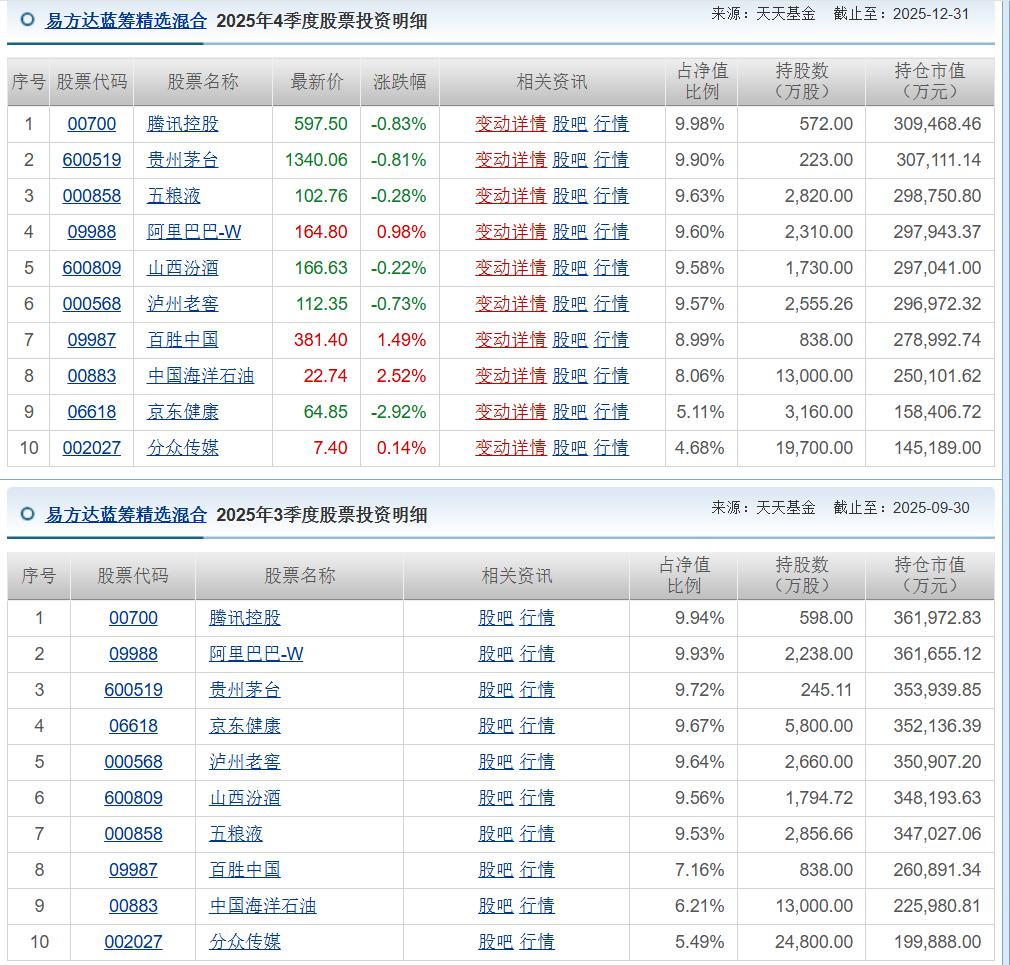
易方达蓝筹精选的前十大重仓股并未发生变更,依次为:腾讯控股(00700)、贵州茅台(600519.SH)、五粮液(000858.SZ)、阿里巴巴(09988)、山西 汾酒(600809.SH)、泸州老窖(000568.SZ)、百胜中国(09987)、中国海洋石油(00883)、京东健康(06618)、分众传媒(002027.SZ)。其中,张坤较大 幅度地减持了分众传媒,还减持了泸州老窖、山西汾酒、五粮液;加仓了阿里巴巴。 | 序号 | 股票代码 | 股票名称 | 相关资讯 | 占浄值 | 持股数 | 持仓市值 | | --- | --- | --- | --- | --- | --- | --- | | | | | | 比例 | (万股) | (万元) | | 1 | 00700 | 腾讯控股 | 股吧 行情 | 9.94% | 598.00 | 361,972.83 | | 2 | 09988 | 阿里巴巴-W | 股吧 行情 | 9.93% | 2.238.00 | 361.655.12 | | 3 | 600519 | 贵州茅台 | 股吧 行情 | 9.72% | 245.11 | 353.939.85 ...



阿里芯片谋求ipo
小熊跑的快· 2026-01-22 23:43
数量大,今明两年国内一半需求用自研的芯片,目测大几十万颗,和no1 hw那家比肩了。 互通做得好。磐久,64卡,进发128卡,超结点用UAlink。 用量得以保证,阿里去年10年单日tokens调用超过60万亿!同年11月,字节单日40万亿。昨天发言预计 全球tokens调用还要涨100倍。阿里推理自研用的多。 总结:去年google tpu 外售,阿里就看的眼红,一直紧密跟踪。以为它要外售芯片,结果它直接ipo。 阿里云没有像大家期待的分拆。阿里芯片准备单独分拆ipo。 外号"平头哥",实际ppu,目前到1.7代,对标h100。 特点: ...

美股科技股拉升,特斯拉涨超4%,英特尔盘后跌近10%,中概股普涨,阿里涨超5%,金银铂创历史新高
2 1 Shi Ji Jing Ji Bao Dao· 2026-01-22 23:39
记者丨张嘉钰 编辑丨江佩佩 1月23日,美股三大指数收盘集体上涨,道指涨0.63%,纳指涨0.91%,标普500指数涨0.55%。 美国当天公布的一系列宏观数据整体偏强。地缘政治担忧消散,叠加美国经济数据强劲,提振风险偏 好。美股主要股指连续第二个交易日上涨,完全收复本周早些时候的失地。降息预期减弱下,短期美债 承压。2年期美债收益率上行2.5个基点,10年期收益率则持平于昨日尾盘。美元下挫0.5%,逼近98关 口。 | 美股指数 | | | | --- | --- | --- | | 道琼斯 | 纳斯达克 | 标普500 | | 49384.01 | 23436.02 | 6913.35 | | +306.78 +0.63% +211.20 +0.91% +37.73 +0.55% | | | | 中国金龙 | 纳指100期货 | 标普500期货 | | 7899.10 | 25646.25 | 6943.75 | | +122.94 +1.58% +175.25 +0.69% +33.75 +0.49% | | | 特斯拉涨超4%,据智通财经,全球首富、特斯拉CEO埃隆·马斯克最新表示,特斯拉可能会在明年 ...
中国资产大涨 阿里巴巴涨超5%!美国公布重磅数据 特斯拉市值一夜增超4100亿元!国际金价银价同创历史新高
Mei Ri Jing Ji Xin Wen· 2026-01-22 23:21
Group 1: Market Performance - US stock markets closed higher on January 22, with the Dow Jones up 0.63%, Nasdaq up 0.91%, and S&P 500 up 0.55% [1] - Technology stocks saw significant gains, with Meta rising 5.7%, Oracle up over 2%, and Tesla increasing by over 4% [2][3] Group 2: Tesla Developments - Tesla's market value increased by $59.6 billion (approximately 415.6 billion RMB) in one night [3] - CEO Elon Musk announced that Tesla may start selling its humanoid robot "Optimus" to the public by the end of next year, with the robots currently performing simple tasks in factories [4] - Musk predicts that by the end of 2026, these robots will be capable of completing more complex tasks [5] Group 3: Intel Financials - Intel reported fourth-quarter revenue of $13.67 billion, a year-over-year decrease of 4.1%, with adjusted earnings per share of $0.15, up from $0.13 the previous year [6] - The company expects first-quarter adjusted earnings per share of $0.00, with revenue projected between $11.7 billion and $12.7 billion [6] Group 4: Economic Indicators - The US third-quarter GDP annualized growth rate was revised to 4.4%, slightly above the expected 4.3% [9] - Initial jobless claims for the previous week were reported at 200,000, below the expected 210,000 [8]

阿里被曝力推平头哥独立上市,大厂自研芯片有望迎来价值重估
Xuan Gu Bao· 2026-01-22 23:18
平头哥被曝启动上市计划,叠加近期多家国产芯片企业推进资本化进程,正在重塑国产芯片行业的发展 格局。国产芯片公司摩尔线程、沐曦股份已经在A股上市,壁仞科技已通过港交所聆讯,百度正在评估 昆仑芯单独分拆上市;预计26年有多家国产大模型、芯片迎来IPO。申万宏源认为,互联网自研芯片有 望迎来价值重估。 公司方面,据上市公司互动平台表示, 利扬芯片:公司为国内知名芯片设计公司提供中高端芯片独立第三方测试服务,公司是平头哥的供应 商。 全志科技:公司已经基于平头哥RISC-V内核开发了多款芯片产品并在多个下游应用场景,并已经实现 大规模量产,后续将会持续根据客户需求推出新的芯片产品和解决方案。 据第一财经1月22日消息,接近市场人士透露,阿里巴巴集团已决定支持旗下芯片公司平头哥未来独立 上市,具体时间尚未明确。 平头哥作为阿里巴巴全资子公司,成立于2018年,是国内互联网公司中自研芯片的早期探索者,其核心 发展模式是围绕云端数据中心场景开展产品线研发,依托阿里云的场景优势缩短芯片从设计到落地的周 期,这一独特路径使其成为芯片产业链中的黑马。申万宏源表示,阿里云全栈自研技术体系(芯片-服 务器-云OS-大模型)构筑国内A ...