BABA(BABA)

Search documents
年货消费“变天”了!AI正在改写电商的底层逻辑
Xin Jing Bao· 2026-01-22 03:12
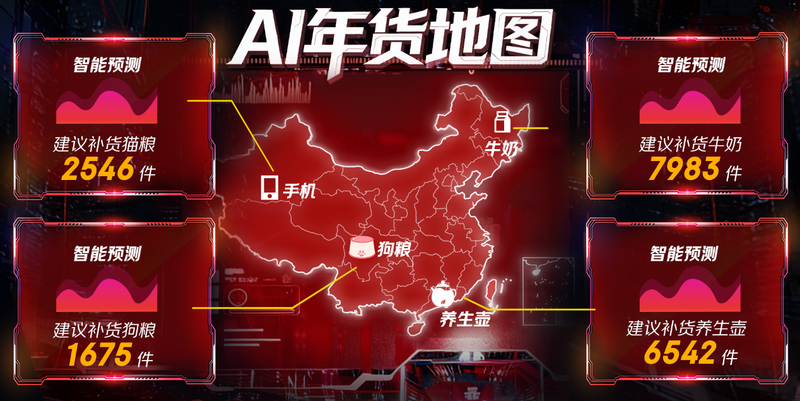
Core Insights - The 2026 "New Year Goods Festival" e-commerce competition has intensified, with AI technology becoming a core variable, shifting the industry focus from scale expansion to efficiency improvement [1] - Major e-commerce platforms like Taobao, JD.com, and Douyin are leveraging AI to enhance their operations, while small and medium-sized businesses are utilizing lightweight tools to navigate the competitive landscape [1][2] - The integration of policy support and technological advancements is creating a unique environment for this year's festival, with the Ministry of Commerce leading the "Buy in China" initiative and additional financial incentives boosting consumer spending [1][7] Group 1: AI Integration in E-commerce - Major platforms are using AI to enhance supply chain efficiency and customer experience, with JD.com launching the "AI New Year Map" to predict regional demand variations [3] - AI tools are helping merchants identify commercial hotspots and match products with target users, significantly improving operational conversion rates [2][5] - The application of AI in e-commerce is shifting from traditional recommendation systems to generative models, enhancing user interaction and experience [7][8] Group 2: Consumer Experience and Market Trends - Consumer behavior is evolving with AI-driven instant retail, allowing for quick delivery and personalized recommendations, as evidenced by the sales of imported cherries and strawberries [4][5] - The AI-driven approach is leading to a significant increase in sales for certain product categories, with food sales expected to see double-digit growth this year [2][4] - The trend of "instant gratification" in consumer purchasing is becoming more pronounced, with AI facilitating a more seamless shopping experience [4][5] Group 3: Challenges for Small and Medium-sized Businesses - While AI presents opportunities for cost reduction and efficiency, small and medium-sized businesses face challenges in effectively utilizing these tools, including high understanding costs and the need for time to adapt [8] - Some small merchants have experienced difficulties due to over-reliance on AI for product selection, highlighting the need for a balance between AI insights and human judgment [3][8] - The current landscape indicates that while larger businesses benefit significantly from AI, smaller players must navigate various obstacles to fully leverage these technologies [8]


里昂:阿里巴巴进军核电领域,今年业内或出现更多合作消息
Xin Lang Cai Jing· 2026-01-22 03:07
里昂发表研究报告指,阿里巴巴近期与中国核电(CNNP)成立合资企业,投资额达约3590万美元,虽然 该笔投资金额相对于阿里未来数年计划投入的530亿美元AI资本开支而言规模较小,但这反映中国科技 巨头正积极探索为其先进的AI模型提供高效且稳定的能源支持,以便在与美国的人工智能竞争中保持 优势。该行认为,中国在核电厂部署方面是全球领导者,相信未来数年仍将如此。该行预期今年业内将 会有更多中国数据中心与核能合作的消息。 ...

布局中国互联网・头部 AI 应用追踪:2026 年六大核心 AI 主题;聚焦 AI 技术、AI 助手与芯片供应-Navigating China Internet_ Top AI_apps tracker_ Laying out six key AI themes for 2026; focuses on AI adtech, AI assistants & chip supply
2026-01-22 02:44
Summary of Key Points from the Conference Call Industry Overview - The focus is on the **China Internet** sector, particularly regarding **AI applications** and **advertising technology** (adtech) as key themes for 2026 [1][2]. Core Themes for 2026 1. **AI/Adtech Evolution**: - Shift towards ROI-based advertising and new marketing strategies like Answer & Generative Engine Optimization (AEO/GEO) [1][19]. 2. **AI Model Breakthroughs**: - Focus on long-context, multi-modal models, and cost-efficient architectures [1][22]. 3. **Proliferation of To-C Assistants**: - Emergence of AI super entry-points, impacting traditional search markets and app user traffic [1][23]. 4. **Chip Supply Dynamics**: - Access to next-generation chips will determine the competitive gap between Chinese and US AI models [1][24]. 5. **Global Market Inroads**: - Increased monetization through a mix of open and closed-source models, with a focus on subscription and API revenue streams [1][26]. 6. **AI Inference Demand**: - Continued growth in AI inference demand will drive cloud revenue and data center demand [1][27]. Company Insights - **Alibaba** and **Tencent** are identified as the best-positioned mega-cap stocks in the China internet sector for the long term [2]. - **PDD** is highlighted as a Buy idea due to its valuation discount and strong user engagement [2]. Engagement Metrics - Overall time spent on the top 400 mobile apps increased by **7% YoY** in December 2025, with notable growth in **Douyin** (+19% YoY) and **eCommerce** engagement (+10% YoY) [3][8]. - **Weixin** and **Weibo** both saw a **5% YoY** increase in time spent [8]. Sector Performance - **Cloud & Data Centers** ranked as the top sub-sector, followed by **Games & Entertainment** and **AI Models** [2][14]. - **JD** and **Taobao** showed strong growth in eCommerce time spent, with increases of **38%** and **9% YoY**, respectively [8]. Notable Trends - **AI Engagement**: Domestic AIGC application engagement rose by **16% MoM**, driven by apps like **Doubao** and **Qwen** [8]. - **Recruitment Platforms**: **Boss Zhipin** maintained leadership in time spent share at **64%** in December [12]. - **Real Estate**: **Beike Zhaofang** saw a **9% YoY** increase in MAUs [12]. Challenges and Regulatory Environment - Cross-border eCommerce faces increasing regulatory pressure, with the EU imposing a **€3 customs duty** on low-value parcels starting July 2026 [8]. Conclusion - The China Internet sector is poised for significant transformation driven by AI advancements, with key players like Alibaba and Tencent leading the charge. The focus on ROI-based advertising, AI model breakthroughs, and global market expansion will shape the competitive landscape in the coming years.

隔夜美股 | “抛售美国”交易逆转 三大指数均涨超1%,美元指数与其他货币相比有所上涨。
Sou Hu Cai Jing· 2026-01-22 02:35
【金属】现货黄金收涨1.38%,报4828.94美元,日内一度抹去全部涨幅,因特朗普发帖表示与北约就格 陵兰问题达成协议。 【原油】国际油价21日微涨。截至当天收盘,纽约商品交易所3月交货的轻质原油期货价格上涨26美 分,收于每桶60.62美元,涨幅为0.43%;3月交货的伦敦布伦特原油期货价格上涨32美分,收于每桶 65.24美元,涨幅为0.49%。 【宏观消息】 特朗普:美国将参与格陵兰矿产权益;心中选定的美联储主席可能只剩一位,希望能像上世纪90年代的 格林斯潘那样。美国总统特朗普表示:我们似乎已达成协议框架。格陵兰岛相关协议草案的内容完全符 合我方预期。格陵兰框架是一项长期协议,格陵兰框架让所有人都处于有利地位。将涉及矿产权益,美 国将"永久"参与格陵兰矿产权益。我们稍后会解释这项协议。此外,特朗普还谈到:我想说美联储主席 候选人已经缩减到三位,不对,是两位。而且我或许可以告诉你,在我心里可能已经只剩下一位了。贝 莱德全球固定收益首席投资官里克·里德尔、美联储前理事凯文·沃什,都适合担任下一任美联储主席。 关于凯文·哈塞特,实际上我更想让他留在目前的位置上。如果鲍威尔不离开美联储(即卸任主席后继 续担 ...


缺席本轮躁动行情的港股科技,最近发生了哪些积极的变化?
Mei Ri Jing Ji Xin Wen· 2026-01-22 01:44
Group 1 - The Hong Kong stock market has been lagging behind the A-share market since December, primarily due to structural differences and varying funding environments [1] - The current market hotspots in A-shares, such as artificial intelligence and commercial aerospace, have strong representation and high capital concentration, while Hong Kong stocks are dominated by internet giants, biomedicine, and high-dividend financial real estate [1] - The liquidity environment is more favorable for A-shares, driven by domestic capital, while Hong Kong's offshore market relies heavily on global capital flows, particularly from the US [1] Group 2 - Future opportunities for the Hong Kong market may depend on key "trigger points," including the expansion and rotation of market hotspots from A-shares to Hong Kong's unique assets [2] - Changes in the funding landscape, particularly regarding the Federal Reserve's monetary policy and the trend of southbound capital inflows, could significantly impact Hong Kong stocks [2] - Positive surprises in economic data could lead to substantial revisions in market expectations, benefiting both A-shares and Hong Kong stocks, with the latter potentially showing greater rebound elasticity due to previous declines [3] Group 3 - Recent positive changes in the funding and fundamental outlook for the Hong Kong market suggest potential opportunities in core assets, including the Hang Seng Tech Index ETF, which covers internet, hard tech, and new energy vehicles [4] - The Hong Kong Stock Connect Tech ETF offers higher sharpness by reducing retail and automotive exposure while increasing biopharmaceutical allocations [4] - The Hang Seng Internet ETF focuses on software applications and internet media, with significant weight in Alibaba, Tencent, and Meituan, while the Hang Seng Pharma ETF targets innovative drugs and CXO leaders, currently characterized by low valuations and low crowding [4]
互联网大厂AI应用进入收获期!百度集团、阿里巴巴股价重回上涨通道
Mei Ri Jing Ji Xin Wen· 2026-01-22 01:25
Group 1 - The core viewpoint of the news highlights a significant rebound in Chinese concept stocks, particularly in the Nasdaq China Golden Dragon Index, which rose by 2.21% with major companies like Baidu, Alibaba, and JD.com seeing gains [1] - Southbound capital saw a net inflow exceeding 13.9 billion HKD on January 21, marking the second instance of over 10 billion HKD net inflow since the start of the year [1] - Major AI applications from Chinese tech giants are entering a "harvest period," with Alibaba's "Qianwen" integrating into the Taobao ecosystem and Baidu's "Wenxin Assistant" surpassing 200 million monthly active users [1] Group 2 - The Hong Kong TMT sector is currently viewed as undervalued compared to its A-share and US counterparts, with the current PE ratio at 26.31, which is in the 43.78% percentile over the past five years [2] - The Hong Kong Stock Connect Technology ETF (159101.SZ) includes major tech stocks like Alibaba, Tencent, and Baidu, and allows for T+0 trading, providing a diversified exposure to the tech sector [2] - The National Index for Hong Kong Stock Connect Technology has a higher concentration in innovative pharmaceuticals and CXO leaders, with a single stock weight limit of up to 15%, indicating a sharper focus and greater volatility compared to the Hang Seng Technology Index [2]
淘宝闪购正在打一场不能输的战役
3 6 Ke· 2026-01-22 00:46
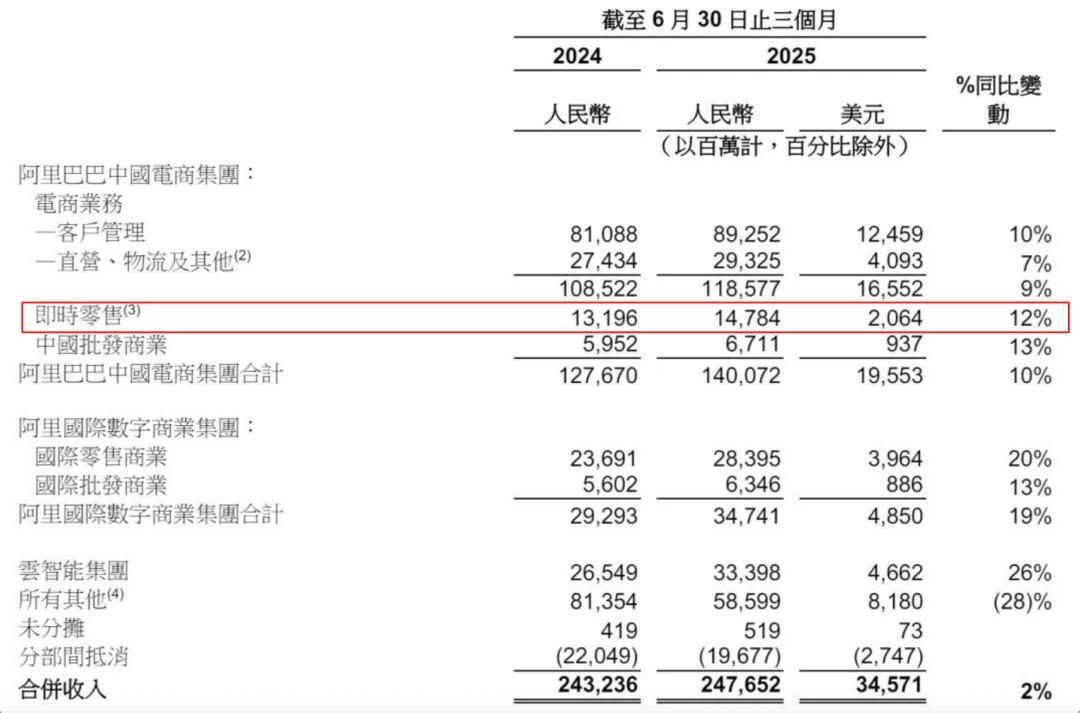
Core Insights - Alibaba has set a clear goal to become the "absolute number one" in the instant retail sector by 2026, marking a shift from a competitive participation stance to a decisive winning strategy [1][2][22] - The company aims to capture market share through increased investment in its Taobao Flash Purchase platform, which has shown significant growth potential [2][4] Financial Performance - In Q2 2025, Alibaba's instant retail segment generated revenue of 14.784 billion RMB, a 12% year-on-year increase, contributing to the overall growth of the e-commerce business [2][3] - The total revenue for Alibaba's China e-commerce group reached 140.072 billion RMB in 2025, with instant retail being one of the few segments maintaining double-digit growth [3] Market Dynamics - The instant retail market in China is projected to reach 1 trillion RMB by 2026, with an annual growth rate of 12.6%, making it a highly competitive space for major retail players [4][22] - Alibaba's Taobao Flash Purchase has achieved 300 million monthly active buyers and peak daily orders of 120 million, indicating a strong market presence [7] Competitive Landscape - Competitors like Meituan and JD.com have established strong footholds in the instant retail market, with Meituan leveraging its delivery network and JD.com focusing on high-value categories [22][24] - Douyin is disrupting the market by integrating content with instant retail, appealing to younger consumers through live streaming and short videos [25] Strategic Initiatives - Alibaba is focusing on efficiency optimization and has initiated a "burning plan" to enhance operational efficiency through AI technology and smart tools for merchants [11][12] - The company plans to introduce 1 million offline brand stores into its instant retail network over the next three years, aiming for a transaction increase of 1 trillion RMB [14][26] Challenges and Risks - The shift towards efficiency optimization has led to a significant decline in adjusted EBITDA, down 78% year-on-year, primarily due to high investments in instant retail and user experience [12][20] - Balancing profitability with service quality remains a challenge, as high customer expectations for premium services can further compress profit margins [20][21]
英特尔涨11.7%,AMD涨7.1%,美光科技涨6.6%,英伟达涨2.9%
财联社· 2026-01-22 00:39
Core Viewpoint - The U.S. stock market experienced a significant rebound following President Trump's cancellation of new tariffs on European countries and his announcement of a "framework agreement" regarding Greenland [1][3]. Market Performance - The Dow Jones Industrial Average rose by 1.21%, closing at 49,077.23 points; the S&P 500 increased by 1.16%, ending at 6,875.62 points; and the Nasdaq Composite gained 1.18%, finishing at 23,224.82 points [2]. Political Developments - Trump stated at the World Economic Forum in Davos that he would not use military force to acquire Greenland, which positively influenced the stock market. He mentioned a productive discussion with NATO Secretary General Mark Rutte, leading to a future agreement framework concerning Greenland and the Arctic region [3]. - Trump had previously announced a 10% tariff on goods from Denmark, Norway, Sweden, France, Germany, the UK, the Netherlands, and Finland, set to take effect on February 1, with a potential increase to 25% by June 1 if an agreement on Greenland was not reached [4]. Market Reactions - The stock market had previously declined sharply due to Trump's escalation of tariff threats and the possibility of military action regarding Greenland, marking the worst single-day performance since October 10 [6]. - The market's reaction to Trump's tariff cancellation reflects a trend where investors no longer assume his statements will be executed, indicating a level of unpredictability in his administration's policies [7]. Stock Performance - Major technology stocks mostly rose, with Nvidia up 2.95%, Apple up 0.39%, Microsoft down 2.29%, Google up 1.98%, Amazon up 0.13%, Meta up 1.46%, Tesla up 2.91%, Broadcom down 1.14%, Oracle down 3.36%, Netflix down 2.18%, Micron Technology up 6.61%, AMD up 7.11%, and Intel up 11.72% [7]. - Chinese concept stocks also saw gains, with the Nasdaq Golden Dragon China Index rising 2.21%, Alibaba up 3.87%, JD.com up 2.43%, Pinduoduo up 1.40%, NIO up 2.41%, Xpeng up 1.70%, Li Auto up 2.48%, Bilibili up 5.65%, Baidu up 8.17%, while NetEase fell 4.07%, Tencent Music down 0.80%, and Pony.ai up 2.55% [7].



抖音发布首份安全与信任报告,与年初相比谣言曝光量下降90%
Ge Long Hui· 2026-01-22 00:19
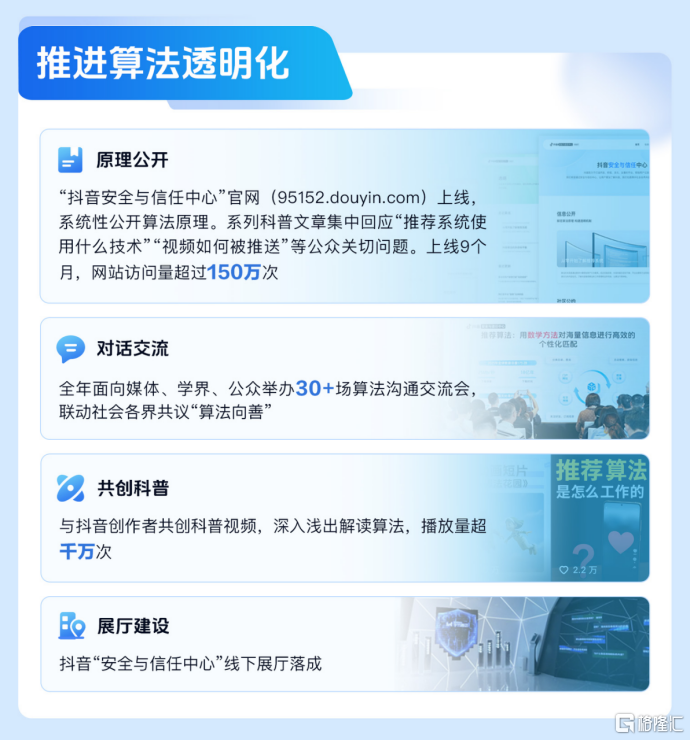
2026年1月21日,抖音举办2026安全与信任大会,并发布《2025抖音安全与信任年度报告》,介绍一年 来抖音平台治理及透明化工作的进展。 《报告》披露了平台在算法公开、治理探索、价值创造和用户服务领域的相关工作。《报告》显示, 2025年,抖音上线安全与信任中心网站(95152.douyin.com),全面公开抖音算法原理,对公众关切的 问题逐一解答;并举办30余场与媒体、学界的算法沟通会,倾听诉求、回应问题、吸纳建议。 在加强平台治理能力上,通过将大模型技术引入谣言治理,抖音平台谣言内容曝光量与年初相比下降 90%;针对争议热点信息传播、AI生成内容、恶意营销号等平台治理新兴问题,抖音创新性推出《社区 热点信息和账号治理规则(试行)》等7项治理类规范,守护社区内容生态。 算法与治理公开:多渠道打破壁垒、吸纳建议 2025年1月,抖音宣布将推出10项措施,推动平台工作透明化。首先被提及的即推进算法和平台治理透 明化。 抖音内容运营负责人李翔宇在大会上介绍,过去一年,以安全与信任中心网站为载体,抖音全面公开了 算法的核心逻辑、所采用的主要模型。同时,网站也针对"平台如何看待信息茧房""网红是不是被平台 推出 ...
全球大公司要闻 | 苹果公司计划推出首款AI聊天机器人
Wind万得· 2026-01-21 22:40
Group 1 - Apple is accelerating its AI strategy by developing an AI wearable device called "Pin" and plans to significantly revamp Siri into its first AI chatbot, codenamed "Campos" [2] - Intel has secured a substantial contract with the U.S. military for chip supply under the SHIELD project, with a maximum limit of $151 billion, boosting expectations for its defense electronics business [2] - TSMC is facing production bottlenecks in its advanced 3nm process due to surging AI demand, with all capacity booked until 2027, highlighting strong demand in the global semiconductor supply chain [2] - Nvidia's CEO Jensen Huang plans to visit China to revive the AI chip market, emphasizing that AI represents a "platform shift" requiring trillions in infrastructure investment, with global AI venture capital expected to exceed $100 billion by 2025 [2] Group 2 - Alibaba's Qianwen series model downloads have surpassed 1 billion, making it the most popular open-source AI model globally, reinforcing the company's technological leadership in AI [4] - Vanke's bond extension proposal for "21 Vanke 02" has been approved, marking the company's first successful bond extension, with a scale of 1.1 billion yuan [4] - Xinda Real Estate expects a net loss of 7.6 billion to 8.2 billion yuan in 2025 due to industry adjustments and project sales underperformance, focusing on core areas for business transformation [4] - Cangge Mining has voluntarily reduced its potassium chloride production capacity from 2 million tons per year to 1.2 million tons based on resource conditions, without affecting existing production and sales plans [4] Group 3 - AI startup Anthropic PBC is raising at least $1 billion from investors, with annual revenue run rate doubling since last summer and projected to exceed $9 billion by the end of 2025 [6] - Meta's Super Intelligence Lab delivered its first batch of key AI models in January, with plans to focus on consumer products over the next two years [6] - Microsoft has resolved access issues with its 365 services and has introduced a basic subscription version of Microsoft 365 in China for an annual fee of 150 yuan [6] - Tesla clarified that there are no plans for layoffs or production cuts at its Berlin factory, while its Robotaxi fleet has reached 200 vehicles [6] Group 4 - Samsung Electronics is diversifying its HBM supply chain and has reported Q4 sales of 1.29 trillion won, a 2.3% year-on-year increase, with operating profit rising 62% [10] - Toyota anticipates a cost burden increase of 5 trillion yen over 4.5 years and plans to raise prices for some suppliers while sharing chip data among Japanese automakers [10] - SK Hynix is projected to achieve record revenue and profit by Q4 2025, with plans to distribute a record year-end bonus of 640,000 yuan per employee [10] - LG Electronics is testing sodium-ion battery production at its Nanjing factory and has launched AI air conditioning products overseas [10] Group 5 - Volkswagen Group expects a net cash flow of 6 billion euros in the automotive sector for FY2025, a 20% year-on-year increase, driven by lower operating capital and capital expenditures [13] - Rio Tinto anticipates an 11% increase in copper production to 883,000 tons by 2025, with a strong rebound in Q4 iron ore production [13] - Mercedes-Benz will unveil the 2026 S-Class on January 29, featuring heated seat belts to enhance low-temperature range and safety [13] - ASML's target price has been raised by JPMorgan from 587 euros to 800 euros, reflecting optimistic market expectations for semiconductor equipment demand [13]