BABA(BABA)

Search documents
AI正在进公司,谁成了职场人的默认工具丨AI产品榜·网站榜2025年12月
36氪· 2026-01-08 13:35
AI 产品榜 · 网站榜 2025 年 12 月榜单 , 本文里包含 19 个 AI 榜单。 | AI产品榜·网站榜(web) | | | --- | --- | | 全球总榜 | 全球搜索引擎 | | 国内总榜 | 全球聊天机器人 | | 出海总榜 | 全球Al虚拟角色 | | 全球 · 增速/降速榜 | 全球AiPPT工具 | | 国内・増速榜 | 图片生成/编辑 | | 全球视频生成/编辑 | 全球音乐/会议助理 | | Vibe Coding | Al云榜 | | AI产品榜·智能体榜 | | 以下文章来源于AI产品榜 ,作者李榜主 AI产品榜 . AI产品榜 aicpb.com:全球影响力AI产品榜单,互联网女皇 Mary Meeker 都在引用!按月发布;AI产品榜大会:你必参的 AI 行业盛会;发起人:李榜主 wx:QBB2387 能留在网站里的AI。 第 31 期 AI 产品榜·网站榜 (Web) ( 2025 年 12 月榜)由 AI 产品榜、 36kr 、硅星人联名发布。 非商用引用数据标注来源:【公众号@AI产品榜 aicpb.com】 亮点摘要 全球总榜: 真正的 " 世界级入口 " ...







目标直指绝对第一:阿里为淘宝闪购按下份额扩张“加速键”
华尔街见闻· 2026-01-08 13:09
一次 " 力出一孔 " 的战略下注 此次闭门会释放的信号异常清晰 —— 市场份额第一, 成为淘宝闪购内部 绝对目标 。 而 阿里此次将目标锁定在 "市场份额第一",并非激进冒险,而是 一种 理性商业 考量 下 的 必然 选择。 在即时零售赛道的激烈角逐中, 阿里巴巴 终于亮出了最明确的底牌。 在 FY26Q3财报前瞻 交流中 ,阿里首次将淘宝闪购 2026年的核心目标直白定调为—— 市场份额增长 ,终极目标是拿下即时零售市场的 "绝对第一" 。 这一表态几乎没有留下 模糊地带 ,也彻底打消了市场此前关于阿里是否会对闪购业务 "战略性收缩"的疑虑。 这一决策 有着充分的行业背景 。商务部研究院在《即时零售行业发展报告( 2025)》中预计, 2026年我国即时零售市场规模将突破1万亿元,2030年 有望达到2万亿元,"十五五"期间年均增速达12.6% 。 即时零售,已从零售体系中的补充形态,演变为确定性最强的新增长引擎之一。 更重要的是,行业格局正处于 被重塑的关键阶段。淘宝闪购在此时选择全面加码,意味着阿里在即时零售领域的战略定位已经发生转变: 从 " 参与竞争 ",升级为"必须赢得竞争" 。 围绕万亿级市场 ...

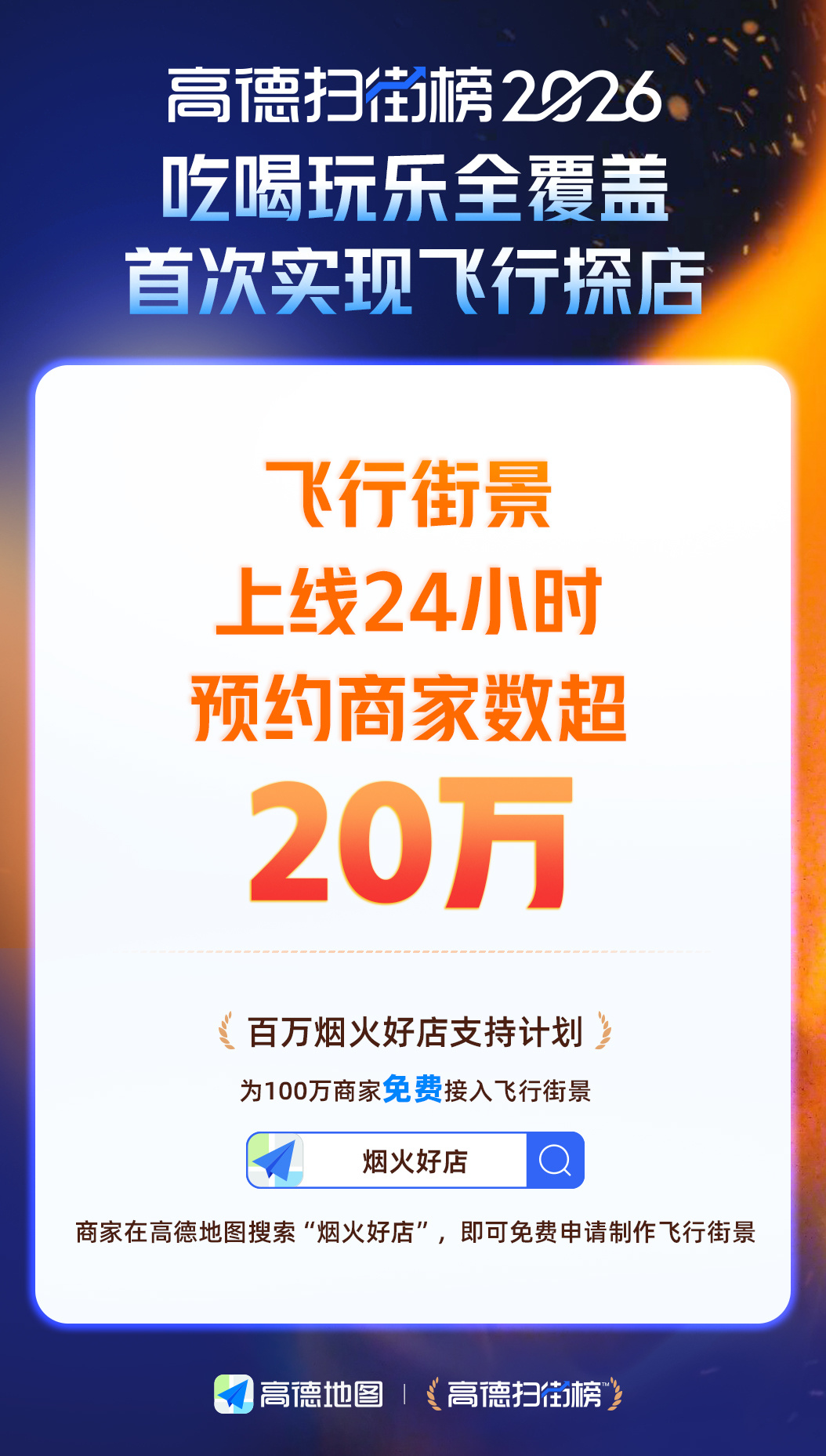
首日报名数超20万 高德“飞行街景”成商家新宠
Zheng Quan Ri Bao· 2026-01-08 12:44
Core Insights - Alibaba's Gaode has launched an upgraded version of the Gaode Street Ranking 2026 and initiated a "Million Fireworks Good Store Support Plan," committing billions in computing resources to help 1 million merchants access the "Flying Street View" for free [1] - Within 24 hours of the plan's announcement, over 200,000 merchants registered for the program, indicating strong interest and demand [1] - Since the launch of the Gaode Street Ranking 100 days ago, over 860,000 dining merchants have joined, leading to a more than 330% increase in order volume and over 270% growth in transaction value [1] Group 1 - The Flying Street View feature allows users to experience realistic navigation and explore restaurant environments, enhancing consumer engagement [1] - The technology lowers the barrier for merchants to adopt new tools, as creating a 3D model now only requires a smartphone to capture video, making it accessible to smaller businesses [2] - The shift in merchant strategies reflects a growing understanding that presenting their authentic quality to consumers is more beneficial than complex traffic strategies [2] Group 2 - The Chinese restaurant industry is currently undergoing a critical phase of high-quality development, facing challenges in digital transformation and business model integration [2] - The Gaode Street Ranking aims to build a comprehensive offline credit system through digital, trust, and technological empowerment, supporting sustainable growth in the restaurant sector [2]
AI时代,如何挑战行业巨头?
Xin Lang Cai Jing· 2026-01-08 11:44
Core Insights - The article discusses the rapid disruption of Meituan's monopoly in China's food delivery market, initiated by JD.com and Ele.me, with significant financial backing and strategic investments [3][28] - A four-dimensional resource capability framework is proposed to analyze the competitive dynamics among major internet platforms in the food delivery sector [3][28] Market Dynamics - Starting in February 2025, a competitive battle emerged in the food delivery market, leading to a significant decline in Meituan's market share from 85% to 65% by August 2025, while Ele.me's share increased from 15% to 28%, and JD.com captured 7% [3][28] - By November 2025, Meituan's market share further dropped to 50%, with the Alibaba ecosystem (Ele.me + Taobao Flash Purchase) rising to 42%, indicating a narrowing gap [3][28] Resource Capability Framework - The article constructs a framework based on "capital + technology + operations + ecosystem" to explain how challengers can disrupt established market leaders [3][28] - The framework emphasizes the need for a multi-dimensional and high-matching resource capability system to effectively compete against dominant players like Meituan [38] Competitive Strategies - JD.com and Ele.me launched substantial subsidy programs, with JD.com initiating a "100 billion subsidy" plan to attract riders and merchants, while Ele.me also announced significant financial support [40][41] - Both challengers leveraged their existing user bases and data assets to enhance their marketing and operational efficiencies, with JD.com focusing on high-value consumer segments and Ele.me utilizing Alibaba's extensive data resources [41] Operational Efficiency - Meituan's operational efficiency, with an average delivery time of 34 minutes and a cost of 7 yuan per delivery, posed a significant challenge to the operational capabilities of JD.com and Ele.me [42] - JD.com managed to reduce delivery times to under 30 minutes in key cities, while Ele.me maintained similar efficiency levels, highlighting the importance of logistics and rider management in competitive positioning [42] Ecosystem Synergy - The integration of Ele.me with Taobao creates a synergistic flow of users, enhancing Ele.me's potential as a traffic entry point for Alibaba's instant retail business [44] - The competition in the food delivery market has led to improved conditions for merchants, riders, and consumers, fostering a more balanced ecosystem [45][46] Conclusion - The competitive landscape in the food delivery market is evolving, with significant implications for operational strategies, market share dynamics, and the overall ecosystem, suggesting a shift towards healthier competition and innovation [45][46]


中国万亿市值公司之变:四家新贵晋级 两大增长逻辑
2 1 Shi Ji Jing Ji Bao Dao· 2026-01-08 11:41
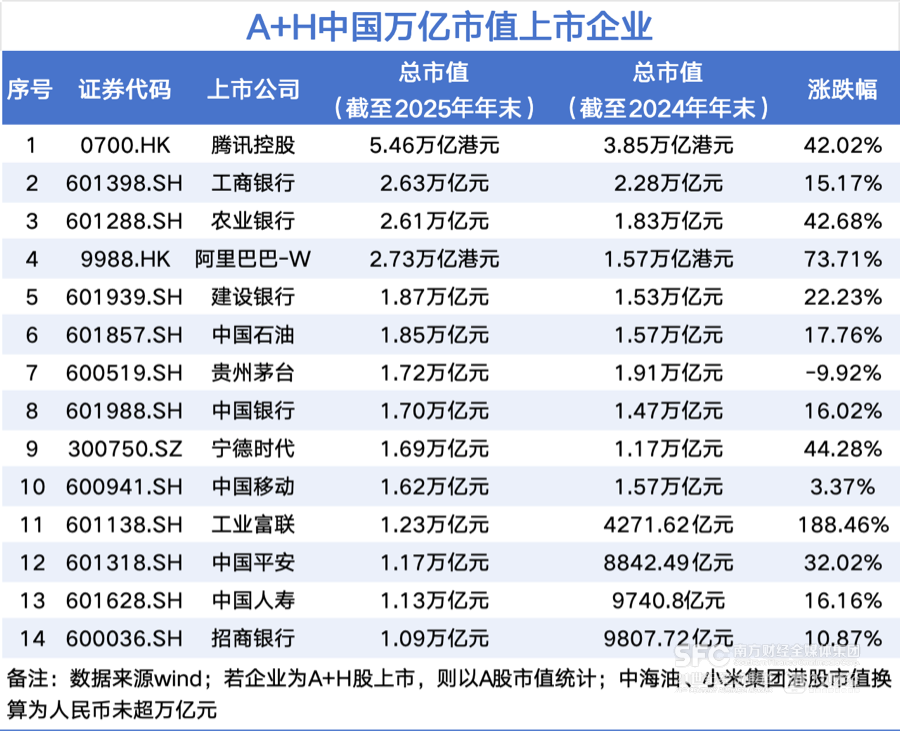
Core Insights - The number of companies with a market capitalization exceeding 1 trillion yuan in mainland China has increased to 14 by the end of 2025, with a total market value increase of over 9 trillion yuan, reflecting a growth rate of over 50% [1][2] Group 1: New Trillion-Yuan Companies - Four new companies have joined the trillion-yuan market cap club: Industrial Fulian, China Ping An, China Life, and China Merchants Bank, with four headquartered in Shenzhen [3][4] - Industrial Fulian has seen a remarkable market cap increase of approximately 188%, while the other three companies in the financial sector have experienced more modest growth rates: China Ping An at 32.02%, China Life at 16.16%, and China Merchants Bank at 10.87% [4][5] Group 2: Market Trends and Dynamics - The rise of these companies reflects two core market dynamics: explosive growth in the technology sector and valuation recovery in the financial sector [5] - Industrial Fulian's rapid growth is attributed to its comprehensive involvement in the AI industry chain, with a significant revenue increase of 38.4% year-on-year, reaching 603.93 billion yuan in the first three quarters of 2025 [6] - China Life has reported a total premium exceeding 700 billion yuan, with a 41% increase in total investment income, while China Ping An has established a strong competitive barrier through its extensive customer base and technology capabilities [7] Group 3: Performance of Major Players - Tencent and Alibaba have also seen significant market cap increases, with both companies adding over 1 trillion Hong Kong dollars to their valuations, driven by AI advancements and a recovery in their core businesses [8][10] - Tencent's market cap reached 5.46 trillion Hong Kong dollars by the end of 2025, with a stock price increase of over 40%, while Alibaba's market cap rose to 2.73 trillion Hong Kong dollars [10][11] Group 4: Banking Sector Insights - The banking sector has shown signs of valuation recovery, with Agricultural Bank of China achieving a notable stock price increase of over 50% and breaking the long-standing "price-to-book" ratio below 1 [12][13] - Agricultural Bank's revenue for the first three quarters of 2025 was 550.88 billion yuan, with a net profit of 220.86 billion yuan, reflecting a year-on-year increase of 3.03% [12][13]




“市场绝对第一”,阿里巴巴最新宣布!盈利+流动性双驱动,港股互联网ETF(513770)连续吸金超5亿元
Xin Lang Cai Jing· 2026-01-08 11:31
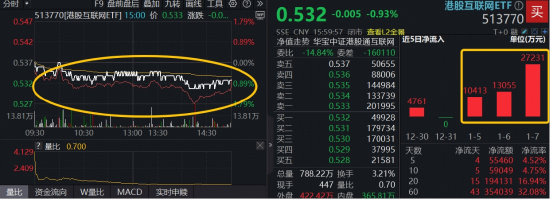
Market Overview - The Hong Kong stock market continued its downward trend on January 8, with the Hang Seng Index and Hang Seng Tech Index both falling over 1% [1][9] - Major tech stocks such as Meituan, Alibaba, and Tencent experienced declines, while Bilibili saw a rise of over 2% [1][9] - The Hong Kong Internet ETF (513770) closed down 0.93%, indicating a persistent premium and a positive attitude from buyers, with over 500 million yuan net inflow in the last three days [1][9] Alibaba Developments - Alibaba announced significant progress in its Taobao Flash Sales in the latest quarter and plans to increase investments to achieve market leadership [3][11] - Forecasts suggest that the market share of Taobao Flash Sales will continue to grow strongly by Q4 2025, with a faster reduction in losses compared to competitors [3][11] - The Ministry of Commerce predicts that China's instant retail market will exceed 1 trillion yuan by 2026 and reach 2 trillion yuan by 2030 [3][11] AI Advancements - Alibaba's Amap has upgraded its "Street Scanning List" with new features, leveraging self-developed world model technology to introduce a "Flying Street View" function [3][11] - Industry experts believe Amap is building a continuously evolving "true" digital asset pool, positioning itself as a super hub in the AI era [3][11] - The profitability cycle of the AI industry is expected to drive growth for major internet companies like Alibaba and Tencent, with a projected 34% EPS growth for the Hang Seng Tech Index by 2026 [3][11] Capital Inflows - Since the beginning of the year, southbound funds have significantly purchased Hong Kong stocks, with a net inflow of 30.78 billion HKD in the first three trading days of 2026 [4][12] - Major beneficiaries include Xiaomi, which received a net inflow of 3.148 billion HKD, and Alibaba, which saw over 2 billion HKD in net purchases [4][12] - Goldman Sachs forecasts that southbound fund inflows will reach a new high of 200 billion USD in 2026, driven by the current 37% premium of AH shares, highlighting the valuation advantages of Hong Kong stocks [4][12] Market Outlook - According to Guangfa Securities, the rise in Hong Kong assets is supported by fundamentals, with signs of structural recovery in profitability starting from the second half of 2024 [4][12] - The shift from liquidity-driven growth to a combination of profitability and liquidity is anticipated, especially with the decline of food delivery subsidies and the emergence of AI-driven advertising and cloud services as new growth points [4][12] - The Hong Kong Internet ETF and its linked funds track the CSI Hong Kong Internet Index, with major holdings in Alibaba, Tencent, and Xiaomi, accounting for over 78% of the top ten weighted stocks [4][12] Top Holdings in Hong Kong Internet ETF - Tencent Holdings (0700.HK) - 15.42% [5][13] - Alibaba (0988.HK) - 14.50% [5][13] - Xiaomi Group (1810.HK) - 13.11% [5][13] - Meituan (3690.HK) - 12.03% [5][13] - Kuaishou (1024.HK) - 4.24% [5][13]
阿里业绩前瞻:淘宝闪购2026年首要目标是份额增长 继续加大投入
Zheng Quan Ri Bao Wang· 2026-01-08 11:18
Core Insights - Alibaba's Taobao Flash Purchase has made significant progress in the latest quarter, with a clear investment strategy aimed at achieving market leadership by 2026 [1] - The growth momentum of Taobao Flash Purchase continues to be strong, with improvements in order structure and an increase in high-value customer transactions [2] Group 1: Growth Performance - In the December quarter, Taobao Flash Purchase's GMV share continued to grow, with an average order value (AOV) also on the rise, indicating a stable order share and improved order structure [2] - The platform achieved a peak daily order volume of 120 million in August, with monthly active buyers surpassing 300 million, rapidly climbing to a leading market position [2] - The focus for the next phase will be on high-value user engagement and retail category development, with new services enhancing overall user experience [2] Group 2: Non-Food Retail Acceleration - Taobao Flash Purchase's non-food retail business is accelerating, showing significant growth in collaboration with Hema and Tmall Supermarket [4] - After integrating with Taobao Flash Purchase, Hema's daily order volume exceeded 2 million, with a year-on-year growth of over 70% [4] - The platform is creating a unique experience by integrating Tmall's brand offerings, Hema's community coverage, and Tmall Supermarket's logistics network into a "30-minute delivery" model [4] Group 3: Loss Reduction and Investment Confidence - Taobao Flash Purchase's fourth-quarter losses are projected at 20 billion, with a faster reduction in losses compared to competitors, boosting confidence in sustainable investment [5] - Efficiency improvements are driven by user structure optimization, order structure optimization, and fulfillment cost optimization [5] - Alibaba plans to continue increasing investments in Taobao Flash Purchase to achieve market leadership, with a focus on high-value users and non-food retail [5]
AI眼镜大战终局前瞻:阿里与百度的超级终端争夺战
3 6 Ke· 2026-01-08 09:54
Core Insights - The 2025 consumer electronics landscape is dominated by "AI glasses," with major players like Baidu and Alibaba launching significant products, leading to a global competition termed the "Hundred Glasses War" [1][12] - The competition is fundamentally about the control of the "next-generation super terminal" narrative, with a focus on hardware, AI capabilities, and ecosystem development [1][4] Group 1: Competition Focus - The competition has evolved from basic hardware comparisons to a multi-dimensional ecosystem battle, highlighting three core competitive focuses: lightweight design and user experience, practical AI capabilities, and ecosystem collaboration [1][4] - Baidu's Xiaodu AI Glasses Pro weighs 39 grams and offers a stylish design, while Alibaba's Quark AI Glasses provide two series targeting different user needs, emphasizing comfort and integrated prescription options [2][3] - The challenge of balancing display quality, battery life, and comfort is referred to as the "impossible triangle" in the industry [2] Group 2: AI Capabilities and Ecosystem - Baidu's AI glasses leverage the Wenxin Yiyan model for real-time translation, AI recognition, and meeting summaries, while Quark integrates its capabilities with local services like navigation and payment [3][4] - The two companies differ in their approaches: Baidu focuses on personal assistant features, while Quark emphasizes efficiency tools for local living [4] Group 3: Market Dynamics and Challenges - The current market faces high return rates, with traditional e-commerce platforms seeing around 30% and content platforms like Douyin reaching 40-50%, primarily due to insufficient functionality and user experience [6] - Key issues include mismatched battery life, inadequate functionality across devices, and a lack of perceived value for high-priced products, leading to consumer regret [6][7] Group 4: Future Outlook - The AI glasses market is expected to see significant growth, with global shipments projected to exceed 23.68 million units by 2026, and the Chinese market alone surpassing 4.91 million units [8][9] - The industry is anticipated to shift towards a model of "head concentration and segmented coexistence," with major players dominating the general market while niche companies focus on specialized areas [9][10] - Technological advancements are expected to address current limitations, with improvements in battery life, display technology, and the development of native applications [10][11] Group 5: Business Models and Consumer Adoption - The business model is shifting from hardware sales to a "hardware + service" subscription model, with companies like Quark and Baidu exploring service monetization strategies [10][11] - By 2026, AI glasses are projected to become more affordable, with prices potentially dropping to the 1500-2000 yuan range, making them more accessible to consumers [11]
高德“百万烟火经济支持计划”开启首日,超20万商家预约“飞行街景”
Huan Qiu Wang· 2026-01-08 09:41
Core Insights - Alibaba's Gaode has launched an upgraded version of the Gaode Street Ranking 2026 and initiated a "Million Fireworks Good Store Support Plan," committing to invest billions in computing resources to help 1 million merchants access "Flying Street View" for free [1][4] - Within 24 hours of the plan's announcement, over 200,000 merchants registered for the program, indicating strong interest in AI technology among offline businesses [1][4] Group 1: Business Impact - Since the launch of the Gaode Street Ranking 100 days ago, over 860,000 dining merchants have actively joined, leading to a more than 330% increase in order volume and over 270% growth in transaction value [4] - The CEO of Gaode expressed a desire to build a modern offline credit system to enhance consumer trust and confidence, emphasizing the importance of visibility for diligent businesses [4] Group 2: Technological Advancements - The "Flying Street View" feature utilizes Gaode's self-developed world model to provide realistic navigation and immersive experiences for users, allowing them to preview restaurant environments and other locations [4][6] - Merchants can easily create promotional content by simply filming and uploading videos and photos using a smartphone, significantly lowering the barrier to adopting new technology [6][8] Group 3: Industry Trends - The enthusiasm from merchants reflects a shift in business strategies, with many recognizing the value of showcasing their authentic qualities to build long-term trust and reputation rather than relying solely on complex marketing tactics [8] - The President of the China Hotel Association noted that the restaurant industry is at a critical juncture for high-quality development, emphasizing the importance of digital transformation for enhancing efficiency and sustainability [9]
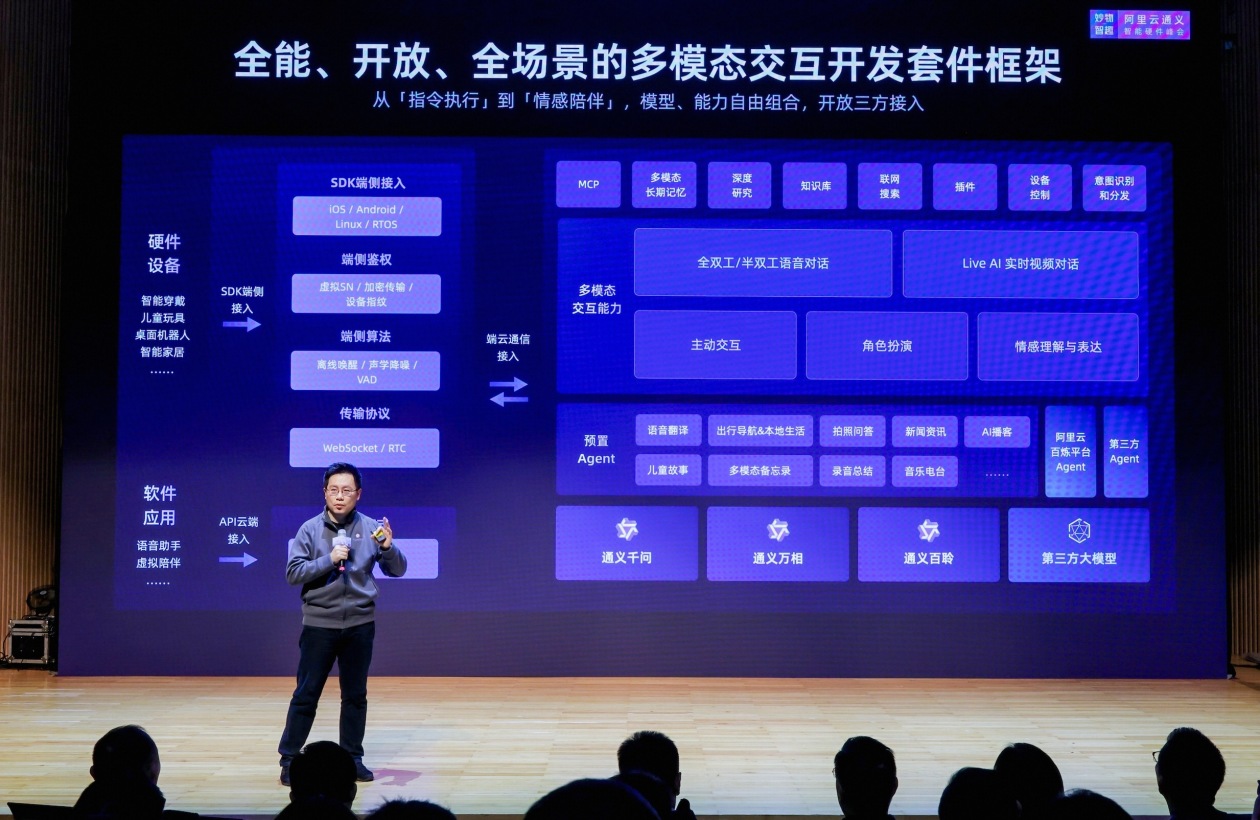
阿里云发布多模态交互开发套件 助力硬件实现“能听、会看、会交互”
Huan Qiu Wang· 2026-01-08 09:41
Core Insights - Alibaba Cloud has launched a multimodal interaction development kit that integrates three foundational models, aiming to enhance the capabilities of various hardware devices such as AI glasses and smart robots [1][3] Group 1: Product Features - The development kit includes pre-set intelligent agents and tools across various domains like leisure and work efficiency, designed to provide stronger perception, understanding, and interaction capabilities for hardware devices [1][3] - The kit is compatible with over 30 mainstream terminal chip platforms, including ARM, RISC-V, and MIPS architectures, addressing the integration needs of most hardware devices [3] - The kit supports various interaction methods, including full-duplex voice, video, and text-image interactions, with end-to-end voice interaction latency reduced to 1 second and video interaction latency not exceeding 1.5 seconds [3] Group 2: Market Position and Recognition - Alibaba Cloud's solutions showcased at the exhibition include integrated functionalities for AI glasses and comprehensive services for home companion robots, such as anomaly monitoring and human-machine dialogue [4] - According to Gartner's report, Alibaba Cloud has been recognized as an "emerging leader" in four dimensions: cloud infrastructure, engineering, models, and knowledge management applications, making it the only vendor in the Asia-Pacific region to achieve this recognition alongside companies like Google and OpenAI [4]