
BABA(BABA)

Search documents
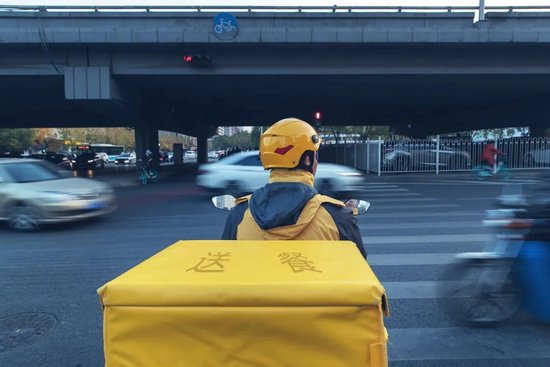
亲历外卖补贴过山车:他们的爆单、疲惫与重新算账
第一财经· 2025-12-27 11:10
Core Viewpoint - The article discusses the intense competition in the food delivery industry during the subsidy war in July 2025, highlighting the challenges faced by restaurants and delivery personnel, as well as the long-term implications for the industry [4][10]. Group 1: Impact of the Subsidy War - The food delivery subsidy war led to a significant increase in order volume, but many restaurants reported that profits did not increase proportionately, with some experiencing losses despite higher sales [6][11]. - The average order value dropped significantly during the subsidy war, with some restaurants reporting a decrease from over 30 yuan to around 15 yuan per order [7]. - The competition resulted in a shift in consumer behavior, with a notable increase in the proportion of orders placed for delivery compared to dine-in [11]. Group 2: Financial Performance of Platforms - Meituan reported a 2.8% year-on-year decrease in revenue for its core local business in Q3 2025, resulting in an operating loss of 14.1 billion yuan [13]. - Alibaba's Q3 financial report indicated a 60% year-on-year increase in revenue from its instant retail business, but a significant decline in adjusted EBITA by 78% [13]. - The intense competition and high spending on subsidies have accelerated the development of instant retail, impacting traditional e-commerce dynamics [13]. Group 3: Industry Adjustments and Future Outlook - The article notes a shift towards more rational competition in the food delivery industry, with platforms beginning to reduce subsidy expenditures and focus on sustainable operations [15][16]. - Regulatory bodies are increasing scrutiny on the industry, addressing issues such as "ghost deliveries" and the rights of delivery personnel, which may lead to a more balanced market [15]. - Experts predict that the industry will evolve into a more mature phase, focusing on a symbiotic relationship between platforms and quality merchants, with an emphasis on user experience and profitability [16].



火了整整一年 AI更“懂人”了!
Sou Hu Cai Jing· 2025-12-27 09:43
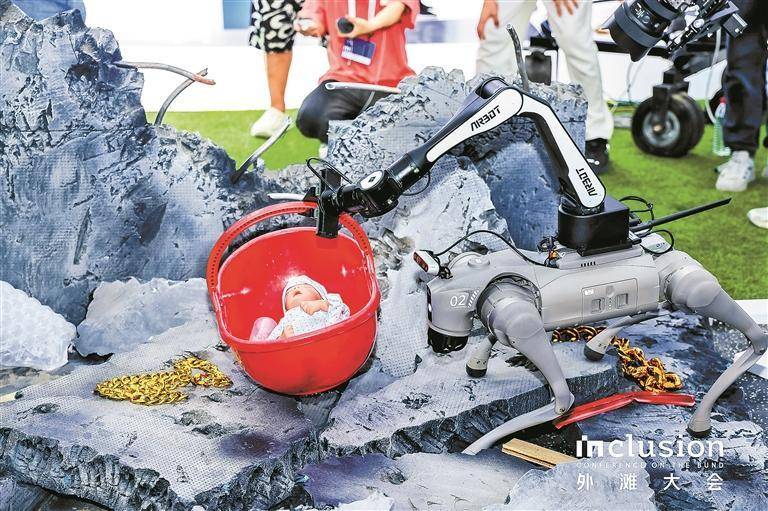
Core Insights - The AI industry is experiencing significant advancements, marked by the release of the DeepSeek AI model, which has sparked a wave of revaluation in the tech sector [2] - AI applications are evolving from simple question-answering to executing complex multi-modal tasks, indicating a shift towards more sophisticated AI capabilities [3][4] - The competition in the AI sector is increasingly focused on multi-modal capabilities, where models must understand and generate various types of information [4] Group 1: AI Advancements - The launch of DeepSeek's AI model R1 on January 20, 2025, has ignited a revaluation of tech stocks in the A-share and Hong Kong markets, leading to a surge in AI-related companies [2] - AI applications are now capable of processing multi-modal information, moving from mere intent understanding to executing services based on real-world data [2][3] - The introduction of various AI applications, such as Sora 2 and the Ant Group's AI health app, showcases the growing sophistication and understanding of AI in real-world scenarios [4][5] Group 2: Market Dynamics - The AI industry is transitioning from a phase reliant on capital investment to one that demands self-sustainability and rigorous scrutiny, as evidenced by companies like Zhiyu and MiniMax seeking IPOs [7] - The investment landscape for AI has been robust, with significant funding rounds and a total of 186 financing events in the AIGC sector from July to November 2025, amounting to 33.67 billion [7] - Major tech companies are committing substantial resources to AI development, with Alibaba planning to invest at least 380 billion RMB over three years for cloud computing and AI infrastructure [7] Group 3: Application Trends - AI applications are becoming more specialized, with a notable increase in vertical applications in healthcare, as seen with the Ant Group's AQ brand upgrade to Ant Aifu [5][6] - The competitive edge in AI applications is shifting from model parameters to a deeper understanding of industry needs and the ability to create closed-loop solutions [6] - The current landscape features a mix of general-purpose AI and specialized applications, with a notable presence of healthcare-focused AI apps among the top user engagement rankings [5][6] Group 4: Future Outlook - The AI industry is at a critical juncture, transitioning from a conceptual phase to a growth phase, with a need to enhance monetization strategies for AI applications [9] - Predictions for 2026 indicate a focus on lightweight models and deeper integration of AI with the real economy, alongside the establishment of regulatory frameworks to guide industry development [9][10] - The emergence of embodied intelligence and AI smartphones is expected to drive significant growth, with a competitive focus on application ecosystems among various AI platforms [10]
数码家电行业周度市场观察-20251227
Ai Rui Zi Xun· 2025-12-27 08:05
Investment Rating - The report does not explicitly provide an investment rating for the industry Core Insights - The digital home appliance industry is experiencing a bifurcation, with companies in Hangzhou focusing on traffic operations and storytelling, while Shenzhen companies emphasize technical refinement and practical innovation [4] - The AI eyewear market is witnessing intense competition among major players like Google and Alibaba, with a projected market size of $4.2 billion by 2025, although consumer sentiment remains cautious [6] - The rise of AI emotional products is driven by the "loneliness economy," with a market expected to reach 59.5 billion yuan by 2028, as young consumers seek emotional companionship [6] - The humanoid robot sector is facing scrutiny over its reliance on remote control rather than autonomous intelligence, with a projected global shipment of only 1.38 million units by 2035 [7] - The AI model IPO race is heating up, with companies like MiniMax and Zhizhu AI vying for the title of "first AI model stock" in Hong Kong, indicating a shift from technology to commercialization [9] Industry Trends - The Hangzhou "Six Little Dragons" and Shenzhen "Invisible Champions" are contrasting entrepreneurial philosophies, with the former focusing on narrative and the latter on technical prowess [4] - The AI eyewear market is characterized by a shift from hardware to vertical scene integration and data control, with major players competing for market share and future interaction interfaces [6] - The AI emotional product market is evolving from functional needs to emotional value, driven by the increasing demand for companionship among young consumers [6] - The humanoid robot market is currently in a speculative phase, with significant investment but limited actual orders and production capacity [7] - The competition among AI models is intensifying, with a focus on ecosystem building and commercial validation as companies prepare for IPOs [9] Brand Dynamics - The AI investment landscape is witnessing a rush to IPO, with companies like Moonlight Dark Side negotiating significant funding and facing increased competition [17] - Ideal Auto has launched AI glasses as part of its strategy to integrate AI into physical products, emphasizing multi-modal data integration [18] - Xiaomi is making significant investments in humanoid robotics, aiming to leverage its existing technology and supply chain capabilities [19] - Google is re-entering the smart glasses market after a long hiatus, planning to launch new products that face challenges in market acceptance [20] - The AI assistant from Doubao is facing privacy concerns and restrictions from major app ecosystems, highlighting the tension between innovation and regulatory compliance [22]



拒绝「行活」舒适区,优酷用「无上限」激励创造新秩序
Sou Hu Cai Jing· 2025-12-27 07:05
Core Insights - The long video industry is transitioning into a new cycle focused on quality content creation after a prolonged phase of "land grabbing" and intense "cost reduction and efficiency improvement" [2] - A new industry anxiety has emerged as many projects are trapped in a "data inflation" cycle, where high surface-level popularity lacks genuine social impact and user reputation [2] - The traditional fixed fee model for content production limits ambition and creates a disconnect between content production and revenue mechanisms, leading to a market filled with mediocre content [2][5] Group 1: Industry Changes - The call for premium content to receive priority returns has been echoed in recent policies, such as the "21 Articles" directive [2] - Youku's new post-broadcast verification strategy, integrating the Effective Play Index (EPI) rating system, aims to break the wall between revenue and performance for content creators [2][5] - The EPI model shifts revenue structures from a fixed fee to a combination of fixed costs, variable management fees, and unlimited incentives, allowing for greater potential earnings based on performance [5][8] Group 2: EPI Model Implementation - The EPI model is designed to align content creators' earnings with actual audience engagement, moving the focus from merely satisfying platform demands to genuinely engaging users [8][9] - This model is a response to the industry's need for a more transparent and trust-based relationship between platforms and content creators, addressing concerns about data authenticity and algorithm transparency [9][12] - The EPI is not just a traffic metric; it incorporates multiple dimensions such as user scale, membership revenue, and viewing duration, thus reflecting the true commercial value of content [8][12] Group 3: Trust and Transparency - Youku's commitment to transparency includes real-time data access for content creators, allowing them to monitor their EPI scores and corresponding incentives [12] - The platform aims to build trust through clear standards and data sharing, moving away from the opaque "black box" nature of previous models [9][12] - Youku is also enhancing its industrial capabilities by providing advanced production tools and technologies to support content creators in achieving high EPI scores [12][14] Group 4: Talent Development - To address talent shortages in the industry, Youku is establishing a closed-loop system for screenwriters and directors, ensuring a continuous influx of new talent [15] - Initiatives like the "Whale Super Class" and collaborations with international entities aim to cultivate a robust talent pool for the industry [15] - These efforts signal a shift towards a more collaborative partnership model between platforms and content creators, fostering a symbiotic relationship [17]

2025港科股的“冰与火之歌”:AI价值兑现终究花落谁家?
Ge Long Hui· 2025-12-27 06:22
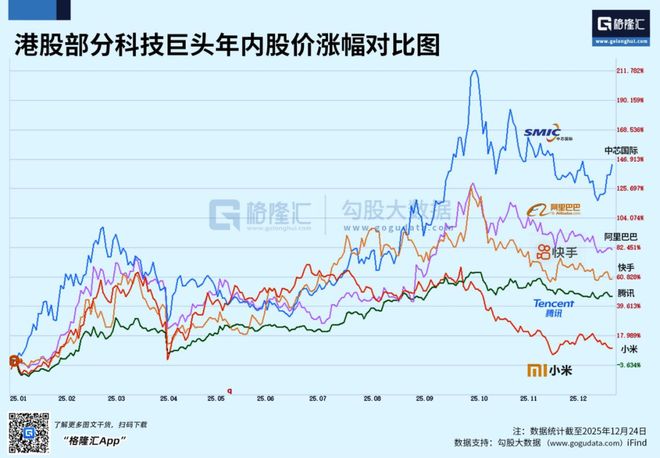
Core Viewpoint - The core narrative of the Hong Kong stock market in 2025 was driven by AI, with significant structural trends observed in the technology sector, highlighted by a notable increase in the Hang Seng Tech Index and substantial inflows of capital into AI-related stocks [2][6][33]. Group 1: AI as a Growth Driver - AI technology transitioned from a speculative concept to a value-realization phase, becoming a critical growth driver for the technology industry [6][14]. - The performance of major tech companies like Alibaba and Tencent was significantly enhanced by their AI strategies, with Alibaba's stock rising over 80% and Tencent's by over 46% due to successful AI implementations [7][9]. - The overall market sentiment towards AI remained strong, with a projected $10 trillion market opportunity for the global tech industry over the next five years due to AI penetration [13][14]. Group 2: Individual Company Performance - Alibaba's AI-related revenue saw triple-digit growth for multiple quarters, with a 34% revenue increase in Q3 2025, reflecting strong market expectations [16][18]. - Tencent's AI initiatives, including the launch of over 30 new models, contributed to a 19% year-on-year increase in adjusted net profit, although its valuation expansion was less pronounced compared to Alibaba [18][21]. - Xiaomi's stock performance lagged behind its peers, with a 13% increase, attributed to a slower realization of AI value despite significant R&D investments exceeding 100 billion RMB over five years [19][20]. Group 3: Valuation Disparities - The valuation of AI-related companies showed clear differentiation, with Alibaba's AI value fully reflected in its stock price, while Xiaomi's AI capabilities had not yet translated into market consensus [21][22]. - AI vertical companies like SenseTime experienced high valuation premiums, with stock prices increasing over 80% due to their technological advancements [18][19]. - The market has yet to fully price in the AI value of leading Hong Kong tech companies, indicating potential for upward valuation adjustments [20][21]. Group 4: Future Outlook - The investment focus for 2026 is expected to shift from "technological breakthroughs" to "commercialization," with a faster pace of value realization anticipated [33]. - Companies that can effectively integrate AI into their business models and demonstrate scalable applications are likely to continue releasing growth value [33]. - The deep integration of AI with the physical world is seen as an irreversible trend, suggesting that the Hong Kong tech sector will continue to evolve and present investment opportunities [33].
外卖抢人大战,骑手成抢手资源?美团、淘宝闪购真金白银急挖人
Mei Ri Jing Ji Xin Wen· 2025-12-27 06:12
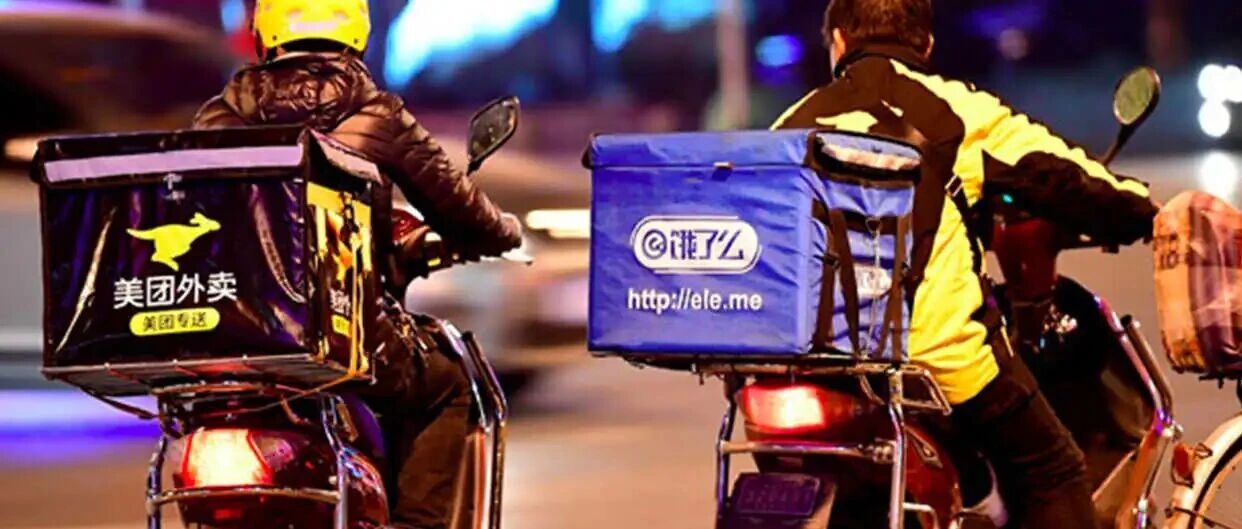
Core Viewpoint - The competition in the food delivery industry has intensified as companies like Meituan and Taobao Flash are offering substantial "transfer" bonuses to attract experienced riders, reflecting a shift from user subsidies to human resource competition [1][2][6] Group 1: Rider Recruitment Strategies - Meituan offers a reward of 2888 yuan for riders who switch from Ele.me or JD with a monthly order volume exceeding 720 [1][4] - Taobao Flash provides a 3000 yuan bonus for riders who have completed over 140 orders on competing platforms and join their service for four consecutive weeks, along with an additional 1000 yuan for the referrer [1][4] - The recruitment efforts are localized and not part of a nationwide campaign, indicating a targeted approach based on specific market conditions [5] Group 2: Industry Dynamics - The competition for riders is seen as a necessary response to the seasonal demand surge and operational challenges faced by delivery platforms [2][6] - The industry has witnessed a significant increase in rider mobility, with many riders switching platforms based on short-term incentives [6][9] - The overlap of active riders across platforms has increased significantly, indicating a trend of riders being in a "wait-and-see" mode regarding their employment choices [7] Group 3: Long-term Strategies and Welfare Improvements - Companies are beginning to focus on long-term rider retention strategies, including social security subsidies, housing support, and improved working conditions [8][9] - Meituan has announced a nationwide social security subsidy program and plans to invest 10 billion yuan over five years to enhance rider welfare [8] - JD has committed to investing 22 billion yuan over five years to provide housing solutions for delivery personnel [8] Group 4: Future Outlook - The industry is transitioning from a focus on short-term subsidies to a more sustainable model that emphasizes rider rights and welfare [9] - The stability and quality of the rider workforce are crucial for enhancing service quality and operational efficiency, which will be key differentiators in the competitive landscape [9]
外卖抢人大战,骑手成“抢手资源”?北京城里,美团、淘宝闪购真金白银急挖人
Xin Lang Cai Jing· 2025-12-27 04:55
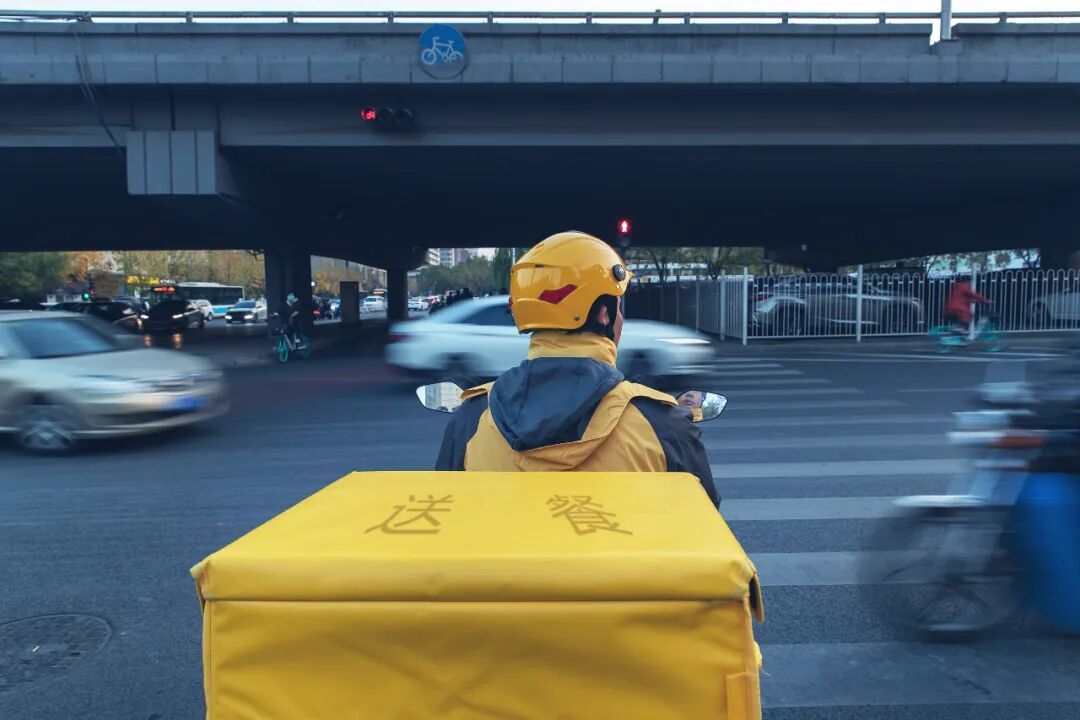
Core Viewpoint - The competition in the food delivery industry has intensified as companies like Meituan and Taobao Flash are offering substantial "transfer" bonuses to attract experienced riders, reflecting a shift from user subsidies to human resource competition [1][2][13]. Group 1: Transfer Bonuses - Meituan offers a reward of 2888 yuan for riders who have completed over 720 orders on Ele.me or JD in November and are willing to join Meituan for six weeks [1][15]. - Taobao Flash provides a 3000 yuan reward for riders who completed over 140 orders on JD, Meituan, or SF Express between December 15 and 21, along with an additional 1000 yuan for the referrer [1][15]. - These recruitment efforts are limited to specific areas in Beijing and are not part of a nationwide campaign, emphasizing the urgency of addressing rider shortages [6][16]. Group 2: Industry Dynamics - The competition for riders has escalated as platforms seek to address year-end order surges and capacity fluctuations, making short-term incentives a necessary strategy [7][17]. - The industry has seen a notable increase in rider mobility, with many riders switching platforms based on immediate financial incentives [5][18]. - The number of registered delivery riders in China exceeds 12 million, with a significant overlap in active users across platforms, indicating a trend of riders being in a "wait-and-see" mode regarding their employment choices [9][18]. Group 3: Long-term Strategies - Companies are shifting focus from short-term cash incentives to long-term welfare and rights protection for riders, including social security subsidies and improved working conditions [10][19]. - Meituan has announced a nationwide social security subsidy program and plans to invest 100 billion yuan over five years to enhance rider benefits [20]. - JD plans to invest 220 billion yuan over the next five years to provide housing support for delivery personnel, indicating a move towards building a more stable and satisfied workforce [20][21].
超1900万年轻人在闲鱼“偷偷搞钱”,四成从业者副业收入占比超30%
Guan Cha Zhe Wang· 2025-12-27 04:37
Core Insights - The report indicates a shift in the employment perspective of the youth from seeking "long-term stable positions" to accepting "flexible and diverse employment" [1] - Xianyu has emerged as a significant platform for new professions and an important arena for youth employment and entrepreneurship [1] Employment Trends - In the past year, 19.62 million sellers published skill services on Xianyu, with 41% being post-2000s generation and 33% from the post-90s and post-95s generations combined [1] - High-educated, non-student youth are the active group in side jobs, with an average annual income of 4,317 yuan for active side job workers [1] - Over 41% of side job workers reported that their side job income constitutes more than 30% of their monthly income [2] - Nearly 30% of workers spend 30 hours per week on the platform, akin to part-time or secondary jobs [1][2] - Almost 80% of workers plan to develop their side jobs into freelance or entrepreneurial projects [1] New Professional Directions - There is a notable trend towards three new professional directions on the Xianyu platform: personal growth, emotional companionship, and skill monetization, with each category's order volume growing over 100% year-on-year [1] - Personal growth orders saw a year-on-year increase of 158.01%, with side jobs like exam guidance and cloud supervision gaining popularity [2] - Emotional companionship orders grew by 107.41%, leading to the emergence of roles such as emotional healing therapists and MBTI analysts [2] Recommendations for Educational Institutions - The report suggests that universities should encourage the recognition of verified side job hours as innovation practice or professional internship credits [2] - It recommends the development of short training courses and applying for vocational skill enhancement funding to reduce learning costs for youth [2] - For mature and significantly demanded new professions, there is a suggestion to apply for inclusion in the National Occupational Classification Directory [2] - Local governments are encouraged to incorporate online side job entrepreneurship into youth entrepreneurship support projects, exploring the integration of online incubation with offline implementation [2]

烧钱的一年 金融时报:外卖大战损害美团利润制约海外扩张
Feng Huang Wang· 2025-12-27 03:59
Core Viewpoint - Meituan is facing intense competition from Alibaba and JD.com in the food delivery market, leading to significant financial losses and impacting its international expansion plans [1][2]. Group 1: Financial Impact - Meituan has incurred its largest quarterly loss since its IPO in 2018, with a loss of 16 billion RMB in Q3 due to heavy subsidies to compete with rivals [2][3]. - Analysts estimate that Meituan is losing approximately 1 RMB on average for each instant delivery order this year [2]. - If the subsidy war continues, Meituan's cash reserves are projected to drop to 74 billion RMB by next year, compared to 110 billion RMB in 2025 [4]. Group 2: Market Dynamics - Alibaba's resurgence has altered the competitive landscape, with the company investing 7 billion USD in subsidies and rapidly increasing its active user base in the food delivery sector [4]. - Meituan's market share in instant delivery is expected to decline from 73% in 2024 to 55% by 2027, while Alibaba's share is projected to rise from 21% to 40% in the same period [5]. Group 3: International Expansion Challenges - The fierce competition in the domestic market is hindering Meituan's international ambitions, as it must focus on defending its local market position [8]. - Meituan has made strides in international markets, surpassing competitors in Hong Kong and Saudi Arabia, but faces tougher challenges in Brazil due to stronger local players [8][9]. Group 4: Employee Morale and Company Culture - Employee morale at Meituan is reportedly low, with staff working long hours to support ongoing subsidy campaigns and manage the demands of both domestic and international operations [10]. - The company's stock has declined over 30% this year, contrasting sharply with the rebound of other Chinese internet stocks [10].

年终盘点| 亲历外卖补贴过山车:他们的爆单、疲惫与重新算账
Di Yi Cai Jing· 2025-12-27 03:01
Core Insights - The takeaway from the article is that the food delivery industry experienced a paradox of record order volumes and declining profits during the peak of the subsidy war in July 2025, leading to significant operational challenges for restaurants and delivery personnel [1][2][3]. Group 1: Industry Dynamics - The food delivery subsidy war peaked on July 5, 2025, with over 100 billion yuan in subsidies from platforms like Meituan, Taobao, and JD, making the delivery sector one of the most discussed industries of the year [2]. - Despite record order volumes, many restaurants reported that profits did not increase proportionately, with some experiencing a decline in profitability due to rising operational costs [3][4]. - The average order value dropped significantly during the subsidy war, with some restaurants reporting a decrease from over 30 yuan to around 15 yuan per order [3]. Group 2: Impact on Restaurants - Restaurant owners like Yu Li and Huang Lin noted that while order volumes surged, the costs associated with labor, ingredients, and platform fees also doubled, leading to minimal or negative profit margins [3][4]. - Huang Lin observed that low-priced subsidized items did not retain customers effectively, and he found that eliminating low-price subsidies allowed for higher average order values and better profit margins [4]. Group 3: Delivery Personnel Experience - Delivery personnel, such as Zhou Pengfei, reported increased earnings during the subsidy war, with some earning up to 900 yuan in a single day due to the high volume of orders [5]. - The number of delivery riders increased significantly, with Zhou noting that his station's rider count nearly doubled during peak times [8]. Group 4: Financial Performance of Platforms - Meituan reported a 2.8% year-on-year decline in revenue for its core local business in Q3, resulting in a significant operating loss of 14.1 billion yuan [8]. - Alibaba's Q3 financials showed a 60% year-on-year increase in revenue from its instant retail business, but adjusted EBITA fell by 78% due to investments in user experience and technology [8]. Group 5: Regulatory and Market Adjustments - The article highlights a shift towards more rational operations in the food delivery industry, with regulatory bodies introducing guidelines to address issues like irrational competition and the rights of delivery personnel [10]. - Experts predict that the industry will transition from aggressive subsidy strategies to refined operations focusing on user experience and sustainable business practices [12].