BIDU(BIDU)

Search documents
【数智周报】 谷歌DeepMind CEO:中国的AI模型仅落后美国几个月;DeepSeek开源相关记忆模块Engram;微软在人工智能上的支出将达到5...
Tai Mei Ti A P P· 2026-01-18 02:38
Group 1 - Keda Xunfei's Chairman Liu Qingfeng stated that the domestic AI infrastructure has taken initial shape, with domestic large models matching international standards despite having half the parameters [2] - Michael Burry warned that the era of tech giants earning huge profits with minimal investment is ending, primarily due to AI, and investors should focus on Return on Invested Capital (ROIC) rather than revenue growth [3] - A BlackRock survey revealed that while investors are optimistic about AI, they are shifting their investment focus towards energy and infrastructure suppliers, with only one-fifth considering large US tech companies as attractive investment opportunities [4] Group 2 - Demis Hassabis, CEO of Google DeepMind, indicated that Chinese AI models are only a few months behind those in the US and Western countries, with significant advancements made by Chinese developers [5] - DeepSeek released a new paper on conditional memory, significantly improving model performance in various tasks, and has open-sourced a related memory module [6] - Wang Xiaochuan, CEO of Baichuan Intelligent, mentioned that the company has 3 billion yuan on hand and may initiate an IPO plan in 2027 [7] Group 3 - Zhiyu and Huawei launched the first domestically trained multimodal SOTA model on local chips, achieving a full training process on the Ascend Atlas 800T A2 device [8] - Kuaishou announced that Keling AI's revenue exceeded $20 million in December 2025, with an annual recurring revenue (ARR) of $240 million [9] - Yongyou Network projected a net loss of 1.3 to 1.39 billion yuan for 2025, although it expects to reduce losses compared to the previous year [10] Group 4 - JD.com and Lenovo deepened their "hybrid AI" cooperation, launching new products at CES 2026, with a focus on strategic collaboration around smart devices and services [11] - Alibaba's Qianwen app integrated with various services, allowing users to order food and book flights through AI, marking a significant upgrade in functionality [12] - Alipay and partners released China's first AI commercial agreement, aimed at creating a universal language for AI tasks across platforms [13] Group 5 - Yunhai Medical launched the "YunJian AI Spirit," a product that reduces long-term costs for users by offering unlimited access to traditional Chinese medicine infrared algorithms [14] - Zhiyuan purchased thousands of hours of robot training data for various tasks [15] - Meituan released the open-source "ReThink" model, achieving state-of-the-art performance in several benchmarks [16] Group 6 - Teslian introduced the upgraded T-Cluster 512 super node architecture, designed for high-performance AI model training, with a total computing power exceeding 500 PFlops [17] - Keda Xunfei launched a marketing AI platform based on the "SuperAgent" framework, enhancing efficiency in marketing strategies [18] - The first domestically trained text-to-image model was released by Zhiyu and Huawei, completing the entire training process on local chips [19] Group 7 - Tencent Cloud ADP launched the first "AI-native Widget," enhancing task delivery experiences through natural language interaction [20] - Anthropic implemented stricter measures to prevent third-party tools from bypassing rate limits, affecting several developer projects [21] - Google announced a partnership with Walmart to expand AI model shopping capabilities, allowing direct transactions through its AI application [22] Group 8 - Mark Zuckerberg initiated the "Meta Compute" project, aiming to build substantial AI infrastructure by 2030, with a focus on collaboration with governments [23] - Meta plans to lay off hundreds of employees in its Reality Labs department, shifting focus from the metaverse to AI [24] - Alphabet's market value surpassed $4 trillion for the first time, joining a select group of companies [24] Group 9 - Nvidia and Eli Lilly will jointly invest $1 billion to establish an AI drug laboratory over the next five years [26] - The US relaxed export controls on Nvidia's H200 chips to China, potentially impacting the AI hardware market [27] - Microsoft announced a plan to limit the impact of data center energy costs and water usage on local communities [29] Group 10 - OpenAI is reportedly seeking US hardware suppliers for its planned consumer devices and cloud data center expansion [32] - Elon Musk's lawsuit against OpenAI is set to go to trial in late April [33] - OpenAI and Cerebras announced a partnership worth over $10 billion to deploy a large-scale AI inference platform [34] Group 11 - Zivariable Robotics completed a 1 billion yuan A++ round of financing, backed by major investors including ByteDance and Meituan [35] - Qiangnao Technology submitted a confidential IPO application in Hong Kong [36] - OpenAI agreed to acquire the AI health application Torch for approximately $100 million [37] Group 12 - K2 Lab, founded by a former DingTalk executive, secured tens of millions in seed funding to develop an AI-driven content e-commerce agent [38] - Alibaba Cloud completed a strategic investment in ZStack, achieving a controlling stake [39] - Skild AI raised nearly $1.4 billion in funding, reaching a valuation of over $14 billion [40] Group 13 - WeLab completed a $220 million D-round strategic financing, the largest single round since its inception [41] - Merge Labs, a brain-machine interface startup, raised $252 million in seed funding, with OpenAI as a major investor [42] Group 14 - A report indicated that by 2026, the Chinese tech giants index is expected to surpass the US tech giants in profitability growth for the first time since 2022 [43] - China is accelerating the establishment of a data property registration system to enhance data circulation and value [44] - Storage prices are expected to surge by 40%-50% in Q4 2025 and again in Q1 2026 due to increased demand from AI and server capacity [45] Group 15 - A new AI model developed by US researchers can predict the risk of approximately 130 diseases based on sleep data [46] - Foreign investment firms are increasingly incorporating AI into their research processes in the Chinese market [47] - UBS believes the probability of an AI bubble in China is low, with monetization relying on cloud services and advertising [48] Group 16 - The number of AI companies in China has exceeded 6,200, with applications expanding across various industries [49]




9点1氪丨贾国龙罗永浩微博被禁言,罗永浩朋友圈最新发声;李湘多平台账号被禁止关注;特朗普拿到诺贝尔和平奖奖章
3 6 Ke· 2026-01-17 01:12
Group 1 - The accounts of well-known figures Jia Guolong and Luo Yonghao have been banned on Weibo due to negative behavior, as stated by Weibo's CEO Wang Gaofei [1] - Jia Guolong responded to accusations from Luo Yonghao, emphasizing that his company, Xibei, has operated legally and has not engaged in any illicit activities [1][2] - Xibei's public relations vice president, Song Xuan, has resigned, citing personal development reasons and the pressure from recent events [4][6] Group 2 - Ctrip has been under investigation by local market regulatory authorities for alleged monopolistic practices, including price manipulation and forced exclusivity [5][7] - Some Moutai provincial direct stores are now allowing eligible taxpayers to purchase the Flying Moutai at a price of 1499 yuan per bottle, without the need to buy additional products [7] - New regulations for the recycling and utilization of used power batteries from electric vehicles will be implemented starting April 1, 2026, focusing on comprehensive lifecycle management [7] Group 3 - Several smartphone manufacturers, including Xiaomi and OPPO, have lowered their annual shipment forecasts by over 20% due to rising upstream supply chain costs [8] - Porsche announced a 10% decrease in global deliveries for 2025, totaling 279,449 vehicles, with significant declines in the European market attributed to supply shortages [12][13] - Gree Electric plans to distribute over 5.58 billion yuan in cash dividends to shareholders, with a payout of 10 yuan per 10 shares [10] Group 4 - Smart has suspended its charging cooperation with multiple charging operators, possibly due to financial pressures [11] - Major banks in the U.S. have reduced their workforce by approximately 10,600 employees, marking the highest reduction in nearly a decade [14] - The AI startup Anthropic has appointed former Microsoft executive Irina Ghose as its General Manager for India [14]





大厂AI,激战医疗
Sou Hu Cai Jing· 2026-01-16 10:51
Core Insights - Ant Group's AI health application "Afu" gained significant market attention with a monthly active user (MAU) count of 30 million within a month of its December 2025 release, indicating a strong interest in AI applications in health management [2] - Major tech companies like Baidu, JD Health, ByteDance, and others are increasingly active in the medical AI sector, reflecting a resurgence of interest in this field [3] - The strategic focus of these companies has shifted from merely replacing healthcare professionals to enhancing and empowering them, aiming for an integrated service model that connects medical, pharmaceutical, insurance, and testing services [3][4] Company Strategies - Ant Group's "Afu" offers three core functions: health companionship, health Q&A, and health services, leveraging its ecosystem to provide end-to-end service from consultation to payment [5] - Baidu's "Wenxin Health Manager" utilizes its search engine traffic and AI technology but faces challenges in converting users from information seekers to service users [6] - JD Health's "Kangkang" has achieved stable profitability, primarily through pharmaceutical retail, while its AI services enhance efficiency [6] Market Dynamics - The medical AI sector is characterized by a divide between horizontal platform players (like Ant Group and Baidu) and vertical specialists (like ByteDance and iFlytek), each pursuing different strategic paths [4][7] - The demand for AI in healthcare is driven by the need for efficiency in a system facing resource distribution challenges, with 71% of Chinese clinicians relying on AI tools to alleviate work pressure [8][9] - AI applications are expanding from disease treatment to proactive health management, creating broader opportunities for user engagement [8] Challenges and Opportunities - Despite the potential, the commercialization path for medical AI remains unclear, with issues such as low willingness to pay in primary care and regulatory hurdles [15][16] - The integration of AI in healthcare requires high-quality, standardized data, which is often difficult to obtain due to privacy and sharing constraints [13][16] - The sector's complexity necessitates a deep understanding of medical industry regulations and ethical considerations, making it a challenging landscape for tech companies [16]


2025年12月中国AI大模型平台排行榜
Sou Hu Cai Jing· 2026-01-16 10:44
Group 1: Industry Trends - The domestic AI large model industry is experiencing a critical turning point with intensified competition for C-end traffic and clearer commercialization paths [2][3] - Major companies are shifting focus from B-end empowerment to comprehensive efforts in the C-end market, leading to the emergence of "AI native super apps" [2][3] - The rapid growth of user engagement is evident, with ByteDance's Dola achieving over 10 million daily active users and the Kimi model from Moonlight achieving a monthly user growth rate of 170% [3][4] Group 2: Capital and Financing - The AI large model sector has seen significant capital activity, with Moonlight completing a $500 million Series C funding round, raising its valuation to $4.3 billion [4][5] - The industry is projected to generate over 10 billion in revenue by the end of 2025, indicating a shift from merely burning cash to demonstrating real monetization capabilities [4][5] - Companies are adopting differentiated capital strategies, with some focusing on immediate funding through technological advancements while others pursue long-term IPOs [4][5] Group 3: Company Developments - Alibaba's Qwen team launched several new models and applications, including the Qwen-Image-Edit model and the Qwen-Image-Layered model, enhancing capabilities in image generation and editing [11][12][14] - ByteDance's Dola and the Beanbag model have shown remarkable growth, with the latter's daily token usage surpassing 50 trillion, reflecting a tenfold increase year-on-year [9][20] - SenseTime's Kapi camera app has reached over 10 million users, becoming a leading choice in the photography app market [34] Group 4: Market Dynamics - The competition is shifting from simple parameter comparisons in chip performance to a focus on overall computational efficiency and cost-effectiveness across chips, systems, and software [6][7] - The AI large model industry is entering a phase characterized by differentiated competition and a focus on commercial performance, moving away from the narrative of merely burning cash [5][6] - The emergence of AI native applications is expected to enhance user experience and promote healthier business ecosystems [3][5]


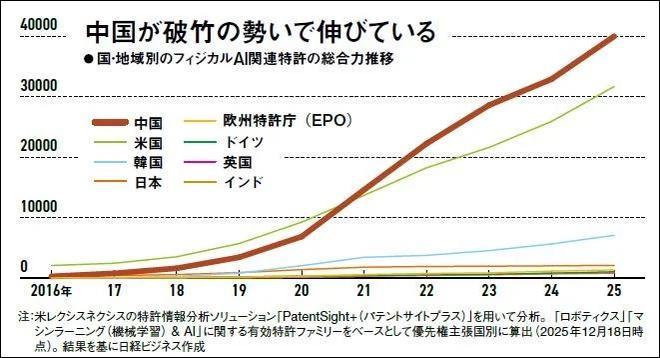
比拼物理AI:中国世界第一,中企包揽专利竞争力前三
Guan Cha Zhe Wang· 2026-01-16 09:19
Core Insights - Physical AI is a key area of global technological competition, with Chinese companies emerging as leaders in the field of humanoid robots, automotive applications, and other physical AI patents [1][3] - According to a recent analysis, China ranks first globally in terms of comprehensive strength in patent applications, followed closely by the United States [1][3] - Major Chinese tech firms such as Baidu, Huawei, and Tencent lead in patent scores, while China Ping An Insurance ranks sixth [1][4] Patent Rankings - The analysis ranks Baidu, Huawei, and Tencent as the top three companies in the field of Physical AI, with scores of 4126, 3645, and 3043 respectively [4] - Samsung Electronics from South Korea ranks fourth with a score of 2734, followed by NVIDIA (2154) and China Ping An Insurance (1881) [4] - Other notable companies include Intel (1543), LG Electronics (1393), Alphabet (1325), and the Chinese Academy of Sciences (835) [4] Industry Context - The analysis indicates that while Chinese companies have a strong patent quantity, they still lag behind U.S. competitors like Intel, NVIDIA, and Alphabet in terms of patent quality [1][3] - The shift towards AI technologies is emphasized in China's 14th Five-Year Plan, which highlights the importance of high-quality development and technological advancement [4] - The CES 2024 showcased various Physical AI applications, indicating a competitive landscape among tech companies from China, the U.S., and South Korea [5] Future Developments - The Chinese government is actively supporting Physical AI as a national strategy, with plans to enhance AI integration across various industrial sectors by 2025 [5][6] - The application of AI in industrial enterprises is projected to rise significantly, with a forecasted increase from 9.6% in 2024 to 47.5% in 2025 [7] - China has established over 7000 advanced smart factories, demonstrating significant progress in the integration of AI and manufacturing [7]
原创?百度算法笑出声!猎犬闻的是你的信息轨迹
Sou Hu Cai Jing· 2026-01-16 08:49
说实话,我到现在还记得那篇文章。 那是去年三月,我熬了两个通宵写的行业分析,五千多字啊。发到自己网站,第二天一看,百度收录是收录了,但原创标识没给我。给了另一个比我晚发三 小时的站。 我当时就懵了。凭什么? 电话打到百度客服,那边声音温和得像AI:"先生,我们算法综合判断的哦。" 综合判断个鬼。 百度原创度检测真的只看相似度吗? 大多数人,包括当时的我,觉得不就是查重嘛。复制粘贴肯定死,改几个词就行。 太天真了。 它看的何止是字面相似。段落结构像不像?关键词密度分布有没有套路?甚至你引用的资料来源,是不是一批人都在用同一个? 我后来认识一个做算法的朋友,喝多了才漏两句。 他说,你以为系统是语文老师,逐字批改? 百度如何判断一篇文章是原创? 时间戳当然重要,但又不是绝对重要。你首发,但内容像是把十篇文章用胶水粘起来的,系统也看得出来。 它有一套"置信度"打分。 比如,你的文章里突然出现一个很新的数据、一个独特的观点组合,或者对某个热点事件的即时反应。这些是加分项。 反之,如果你文章的句子,在互联网上早就以各种排列组合出现过无数次了。 哪怕你手动改得面目全非。 系统扫一眼,心里就有数了:哦,又一个组装车间出来的。 ...

传媒行业人工智能专题:从生产力到变现力,GEO重构流量入口与AI商业化拐点
Guoxin Securities· 2026-01-16 08:45
Investment Rating - The report maintains an "Outperform" rating for the media industry [2] Core Insights - AI is reshaping user entry forms and the distribution of internet traffic, leading to a revolution in the underlying distribution of industry chain value [4] - The transition from "productivity" to "monetization" in AI applications is expected to accelerate, with 2026 being a critical turning point [5] - The rise of Generative Engine Optimization (GEO) signifies a shift from traditional SEO to a model that prioritizes data structure and authority, impacting how content is valued and distributed [4][5] Summary by Sections AI Reshaping Entry Forms - AI is transforming user interaction from keyword-based searches to natural language queries, significantly shortening the information retrieval process [4][14] - The traditional search engine era is ending, giving way to a new era characterized by AI-driven search capabilities [4][14] Commercial Monetization Acceleration - By 2026, the GEO market is projected to reach $24 billion globally, with the domestic market expected to hit 11.1 billion yuan, indicating exponential growth [5][52] - Chinese consumers exhibit a high trust level in AI applications at 80%, compared to 35% in the U.S. and 40% in Europe, particularly in personalized shopping recommendations [5][41][42] Content Industry Upgrade - AI-generated content (AIGC) is not only reducing costs but also creating new supply, with AI-driven video production becoming increasingly viable [6][58] - The emergence of AI anime short dramas is expected to open new market opportunities, particularly among younger male audiences [6][70] Investment Recommendations - The report suggests focusing on the GEO direction, particularly in marketing services and high-quality content, while also considering potential rebounds in content sectors like film and gaming [7][52] - Companies that can optimize AI data and content will likely benefit from the shift towards GEO, with a new emphasis on brand authority and content quality [55][56]

物理AI专利竞争力:中企包揽前三
日经中文网· 2026-01-16 08:00
Core Viewpoint - The article discusses the competitive landscape of patents in the field of "physical AI," which integrates humanoid robots and artificial intelligence, highlighting China's leading position in this sector [2][4]. Group 1: Patent Competitiveness - China ranks first globally in the comprehensive strength of patents related to physical AI, followed closely by the United States [2]. - The analysis was conducted with the assistance of LexisNexis, focusing on the integration of robotics and AI technologies [2]. Group 2: Leading Companies - The top three companies in terms of comprehensive patent strength in the physical AI sector are Baidu (4126 points), Huawei (3645 points), and Tencent (3043 points), all from China [5][6]. - Samsung Electronics from South Korea ranks fourth with 2734 points, followed by NVIDIA from the United States with 2154 points [5]. Group 3: Comparative Analysis - Chinese companies, while leading in quantity, still face challenges in patent quality compared to American firms like Intel, NVIDIA, and Alphabet, although Huawei is reportedly nearing their level [6]. - Japan's highest-ranked company in this field is Fanuc, which is positioned at 13th place [6].



产业级 Agent 如何破局?百度吴健民:通用模型难“通吃”,垂直场景才是出路
AI前线· 2026-01-16 06:28
Core Insights - The article discusses the challenges and advancements in the development of Agentic models, emphasizing that the main bottleneck is not the models themselves but the replication of real-world environments and stable access to external interfaces and databases [2][4][5] - It highlights the current limitations of general-purpose models in achieving industrial-level performance across various vertical agent scenarios, suggesting that tailored models for specific applications are more effective [5][12] - The article also explores the evolution of multi-modal models, indicating that while there have been significant advancements, a unified modeling approach for understanding and generating across modalities remains a key goal for the future [17][20] Group 1: Agentic Models - The primary focus is on enhancing models to perform effectively in various vertical agent scenarios, particularly in coding applications [4] - Current general-purpose models lack the capability to achieve stable generalization across diverse environments, necessitating the customization of models for specific applications [5] - The complexity of real-world environments, including external dependencies and interfaces, poses significant challenges for training agentic models [5][6] Group 2: Multi-Modal Models - The transition from single-modal to multi-modal models has introduced visual capabilities into language models, with a focus on aligning text and visual tokens [17][18] - Despite advancements, the industry faces challenges in scaling multi-modal models due to the difficulty in obtaining high-quality, aligned data [18] - Future directions include the pursuit of unified modeling that integrates generation and understanding capabilities, although current results indicate that separate optimization yields better performance [20][21][22] Group 3: Reinforcement Learning and Training Efficiency - The article emphasizes the importance of reinforcement learning systems for continuous model iteration in specific scenarios, with a focus on high efficiency and throughput [6][9] - The scaling of reinforcement learning has not yet reached a consensus in the industry, but there is recognition of its potential to enhance model capabilities significantly [10][11] - Efficient training processes, particularly in generating diverse paths for evaluation, are critical for the success of reinforcement learning in agentic models [9] Group 4: Future Trends and Directions - The article predicts that the development of agentic models with stable and accurate tool-calling capabilities will expand beyond coding applications to a broader range of real-world APIs [28] - The concept of "world models" is discussed, highlighting the evolution from language models to dynamic models that understand physical world operations [26] - The integration of tools into agent development is seen as a crucial pathway for enhancing model capabilities, reflecting the importance of tool usage in human intelligence evolution [25]

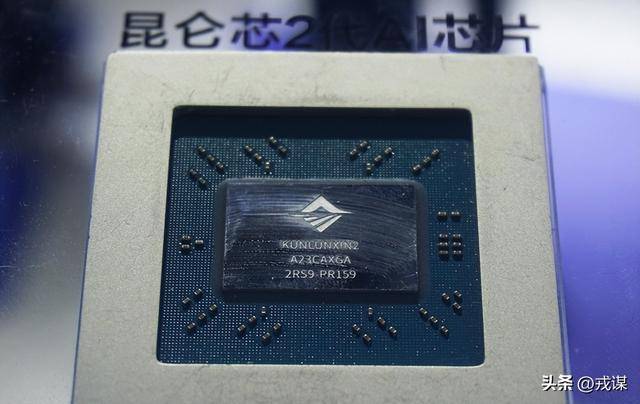
李彦宏狠活!昆仑芯独立上市,百度估值要翻盘,同行要慌了?
Sou Hu Cai Jing· 2026-01-16 02:48
Core Viewpoint - Baidu is planning to spin off its AI chip subsidiary Kunlun Chip for an IPO in Hong Kong, aiming to unlock value and address its valuation challenges in the market [1][3]. Group 1: Reasons for Anticipation - The capital market is buzzing with excitement over Baidu's decision to spin off Kunlun Chip, especially as other tech giants have struggled with similar moves [3]. - Baidu's CEO, Li Yanhong, is taking a contrarian approach by leveraging Kunlun Chip, which contrasts with the conservative strategies of other tech companies [3]. Group 2: Valuation Concerns - Shareholders are primarily focused on valuation, as Baidu's market perception has been hindered by its reliance on search advertising, despite significant investments in AI [5][7]. - The "diversification discount" phenomenon is evident, where Baidu's valuable AI chip technology is undervalued due to its association with the company's traditional business model [7]. Group 3: Market Positioning - Kunlun Chip is positioned as a strong player in the domestic AI chip market, but its association with Baidu limits its market valuation to 8-10 times PE, compared to higher valuations for competitors [9]. - By becoming an independent entity, Kunlun Chip could transform into a neutral supplier, enhancing its attractiveness in a market facing a shortage of domestic computing power [9]. Group 4: Strategic Implications - The spin-off is seen as a "precise weight-loss surgery" for Baidu, shedding financial burdens while retaining control and potential for value appreciation [11]. - The potential future spin-off of Baidu's autonomous driving unit, Apollo, is anticipated, as it has been a significant financial drain and needs to scale independently to attract talent and investment [13][15].