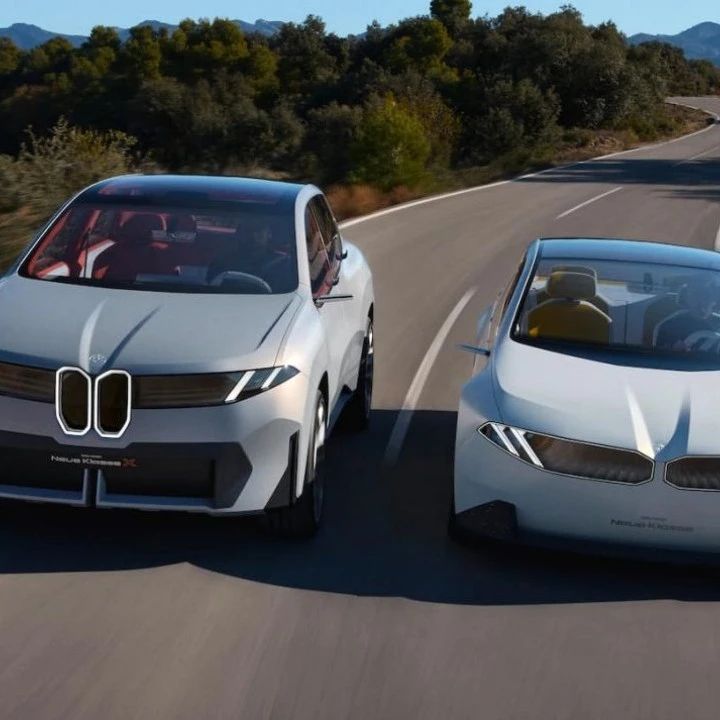
BMW(BMWYY)

Search documents
欧洲汽车“软”实力有救了?
Zhong Guo Qi Che Bao Wang· 2025-07-10 08:33
Core Insights - European automotive manufacturers and tech companies have formed a software alliance to develop and share advanced automotive software platforms, aiming to regain control over the digital architecture of future vehicles in areas like autonomous driving and connected cars [3][5][12] - The initiative is primarily driven by German automotive industry leaders, with most members being German companies, and it seeks to create an open-source core software stack by 2026 [4][5] - The shift towards "software-defined vehicles" (SDV) is seen as crucial for enhancing vehicle performance and creating new revenue streams for automakers, especially with the integration of AI technologies [5][7] Group 1 - The software alliance includes major automotive manufacturers and suppliers, such as Volkswagen, BMW, Mercedes-Benz, Bosch, and Valeo, and aims to deliver a core software stack by 2026 and start mass production of vehicles based on this stack by 2030 [3][4][5] - The alliance is negotiating with the French automotive association to attract more members and accelerate the transition to SDV while reducing rising R&D costs [5][12] - The development process will follow new standards for open-source technology, focusing on a "code-first" strategy to enhance efficiency and quality in software development [6][10] Group 2 - European automakers have faced significant challenges in software development, with companies like Volkswagen's CARIAD experiencing delays and substantial financial losses, highlighting the difficulties in transitioning to a software-driven model [7][8][11] - The automotive industry in Europe has historically prioritized hardware over software, leading to a lack of focus on software capabilities and a reliance on external suppliers for software development [10][11] - The shortage of software talent in Europe, compounded by a weak consumer software ecosystem compared to the US and China, poses a significant barrier to the development of competitive automotive software solutions [11][12] Group 3 - The formation of the software alliance represents a proactive attempt by the European automotive industry to enhance its influence in the digital automotive landscape and address its software shortcomings [12] - European automakers are also collaborating with Chinese tech companies to bolster their software capabilities, recognizing the advanced state of software development in China [12]


宝马新世代iX3将在2026年国内量产,智能和驾控全都进化了
车fans· 2025-07-10 00:29
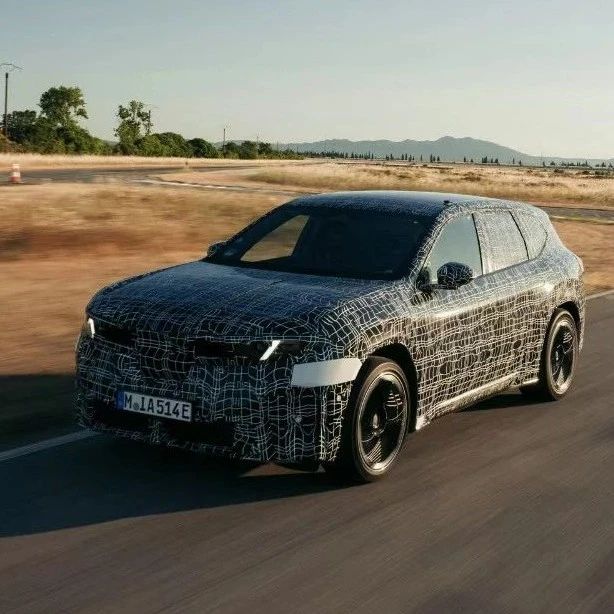
Core Viewpoint - The launch of BMW's first mass-produced new generation model, the BMW iX3, is set to redefine perceptions of electric driving pleasure and address the evolving demands of the Chinese market [1][14]. Group 1: Product Development and Design - The BMW iX3 is developed with a new platform, architecture, and technology cluster, marking a strategic shift in BMW's approach to electric vehicles, moving away from traditional oil-to-electric conversions [2]. - The design of the iX3 was led by a Chinese team, which conducted over 1,200 one-on-one user research sessions totaling more than 4,700 hours, optimizing over 100 functional details [1][4]. - The iX3 features a "Heart of Joy" driving control system that integrates the powertrain and chassis control, with a response time of just 1 millisecond, significantly enhancing driving dynamics [2]. Group 2: Smart Technology and User Experience - The iX3 incorporates a smart cockpit powered by the HarmonyOS ecosystem, developed in collaboration with Huawei, enabling comprehensive vehicle-home connectivity [5][6]. - The vehicle will feature a revolutionary PHUD (Projected Head-Up Display) system, which projects information onto the windshield, enhancing the driving experience with a wide field of view and high image quality [6][7]. - BMW is collaborating with local suppliers for intelligent driving solutions, aiming for a safe and user-friendly experience, with plans to implement L3-level autonomous driving capabilities [9][11]. Group 3: Battery and Charging Infrastructure - The iX3 utilizes a jointly developed cylindrical battery with CATL and Eve Energy, supporting an 800V high-voltage platform for improved range, fast charging, and safety [11]. - The maximum range of the iX3 is projected to reach 900 kilometers (CLTC), with plans to establish a charging network of at least 1,000 supercharging stations and 7,000 supercharging piles in China by 2026 [13]. Group 4: Market Positioning and Future Outlook - The introduction of the iX3 signifies a new era for BMW's electric vehicles, with a focus on advanced technology and luxury, positioning it competitively against emerging electric vehicle brands [14].
30天超20位高管大调整,80后包揽所有核心岗
汽车商业评论· 2025-07-08 15:44
Core Viewpoint - The article discusses the frequent personnel changes in the Chinese automotive industry as of June 2025, highlighting the need for organizational restructuring to adapt to rapid industry changes and competitive pressures [2][4]. Foreign Enterprises - Volkswagen and BMW have made significant personnel changes in their Chinese operations, with Robert Cisek appointed as the new CEO of Volkswagen's passenger car brand in China, effective July 1, 2025 [8][11]. - Cisek has a strong background in production strategy and has previously managed operations in South Africa, ensuring stability during crises like the pandemic and chip shortages [9][12]. - Birgit Böhm-Wannenwetsch will take over as President and CEO of BMW Brilliance from Franz Decker on August 1, 2025, bringing extensive experience from her previous roles in the automotive sector [16][19]. State-owned Enterprises - Chen Cui has been appointed as the General Manager of the MG brand, marking a significant leadership change as part of SAIC Group's push to accelerate its passenger vehicle business reform [22][24]. - North China Industries Group has appointed Liu Xuguang and Sun Jing as vice presidents, with Liu having a strong background in market strategy and Sun having successfully improved employee management efficiency [25][30][32]. - Dongfeng Motor Finance has seen leadership changes with Ding Guoxiang becoming the Party Secretary and Chairman, while Li Hua takes over as General Manager [34][35]. Private Enterprises - Lars Bialkowski has been appointed as the head of BYD's operations in Germany, focusing on expanding the company's presence in the European market [38][41]. - GWM has appointed Lü Wenbin as the General Manager of the Ora brand, which is facing challenges in market performance and aims to revitalize its sales strategy [42][46]. - Zhou Xing has joined Lynk & Co as the Executive Vice President, bringing a wealth of experience in automotive marketing and brand development [47][50]. New Forces - Li Auto has restructured its organization by merging its R&D and sales groups into a new "Smart Vehicle Group," aimed at enhancing collaboration across the value chain [51][53]. - Hu Chengchen, a key figure in NIO's technology planning, has left the company, while Chen Guang has joined Xiaomi Auto as the head of perception for assisted driving [56][61].





宝马推出集交互/操控/驾驶辅助一体的智驾解决方案,全新宝马iX3首搭
Feng Huang Wang· 2025-07-08 14:13
Core Insights - BMW Group has launched an integrated smart driving solution combining interaction, control, and driving assistance, with the new BMW iX3 being the first model to feature this technology [1] - The company emphasizes a differentiated approach in the competitive smart driving technology landscape, focusing on a holistic solution rather than single-function features [1][2] - The new generation models utilize a cutting-edge electronic architecture with four high-performance computers, achieving significant advancements in decision-making speed and processing power [1][2] Technology Development - The core innovation lies in the "Heart of Joy," which integrates power and chassis control, managing functions like power transmission, braking, charging, energy recovery, and steering [1] - The new system boasts a decision-making latency of under 1 millisecond and a tenfold increase in information processing speed compared to traditional systems [1] - The "smart driving assistance super brain" has seen a 20-fold increase in computing power, optimizing the entire chain from perception to control [1] Driving Experience - BMW's technology route reflects a commitment to the essence of driving, maintaining a dialogue between the driver and the vehicle even when smart assistance systems are engaged [2] - The design philosophy is rooted in BMW's 2016 concepts of "BOOST" and "EASE," emphasizing the synergy between driving performance and smart assistance [2] Data Utilization - The development of BMW's technology is supported by driving data from nearly 30 million global car owners, including over 7 million from China, providing a solid foundation for product design [2] Market Positioning - BMW's approach to smart driving technology represents a unique perspective on the transformation of traditional luxury car brands, aiming to balance brand heritage with technological innovation [2] - The market performance of BMW's new generation models will serve as an important reference for the smart transformation of traditional luxury brands in the automotive industry [2]
宝马新世代以“人车合一”为核心理念
Zhong Guo Qi Che Bao Wang· 2025-07-08 08:10
Group 1 - The core concept of BMW's new generation is "human-vehicle integration," redefining intelligent driving by creating a holistic solution that combines interaction, control, and driving assistance for a unique driving experience [1] - BMW's new generation models are equipped with a powerful intelligent "brain" that enhances the understanding between the vehicle and the driver, allowing for an instinctive driving experience [1] - The new generation's comprehensive solution breaks away from merely stacking individual functions, achieving a synergy of intelligent interaction, extreme control, and all-scenario driving assistance [1] Group 2 - The development of BMW's holistic solution is based on deep user insights derived from nearly 30 million drivers worldwide, including over 7 million in China, and extensive data from automotive events [2] - BMW's new generation represents a significant leap in design, technology, and philosophy, featuring a new design language, electronic architecture, integrated super brain, digital experience, and advanced powertrain technology [2] - Each new generation model is built on a new intelligent electronic architecture and includes three breakthrough technologies: panoramic iDrive, BMW driving control super brain, and revolutionary cylindrical battery [2]
宝马新世代重新定义智能驾驶乐趣 首推智能交互、操控和驾驶辅助
Qi Lu Wan Bao· 2025-07-08 03:22
Core Insights - The automotive industry is experiencing intense competition in the field of intelligent driving solutions, with BMW redefining smart driving through its new generation models that focus on interaction, control, and driving assistance as a holistic solution [1][2][4] Group 1: Intelligent Driving Vision - BMW's new generation models embody the company's vision for intelligent mobility, emphasizing the seamless collaboration of smart interaction, control, and driving assistance to enhance the driver's experience [2][4] - The concept of "BOOST" and "EASE" introduced by BMW aims to provide an ultimate driving experience while reducing the burden of driving through advanced assistance systems [2][4] Group 2: User Insights and Data Utilization - The development of BMW's holistic solutions is based on deep user insights derived from nearly 30 million global car owners' driving data, including over 7 million from China [4] - This data encompasses the evolution of driving assistance systems and infotainment systems, which informs the design and development of new generation products [4] Group 3: Technological Innovations - The new generation models feature a next-generation intelligent electronic architecture, with four high-performance computers acting as the "super brain" responsible for core user functions [5][9] - The "Driving Control Super Brain" is developed in-house by BMW, integrating power and chassis control for efficient management of core functionalities [5][9] - The "Intelligent Driving Assistance Super Brain" consolidates previously dispersed functions into a single high-performance unit, enhancing computational power by 20 times compared to previous generations [8][9] Group 4: User Experience and Interaction - BMW's innovative interaction design, including the panoramic iDrive, is essential for a safe and enjoyable driving experience, creating a unique human-machine interaction that prioritizes the driver's needs [7][9] - The new generation models represent a significant leap in design, technology, and philosophy for the BMW brand, featuring a new design language and advanced digital experiences [7][9]

宝马发布整体性智驾方案 强调交互、操控与辅助协同
Feng Huang Wang· 2025-07-08 02:59
Core Insights - BMW Group has unveiled its latest solutions in the field of intelligent driving, focusing on smart interaction, vehicle control, and driving assistance systems [1][2] - The main goal is to ensure that drivers can maintain a clear perception of road conditions through feedback from the steering wheel, pedals, and chassis dynamics, even when driving assistance systems are engaged [1] Technological Advancements - The implementation of an integrated solution is supported by a new generation of intelligent electronic and electrical architecture [1] - Four high-performance computers, referred to as "super brains," are responsible for four core user functions, with the "Driving Control Super Brain" being fully developed by BMW [1] - This system integrates power and chassis control into one domain, enhancing efficiency in core sub-functions such as power transmission, braking, charging, energy recovery, and steering [1] Performance Enhancements - A new wiring system and high-speed data transmission technology have created a digital neural network that reduces decision-making latency to less than 1 millisecond, improving information processing speed by 10 times compared to previous systems [1] - The "Intelligent Driving Assistance Super Brain" consolidates previously dispersed functions into a single high-performance computing unit, increasing computing power by 20 times compared to the previous generation [2] Data Utilization - The development of this integrated solution is based on extensive user driving data, incorporating actual driving information from nearly 30 million vehicle owners globally, including over 7 million from China [2]
增程式汽车再加速
Zhong Guo Qi Che Bao Wang· 2025-07-07 01:57
Group 1 - BMW plans to reintroduce range-extended technology with the iX5 in 2026, expecting a combined range of 1000 km, and will apply this technology to the sixth generation iX3 and seventh generation iX7 models [2][4] - GAC Toyota announced plans to produce range-extended models, including versions of the Highlander and Sienna, while SAIC Volkswagen has introduced the ID.ERA concept car as its first range-extended model [2][5] - The market for range-extended vehicles is experiencing significant growth, with a nearly 50% year-on-year increase in sales, while plug-in hybrid vehicles are showing signs of slowing growth [3][4] Group 2 - The sales of range-extended vehicles have surged, with a reported 111% year-on-year growth in 2023 and an expected 167% increase in 2024, contrasting with the single-digit growth of pure electric and plug-in hybrid vehicles [12][18] - The shift towards range-extended technology is driven by changing consumer preferences, with buyers favoring vehicles that offer both electric and fuel options for flexibility [10][14] - Range-extended vehicles are perceived to have better performance and user experience compared to plug-in hybrids, as they are fully driven by electric motors and alleviate concerns about range anxiety [8][9] Group 3 - The automotive industry is witnessing a strategic pivot towards range-extended technology, with companies like Ideal, Leap Motor, and Aito achieving significant sales growth in this segment [5][13] - The simplicity of range-extended vehicle structures helps reduce manufacturing costs and vehicle weight, enhancing their appeal in the market [9][14] - The introduction of solid-state batteries is anticipated to further enhance the performance and appeal of range-extended vehicles, potentially revolutionizing the market [17][18]


100余家德国和四川企业慕尼黑现场对接 川德签约33个项目
Si Chuan Ri Bao· 2025-07-07 00:20
Group 1 - Seven German Fortune 500 companies, including BMW, Allianz, Siemens, and Linde Gas, participated in the China (Sichuan) - Bavaria Economic and Cultural Cooperation Exchange Conference held in Munich, Germany [1] - A total of 33 signed projects were reached, with a cumulative amount exceeding 9.082 billion yuan, including six key projects signed on-site [1][2] - The signed projects cover various fields such as goods trade, service trade, industrial investment, cultural tourism, and traditional Chinese medicine [1][2] Group 2 - The Chengdu High-tech Zone Management Committee signed an industrial gas investment cooperation agreement with Germany's Messer Group, which will provide purification and supply equipment for BOE's production line, supporting the development of Sichuan's electronic information industry [2] - Sichuan Runzhao Food Co., Ltd. reached a cooperation agreement with Germany's N25 Caviar Trading Company to promote Sichuan Runzhao's caviar products in high-end consumption scenarios in Europe, leveraging N25's established sales network [2] - In the first five months of this year, the trade import and export volume between Sichuan and Germany reached 10.42 billion yuan, with a year-on-year growth rate of 10.1%, making Germany an important trade partner and investment source for Sichuan in the EU [2]


豪华车巨头绝不放弃内燃机
汽车商业评论· 2025-07-03 16:40
Core Viewpoint - BMW's Steyr plant in Austria is undergoing a complex transformation, expanding electric powertrain production while maintaining its role as a global internal combustion engine manufacturing center [2][5]. Group 1: Transformation and Strategy - The Steyr plant is positioned as a dual-engine facility for both internal combustion engines and electric drive systems, ensuring a flexible and future-oriented supply model for BMW's global vehicle lineup [7][11]. - The plant had 4,900 employees and generated sales of €4.4 billion last year, ranking among the top ten industrial companies in Austria [7]. - BMW is committed to maintaining its internal combustion engine business, producing approximately 1.2 million internal combustion engines last year while also investing in traditional engine improvements [14][24]. Group 2: Technological Advancements - The current fifth-generation electric vehicle drive system has achieved a 40% reduction in energy consumption and a 30% increase in vehicle range compared to the upcoming sixth generation [20]. - The introduction of new technological components, such as inverters, is seen as a key differentiator for BMW in enhancing electric drive efficiency and performance [18][22]. Group 3: Workforce and Production Capacity - BMW aims to maintain the current workforce level of approximately 4,900 employees by 2030, with 700 dedicated to research and development [23]. - The production capacity for electric drive systems is expected to expand to 600,000 units across two production lines, with adjustments based on market demand [24]. Group 4: Future Developments - The first "New Generation" model, the iX3, is set to begin series production in the fall at BMW's new factory in Debrecen, Hungary [29]. - BMW is prepared to evaluate global expansion options if demand increases, ensuring flexibility in production strategies [32].