
BYD(BYDDY)

Search documents
比亚迪(002594):2025年三季报业绩点评:3Q25单车盈利环比提升,海外市场打开全新增长空间
EBSCN· 2025-11-04 07:48
Investment Rating - The report maintains a "Buy" rating for both A-shares and H-shares of BYD, with current prices at 99.60 CNY and 99.10 HKD respectively [5]. Core Insights - BYD's total revenue for the first three quarters of 2025 increased by 12.7% year-on-year to 566.3 billion CNY, while net profit attributable to shareholders decreased by 7.5% to 23.3 billion CNY [1]. - The company has seen a significant increase in overseas sales, with a 134.0% year-on-year growth to 697,000 units, driven by a rich model matrix and deepened localization efforts [3]. - The high-end strategy is showing results, with total sales of new energy passenger vehicles up 18.6% year-on-year to 3.26 million units, and pure electric vehicle sales up 37.3% to 1.61 million units [2]. Summary by Sections Financial Performance - In Q3 2025, BYD's revenue decreased by 3.1% year-on-year to 195 billion CNY, and net profit dropped by 32.6% year-on-year to 7.8 billion CNY [1]. - For the first three quarters of 2025, the average profit per vehicle was 6,014 CNY, a year-on-year decrease of 35.9% [1]. Sales and Market Strategy - The sales of BYD's mid-to-high-end brands increased by 77% year-on-year to 225,000 units, indicating a successful high-end strategy [2]. - The introduction of new models such as the Tengshi N9 and Fangchengbao series has contributed to the brand's image and market penetration [2]. Global Expansion - BYD's global strategy is expected to open new growth avenues, with significant increases in overseas sales attributed to favorable market conditions and local production [3]. - The company has established factories and R&D centers in countries like Cambodia and Hungary, enhancing its global footprint [3]. Profitability Forecast - The report projects a decrease in net profit for 2025-2027, with estimates revised down by 9%, 14%, and 16% respectively [3]. - Despite the challenges, BYD's focus on technology and brand enhancement is expected to improve profitability in the long run [3].

比亚迪(002594):3Q25单车盈利环比提升,海外市场打开全新增长空间:——比亚迪(002594.SZ)/比亚迪股份(1211.HK)2025年三季报业绩点评
EBSCN· 2025-11-04 06:15
Investment Rating - The report maintains a "Buy" rating for both A-shares and H-shares of BYD, with current prices at 99.60 CNY and 99.10 HKD respectively [5]. Core Insights - BYD's total revenue for the first three quarters of 2025 increased by 12.7% year-on-year to 566.3 billion CNY, while net profit attributable to shareholders decreased by 7.5% to 23.3 billion CNY [1]. - The company's high-end strategy is showing results, with total sales of new energy passenger vehicles increasing by 18.6% year-on-year to 3.26 million units, and pure electric vehicle sales rising by 37.3% to 1.61 million units [2]. - BYD's overseas sales surged by 134.0% year-on-year to 697,000 units, driven by a rich model matrix and deepening localization efforts [3]. Summary by Sections Financial Performance - In Q3 2025, BYD's revenue decreased by 3.1% year-on-year to 195 billion CNY, with net profit down 32.6% year-on-year to 7.8 billion CNY [1]. - For the first three quarters of 2025, the average profit per vehicle was 6,014 CNY, reflecting a year-on-year decline of 35.9% [1]. Sales and Market Strategy - The high-end brand sales increased by 77% year-on-year to 225,000 units, indicating the effectiveness of BYD's high-end strategy [2]. - The introduction of new models like the Tengshi N9 and Fangchengbao series is expected to enhance market presence and sales [2]. Global Expansion - BYD's global strategy is expected to open new growth avenues, with significant increases in overseas sales attributed to favorable market conditions and local production [3]. - The company has established factories and R&D centers in countries like Cambodia and Hungary, further supporting its international growth [3]. Profitability Forecast - The report projects a decrease in net profit for 2025-2027, with estimates revised down by 9%, 14%, and 16% respectively [3]. - Despite the challenges, BYD's focus on technology and brand enhancement is anticipated to improve profitability in the long run [3].
大行评级丨建银国际:下调比亚迪电子目标价至47港元 相信公司今年仍处于转型期
Ge Long Hui· 2025-11-04 05:59
Core Viewpoint - BYD Electronics reported a 2% year-on-year decline in revenue for Q3, totaling 42.7 billion yuan, which was below expectations due to weak component and smart product businesses [1] Financial Performance - Gross margin decreased to 6.9%, down 1.6 percentage points year-on-year and 0.5 percentage points quarter-on-quarter, primarily due to a reduction in high-margin component sales and an increase in low-margin assembly business [1] - Net profit for the period was 1.4 billion yuan, representing a 9% year-on-year decline but a 27% quarter-on-quarter increase, slightly below expectations [1] Target Price and Rating - The target price was lowered from 52 HKD to 47 HKD, while maintaining a "Buy" rating, indicating confidence in the company's ongoing transformation [1] - The company is expected to continue its transition towards becoming a comprehensive component and assembly supplier, with an anticipated increase in sales from high-tech businesses such as servers starting in 2026 [1]
在汽车强国的主场,比亚迪打响“东京突围战”
Tai Mei Ti A P P· 2025-11-04 02:48
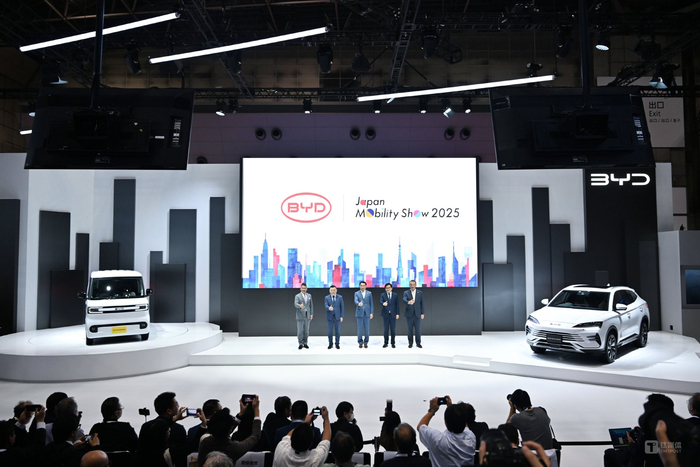
Core Insights - BYD's presence at the 2025 Tokyo Motor Show symbolizes its long-term commitment and strategic evolution in the Japanese market, transitioning from a battery manufacturer to a significant player in the automotive industry [2][5][27] - The company has established a dual strategy of "pure electric + hybrid" to cater to the unique demands of Japanese consumers, reflecting a deep understanding of local market dynamics [20][21][30] Group 1: Historical Context and Market Entry - BYD began exploring the Japanese market in 2005, gradually moving from batteries to electric buses and now to passenger vehicles, marking a significant transformation over two decades [6][12] - The company has established 66 sales points in Japan by 2025, offering a range of electric and hybrid models, making it the only Chinese brand with a full supply chain presence in the country [6][14] Group 2: Cultural and Market Challenges - The Japanese automotive market is known for its closed nature and high consumer loyalty, making it challenging for foreign brands to gain a foothold [7][22] - BYD's approach emphasizes building long-term trust and understanding local cultural nuances, which is crucial for acceptance in Japan [9][24] Group 3: Product Strategy and Innovation - The introduction of the K-EV BYD RACCO, designed specifically for the Japanese market, represents BYD's commitment to local culture and consumer needs [17][19] - The launch of the Sea Lion 06 DM-i hybrid SUV aligns with the prevalent consumer preference for hybrid vehicles in Japan, addressing concerns about charging infrastructure [20][21] Group 4: Recognition and Market Position - BYD's electric buses have become the leading brand in Japan, with a significant market share, reflecting the growing acceptance of Chinese brands in the public transportation sector [12][24] - The publication of a technical analysis book on BYD's SEAL model by a Japanese media outlet signifies a shift in perception, recognizing BYD as a serious player worthy of study [14][15] Group 5: Strategic Philosophy - BYD's strategy in Japan focuses on gradual brand building rather than aggressive market share acquisition, emphasizing the importance of time and trust in establishing a presence [26][30] - The company's long-term approach has led to collaborations with Japanese firms, indicating a shift from competition to partnership in the automotive sector [26][30]

招银国际:降比亚迪电子(00285)目标价至43.54港元 维持“买入”评级
Zhi Tong Cai Jing· 2025-11-04 02:12
Core Viewpoint - Zhaoyin International's report indicates that BYD Electronics (00285) met revenue expectations in Q3, but net profit was impacted by weak smartphone component business, declining revenue from new smart products, and a drop in gross margin, while the new energy vehicle business showed stable growth [1] Group 1: Financial Performance - Q3 revenue for BYD Electronics met expectations, but net profit was negatively affected by several factors [1] - The company has adjusted its earnings per share forecast for 2025 to 2027 down by 8% to 14% [1] - Target price has been reduced from HKD 47.37 to HKD 43.54, while maintaining a "Buy" rating [1] Group 2: Future Outlook - Management expects Q4 revenue and gross margin to remain stable, primarily due to the impact of iPhone components and delays in AI server projects [1] - Anticipated benefits from component upgrades, new smart home product launches, growth in high-end new energy vehicle products, and AI server project shipments are expected to drive stronger revenue growth in 2026 [1]
招银国际:降比亚迪电子目标价至43.54港元 维持“买入”评级
Zhi Tong Cai Jing· 2025-11-04 02:11
Core Viewpoint - Zhaoyin International's report indicates that BYD Electronics' Q3 revenue met expectations, but net profit was impacted by weak smartphone component business, declining revenue from new smart products, and falling gross margins, while the new energy vehicle business showed stable growth [1] Summary by Sections Financial Performance - BYD Electronics' Q3 revenue aligned with market expectations, but net profit was negatively affected by several factors including weak performance in the smartphone components sector, a decrease in revenue from new smart products, and a drop in gross margins [1] - The forecast for earnings per share from 2025 to 2027 has been revised down by 8% to 14%, and the target price has been adjusted from HKD 47.37 to HKD 43.54, while maintaining a "Buy" rating [1] Management Outlook - Management anticipates that Q4 revenue and gross margins will remain stable, primarily due to the impact of iPhone components and delays in AI server projects [1] - However, there is an expectation of benefits from component upgrades, the launch of new smart home products, growth in high-end new energy vehicle products, and shipments from AI server projects, with stronger revenue growth anticipated in 2026 [1]
比亚迪_海外市场将成主要增长动力,解答投资者关键 FAQs;买入评级
2025-11-04 01:56
Summary of BYD Co. Conference Call Company Overview - **Company**: BYD Co. (002594.SZ/1211.HK) - **Industry**: New Energy Vehicles (NEV) Key Points Growth Potential in Overseas Markets - **Overseas Market Growth**: BYD expects overseas markets to be a major growth driver, projecting sales volume to increase by 5%-14% to 1.5 million - 3.5 million units from 2026E to 2035E [1] - **NEV Penetration**: Current NEV penetration in key overseas markets is about 16%, approximately four years behind China. It is anticipated to follow China's >10% penetration increase from 2022 to 2024 [1][15] - **Total Addressable Market (TAM)**: By 2035E, overseas NEV penetration could reach China's level in 2028E, creating a TAM of 28 million units [1] Product Competitiveness - **Market Share Gain**: BYD's models are highly competitive in price, range, and size, with several models becoming best-sellers in their segments. The company aims for an 8% overseas passenger vehicle market share by 2035E, up from 1% in 2024 [2] - **Model Offerings**: BYD has a comprehensive portfolio of models and is well-positioned to capture top volume market share among global NEV companies [2] Financial Projections - **Earnings Growth**: BYD forecasts a 30% earnings CAGR from 2025E to 2028E, with overseas profit contribution increasing from 21% in 2024 to 60% by 2028E [5] - **Revised Estimates**: 2025E volume is lowered by 6%, while 2026E-2030E volume is increased by up to 3%. Net profit estimates are revised by -14% to +9% [5] Overseas Business Outlook - **Sales Volume Performance**: BYD's overseas sales volume has exceeded expectations, driven by expanding supply and successful new model launches [13][14] - **Dealer Network Expansion**: The company has rapidly expanded its dealer network, estimating a fourfold increase in the top 10 markets by the end of 2025 [16][43] Sustainability of Profit Levels - **Unit Profit Levels**: BYD maintains a unit profit of Rmb20k+ in overseas markets, supported by localized factories expected to achieve high utilization rates [25][26] - **Profitability Analysis**: The analysis indicates that overseas factories could sustain high unit profits despite higher costs [26] Inventory and Sales Dynamics - **Wholesale vs. Retail Volume**: The gap between wholesale and retail sales volume is narrowing, indicating healthy sales momentum and inventory levels [35][38] New Model Launches - **Model Launches in 2025**: BYD launched 8 new vehicle models in 1H25, compared to 6 and 7 in 2023 and 2024, respectively [44] - **Competitive Models**: Key models contributing to incremental volume include Song Plus DM-i, Sea Lion 07 EV, and Seagull, which have shown high competitiveness in their respective markets [45][56] Market Penetration and Future Projections - **Future Sales Projections**: BYD's total sales volume is estimated to reach approximately 9 million units by 2035E, with around 3.5 million from overseas markets [11] Additional Insights - **NEV Adoption Policies**: Favorable policies in top destinations support NEV adoption, although some countries are increasing tariffs and localization requirements [15][42] - **Competitive Landscape**: BYD's product portfolio still has room for expansion compared to local market leaders, indicating potential for further market share growth [14][19] This summary encapsulates the key insights from BYD's conference call, highlighting the company's growth strategies, market dynamics, and financial outlook in the NEV sector.
高盛:上调比亚迪A股和H股目标价 海外市场将成关键增长驱动
Ge Long Hui· 2025-11-04 01:00
Core Viewpoint - Goldman Sachs expects overseas markets to be a key growth driver for BYD over the next decade, raising the company's sales forecast for overseas markets (excluding the U.S.) and increasing target prices for its A-shares and H-shares by 8% to 144 RMB and 141 HKD respectively [1] Sales Forecast - The sales forecast for BYD's overseas markets (excluding the U.S.) for 2026-2035 has been raised by 5%-14%, now projected to be between 1.5 million and 3.5 million units [1] - It is anticipated that the overseas market for new energy vehicles will experience a penetration rate growth exceeding 10% in the coming years, similar to the situation in the Chinese market from 2022 to 2024 [1] Competitive Position - BYD's models are noted to have higher competitiveness in key aspects such as pricing, range, and size across various market segments [1] - The company maintains a buy rating for both its A-shares and H-shares [1]
比亚迪:公司将把握时代机遇 不负股东重托
Zheng Quan Ri Bao· 2025-11-03 14:10
Core Viewpoint - BYD, as a global leader in high-tech innovation, emphasizes its strong technological foundation in electric and intelligent vehicles, aiming to solidify its leadership in the global new energy vehicle industry while diversifying into consumer electronics and AI data centers [2] Group 1: Company Positioning - The company is recognized for its significant technological accumulation in key areas such as automotive electrification and intelligence [2] - BYD is committed to continuous technological innovation to create a sustainable core competitive advantage [2] - The company aims to accelerate the transformation and upgrading of the global automotive industry [2] Group 2: Market Diversification - BYD's business scope extends beyond the automotive sector to include diversified markets such as consumer electronics and AI data centers [2] - The company acknowledges the unprecedented changes facing the automotive industry and intends to seize the opportunities presented by these changes [2] - BYD expresses its commitment to fulfilling shareholder expectations amidst these industry transformations [2]
比亚迪等百家上市公司发布ESG委员会细则 | ESG热搜榜
2 1 Shi Ji Jing Ji Bao Dao· 2025-11-03 14:00
Group 1 - Li Auto announced a recall of 11,411 units of the MEGA 2024 model due to insufficient corrosion resistance of the coolant, which could lead to safety hazards such as battery thermal runaway [1] - The recall affects vehicles produced between February 18, 2024, and December 27, 2024, and will begin on November 7, 2025 [1] - Li Auto's chairman emphasized the proactive nature of the recall, stating that the company cannot wait for the investigation results given the potential risks [1] Group 2 - A total of 99 A-share listed companies, including BYD and Yili, have released ESG committee work guidelines from October 24 to 31 [2] - Some companies have rebranded their strategic committees to ESG committees, integrating ESG considerations into core decision-making processes [2] - Companies like Jinling Mining have revised their guidelines to clarify the responsibilities of the chairman in convening ESG committee meetings [2] Group 3 - Five banks, including China Bank and Agricultural Bank of China, received fines for various management failures, totaling millions in penalties [3] - The fines were primarily due to imprudent management in areas such as corporate governance, loan management, and asset quality [3] Group 4 - China's Ministry of Ecology and Environment called for a financing roadmap of $1.3 trillion ahead of COP30, highlighting dissatisfaction with the current funding targets set for developed countries [5] - The report emphasizes the need for substantial progress on financing commitments to support global adaptation goals [5] Group 5 - Zhejiang Securities reported a significant divergence in ESG investment trends between the US and Europe, with large-scale withdrawals from passive ESG funds in Europe [6] - BlackRock has transformed approximately $48 billion of institutional client index products into "ESG dedicated accounts" to meet specific ESG requirements [6] Group 6 - An interview with Zhong Hongwu highlighted that China's ESG evaluation system is transitioning from a follower to a leader, focusing on value creation rather than just risk avoidance [7] - The emphasis is on aligning ESG efforts with national strategic goals, providing a new inclusive development option for global ESG governance [7] Group 7 - Roland Berger's senior partner emphasized the need for businesses to integrate ESG and green transformation into product development systems [7] - The current phase of green low-carbon transformation requires overcoming challenges in standards and collaboration, with CCUS technology being crucial for achieving net-zero goals [7]