Goldman Sachs(GS)

Search documents
China's Power Capacity Surpasses US— Elon Musk Calls It 'Major Competitive Disadvantage' - Goldman Sachs Group (NYSE:GS), Morgan Stanley (NYSE:MS)
Benzinga· 2025-12-20 04:42
Power Generation Capacity - China has 3.75 terawatts of power generation capacity, nearly three times that of the U.S. at 1.30 terawatts [1] - China's power generation capacity has doubled over the past eight years, surpassing 3,348 gigawatts in 2024, with a year-over-year increase of 14.6% [2] - In 2024, China added 429 gigawatts of net new capacity, with wind and solar contributing to 83% of these additions [2] Nuclear Energy Development - China has 34 nuclear reactors under construction, more than the next nine countries combined, with nearly 200 additional reactors planned or proposed [1] - The U.S. currently has no large commercial nuclear reactors under construction [1] Investment in Power Infrastructure - Morgan Stanley estimates that China will invest about $560 billion in power grid projects by 2030, with over $80 billion invested in 2024 alone [3] - China's rapid grid expansion and large renewable energy investments are providing a strategic edge in the AI race, as advanced AI development relies on abundant, reliable power [4] Competitive Disadvantages in the U.S. - Tesla CEO Elon Musk described the U.S. power situation as a "major competitive disadvantage," highlighting the challenges faced by U.S. data centers due to rising power demand [5] - Research indicates that U.S. data-center power demand is increasing faster than the grid can accommodate, leading to unresolved transmission bottlenecks amid the AI boom [5]



高盛2026年全球股市展望:更广泛的牛市,更宽泛的AI受益者
美股IPO· 2025-12-20 04:18
Core Viewpoint - Goldman Sachs expects the global stock market to continue its bull market into 2026, with a market capitalization-weighted total return rate of 15%, primarily driven by earnings growth rather than valuation expansion [4][5][10]. Economic Environment - The global economy is projected to maintain a comprehensive expansion in 2026, supported by further moderate easing of monetary policy by the Federal Reserve, providing solid support for the stock market [5][6]. - The current market is defined as being in the "optimistic" phase of the cycle, characterized by increased investor confidence and potential upward pressure on valuations [5][6]. Market Trends - The report indicates a significant broadening trend in the global stock market, with non-U.S. markets expected to outperform U.S. stocks, breaking the previous concentration pattern [4][10]. - In 2025, it was noted that for the first time in nearly 15 years, U.S. stocks underperformed compared to other major markets, with total returns in Europe, China, and Asia nearly double that of the U.S. [10][11]. Earnings Growth - Goldman Sachs forecasts that all regions will achieve sustained positive earnings growth in 2026, with the S&P 500 expected to see a 12% growth, STOXX 600 at 5%, Japan's TOPIX at 9%, and Asia-Pacific (excluding Japan) at 16% [8][10]. - The contribution of the top seven tech giants to S&P 500 earnings is expected to decrease from 50% in 2025 to 46% in 2026, indicating a further decline in industry concentration [11]. AI Dividend - The AI dividend is anticipated to further expand in 2026, benefiting a broader range of industries and companies beyond core tech giants, particularly those that can leverage AI to enhance profitability and productivity [4][12][16]. - The spillover effects of tech capital expenditures are expected to drive growth in industrial, materials, and financial sectors, creating a cross-industry growth wave termed "AI + industry" [16]. Market Dynamics - The report highlights a shift in focus among investors towards AI beneficiaries outside the tech sector, as competition intensifies and cost structures evolve within the AI landscape [14][15]. - Historical data suggests that in the absence of a recession, even with high valuations, the stock market is unlikely to experience significant pullbacks or bear markets [6].
高盛大宗商品展望:央行买金 + 美联储降息,看好黄金2026年冲击4900美元!
美股IPO· 2025-12-20 04:18
高盛在最新报告中重申看涨黄金,预测金价将在2026年12月冲击每盎司4900美元历史新高。该预测主要基于双重驱动:一是结构性需求,即新兴市场央 行为对冲地缘政治风险而持续大幅购金;二是周期性利好,即美联储降息周期将推动ETF资金回流,加剧实物黄金市场的供需紧张。 报告指出,尽管大宗商品指数整体回报可能因能源板块疲软而放缓,但贵金属作为受益于利率下行的资产类别,将在2026年继续跑赢大盘。特别是随 着美国利率下降,此前在2022年至2024年间作为净卖家的ETF投资者已开始回归市场,与央行争夺有限的黄金供应,这种"坚定买家"(央行)与"回归 买家"(ETF)的同步共振是推升价格的关键。 央行购金新常态:地缘政治风险的对冲 高盛在报告中详细阐述了央行购金行为的结构性变化。报告认为,2022年俄罗斯外汇储备被冻结是一个分水岭,彻底改变了新兴市场储备管理者对地 缘政治风险的认知。为了对冲制裁风险和地缘政治不确定性,新兴市场央行正在加速将其储备资产多元化,从美元资产转向黄金。 高盛重申2026年金价看涨至4900美元,央行需求与降息构成双轮驱动。 12月18日,高盛发布研究报告,将"做多黄金"列为核心高确信度交易策略。 ...

高盛2026年全球股市展望:更广泛的牛市,更宽泛的AI受益者
Hua Er Jie Jian Wen· 2025-12-20 03:09
Group 1: Market Outlook - Goldman Sachs predicts that the global stock market will continue its bull market into 2026, with a price return of 13% and a total return of 15% including dividends, driven primarily by earnings growth rather than valuation expansion [1][2] - The current market is defined as being in the "optimistic" phase of the cycle, characterized by increased investor confidence and potential upward risks to core expectations [2][3] - The report indicates that the trend of non-U.S. markets outperforming U.S. markets will continue, with European, Chinese, and Asian markets showing total returns nearly double that of the U.S. market [1][5] Group 2: Earnings Growth and Valuation - Goldman Sachs expects all regions to achieve positive earnings growth in 2026, with the S&P 500 projected to grow earnings by 12%, STOXX 600 by 5%, Japan's TOPIX by 9%, and Asia-Pacific (excluding Japan) by 16% [3] - The report highlights that the high valuations observed in the U.S. market, with a forward P/E ratio of 22.3, will lead to returns being more reliant on fundamental earnings growth rather than valuation expansion [3] Group 3: Sector and Market Diversification - The bull market is broadening, with a notable shift away from the dominance of U.S. tech stocks, as the contribution of the top seven tech giants to S&P 500 earnings is expected to decrease from 50% in 2025 to 46% in 2026 [6] - Traditional value sectors such as financials and materials are transitioning from "value traps" to "value creators," benefiting from increased tech capital expenditures [5][6] Group 4: AI Impact and Sector Expansion - The AI dividend is expected to expand beyond core tech giants to a wider range of industries and companies that can leverage AI to enhance profitability and productivity [1][7] - The report notes a significant reduction in stock correlation among the five major AI hyperscalers, indicating a shift towards selective investment in potential winners within the tech sector [8] - The spillover effects of tech capital spending are anticipated to drive growth in non-tech sectors, creating a cross-industry growth wave termed "AI+ industry" [9]
华尔街见闻早餐FM-Radio|2025年12月20日
Sou Hu Cai Jing· 2025-12-19 23:52
华见早安之声 市场概述 科技股力挺, 美股无惧周五 创纪录"三巫日"动荡继续走高,三大股指 两连阳,纳指两日均涨超1%,和标普全周惊险转涨,但道指一个月来首度周跌; TikTok协议消息后, 甲骨文大涨6.6%,带动AI股和芯片股走高,芯片指数涨3%,AMD涨超6%, 英伟达涨近4%;特斯拉逆市回落,但全周涨近5%。欧央 行上调经济预期后,泛欧股指两日连创历史新高。 日本央行加息后, 全球债市价格齐跌。10年期日债收益率1999年来首次升破2.0%;法国预算案谈判破裂,30年期法债收益率创2009年来新高;美联储"三把 手"称不急于降息, 美债收益率加速反弹。 美元指数三连涨至一周高位、扭转全周跌势; 日央行加息前景"审慎", 日元盘中跌超1%至四周新低,创逾两月最差表现;离岸人民币暂别14个月高位,连 涨四周;加密货币反弹,比特币一度较日高涨近5%、重新逼近9万美元,以太坊盘中涨超7%。 金银反弹, 银铜齐创历史新高,黄金盘中转涨、靠近纪录高位;白银本周二度创新高,期银盘中涨近4%,连涨四周;伦铜时隔一周又收创新高,一周涨超 3%;原油盘中涨超1%,连续三日反弹、仍连跌两周。 亚洲时段,A股和港股股指数集体 ...



Nike's challenges from China, retail trading trends & the surge in options demand
Youtube· 2025-12-19 21:51
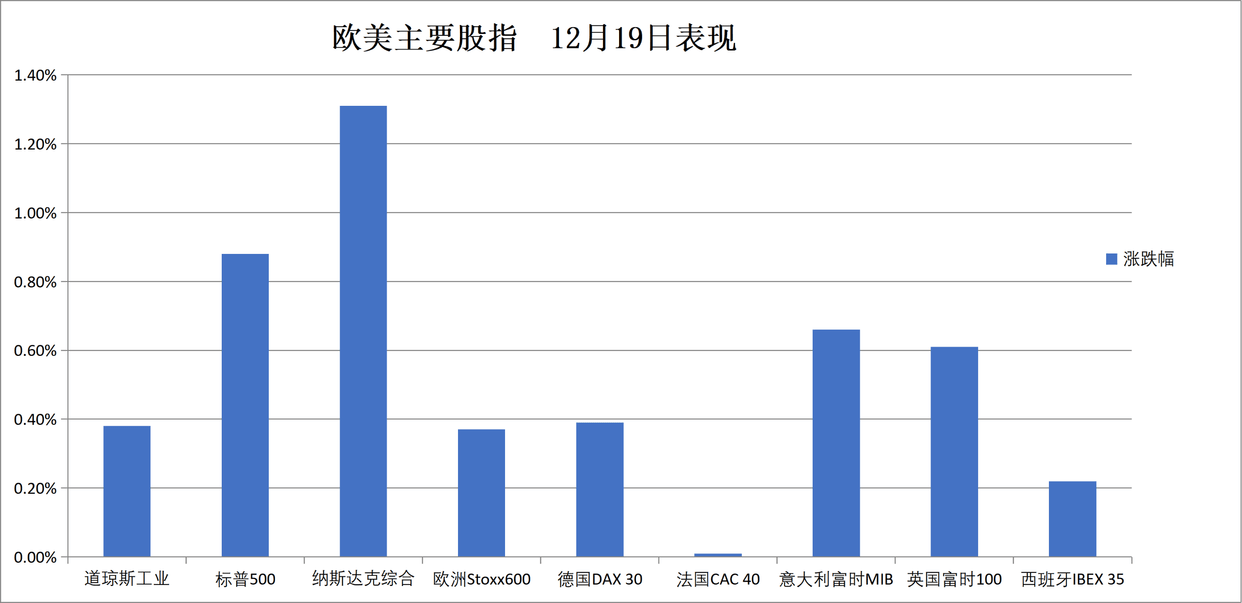
Market Overview - The Dow is up by 0.5% today, but remains in the red for the week [1] - The NASDAQ has increased by over 1% today, turning positive for the week, while the S&P 500 is up just under 1% [2] - The bond market shows a slight increase in yields, with the 10-year Treasury yield up by 3 basis points today [3] Sector Performance - Technology has been a strong performer this week, with large-cap tech (XLK) up by 2% [4] - Consumer discretionary, led by Tesla and Amazon, is up by 1.3%, while energy has seen a decline of about 3% [5] - Notable stock movements include Nvidia up by 3.74% and Goldman Sachs up by 2% [6] Economic Outlook - Markets are reacting to cooler inflation data and a strong growth backdrop anticipated for 2026 [7] - Investors are focusing on potential rate cuts, earnings, and sector rotation as they prepare for the new year [7] - The Federal Reserve has cut rates by 175 basis points from the highs, indicating a move closer to a neutral rate [13] Fiscal Stimulus and Growth - Significant fiscal stimulus is expected to impact the economy in 2026, including corporate and personal tax changes [16] - The potential for increased capital expenditures (capex) is anticipated due to new corporate stimulus measures [16] AI and Technology Sector - The AI theme remains volatile, with a shift from broad market exposure to more selective stock picking expected in 2026 [18] - The MAG 7 tech stocks have shown mixed performance, with some like Alphabet and Nvidia performing well, while others like Microsoft and Meta have lagged [19] Small Cap Stocks - Small caps have recently rebounded, but there are concerns about sustainability given past performance trends [23] - The current small-cap index composition differs significantly from historical norms, leading to skepticism about future growth [25] Retail Sector Insights - Rivian's stock has been upgraded by Wedbush, citing 2026 as a pivotal year for the company [27] - KB Home reported fourth-quarter earnings that missed estimates, indicating ongoing challenges in the housing market [29] - Nike's second-quarter results reflect a turbulent year for retailers, with uneven performance across the sector [31] Honeywell's Performance - Honeywell's stock has underperformed compared to the broader industrial market, largely due to limited exposure to AI and data center growth [90] - The company is expected to benefit from the spin-off of its aerospace business, which could enhance its market position [92] EV Market Outlook - The EV market is facing headwinds, including the expiration of tax credits, but long-term demand is expected to remain strong [74] - ChargePoint's CEO emphasizes the importance of innovation and product development to drive growth in the EV charging sector [78] - The commercial and fleet markets for EVs are anticipated to grow as businesses seek lower total cost of ownership [86]




Kevin Plank, Goldman Sachs Exit Any Further Development Of Billion-Dollar Ghost Town
ZeroHedge· 2025-12-19 20:20
Core Insights - Under Armour's founder and CEO Kevin Plank, along with Goldman Sachs, is withdrawing from further development of the Baltimore Peninsula project, which has seen less than 10% of its planned 14 million square feet built [1][3][8] Group 1: Project Development - The Baltimore Peninsula, previously known as Port Covington, is a 235-acre mixed-use waterfront redevelopment project in South Baltimore [1] - Plank and Goldman Sachs will retain ownership of the current development but will exit the remaining underdeveloped portions of the project [3] - The decision to withdraw was influenced by a $66 million land loan that was due, leading to negotiations with Bank OZK to take over future development responsibilities [8] Group 2: Challenges and Market Conditions - The project has faced significant challenges due to high crime rates in Baltimore, which have contributed to a population exodus and hindered the project's traction [9][12] - The city has experienced a spike in violent crime following the 2015 riots, which has deterred potential investments and developments [11][12] - Under Armour's brand has struggled in the market, leading to a decline in stock value as the company attempts a turnaround [12] Group 3: Real Estate Strategy - Plank has been divesting real estate assets in the area, including an $18.5 million, 500-acre racehorse farm, Sagamore Farm [14] - The Baltimore Peninsula has been described as a "billion-dollar ghost town," reflecting the lack of progress and investment in the area [16]



Goldman Sachs quietly revamps gold price target for 2026
Yahoo Finance· 2025-12-19 17:33
Core Viewpoint - Goldman Sachs has forecasted that gold prices will rise to approximately $4,900 per ounce by the end of 2026, indicating a 13% increase from current spot prices of $4,323.71 per ounce [2]. Group 1: Central Bank Demand - Central banks have transitioned from occasional gold buyers during crises to consistent and strategic purchasers as part of their long-term reserve strategies [5][6]. - In Q1 2025, central banks acquired a net total of 244 tonnes of gold, followed by 166 tonnes in Q2 and a significant increase to 220 tonnes in Q3 [7]. - In October 2025 alone, central banks recorded 53 tonnes of net gold buying [8]. Group 2: Interest Rates Impact - Falling interest rates are reshaping investor perceptions of gold, which traditionally struggles when yields are high due to its lack of income generation [9]. - The recent Federal Reserve rate cut on December 10, 2025, lowered the target range to 3.50% to 3.75%, further supporting gold's appeal as a store of value [10].
XLF Rally Continuing Into 2026? Rebecca Walser Offers Banking Bull Case
Youtube· 2025-12-19 17:00
Financial Sector Performance - The financial sector has shown strong performance in 2025, with the XLF gaining 13% this year and over 65% in the last three years [1] - Major banks such as JP Morgan, Bank of America, Wells Fargo, and Goldman Sachs have reached new all-time highs in December [1] Outlook for 2026 - There is optimism that the strength in financials could continue into 2026, particularly if the Federal Reserve maintains an accommodative rate policy [2][3] - Lower interest rates are expected to stimulate mortgage activity, benefiting both large and regional banks [3][4] Impact of Interest Rates - Lower rates are anticipated to increase mortgage refinancing and purchasing activity, which in turn supports ancillary businesses related to home ownership [4][5] - The current environment may not encourage savings in money markets, but there remains a significant amount of capital in money markets that could rotate back into equities [6] Regional vs. Large Banks - Regional banks are more vulnerable to issues in commercial real estate, which is a significant concern due to the resetting of loans issued before 2020 at higher rates [7][8] - Large banks are better positioned to withstand potential challenges in 2026 compared to regional banks [9] Technological Adaptation - There is a call for banks to invest in decentralized finance technologies, such as blockchain and stable coins, to remain competitive in the future [10][11] - The shift towards decentralized finance is seen as a long-term trend that banks need to prepare for now [11]


散户和机构齐加仓!美股“圣诞老人反弹”稳了?
Jin Shi Shu Ju· 2025-12-19 13:45
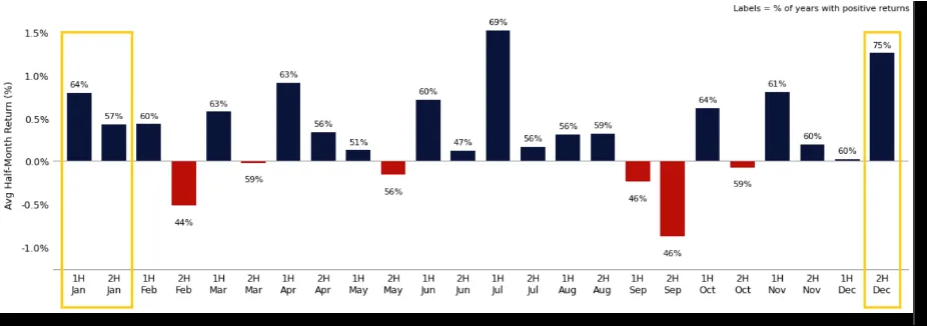
Market Trends - The S&P 500 index rose by 0.8%, ending a four-day decline, with historical data indicating a 75% probability of an increase in the last two weeks of December, averaging a 1.3% gain since 1928 [1] - Optimism regarding strong economic performance and corporate earnings is supporting investor confidence, despite ongoing concerns about AI-related valuations [3] - A recent inflation report, which was below expectations, has boosted expectations for further interest rate cuts next year, contributing to a rebound in the U.S. stock market [3] Investment Behavior - Traders are significantly buying call options for chip manufacturers and large-cap tech stocks, indicating a bullish sentiment in the market [3] - Derivatives traders are expressing confidence by buying call spreads on companies like NVIDIA and Micron Technology while selling put options on major tech stocks [4] - Retail investors have shown sustained interest, with 32 out of the last 33 weeks being net buyers of bullish options on U.S. stocks, marking the longest continuous net buying period recorded [4] Institutional Investor Sentiment - Institutional investors have become more optimistic, with significant purchases of call options across the market and interest in sectors beyond large tech stocks, particularly in economically sensitive real estate and industrial stocks [5] - The S&P 500's 10-day realized volatility has dropped to one of its lowest levels this year, potentially encouraging volatility-targeting funds to increase stock exposure [5] - There is an expectation for further compression in volatility, which may provide additional leverage opportunities for hedge funds employing systematic strategies [5]