LI AUTO(LI)

Search documents
“安全是无价的”:理想主动召回背后的价值观抉择
Jing Ji Guan Cha Wang· 2025-11-03 10:04
Core Viewpoint - Li Auto has proactively recalled certain models of the Li MEGA 2024 following a fire incident in Shanghai, emphasizing the importance of safety over financial considerations [1][4][14] Group 1: Incident Overview - A fire incident involving the Li MEGA 2024 occurred in Shanghai on October 23, with no casualties reported [2] - The company promptly contacted vehicle owners and cooperated with relevant authorities for investigation [2] - An internal investigation revealed that a specific batch of vehicles had insufficient corrosion resistance in the coolant, potentially leading to safety hazards [3][7] Group 2: Recall Decision - On October 25, Li Auto's quality and product line leaders discussed the safety risks and unanimously decided to initiate a recall [4] - The recall was officially announced on October 31, with Li Auto stating that even a minimal risk to safety warranted immediate action [1][6] - The recall involves 11,411 vehicles, with plans for free replacement of coolant, battery, and motor controller [8] Group 3: Safety Measures and Improvements - Li Auto's cloud-based AI quality warning system detected battery insulation faults over four hours before the fire, demonstrating the company's proactive safety measures [7] - The company plans to enhance training for frontline staff and improve emergency response strategies based on the incident [9] - Li Auto has committed to stricter testing and verification standards for chemical materials to prevent similar issues in the future [9] Group 4: Corporate Philosophy - Li Auto emphasizes that safety is a core value, stating that any costs related to safety do not require approval [4][10] - The company has a history of prioritizing safety, having implemented over 100 vehicle crash tests, which is more than double the industry average [11] - The MEGA model was designed with safety as a fundamental principle, achieving high safety ratings in various tests [12] Group 5: Communication and Public Response - Li Auto issued a public apology and addressed key concerns from customers regarding the recall and safety measures [13][14] - The company aims to build trust by demonstrating a commitment to user safety over short-term financial interests [14]

行业总量专题:2026年购置税补贴减半,预计电车销量仍可维持中高个位数增长
Hua Yuan Zheng Quan· 2025-11-03 09:20
Investment Rating - The industry investment rating is "Positive" (maintained) [3] Core Viewpoints - The 2026 purchase tax subsidy for new energy vehicles (NEVs) is set to be halved, yet it is expected that electric vehicle (EV) sales can still maintain a mid-to-high single-digit growth rate [3][9] - The impact of the subsidy reduction will be significant, affecting approximately 90% of NEV consumers, particularly in the low-price segment [6][17] - The overall market for NEVs is influenced by multiple factors beyond subsidies, including the introduction of quality supply and the gradual penetration of NEVs into various channels [7][9] Summary by Sections 1. Analysis of the Impact of the 2026 New Energy Vehicle Purchase Tax Policy - The purchase tax subsidy for NEVs will be halved from 2026 to 2027, with the maximum subsidy per vehicle reduced to 15,000 yuan [5][13] - The technical requirements for subsidies will also increase, with the pure electric range requirement for plug-in hybrid and extended-range vehicles rising from 43 km to 100 km [5][13][24] - The subsidy reduction will have broad implications, with 90% of low-price segment consumers feeling the impact significantly [6][17] 2. Overall Forecast - The expected growth rates for NEV insurance registrations are 19% for 2025 and 9% for 2026, with potential upward adjustments depending on advancements in autonomous driving technology [8][33] - Despite the subsidy reduction, the NEV penetration rate is anticipated to maintain a slight increase due to factors such as quality supply and market dynamics [7][9][41] - The total volume of NEVs is projected to grow moderately, with the potential for unexpected demand driven by technological innovations [8][40] 3. Investment Opportunities - Focus on high-end automakers less affected by the subsidy reduction, such as Jianghuai Automobile [9] - Attention to automakers with strong new product cycles that can offset the impact of subsidy reductions, including Geely Automobile and SAIC Group [9] - Consider companies that may create additional demand through technological innovations, such as Li Auto and Xpeng Motors [9]





“银十”变“金十” 多家新能源车企10月销量创新高
Bei Jing Ri Bao Ke Hu Duan· 2025-11-03 08:23
Core Insights - The automotive market in October experienced strong performance, driven by favorable policies and the launch of new models, leading to a "golden October" for the industry [3] Group 1: New Energy Vehicle Sales - Leap Motor achieved a monthly delivery of 70,289 units, marking a year-on-year increase of over 84%, maintaining its position as the monthly sales champion among new forces [1] - Xiaopeng Motors delivered 42,013 vehicles in October, a historical high with a year-on-year growth of 76% and a month-on-month increase of 1% [1] - NIO's deliveries reached 40,397 units, a year-on-year increase of 92.6%, supported by the launch of new models [1] - Xiaomi Motors also surpassed 40,000 monthly deliveries [1] - Li Auto's deliveries decreased both year-on-year and month-on-month, totaling 31,767 units in October [1] Group 2: Traditional Automakers' Performance - Geely's Zeekr brand sold 21,400 units in October, a year-on-year increase of 63.8% [2] - BAIC's Arcfox brand achieved sales of 23,400 units, a remarkable year-on-year growth of 110% [2] - Dongfeng's Lantu delivered 17,200 units, while Changan's Avita Technology sold 13,500 units, both reaching historical highs [2] - SAIC's Zhiji brand sold 13,200 units, also a record for the brand [2] Group 3: Overall Market Trends - BYD's new energy vehicle sales reached 441,706 units in October, showing a year-on-year decline of 12% but a month-on-month increase of 11.47%, with overseas sales surging by 155% [2] - SAIC's total vehicle sales for October were 453,978 units, reflecting a year-on-year growth of 12.96%, with new energy vehicle sales increasing by 31.6% [2] - Chery Group's total sales reached 281,161 units, a year-on-year increase of 3.3%, with new energy vehicle sales surpassing 110,000 units for the first time [2]


召回常态化 让隐患清零让信任重塑
Xin Jing Bao· 2025-11-03 08:17
Core Viewpoint - The recent proactive recall by Li Auto has drawn industry attention, highlighting the importance of safety and quality control in the automotive sector [2][4]. Group 1: Recall Details - On October 31, Li Auto announced a recall of 11,411 Li MEGA vehicles produced between February 18, 2024, and December 27, 2024, due to insufficient corrosion resistance of the coolant [2]. - The company will replace the power batteries and related equipment for the recalled vehicles free of charge and will conduct safety inspections on the same batch of vehicles [2]. Group 2: Industry Context - The automotive recall system in China has evolved since its establishment in 2004, becoming more comprehensive and effective, particularly with the rise of new energy vehicles and smart technologies [3]. - In the past five years, the average annual number of recalls in China has reached 216, with over 7.59 million vehicles recalled, indicating that recalls have become a normalized practice in the industry [3]. Group 3: Perception and Responsibility - The perception that recalls indicate a quality crisis is outdated; instead, recalls are a routine part of a mature automotive industry [4]. - Proactive recalls reflect a company's internal risk control capabilities and a commitment to long-term brand trust, as they demonstrate transparency and responsibility [4][5]. Group 4: Consumer Trust and Safety Standards - Consumers expect not just functionality but also trust in the safety of their vehicles, making recalls a critical aspect of quality assurance [3][5]. - The normalization of recalls is essential for continuous improvement of safety standards and supports the high-quality development of the automotive industry [5].

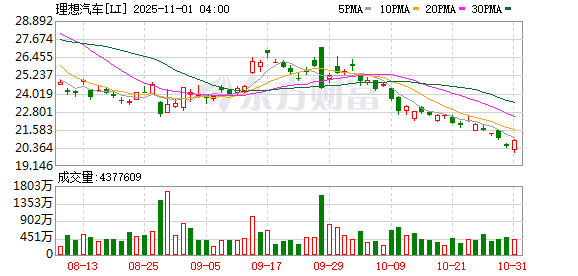
召回常态化,让隐患清零让信任重塑
Bei Ke Cai Jing· 2025-11-03 08:01
Core Viewpoint - Li Auto announced a recall of 11,411 units of the Li MEGA model due to insufficient coolant corrosion resistance, offering free replacement of power batteries and related equipment for affected owners [1] Group 1: Recall Context and Industry Implications - The automotive industry is characterized by its complexity, with each vehicle containing thousands of components across various systems, making recalls a crucial method for balancing safety, industry development, and consumer rights [1] - The recall system in China has evolved since its establishment in 2004, now forming a comprehensive framework that includes legal, technical, regulatory, and execution aspects [1] - In the past five years, the average annual number of vehicle recalls in China has reached 216, totaling over 7.59 million vehicles, indicating that recalls have become a normalized practice [2] Group 2: Quality Management and Consumer Trust - Recalls reflect a proactive approach to risk management, demonstrating that companies have established robust quality monitoring systems capable of identifying and addressing issues before they escalate [2] - The automotive industry emphasizes systemic safety, where consumers are purchasing not just functionality but also trust in the brand [2] - Proactive recalls are indicative of a company's internal risk control capabilities and long-term brand management strategy, where transparency and responsibility are foundational to consumer trust [2][3] Group 3: Regulatory Compliance and Industry Maturity - New energy vehicle companies are adapting to the regulatory environment by viewing recalls as part of quality management rather than merely public relations events [3] - The notion that recalls equate to quality crises is outdated; instead, they are a routine aspect of a mature automotive industry [2][5] - The frequency of recalls should be viewed through a governance lens, reflecting a company's ability to identify and resolve issues efficiently [5] Group 4: Safety Standards and Industry Evolution - Safety in the automotive sector is defined by absolute standards rather than cost-effectiveness, with proactive recalls being more trustworthy than a zero-recall approach [4] - The normalization of recalls is essential for the continuous upgrade of safety standards and the steady pace of innovation within the industry [5] - Recalls serve as a core metric for industry maturity and are vital for driving technological iteration and building a trust-based ecosystem [5]
李想谈与DeepSeek梁文锋聊完后印象最深的两点
理想TOP2· 2025-11-03 07:33
Core Insights - The article discusses the leadership philosophy of Li Xiang, emphasizing the importance of young talent in research and development, and the unique management styles within the company [1][7][11] Group 1: Leadership Philosophy - Li Xiang believes that experience can be a barrier to research, advocating for a high proportion of fresh graduates in research teams, which currently stands at around 60-70% [1][7] - The company employs different management styles for various teams, including manufacturing, operating systems, and autonomous driving, with a core team of about 200 people dedicated to end-to-end autonomous driving [6][7] - Li Xiang admires Liang Wenfeng's self-discipline and his approach to researching global best practices, which has influenced the company's operational strategies [4][5][11] Group 2: AI and Engineering Insights - Li Xiang expresses confidence in his engineering background, stating that while he may be misled in AI science, he cannot be deceived in AI engineering due to his strong engineering mindset [2][16] - The company has benefited from the open-source project DeepSeek, which accelerated their development timeline for language models by nine months [5][8] - Li Xiang emphasizes the importance of structural questioning in engineering, which aids in improving team efficiency and problem-solving [18] Group 3: Talent Acquisition and Competition - The company is focused on attracting talent by emphasizing its commitment to AI and the importance of real-world applications, which enhances its appeal to potential recruits [10] - Li Xiang notes that while competitors may have larger teams, the company's smaller, focused team has achieved superior product experiences in autonomous driving [6][7] Group 4: Best Practices and Growth - Li Xiang identifies growth as a central theme in his leadership, linking personal development to user value and commercial success [15] - The company aims to internalize best practices, particularly in research and analysis, to enhance success rates in various projects [13][14]

理想MEGA惊魂爆燃后,三元锂电池天塌了?
3 6 Ke· 2025-11-03 06:06
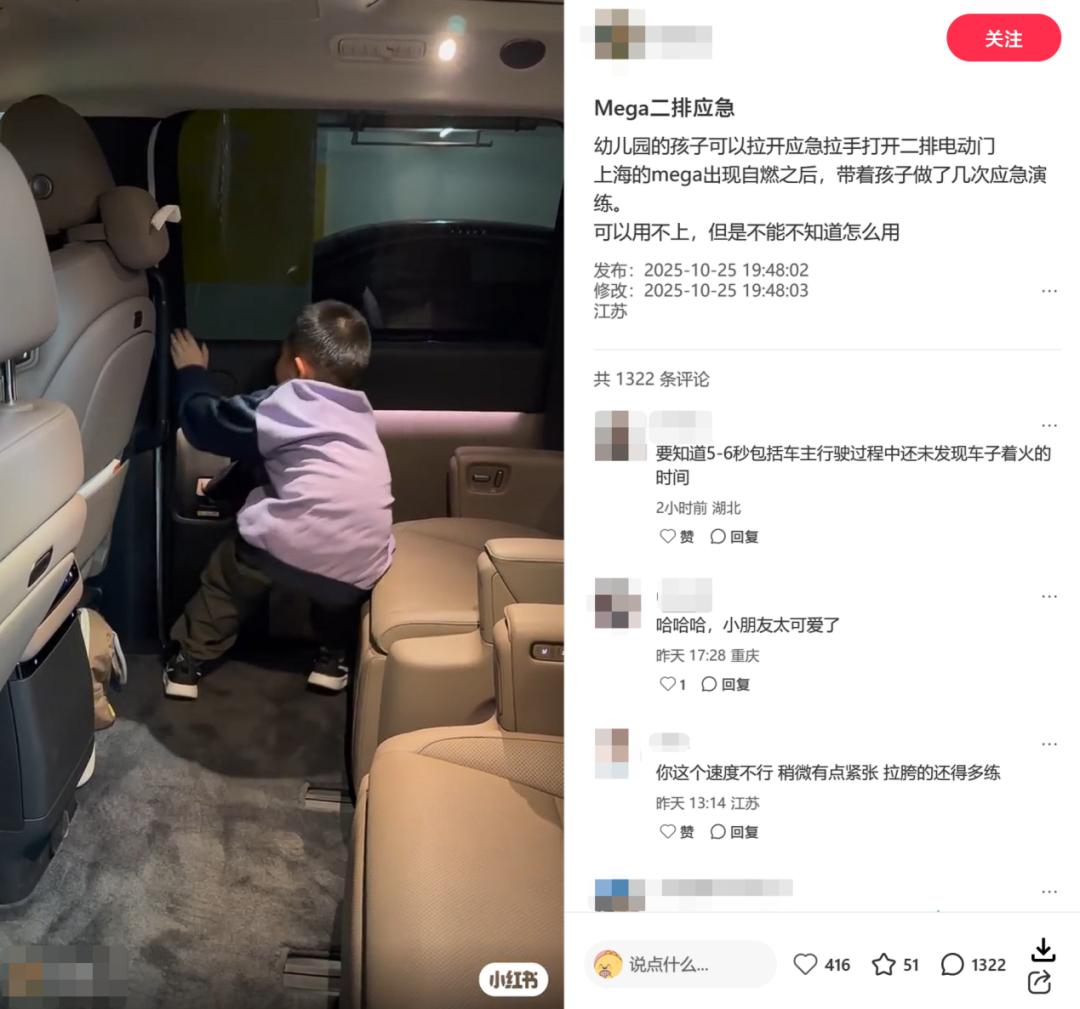
Core Viewpoint - The incident involving the Ideal MEGA electric vehicle, which caught fire within 10 seconds, has sparked significant discussions about battery safety in the electric vehicle industry, particularly regarding the risks associated with high-performance lithium-ion batteries [1][2]. Group 1: Incident and Immediate Reactions - The Ideal MEGA fire incident has led to widespread concern among middle-class parents who purchased the vehicle, prompting discussions on "electric vehicle escape" for children [1]. - Following the incident, Ideal officially apologized and acknowledged a defect in the coolant of the MEGA 2024 model, which could lead to thermal runaway of the battery under extreme conditions [2]. Group 2: Battery Technology Debate - The incident has reignited the long-standing debate between the safety of lithium iron phosphate (LFP) batteries and the performance of ternary lithium batteries, with the former being seen as safer but less powerful [2][5]. - Ideal's MEGA uses the Kirin ternary lithium battery, which was previously marketed as having superior safety features, including a low failure rate and advanced battery management systems [3][5]. Group 3: Battery Characteristics and Safety - Ternary lithium batteries have lower thermal stability, with decomposition reactions potentially starting at around 200°C, while LFP batteries require much higher temperatures (500-800°C) to decompose, making LFP inherently safer [5]. - Experimental data shows that ternary lithium cells can reach peak temperatures of 400-600°C within 10 seconds during short-circuit tests, whereas LFP cells take about 2 minutes to reach 300°C, highlighting a critical safety difference [5]. Group 4: Market Dynamics and Battery Choices - The shift in the market dynamics began in 2016 when subsidies for electric vehicles were linked to battery energy density, favoring ternary lithium batteries, which led to a significant market share increase for them [8][10]. - However, by 2021, LFP batteries began to regain market share, surpassing 70% in 2023, driven by cost-effectiveness and the growing demand for affordable electric vehicles [10][11]. Group 5: Future of Battery Technologies - The future of battery technology may not be a straightforward choice between LFP and ternary lithium, as both have distinct advantages and are likely to coexist based on market demands [24]. - Ternary lithium batteries are seen as a key pathway to next-generation solid-state batteries, which promise improved safety and energy density, while also being suitable for high-performance applications like flying cars and robotics [22][24].
新能源免购置税倒计时:多家车企宣布税费“兜底”政策,年底抢单大战开始
Mei Ri Jing Ji Xin Wen· 2025-11-03 04:54
Core Viewpoint - The upcoming reduction in the new energy vehicle purchase tax is expected to stimulate a surge in vehicle purchases before the end of the year, with various automakers offering "tax guarantee" policies to attract consumers [1][5][7]. Group 1: Tax Policy and Consumer Behavior - The new energy vehicle purchase tax is anticipated to be halved, prompting consumers to rush to make purchases before the policy change takes effect [1][5]. - Consumers who place orders by the end of November can benefit from tax guarantee services offered by automakers, which will cover any tax differences if delivery is delayed until 2026 due to production or transportation issues [1][4]. - The tax guarantee service includes cash subsidies, with amounts varying based on the timing of the order, providing incentives for early purchases [2][3]. Group 2: Automaker Strategies - Several automakers, including Li Auto, Xiaomi, and Chery, have introduced tax guarantee policies to mitigate consumer concerns about potential tax increases in the following year [4][5]. - The sales teams of various manufacturers are encouraging consumers to place orders quickly to avoid missing out on tax benefits, especially for vehicles priced over 200,000 yuan, where the tax savings can be significant [5][7]. - The competitive landscape is intensifying as automakers aim to boost sales during the year-end rush, leveraging the tax policy changes to attract more buyers [5][7]. Group 3: Market Performance - The new energy vehicle market has shown strong performance, with retail sales reaching 901,000 units from October 1 to 26, marking a 22% year-on-year increase [7]. - Despite the positive sales figures, many automakers are struggling to meet their annual targets, making the next two months critical for their performance [7].
多家车企宣布税费“兜底”政策 ,年底抢单大战开始!
Xin Lang Ke Ji· 2025-11-03 04:09
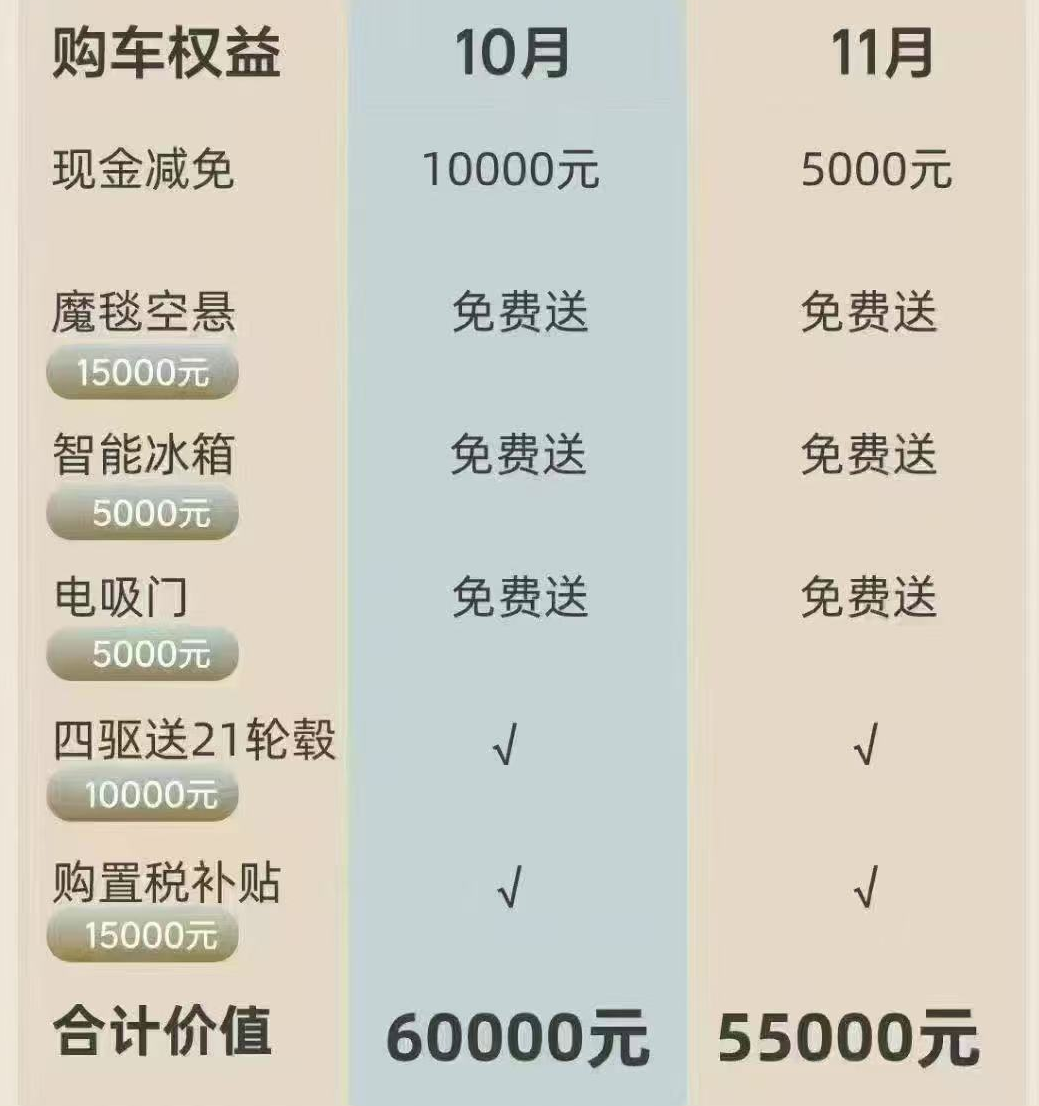
Core Insights - The upcoming reduction of the new energy vehicle purchase tax is expected to stimulate a surge in vehicle purchases before the end of the year [1][6] - Several automakers are offering "tax guarantee" policies to encourage consumers to place orders before the tax benefits expire [4][6] Group 1: Tax Policy and Consumer Behavior - The new energy vehicle purchase tax is anticipated to be halved, prompting consumers to rush to make purchases to take advantage of the tax exemption [1][6] - Consumers who place orders by the end of November can benefit from tax guarantee services offered by various automakers, which will cover any tax differences if delivery is delayed [1][4] - The cash subsidy for consumers who order in October is higher than for those who order in November, with a difference of 5,000 yuan [2][3] Group 2: Automaker Strategies - Companies like Li Auto, Xiaomi, and Chery are implementing "tax guarantee" policies to mitigate the risk of delayed deliveries affecting tax exemptions [1][4] - The "tax guarantee" policy typically covers up to 15,000 yuan in tax differences for delayed deliveries due to production or transportation issues [1][4] - Automakers are actively encouraging consumers to place orders quickly, as the end of the year approaches and the purchase tax policy is set to change [6][8] Group 3: Market Trends - The new energy vehicle market has shown strong sales performance, with a reported retail of 901,000 units in October, marking a 22% year-on-year increase [8] - The upcoming tax policy changes are expected to create a critical window for automakers to boost sales and meet annual targets [8]
10月各家车企销量
数说新能源· 2025-11-03 03:16
Sales Performance Summary - BYD achieved sales of 441,700 units in October, representing a year-on-year increase of 5.31% and a month-on-month increase of 11%. Cumulative sales for 2025 reached 3.7019 million units, with a year-on-year growth of 20.93% [1] - Geely Automobile reported sales of 307,100 units in October, showing a year-on-year increase of 35.49% and a month-on-month increase of 12%. Cumulative sales for 2025 reached 2.4773 million units, with a year-on-year growth of 44.33% [1] - Great Wall Motors sold 143,100 units in October, marking a year-on-year increase of 22.50% and a month-on-month increase of 7%. Cumulative sales for 2025 reached 1.0664 million units, with a year-on-year growth of 9.87% [1] - Xpeng Motors recorded sales of 42,000 units in October, a significant year-on-year increase of 76% and a month-on-month increase of 1%. Cumulative sales for 2025 reached 355,200 units, with a year-on-year growth of 190.02% [1] - Li Auto's sales were 31,800 units in October, reflecting a year-on-year decline of 38.25% and a month-on-month decline of 6%. Cumulative sales for 2025 reached 328,900 units, with a year-on-year decrease of 16.36% [1] - NIO sold 40,400 units in October, achieving a year-on-year increase of 92.59% and a month-on-month increase of 16%. Cumulative sales for 2025 reached 241,600 units, with a year-on-year growth of 41.91% [1] - Leap Motor reported sales of 70,300 units in October, with a year-on-year increase of 94.78% and a month-on-month increase of 5%. Cumulative sales for 2025 reached 465,800 units, with a year-on-year growth of 126.93% [1] - Zeekr's sales were 21,400 units in October, showing a year-on-year decline of 14.48% but a month-on-month increase of 17%. Cumulative sales for 2025 reached 165,000 units, with a year-on-year decrease of 1.73% [1] - Deep Blue sold 36,800 units in October, marking a year-on-year increase of 69.33% and a month-on-month increase of 9%. Cumulative sales for 2025 reached 262,400 units, with a year-on-year growth of 80.66% [1] - Lantu reported sales of 17,200 units in October, achieving a year-on-year increase of 69.52% and a month-on-month increase of 13%. Cumulative sales for 2025 reached 114,200 units, with a year-on-year growth of 82.14% [1]