
LI AUTO(LI)

Search documents
美股开盘丨三大指数集体高开 小鹏汽车跌逾4%
Di Yi Cai Jing· 2025-12-31 16:00
美股三大指数集体高开,道指涨0.01%,标普500指数涨0.04%,纳指涨0.01%。小鹏汽车跌逾4%,理想 汽车跌超3%。 美股三大指数集体高开,道指涨0.01%,标普500指数涨0.04%,纳指涨0.01%。小鹏汽车跌逾4%,理想 汽车跌超3%。 ...

美股异动 | 热门中概股普跌 小鹏汽车(XPEV.US)跌6%
智通财经网· 2025-12-31 15:40
Group 1 - The Nasdaq Golden Dragon Index fell by 1.2% on Wednesday, indicating a decline in popular Chinese concept stocks [1] - Xpeng Motors (XPEV.US) dropped by 6%, while Li Auto (LI.US) fell by over 4% [1] - Niu Technologies (NIU.US) and New Oriental Education (EDU.US) both experienced declines of over 1% [1]


美股异动 | 新能源车股走低 特斯拉(TSLA.US)延续本周跌势
Zhi Tong Cai Jing· 2025-12-31 14:47
(原标题:美股异动 | 新能源车股走低 特斯拉(TSLA.US)延续本周跌势) 智通财经APP获悉,周三,新能源车股走低,截至发稿,特斯拉(TSLA.US)微跌,延续本周跌势;蔚来 (NIO.US)跌超5.5%,小鹏汽车(XPEV.US)跌超4.7%,理想汽车(LI.US)跌超3.8%,Rivian Automotive(RIVN.US)跌超1.4%,Lucid Group(LCID.US)跌0.64%。 ...


独家丨理想 30 万元级车型酝酿调整:纯电持续迭代,增程精简 SKU
晚点Auto· 2025-12-31 12:53
Core Viewpoint - Li Auto is preparing a significant product adjustment to enhance product strength and reduce internal competition among its electric and range-extended models, aiming to streamline its offerings and improve market efficiency [2][3][5]. Product Strategy - By November 2025, Li Auto aims to achieve cumulative sales of 360,000 units, which is about half of its initial target for the year. The company plans to retain and continuously iterate its pure electric i8 series while focusing on adjustments in the 300,000 to 400,000 yuan price range for its range-extended products [3][5]. - The company intends to simplify its model SKUs to enhance single-vehicle efficiency in the targeted price segment, potentially introducing a high-end model priced above 500,000 yuan [3][5]. Market Positioning - Li Auto's strategy includes increasing the luxury appeal of its flagship models to minimize internal competition between electric and range-extended vehicles at similar price points. The differentiation among models priced between 300,000 and 400,000 yuan will be more pronounced, enhancing competitiveness [5][6]. - The L8 model, which was introduced as a "market rescue" vehicle, has been pivotal in stabilizing the company's sales and reputation following the controversial discontinuation of the Li ONE model [6][7]. Competitive Landscape - The market for six-seat SUVs has become increasingly crowded since 2025, with competitors like NIO's new ES8 and AITO's M8 electric version entering the space, offering better space configurations or more aggressive pricing [6][7]. - Li Auto's previous success in the range-extended market is now challenged by competitors who are rapidly learning and adapting, often providing cheaper or more cost-effective products as a strategy to capture market share [6][7]. Future Outlook - Li Auto's CEO highlighted the intense competition in the electric vehicle sector, emphasizing the need for vehicles with greater range, lower prices, and innovative designs. The company must clarify its product hierarchy and ensure each model has a distinct market role to concentrate resources effectively [7].


车企派人上门“抢电池”,何小鹏直言“跟电池厂商老板都喝过酒了”!
Xin Lang Cai Jing· 2025-12-31 12:21
Core Viewpoint - The supply of power batteries has eased by the end of 2025, but the shortage of energy storage batteries remains severe, leading to increased prices across the lithium battery supply chain [1][3][4]. Group 1: Battery Supply and Demand - Several car manufacturers have experienced delivery delays due to battery supply shortages, particularly affecting models like Li Auto's i6 and NIO's new ES8 [3][15]. - Reports indicate that from September to November 2025, some car companies sent personnel to battery manufacturers to secure battery supplies, highlighting the competitive nature of the market [3][17]. - The demand for power batteries surged during the traditional peak season, exacerbated by the need for manufacturers to stock up before year-end sales and the upcoming tax changes in 2026 [4][18]. Group 2: Energy Storage Battery Market - The energy storage battery market is facing a more severe shortage compared to power batteries, with many companies operating at full capacity and requiring prepayments for orders [5][19]. - The National Development and Reform Commission has set a target for new energy storage installations to reach 180 million kilowatts by 2027, which is expected to drive significant investment [5][19]. - Predictions indicate that global battery demand will exceed 2.5 TWh in 2026, with energy storage demand expected to grow by over 60% year-on-year [5][19]. Group 3: Price Trends in the Lithium Battery Supply Chain - The prices of lithium carbonate have surged, with futures exceeding 120,000 yuan per ton, marking a more than 100% increase from July's lows [6][22]. - The entire lithium battery supply chain is experiencing price increases, including key components like anode and cathode materials, separators, and copper foil [6][22]. - Companies are adjusting their pricing strategies in response to rising raw material costs, with some battery manufacturers announcing price hikes for their products [6][23]. Group 4: Company Performance and Strategic Partnerships - CATL's energy storage battery system revenue reached 28.4 billion yuan in the first half of 2025, accounting for nearly 16% of total revenue, with a gross margin of 25.52% [6][21]. - Major automotive companies are increasingly focusing on energy storage as a growth area, with BYD ranking third globally in energy storage system shipments [6][21]. - Strategic partnerships have been established between several car manufacturers and CATL, with agreements lasting up to 10 years to ensure stable supply chains [4][18].

12款新车展望2026:中国汽车市场开启“耐力赛” | 界面预言家⑧
Xin Lang Cai Jing· 2025-12-31 09:15
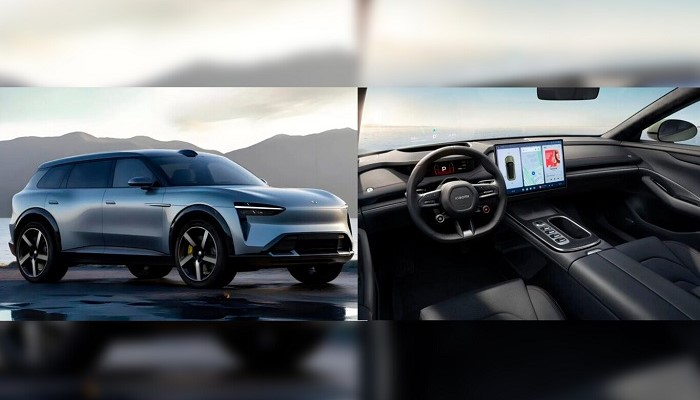
Group 1 - The automotive market is transitioning from a high-intensity "sprint" to a "marathon" mode by 2026, with electric vehicle (EV) growth slowing and consumers becoming more cautious about value and reliability [1] - Consumers are increasingly embracing hybrid and plug-in hybrid vehicles as a "bridge solution" to reduce range anxiety and stabilize purchasing decisions [1] - The supply side is experiencing compressed model development cycles, with a shift towards rapid iteration similar to the Chinese model, making "annual updates" and "mid-cycle facelifts" essential [1] Group 2 - The focus for 2026 is shifting towards addressing "problems" rather than just introducing "new cars," including questions about brand coherence and the ability to maintain consumer trust [2] - The success of the SU7 indicates that a clear product positioning and ongoing conversation can mitigate the disadvantages of late market entry, but the YU9 faces a crowded high-end SUV segment [3][7] Group 3 - The YU9 is expected to target the family flagship market with a three-row layout and reduced range anxiety, but it must adapt its sporty narrative to emphasize comfort and long-distance experience [7] - The Z model from Tengshi aims to rebrand the company by packaging its technological capabilities into a more appealing product narrative, enhancing its market presence [35] Group 4 - The iX3 from BMW is positioned to address how joint venture electric vehicles can differentiate themselves in the Chinese market, focusing on comfort and local adaptations while retaining driving characteristics [47][49] - The second-generation Roadster from Tesla, delayed for nearly nine years, needs to redefine its narrative to maintain its market allure amidst increasing competition in the high-performance electric vehicle segment [51][54] Group 5 - The introduction of large GT and convertible models by Genesis is seen as a brand investment rather than a sales strategy, aiming to elevate brand perception and value in the luxury market [56][59]


汽车及汽车零部件行业研究:汽车行业2026 年投资策略:智能提速、格局再塑与全球化持续
SINOLINK SECURITIES· 2025-12-31 09:10
Investment Rating - The report maintains a positive outlook on the automotive industry, particularly focusing on globalization, intelligence, and high-end market opportunities [5]. Core Insights - The automotive industry is experiencing intensified competition in the domestic market while witnessing significant growth in new energy vehicle (NEV) exports [2][3]. - The overall vehicle sales are projected to remain stable in 2026, with a notable increase in NEV sales driven by favorable policies and consumer demand [4][5]. - The report emphasizes the importance of high-end vehicles and intelligent driving technologies as key growth areas for automotive companies [5][14]. Summary by Sections 1. 2025 Review: Intensified Domestic Competition, High Growth in NEV Exports - Total vehicle sales in China for January to November 2025 reached 20.45 million units, a year-on-year increase of 2.0% in retail and 11.2% in wholesale [2]. - Domestic sales showed slight growth, heavily influenced by policy changes, while exports surged, particularly in the NEV segment, which saw a 19% increase year-on-year [2][19]. - The NEV penetration rate reached 40.8% in exports, with significant contributions from plug-in hybrid vehicles [19]. 2. 2026 Outlook: Stability Expected, Acceleration in Globalization and Intelligence - Retail sales of passenger vehicles are expected to reach 22.03 million units in 2026, with NEVs projected to grow by 12% year-on-year [3][4]. - The high-end vehicle segment is anticipated to perform better due to a shift in consumer preferences and the increasing market share of domestic brands [4]. - NEV exports are expected to reach 6.73 million units, with a 34% increase in NEV exports alone, driven by improved product quality and market maturity [4]. 3. Investment Strategy: Favorable Opportunities in Globalization, Intelligence, and High-End Markets - The report highlights the potential for automotive companies that excel in international markets, high-end product offerings, and advanced intelligent driving technologies [5][13]. - Companies like BYD, Geely, and Li Auto are identified as key players likely to benefit from these trends due to their strong export capabilities and innovative products [5][13]. - The report also emphasizes the importance of the AI driving sector, predicting that leading companies will leverage their technological advancements to gain competitive advantages [14][15].
美股异动丨中概新能源车股齐涨,两部门发布关于明年实施“两新”政策的通知
Xin Lang Cai Jing· 2025-12-30 15:01
格隆汇12月30日|中概新能源车股齐涨,蔚来涨超7%,小鹏汽车涨5.5%,理想汽车涨近2%。 消息面上,国家发展改革委、财政部发布关于2026年实施大规模设备更新和消费品以旧换新政策的通 知。支持汽车报废更新。个人消费者报废登记在本人名下的乘用车,并购买纳入《减免车辆购置税的新 能源汽车车型目录》的新能源乘用车或2.0升及以下排量燃油乘用车的,给予汽车报废更新补贴支持, 购买新能源乘用车补贴车价的12%(最高不超过2万元)、购买2.0升及以下排量燃油乘用车补贴车价的 10%(最高不超过1.5万元)。 支持汽车置换更新。个人消费者转让登记在本人名下的乘用车,并购买纳入《减免车辆购置税的新能源 汽车车型目录》的新能源乘用车或2.0升及以下排量燃油乘用车的,给予汽车置换更新补贴支持,购买 新能源乘用车补贴车价的8%(最高不超过1.5万元)、购买2.0升及以下排量燃油乘用车补贴车价的6% (最高不超过1.3万元)。(格隆汇) ...
美股异动 | 新能源车中概股普涨 蔚来(NIO.US)涨5%
智通财经网· 2025-12-30 14:45
消息面上,国家发改委、财政部发布《关于2026年实施大规模设备更新和消费品以旧换新政策的通 知》,其中提到,支持汽车报废更新。个人消费者报废登记在本人名下的乘用车,并购买纳入《减免车 辆购置税的新能源汽车车型目录》的新能源乘用车或2.0升及以下排量燃油乘用车的,给予汽车报废更 新补贴支持,购买新能源乘用车补贴车价的12%(最高不超过2万元)、购买2.0升及以下排量燃油乘用车 补贴车价的10%(最高不超过1.5万元)。 上述通知还提到,支持汽车置换更新。个人消费者转让登记在本人名下的乘用车,并购买纳入《减免车 辆购置税的新能源汽车车型目录》的新能源乘用车或2.0升及以下排量燃油乘用车的,给予汽车置换更 新补贴支持,购买新能源乘用车补贴车价的8%(最高不超过1.5万元)、购买2.0升及以下排量燃油乘用车 补贴车价的6%(最高不超过1.3万元)。 智通财经APP获悉,周二,新能源车中概股普涨,蔚来(NIO.US)涨5%,小鹏汽车(XPEV.US)涨逾3%, 理想汽车(LI.US)涨逾1%。 ...
中国汽车_2026 年展望- 衰退与重塑之年-China Autos & Shared Mobility-2026 Outlook – A Year of Recession and Reinvention
2025-12-30 14:41
Summary of the Conference Call on China's Auto Industry Outlook for 2026 Industry Overview - The conference call focuses on the **China auto industry** and its outlook for **2026**, highlighting cyclical and policy challenges that may lead to both risks and opportunities for technological advancements and market growth [1][2]. Key Forecasts and Trends - **Sales Decline**: Anticipated **7% year-over-year (YoY)** decline in auto sales for 2026, ending a three-year growth streak. This decline is attributed to market pessimism, which may lead to a relief rally if marginal improvements occur [2][3]. - **Subsidy Expectations**: Continued nationwide and local subsidies are expected to mitigate the impact of a **5% purchase tax hike**. The average subsidy per car is projected to decrease due to updated stimulus measures [3]. - **Quarterly Sales Projections**: - **1Q26**: Sales expected to fall **5-7% YoY** (or down **30%+ quarter-over-quarter (QoQ)**). - **2Q26**: Anticipated **3% YoY** decline. - **2H26**: Expected to see a **0-1% YoY** decline, with March/April potentially marking the fundamental trough for investors [3]. Volume and Market Share - **Wholesale Volume**: Forecasted **3% YoY** decline in **2026** for passenger vehicle (PV) wholesale volume, with a **7% YoY** decline in domestic sales [4][11]. - **New Energy Vehicles (NEV)**: NEV sales growth is expected to decelerate to **11%**, achieving **59% sales penetration**. Plug-in hybrid electric vehicles (PHEVs) are projected to grow **14%**, outpacing battery electric vehicles (BEVs) at **9%** growth [4][15]. - **Export Growth**: Exports are expected to grow by **16% YoY**, with significant growth in sales to Europe, ASEAN, and Latin America, each projected to grow **20-25% YoY** [4][12]. Investment Recommendations - **Preferred Stocks**: - For OEMs: **XPeng**, **Geely**, and **SAIC** are recommended for their resilient domestic and growing overseas sales, along with potential re-rating opportunities from non-auto initiatives. - Investors are advised to monitor **Li Auto**, **NIO**, and **BYD** for new launches in **2Q26** that may generate alpha against reduced expectations [6]. - **Auto Parts**: Preferred stocks include **Hesai**, **Minth**, and **Xingyu**. Among dealers, **Zhongsheng** is favored due to profit resurgence from stricter scrutiny on unfair auto price competition [6]. Additional Insights - **Technological Development**: The need for progressive development of non-auto initiatives, such as AI and humanoids, is emphasized for a potential re-rating of multiples in the capital market [5]. - **Market Sentiment**: The current market sentiment is characterized by a pessimistic bias, which may create opportunities for recovery if conditions improve [2]. Conclusion - The China auto industry is poised for a challenging year in **2026**, with expected declines in sales and volume. However, strategic investments in resilient companies and emerging technologies may provide opportunities for recovery and growth in the long term [1][2][6].
