Microsoft(MSFT)
Search documents
Big Tech Earnings Live: Meta and Tesla Shares Surge on Strong Results; Microsoft Drops as Cloud Revenue Growth Slows
Investopedia· 2026-01-29 01:01
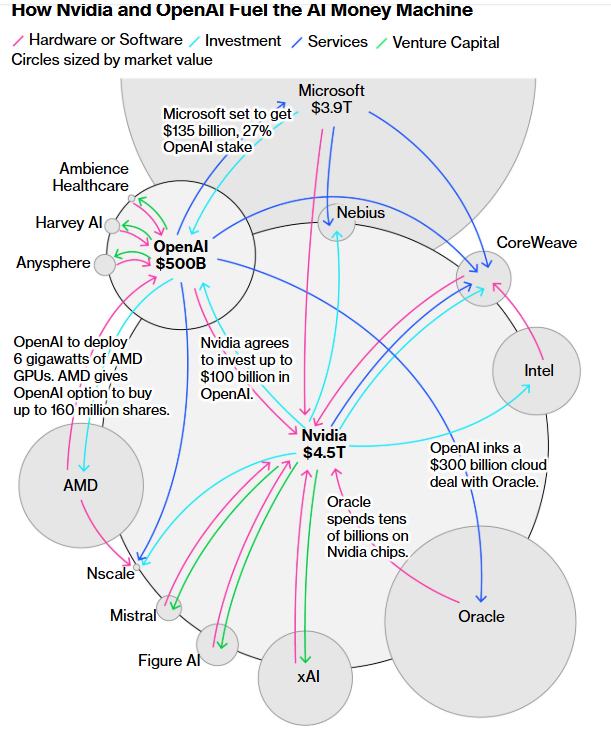
Microsoft - Microsoft’s stock decline is attributed to slowing revenue growth from its Azure cloud platform and concerns over backlog concentration, particularly its reliance on a significant deal with OpenAI [1][2] - The company’s remaining performance obligations, or backlog, is currently $625 billion, more than double from a year ago, with approximately 45% tied to OpenAI [2] - Despite these concerns, analysts believe Microsoft can monetize AI effectively due to its diverse business segments, including applications, security, and infrastructure [3] - Microsoft reported $81.3 billion in revenue for its fiscal second quarter, with adjusted earnings per share of $4.14, exceeding analyst expectations [21] - Intelligent Cloud revenue, which includes Azure, reached $32.9 billion, surpassing the consensus estimate of $32.39 billion [21] - Capital expenditures for Microsoft were $37.5 billion, higher than the expected $34.3 billion, with a significant portion allocated to short-lived assets like GPUs and CPUs [18] Meta - Meta's anticipated capital expenditures for 2026 are projected to be between $115 billion and $135 billion, significantly higher than last year's $72.22 billion and above analysts' expectations of $110 billion [13][14] - The increase in spending is primarily driven by investments in AI initiatives, particularly the Meta Superintelligence Labs [14] - Meta reported fourth-quarter earnings of $8.88 per share, with a 24% year-over-year revenue increase to a record $59.89 billion, driven by a surge in ad revenues [15] - The company expects first-quarter revenue between $53.5 billion and $56.5 billion, exceeding analyst projections [15] Tesla - Tesla's stock rose after reporting quarterly revenue of $25.71 billion, surpassing the consensus expectation of $25.12 billion, with net income at 60 cents per share [17] - The company did not provide a detailed outlook for vehicle sales, focusing instead on maximizing factory capacity utilization [12] - Tesla confirmed plans to unveil a new Optimus robot in the first quarter of 2026, with production expected to start in the same year [10]
Microsoft Q2 Earnings Call Highlights
Yahoo Finance· 2026-01-29 01:00
At the silicon layer, Nadella pointed to a mix of NVIDIA and AMD GPUs and Microsoft’s own chips. He said Microsoft brought online its Maia 200 accelerator, describing it as delivering “10+ petaflops at FP4 precision” with “over 30% improved TCO compared to the latest generation hardware” in Microsoft’s fleet. He also highlighted the Cobalt 200 CPU, which he said delivers “over 50% higher performance” compared with Microsoft’s first custom processor for cloud-native workloads.On infrastructure, Nadella empha ...
Microsoft's AI Growth Drives Both Revenue and Massive Capital Expenditure
PYMNTS.com· 2026-01-29 00:57
Core Insights - Microsoft's transformation story has shifted to focus on artificial intelligence (AI), with Azure as the primary platform for large-scale AI training and inference [3][4]. Financial Performance - In Q2 FY2026, Microsoft's overall revenue reached $81.3 billion, a 17% increase year over year, while operating income rose 21% to $38.3 billion [6]. - The Intelligent Cloud segment saw a revenue increase of 29% year over year, totaling $32.9 billion, with Azure and other cloud services growing 39% [5]. AI Strategy - Microsoft has built an AI business larger than some of its biggest franchises, emphasizing the importance of AI across its entire stack to create new value for customers [4]. - The company retains 80% of sales from OpenAI models to Azure customers, while a smaller percentage comes from Anthropic's AI models [9]. Capital Expenditures - AI-driven capital expenditures increased by 66% in the quarter, with total capital expenditures reaching $37.5 billion [7][10]. - Microsoft's commercial remaining performance obligation increased by 110% to $625 billion, indicating strong long-term demand for AI capabilities [8]. Infrastructure and Governance - The company is investing heavily in data centers and specialized hardware to support AI workloads, reflecting confidence in sustained demand for AI-driven compute [12]. - Governance, security, and compliance are emphasized as essential for large enterprises and governments to adopt AI at scale [13]. Business Applications - Revenue from Microsoft 365 grew 16% to $34.1 billion, driven by strong performance in both commercial and consumer cloud offerings [14]. - Dynamics 365 revenue rose 19%, showcasing AI's impact on business applications like CRM and ERP systems [15].
Why Microsoft's stock is getting punished after earnings
MarketWatch· 2026-01-29 00:39
Core Insights - Investors are seeking a better balance between AI spending and AI revenue, particularly looking for stronger performance from Microsoft's cloud business in the latest quarter [1] Company Focus - The emphasis is on Microsoft's cloud business performance, indicating that investors are not satisfied with the current returns from AI investments [1]
微软财报亮眼却遭市场“用脚投票”:云业务增速微降 AI“狂烧钱”吓坏投资者
Jin Rong Jie· 2026-01-29 00:33
Core Viewpoint - Microsoft reported strong financial results for Q2 FY2026, exceeding Wall Street expectations, but concerns over slowing Azure growth and record capital expenditures led to a significant drop in stock price after hours [1][2]. Financial Performance - For the second quarter ending December 31, Microsoft achieved revenue of $81.27 billion, a year-over-year increase of approximately 17%, surpassing the market expectation of $80.3 billion [2]. - Net profit reached $38.46 billion, translating to earnings per share of $5.16, significantly above the expected $3.92 [2]. - Adjusted earnings per share were $4.14, also exceeding forecasts [2]. - A notable portion of the profit increase was attributed to changes in accounting treatment for the investment in OpenAI, contributing an additional $1.02 to earnings per share [2]. Cloud Business Performance - Microsoft's "Intelligent Cloud" segment, including Azure, generated revenue of $32.91 billion, a nearly 29% year-over-year increase, slightly above expectations [3]. - Azure and other cloud services revenue grew by 38% year-over-year at constant currency, matching analyst predictions, but the growth rate slowed by one percentage point compared to the previous quarter [3]. - Despite the overall cloud revenue surpassing $50 billion for the first time at $51.5 billion, the deceleration in Azure's growth raised concerns about the sustainability of AI-driven cloud growth [3]. Capital Expenditures and AI Investment - Capital expenditures surged to $37.5 billion, a 66% year-over-year increase, exceeding analyst expectations of $36.2 billion [4]. - Approximately two-thirds of this expenditure was allocated to computing chips for data centers to meet AI demand [4]. - CEO Satya Nadella noted an increase of nearly 1 gigawatt in computing capacity during the quarter, but the significant investment raised questions about the return on AI investments [4]. - The "remaining performance obligations" (RPO), indicating future revenue from signed contracts, reached a record $625 billion, more than doubling year-over-year, with 45% of this amount linked to agreements with OpenAI [4][5]. Competitive Landscape and Stock Performance - Microsoft is the first among major cloud service companies to report quarterly financial results, serving as a key indicator of the efficiency of AI investments among tech giants [7]. - In contrast to Microsoft's stock decline, Meta's stock rose significantly after announcing increased AI spending, highlighting differing market perceptions of AI strategies [7]. - The emergence of competitors like Google's Gemini model and Anthropic is intensifying pressure on Microsoft's AI and traditional software businesses [7]. - As of the close on Wednesday, Microsoft's stock was priced at $481.63, experiencing a drop of over 7% in after-hours trading, and a decline of approximately 11% over the past three months, underperforming the S&P 500 index, which rose by 1% during the same period [7].
微软股价盘后大跌,支出创纪录新高且云业务增长放缓
Sou Hu Cai Jing· 2026-01-29 00:31
钛媒体App 1月29日消息, 微软股价大幅下跌,该公司支出飙升至历史新高,而云业务销售额增长放 缓,投资者担心其人工智能投资可能需要比预期更长的时间才能获得回报。第二财季资本支出达到375 亿美元,比上年同期增长66%,超过分析师预期的362亿美元。经汇率波动调整后,Azure云计算部门当 季营收增长38%,勉强符合分析师预期。但这一增速较上一季度放缓。该公司预计当前财季Azure销售 额将增长37%至38%。微软股价在盘后交易中下跌约7%,纽约常规交易时段收于481.63美元。(广角观 察) ...
微软(MSFT.US)财报亮眼却遭市场“用脚投票”:云业务增速微降 AI“狂烧钱”吓坏投资者
Zhi Tong Cai Jing· 2026-01-29 00:27
Core Viewpoint - Microsoft reported strong financial results for Q2 of FY2026, with revenue and profit exceeding Wall Street expectations. However, concerns over slowing growth in Azure cloud services and significant capital expenditures related to AI investments led to a sharp decline in its stock price post-announcement [1]. Financial Performance - For the second quarter ending December 31, Microsoft achieved revenue of $81.27 billion, a year-over-year increase of approximately 17%, surpassing the market expectation of $80.3 billion. Net profit reached $38.46 billion, translating to earnings per share of $5.16, significantly exceeding the expected $3.92. Adjusted earnings per share were $4.14, also above forecasts. Notably, the surge in net profit was partly due to changes in accounting treatment for investments in OpenAI, contributing an additional $1.02 to earnings per share [2]. Cloud Business Performance - Microsoft's "Intelligent Cloud" segment, including Azure, generated revenue of $32.91 billion, a nearly 29% year-over-year increase, slightly above expectations. However, the growth rate of Azure and other cloud services, which increased by 38% year-over-year at constant currency, showed a deceleration of one percentage point compared to the previous quarter. This slowdown raised concerns among investors betting on stronger cloud performance [3]. Capital Expenditures and AI Investment Concerns - Capital expenditures surged to $37.5 billion, a 66% year-over-year increase, exceeding analyst expectations of $36.2 billion. Approximately two-thirds of this expenditure was allocated to computing chips for data centers to meet AI demands. CEO Satya Nadella noted an increase of nearly 1 gigawatt in computing capacity during the quarter. Despite significant investments, the company faces challenges in rapidly expanding sufficient computing capacity to meet demand [4]. Remaining Performance Obligations (RPO) - The remaining performance obligations (RPO), representing future revenue under contract but not yet recognized, reached a record $625 billion, more than doubling year-over-year. This figure surpassed Oracle's reported $523 billion. However, 45% of Microsoft's RPO is tied to agreements with OpenAI, highlighting the company's deep reliance on this AI startup [4][5]. Other Business Segments - The Productivity and Business Processes segment, which includes Office, Dynamics, and LinkedIn, generated revenue of $34.12 billion, a 16% year-over-year increase, exceeding expectations. Microsoft also reported that its AI assistant, Microsoft 365 Copilot, has gained 15 million commercial user seats, indicating initial adoption momentum. Conversely, the More Personal Computing segment, which includes Windows, Xbox, Surface, and Bing, saw revenue decline by approximately 3% year-over-year to $14.25 billion, slightly below expectations, with gaming revenue down 9.5% [6]. Industry Competition and Stock Pressure - Microsoft is the first of the three major cloud service companies to report quarterly financial results, serving as a key indicator of the efficiency of AI investments among tech giants. Microsoft, Amazon, Google, and Meta are expected to collectively spend over $500 billion on AI this year. In contrast to Microsoft's post-earnings stock decline, Meta's stock surged following its announcement of increased AI spending, reflecting differing market expectations regarding AI strategies. Analysts noted that Microsoft's stock performance is closely tied to OpenAI's outcomes, particularly amid competition from Google's Gemini model and other emerging competitors [7].
马云最新发声:谈AI和教育;软银拟向OpenAI追加投资300亿美元;英伟达员工晒年会最牛年终奖:黄仁勋亲笔签名皮衣丨邦早报
Sou Hu Cai Jing· 2026-01-29 00:25
点击输入图片描述(最多30字) 点击输入图片描述(最多30字) 【鸣鸣很忙上市大涨88%】中国最大的休闲食品饮料连锁零售商——湖南鸣鸣很忙商业连锁股份有限公司在港交所主板挂 牌上市,开盘大涨88.08%,截至收盘,涨幅回落至69.06%,报400港元/股,总市值达862.04亿港元。鸣鸣很忙此次全球发 售1410.1万股H股,公开发售阶段认购倍数超过1500倍,8家基石投资者合计认购15亿港元,包括腾讯、淡马锡与贝莱德 等。公司预计净筹资30亿港元以上,发行市值约500亿港元。鸣鸣很忙旗下拥有零食很忙、赵一鸣零食两大品牌,最新数据 显示,截至2025年11月30日,鸣鸣很忙门店数达21041家。(更多内容,点击查看《两位85后卖零食,开店两万家,身价均 超200亿港元,鸣鸣很忙刚刚IPO》)(中国基金报) 点击输入图片描述(最多30字) 【英伟达员工晒年会最牛年终奖:黄仁勋亲笔签名皮衣】近日,英伟达CEO黄仁勋陆续到访上海、北京、深圳,分别参加 了三地分公司举办的新年活动。1月27日,有网友在社交媒体晒出一件黄仁勋亲笔签名的皮衣。该网友表示,自己本来想签 在胸前,结果黄仁勋直接把他翻个身按住并称"Don't ...
科技巨头集体发榜:特斯拉Meta盘后跳涨 微软跳水
Di Yi Cai Jing· 2026-01-29 00:24
周三盘后,Meta、微软和特斯拉发布最新业绩。 新年以来,随着投资者试图判断人工智能的应用将如何颠覆此前龙头企业的商业模式,大盘科技股、软 件股与芯片股内部的分化态势正持续加剧。因此这些热门赛道公司的业绩,特别是资本开支状况受到了 广泛关注。 按照日程安排,苹果周四将披露最新业绩。 Meta公布利好营收预测,盘后涨逾7% 脸书母公司Meta盘后涨逾7%,超市场预期的销售额业绩指引提振市场情绪。公司第四财季营收598.9亿 美元,同比增长24%,市场预期 585.9 亿美元。调整后每股收益EPS 8.88 美元,预期8.23美元。 Meta预计一季度营收将在535亿至565亿美元区间,高于分析师514.1亿美元的预期值。 微软盘后股价跌近7%。微软智能云业务板块(含 Azure 云基础设施)营收达329.1亿美元,同比增长近 29%,略好于市场预期,不过Azure 云服务及其他云业务营收同比增长39%,而该业务在财年第一季度 的同比增速为40%。生产力和商业流程业务板块营收341.2亿美元,同比增长约16%,个人计算业务板块 营收142.5亿美元,同比下跌约3%。 截至本财年末,微软的商业剩余履约义务金额达62 ...
早报 | 特斯拉将停产Model S和X;美联储宣布维持基准利率不变;多家房企已不用上报“三道红线”指标;亚马逊裁员1.6万人
虎嗅APP· 2026-01-29 00:23
大家早上好!这里是今天的早报,每天早上,我都会在这里跟你聊聊昨夜今晨发生了哪些大事儿。 昨夜今晨 【美联储宣布维持基准利率不变】 当地时间1月28日,美联储最新的联邦公开市场委员会(FOMC)货币政策会议纪要显示,美联储决定将联邦 基金利率目标区间继续维持在3.5%至3.75%之间。 会议纪要显示,现有指标表明,就业增长仍处于低位,失业率已显现出趋于稳定的迹象。通胀水平仍处于较高 水平。委员会致力于实现最大就业和长期通胀率达到2%的目标。经济前景的不确定性仍然很高。委员会密切 关注其双重使命面临的风险。为支持其目标,美联储决定将联邦基金利率目标区间继续维持在3.5%至3.75%之 间。 具体表决细节显示,美联储以10票赞成、2票反对的结果,决定将基准利率维持在3.5%至3.75%区间。美联储 理事沃勒以及米兰投下反对票,主张降息25个基点。 在此次利率政策出台前,市场普遍预期美联储将在本周政策会议上维持利率不变,此前该机构已在2025下半年 连续三次降息。 【微软、特斯拉、META公布最新"成绩单"】 微软公司第二财季营收812.7亿美元,预估803.1亿美元;第二季度智能云业务营收329.1亿美元,预估32 ...