Microsoft(MSFT)

Search documents
中概股全线走低、美股全线大跌,有色金属、半导体芯片、苹果重挫
Sou Hu Cai Jing· 2026-02-14 04:30
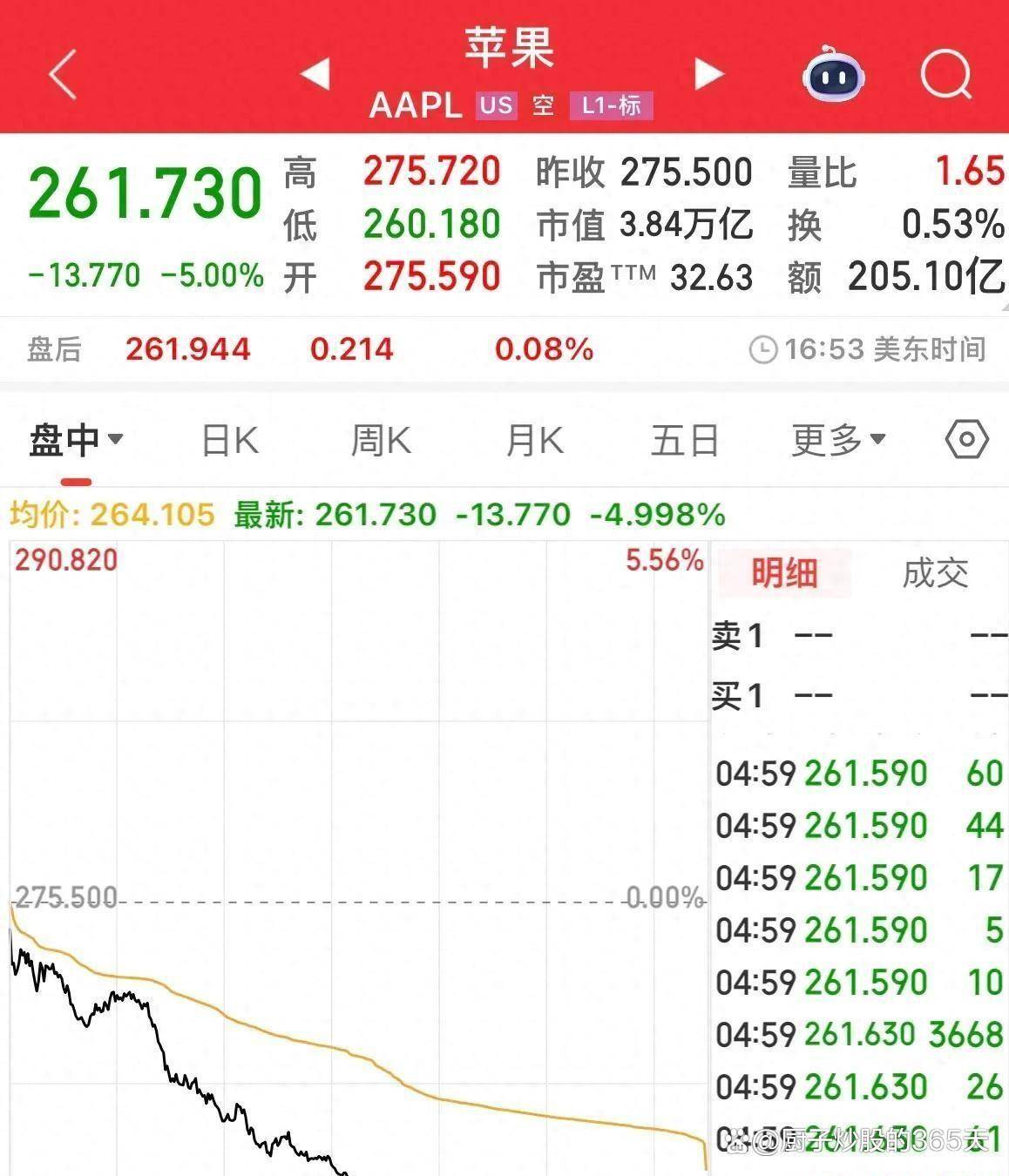
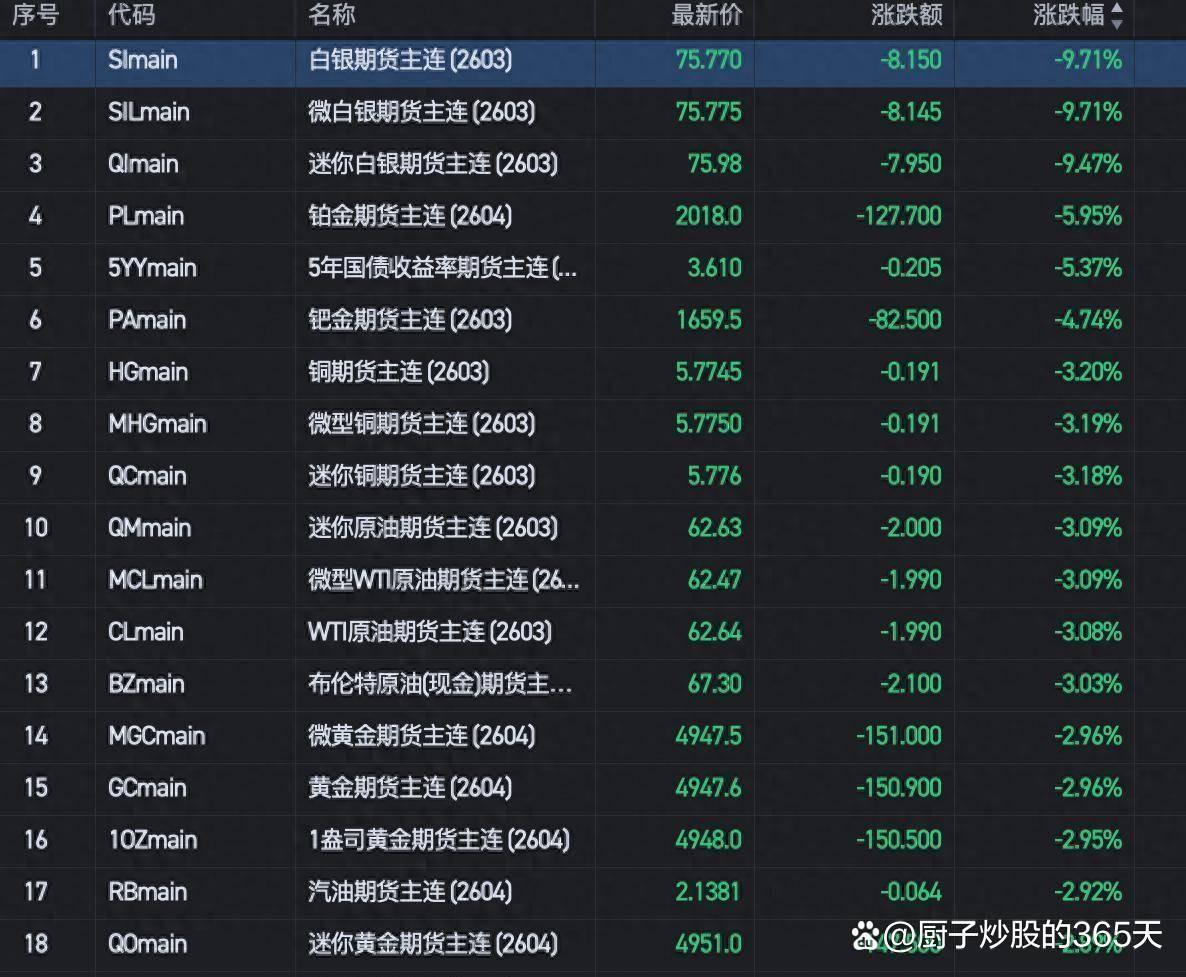
Market Overview - The US stock market experienced a significant decline, with the Dow Jones Industrial Average dropping 669.42 points (1.34%) to close at 49,451.98 points, the Nasdaq Composite falling 469.32 points (2.03%) to 22,597.15 points, and the S&P 500 decreasing by 108.71 points (1.57%) to 6,832.76 points [1][2][3] Market Sentiment - Over 4,100 stocks declined, indicating widespread market panic as investors rushed to sell assets, particularly in the tech and growth sectors. The VIX index surged, reflecting heightened risk aversion [2][3] Sector Performance - The sell-off affected nearly all sectors, with notable declines in precious metals and semiconductor stocks. The precious metals sector saw significant drops, with gold futures down 3.08% and silver futures plummeting 10.62% [4][5][6][8] - The Philadelphia Semiconductor Index fell by 2.5%, with individual stocks like AEHR Test Systems down 17.58% and Intel down over 3% [8][10] Major Companies - Apple Inc. experienced a substantial drop of 5.00%, resulting in a market cap loss of over $120 billion, attributed partly to regulatory concerns [12] - Other major tech companies also faced declines, with Tesla down 1.62%, Amazon down 2.20%, and Meta Platforms down nearly 3% [12] Financial Sector - Bank stocks fell across the board, with JPMorgan Chase down over 2%, Goldman Sachs down over 4%, and Citigroup down over 5%, driven by concerns over AI disrupting traditional wealth management [13][14] Economic Indicators - Recent economic data, including a drop in initial jobless claims and lower-than-expected existing home sales, contributed to market anxiety about potential economic overheating and prolonged high interest rates [24][25][26] Global Market Impact - The sell-off in the US markets had a ripple effect on global markets, with European indices also closing lower after initially opening higher, indicating a widespread sentiment of fear [18][19][20] AI Concerns - The market's decline was exacerbated by fears regarding the disruptive impact of AI technologies on various industries, leading to significant stock price drops in sectors perceived to be at risk [21][22][30] Storage Chip Sector - In contrast to the overall market trend, storage chip stocks saw gains, with companies like SanDisk and Seagate Technology rising significantly, reflecting a belief that AI's growth will increase demand for data storage [29]


晚间暴雷!黄金、白银、原油、美股全线崩盘,42只中概集体下跌
Sou Hu Cai Jing· 2026-02-14 04:22
Market Overview - On February 13, 2026, a significant asset sell-off occurred in global financial markets, particularly impacting U.S. stock indices. The Dow Jones Industrial Average fell by 669.42 points (1.34%) to close at 49,451.98, while the Nasdaq Composite Index dropped 469.32 points (2.03%) to 22,597.15. The S&P 500 Index also declined by 108.71 points (1.57%) to 6,832.76 [1]. Commodity Market Impact - The sell-off extended to the commodity markets, with gold and silver experiencing substantial declines. COMEX gold futures fell by 3.08% to $4,941.4 per ounce, while COMEX silver futures plummeted by 10.62% to $75.01 per ounce [2][3]. Technology Sector Reaction - Major technology companies were severely affected, with Apple’s stock price dropping by 5%, resulting in a market value loss of over $120 billion (approximately 800 billion RMB). Other tech giants like Microsoft, Amazon, Tesla, Meta, and Nvidia also saw significant declines [3][4]. Chinese Concept Stocks - The Nasdaq Golden Dragon China Index, which includes many Chinese concept stocks, fell by 3% on the same day, indicating a collective sell-off in this sector. Over 40 Chinese concept stocks experienced substantial declines, with Tencent Music down 10.57% and Alibaba down 3.40% [3][4][6]. Employment Data Influence - The catalyst for this market turmoil was a strong U.S. employment report released on February 11, showing a non-farm payroll increase of 130,000 in January, significantly above the expected 70,000. This led to a shift in market expectations regarding Federal Reserve interest rate cuts, with the probability of a March rate cut dropping from 19.6% to 6% [5][6]. Capital Expenditure Concerns - Major tech companies announced aggressive capital expenditure plans for 2026, with Alphabet projecting $175 billion to $185 billion and Amazon estimating $200 billion, both nearly doubling their 2025 expenditures. This raised investor concerns about the return on such investments, especially as many companies reported record profits but saw stock price declines [10][11]. Market Sentiment and Volatility - The market's fear and volatility increased sharply, with the VIX index rising significantly. The sell-off was exacerbated by algorithm-driven trading, which triggered stop-loss orders and led to extreme price movements [15][16][17]. Global Market Impact - The financial turmoil that began in Wall Street quickly spread to global markets, with Asian and European stock markets opening lower in response to the U.S. declines [18].



索罗斯Q4调仓路线图:猛砍Snowflake,狂买微软、英伟达,新建仓黄金股
美股IPO· 2026-02-14 04:12
Core Viewpoint - Soros Fund Management made significant adjustments to its investment portfolio in the fourth quarter, focusing on increasing exposure to tech giants while engaging in "buy high, sell low" strategies for energy and cryptocurrency stocks [1]. Group 1: Technology Sector Investments - The fund substantially increased its holdings in core technology stocks, including adding 161,000 shares of Microsoft (MSFT.US), 118,000 shares of Nvidia (NVDA.US), and approximately 66,000 shares of Apple [3]. - In the software and mobility sectors, the fund also increased its positions by acquiring approximately 216,000 shares of Atlassian (TEAM.US), 55,000 shares of Salesforce (CRM.US), and 119,000 shares of Uber (UBER.US) [3]. Group 2: Defensive and Growth Investments - In the defensive sector and consumer space, the fund increased its holdings in utility company Exelon (EXC.US) by approximately 488,000 shares and in gaming giant Electronic Arts (EA.US) by about 318,000 shares [3]. Group 3: Reduction in High Volatility and Financial Stocks - The fund reduced its positions in high-volatility and financial stocks, significantly cutting approximately 168,000 shares of Snowflake (SNOW.US) [4]. - It also reduced its holdings in Circle Internet Group (CRCL.US) by about 151,000 shares and in Interactive Brokers (IBKR.US) by approximately 813,000 shares, indicating a cautious stance towards the financial brokerage sector [5][6]. Group 4: New Positions and Exits - The fund opened new positions by purchasing gold-related assets such as New Gold (NGD.US) and established positions in DigitalBridge (DBRG.US), Blue Owl Capital (OWL.US), Exact Sciences (EXAS.US), and Xcel Energy (XEL.US) [7]. - It completely exited positions in KeyCorp (KEY.US), CareTrust REIT (CTRE.US), Cipher Mining (CIFR.US), and KKR & Co. (KKR.US), indicating a shift away from traditional banking and certain cryptocurrency mining stocks towards more stable or defensive sectors [7]. Group 5: Overall Strategy - The overall strategy of Soros Fund Management in the fourth quarter reflects a clear approach: embracing AI and core tech assets like Microsoft and Nvidia while avoiding high-volatility cloud and data companies like Snowflake, and hedging against macroeconomic uncertainties by investing in gold stocks. This "pick and choose" adjustment strategy highlights the pursuit of certainty and safety margins amid global economic uncertainties [7].





9连跌!“资本开支最高”的亚马逊跌入熊市,投资者对Mag 7“用脚投票”
美股IPO· 2026-02-14 04:12
Core Viewpoint - Amazon's stock has entered a technical bear market, marking the second company in the Mag7 group to do so, driven by investor resistance to aggressive AI spending plans [2] Group 1: Amazon's Stock Performance - Amazon's stock closed at $198.79, down over 23% from recent highs, officially entering bear market territory on Thursday [2] - Amazon plans to spend $200 billion on capital expenditures by 2026, the highest among the four major cloud service providers [2] - The total expected capital expenditure in AI by Amazon, Microsoft, Meta, and Alphabet by 2026 is projected to reach $650 billion [2] Group 2: Meta and Microsoft's Market Position - Meta is close to entering a bear market, with a cumulative decline of 19.6% from last year's peak, just 0.4% away from the 20% threshold [2] - Despite exceeding Wall Street expectations for Q4 revenue and earnings, Meta's increased AI spending and pressure on profit margins have undermined investor confidence [2] - Microsoft was the first Mag7 member to enter a bear market, with its stock down 27.8% from recent highs following disappointing Azure cloud business growth [2] Group 3: Investor Sentiment and Market Dynamics - Recent sell-offs highlight the growing divergence among Mag7 members, with investors shifting away from OpenAI-related stocks like Microsoft and Nvidia towards Alphabet and Broadcom [4] - Alphabet's vertically integrated technology stack has somewhat mitigated concerns over excessive spending, allowing it to avoid the worst impacts of the tech stock sell-off [4] - Increased capital expenditure levels for Amazon may lead to negative free cash flow this year, prompting the company to seek additional capital through debt markets [4] - The next significant catalyst for AI stocks is expected to be Nvidia's earnings report on February 25, which will indicate whether the AI boom is cooling or if Nvidia is successfully capturing billions in investments from its largest clients [4]



索罗斯Q4调仓路线图:猛砍Snowflake,狂买微软、英伟达,新建仓黄金股
Zhi Tong Cai Jing· 2026-02-14 02:05
Group 1: Core Investment Strategy - Soros Fund Management significantly increased its exposure to core technology stocks, including adding 161,000 shares of Microsoft (MSFT.US), 118,000 shares of Nvidia (NVDA.US), and approximately 66,000 shares of Apple [1] - The fund also made moves in the software and mobility sectors, increasing positions in Atlassian (TEAM.US) by approximately 216,000 shares, Salesforce (CRM.US) by about 55,000 shares, and Uber (UBER.US) by around 119,000 shares [1] - In defensive and growth sectors, the fund increased its holdings in utility company Exelon (EXC.US) by approximately 488,000 shares and gaming giant Electronic Arts (EA.US) by about 318,000 shares [1] Group 2: Reduction and Caution - The fund reduced its positions in high-volatility and financial stocks, significantly cutting 168,000 shares of Snowflake (SNOW.US) and 151,000 shares of Circle Internet Group (CRCL.US) [2] - A notable reduction was also seen in Interactive Brokers (IBKR.US), with a decrease of 813,000 shares, indicating a cautious stance towards the financial brokerage sector [2] Group 3: New Positions and Exits - Soros Fund Management opened new positions in gold-related assets such as New Gold (NGD.US) and established positions in DigitalBridge (DBRG.US), Blue Owl Capital (OWL.US), Exact Sciences (EXAS.US), and Xcel Energy (XEL.US) [3] - The fund completely exited positions in KeyCorp (KEY.US), CareTrust REIT (CTRE.US), Cipher Mining (CIFR.US), and KKR & Co. (KKR.US), indicating a shift away from traditional banking and certain cryptocurrency mining stocks towards more stable or defensive sectors [3] - Overall, the fund's strategy reflects a clear intention to embrace AI and core technology assets while avoiding high-volatility cloud and data companies like Snowflake, and hedging against macroeconomic uncertainties by investing in gold stocks [3]

凌晨重磅!黄金、白银,突然暴涨
Xin Lang Cai Jing· 2026-02-14 01:55
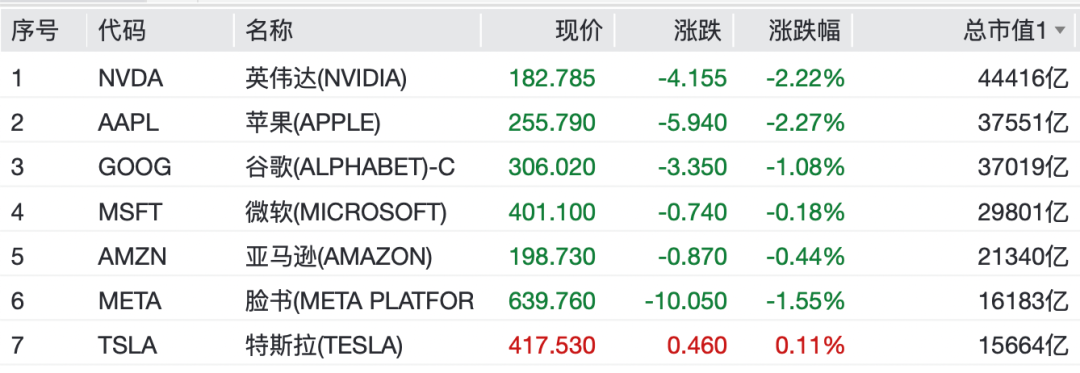
Market Performance - On February 13, the US stock market showed mixed results, with large tech stocks declining while Chinese concept stocks had varied performances [2] - The Dow Jones Industrial Average rose by 0.1% to close at 49,500.93 points, the S&P 500 increased by 0.05% to 6,836.17 points, and the Nasdaq Composite gained 0.22% to 22,546.67 points. However, all three indices experienced weekly declines, with the Nasdaq down 2.1%, the Dow down 1.23%, and the S&P 500 down 1.39% [3] Individual Stock Performance - Major tech stocks saw declines, with NVIDIA down 2.22% to $182.785, Apple down 2.27% to $255.790, and Google down 1.08% to $306.020. Microsoft fell slightly by 0.18% to $401.100, while Amazon decreased by 0.44% to $198.730. Meta Platforms dropped by 1.55% to $639.760, while Tesla saw a slight increase of 0.11% to $417.530 [4] - In the Chinese concept stock market, Tencent Music rose over 4%, while Alibaba fell over 2%, and JD Group, Baidu Group, Beike, and Li Auto all dropped by more than 1% [6] Commodity Market - Spot gold prices increased by 2.41% to a high of $5,046.261 per ounce, currently trading at $5,042.808 per ounce [8] - Spot silver prices also rose, breaking the $79 per ounce mark with a daily increase of 2.81% [8] - Gold futures contracts rose by 1.4% this week, marking an upward trend in 8 out of the last 10 weeks [9] - Silver futures contracts increased by 1.5% this week, ending a two-week decline and showing an upward trend in 11 out of the last 15 weeks [11] Market Insights - NVIDIA's CEO Jensen Huang addressed concerns about excessive spending in data centers, asserting that spending levels are reasonable and sustainable. He emphasized the growing utility and functionality of artificial intelligence, dismissing the recent sell-off in software stocks as "the most illogical thing in the world" [5] - Despite volatility in the precious metals market, demand for safe-haven assets continues to support rising gold and silver prices, according to a report by Antonio Di Giacomo from XS.com [10]



微软AI负责人预言:18个月内多数白领将被AI替代
Huan Qiu Wang Zi Xun· 2026-02-14 01:52
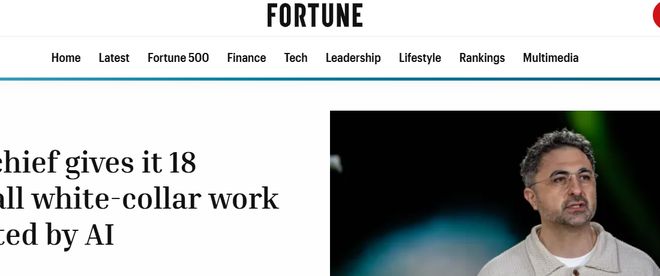
来源:环球网 【环球网科技综合报道】2月14日消息,微软AI首席执行官穆斯塔法·苏莱曼在接受《金融时报》采访 时,抛出震撼行业的预言:未来18个月内,AI将在大多数甚至所有专业任务上达到人类水平,包括会 计、法律、营销、项目管理在内的各类白领工作,尤其是需要坐在电脑前完成的任务,将被AI完全自 动化,这一判断涵盖了MBA、法学院毕业生及各类普通白领。 苏莱曼的预言并非孤例,而是科技行业大佬对AI影响的又一激进判断。此前,Anthropic首席执行官达 里奥·阿莫代伊曾警告,AI可能淘汰一半入门级白领岗位;福特首席执行官吉姆·法利称AI将使美国白领 岗位减半;马斯克也于上月表示,通用人工智能最早可能在今年出现。 不过,外媒报道称,目前AI在专业服务领域影响有限,2025年汤森路透报告显示,律师、会计师仅用 AI处理文档审核等针对性任务, productivity提升微弱,未出现大规模岗位流失;甚至有研究表明,AI 可能降低部分从业者效率,如非营利组织METR发现,AI使软件开发者的任务耗时增加20%。 苏莱曼表示,算力的指数级增长是其预言的核心依据,他还透露微软AI的核心使命是实现超级智能, 减少对OpenAI ...
微软投资AI芯片公司,挑战英伟达
半导体行业观察· 2026-02-14 01:37
Core Viewpoint - The article discusses the emerging potential of d-Matrix, a chip startup supported by Microsoft, which aims to revolutionize AI inference by creating chips that are faster, cheaper, and more efficient than current GPU-based solutions, potentially reducing inference costs by about 90% [2][5][7]. Group 1: d-Matrix's Approach - d-Matrix focuses on designing chips specifically for inference rather than repurposing training hardware, emphasizing the architectural differences between training and inference tasks [3][5]. - The company aims to reduce latency and increase throughput by integrating memory and computation more closely, which contrasts with traditional GPU architectures that separate these functions [4][5]. - d-Matrix's chip design is modular, allowing for scalability based on workload requirements, similar to Apple's unified memory design [5][6]. Group 2: Market Dynamics - NVIDIA currently dominates the AI chip market, with a market capitalization of $4.5 trillion, but there is growing interest in alternatives as companies seek to hedge against NVIDIA's dominance [7][8]. - Several startups, including Groq and Positron, are gaining traction in the inference space, indicating a shift in the market dynamics as companies explore different memory types for faster responses [8][9]. - The competition is intensifying, with major players like OpenAI and Anthropic exploring partnerships with various chip manufacturers to enhance their AI capabilities [9][10]. Group 3: Future Outlook - d-Matrix plans to ramp up production significantly, aiming for millions of chips by the end of the year, which could position it as a key player in the AI inference market [6][9]. - The article suggests that while NVIDIA remains a formidable leader, the rapid growth of dedicated hardware for AI inference could lead to a more fragmented market where multiple players thrive [10].

陆家嘴财经早餐2026年2月14日星期六
Sou Hu Cai Jing· 2026-02-14 01:14
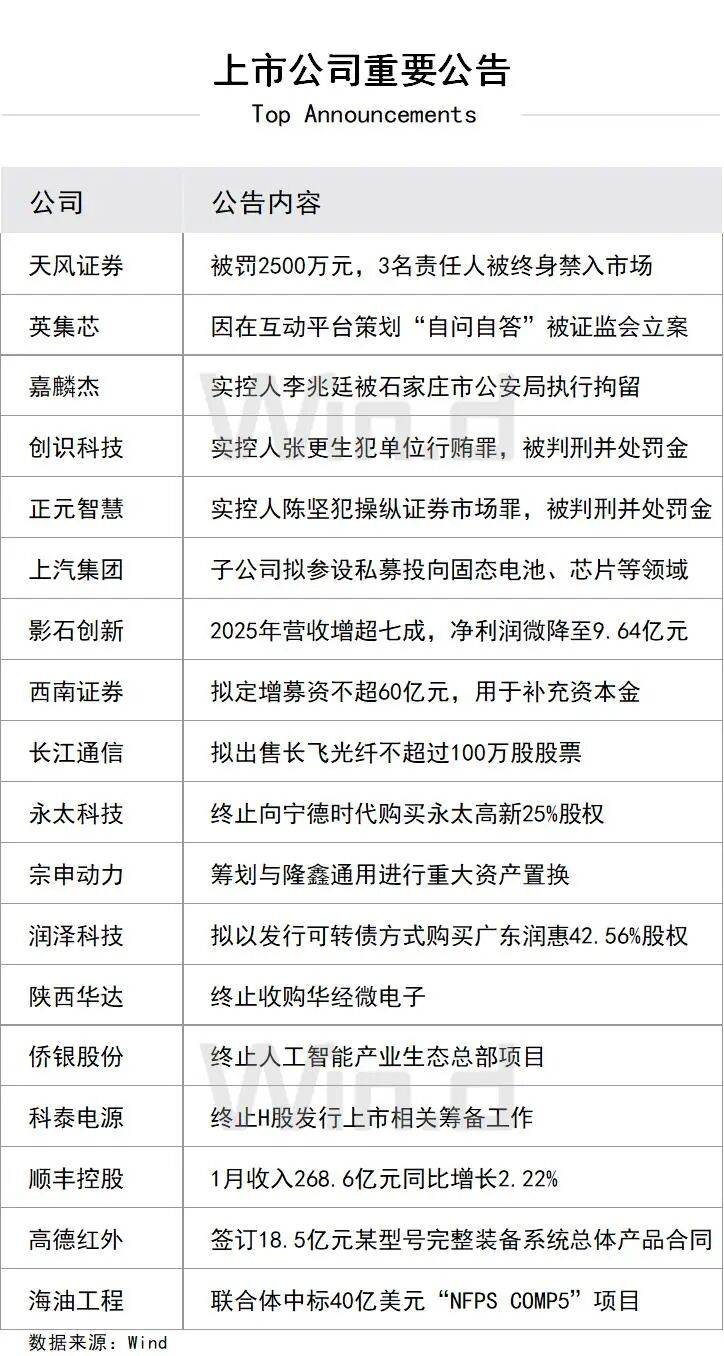
Financial Data - In January, China's social financing increased by 7.22 trillion yuan, up by 166.2 billion yuan year-on-year, while RMB loans rose by 4.71 trillion yuan, with a total balance of 276.62 trillion yuan, reflecting a year-on-year growth of 6.1% [1] - The weighted average interest rate for new corporate loans in January was approximately 3.2%, down by about 20 basis points year-on-year, while the rate for personal housing loans remained stable at 3.1% [3] - The M2 money supply grew by 9% year-on-year, and M1 increased by 4.9% [1] Real Estate Market - Data from the National Bureau of Statistics indicated that the month-on-month decline in second-hand housing prices in 70 cities narrowed, with first, second, and third-tier cities seeing reductions of 0.4, 0.2, and 0.1 percentage points respectively [1] - Year-on-year, new and second-hand housing prices in 70 major cities continued to decline, with the rate of decrease further widening [1] Stock Market Performance - The A-share market showed a positive trend in the post-Spring Festival period, with the Shanghai Composite Index rising by 4.85% in the first five trading days of 2024, marking the highest increase in nearly a decade [2] - The Shanghai Composite Index closed down by 1.26% at 4082.07 points on the last trading day before the Spring Festival, with a total market turnover of 2 trillion yuan [4] Regulatory Developments - The China Securities Regulatory Commission (CSRC) imposed strict penalties on Tianfeng Securities for illegal financing and information disclosure violations, with fines totaling 25 million yuan [4] - The State Administration for Market Regulation and the Ministry of Commerce announced enhanced supervision of cross-border e-commerce retail imports, focusing on recall regulations [3] Corporate News - Meituan projected a loss of over 23 billion yuan for the previous year, with continued losses expected in the first quarter of this year, primarily due to a significant decline in operating profit in its core local business segment [6] - The Hong Kong Stock Exchange is considering expanding the scope of confidentiality applications beyond technology and biotech sectors to include traditional industries [5]





美股三大指数周线齐跌
财联社· 2026-02-14 00:39
Market Overview - The three major indices showed mixed performance, with the Dow Jones up 0.10% to 49,500.93 points, the S&P 500 up 0.05% to 6,836.17 points, and the Nasdaq down 0.22% to 22,546.67 points [3] - All three indices recorded weekly declines, with the S&P 500 down 1.4%, the Dow down 1.2%, and the Nasdaq down 2.1% [3] Economic Indicators - The U.S. Bureau of Labor Statistics reported that the January CPI rose 2.4% year-over-year and 0.2% month-over-month, both below market expectations [3] - The core CPI, excluding volatile food and energy prices, increased by 2.5% year-over-year and 0.3% month-over-month, aligning with market expectations [3] - Phil Blancato, Chief Market Strategist at Osaic, indicated that this data could pave the way for interest rate cuts and inflation control if the trend continues [3] Sector Performance - Concerns over AI disruption led to market sell-offs, affecting various sectors including software, real estate, trucking, and financial services [6] - Financial stocks such as Charles Schwab and Morgan Stanley fell by 10.8% and 4.9%, respectively, while software company Workday dropped 11% and commercial real estate firm CBRE fell 16% [6] - The media sector was also impacted, with Disney down approximately 3% and Netflix down 6% [7] Technology Stocks - Major tech stocks mostly declined, with Nvidia down 2.21%, Apple down 2.27%, Microsoft down 0.13%, Google down 1.06%, and Amazon down 0.41% [7] - Tesla saw a slight increase of 0.09%, while Oracle rose by 2.34% and Netflix increased by 1.33% [7] Chinese Stocks - The Nasdaq Golden Dragon China Index fell by 0.10%, with Alibaba down 1.89%, JD.com down 1.38%, and Pinduoduo up 0.06% [7] - NIO remained flat, while Xpeng rose by 1.36% and Li Auto fell by 1.81% [7]