Nvidia(NVDA)

Search documents
欧美股市全线反弹,英伟达苹果大涨,有色金属大跌,中概股小跌!上演了一出惊心动魄的深V大戏!
Sou Hu Cai Jing· 2026-02-19 06:06
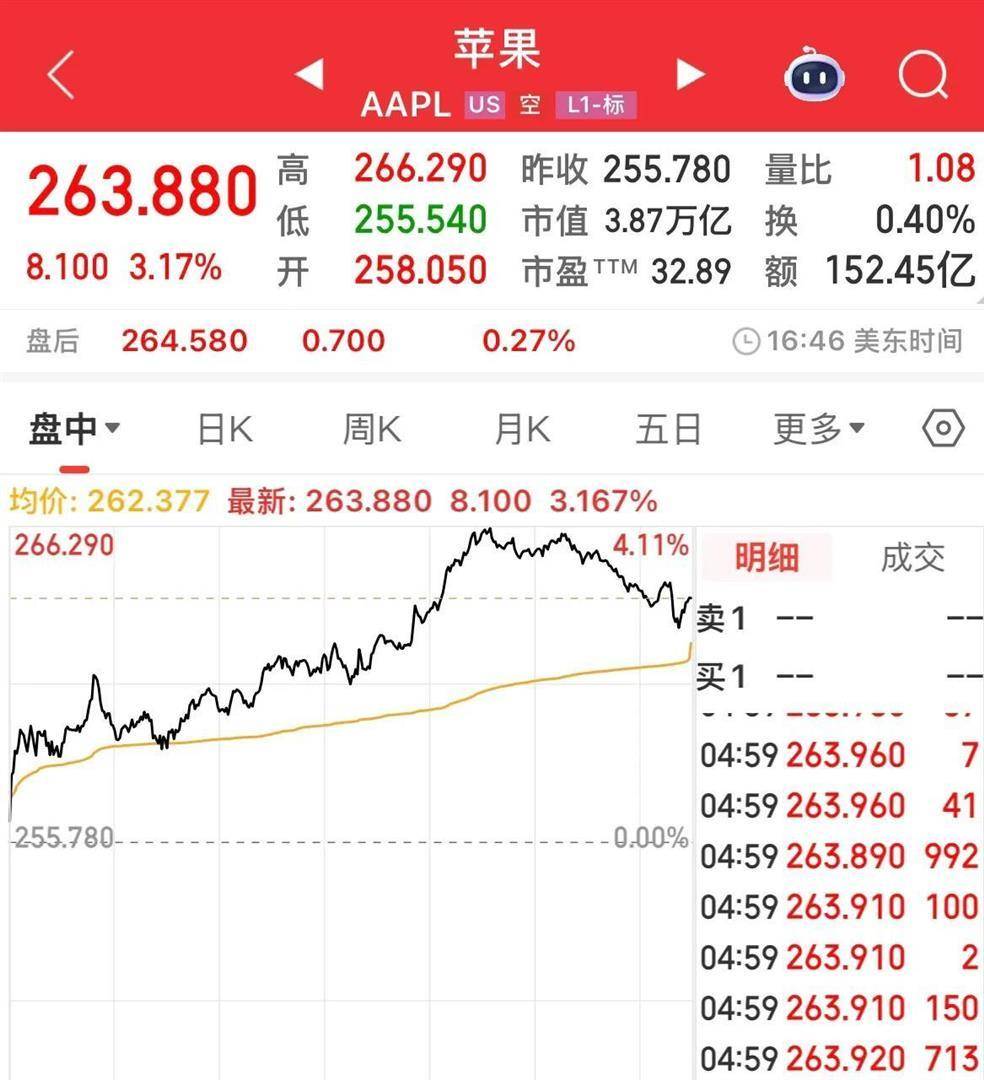
昨晚全球股市上演了一出惊心动魄的"深V"大戏! 正当大家以为美股要跟着白天的期指一起"跳水"时,它却在开盘后硬生生拉了起来。 最 终,欧美股市全线飘红,但剧情可没那么简单,盘中像是坐过山车,跌了拉,拉了又跌,看得人心惊肉跳。 更刺激的是板块间的冰火两重天。 之前连跌几天的科技巨头英伟达和苹果,突然成了"救市主",盘中从大跌猛冲到暴涨。 而另一边,有色 金属却集体"扑街",铜、铝、稀有金属跌得一片惨绿。 中概股则显得有点蔫,整体小幅收跌。 这市场到底唱的哪一出? 是反弹真的来了,还是只是昙花一现? 咱们先看看美股的具体表演。 纳斯达克指数低开了0.68%,这开局可不 妙。 但故事才刚开始,开盘后没多久,它就被砸到了下跌1.25%的位置。 你以为这就一跌到底了? 并没有。 市场资金仿佛突然苏醒,又把它给拉红了。 可好景不长,红盘没保持多久,空头再次发力,指数又掉头 向下。 到了尾盘,又是一波跳水,眼看就要收跌,神秘力量再次出现,临收盘前一顿拉升,最终勉强收涨0.14%。 标普500的剧本也差不多。 同样是低开,开盘二十分钟内跌得最狠,幅度达到1.02%。 之后同样经历了拉红、下砸、再拉起的循环。 最终收 盘上涨0 ...


黄仁勋:将在GTC 2026发布“世界前所未见”芯片
Xin Lang Cai Jing· 2026-02-19 05:36
据悉,GTC 2026大会的主题演讲将于3月15日在加利福尼亚州圣何塞举行,核心聚焦AI基础设施竞赛的 新时代。黄仁勋坦言,这些全新芯片的研发极具挑战,"所有技术都已逼近极限",但结合其过往履约记 录,业界对英伟达此次新品充满期待。 (原题为:重磅预告!黄仁勋将在GTC 2026发布"世界前所未见"芯片) 2月19日消息,据外媒wccftech报道,英伟达首席执行官黄仁勋在接受媒体采访时,对即将到来的GTC 2026大会进行预热,明确表示将在会上揭晓"世界前所未见"的全新芯片,引发业界广泛关注。作为AI芯 片领域的领军者,英伟达此次重磅预告,被认为将进一步巩固其在AI基础设施领域的领先地位。 来源:环球网 目前,新品具体型号尚未披露,但外界普遍猜测,大概率出自两大芯片系列:一是Rubin系列的衍生产 品(如此前曝光的Rubin CPX),该系列已于2026年CES大会上亮相,包含6款全新设计芯片,目前已全 面量产;二是下一代Feynman系列芯片,该系列被称为"革命性"产品,英伟达正探索以SRAM为核心的 广泛集成,或通过3D堆叠技术整合LPUs,不过相关细节尚未确认。 值得注意的是,英伟达正适配AI算力需求 ...
英伟达与Meta建立长期合作,推动AI基础设施革新
Jing Ji Guan Cha Wang· 2026-02-19 05:12
Core Insights - Meta and Nvidia have established a long-term strategic partnership focusing on large-scale deployment of chips and comprehensive optimization from hardware to software in the competitive AI landscape [1][2] - The collaboration has led to a rise in stock prices for both Meta and Nvidia, while AMD's stock fell over 4% [1][3] - Meta plans to deploy millions of Nvidia chips, including Blackwell and next-generation Rubin architecture GPUs, marking the first large-scale independent deployment of Nvidia's Grace CPU [1][3] - Meta aims to introduce the more powerful Vera series processors by 2027 to strengthen its position in high-efficiency AI computing [1][2] Company-Specific Developments - Nvidia is providing a unified solution covering training, inference, and data processing by integrating CPU, GPU, networking technologies, and software ecosystems for Meta [2] - Meta's large-scale procurement of Nvidia chips is seen as a long-term commitment to external computing power, ensuring competitiveness against Google and Microsoft [2][3] - Meta plans to integrate Nvidia's security technology into WhatsApp's AI features, enhancing performance while meeting stringent data security and privacy requirements [2] Industry Implications - Analysts estimate the scale of the partnership could reach hundreds of billions, with Meta's capital expenditure for AI infrastructure projected to be as high as $135 billion by 2026 [3] - The collaboration validates Nvidia's "full-stack" infrastructure strategy, as Meta's shift towards Nvidia's solutions comes amid challenges in its own AI chip development [3][4] - The partnership signals a significant shift in the competitive landscape, particularly for traditional chip giants like Intel and AMD, as Meta's move towards Arm architecture CPUs indicates a structural change in the data center market [4]

黄仁勋官宣:GTC 2026发布“前所未见”芯片,新一代 AI 芯片即将登场!
是说芯语· 2026-02-19 05:11
Core Viewpoint - Nvidia's CEO Jensen Huang announced the unveiling of a "world unprecedented" new chip at the upcoming GTC 2026 conference, which is expected to further solidify the company's leading position in the AI infrastructure sector [1][3]. Group 1: Upcoming GTC 2026 Conference - The GTC 2026 conference will take place on March 15 in San Jose, California, focusing on a new era of AI infrastructure competition [3]. - Huang acknowledged the challenges in developing these new chips, stating that "all technologies are approaching their limits," yet the industry remains optimistic due to Nvidia's past performance [3]. Group 2: New Chip Series - The specific models of the new chips have not been disclosed, but speculation suggests they may come from two major series: the Rubin series derivatives and the next-generation Feynman series [3]. - The Rubin series, which includes six new chip designs, has already been mass-produced, while the Feynman series is described as "revolutionary," exploring wide integration with SRAM and potential 3D stacking technology [3]. Group 3: AI Computing Needs - Nvidia is adapting to quarterly changes in AI computing demands, shifting focus from model pre-training with the Hopper and Blackwell series to inference scenarios with the Grace Blackwell Ultra and Vera Rubin series [3]. - The new products are expected to specifically address latency and memory bandwidth bottlenecks, which are critical for AI applications [3]. Group 4: Strategic Positioning - Huang emphasized that extensive collaboration and investment are key to Nvidia's continued leadership, as the company is positioning itself across the entire AI industry chain, including energy, semiconductors, and data centers [3].

Meta扩大与英伟达合作,行业竞争态势加剧
Jing Ji Guan Cha Wang· 2026-02-19 05:00
Core Insights - Meta and Nvidia have announced a long-term partnership focusing on large-scale deployment of chips and full-stack optimization in the AI sector, which has garnered significant industry attention [1][2] - Following the announcement, Meta and Nvidia's stock prices rose in after-hours trading, while AMD's stock fell over 4%, indicating market recognition of the collaboration [1][4] Company Developments - Meta plans to deploy millions of Nvidia chips, including Blackwell and next-generation Rubin architecture GPUs, as well as the Arm-based Grace CPU, marking its first large-scale independent deployment [1][3] - The partnership will involve collaborative design efforts for Meta's next-generation large-scale language models, optimizing performance through integrated CPU, GPU, networking technologies, and software ecosystems [1][2] - Meta's CEO, Mark Zuckerberg, emphasized that this collaboration is crucial for achieving the vision of providing personal superintelligence to users globally [2] Industry Impact - The scale of the partnership could reach hundreds of billions, with Meta's capital expenditure projected to hit $135 billion by 2026, a significant portion of which will be allocated to AI infrastructure [3] - Analysts view this large-scale adoption as validation of Nvidia's full-stack infrastructure strategy, which is designed for inference workloads as the AI industry transitions from training to inference [3][4] - The collaboration signals a shift in the competitive landscape, with Meta's move towards Arm architecture CPUs posing a warning to traditional chip giants like Intel and AMD [5]
“这很难,但我相信你们”!黄仁勋上周宴请SK海力士工程师,亲自敬酒,敦促“无延迟交付HBM4”
Hua Er Jie Jian Wen· 2026-02-19 04:04
Core Insights - Nvidia's CEO Jensen Huang hosted a rare dinner for engineers from SK Hynix, highlighting the strategic importance of the next-generation high-bandwidth memory HBM4 for Nvidia's AI chip business [1][4] - The dinner signals Nvidia's view of HBM4 as a key differentiator for its upcoming AI accelerator, Vera Rubin, which is set to launch in the second half of this year [3][5] Group 1: HBM4 Specifications and Market Dynamics - Nvidia has set stringent specifications for HBM4, requiring a running speed of over 11 Gbps and a bandwidth exceeding 3.0 TB/s, which is over 30% higher than AMD's requirements [3][6] - SK Hynix has secured over 55% of the HBM supply allocation for this year, while Samsung and Micron hold approximately 20% each [3][6] - Samsung has begun shipping HBM4 products with a running speed of 11.7 Gbps and a bandwidth of 3.3 TB/s, marking a competitive entry into the HBM4 market [6][7] Group 2: Strategic Partnerships and Execution - Huang's personal involvement in the dinner is seen as a significant gesture of recognition and encouragement for SK Hynix, emphasizing the importance of timely delivery and performance optimization [4][9] - The upcoming months will be critical for SK Hynix to maintain its leading position in the competitive landscape of HBM4 supply [9]

黄仁勋:将在3月发布“世界前所未见”的全新芯片
财联社· 2026-02-19 03:55
Core Viewpoint - Nvidia's CEO Jensen Huang announced the unveiling of a "world-first" new chip at the upcoming GTC 2026 conference, which is expected to further solidify the company's leading position in the AI infrastructure sector [1][4]. Group 1: Upcoming Conference Details - The GTC 2026 conference will take place on March 15 in San Jose, California, focusing on a new era of AI infrastructure competition [4]. - Huang acknowledged the challenges in developing these new chips, stating that "all technologies are approaching their limits," yet the industry remains optimistic due to Nvidia's track record [4]. Group 2: New Chip Series - Specific models of the new chips have not been disclosed, but speculation suggests they may come from two major series: the Rubin series derivatives and the next-generation Feynman series [4]. - The Rubin series, which includes six new chip designs, has already been fully mass-produced and was showcased at the 2026 CES [4]. - The Feynman series is described as "revolutionary," with Nvidia exploring broad integration using SRAM and potential 3D stacking technology for LPUs, although details remain unconfirmed [4]. Group 3: Addressing AI Compute Needs - Nvidia is adapting to quarterly changes in AI compute demands, shifting focus from the Hopper and Blackwell series, which emphasize model pre-training, to the Grace Blackwell Ultra and Vera Rubin series, which target inference scenarios [4]. - The new products are expected to specifically address latency and memory bandwidth bottlenecks [4]. Group 4: Strategic Positioning - Huang emphasized that extensive collaboration and investment are key to Nvidia's continued leadership, as the company is positioning itself across the entire AI industry chain, including energy, semiconductors, and data centers [4].
2025中国算力产业实录:狂热、阵痛与价值回归丨年度盘点
雷峰网· 2026-02-19 03:32
Group 1 - The core viewpoint of the article emphasizes the transformation of the AI computing power industry, driven by the emergence of DeepSeek, which optimizes computing efficiency and breaks down barriers for deploying large models, marking a significant moment for China's AI industry [2][6] - The article highlights the rapid rise and subsequent decline of integrated machines within four months, illustrating the struggles faced by intelligent computing centers amid idle computing power and the need to sell cards for survival [3][10] - A year-long investigation into the industry reveals the underlying factors that will support the scaling and ecological development of China's AI computing power, emphasizing the importance of endurance, ecology, and trust in this ongoing battle [4][25] Group 2 - DeepSeek's explosive popularity catalyzed a transformation in the AI computing power industry, prompting domestic chip manufacturers to accelerate adaptation processes, benefiting companies like Huawei and Cambricon [7][8] - The article discusses the structural contradictions in the AI computing market, where demand for computing power is surging while many intelligent computing centers face low utilization rates, leading to a paradox of computing shortages on one side and idle resources on the other [10][11] - The article notes that the AI computing power industry is entering a mature phase, with a shift from speculative profits to a focus on core business principles, as evidenced by various industry challenges such as contract breaches and fraudulent activities [12][13] Group 3 - The article outlines the emergence of domestic inference chips, driven by urgent demands for autonomy and rapid growth in inference needs, with several companies like Moore Threads and Nuxi going public [16][17] - It highlights the competitive landscape where domestic chips are attempting to challenge Nvidia's dominance, with the inference segment becoming a critical breakthrough point for domestic computing power [19][20] - The storage sector is experiencing a price surge due to increased demand, significantly impacting the AI server industry and creating survival challenges for smaller manufacturers [21][23] Group 4 - The article reflects on the key developments in 2025, from the initial excitement surrounding DeepSeek to the industry's entry into a more complex phase characterized by chaos and bubble clearing [25] - It notes the collective market entry of several domestic GPU companies, referred to as the "Four Little Dragons," which has expanded the competitive landscape for domestic computing power [25] - Looking ahead to 2026, the article emphasizes the need to focus on the real adaptation progress in AI chips and storage, tracking technological breakthroughs and capital market dynamics to witness the evolution of domestic computing power from mere usability to leadership [25]



云巨头,为何倒向英伟达?
半导体行业观察· 2026-02-19 02:46
公众号记得加星标⭐️,第一时间看推送不会错过。 当Meta Platforms与英伟达(Nvidia)达成大规模 AI 系统交易时,通常意味着该公司此前的某些开 放硬件计划已无法满足紧迫的算力需求。这与项目延期不完全是一回事,但效果是一样的。提醒一 下,这类情况我们掌握的数据并不多,而如今这家社交网络巨头、AI 模型厂商与 AI 硬件巨头英伟 达之间宣布的巨额合作,已是第三起。 这笔交易远比 Meta 上一次与英伟达的合作规模更大,对英伟达而言价值至少数百亿美元,再加上原 始设计制造商将英伟达芯片集成到 Meta 系统中所能获得的额外收益。 在前两起案例中(几乎可以确定第三起新案例也是如此),一旦 AI 算力需求足够紧迫,Meta 便愿 意放弃自家开放计算项目(OCP)的设计方案。 在超大规模云厂商与大模型厂商中,Meta 的定位略有不同:它不只是为搜索加入 AI 能力,或是打 造能与 OpenAI、Anthropic 等抗衡的通用大模型,同时还高举开源大旗(至少目前是这样)。该公 司还运营着庞大的高性能集群集群,作为旗下各类服务的推荐引擎。这些系统需要CPU 与加速器紧 密耦合,让加速器能直接访问 CPU ...
ARM,失宠了
半导体行业观察· 2026-02-19 02:46
公众号记得加星标⭐️,第一时间看推送不会错过。 英伟达本周已出售所持 ARM 的最后剩余股份,与几年前曾试图收购该公司的情景已相去甚远。 英伟达与 ARM 的合作,在当代 AI 基础设施建设中至关重要 —— 正是凭借 ARM 的 CPU 架构,英 伟达才得以推出 Grace Hopper、Blackwell 等系列重磅产品。更重要的是,ARM 还将在英伟达即将 推出的Vera CPU中扮演关键角色,这类处理器的重要性正在急剧提升。 据彭博社报道,根据最新提交给美国 SEC 的文件,英伟达已出售其持有的 ARM 剩余股份,价值约 1.4 亿美元。耐人寻味的是,此举恰好发生在ARM 在未来 AI 竞赛中的地位开始受到质疑的节点。 很多人尚未意识到:CPU 近期正迎来空前重要的地位提升。原因在于推理 workload,尤其是智能体 (agentic)相关负载—— 这类场景的重心正从 GPU 计算转向更依赖 CPU 的任务,例如工具调用、 API 请求、内存查找与调度逻辑。 这一转向已非常明显:英特尔、AMD 均表示,超大规模云厂商对其数据中心 CPU 需求暴增,背后 正是 CPU 整体市场(TAM)的高速扩张。与此 ...