POP MART(PMRTY)

Search documents
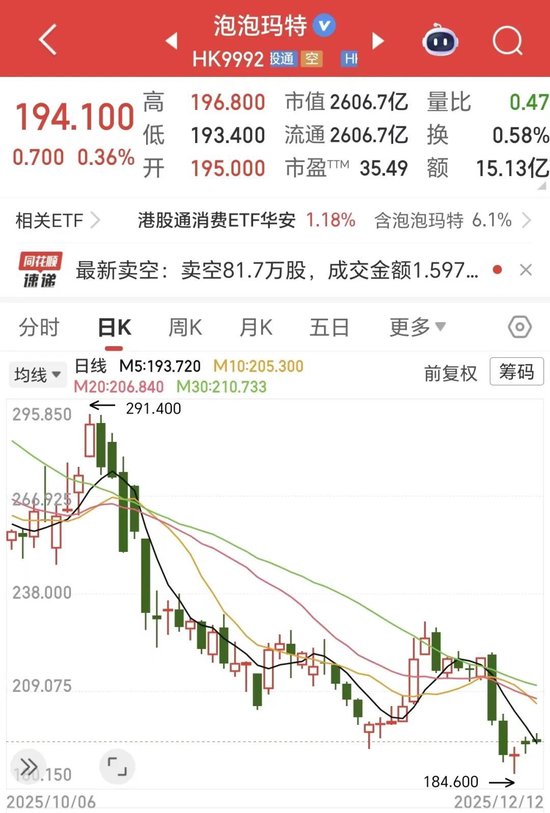
泡泡玛特午后涨近4% LVMH高管加入公司董事会 大摩称有望提升Labubu吸引力
Zhi Tong Cai Jing· 2025-12-17 07:11
摩根士丹利发布研报称,这一人事变动将显著增强公司调动高端时尚资源的能力,并提升核心IP Labubu的市场吸引力。分析师指出,市场此前对Labubu及公司增长可持续性存在担忧,而吴越的加入 传递出IP已获时尚界高度认可的信号,并有望在高端会员、时尚珠宝联名等方向为泡泡玛特导入新流量 与增量场景。 消息面上,12月11日,泡泡玛特发布公告,董事会新增LVMH大中华区集团总裁吴越为非执行董事。公 开资料显示,吴越在LVMH任职20年,深度参与奢侈品品牌在大中华区的渠道、会员及人才体系建设。 有业内人士指出,吴越加入泡泡玛特董事会是对品牌的一次背书,这意味着泡泡玛特正融入国际时尚潮 流核心圈层。 泡泡玛特(09992)午后涨近4%,截至发稿,涨3.28%,报195.4港元,成交额13.42亿港元。 ...

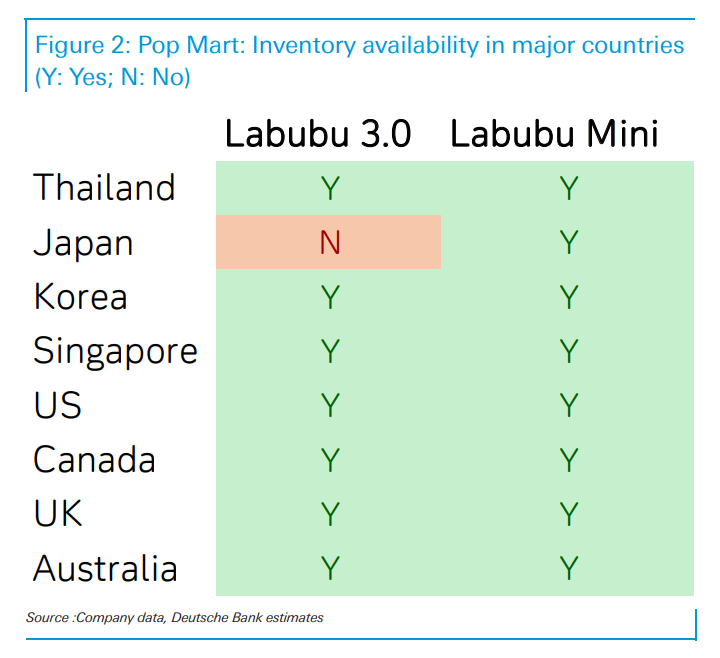
多数海外门店的客流量减少和排队现象消失!华尔街质疑:泡泡玛特选择“走量模式”,对吗?
Hua Er Jie Jian Wen· 2025-12-17 03:34
Core Viewpoint - The market sentiment is shifting dramatically, with Deutsche Bank downgrading Pop Mart's rating to "Hold" due to the loss of "scarcity" which is undermining the brand's premium pricing ability [1] Group 1: Business Model and Market Dynamics - Pop Mart's aggressive capacity expansion since mid-October 2025 has increased monthly production from 10 million to 50 million units, resolving supply shortages but significantly reducing product scarcity and collector enthusiasm [1][2] - The once high-demand Labubu series, with approximately 145 million units sold globally, is now widely available, leading to a decline in Google search interest and social media discussions [2] - The business model relies heavily on high transaction volumes with low average transaction values, necessitating frequent customer visits to maintain sales performance comparable to top fashion brands [4] Group 2: Customer Traffic and Profitability - Observations indicate that stores in major cities like Bangkok, Singapore, Seoul, and the U.S. no longer experience queueing, which could negatively impact the company's operating leverage [5] - Deutsche Bank projects an adjusted net profit margin (NPM) of 34.4% for 2025, up from 26.1% in 2024, but this is contingent on maintaining high customer traffic [5] Group 3: Historical Context and Future Risks - Historical analysis of Hello Kitty's IP cycles warns investors that the trajectory of IP popularity is not linear, with potential for significant downturns following periods of high demand [6][10] - Current market reactions to new products like "mini Labubu" and "The Monsters 1 a.m." series are lukewarm, raising concerns about the ability to sustain Labubu's popularity or quickly launch another hit IP [11] Group 4: Valuation and Catalysts - Pop Mart's forward P/E ratio is currently at 15 times, reflecting market concerns about the peak of its "fashion cycle" [12] - Future stock price movements will depend on short-term catalysts; if revenue growth is merely a result of increased production at the expense of IP popularity, long-term valuation logic may need to be reassessed [12]

泡泡玛特想“升咖”
Xin Lang Cai Jing· 2025-12-17 01:41
文 | 连线Insight 王慧莹 编辑 | 子夜 2016年,泡泡玛特创始人王宁就想将门店开到LV旁。 "需要LV认为泡泡玛特的产品、服务和店铺状态是可以配得上跟它做邻居的",王宁在节目中提到。 12月10日,69岁的前LVMH大中华区集团总裁吴越正式出任泡泡玛特非执行董事一职。说起吴越的经历,从负责Dior香水中国业务,到执掌LVMH大中华 区二十年,堪称"一部奢侈品在华的发展史"。 那时的王宁还是个初来乍到的创业者,彼时亏损的泡泡玛特离千亿市值还很遥远。如今,泡泡玛特全球爆火,LABUBU、星星人等IP相继成为当红炸子 鸡,王宁离LV又近了一步。 这也意味着,吴越的加入绝非一次普通的董事会换血,而透露着这家潮玩巨头融入国际奢侈品时尚的野心。伴随LABUBU的爆火,泡泡玛特一边将产品 送进时装周,与时尚品牌联名;一边推出独立高端珠宝产品线,将巨型MOLLY雕塑打造为城市新地标。 想要融入高端化圈层,并实现全球化的布局,泡泡玛特不甘心只做个玩具品牌。当市场仍在不厌其烦地追问"下一个LABUBU在哪里"时,泡泡玛特更希望 消费者记住的是品牌本身。 图源泡泡玛特官网 更深层的逻辑在于,泡泡玛特想要长久地在消费市 ...
香薰、盲盒与古法金:观夏、泡泡玛特、老铺黄金的"千亿情绪生意",是怎样炼成的?
3 6 Ke· 2025-12-16 03:34
Core Insights - The article discusses the shift in consumer behavior from functional products to those that provide emotional value, emphasizing the importance of meaning, stories, and emotions attached to products [1][2][4] Group 1: Emotional Consumption - Emotional consumption is driven by two societal psychological factors: the pursuit of instant gratification and the fragmentation of social connections [2][4] - The need for instant gratification leads consumers to seek products that provide immediate emotional satisfaction, similar to the quick emotional stimuli found in platforms like TikTok [2][4] - The urbanization process has increased feelings of loneliness, prompting consumers to seek products that fulfill deeper emotional needs for connection and belonging [4] Group 2: Layers of Emotional Value - The first layer of emotional value is "small happiness," where consumers pay for minor yet certain feelings of joy, such as comfort food or relaxing home items [5][7] - The second layer involves identity construction, where consumers use products to express who they are and find their social group, as traditional identity markers weaken [8][10] - The third layer focuses on co-creation, where consumers desire to participate in the brand narrative, seeking a sense of agency and influence over the products they consume [18][19] Group 3: Case Studies - The case of "Guanxia" illustrates how a brand can create a cultural identity through a sophisticated symbol system, allowing consumers to align with a modern, cultured lifestyle [11][13] - The collaboration of Luckin Coffee demonstrates the creation of social currency through trendy products, where the value lies in the shared experience and belonging to a cultural moment [14][15] Group 4: Strategies for Brands - Brands should focus on creating immediate emotional gratification through appealing design, storytelling, and user empowerment [22][23] - Designing user participation in emotional narratives allows consumers to feel like protagonists in their experiences with the brand [23][25] - Building a community around the brand enhances loyalty, as consumers seek connection with like-minded individuals [26] - Brands should develop products that serve as emotional companions, addressing the need for comfort and connection in daily life [27] - Encouraging co-creation with consumers transforms them from passive buyers to active participants in the brand's evolution [28] Group 5: Market Potential - The emotional consumption market in China is projected to reach a trillion scale, indicating a significant shift in commercial logic towards emotional connections and shared brand narratives [28]

泡泡玛特已成潮玩界「黑洞」
3 6 Ke· 2025-12-15 23:33
Core Insights - Bubble Mart has significantly increased its market share from 8.5% to 14% over five years, while its market value has surpassed HKD 250 billion, indicating a strong competitive position in the collectible toy industry [1] - The company has built a robust ecosystem that attracts users, creators, and market attention through its platform model, which focuses on artist discovery, IP incubation, and omnichannel operations [1][8] - The current landscape of the collectible toy industry shows that competitors like TOP TOY and 52TOYS struggle with IP dependency and lack core competitive advantages, leading to a challenging environment for smaller brands [1][8] Market Position - Bubble Mart's CEO Wang Ning has projected that the company can easily achieve revenue of RMB 30 billion by 2025, highlighting its dominant market position with few real competitors [2] - The company has shifted the focus from artist value to operational efficiency, which has allowed it to capitalize on market trends and consumer demand [4][8] - The average inventory turnover for Bubble Mart is 83 days, significantly better than the industry average of 180 days, reinforcing its operational efficiency [9] IP Strategy - Bubble Mart's IP operation capabilities have been enhanced, allowing it to create a standardized pipeline for artist signing, user research, and supply chain response, which can turn creative ideas into potential bestsellers in as little as six months [8][9] - The company has secured 14 out of 32 hot-selling collectible toy IPs for 2024, representing a 43% market share in that segment [9] - Bubble Mart's approach to IP management resembles that of a talent agency, focusing on nurturing top-tier IPs while also identifying emerging artists early [8][11] Industry Trends - The collectible toy market in China is increasingly defined by marketing-driven strategies that prioritize consumer engagement over artistic integrity, contrasting with more established markets like Japan, where cultural depth and storytelling are key [12][14] - Smaller brands in the Chinese market face significant challenges in competing with Bubble Mart's scale and efficiency, leading to a trend of reliance on short-term marketing tactics [11][12] - The potential for new entrants exists, but they must navigate a landscape where replicating Bubble Mart's success is nearly impossible due to high barriers to entry and established market dominance [14]
泡泡玛特:业绩狂飙,资本恐高
3 6 Ke· 2025-12-15 12:33
Core Insights - Apple CEO Tim Cook's visit to China, particularly to the Shanghai THE MONSTERS exhibition, symbolizes the intersection of tech giants and the collectible toy market, highlighting the cultural significance of this event in China's consumer history [1] - Despite impressive financial performance, Pop Mart's stock has seen a nearly 40% decline since its peak in August, indicating a disconnect between strong sales and investor sentiment [1][2] - The company's reliance on the Labubu IP raises concerns about sustainability and future growth, as it accounted for 34.7% of revenue in the first half of 2025, with a staggering growth rate of 668.4% [8][10] Financial Performance - In Q3 2025, Pop Mart reported a revenue growth of 245%-250% year-on-year, with overseas market revenue surging by 365%-370% [1][7] - The company's revenue for the first half of 2025 has already surpassed the total revenue for 2024, indicating robust sales performance [1] Market Dynamics - The collectible toy market has shifted towards lower-priced, instant gratification products post-pandemic, with Pop Mart capitalizing on this trend through its blind box offerings [3][5] - The initial hype around Labubu has begun to wane, with prices for hidden variants on secondary markets halving from their peak, reflecting a potential saturation of demand [1][7] Strategic Direction - Pop Mart aims to transition from a fast-fashion model to a luxury brand, seeking to position itself as a "Louis Vuitton" of the toy industry, with a focus on global expansion and premium branding [11][13] - The company has adopted a strategy of "sufficient scarcity," aiming to balance product availability with brand prestige, moving away from speculative pricing models [21][25] Consumer Behavior - The decline in speculative buying from resellers has led to a more stable consumer base, with Pop Mart focusing on genuine fans rather than speculative investors [20][25] - The company is implementing a product stratification strategy, ensuring that lower-tier products remain accessible while maintaining exclusivity for high-end offerings [23][24]
中国 IP 零售商与玩具追踪 - 11 月:泡泡玛特供应环比增加;Bloks 推出更多女性 IP;聚焦美国假日季销售-China IP Retailer and Toy Tracker_ Nov_ Pop Mart sequentially increased supply; Bloks launched more female IPs; US holiday sales in focus
2025-12-15 01:55
Summary of Conference Call Notes on China IP Retailers and Toy Tracker Industry Overview - The report focuses on the China IP retail and toy industry, highlighting key players such as Pop Mart, Miniso, and Bloks, along with their sales performance and product launches during the holiday season [1][6][7][8]. Key Points Pop Mart - **Sales Growth**: Online sales growth in China accelerated in November, reaching 104% year-over-year, primarily due to increased supply on Tmall and Douyin [1][11]. - **Product Launches**: Introduced two new IPs, Hatti and SUPERTUTU, with Hatti's figure toys achieving over 2,000 sales on Tmall shortly after launch [9]. - **Secondary Market Prices**: Prices for most IPs remained stable, with Twinkle Twinkle's premium correcting to 20%-30% from a higher level in October [1][9]. - **Supply and Demand**: Sufficient supply of plush toys was noted during the peak season, with a slight decline in app monthly active users (MAU) but a pickup in Google Trends towards the end of November [23][44]. Miniso - **Product Popularity**: Launched Zootopia products across various channels, with some items gaining popularity among IP fans [1][7]. - **Sales Performance**: US credit card sales growth was approximately 60% in November, slightly lower than 64% in October, but still ahead of management's guidance of 50%-55% for Q4 [24][27]. - **Local Procurement**: Increased local procurement mix noted as a potential headwind to gross profit margin (GPM), but it may help meet local demand and mitigate tariff risks [1][24]. Bloks - **New IP Launches**: Continued rapid pace of new IP launches, including female-focused products like the Powerpuff Girls and Zootopia [1][8]. - **Sales Feedback**: Mixed feedback on new products; while assembly vehicle toys received positive consumer feedback, female product performance was less impressive based on online sales [10][20]. Additional Insights - **US Market Trends**: Black Friday 2025 saw a growth of 3.7-4.2% year-over-year, with notable in-store traffic in toys and kids' apparel, although overall growth was slower compared to the previous year [22]. - **Marketing Efforts**: Miniso's marketing included celebrity appearances, such as Paris Hilton visiting a store, which may enhance brand visibility [1][7]. - **Regulatory Environment**: The Chinese government is supporting the development of local IPs and cultural products, which may benefit companies in the IP retail sector [46]. Conclusion - The China IP retail and toy industry is experiencing significant growth driven by new product launches and increased online sales. However, challenges such as local procurement impacts on margins and mixed product performance need to be monitored closely. The upcoming holiday season will be crucial for assessing the overall health and future prospects of these companies in the market [1][24][46].
300万港元年薪!泡泡玛特“挖”来奢侈品教父
Guo Ji Jin Rong Bao· 2025-12-12 12:42
Core Insights - Pop Mart has appointed Wu Yue, the President of LVMH Greater China, as a new non-executive director, effective December 10, signaling the company's intent to strengthen its presence in the luxury market [1][2] Group 1: Leadership and Strategy - Wu Yue brings over 20 years of experience from LVMH, which will aid Pop Mart in talent acquisition, fashion jewelry, and global store location strategies [2] - The company is offering a competitive compensation package of HKD 1.2 million in cash and HKD 1.8 million in stock-based remuneration to attract Wu Yue, indicating a commitment to a mutually beneficial relationship [1] Group 2: Financial Performance - For the first half of 2025, the MEGA COLLECTION series is expected to generate over CNY 1 billion in revenue, accounting for 7.3% of total revenue [3] - In the first half of the year, Pop Mart reported revenue of CNY 13.88 billion, a year-on-year increase of 204.4%, with adjusted net profit rising 362.8% to CNY 4.71 billion and a gross margin of 70.3% [3] Group 3: Market Expansion - Pop Mart's international strategy has shown significant growth, with revenue from the Asia-Pacific region increasing by 257.8% to CNY 2.85 billion, and revenue from the Americas soaring by 1142.3% to CNY 2.26 billion [4] - The company anticipates strong sales growth in the fourth quarter due to seasonal demand from Halloween, Black Friday, and Christmas, particularly in the overseas markets [5]
铜质“泡泡玛特”的上市野心:铜师傅再闯港交所
Zhong Guo Jing Ying Bao· 2025-12-12 11:35
Core Viewpoint - The company, Hangzhou Copper Master Cultural and Creative (Group) Co., Ltd., is seeking to go public again on the Hong Kong Stock Exchange, with a focus on the copper cultural and creative product market, which is expected to grow significantly in China [1][5]. Company Overview - Copper Master primarily targets male consumers aged 30 to 55, earning it the nickname "the Bubble Mart for middle-aged men" [1]. - The company reported annual revenue exceeding 500 million yuan, with self-owned IP products accounting for approximately 90% of total revenue [1][2]. - The market for copper cultural and creative products is relatively small, with an estimated size of 1.58 billion yuan in 2024, where Copper Master holds a 35% market share [2]. Market Dynamics - The copper cultural and creative product market is characterized by high concentration, with Copper Master and another brand, Zhu Bingren Copper, dominating nearly 70% of the market [2]. - The company faces challenges in expanding its customer base, particularly among younger consumers, due to high prices and production costs [3][5]. Sales Channels - Copper Master relies heavily on online sales, with over 70% of its revenue coming from online direct sales and e-commerce platforms [3]. - The company is attempting to establish a physical retail presence, with 63 stores operated by 56 authorized dealers as of June 30, 2025 [3]. Competitive Landscape - Despite its leading position, Copper Master is experiencing difficulties in customer expansion and faces limitations due to the slow growth ceiling of its market segment [5]. - The company has completed five rounds of financing, attracting investments from notable firms such as Shunwei Capital and Xiaomi Group [6]. Industry Trends - The global cultural and creative industry is expanding, with market size projected to grow from 16 trillion yuan in 2019 to 19.5 trillion yuan in 2024 [7]. - The rise of "emotional economy" and the pursuit of quality life among consumers are driving demand for artistic and cultural products [7]. Challenges - The company faces significant challenges related to raw material price fluctuations, particularly copper prices, which have risen from 48,773.5 yuan per ton in 2020 to 74,958.3 yuan per ton in 2024, reflecting a compound annual growth rate of 11.3% [8]. - The high production costs associated with copper-intensive manufacturing may limit the company's pricing flexibility and overall financial performance [8].
300万请来的LV总裁,泡泡玛特的投资者们为何不买账?
Xin Lang Cai Jing· 2025-12-12 08:52
Core Viewpoint - The appointment of Wu Yue, the president of LVMH Greater China, as a non-executive director of Pop Mart has not been positively received by investors, despite being seen as a significant move to inject luxury brand expertise into the toy industry. The company's stock price has significantly declined over the past months, reflecting investor skepticism about its future prospects [1][6]. Group 1: Appointment and Compensation - Pop Mart announced the appointment of Wu Yue as a non-executive director for a three-year term, with an annual compensation of 3 million HKD, which includes a fixed cash salary of 1.2 million HKD and a share-based salary of 1.8 million HKD [1][6]. - The market reaction to this appointment has been lukewarm, with only a slight increase in stock price following the announcement, and a significant drop of over 40% from its historical high in August, resulting in a market capitalization loss of more than 250 billion HKD [1][6]. Group 2: Background and Challenges - Wu Yue is recognized as a veteran in the luxury goods industry, having joined LVMH in 1993 and played a crucial role in expanding luxury brands in China [3][8]. - Pop Mart has faced multiple operational challenges, including a significant increase in the production of its core IP, Labubu, which has led to a decline in perceived scarcity and a drop in secondary market prices [3][9]. - Recent controversies regarding product quality and pricing have further impacted the brand's reputation, with notable incidents including employee comments on product pricing and issues with product consistency [4][9]. Group 3: Market Sentiment and Institutional Response - The high compensation for Wu Yue has sparked debate, as it exceeds the combined annual salary of three independent non-executive directors at Pop Mart and is higher than some executive directors' salaries [4][9]. - Institutional responses are mixed; Morgan Stanley views Wu Yue's appointment as a positive recognition of Pop Mart's IP in the fashion sector, while Deutsche Bank has downgraded its rating to "hold," emphasizing the need for the company to diversify beyond its single blockbuster IP strategy [4][9]. Group 4: Investor Dynamics - The recent board changes coincide with the exit of a key investor, He Yu, who sold shares at 32.32 HKD each, missing out on a subsequent 489% increase in stock price, which some interpret as a cautious stance on the company's long-term development [5][10].