Starbucks(SBUX)

Search documents
向“省钱党”妥协,星巴克开放免费自习室
2 1 Shi Ji Jing Ji Bao Dao· 2025-07-23 10:53
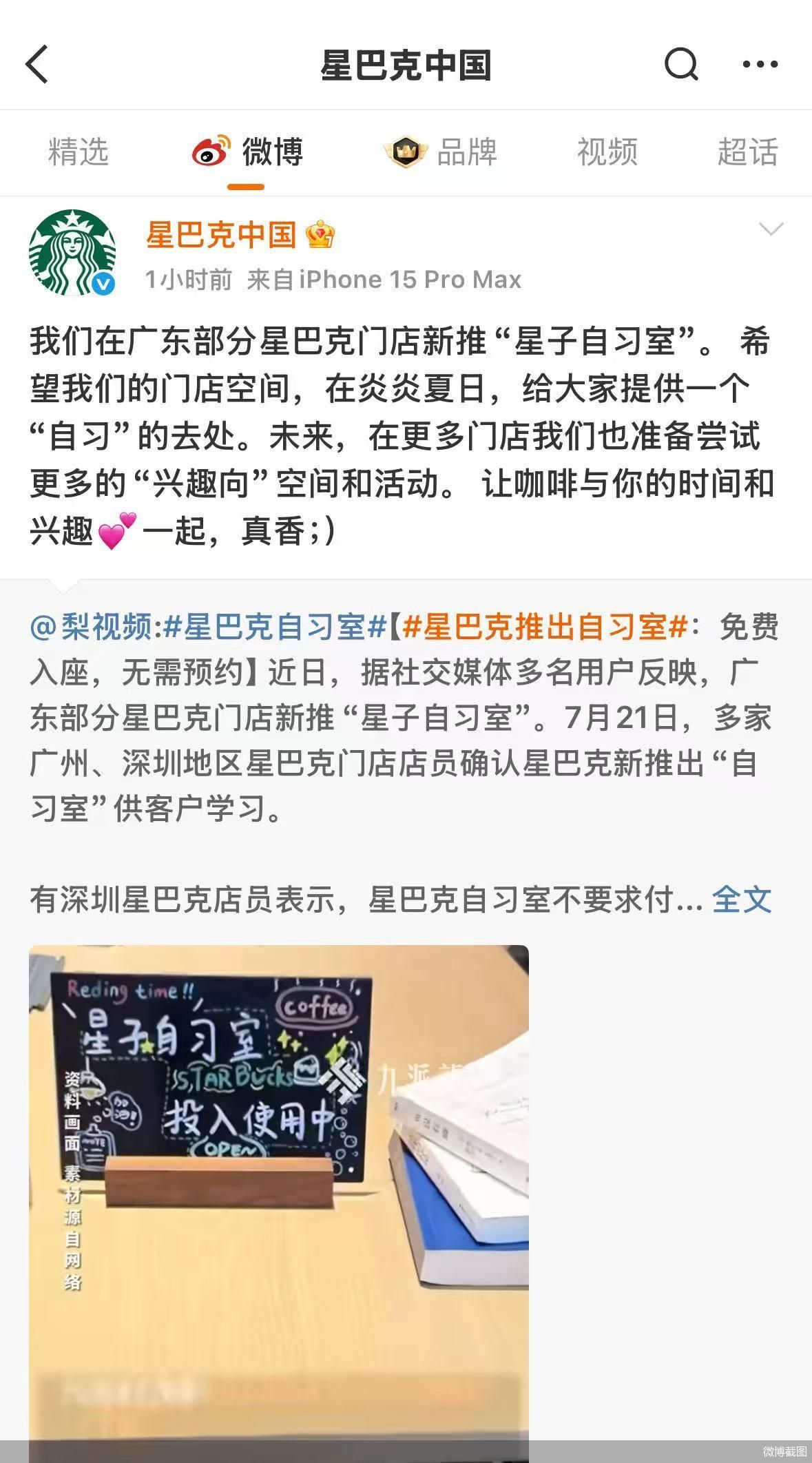
Core Viewpoint - Starbucks is introducing "Starry Study Rooms" in select locations in Guangdong, Guangxi, and Hainan, aiming to provide free study spaces for consumers and enhance the "third space" experience [1] Group 1: New Initiatives - The "Starry Study Rooms" feature a shared long table model, offering free seating, power outlets, hot water, and stationery without requiring reservations [1] - Despite the initiative, there has not been a significant increase in foot traffic, with many study seats remaining unoccupied [1] Group 2: Market Strategy - Starbucks has recently lowered prices on non-coffee products, with an average price reduction of around 5 yuan for items like Frappuccinos and iced teas, bringing many products from the 30-40 yuan range down to the 20 yuan range [2] - The company is accelerating its expansion into lower-tier markets, with a total of 7,758 stores in China by March 2025, 40% of which are located in townships [2] - In contrast, Starbucks has closed nearly 20 flagship stores in 2024, primarily in densely branded regions like Jiangsu, Zhejiang, Shanghai, and Guangdong, indicating a strategy of "closing in first-tier cities while opening in county towns" [2] Group 3: Ownership and Acquisition - Starbucks is actively pursuing a plan to sell its stake in the Chinese market, having received multiple acquisition proposals from various investors, including Hillhouse Capital, Carlyle, KKR, and major shareholder of Luckin Coffee, Dazhong Capital [2]

【尝鲜】《公司的秘密》+智解财经 | 解码12家大公司的跌落与重生
第一财经· 2025-07-23 10:20
Core Viewpoint - The article discusses the decline and rebirth of major companies, drawing parallels to Nietzsche's "Twilight of the Idols," and emphasizes the importance of understanding the lifecycle of businesses [1]. Group 1: Company Analysis - The report analyzes 12 notable companies, focusing on their peaks and challenges, including Pinduoduo and Lululemon, which are rethinking their user base despite differing pricing strategies [2]. - Starbucks and Yonghui are examined for their slow business pace amidst fast-changing market conditions [2]. - Haidilao and Meituan are assessed on how they are adapting in a time when dining costs are rising [2]. - Mixue Ice City is highlighted for its performance in lower-tier markets during challenging times [2]. - Intel's competitive position against TSMC and NVIDIA is questioned regarding its future viability [2]. - Toyota's late entry into the electric vehicle market raises concerns about its competitiveness [2]. - Alphabet's advancements in AI are scrutinized for their impact on the company's intelligence and market position [2]. - The report questions whether Hongkong Land can regain its former glory and if Disney can continue to leverage its intellectual property [2]. Group 2: Report Features - The report is noted for its depth, providing insights from financial data to market trends, and strategic directions to corporate mindsets, making it a valuable resource for industry professionals [4]. - It is designed to save time, allowing readers to grasp essential data points efficiently, compared to traditional methods like reading annual reports [5]. - The report serves practical purposes, helping users understand future industry trends and evaluate the reliability of a company's strategy [6].






The Starbucks Turnaround Is Underway - but will it work?
Bloomberg Television· 2025-07-23 08:01
There's definitely been some progress. You know, Starbucks has already made some changes, like bringing back the Continental Bar so people don't have to, you know, complain to baristas about their drink being too sweet or too dark or too late. They've also started renovating some stores.You know, they started redesigning the menu. So definitely things that are going to make a difference. And, you know, they do say that people are hanging out in stores more because they want to bring back that feeling of, yo ...

星巴克喊你去自习了!真免费?记者实探广州门店
Sou Hu Cai Jing· 2025-07-23 07:28
Core Viewpoint - Starbucks has introduced a "study room" service in various locations, allowing customers to use the space without mandatory purchases, particularly aimed at students and parents during the summer [1][5][9] Group 1: Service Implementation - The "study room" service has been launched in at least 30 stores in Guangzhou and has expanded to other cities in Guangdong, as well as parts of Guangxi and Hainan [1][5] - The service is designed to provide a conducive environment for studying, with some stores offering quiet corners or long tables for this purpose [4][5] - Store employees have confirmed that the availability of the study room is determined by individual store conditions, and some stores still operate under the "third space" concept [4][6] Group 2: Customer Reactions - Customer feedback on social media has been mixed, with some expressing a desire for the service to be available in more cities, while others are concerned about its impact on the store's consumption environment [9] - The introduction of the study room service has drawn comparisons to similar initiatives by McDonald's, which has also experimented with study spaces in the past [9] Group 3: Context and Background - The introduction of the study room service comes amid discussions about Starbucks' policy on customer access without purchase, particularly following a recent decision in North America to require purchases for entry [6][9] - The service aligns with Starbucks' ongoing emphasis on creating a "third space" for customers, catering to diverse needs in different settings [4][6]
在华竞争压力山大 星巴克(SBUX.US)推出免费自习室以求增长
智通财经网· 2025-07-23 06:48
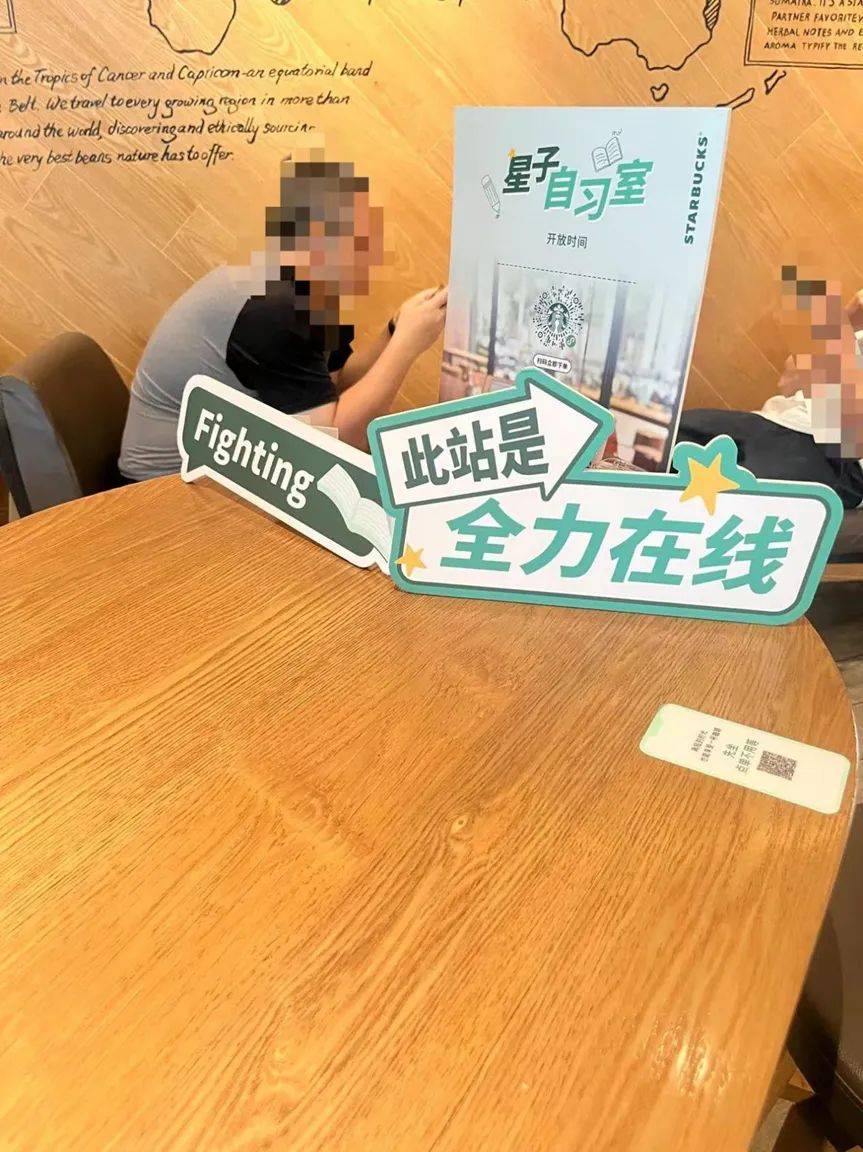
Group 1 - Starbucks has launched free "study rooms" in select stores in Guangdong, China, to boost customer traffic amid increasing competition from local rivals like Luckin Coffee [1] - The study rooms do not require a purchase, have no reservation or time limits, and offer free power outlets and hot water [1] - The initiative is part of a broader strategy to counteract the aggressive competition from local coffee and tea brands, which frequently introduce new products and flavors [1] Group 2 - Starbucks China has expanded its beverage menu with more sugar-free options and local tea flavors, significantly lowering prices and increasing customization choices [2] - The company is targeting Gen Z consumers by creating engaging entry-level drink experiences and fostering community relationships through in-store activities [2] - The new Chief Growth Officer in China is driving collaborations with movies, cartoons, and popular artists to attract younger consumers, which has helped stabilize sales in recent quarters [2] Group 3 - The study rooms also include a book donation area, aimed at attracting more customers and ultimately increasing foot traffic and revenue [2] - Starbucks is opening new stores in historically significant or scenic locations, such as a recent store in Yulong Snow Mountain, Yunnan Province, to draw in customers [2]
去星巴克上自习免费?应该给你钱才对
半佛仙人· 2025-07-23 04:57
Core Viewpoint - Starbucks is leveraging the concept of free study rooms to attract customers, suggesting that the company needs foot traffic more than customers need its services [6][10][16]. Group 1: Starbucks' Strategy - The introduction of free study rooms indicates that Starbucks is trying to increase customer footfall in its stores, which is crucial for its valuation in the eyes of investors [9][10]. - The company is in a position where it needs to demonstrate its value to both customers and investors, emphasizing the importance of having people in its stores [16][22]. - By allowing customers to use its space for free, Starbucks is essentially using them to create a lively atmosphere that can be leveraged in negotiations with landlords for rent reductions [22][24]. Group 2: Customer Perception - Customers may feel they are gaining an advantage by using Starbucks for free study sessions, but in reality, they are contributing to the company's visibility and appeal [11][12]. - The article compares this situation to other industries where businesses pay for foot traffic, suggesting that Starbucks should be compensating customers for their presence [25][26]. - The notion that customers are getting something for free is challenged by the idea that they may end up spending money on drinks, thus benefiting Starbucks financially [31][32].
星巴克为增长拼了:开自习室只是开始丨消费参考
2 1 Shi Ji Jing Ji Bao Dao· 2025-07-23 04:25
Group 1 - Starbucks has launched "self-study rooms" in several stores in Guangzhou and Shenzhen, allowing customers to study without fees, time limits, or reservations, and providing free power outlets and water [1][2] - The company is granting more autonomy to its Chinese team, as evidenced by recent price reductions on key products and collaborations with popular brands, indicating a shift towards more flexible operations [2][4] - Starbucks China reported a revenue of $739.7 million (approximately 5.317 billion RMB) for the latest fiscal quarter, with a year-on-year growth of 5%, while same-store sales remained flat [4][5] Group 2 - The increase in customers using the self-study rooms may impact the overall customer experience at Starbucks, which is a consideration for the company [3] - Comparatively, Luckin Coffee reported a revenue growth of 41.2% to 8.87 billion RMB in the first quarter, highlighting competitive pressures on Starbucks [5] - There are ongoing rumors regarding the potential sale of Starbucks' stake in China, with speculation that the company may retain 30% of its shares while distributing the rest among multiple buyers [5][6]
星巴克门店回应不消费能否自习;特斯拉餐厅来了|消费早参
Mei Ri Jing Ji Xin Wen· 2025-07-22 23:24
Group 1 - Fosun Tourism appointed Stefan Maier as the new CEO of Club Med, which is significant for the company and the tourism industry due to his extensive experience in commercial real estate and retail [1] - The appointment aligns with the trend of younger management in the tourism sector, emphasizing practical operations and sustainable development [1] Group 2 - Starbucks has introduced study rooms in select locations, allowing customers to use the space without mandatory purchases, which reflects a shift towards diversified service offerings in traditional coffee shops [2] - The availability of free amenities such as power outlets, hot water, and Wi-Fi may inspire other cafes and dining establishments to adopt similar features to meet consumer demand for shared spaces [2] Group 3 - China's service trade deficit decreased by 14% year-on-year in the first half of the year, with service trade income growing by 13% and cross-border travel income surging by 42% [3] - The improvement in service trade indicates an optimization of China's service trade structure and an enhancement of international competitiveness, with strong recovery in the tourism sector positively impacting related industries [3] Group 4 - Tesla opened its first restaurant in Hollywood, California, featuring 80 V4 supercharging stations and over 250 dining seats, along with merchandise sales [4] - The restaurant's launch is expected to enhance brand loyalty and market influence, with plans for global expansion of similar establishments to further penetrate the dining and retail sectors [4]

Will Higher Coffee Prices Derail The J.M. Smucker's Volume Momentum?
ZACKS· 2025-07-22 18:06
Core Insights - The J.M. Smucker Company's coffee prices are significantly influenced by raw ingredient costs, tariffs, changing consumer patterns, and market volatility [1] - The company has raised coffee prices to address rising import costs, particularly due to tariffs, and has implemented pricing actions across its coffee portfolio [2][9] Pricing and Sales Performance - The primary driver for the price increase is the green coffee portfolio, with additional pricing actions in the Frozen Handheld and Spreads categories to offset rising costs [2] - In Q4 FY25, U.S. Retail Coffee segment sales increased by 11% due to higher net price realization, while volume/mix remained neutral [2][9] Earnings Outlook - Management indicated that EPS growth for fiscal 2026 would have surpassed expectations if not for high green coffee costs, noting an 80-cent impact from coffee inflation and pricing, and a 25-cent impact from tariffs [3] - The fiscal 2026 outlook anticipates approximately 20% net pricing, which may lead to a 10% decline in volumes due to price elasticity of demand [4] Competitive Landscape - Key competitors include Keurig Dr Pepper Inc. and Starbucks Corporation, both of which are actively pursuing strategies to enhance their market positions [5][7] - Keurig Dr Pepper has experienced a decline in its coffee segment, while Starbucks is focusing on revitalizing operations and expanding its market share through various strategic initiatives [6][7] Valuation and Estimates - The J.M. Smucker stock has decreased by 1.9% year-to-date, compared to a 3.9% decline in the industry [8] - The company trades at a forward price-to-earnings ratio of 11.16X, below the industry average of 16.04X [10] - The Zacks Consensus Estimate for fiscal 2026 EPS suggests a year-over-year decline of 9.7%, while fiscal 2027 indicates an 8.7% growth [11]



免费不限时还免预约,星巴克自习室藏着哪些“小心思”?
Bei Jing Shang Bao· 2025-07-22 12:40
Core Viewpoint - Starbucks China is expanding its brand from a "coffee consumption space" to a "diverse interest space" by introducing study rooms in select locations, aiming to provide consumers with a conducive environment for studying during the summer [1][5]. Group 1: New Initiatives - Starbucks China has launched the "Starzi Study Room" in some stores in Guangdong, allowing customers to study without any fees, time limits, or reservations, and providing amenities like free power outlets and water [5][6]. - The study rooms are designed to attract high-quality customers and encourage book exchanges among patrons, although some customers express concerns about noise during peak hours [5][6]. Group 2: Market Strategy - The introduction of the study room is seen as a strategic move to differentiate Starbucks from competitors in a market characterized by product homogeneity, leveraging its store space as a core competitive advantage [6][7]. - Starbucks China is also exploring diverse service offerings, such as a new focus on non-coffee beverages, with significant price reductions on summer drinks, indicating a broader strategy to enhance customer engagement [6][7]. Group 3: Future Growth and Challenges - There are reports of interest from investment firms in acquiring Starbucks China's business, highlighting the perceived growth potential in the Chinese market [7]. - Despite various initiatives, market feedback suggests that consumer demands for customized space are increasing, indicating that Starbucks China needs to adapt its strategies to local consumption patterns for better differentiation [7].