
腾讯

Search documents
阿里发布新一代万相2.6系列模型!科创人工智能ETF华夏(589010) 盘中震荡调整,回调或迎布局良机
Mei Ri Jing Ji Xin Wen· 2025-12-16 06:32
(文章来源:每日经济新闻) 国信证券表示,AI已呈现对互联网巨头广告业务场景、云计算场景和企业效率方面的明显作用,典型 体现在Q2腾讯广告持续保持在20%增长、阿里云增速环比提速至26%,同时利润端腾讯、腾讯音乐、快 手等公司经营效率提升明显。此外,近期随着百度、阿里为代表的互联网公司推出自研芯片,完成芯 片、模型、应用全链条布局的云厂有望实现市场份额的持续提升。 科创人工智能ETF华夏(589010)紧密跟踪上证科创板人工智能指数,覆盖全产业链优质企业,兼具高研 发投入与政策红利支持,20%涨跌幅与中小盘弹性助力捕捉AI产业"奇点时刻"。 截至13:57,科创人工智能ETF(589010) 下跌1.44%,目前价格在1.3元整数关口附近反复确认支撑,对于 看好AI长期发展的投资者而言,当前的调整或提供了相对"便宜"的介入契机。持仓股方面虽然跌多涨 少,但不乏结构性亮点:星环科技一马当先大涨超6%,展现出强劲的弹性,合合信息、天准科技等个 股逆势飘红;另一方面,寒武纪、中科星图等前期热门股跌幅超4%,释放了部分获利盘压力。流动性 方面,成交额突破7000万元,显示出在调整行情中仍有资金承接,投资者或可把握震荡 ...
国投证券港股晨报-20251216
Guotou Securities· 2025-12-16 05:04
Core Insights - The report indicates that China's economy continued to show steady progress in November, with the Hang Seng Index declining by 1.34% and significant trading activity in the stock market [2][3] - The report highlights the performance of various sectors, including a rise in consumer goods and gold stocks, with notable increases in companies like Xiaomi and China Ping An [2][4] Company Overview - The specific company under review, Zhihui Mining (2546.HK), is engaged in the exploration, mining, and production of zinc, lead, and copper in Tibet, ranking fifth, fourth, and fifth respectively in these categories for 2024 [8] - The company has significant mineral reserves, with open-pit and underground mines expected to operate for 8 and 31 years respectively [8][10] Financial Performance - The company's projected revenues for 2022, 2023, and 2024 are approximately RMB 482.35 million, RMB 546.13 million, and RMB 301.43 million, reflecting a year-on-year growth of 13.2% and a decline of 44.8% [9] - The gross profit margins for copper concentrate exceed 80%, while zinc concentrate margins are more volatile [9] Industry Status and Outlook - The demand for zinc concentrate in Tibet is projected to grow at a compound annual growth rate (CAGR) of -0.5% from 2018 to 2024, with a slight recovery expected from 2025 to 2028 [10] - The report anticipates stable zinc concentrate prices between RMB 18,600 and RMB 19,000 per ton, with a similar upward trend expected for lead and copper concentrates [10] Advantages and Opportunities - The company benefits from resource and geographical advantages, being located in a region rich in metals such as lead, zinc, copper, and silver [11] - A professional technical team and good community relations further enhance the company's operational capabilities [11] Use of Proceeds - The company plans to allocate approximately 29.2% of the funds raised for enhancing mining capabilities, 23.4% for exploration investments, and 18.7% for improving ore processing and production optimization [13][14] Investment Recommendation - The company has achieved profitability with a net profit of over HKD 100 million, and despite challenges in 2024, a recovery is anticipated [16] - The report suggests a cautious approach to investment, rating the company at "5.5" and recommending attention due to its positive cash flow and the potential for oversubscription in its IPO [16]
巨人网络20251215
2025-12-16 03:26
Summary of the Conference Call for Giant Network Industry Overview - The gaming sector is experiencing a valuation correction, currently around 20 times earnings, down from a previous high of 25 times, indicating potential for further upside to the 25-30 times range [2][4] - The gaming industry is expected to see a significant product launch year in 2026, with major titles from companies like Perfect World, Tencent, Lilith, and miHoYo, alleviating concerns about declining product growth [2][6] Company Performance - Giant Network's game "Supernatural" has performed exceptionally well, generating 1.5 billion yuan in revenue from July to September, with September's revenue exceeding expectations and daily active users (DAU) reaching a record high of nearly 7 million during the National Day holiday [2][7] - The revenue recognition cycle for "Supernatural" was adjusted from two months to three months, which could increase revenue by approximately 270 million yuan, bringing total revenue to 3 billion yuan and profit to 850 million yuan for the third quarter [2][8] - The sales expense ratio for "Supernatural" is maintained below 20% of revenue, with a net profit margin of 50%, primarily due to a high percentage of downloads from the official website, resulting in lower channel costs [2][9] Future Product Pipeline - In addition to "Supernatural," Giant Network has several upcoming titles, including "Famous Generals Kill," "5000 Years," and "Pocket Fighting," with expectations of quarterly profits of 300-400 million yuan in 2026 and "Supernatural" potentially generating 6 billion yuan in revenue [3][14] Market Trends and Opportunities - The Chinese gaming market is diversifying, with both large productions and casual games coexisting, driven by user demand for casual gaming experiences [10] - There is a notable shift towards targeting younger and female demographics, with companies like Giant Network and others developing games that appeal to these groups [10][11][13] - The gaming industry is witnessing a rise in casual games that cater to modern lifestyles, providing quick entertainment options [10] Investment Insights - The current market correction offers a favorable entry point for investors, with a potential upside of 50% as valuations have adjusted from 25 times to below 20 times [5] - The overall performance of the gaming sector is expected to stabilize, with a long-term outlook suggesting valuations could reach 25-30 times [4] Conclusion - Giant Network is well-positioned for future growth, with a strong product pipeline and a focus on expanding its user base. The company is expected to maintain its leading position in the market, potentially driving significant profits and market sentiment in the coming years [14]

高盛:中美科技竞争
Goldman Sachs· 2025-12-16 03:26
Investment Rating - The report does not explicitly provide an investment rating for the industry Core Insights - The United States maintains an advantage in high-end blueprint design, while China is rapidly catching up in technology application and digital infrastructure, particularly in robotics and electronic engineering talent cultivation [1] - U.S. export controls have accelerated China's domestic chip production but have not completely stifled its technological progress [1][4] - China is addressing restrictions by utilizing low-end chips and acquiring partial technology usage rights [4] - Control over rare earth resources by China poses a potential risk, necessitating the U.S. to enhance investments in rare earth mining and seek collaboration with allies like Australia and Canada to ensure supply chain security [1][5] - Increased research funding and attracting global talent are essential for the U.S. to maintain its technological leadership, alongside ensuring that technological development aligns with its values and standards [1][6] Summary by Sections Section 1: U.S.-China Technology Competition - Technology plays a crucial role in U.S.-China strategic competition, impacting military strength, economic influence, and information dissemination [3] - The U.S. leads in most advanced technologies such as semiconductors, AI frameworks, cloud infrastructure, and quantum computing, while China excels in quantum communication, hypersonic technology, and battery technology [3] - China is rapidly catching up in application areas, with its manufacturing sector utilizing robots at a rate 12 times higher than other countries [3] Section 2: Impact of U.S. Export Controls - U.S. export controls have accelerated China's efforts to reduce dependence on American chips, but they do not guarantee long-term U.S. technological leadership [3][4] - China is working to develop alternative technologies despite facing challenges due to these restrictions [12] Section 3: Rare Earth Resources - China's control over rare earth minerals is a significant concern for the U.S., which is taking measures to invest in rare earth mining and collaborate with allies to secure supply sources [5] Section 4: Measures for U.S. Competitiveness - The U.S. needs to increase research funding, attract top global talent, and ensure that its technological advancements align with its values to maintain competitiveness [6][7] Section 5: China's Strategic Focus - China must continue targeted investments in key areas, support local chip manufacturing, and build international trust to enhance its technological standing [8][9] Section 6: Semiconductor Self-Sufficiency - China is likely the only country that could achieve semiconductor self-sufficiency due to its large pool of STEM graduates and government support, although challenges remain in system integration and maintenance [11] Section 7: AI Competition - The U.S. relies on scaling GPU and computing power to maintain its lead in AI, while China's ability to overcome hardware bottlenecks will be critical [2][14] - Energy supply is a key factor for AI infrastructure, with China's unified grid facilitating easier power delivery compared to the U.S. [13]
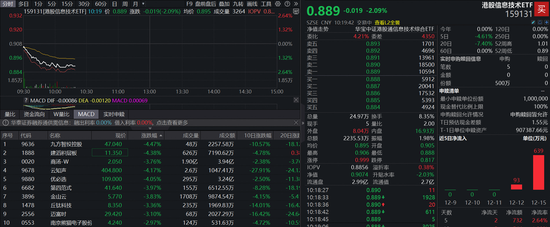
“港股芯片”再调整,资金跑步进场!港股信息技术ETF(159131)跌超2%再获净申购500万份
Xin Lang Cai Jing· 2025-12-16 02:48
Core Viewpoint - The Hong Kong stock market's semiconductor industry chain is experiencing a downturn, with several stocks dropping over 4%, while the first ETF focused on this sector is showing signs of volatility and net inflow [1][5]. Group 1: Market Performance - The Hong Kong semiconductor industry chain saw significant declines, with stocks like Jiufang Zhitu Holdings, Jintao Laminated Board, and Cloud Know Voice dropping over 4% [1][5]. - The newly launched Hong Kong Information Technology ETF (159131) opened lower, down 2.09%, with a real-time transaction amount of 22.35 million yuan, indicating a widening premium [1][5]. - The ETF recorded a net inflow of 6.39 million yuan yesterday and an additional net subscription of 5 million units today [1][5]. Group 2: ETF Details - The ETF is the first in the market to focus on the "Hong Kong semiconductor" industry chain, with a composition of 70% hardware and 30% software, covering 42 Hong Kong hard-tech companies [3][7]. - Major holdings include SMIC with a weight of 20.48%, Xiaomi Group-W at 9.53%, and Huahong Semiconductor at 5.80%, excluding large-cap internet companies like Alibaba and Tencent [3][7]. - The index tracked by the ETF has a sample weight cap of 15%, with adjustments made every six months, which may lead to fluctuations in individual stock weightings [3][7]. Group 3: Industry Insights - According to recent research, the self-sufficiency of the semiconductor supply chain is a key theme in China's hard technology sector, supported by strong domestic demand and policy backing [6][8]. - The geopolitical landscape is reshaping the global semiconductor industry, with major economies prioritizing local manufacturing to mitigate supply chain risks [6][8]. - This trend is also evident in other regions like the US, EU, and Japan, where government subsidies are expected to reshape the competitive landscape of the global semiconductor industry in the medium term [6][8].

每日投资策略-20251216
Zhao Yin Guo Ji· 2025-12-16 01:42
Macro Economic Outlook - The economic momentum in China is weakening, with November economic indicators falling below market expectations, indicating a further decline in economic activity [2] - Retail sales growth dropped to a post-pandemic low, significantly affected by high base effects and demand exhaustion from old-for-new subsidies, particularly in durable goods like home appliances, furniture, and automobiles [2] - Fixed asset investment growth has sharply declined, with real estate investment hitting a historical low, and both manufacturing and infrastructure investment growth continuing to slow [2] - A comprehensive decline in the real estate market, durable goods consumption, and new household loans suggests weakening terminal demand, forecasting a sluggish economic growth momentum into Q1 2026 [2] - GDP growth is expected to fall from 5% in 2025 to 4.8% in 2026, potentially triggering a new round of policy easing, including a 50 basis point RRR cut and a 10 basis point LPR cut in Q1 2026 [2] Global Market Performance - Major global stock indices showed mixed performance, with the Hang Seng Index closing at 25,629, down 1.34% for the day but up 27.76% year-to-date [2] - The S&P 500 and NASDAQ also experienced slight declines of 0.16% and 0.59% respectively, while the DAX and CAC indices saw minor gains [2] - The performance of the Chinese stock market was characterized by declines in healthcare, consumer discretionary, and information technology sectors, while consumer staples, utilities, and financials outperformed [4] Industry Outlook - The semiconductor industry is projected to maintain four core investment themes for 2026: AI-driven structural growth, China's semiconductor self-sufficiency trend, high-yield defensive allocations, and industry consolidation and mergers [5] - The global semiconductor market is expected to grow by 26% year-on-year to reach $975 billion in 2026, with AI-related segments leading the growth, particularly logic chips and memory chips [5] - Notable stock performances include Zhongji Xuchuang with a year-to-date increase of 407%, Shengyi Technology at 172%, and Northern Huachuang at 64.9% [5]
豆包手机触碰了大厂APP的“逆鳞”
3 6 Ke· 2025-12-15 23:28
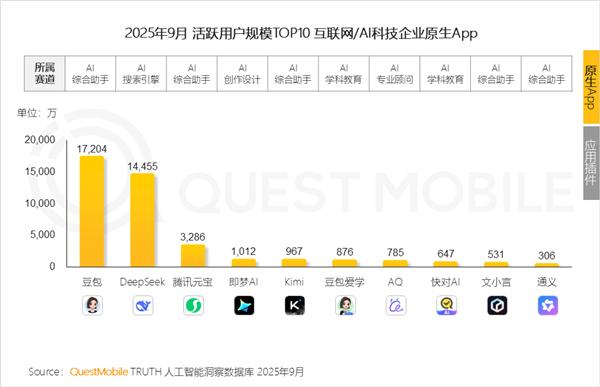
Core Viewpoint - The emergence of Doubao AI phone has sparked significant interest in the potential of AI agents as a new entry point in the internet ecosystem, but it faces immediate backlash from major internet companies due to security and operational concerns [1][2][3]. Group 1: Doubao AI Phone and Its Features - Doubao AI phone allows users to perform complex cross-application operations through an integrated AI agent, enhancing user experience [1]. - Users reported issues with accessing major applications like WeChat and Alipay shortly after the phone's launch, indicating a significant reduction in functionality [2]. - The phone's initial appeal diminished as it could no longer utilize its AI capabilities effectively with popular apps, leading to a decline in user experience [2]. Group 2: Industry Response and Competition - Industry insiders expressed a lack of surprise at the backlash against Doubao, with Tencent attributing the issues to existing security measures [3]. - The competition for the next generation of traffic entry points among internet giants is intensifying, with companies like Alibaba and Tencent scrambling to establish their AI applications [4][5]. - Doubao's rapid rise in daily active users (DAU) highlights its initial success, but subsequent declines in user engagement raise questions about its sustainability [6]. Group 3: The Shift in User Engagement and Advertising - The dominance of major apps like Taobao and WeChat has led to a high concentration of user traffic, creating a "traffic anxiety" among internet companies [4][5]. - The introduction of GUI agents, which can operate apps without user interaction, threatens traditional advertising revenue models by bypassing app usage [13][15]. - The growth of AI assistants among smartphone manufacturers indicates a shift in the value chain from internet companies to hardware manufacturers [16]. Group 4: Future Implications and Developments - The release of Doubao AI phone has prompted other companies to accelerate their development of AI agents, with a focus on creating competitive products [19][20]. - The open-sourcing of AI agent models could democratize access to this technology, potentially leading to a proliferation of personalized agents that challenge established players [21]. - The urgency for internet giants to adapt and innovate in response to the evolving landscape of AI applications is becoming increasingly critical [22].
赋能百业、资本追捧 3D打印赛道将迎黄金发展期
Zheng Quan Ri Bao· 2025-12-15 22:56
Core Insights - The transition from "Made in China" to "Intelligent Manufacturing in China" is accelerating, with 3D printing becoming a core variable in various industries, evidenced by a nearly 50% increase in the 3D printing concept index as of December 15 [1] - The 3D printing industry is experiencing a significant transformation, moving from niche applications to becoming a mainstay in manufacturing, driven by policy support and surging market demand [1][2] Industry Growth and Market Dynamics - The production of 3D printing equipment surged by 100.5% year-on-year in November, outpacing other high-end manufacturing categories like industrial robots and electric vehicles [1] - The consumer-grade 3D printing market is expanding rapidly, with a projected market size of $4.1 billion in 2024, expected to grow to $16.9 billion by 2029, reflecting a compound annual growth rate of 33.0% [4] - The price of consumer-grade 3D printers has significantly decreased, with stable mid-range models now priced around 3,000 yuan, comparable to smartphones, down from over 10,000 yuan three years ago [4] Technological Advancements - Innovations in AI modeling and materials are lowering the barriers for consumer-grade 3D printing, making it more accessible and cost-effective [3][4] - Industrial-grade 3D printing is increasingly being adopted across various manufacturing sectors, including automotive, where it facilitates rapid prototyping and reduces development costs [5][7] Capital Influx and Investment Trends - The 3D printing sector has seen a surge in investment, with major tech companies like Tencent and Meituan entering the market, indicating strong future growth potential [8][10] - The A-share market for 3D printing stocks has shown robust performance, with over 80% of companies in the sector experiencing stock price increases this year [9] Consumer Demand and Customization - The rise of personalized consumption is driving demand for 3D printing, particularly in niche markets like cosplay and custom figurines, where consumers seek unique, tailored products [2][3] - The combination of industrial and consumer demands is reshaping the market, with 3D printing technology becoming a critical tool for meeting new manufacturing requirements [7][9]
凯撒文化摘帽;《33 号远征队》获TGA年度游戏丨游戏周报
2 1 Shi Ji Jing Ji Bao Dao· 2025-12-15 11:11
Industry Highlights - The TGA 2025 awards concluded with "Light and Shadow: Expedition 33" by Sandfall Interactive winning nine awards, including Game of the Year and Best Narrative [1][2] - The Chinese game "Ming Chao" received the Player's Voice award at TGA 2025, marking another significant recognition for Chinese gaming [2] - In November 2025, 33 Chinese mobile game publishers made it to the global top 100 revenue list, collectively earning $1.95 billion, which accounts for 35.8% of the total revenue of the top 100 [3] - The esports industry in China is projected to generate revenue of 29.331 billion yuan in 2025, reflecting a year-on-year growth of 6.40% [9] Company Developments - Caesar Culture announced that its stock will resume trading without the ST designation starting December 11, 2025, after previously facing penalties for profit inflation [5] - Century Huatong disclosed its indirect investment in Moore Threads, with an estimated profit impact of 640 million yuan on its Q4 2025 net profit [6] - 37 Interactive Entertainment plans to invest up to $2 million in the Lighthouse Founders' Fund, which has a target size of $80 million, and has also acquired a 7.5% stake in Weihai Hanyuan Network [7] - Lingyoufang's action game "Shadow Blade Zero" is set to launch on September 9, 2026, showcasing a blend of dark martial arts and steampunk aesthetics [4] Regulatory Changes - Australia has enacted a strict law prohibiting users under 16 from owning social media accounts or accessing platforms like TikTok and Facebook, making it the first country to implement such a ban [8]


【港股收盘快报】港股恒指跌1.34% 科指跌2.48% 科网股、生物医药股普跌 黄金股活跃 百...
Xin Lang Cai Jing· 2025-12-15 10:16
12月15日,港股三大指数低开低走。截至收盘,恒生指数跌1.34%,报25628.88点,恒生科技指数跌 2.48%,国企指数跌1.78%。 盘面上,科网股普跌,百度跌幅超过5%,快手跌幅超过4%,阿里巴巴跌幅超过3%,腾讯、小米跌幅超 过2%,京东、哔哩哔哩、美团、联想跌幅超过1%;黄金股涨幅居前,紫金黄金国际涨幅超过7%;保险 股强势,中国平安创逾四年新高;芯片股跌幅居前,华虹半导体跌幅超过6%;生物医药板块普跌,百 济神州跌幅超过8%。 来源:青岛财经日报 ...