奔驰

Search documents
关税令欧洲经济蒙上阴影 多个支柱产业首当其冲
Zhong Guo Jing Ji Wang· 2025-08-25 00:38
Group 1 - The US and EU have reached a framework agreement on trade, maintaining a 15% tariff cap on most EU goods, impacting sectors like automotive, pharmaceuticals, semiconductors, and timber [1][2] - Eurozone exports have significantly declined, with a year-on-year drop of over 10% to the US, reflecting the impact of increased tariffs [1][2] - In June, Eurozone exports fell by 2.4% month-on-month, while imports rose by over 3%, leading to a substantial decrease in trade surplus from €15.6 billion in May to €2.8 billion [1] Group 2 - The automotive industry is under severe pressure, with companies like German and French automakers heavily reliant on the US market facing uncertainty due to tariffs [3] - The metal industry is struggling with a 50% tariff on steel and aluminum, leading to reduced orders and canceled contracts for major exporting countries like Germany and Italy [3] - The wine and spirits industry is also affected, with a 15% tariff on EU imports, potentially leading to significant economic losses and increased financial burdens [3] Group 3 - European companies are responding to high tariffs by raising prices, with brands like BMW and Mercedes-Benz passing some costs onto consumers [4] - Companies are also localizing production and considering expanding manufacturing capacity in the US to mitigate tariff risks [4] - Some small and medium exporters are shifting focus to markets in Southeast Asia and the Middle East to reduce dependence on the US [5] Group 4 - The pressure from tariffs is translating into macroeconomic challenges, with Eurozone industrial output declining by 1.3% month-on-month in June, indicating manufacturing sector stress [6] - Although the Eurozone GDP showed positive growth in Q2, signs of industrial weakness are becoming more apparent, particularly for export-dependent countries like Germany and the Netherlands [6] - Economists warn that if automotive tariffs are not reduced soon, Eurozone exports may face further pressure, impacting corporate profits and overall economic growth [6]
关税令欧洲经济蒙上阴影
Jing Ji Ri Bao· 2025-08-24 21:55
Group 1: Trade Agreement and Tariffs - The United States and the European Union have reached a framework agreement on trade, reaffirming a 15% tariff cap on most EU goods, including automobiles, pharmaceuticals, semiconductors, and timber [1][2] - Since the beginning of the year, the U.S. has gradually increased tariffs on European goods, with most EU products facing a 15% baseline tariff as of August, significantly higher than the previous average of less than 5% [2][3] - The EU's exports to the U.S. have seen a year-on-year decline of over 10%, reflecting the severe impact of the U.S. tariff measures [1][3] Group 2: Impact on European Industries - The automotive industry is under significant pressure, with German and French manufacturers heavily reliant on the U.S. market, facing uncertainty in long-term planning due to tariff fluctuations [3][4] - The metal industry is experiencing severe challenges, with steel and aluminum products subjected to a 50% tariff, leading to a sharp reduction in orders from major exporting countries like Germany and Italy [3][4] - The wine and spirits industry is also affected, with French wines and Italian spirits facing a 15% tariff, potentially leading to a 30% increase in financial burdens for the industry [3][4] Group 3: Corporate Strategies and Adjustments - European companies are actively seeking strategies to cope with high tariffs, including price increases to pass on costs to consumers, as seen with brands like BMW and Mercedes [4][5] - Some companies are accelerating localization efforts and considering expanding production capacity in the U.S. to mitigate tariff risks, with Volkswagen planning attractive investment initiatives [4][5] - Smaller exporters are shifting their market focus to Southeast Asia and the Middle East to reduce dependence on the U.S. market [5] Group 4: Economic Indicators and Future Outlook - The eurozone's industrial output fell by 1.3% month-on-month in June, indicating pressure on the manufacturing sector, despite positive GDP growth in Q2 [6] - Economists warn that if automotive tariffs are not reduced soon, eurozone exports may face further pressure in Q3, potentially impacting corporate profits and overall economic growth [6]
为求生存,燃油车悄然降价简配
经济观察报· 2025-08-23 10:47
Core Viewpoint - The automotive market is undergoing a complex transformation, with traditional fuel vehicles adapting through price cuts and simplifications while electric vehicles face their own challenges in market positioning and strategy [1][2][3]. Group 1: Fuel Vehicle Strategies - Traditional fuel vehicle companies are adopting a "price for volume" strategy, reducing prices while simplifying configurations, such as using lower-quality materials and reducing advanced features [2][6]. - The Nissan Sylphy has introduced a new base model priced at 75,800 yuan, significantly lower than previous models, achieved through substantial configuration reductions [6][7]. - High-end fuel vehicles are also engaging in price cuts and simplifications to capture market share, as seen with the Volkswagen Touareg's new model priced at 508,800 yuan, down from its previous entry-level model [7][8]. Group 2: Market Dynamics - The retail sales of fuel vehicles showed a slight growth of 0.35% year-on-year in July 2025, indicating that fuel vehicles are still maintaining a presence in the market despite the rise of electric vehicles [3][16]. - The penetration rate of new energy vehicles reached 54% in the domestic passenger car market by July 2025, highlighting the increasing competition between fuel and electric vehicles [16][19]. - The market is shifting towards hybrid models, with companies like Toyota phasing out pure fuel versions in favor of hybrid options, reflecting a broader trend of energy diversification [16][19]. Group 3: Technological Adaptation - Fuel vehicles are increasingly integrating smart technologies to enhance competitiveness, with models like the Audi A5L featuring advanced driving systems developed in collaboration with tech companies [11][12]. - The cost of integrating smart features into fuel vehicles is expected to increase by 15% to 20%, posing challenges for mid-range models [14]. - Major automotive companies are leveraging economies of scale to manage costs while enhancing the smart features of their fuel vehicles, as seen in Volkswagen's strategy for the Chinese market [14]. Group 4: Future Outlook - The global automotive landscape is evolving, with predictions indicating that the market share of traditional fuel vehicles will decline from approximately 59% in 2023 to around 31% by 2030 [19]. - The future automotive market is expected to consist of a diverse energy system, with no single powertrain dominating, but rather a coexistence of electric, hybrid, and fuel vehicles based on specific market needs [19].

关税后果初现,百亿美元或蒸发,美盟友陷焦虑,中国成最大赢家?
Sou Hu Cai Jing· 2025-08-23 04:58
Group 1: Impact of Tariff Policies - Trump's tariff policy has led to significant negative impacts globally, particularly affecting U.S. allies such as Japan and South Korea, causing anxiety and dissatisfaction towards the U.S. [1][5] - Japan's automotive industry has been severely hit, with a continuous decline in exports to the U.S. and projected revenue losses of 1.4 trillion yen for Toyota due to tariffs [7][8] - South Korea's automotive exports have decreased by nearly 17%, with major manufacturers like Hyundai facing an additional cost pressure of up to $5 billion [9] Group 2: Domestic Consequences in the U.S. - The tariff policy, while aimed at China, has also adversely affected U.S. companies, exemplified by Ford's net profit plummeting by 86.2% in the first half of 2025 [16] - The steel industry in the U.K. is experiencing heightened anxiety due to increased tariffs, with the U.S. raising import taxes on steel and aluminum to 50% [11] Group 3: Opportunities for Chinese Companies - Chinese automotive manufacturers are accelerating their overseas expansion, with exports exceeding 3.08 million units in the first half of 2025, a 10.4% increase year-on-year [19][20] - The unfavorable conditions for Japanese and Korean automakers are providing Chinese companies with opportunities to strengthen their presence in global markets, particularly in Europe [20][24] Group 4: Performance of Multinational Automotive Companies - Major automotive companies have reported varying performance metrics in the first half of 2025, with significant declines in net profits for companies like Ford (down 86.2%) and BMW (down 29.0%) [21] - The overall trend indicates that many traditional automakers are struggling under the weight of tariffs and changing market dynamics [21] Group 5: Future Trends in the Automotive Industry - The EU's recent policy to ban the sale of fossil fuel vehicles by 2035 is expected to accelerate the development of electric vehicles, positioning Chinese companies as key beneficiaries due to their advantages in the EV sector [22][24]
财报“透视”:日系车企三强的喜与忧
Zhong Guo Jing Ying Bao· 2025-08-22 21:13
Core Viewpoint - The Japanese automotive industry, particularly the "Big Three" (Toyota, Honda, Nissan), is facing significant profit contraction due to U.S. tariff pressures and the transition to electric vehicles, despite some revenue growth [1][2][3]. Financial Performance - Toyota's net profit for Q1 of FY2025 decreased by 36.9% to 841.4 billion yen (approximately 40.7 billion RMB), while operating profit fell by 11% to 1.17 trillion yen (approximately 56.6 billion RMB) [1][3]. - Honda's net profit dropped by 50.2% to 170.4 billion yen (approximately 8.24 billion RMB), with operating profit down by 49.6% to 244.2 billion yen (approximately 11.89 billion RMB) [1][4]. - Nissan reported a loss of 79.1 billion yen (approximately 3.83 billion RMB) in operating profit, a significant decline from a profit of 1 billion yen (approximately 48.1 million RMB) in the previous year [5]. Impact of U.S. Tariffs - The U.S. government's imposition of a 25% tariff on imported vehicles and additional tariffs on core components has severely impacted the profitability of Japanese automakers [4][7]. - Toyota estimated a loss of 450 billion yen (approximately 21.8 billion RMB) in operating profit due to tariffs for Q1, with an annual forecast of 1.4 trillion yen (approximately 67.7 billion RMB) [3][4]. - Honda also projected a loss of 450 billion yen (approximately 21.8 billion RMB) in operating profit for FY2025 due to U.S. tariffs [4]. Market Performance in China - Despite challenges in the U.S. market, Toyota's sales in China increased by 6.8% to 837,700 units in the first half of the year, marking its first year-on-year growth in nearly four years [8][11]. - Nissan's sales in China rose by 21.8% in July, driven by the success of its new electric model, the N7 [9][10]. - Honda's performance in China lagged behind, with a 14.75% decline in July sales, reflecting struggles in both traditional fuel and new energy vehicle segments [10][11]. Strategic Responses - Toyota is focusing on local partnerships and expanding its hybrid and electric vehicle offerings in China to adapt to market demands [8][11]. - Nissan plans to invest 10 billion RMB in electric vehicle development in China and aims to launch 10 new electric models over the next two years [6][9]. - Honda is attempting to strengthen its position in the electric vehicle market with new product launches, although initial sales have been underwhelming [10][11].


中国品牌掘金超跑市场
Zhong Guo Qi Che Bao Wang· 2025-08-22 11:18
Core Viewpoint - The supercar market is undergoing a significant transformation, with Chinese brands emerging as challengers against the long-standing dominance of European brands in the high-end automotive sector [2][3][11] Market Landscape - The global supercar market has been historically centered around European brands like Ferrari, Lamborghini, and Porsche, which have established strong market barriers through technology, brand recognition, and supply chain control [3][4] - In 2024, the top 10 supercars in China priced over 1 million yuan sold a total of 4,219 units, with European brands accounting for over 90% of both brand and sales statistics [3] Technological Advancements - Chinese brands are exploring diverse paths in the supercar sector, achieving breakthroughs in both electric and fuel-powered vehicles [3][4] - NIO's EP9 set a record at the Nürburgring with a time of 6 minutes and 45.90 seconds, while BYD's Yangwang U9 has begun mass production, showcasing the feasibility of "overtaking" in the high-end electric supercar market [3][4] - Great Wall Motors is developing a hybrid supercar with a 4.0T V8 engine and electric motor, achieving a combined power of 1,000 horsepower and a 0-100 km/h acceleration time of under 2.5 seconds [4] Industrial Foundation - Chinese brands have made significant advancements in core technology, enabling self-research and development of key components, which supports the industrialization of supercars [5][6] - Great Wall's 4.0T V8 engine boasts a thermal efficiency of 38.5%, while BYD's blade battery achieves an energy density of 180 Wh/kg, enhancing safety and charging capabilities [5][6] Cost and Supply Chain Advantages - Chinese brands benefit from a complete electric vehicle supply chain, with core components costing 30%-40% less than those of European brands, allowing for lower production costs for electric supercars [7] - The upcoming luxury car tax adjustment in China may initially pressure high-end markets but could ultimately foster technological upgrades and enhance brand recognition for domestic brands [8] Marketing and Brand Strategy - Chinese brands are investing in marketing innovations and global positioning to build a unique brand ecosystem, with NIO and Great Wall Motors focusing on experiential marketing to enhance brand perception [9][10] - The strategic value of supercars extends beyond direct sales, as they serve as brand symbols that elevate overall brand equity and profitability [8][10] Challenges and Future Outlook - Despite advancements, Chinese brands face challenges in brand recognition, cost control, and service systems, which require long-term efforts to transition from technical advantages to ecological advantages [10] - The future of the global supercar market is expected to integrate electrification, intelligence, and sustainability, providing greater opportunities for Chinese brands to redefine their roles and establish new market standards [11]


比亚迪赛车场:高端化的新引擎
Tianfeng Securities· 2025-08-22 06:24
Industry Investment Rating - The industry investment rating is "Outperform the Market" [1] Core Insights - The report emphasizes the integration of racing culture and high-end branding for BYD, showcasing how the newly built all-terrain racetrack in Zhengzhou serves as a platform for technology application and user engagement [2][4][21] - The report draws parallels between BYD's strategy and historical examples from global automotive brands like Mercedes and Ferrari, highlighting the importance of racing success in enhancing brand perception and driving sales [3][22][24] Summary by Sections Section 1: BYD Racetrack - The BYD Zhengzhou all-terrain racetrack has been completed and opened, representing a significant investment of 5 billion yuan, featuring diverse driving experiences such as drifting and off-road challenges [11] - The racetrack serves as a testing ground for key technologies like Yisifang and Yunian, facilitating the connection between technology and users [2][12] Section 2: Racing Culture and Brand Evolution - The racetrack is positioned as a tool for brand elevation, with a focus on user engagement through various activities that blend technology validation and consumer experience [23] - Historical examples from F1 and other racing events illustrate how success on the racetrack can translate into brand prestige and sales growth for automotive companies [24][26][30] Section 3: High-End Product Strategy - BYD is set to launch several high-end models in the latter half of 2025, including the Fangchengbao Titanium 7, Yangwang U8L, and Tengshi N8L, targeting different segments of the luxury SUV market [41][53] - The Fangchengbao Titanium 7 is designed for both urban commuting and off-road capabilities, while the Yangwang U8L emphasizes luxury and advanced driving features [47][50] - The Tengshi N8L showcases a modern design and strong performance metrics, appealing to younger consumers [53][55]
充分竞合?奔驰或将搭载宝马发动机
Jing Ji Guan Cha Bao· 2025-08-22 04:21
Core Viewpoint - The collaboration between Mercedes-Benz and BMW reflects a strategic balance between traditional internal combustion engine (ICE) operations and the transition to electric vehicles (EVs), showcasing a dual approach to meet market demands and regulatory pressures [1][2]. Group 1: Engine Collaboration - Mercedes-Benz is in advanced negotiations with BMW to supply its 2.0-liter turbocharged four-cylinder engine (B48 series) for multiple Mercedes models, which aligns with the upcoming Euro 7 emission standards [1]. - This engine can be utilized across various platforms, including models such as CLA, GLA, GLB, C-Class, E-Class, GLC, and the planned "small G" series, potentially produced in Austria or the U.S. to avoid tariffs [1][2]. - The partnership allows Mercedes to reduce R&D costs for ICEs while maintaining competitiveness in the plug-in hybrid and range-extended vehicle markets [1]. Group 2: Charging Network Collaboration - Mercedes and BMW have established a joint venture, Beijing Yianqi New Energy Technology Co., Ltd., to build and operate a high-power charging network in China, with plans to construct at least 1,000 charging stations and approximately 7,000 charging piles by the end of 2026 [1][2]. - The charging stations will feature a rated power of 600 kW and a maximum current of 800 A, supporting a voltage range of 200V to 1000V, and will offer functionalities like plug-and-charge and online reservations [2]. - This collaboration addresses the growing demand for high-end charging experiences and reflects the necessity for infrastructure investment as a competitive differentiator in the luxury automotive market [2]. Group 3: Market Dynamics - The dual strategy of maintaining ICE and hybrid models while enhancing EV charging infrastructure illustrates the challenges luxury automakers face amid slow EV sales growth and limited profit contributions from electric vehicles [2]. - The partnership between Mercedes and BMW signifies a pragmatic approach to resource sharing and cost distribution, highlighting the flexible stance of luxury car manufacturers in navigating competition and collaboration during the transition period [2]. - If the engine collaboration is finalized, consumers may see Mercedes vehicles equipped with BMW engines, alongside access to the jointly developed high-power charging network in China, representing a compromise in the face of industry uncertainties [2].
长城汽车超豪车项目招标,要求供应商服务过苹果、保时捷等品牌
Xin Lang Ke Ji· 2025-08-22 03:16
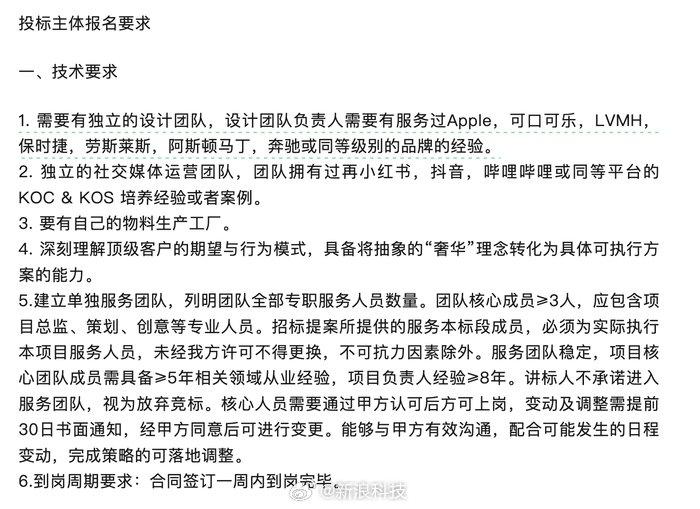
【#长城超豪华车招标要求服务过苹果等#】传闻已久的长城汽车超豪华车项目迎来新动作。近日,长城 控股招标中心发布《长城汽车超豪车BG品牌用户活动项目》招标公告,面向全球公开招募具备超豪品 牌服务经验与卓越社交媒体运营能力的的供应商,服务长城汽车超豪车BG,协助用户活动的规划和执 行。 在投标主体报名要求上,需要有独立的设计团队,设计团队负责人需要有服务过Apple,可口可乐, LVMH,保时捷,劳斯莱斯,阿斯顿马丁,奔驰或同等级别的品牌的经验。对到岗周期要求,需合同签 订一周内到岗完毕。 长城汽车还对投标主体的业绩提出要求,应标方在2019-2024年,期间有服务超高净值人群的、有可被 核实的成功案例,例如奢侈品用户活动(LV,爱马仕、香奈儿、迪奥、古驰、芬迪等),超豪车用户 活动(劳斯莱斯,阿斯顿马丁,保时捷、法拉利、迈巴赫、宾利、尊界等)。 三、投标主体业绩要求 1. 应标方在2019-2024年,期间有服务超高净值人群的、有可被核实的成功案例(请在 投标文件中提供至少1个详细案例),例如奢侈品用户活动(LV,爱马仕、香奈儿、迪 奥、古驰、芬迪等),超豪车用户活动(劳斯莱斯,阿斯顿马丁,保时捷、法拉利、迈巴 ...

小鹏狂卖 19 万辆背后,近半是 10 万级小车
阿尔法工场研究院· 2025-08-22 00:00
Core Viewpoint - The A-class car market has significantly boosted Xiaopeng Motors' performance, with a remarkable increase in delivery volume and revenue driven primarily by the launch of the MONA M03 model [2][3]. Delivery and Sales Performance - Xiaopeng Motors delivered approximately 197,200 vehicles in the first half of 2025, a 279% increase from about 52,000 vehicles in the same period last year [2]. - Total revenue reached 34.09 billion yuan, up 132.5% from 14.66 billion yuan year-on-year [2]. - The MONA M03 model accounted for approximately 43.79% of total deliveries in the first half of 2025, with around 86,400 units delivered [3]. Product Strategy and Market Positioning - The introduction of the MONA M03 marks Xiaopeng's shift towards the A-class car segment, aiming to improve cash flow and compete in the lower-priced market [2]. - The MONA M03 is priced between 119,800 yuan and 139,800 yuan, making it competitive against models like BYD's Qin PLUS EV, which has higher pricing for some variants [5]. - Xiaopeng's CEO has expressed ambitions to increase the monthly sales of the MONA M03 from 15,000 to 20,000 units [5]. Competitive Landscape - The A-class electric vehicle market is becoming increasingly competitive, with many new energy vehicle companies adopting similar strategies [2]. - Xiaopeng's mid-to-high-end models have struggled, with monthly sales not exceeding 10,000 units, indicating challenges in this segment [12]. Financial Performance - Xiaopeng Motors reported a net loss of 1.14 billion yuan in the first half of 2025, a reduction from previous years, indicating signs of financial improvement [14]. - The overall gross margin increased to 16.5% in the first half of 2025, up from 13.5% in the same period last year, with automotive gross margin rising from 6.0% to 12.6% [14]. - Research and development expenses increased by 48.6% year-on-year to 4.19 billion yuan, reflecting the company's commitment to innovation despite financial losses [15].