奔驰

Search documents
2025,有钱人的三大变化,醍醐灌顶!
Sou Hu Cai Jing· 2025-08-10 01:55
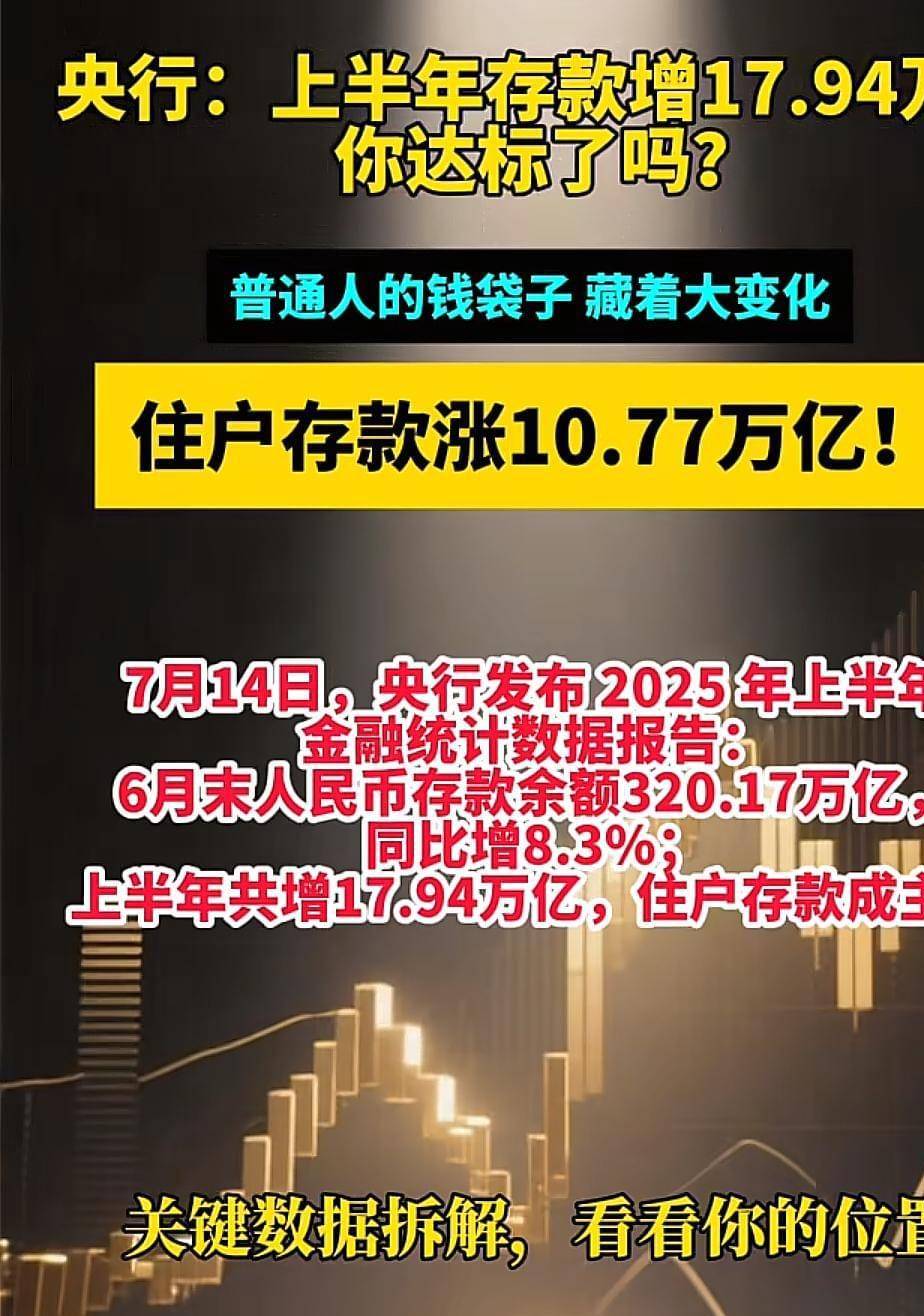
Group 1 - There is a significant shift towards saving among all demographics, including the younger generation, despite low interest rates on deposits [1] - As of June 2025, the balance of RMB deposits reached 300.2 trillion yuan, with a year-on-year growth of 8.3%, indicating a strong increase in household and corporate savings [1] - The cost of borrowing has decreased, with mortgage rates dropping from over 6% in 2021 to around 3% currently, making home purchases more affordable [1] Group 2 - Luxury car brands like Porsche, BMW, and Audi are losing their appeal, with declining sales leading to price reductions, as consumers shift towards more cost-effective domestic electric vehicles [4] - The obsession with luxury goods has diminished, with consumers now prioritizing savings and financial security over brand status, reflecting a change in social behavior and spending habits [4] - The social environment has influenced a more casual approach to dressing, as fewer social gatherings reduce the need for formal attire [4] Group 3 - The increase in savings is primarily attributed to the middle class's anxiety about financial stability, leading to reduced discretionary spending [7] - Wealthy individuals are also hesitant to invest domestically, with many opting to transfer their wealth to Hong Kong through various financial instruments [7] - The trend of mindful consumption is emerging, with individuals recognizing the cumulative costs of small expenses and adjusting their spending habits accordingly [7]

2025H1全球磷酸铁锂动力电池装机占比55.1%
高工锂电· 2025-08-09 09:52
Core Viewpoint - The article highlights the significant growth and market dominance of lithium iron phosphate (LFP) batteries in the global electric vehicle (EV) sector, emphasizing their increasing adoption and export potential, particularly in the first half of 2025 [3][4][6]. Group 1: Market Performance - In the first half of 2025, global sales of new energy vehicles reached 877.6 million units, a year-on-year increase of 29%, driving the global power battery installation volume to approximately 465.9 GWh, up 35% year-on-year [4]. - LFP batteries accounted for 256.6 GWh of installations, marking a 64% year-on-year increase and capturing a market share of 55.1%, up from 50.3% in 2024 [4][5]. - In China, LFP battery installations reached 223.1 GWh in the first half of 2025, reflecting a 71% year-on-year growth and a market share of 77.4% [5]. Group 2: Export Dynamics - China's battery exports surged, with a total of 127.3 GWh exported in the first half of 2025, a 56.8% year-on-year increase, constituting 20% of total battery sales [6]. - LFP battery exports reached 33.1 GWh in the first half of 2025, showing a remarkable 37% year-on-year growth, significantly outpacing the 20.6% growth of ternary batteries [7]. - In June 2025, LFP battery exports accounted for 42.7% of total exports, narrowing the gap with ternary batteries, which held a 56.8% share [7]. Group 3: Technological Advancements - Domestic companies are enhancing LFP competitiveness through technological iterations, with BYD and CATL launching second-generation batteries that achieve peak charging rates of 10C, addressing previous limitations in charging speed [8]. - The U.S. "Inflation Reduction Act" has created uncertainties, but it also presents growth opportunities in European and Asian markets for Chinese lithium batteries [8]. Group 4: Global Market Trends - Germany has become the largest export market for Chinese lithium batteries, with exports reaching $6.515 billion in the first half of 2025, a 11.5% year-on-year increase [9]. - Major global automakers are increasing their LFP battery installation ratios, with companies like Stellantis, Ford, and Volkswagen announcing partnerships with Chinese manufacturers [7][9]. Group 5: Future Projections - The industry anticipates that by 2028, LFP batteries will capture a 60% share of the overseas power battery market [11].


BBA在华遭遇转型阵痛 豪华车市场迎来“中国定义”
Zhong Guo Xin Wen Wang· 2025-08-09 04:20
Core Insights - The luxury car market in China is undergoing a significant transformation, with traditional brands like Mercedes-Benz, BMW, and Audi (BBA) facing declining profits and sales due to the rise of domestic electric vehicle (EV) brands [1][2][3] Group 1: Financial Performance - In the first half of 2025, BBA reported substantial declines in net profits: Mercedes-Benz down 55.8%, BMW down 29%, and Audi down 37.5% [1] - BBA's delivery volumes in China also fell, with declines of 14.2% for Mercedes-Benz, 15.5% for BMW, and 10.3% for Audi [1] Group 2: Market Dynamics - The Chinese market, once a stronghold for BBA, is now a "bleeding point" as domestic EV brands gain traction [3] - In July, luxury car promotions reached a high of 27.2%, indicating increased pressure on BBA to compete [4] Group 3: Competitive Landscape - Domestic EV brands, exemplified by "Hongmeng Zhixing," are redefining luxury car standards with innovative designs and user experiences, achieving sales of 47,752 units in July alone [3] - BBA's electric vehicle penetration in China is below 20%, significantly lower than the overall EV penetration rate of 44.3% [6] Group 4: Strategic Responses - BBA is beginning to seek partnerships with Chinese tech companies to adapt to the changing market landscape, such as Audi collaborating with Huawei for smart driving technologies [8] - The overall restructuring of the automotive value chain and market share is evident, with Chinese EV exports surging by 75.2% year-on-year [7]
数智赋能 “老制造”焕发新活力
Liao Ning Ri Bao· 2025-08-09 01:28
Core Insights - Dalian Yaming Automotive Parts Co., Ltd. has undergone a significant transformation from traditional manufacturing to smart manufacturing, with 70% of its sales now coming from new energy vehicle components [1][2] - The company has invested 222 million yuan in upgrading equipment and building smart factories, showcasing its commitment to digital transformation [1][4] Group 1: Digital Transformation - The implementation of 5G technology and industrial internet has allowed Yaming to achieve real-time data connectivity and automation, transforming its production process from a "black box" to a "glass house" [2][3] - The workforce has been reduced to fewer than 50 people, while over 1,300 processing and testing devices operate 24/7, highlighting the efficiency gained through automation [1][2] Group 2: Innovation and R&D - Yaming invests over 5% of its annual revenue in R&D, holding more than 100 core patents, which is crucial for maintaining competitiveness in the market [3] - The development cycle for new products has been significantly reduced from around six months to as short as 15 days, enabling quicker adaptation to market demands [3] Group 3: Economic Impact - The company's revenue has increased from less than 200 million yuan in 2020 to over 400 million yuan projected for 2024, supported by government funding exceeding 50 million yuan [4] - Yaming has also created a subsidiary, Dalian Zhuyun Intelligent Manufacturing Co., which has generated over 10 million yuan in income from technology and intellectual property output [4]
岂能如此否定中国智驾技术
Jing Ji Ri Bao· 2025-08-08 22:00
Core Viewpoint - The recent automotive intelligence driving simulation tests have sparked controversy, particularly regarding the performance of domestic brands compared to Tesla, highlighting the need for rigorous and credible testing standards in the industry [1][4]. Industry Development - The acceleration of automotive intelligence has made smart driving a crucial area of competition, driven by policy support, technological innovation, and market demand [2]. - By the end of 2024, the penetration rate of passenger cars with Level 2 (L2) combined driving assistance functions in China is expected to reach 57.3%, indicating a leading advantage in the smart driving sector [2]. Market Dynamics - Major luxury car brands, including BMW, Mercedes-Benz, and Audi, are increasingly adopting Chinese smart driving solutions, reflecting the growing recognition of China's technological capabilities in this field [2][3]. - Japanese automakers such as Toyota, Honda, and Nissan are also collaborating with Momenta to integrate smart driving technologies, showcasing a broader trend of multinational companies embracing Chinese innovations [3]. Technological Advancements - Chinese companies are achieving significant market share in key smart driving hardware, with over 60% of the global market for lidar technology being held by Chinese brands [3]. - The transition from "usable" to "well-functioning" smart driving systems requires overcoming technical limitations due to the complexity of real-world driving scenarios [3][4]. Strategic Importance - Smart driving is a critical trend in the global automotive industry, representing a strategic point for China to establish new productive forces and secure a competitive edge in the future automotive landscape [4].
奥迪心态崩了,突然反悔要继续造油车?
创业邦· 2025-08-08 10:17
Core Viewpoint - The article discusses the challenges faced by traditional luxury car manufacturers (BBA: BMW, Benz, Audi) in transitioning to electric vehicles (EVs) amidst fierce competition from new entrants in the automotive market, particularly in China. It highlights the missteps of BBA in their strategies and the resulting financial impacts. Group 1: BBA's Strategy and Market Position - Audi's CEO announced the withdrawal of plans to stop producing internal combustion engine vehicles by 2033, indicating a shift in strategy [6] - Mercedes-Benz adjusted its goal for full electrification from 2030 to having 50% of its models as new energy vehicles by 2030 [7] - BMW has not set a clear timeline for phasing out combustion engines and has expressed skepticism about full electrification [7] Group 2: Financial Performance and Sales Trends - In 2024, BBA's global sales saw declines: Mercedes-Benz down 3%, BMW down 4%, and Audi down 11.8% [19] - This decline led to significant profit reductions in the first half of the year: Mercedes-Benz's net profit decreased by 55.8%, BMW's by 29%, and Audi's by 37.5% [19] - Despite a peak in EV sales in 2023, with BMW and Mercedes-Benz each achieving nearly 20% of their sales from new energy vehicles, the overall performance was still disappointing compared to previous years [16][19] Group 3: Competitive Landscape and Challenges - BBA's transition to EVs has been characterized by a mix of strategies that have not resonated well with consumers, leading to a perception of being outperformed by new entrants [36] - The article emphasizes that BBA underestimated the competitive landscape, particularly in China, where local manufacturers have rapidly advanced in technology and market presence [40][46] - BBA's reliance on traditional luxury branding is being challenged by the evolving consumer preferences for performance and technology in EVs [32][36] Group 4: Technological and Cost Disadvantages - BBA faces a technological gap compared to Chinese competitors, who have been able to innovate and reduce costs significantly in battery technology and vehicle features [69] - The cost of battery production for Chinese companies is significantly lower, with prices around 0.45-0.50 yuan/Wh, compared to European standards [69] - BBA's supply chain and production costs are hindered by their established partnerships, which limit flexibility and responsiveness to market changes [66][68] Group 5: Future Outlook and Recommendations - The article suggests that BBA must adopt a more agile approach to technology and market strategy, akin to startups, to remain competitive [95] - It emphasizes the need for BBA to stabilize their cash flow while gradually improving their technological capabilities [95] - The importance of maintaining a balanced mindset in navigating the transition to EVs is highlighted, as BBA faces both internal and external pressures [94][96]

中欧电动车“竞合”深化 供应链“隐形冠军”迎风起
Zhong Guo Jin Rong Xin Xi Wang· 2025-08-08 09:23
Group 1 - The global trade landscape is undergoing significant adjustments, with China and Europe as key economic partners in the electric vehicle (EV) sector, shifting from a "market for technology" model to a "competitive cooperation" framework [1] - The competitive cooperation is characterized by three trends: acceleration of localization of Chinese EVs and supply chains in Europe, increased investment by European automakers in Chinese EV and component companies, and the establishment of joint ventures for collaborative R&D in both regions [1] - Chinese automakers are rapidly localizing in Europe, with companies like NIO opening centers and Xiaomi establishing a research center in Munich, while European automakers are increasingly reliant on Chinese components, creating opportunities for suppliers with technological advantages, such as Taizhong Co., Ltd. [1] Group 2 - The demand for lightweight components driven by the electrification transformation of European automakers aligns with Taizhong Co., Ltd.'s precision casting technology, which is essential for enhancing EV range [2] - Taizhong Co., Ltd., a specialized automotive parts manufacturer for 28 years, has become a global Tier A supplier for the Volkswagen Group, securing multiple projects for differential housings from brands like Volkswagen, Audi, and Skoda [2] - The trade advantages gained in the EV sector are also laying the groundwork for the global expansion of the robotics industry, as both sectors share common needs for lightweight, high-precision components and efficient power systems [2]

鑫椤锂电一周观察 | 周中碳酸锂又现“波动”
鑫椤锂电· 2025-08-08 08:43
Industry Highlights - China's salt lake lithium carbonate project has officially launched sales, with an annual production capacity of 20,000 tons and first batch purity exceeding 99.6% [1] - Jiangsu Nona New Materials is set to begin trial production of a 200,000-ton electrolyte project in October, with an investment of approximately 1.8 billion yuan [2] - SK On is undergoing restructuring, merging with SK Enmove to enhance competitiveness in the electric vehicle battery sector, with the new entity expected to be established by November 2025 [3] - German silicon-based anode company NorcSi has completed a financing round of 10.7 million euros to commence industrial production of pure silicon anode materials [4] Lithium Battery Material Market Lithium Carbonate - Domestic lithium carbonate prices are fluctuating around 68,000 yuan per ton, with market speculation about a potential 30-day shutdown of a lithium mine in Jiangxi [7] - Latest prices for lithium carbonate as of August 7: Battery-grade 99.5%: 71,000-73,000 yuan/ton; Industrial-grade 99.2%: 68,500-69,500 yuan/ton [8] Ternary Materials - Ternary material prices have seen a slight increase, with a projected 1,000 tons of additional supply from two major suppliers [9] - Current prices for ternary materials as of August 7: 5-series single crystal: 123,000-129,000 yuan/ton; 8-series 811 type: 142,000-148,000 yuan/ton [9] Lithium Iron Phosphate - The lithium iron phosphate market remains stable, with an expected production capacity of 300,000 tons by the end of the year, including a significant expansion by Bangpu [10] - Latest prices for lithium iron phosphate as of August 7: Power type: 32,100-33,200 yuan/ton; Energy storage type: 30,800-31,500 yuan/ton [10] Anode Materials - The anode materials market is stable, with prices closely aligned with production costs, and limited new orders for needle coke [11] - Latest prices for anode materials as of August 7: Natural graphite high-end products: 50,000-65,000 yuan/ton; Artificial graphite high-end: 31,800-64,800 yuan/ton [12] Separator - The separator market is stable, with a decline in orders from energy storage sectors due to reduced procurement from two major companies [13] - Latest prices for separators as of August 7: Base film 9μm/wet: 0.55-0.825 yuan/sqm; Base film 16μm/dry: 0.35-0.5 yuan/sqm [13] Electrolyte - The electrolyte market shows stable prices, with a slight increase in orders from energy storage applications [14] - Latest prices for electrolytes as of August 7: Lithium hexafluorophosphate electrolyte: 49,000-51,500 yuan/ton; Power ternary electrolyte: 19,000-23,400 yuan/ton [14] Lithium Battery Demand Battery Production - The domestic battery market is stable, with a slight increase in production driven by export preparations [15] - Latest prices for lithium batteries as of August 7: Square ternary power cell: 0.38-0.45 yuan/Wh; Square lithium iron phosphate power cell: 0.26-0.355 yuan/Wh [16] New Energy Vehicles - Passenger car sales reached 462,000 units, with new energy vehicle sales at 245,000 units, showing a year-on-year increase [16] - Notable developments include BYD's fifth-generation DM upgrade and Tesla's declining sales in Europe [16] Energy Storage - The energy storage battery market is performing well, with leading companies operating at full capacity and small manufacturers taking on contract orders [17] - Increased demand for energy storage orders is noted in Europe and Australia, while the U.S. market remains stable despite tariff disruptions [18]

利润集体崩盘,燃油车企用时间换空间
远川研究所· 2025-08-08 08:08
Core Viewpoint - The financial performance of traditional fuel vehicle manufacturers is deteriorating significantly, with profit declines outpacing revenue and sales drops, highlighting the challenges of transitioning to electric vehicles [5][9][15]. Group 1: Financial Performance of Traditional Automakers - Volkswagen's operating profit fell by 32.79% in the first half of the year, despite a slight revenue decline of less than 1% and a 1% increase in delivery volume [9]. - Mercedes-Benz experienced a staggering 69% drop in net profit in Q2, with overall revenue down 8.59% and a more than 70% decline in operating profit from its automotive business [15]. - BMW reported a 26.83% decrease in operating profit, with revenue down 7.98% and a gross margin in its automotive business dropping below 15% [12]. Group 2: Market Trends and Challenges - The shift towards electric vehicles is uneven, with traditional automakers struggling to sell electric models while hybrid vehicles are performing better in certain markets [18][20]. - In the second quarter, Mercedes-Benz's overall passenger car deliveries fell by 9%, with electric models down 24%, while plug-in hybrid models saw a 34% increase [18]. - The Chinese market is leading in electric vehicle penetration, with a forecasted 44.3% market share by mid-2025, while the European market lags behind at around 20% [22][27]. Group 3: Strategic Adjustments - Major automakers are adjusting their electric vehicle strategies, with Volkswagen increasing its target for electric vehicles in China to 80% by 2030, while others like Ford and Stellantis are shifting towards hybrid models [28]. - The financial strain from electric vehicle investments is evident, with Volkswagen's software and battery divisions reporting significant losses, indicating a broader issue among traditional automakers [30][32]. - The need to balance investments in traditional fuel vehicles while transitioning to electric and hybrid models is creating a complex operational environment for these companies [27][36].

长城汽车巴西工厂8月15日投产,年产能 5 万辆
Huan Qiu Wang· 2025-08-08 04:01
Group 1 - Great Wall Motors' factory in Iracemapolis, São Paulo, Brazil, will officially open on August 15, with attendance from Brazilian President Lula and company executives [1] - The factory will showcase the first pre-production models assembled in Brazil, including the Haval H6 gasoline and hybrid SUVs, as well as the Haval H9 and Poer pickup trucks, which will enter production in a later phase [1] - The company plans to produce ethanol hybrid models in Brazil, with production scheduled to begin in one year [1] Group 2 - The factory's welding and painting workshops are already operational, employing 530 staff, with plans to increase the workforce to 1,000 by the end of the year, implementing a double shift [2] - Initial production capacity is set at 30,000 vehicles per year, with an expected increase to 50,000 vehicles annually by 2028 [2] - The company aims to raise the local procurement rate to 35% in the following year to facilitate exports to the Southern Common Market, which includes Brazil, Argentina, Uruguay, and Paraguay, having already signed confidentiality agreements with 105 local suppliers [2] - The factory was previously owned by Mercedes-Benz, which ceased vehicle production in Brazil in 2021, and Great Wall Motors acquired the facility in 2023, with about 10% of the current workforce coming from the former Mercedes factory [2]