宝马

Search documents
中国经济实力:换个角度看世界第一还是第二?
Sou Hu Cai Jing· 2025-07-23 05:53
Group 1 - The World Bank's report indicates that China's GDP, when calculated by purchasing power parity, has surpassed that of the United States, positioning China as the world's largest economy [1][3]. - While China's total GDP is impressive, the per capita GDP remains significantly lower, ranking 77th globally and being less than a quarter of the U.S. figure, highlighting disparities in living standards [3][5]. - China's economic development path differs from that of traditional Western powers, focusing on simultaneous growth and transformation, aiming for both quantity and quality improvements in its economy [3][10]. Group 2 - The shift in global economic ranking is influenced by new metrics that prioritize data flow and technological advancements over traditional GDP calculations, indicating a redefinition of economic strength [6][8]. - China's manufacturing capabilities have evolved beyond low-end production, with companies like BYD and CATL leading in global supply chains for electric vehicles, showcasing China's growing influence in high-tech industries [6][8]. - Future economic assessments will rely on new criteria such as data utilization, green energy efficiency, and overall societal well-being, moving beyond traditional GDP rankings [8][10].

特朗普投资几百亿开发稀土,中国稀土出口暴增660%的致命逻辑
Sou Hu Cai Jing· 2025-07-23 05:10
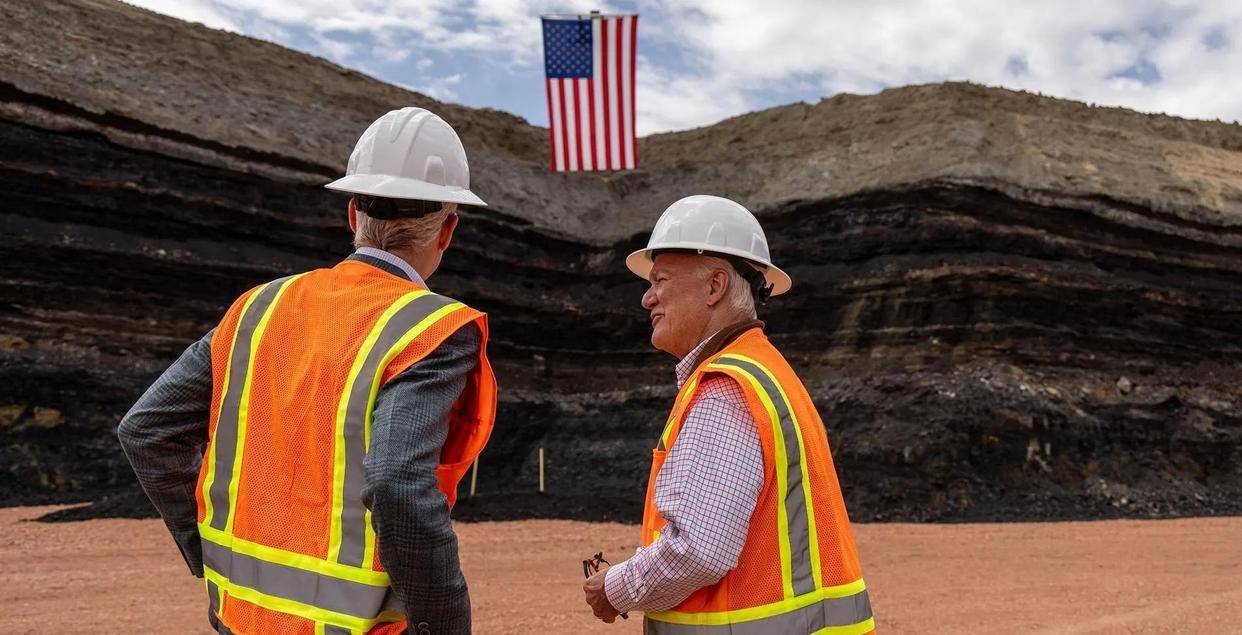
Core Viewpoint - The U.S. is facing a significant crisis in rare earth elements (REE), heavily reliant on China for military applications, which exposes strategic vulnerabilities and may lead to costly failures in its "decoupling" strategy from Chinese supply chains [1][3][10] Group 1: U.S. Military and Supply Chain Issues - The U.S. military's dependence on China for REE is critical, with 90% of military-grade REE sourced from China, leading to production halts in key defense projects like the Raytheon Tomahawk missile and Pratt & Whitney engine upgrades [1][3] - The Pentagon's strategic reserves are only sufficient for 9 months, highlighting the urgency of the situation [1] Group 2: Legislative and Corporate Responses - The U.S. Senate is attempting to advance the Critical Minerals Act, but major companies like General Motors and Tesla oppose it due to potential cost increases of $500 for electric vehicles if they sever ties with Chinese supply chains [1][3] - The U.S. government has invested hundreds of billions to reduce reliance on China, including a $4 billion acquisition of MP Materials shares and a $110 per kilogram long-term procurement contract [3] Group 3: China's Strategic Position - China has increased its REE exports to the U.S. significantly in June, but this was primarily due to the release of previously backlogged orders rather than a genuine increase in supply [5] - China's export strategy is selective, prioritizing long-term contracts and controlling high-purity REE exports critical for military applications [5][9] Group 4: Technological and Market Control - China is advancing its technological edge in REE extraction and processing, with estimates suggesting that the U.S. may need 10 to 20 years and trillions in investment to catch up [3][7] - China has also implemented stricter export controls on REE technologies, which could hinder U.S. capabilities in critical sectors [7][9] Group 5: Long-term Implications - The U.S. is at a crossroads, facing the dilemma of either paying high prices for Chinese REE or risking paralysis in its military and renewable energy sectors [9][10] - The competition for REE has evolved beyond a trade war, with China potentially monopolizing the secondary supply of REE by 2030, further complicating U.S. efforts to establish independence [10]

晚一天多花10万,豪车税惊了买车人
创业邦· 2025-07-23 03:13
Core Viewpoint - The recent adjustment of the luxury car tax in China has significantly impacted the high-end automobile market, with the threshold for tax applicability lowered from 1.3 million yuan to 900,000 yuan, affecting both traditional fuel vehicles and new energy vehicles [4][5][32]. Group 1: Tax Policy Changes - The new luxury car tax policy will take effect on July 20, lowering the retail price threshold for tax applicability from 1.3 million yuan to 900,000 yuan for various types of vehicles, including new energy cars [4][5]. - The effective price threshold for new cars, including tax, has decreased from 1.469 million yuan to 1.017 million yuan, meaning any new car priced between these amounts will incur an additional 10% luxury car tax [5][32]. Group 2: Market Reactions - The announcement of the new tax policy led to a surge in consumer activity, with many rushing to dealerships to purchase vehicles before the tax took effect, resulting in extended store hours and a rapid depletion of available stock [6][8]. - Luxury car brands such as Land Rover and Porsche have been particularly affected, with many of their models now falling under the new tax regulations, prompting a rush among consumers to secure vehicles before the tax increase [9][24]. Group 3: Brand-Specific Impacts - Brands like Porsche and Land Rover are expected to be the most impacted by the new tax policy, as many of their high-end models exceed the new price threshold [24][25]. - The luxury car market share is dominated by brands such as Mercedes-Benz, which holds 48% of the market share for vehicles priced above 1.017 million yuan, followed by Land Rover at 23% and Porsche at 18% [33]. Group 4: Consumer Sentiment - Some consumers expressed frustration over the sudden tax increase, with a notable number considering canceling their orders or seeking refunds on deposits due to the unexpected financial burden [12][13]. - Despite the discontent, some consumers have accepted the additional tax as a necessary contribution to government revenue, indicating a mixed sentiment towards the policy change [12][29]. Group 5: Future Market Dynamics - The adjustment of the luxury car tax is anticipated to reshape the competitive landscape of the luxury car market, potentially benefiting domestic brands as they gain more market opportunities due to the lowered tax threshold [41][42]. - The luxury car market is expected to see a shift in consumer preferences, with buyers possibly opting for high-end models from domestic brands that can strategically adjust pricing to avoid the luxury tax [36][40].
特斯拉首家餐厅开业
Bei Jing Shang Bao· 2025-07-22 16:08
Core Viewpoint - Tesla has opened its first Supercharger restaurant in Los Angeles amidst declining vehicle sales, aiming to enhance customer experience by combining charging, dining, and entertainment [1][2]. Group 1: Restaurant Launch - Tesla's first restaurant is located at 7001 Santa Monica Boulevard, Los Angeles, operating 24/7 and featuring 80 V4 Supercharger stations available for non-Tesla vehicles [1]. - The restaurant's design is inspired by 1950s car cinemas, offering a unique dining experience with outdoor movie screens and Tesla merchandise for sale [1]. - CEO Elon Musk indicated plans for more Tesla restaurants in major cities and along long-distance routes [1]. Group 2: Sales and Delivery Challenges - Tesla faced a 13.5% year-over-year decline in vehicle deliveries in Q2, with a total of 384,100 units delivered, and a cumulative delivery of 720,800 units in the first half of the year, down 13.3% [2]. - The company experienced its first global sales decline in a decade in 2024, with total deliveries of 1.789 million, a 1.1% decrease from 2023 [2]. Group 3: Financial Pressures - Tesla is nearing a loss, with Q1 profits heavily reliant on selling $447 million in carbon credits, which may be threatened by potential legislative changes in the U.S. [3]. - The company faces increasing competition from automakers like BYD, which saw a 359% year-over-year growth in electric vehicle sales in Europe, surpassing Tesla for the first time [3]. Group 4: Management Changes and New Models - Following poor performance in North America and Europe, Omid Afshar, responsible for these regions, has left the company, with Musk taking over sales operations [4]. - Tesla plans to launch a new six-seat Model Y L to stimulate consumer demand, expected to be priced around 400,000 yuan, with deliveries set for this fall [4]. Group 5: Future Prospects - Despite challenges in the automotive sector, Tesla is focusing on the potential of autonomous driving software, ride-hailing services, and the development of humanoid robots, although continued vehicle sales are essential for funding these initiatives [4].

豪车税来了,晚一天多花10万
盐财经· 2025-07-22 10:00
Core Viewpoint - The recent adjustment of the luxury car tax in China has significantly impacted the high-end automobile market, with the threshold for tax applicability lowered from 1.3 million yuan to 900,000 yuan, affecting both traditional fuel vehicles and new energy vehicles [3][4][27]. Group 1: Tax Policy Changes - The new luxury car tax policy will take effect on July 20, lowering the retail price threshold for tax applicability from 1.3 million yuan to 900,000 yuan for various types of passenger cars and light commercial vehicles [3][4]. - The inclusion of new energy vehicles in the tax scope is a notable change, expanding the range of vehicles subject to the luxury car tax [4][27]. Group 2: Market Reactions - Following the announcement, there was a surge in consumer activity, with many rushing to dealerships to finalize purchases before the new tax took effect, leading to extended store hours and increased sales efforts [5][6][7]. - Some consumers who had already placed deposits on vehicles began to reconsider their purchases due to the unexpected tax increase, with reports of potential cancellations [10][13]. Group 3: Impact on Specific Brands - Brands such as Land Rover and Porsche are expected to be significantly affected, as many of their models now fall within the new tax range, leading to increased urgency among consumers to purchase before the tax implementation [9][21]. - The luxury car market is experiencing structural changes, with traditional fuel vehicles facing intensified competition from new energy models, further complicated by the new tax policy [5][27]. Group 4: Sales Data and Market Share - In the market segment affected by the new tax, Mercedes-Benz holds a 48% share, followed by Land Rover at 23% and Porsche at 18%, indicating a competitive landscape that may shift due to the tax changes [29][30]. - The sales figures for luxury vehicles show that models like the Range Rover and Porsche Cayenne are among the top sellers, highlighting the potential impact of the new tax on their sales dynamics [30]. Group 5: Future Market Dynamics - The adjustment of the luxury car tax is expected to alter the competitive landscape, potentially benefiting domestic luxury brands as they may find new opportunities in the market previously dominated by imported vehicles [34][35]. - The ongoing decline in imported vehicle sales suggests that domestic brands could capitalize on the new tax structure, appealing to consumers looking for alternatives in the luxury segment [34].

行业巨头加快技术革新 固态电池商业化竞赛进入下半场
Zhi Tong Cai Jing· 2025-07-22 07:16
Group 1 - The race for innovation in solid-state battery technology for electric vehicles is intensifying, with major automakers and battery manufacturers making recent announcements that reignite hope for commercialization in the next 5 to 10 years [1] - Solid-state batteries are expected to have significantly higher energy density compared to traditional lithium-ion batteries, which could drive the next generation of electric vehicles [2] - The introduction of semi-solid state batteries by companies like NIO and Zhiji in the latter half of last year has catalyzed the industry, with many players aiming for large-scale production by the end of this decade [2] Group 2 - Solid-state batteries utilize solid electrolytes made from materials like ceramics, offering potential benefits such as enhanced safety, lower costs, and improved performance, along with reduced supply chain risks [3] - Critics highlight challenges such as high production costs, battery swelling during charging, and performance degradation after multiple charges, leading some manufacturers to prefer semi-solid state batteries [3] Group 3 - Key players in the solid-state battery race include Volkswagen, Mercedes-Benz, Stellantis, BYD, Nissan, and Toyota, with BYD and CATL seen as having a better chance of achieving commercial production due to their extensive battery manufacturing experience [4] - Western automakers like BMW and Mercedes are considered to be in a leading position due to significant investments in R&D and partnerships aimed at mitigating risks [4] - Nissan aims to achieve solid-state battery mass production by 2028, with the CEO emphasizing the importance of market readiness before making substantial investments [4] Group 4 - Negative sentiment in the industry has been exacerbated by delays and technical issues faced by leading Western companies like Quantumscape, which has pushed back product launch timelines [6] - Recent advancements in existing technologies, such as CATL's lithium iron phosphate battery that can increase range by 520 kilometers with just a 5-minute charge, have raised concerns about the market viability of solid-state batteries [6] - As existing technologies improve and specifications become more similar, the high costs of solid-state batteries may become less justifiable, potentially diminishing their market value proposition [6]


特朗普逼近!德国放话:打仗可不是好玩的游戏!
Sou Hu Cai Jing· 2025-07-22 03:12
欧盟最后一退,特朗普加码15%关税!德高官怒吼:要战便战 当欧盟贸易专员谢夫乔维奇结束六赴华盛顿的谈判,带回美国接受10%基准关税的乐观预期时,布鲁塞 尔的官员们以为终于躲过了贸易战的子弹。然而仅仅一周后,白宫传来的新条件如一盆冷水:特朗普要 求欧盟接受15%甚至更高的基准关税,否则8月1日起全面启动30%关税。 "所有选项都摆在桌面上。"一位德国官员面对《华尔街日报》的镜头语气冰冷,"如果他们想要战争, 他们会得偿所愿。" 步步紧逼:10%的妥协如何喂大了特朗普的胃口 四个月来,欧盟委员会主席冯德莱恩的"谈判策略"已成固定剧本:先强硬表态,再火速让步。7月,她 刚宣称"必将采取一切必要反制",却在24小时内突然推迟了价值210亿欧元的对美报复性关税,姿态柔 软得令人咋舌。 欧盟的妥协清单曾显得诚意十足: - 承诺采购数百亿美元美国能源与半导体 - 在汽车关税上主动提出"归零方案"(只要美国降至20%,欧盟就取消美国汽车10%关税) - 德国车企甚至设计出复杂的"出口抵进口"机制换取豁免 汽车产业是德国的生死线:2023年欧盟对美汽车出口额高达580亿美元,支撑着1400万个就业岗位。大 众、宝马等巨头已发出 ...
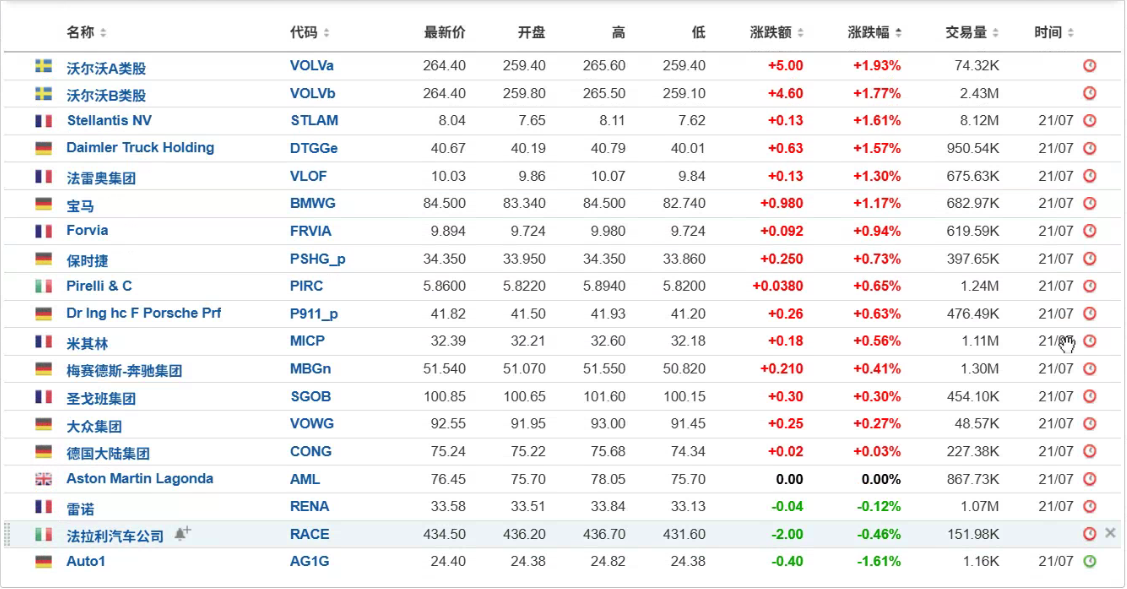
欧洲汽车制造概念股普遍收涨,沃尔沃A类股、斯泰兰蒂斯Stellantis、戴姆勒卡车、法雷奥、宝马至多涨1.93%。
news flash· 2025-07-21 17:19
欧洲汽车制造概念股普遍收涨,沃尔沃A类股、斯泰兰蒂斯Stellantis、戴姆勒卡车、法雷奥、宝马至多涨1.93%。 | 名称 = | 代码 : | 最新价 | 开盘 | 高 | (BE | 涨跌额 = | 涨跌幅 = | 交易量 : | 时间 = | | --- | --- | --- | --- | --- | --- | --- | --- | --- | --- | | 沃尔沃A类股 | VOLVa | 264.40 | 259.40 | 265.60 | 259.40 | +5.00 | +1.93% | 74.32K | O | | 沃尔沃B类股 | VOLVb | 264.40 | 259.80 | 265.50 | 259.10 | +4.60 | +1.77% | 2.43M | 0 | | Stellantis NV | STLAM | 8.04 | 7.65 | 8.11 | 7.62 | +0.13 | +1.61% | 8.12M | 21/07 © | | Daimler Truck Holding | DTGGe | 40.67 | 40.19 | 40.79 | 40.01 | ...
收购控股股东海外资产历时逾一年难落地 万向钱潮称“正在进一步磋商”
Zhong Guo Jing Ying Bao· 2025-07-21 12:38
Core Viewpoint - Wanxiang Qianchao is in the process of acquiring 100% equity of Wanxiang America Corp. from its controlling shareholder, Wanxiang Group, but has not made significant progress in over a year of planning [3][4][5] Group 1: Acquisition Progress - The acquisition process began on April 17, 2024, with Wanxiang Qianchao announcing a suspension of trading and signing a cooperation intention agreement with Wanxiang Group [4] - As of now, the company has issued 13 progress announcements regarding the acquisition, with the latest on July 5, indicating ongoing due diligence and negotiations [5][6] - Investors have shown significant interest, with the stock price experiencing a cumulative increase of 20.94% over two consecutive trading days in May [5] Group 2: Financial Performance - Wanxiang America Corp. (WAC) reported net profits of $121 million in 2022 and $98 million in 2023, indicating a decline in profitability [5] - Wanxiang Qianchao's revenue for 2024 was reported at 12.868 billion yuan, a decrease of 11.17% year-on-year, while net profit increased by 15.76% to 951 million yuan [7] - The company's asset-liability ratio has been on the rise, reaching 58.07% in 2024, up from 47.78% in 2021 [8] Group 3: Strategic Focus - The company is diversifying its business into low-altitude economy and humanoid robotics, with ongoing development in these areas [8][9] - Future acquisitions will focus on bearings and chassis strategies, targeting sectors such as new energy vehicles, intelligent chassis, humanoid robots, and low-altitude economy [9]

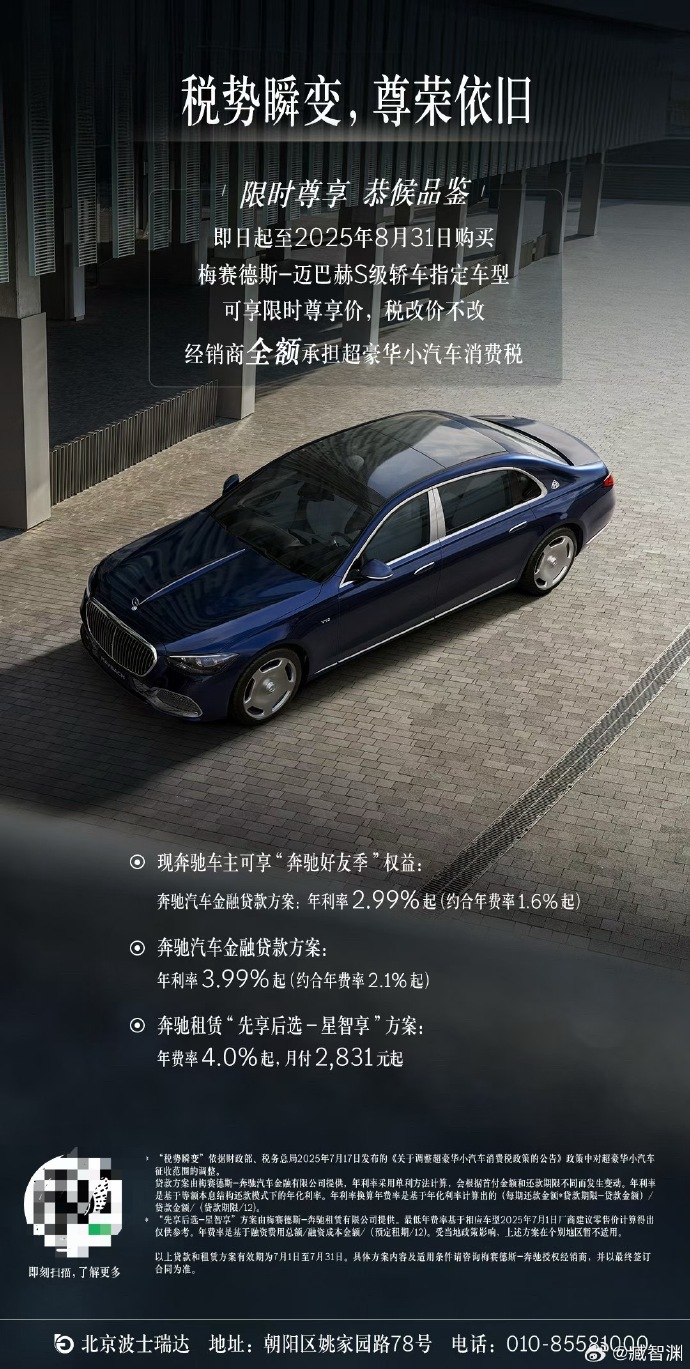
“豪车税”新规落地:捷豹路虎火速“兜底”,奔驰、尊界部分车型也加入了?
Mei Ri Jing Ji Xin Wen· 2025-07-21 08:51
Group 1 - The core point of the article is the adjustment of the luxury car consumption tax in China, which lowers the threshold from 1.3 million yuan to 900,000 yuan, impacting various luxury car models [10][11][13] - The new tax policy allows dealers to absorb the luxury car tax for specific models, such as the Mercedes-Maybach S-Class and GLS SUV, until August 31, 2025 [1][11] - The adjustment is expected to affect approximately 20,000 new cars sold in the price range of 1.017 million to 1.469 million yuan, which represents about 1.4% of the total luxury car sales in China [11] Group 2 - The new luxury car consumption tax policy officially took effect on July 20, 2023, with Jaguar Land Rover announcing that it will cover the additional tax for certain models purchased during the transition period [13] - The affected luxury car models include those from brands like BMW, Mercedes-Benz, and Toyota, among others, indicating a broad impact across the luxury automotive market [11][13] - Industry experts view the tax adjustment as a reasonable measure, noting that ultra-luxury vehicles constitute only a small fraction of the overall automotive market, thus minimizing the impact on general consumers [13]