美的集团

Search documents
建信期货铝日报-20251231
Jian Xin Qi Huo· 2025-12-31 01:45
Group 1: Report Information - Report Name: Aluminum Daily Report [1] - Date: December 31, 2025 [2] - Research Team: Non-ferrous Metals Research Team [3] - Researchers: Yu Feifei, Zhang Ping, Peng Jinglin [3] Group 2: Market Review and Operation Suggestions - Aluminum Price: On the 30th, Shanghai aluminum fluctuated at a high level. The main contract 2602 closed at 22,565, a slight increase of 0.13% from the previous day. The total position decreased by more than 22,000 lots to 655,000 lots [7]. - Spot Premium: Affected by the year - end settlement of enterprises, the trading sentiment in East China weakened, and the market liquidity was generally low. The spot premium was still under pressure. The discount in East China was - 310, in Central China was - 330, and in South China was - 320 [7]. - Supply: The domestic aluminum industry maintained a high - profit level, and the domestic operating capacity increased steadily but slightly under the stimulation of high profits. The supply pressure was generally limited due to the production capacity ceiling. Overseas, attention should be paid to the production reduction risk of Mozambique aluminum plants and the progress of Indonesia's capacity expansion [7]. - Demand: The operating rate of aluminum processing enterprises was further weakened by environmental protection restrictions and high aluminum prices, and the inventory showed an inflection point of accumulation [7]. - Price Outlook: In the medium term, aluminum prices are likely to rise due to loose liquidity and the strong performance of the gold and copper sectors. In the short term, the probability of high - level adjustment increases due to the fluctuating macro - atmosphere and limited fundamental drivers. It is advisable to control risks with light positions during the holiday [7]. Group 3: Industry News - Aluminum Substitution for Copper: 19 air - conditioning enterprises and research institutions, including Midea, Haier, and Xiaomi, jointly launched the implementation of the "aluminum substitution for copper" series of standards. Some brands plan to launch aluminum - made household air - conditioning products as early as 2026, while others have no such plan [10]. - Company Capacity Expansion: Lizhong Group's second - phase project of 1.8 million ultra - lightweight aluminum alloy wheels in its Mexican factory has been initially put into production. The third factory in Thailand with an annual production capacity of 3 million cast - spun aluminum alloy wheels is expected to be put into production next year. New high - performance aluminum alloy material projects in Chongqing, Huaian, Changchun, and Thailand will be put into production from the fourth quarter of this year to next year [10][11]. - Mining Plan: India's state - owned National Aluminium Company (Nalco) plans to start mining the Pottangi bauxite mine in Odisha in June 2026. It is expanding the fifth production line at its Damanjodi alumina refinery, increasing the annual production capacity by 1 million tons to 3.275 million tons [11]. - Automobile Industry: In the first 11 months, China's automobile production and sales exceeded 31 million, with a year - on - year increase of over 10%. The production and sales of new energy vehicles were close to 15 million, with a year - on - year increase of over 30%. New energy vehicle exports reached 2.315 million, doubling year - on - year [11]
2026国补来了!汽车消费补贴由“定额”改为“按比例”
Mei Ri Jing Ji Xin Wen· 2025-12-31 01:42
Group 1 - The core viewpoint of the news is the announcement of the 2026 national subsidy policy, which includes subsidies for smart products like AR glasses and emphasizes the importance of expanding domestic demand as a key task for the upcoming year [1][2] - The new subsidy policy for automobiles shifts from a fixed amount to a proportional subsidy, with electric vehicle scrappage subsidies set at 12% of the vehicle price (up to 20,000) and fuel vehicle scrappage subsidies at 8% (up to 15,000) [1][3] - The focus on expanding domestic demand is framed as a strategic deployment to address external shocks and enhance domestic circulation, highlighting the growth potential of discretionary consumption sectors such as retail, new energy vehicles, and smart home appliances [1][2] Group 2 - The optional consumption ETF primarily covers sectors closely related to service consumption and the unified market, with significant weightings in automobiles (46%) and home appliances (34%) [2] - The top ten weighted stocks in the optional consumption ETF include major companies such as Midea Group, BYD, Gree Electric, and Haier Smart Home, indicating a strong representation of leading firms in the consumer sector [2]

“斯菱股份”正式更名“斯菱智驱” 战略升级智能驱动与机器人核心零部件赛道
Quan Jing Wang· 2025-12-31 01:16
Core Viewpoint - The company has officially changed its name from "Sling Co., Ltd." to "Sling Intelligent Drive Group Co., Ltd." to signify its strategic upgrade from traditional automotive bearing manufacturing to the intelligent drive sector [1] Group 1: Company Transformation - The company has completed its name change and business registration, reflecting its focus on intelligent drive technology [1] - The company has expanded its business scope to include sales and research of industrial robots and intelligent robots [1] Group 2: Business Development - Sling Intelligent Drive has developed a diversified customer base and product range over more than 20 years, providing customized solutions for both aftermarket and original equipment manufacturer (OEM) markets [2] - The company plans to establish a robotics components division in 2024, focusing on the research, production, and sales of robotic components, particularly harmonic reducers [2] - The core equipment for harmonic reducers is expected to be in place by the end of 2024, enabling small-scale production [2] - The company has invested in a second production line for harmonic reducers, expected to reach full capacity by the end of the year to meet future market demand [2] Group 3: Strategic Investments - The company announced the acquisition of a 24.3427% stake in Ningbo Yinqiu Technology Co., Ltd., which will enhance its precision bearing business and promote collaboration in key areas such as precision bearings and automotive components [3] - The acquisition aims to leverage industrial synergies to improve overall competitiveness and profitability [3] Group 4: Global Expansion and Certifications - The company's Thailand factory has received multiple international certifications, including IATF16949 and ISO14001, which will enhance its production capabilities and global delivery stability [3] - The company is establishing local service capabilities in the North American market to accelerate its global industrial layout [3] Group 5: Market Outlook - The global bearing market is projected to reach approximately $134 billion in 2023, with a CAGR of 8.3% from 2023 to 2030, driven by the increasing demand for replacement parts due to the rise in electric vehicle ownership and aging vehicles [4] - The company is expanding its production capacity for high-end automotive bearings, with a project expected to add 6.29 million sets of high-end bearings annually [4] - As of September 30, 2025, the company has achieved significant breakthroughs in product development, with a record number of new high-value product models [4] - For the first nine months of 2025, the company reported revenue of 581 million yuan, a year-on-year increase of 4.38%, and a net profit of 140 million yuan, up 2.17% year-on-year [4]

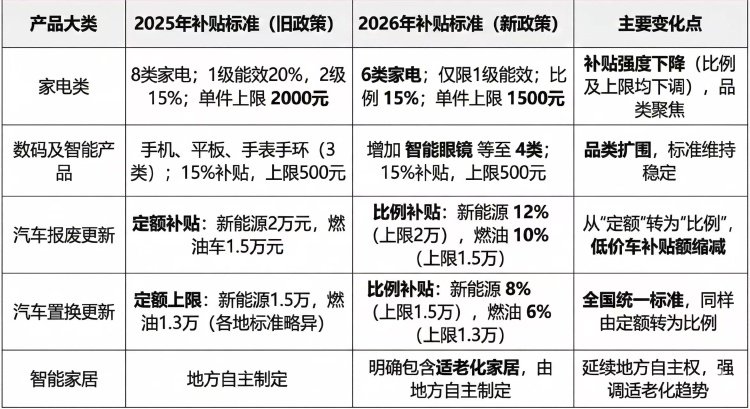
2026国补来了!汽车消费补贴由“定额”改为“按比例”(附对照表)
Mei Ri Jing Ji Xin Wen· 2025-12-31 01:11
Group 1 - The core viewpoint of the news is the announcement of the 2026 "National Subsidy" policy by the National Development and Reform Commission (NDRC) and the Ministry of Finance, which includes subsidies for smart products like AR glasses and emphasizes the importance of expanding domestic demand as a key task for the upcoming year [1] - The subsidy for scrapping and updating vehicles has shifted from a fixed amount to a proportional method, with new energy vehicle scrapping subsidies set at 12% of the vehicle price (up to 20,000 yuan), and fuel vehicle scrapping subsidies at 8% (up to 15,000 yuan) [1] - The NDRC's strategy to expand domestic demand is aimed at addressing external shocks and declining external demand, and is seen as crucial for strengthening the domestic circulation and stimulating market vitality [1] Group 2 - The optional consumption ETF primarily covers sectors closely related to service consumption and the unified market, including automobiles (46%), home appliances (34%), and commercial retail (6%) [2] - The top ten weighted stocks in the optional consumption ETF include Midea Group, BYD, Gree Electric, Fuyao Glass, Haier Smart Home, Seres, Sanhua Intelligent Control, China Duty Free Group, SAIC Motor, and Changan Automobile [2] Group 3 - The previous subsidy standards for 2025 included a fixed subsidy for home appliances (up to 2,000 yuan), digital and smart products (up to 500 yuan), and specific amounts for scrapping and updating vehicles [3] - The old policy provided a fixed subsidy of 20,000 yuan for new energy vehicles and 15,000 yuan for fuel vehicles for scrapping, and 15,000 yuan for new energy vehicles and 13,000 yuan for fuel vehicles for replacement [3]
顺德第一大企业:营收首次超过4000亿元,创始人是广东首富
Sou Hu Cai Jing· 2025-12-30 15:48
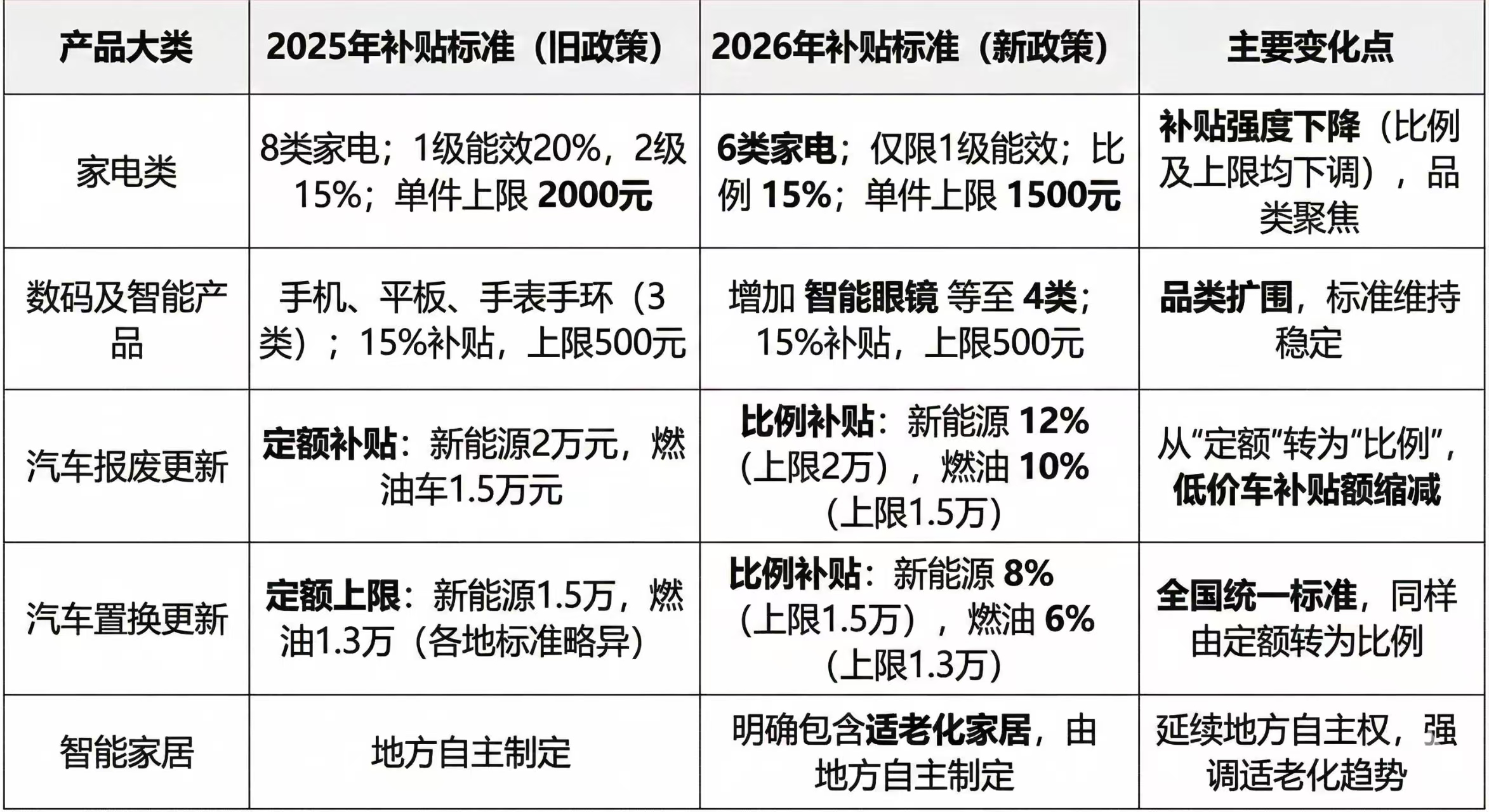
Core Insights - Shunde, known as "Fengcheng," is a key industrial hub in Guangdong, with a total industrial output exceeding 1 trillion yuan, featuring two major industrial clusters worth 300 billion yuan each in home appliances and machinery [1] - The 2025 Shunde Top 100 Enterprises list reflects the region's economic strength, with 138 companies achieving a total revenue of 12,222.29 billion yuan, and 67 companies appearing on all three major rankings [2] Industry Overview - Manufacturing is the backbone of Shunde's economy, with 82.01% of the top 100 enterprises being manufacturing firms, generating 7,908.07 billion yuan in revenue, accounting for 64.71% of the total [3] - Private enterprises, including those with Hong Kong, Macau, and Taiwan investments, make up 86.23% of the list, contributing 10,875.73 billion yuan, or 88.98% of total revenue [3] Regional Distribution - The highest number of listed companies is from Beijiao Town, with 28 companies generating 8,283.63 billion yuan, followed by Ronggui Street (24 companies, 1,555.45 billion yuan) and Daliang Street (22 companies, 633.42 billion yuan) [3] Financial Performance - The entry threshold for the 2025 Shunde Top 100 Enterprises is 786 million yuan, a decrease of 39 million yuan from the previous year, with total revenue surpassing 1.1 trillion yuan, marking a 27.04% year-on-year increase to 11,988.84 billion yuan [7] - The top three companies are Midea Group (4090.84 billion yuan), Country Garden (2527.57 billion yuan), and Hisense Home Appliances (927.46 billion yuan) [7] Company Highlights - Midea Group, established in 1968, has over 400 subsidiaries and 38 R&D centers globally, serving over 500 million users [7] - Hisense Home Appliances is a major player in the HVAC, refrigeration, and kitchen appliance sectors, with multiple brands under its umbrella [9] - China Liansu, recognized as a leader in the pipeline industry, has expanded its overseas operations in several countries, enhancing its global footprint [11]

270万元的洗澡机器人,4万人报名体验,人类离“全自动洗澡”有多远?
机器人大讲堂· 2025-12-30 14:00
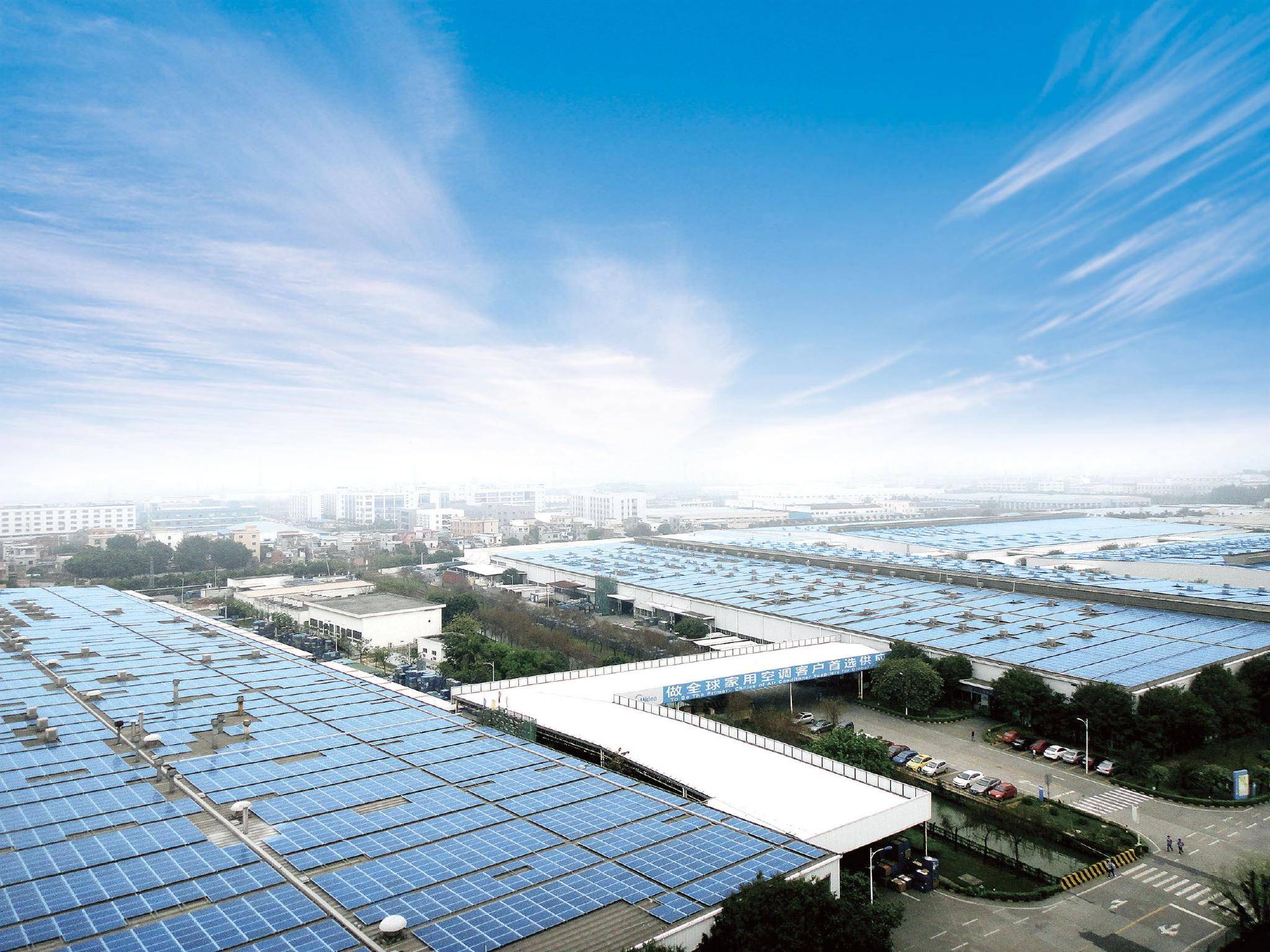
Core Viewpoint - The emergence of a bathing robot developed by Japan's Science company signifies a potential revolution in bathroom automation, reflecting an overlooked consumer demand for smart bathing solutions [1][8]. Group 1: Product Features and Technology - The bathing robot features numerous sensors that monitor users' physiological data, such as heart rate and skin moisture, allowing it to adjust water flow and temperature accordingly [2]. - It utilizes the Mirable micro-bubble technology, which cleans without soap by using negatively charged micro-bubbles to attract dirt and oil from the skin [2]. - The transparent cover of the robot serves as a display screen, providing relaxing visuals during the bathing process [4]. Group 2: Market Demand and Growth - Market research indicates that smart shower and bathroom products have maintained double-digit growth rates in recent years, suggesting a healthy demand for more intelligent bathing solutions [9]. - The current market for smart bathing products is categorized into three stages: basic affordable products, automated function products requiring user input, and fully integrated smart products like the bathing robot [9]. Group 3: Industry Landscape and Competition - Major companies like Huawei, Midea, and Haier have made significant strides in the smart home sector, but their advancements in bathroom technology remain relatively basic compared to other areas [12]. - The bathing robot's current model is not yet a consumer product, with a size of 2.5 meters long and a price of 60 million yen (approximately 2.7 million RMB), indicating a gap between prototype and market-ready products [13]. Group 4: Future Directions and Challenges - Future developments in bathing robots will focus on integrating materials, structure, and control systems, as well as enhancing information management through cloud technology [17]. - Current bathing robots lack the capability to integrate with other smart home devices, highlighting a need for future innovations to create a cohesive smart home ecosystem [17]. Group 5: Societal Implications - The discussion around bathing robots extends beyond convenience, addressing the needs of the elderly and disabled populations who face significant challenges with traditional bathing methods [20]. - The contrast between high-end bathing robots and more practical solutions for elderly care illustrates a broader trend in technology's role in enhancing human dignity and quality of life [21].
家用电器行业投资策略周报-20251230
CAITONG SECURITIES· 2025-12-30 13:17
Core Insights - The report maintains a positive outlook on the home appliance sector, particularly focusing on the cost reduction potential of aluminum replacing copper in air conditioning systems [2][5] - The adoption of aluminum-copper technology is seen as a significant step towards reducing production costs amid rising copper prices and resource scarcity [10][15] Group 1: Aluminum-Copper Technology Impact - The use of aluminum instead of copper in air conditioning units can lead to substantial cost savings, with estimates suggesting a reduction of 208 to 277 RMB per unit when replacing 50% of copper, and up to 416 to 554 RMB when replacing 100% [11][12] - Copper currently constitutes about 26% to 33% of the cost in standard air conditioning units, with high-end models reaching over 40% [11][12] - The global market has seen significant adoption of aluminum-copper products, particularly in Japan where approximately 40% to 50% of air conditioners use aluminum heat exchangers [15][16] Group 2: Domestic Market Challenges - Despite the cost advantages, the domestic promotion of aluminum-copper air conditioners faces challenges, including inferior thermal conductivity and corrosion resistance compared to copper [19][20] - Consumer perception is a major barrier, as negative opinions about aluminum's reliability persist, complicating market acceptance [19][20] - The first domestic aluminum-copper air conditioner was launched by Wanbao in collaboration with JD.com, targeting the mid-to-low-end market, which may help accelerate industry-wide material transitions [16][17] Group 3: Industry Performance and Trends - The home appliance sector has shown mixed performance, with the overall index increasing by 0.44%, while specific segments like white goods and black goods experienced varied changes [21][22] - Recent data indicates a decline in domestic sales growth for air conditioners, refrigerators, and washing machines, reflecting broader market challenges [33][47] - The report highlights the importance of monitoring raw material prices, with copper and aluminum prices showing significant fluctuations that could impact production costs [29][31]





基金经理研究系列报告之九十:中欧基金吉翔:专注发掘具有长期竞争优势个股的价值型基金经理
Shenwan Hongyuan Securities· 2025-12-30 12:03
2025 年 12 月 30 日 中欧基金吉翔:专注发掘具有长期 竞争优势个股的价值型基金经理 ——基金经理研究系列报告之九十 相关研究 证券分析师 白皓天 A0230525070001 baiht@swsresearch.com 蒋辛 A0230521080002 jiangxin@swsresearch.com 邓虎 A0230520070003 denghu@swsresearch.com 联系人 白皓天 A0230525070001 baiht@swsresearch.com 权 益 量 化 研 究 证 券 研 究 报 告 请务必仔细阅读正文之后的各项信息披露与声明 本研究报告仅通过邮件提供给 博时基金 博时基金管理有限公司(researchreport@bosera.com) 使用。1 其 他 权 益 类 产 品 - ⚫ 价值风格的配置价值:长期投资性价比更高,日历效应提示当下配置价值:价值是一类 持有体验度较好的风格策略:(1)从长期配置维度下相对占优;(2)大多数时间下夏 普比明显更高;(3)最大回撤明显更低、创新高能力更强。日历效应反映近期价值风格 的配置价值:观察近 10 年时间中价值风格在 ...
下游迭代加速:汽车、包装与家电需求变化重塑机铰式注塑机结构性机会
QYResearch· 2025-12-30 09:59
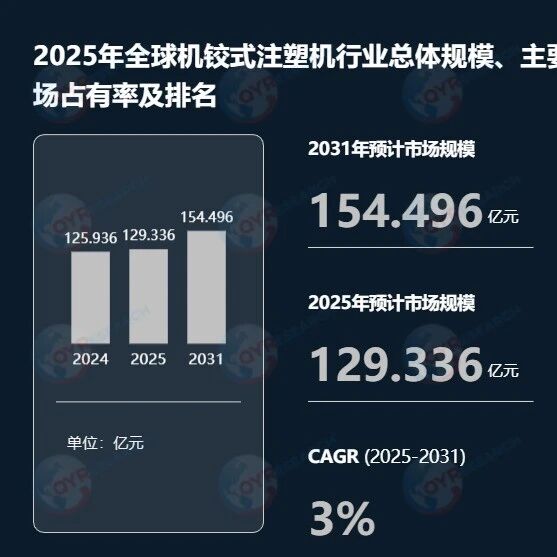
Core Viewpoint - The toggle-type injection molding machine is gaining traction due to its mechanical advantages over traditional hydraulic machines, including energy efficiency, reduced mold deformation, and faster cycle times, making it suitable for high-demand production environments [2][3]. Market Overview - The global market for toggle-type injection molding machines is projected to reach USD 1.902 billion in 2024, with a compound annual growth rate (CAGR) of 3% [3]. - Key manufacturers in the industry include Engel, Supermac Machinery, UBE Machinery Corporation, and others, focusing on various applications across automotive, packaging, medical, and industrial sectors [4]. Supply Chain Dynamics - The upstream supply chain consists of resin materials (e.g., PP, PE, ABS, PC) and essential components like steel, hydraulic oils, and servo motors, with suppliers such as BASF and Baowu Steel [6]. - The downstream applications span across automotive, home appliances, consumer electronics, and medical devices, with major clients including Toyota, Haier, and Foxconn [6]. Driving Factors - The demand for toggle-type injection molding machines is driven by the need for lightweight automotive components, rapid product iterations in consumer electronics, and the push for energy-efficient manufacturing processes [7]. - The transition from traditional hydraulic systems to servo-driven and automated solutions is enhancing production efficiency and stability [7]. Barriers to Entry - High capital expenditure and total cost of ownership (TCO) pressures, along with the need for precise assembly and maintenance capabilities, pose significant challenges for new entrants in the market [8]. - The complexity of the machinery and the requirement for a robust service network make it difficult for newcomers to compete effectively [10]. Industry Development Opportunities - Opportunities for growth are centered around enhancing energy efficiency, integrating automation, and expanding processing capabilities [9]. - The increasing demand for advanced materials and specialized applications in automotive and packaging sectors is expected to drive the adoption of high-end toggle machines [9]. Competitive Landscape - The competitive landscape is characterized by the need for system engineering capabilities, reliability validation, and a strong service network to meet customer expectations [10]. - Established players with a proven track record in quality and service are likely to maintain a competitive edge in the market [10].
罗永浩炮轰,空调售后成“暴利江湖”?
商业洞察· 2025-12-30 09:23
Core Viewpoint - The article discusses the high costs associated with air conditioning maintenance and repair services, highlighting the lack of regulation in the air conditioning after-market, which has become a lucrative but problematic area for consumers and companies alike [2][4][15]. Group 1: High Costs of Air Conditioning Maintenance - The cost for seasonal cleaning and filter replacement for central air conditioning units can reach approximately 15,000 yuan, with filter replacement accounting for 70% of this cost [4][7]. - Consumers have expressed frustration over the high service fees, with some stating that the cost of maintenance can exceed the price of purchasing new units, especially as air conditioning prices have dropped significantly due to market competition [5][10]. - The average cleaning costs for other brands like Midea and Gree range from 100 to 300 yuan, indicating that the prices for maintenance services can vary widely across different brands [10][11]. Group 2: Issues in the After-Market - The air conditioning after-market is plagued by issues such as price opacity, inflated repair costs, and unnecessary upselling, leading to consumer distrust [15][16]. - Reports indicate that third-party service providers often charge significantly more than official brand service teams, sometimes up to 3-4 times higher [15][18]. - The lack of regulation in the after-market allows for a variety of service quality, with many third-party companies operating outside of formal oversight [18]. Group 3: Competitive Landscape and Service Improvements - Major appliance brands like Gree and Midea are increasingly focusing on enhancing their after-sales service networks, with Gree boasting over 15,000 authorized service points [20][22]. - The article notes a shift in service strategies, with brands like Midea and Xiaomi introducing longer warranty periods and comprehensive service packages to improve customer satisfaction [22][24]. - As the price competition in the air conditioning market reaches its limits, companies are recognizing the importance of service quality as a key differentiator in maintaining market share [23][24].