元气森林

Search documents
消费市场不断变化 如何在传统行业中探索增长之道?
Zhong Guo Jing Ying Bao· 2025-12-11 07:02
Core Insights - The rise of Generation Z is reshaping consumer preferences, emphasizing value for money and quality-price ratio, which are becoming mainstream trends in the market [1][2] - Companies need to continuously understand market demands and enhance their competitive edge to adapt to these changes [1] Consumer Trends - Consumers are increasingly focused on extreme cost-performance ratios and single-category champions, with many Chinese brands successfully creating standout products [2] - Emotional consumption is gaining traction, with consumers valuing the emotional connection to products [2] - Comfort marketing is essential, as brands must communicate their values from the consumer's perspective rather than imposing their own views [2] Value Recognition - Consumers are willing to pay for products they perceive as valuable, as illustrated by a personal anecdote regarding a product priced higher due to its unique context [2] - The concept of value recognition is crucial, as consumers have already established their own value positioning for products before making a purchase [2] Brand Strategies - Companies like Dayao Beverage are focusing on high-quality price-performance strategies, ensuring that consumers receive better quality for lower prices [3] - Product quality is a key focus, with strict raw material selection and innovative production processes to enhance consumer experience [3] - Scene-based marketing is vital, with brands optimizing product suitability for common consumption scenarios [3] Industry Innovation - The beverage industry is undergoing innovation through new processes that enhance consumer experiences, as seen with products like "Good Comfort" from Yuanqi Forest [4] - Companies are investing in new technologies and processes to meet rising consumer quality demands [4] - A culture of allowing trial and error is encouraged within companies to foster continuous innovation [4] Strategic Growth - Traditional companies like New Hope Group are exploring business innovations while remaining within familiar sectors to mitigate risks [5] - The focus on product innovation should be narrowed to meet specific consumer needs, rather than overwhelming the market with numerous SKUs [5] Future Market Trends - There is a growing market for functional products as consumer health awareness increases, alongside opportunities for industrializing native products [6] - Cross-industry innovation requires a comprehensive understanding of supply chains, organizational structures, and market dynamics [6]

君乐宝逆势扩张:增持茉酸奶,在长三角扩产丨消费参考
2 1 Shi Ji Jing Ji Bao Dao· 2025-12-11 03:20
Core Insights - In contrast to competitors like Yili and Mengniu, Junlebao is increasing its investments, indicating confidence in the market despite overall industry contraction [1][4] - Junlebao has made a strategic investment in the fresh yogurt chain, Mo Suan Nai, acquiring a 30% stake and planning collaboration in various operational areas [1][4] - The company is expanding its production capacity in the Yangtze River Delta, with a new liquid milk production base planned to have an annual capacity of 450,000 tons [3][4] - Junlebao's ongoing expansion and investment activities may be linked to its IPO process, as it has officially started the A-share IPO journey [4][5] Company Developments - Mo Suan Nai's founder, Zhao Bohua, has stepped down from key management roles, with Gu Hao taking over as the legal representative and holding 57.14% of the shares [1] - Junlebao's investment in Mo Suan Nai is expected to enhance its B-end market access, leveraging Mo Suan Nai's extensive retail network of over 1,600 stores [1] - The strategic partnership with Mo Suan Nai is aimed at improving supply chain collaboration and product development [1] Market Context - The dairy market is experiencing a significant downturn, with a reported 16.8% year-on-year decline in sales across all channels as of September [2] - The oversupply in the dairy sector has weakened negotiation power for companies, impacting pricing and profitability [2]
元气森林:穿越周期,探寻新消费下的“价值回归”与创新哲学
Zhong Guo Jing Ying Bao· 2025-12-10 14:29
Core Insights - The forum "Trends Above, Faith Below" focused on new consumption trends and market dynamics, emphasizing the importance of brand value resonance with consumers in a rational consumption environment [1] Group 1: Consumer Behavior - The shift from "cost-performance" to "value recognition" reflects deeper consumer needs, where consumers are willing to pay for products they resonate with [3] - An example shared highlighted that consumers may value a product not just for its utility but for the emotional connection it provides, as seen with a product that brought joy due to its design [3] Group 2: Innovation in Traditional Industries - Innovation is not exclusive to high-tech sectors; traditional industries can achieve significant advancements through new processes, termed as "new processes reshaping old experiences" [4] - The company has invested in innovative cooking processes for its products, demonstrating a commitment to quality despite initial cost concerns [4] Group 3: Marketing and Product Quality - The essence of marketing lies in the quality of the product itself, with the company emphasizing that all marketing efforts should circle back to product excellence [4] - The company fosters a culture of "allowing trial and error," which encourages innovation and acknowledges that mistakes are part of the process [4] - The philosophy of "slow is fast" in the beverage industry suggests that thoroughness and quality should take precedence over speed in product development [4]


元气森林与富士康深度合作 打造智慧零售新标杆
Sou Hu Cai Jing· 2025-12-10 08:54
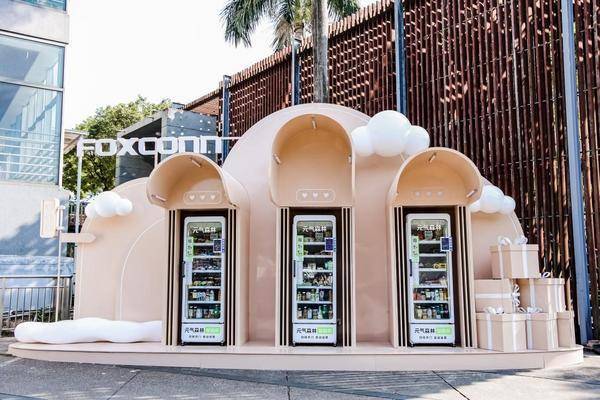
Core Insights - The partnership between Yuanqi Forest and Foxconn Technology Group aims to enhance the living quality of employees at Foxconn's Shenzhen Longhua Park through customized smart retail solutions [1][2] - The collaboration will leverage advanced AI recognition technology for a seamless shopping experience, addressing the "last mile" shopping challenges within the park [2][6] - Yuanqi Forest's smart retail business has achieved significant growth, with plans to expand its offerings across various high-traffic scenarios, including campuses and gyms [6][7] Group 1 - Yuanqi Forest will provide multiple smart retail cabinets in Foxconn's Shenzhen Longhua Park, covering various scenarios such as shopping, leisure, and entertainment [1] - The collaboration emphasizes high standards in product selection and service quality, reflecting Foxconn's commitment to employee welfare [2] - A two-day "Happy Shopping Carnival" was held to celebrate the launch of Yuanqi Forest's smart cabinets, featuring interactive experiences and promotional offers [4] Group 2 - The Chinese instant retail market is projected to grow at a compound annual growth rate of 10% from 2024 to 2029, with a market size expected to exceed 3.8 trillion yuan [6] - Yuanqi Forest's overall performance is anticipated to achieve double-digit growth in 2024, with its smart retail business center continuing to be profitable [6] - The smart cabinet business has been deployed in over 20,000 terminals across 15 cities, covering various high-traffic locations [7]
提供定制化智慧零售服务方案 元气森林与富士康科技集团达成深度合作
Zhong Guo Zhi Liang Xin Wen Wang· 2025-12-10 07:44
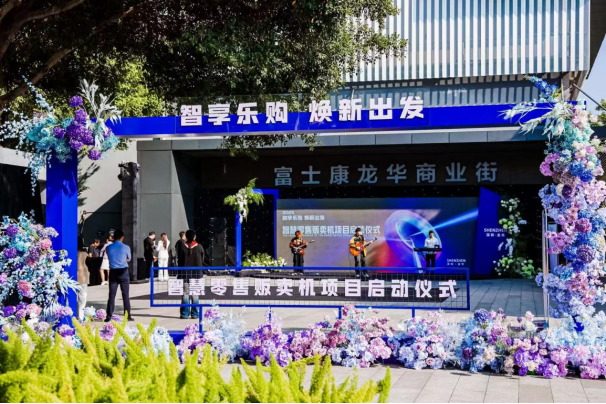
Core Insights - The collaboration between Yuanqi Forest and Foxconn Technology Group aims to enhance employee quality of life through customized smart retail solutions [1][3][4] Group 1: Project Launch and Objectives - The "Smart Retail Vending Machine Project" was successfully launched at Foxconn's Shenzhen Longhua Park, with Yuanqi Forest providing tailored smart retail services [1] - The partnership focuses on optimizing the service ecosystem within the park, enhancing employee satisfaction and convenience [3][4] Group 2: Market Context and Deployment - China's instant retail market is rapidly developing, with Yuanqi Forest's smart cabinet business achieving deployment in over 20,000 terminals across 15 cities [3] - The smart cabinets are strategically placed in high-traffic areas such as enterprises, campuses, hospitals, and subways [3] Group 3: Service Features and Technology - The smart cabinets utilize advanced AI recognition technology to facilitate a seamless shopping experience with "grab-and-go, contactless payment" [3] - Yuanqi Forest has optimized product offerings to include a variety of popular beverages and new products, addressing diverse consumer needs [3][4] Group 4: Quality Standards and Employee Engagement - Foxconn has set high standards for product selection and service personalization, reflecting its commitment to employee care [4] - A two-day "Happy Shopping Carnival" was held to celebrate the launch, featuring interactive experiences and promotional offers to engage employees [4] Group 5: Vision and Philosophy - Foxconn integrates its vision of "Love, Confidence, Determination" into daily employee experiences, while Yuanqi Forest emphasizes its philosophy of "Using good products to love the world" [6] - The collaboration aims to bring innovative solutions to everyday life through smart retail integration [6]
趋势之上 信仰之下——2025中国消费趋势论坛
Zhong Guo Jing Ying Bao· 2025-12-10 07:33
Group 1 - The year 2025 marks the conclusion of the "14th Five-Year Plan" and the beginning of the "15th Five-Year Plan," with a focus on "technological self-reliance" and "improving social welfare" as key objectives [1] - The consumer market in 2025 is characterized by a shift towards pragmatic and rational consumption, with an increasing trust in brands and a new height in brand image construction [1] - The "2025 China Consumption Trend Forum" aims to decode the commercial logic of the consumption market and uncover hidden business opportunities [1] Group 2 - The relationship between "old famous liquor" and "new consumption" is seen as a symbiotic one, where traditional practices are modernized rather than replaced [3] - The integration of public welfare, cultural heritage, and national brands with modern demands is essential for industry development [3] Group 3 - Emotional consumption is identified as a significant trend in tourism, with four emerging business models: events combined with travel, pet-friendly travel, national trends in travel, and nature-focused travel [5] - Emotional travel appeals to various demographics, including older adults seeking social connections [5] Group 4 - The concept of "instant retail" is gaining unprecedented importance, potentially marking the last wave of internet consumption before a reconciliation between local living and e-commerce [8] - The industry is encouraged to embrace the era of instant retail as a core consumption method [8] Group 5 - Consumers are increasingly focused on value, emotional consumption, and comfort marketing, emphasizing the importance of effectively communicating product benefits to the new generation [10] - The beverage industry is urged to innovate continuously, with a focus on new processes to enhance consumer experience [12] Group 6 - AI technology is seen as a critical factor in creating value through collaboration, ecosystem building, and addressing pain points in the market [17] - The integration of AI into consumer industries is viewed as a significant opportunity, with a focus on finding suitable investors and optimizing products for specific consumer scenarios [19] Group 7 - The application of AI in various industries requires a deep understanding of commercial logic and organizational structure optimization to facilitate intelligent services for users [23] - The introduction of AI functionalities in management processes is becoming a reality for companies with extensive branch networks [25]
元气森林胡文娟:饮料行业慢就是快
Xin Lang Cai Jing· 2025-12-10 05:39
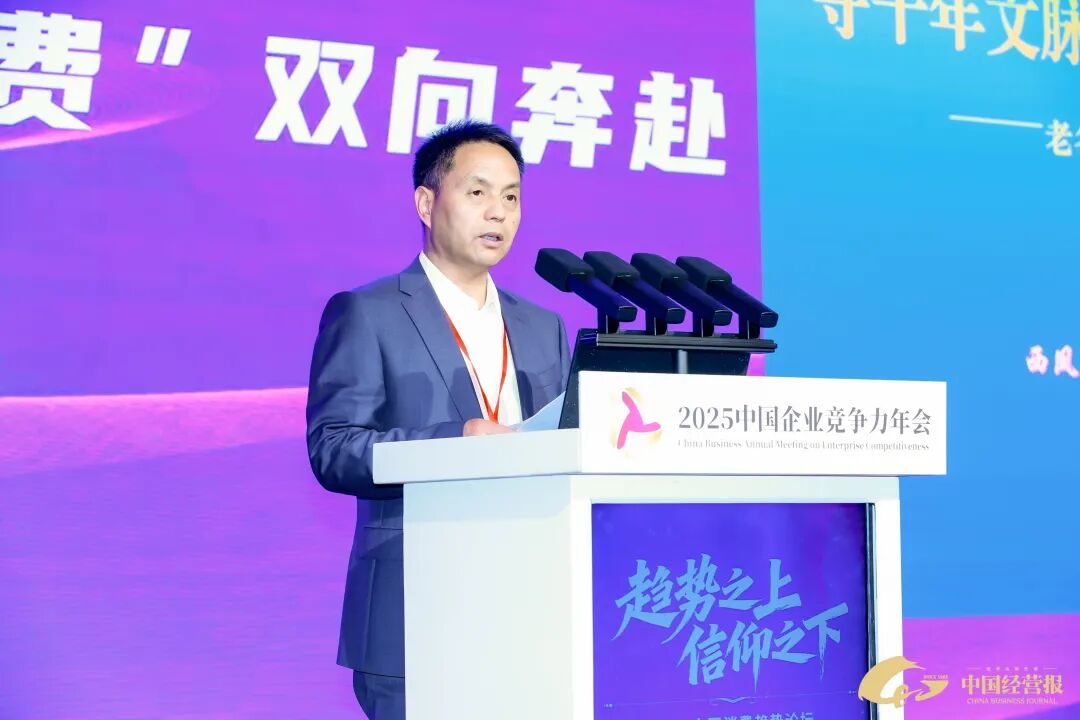
专题:2025中国企业竞争力年会 "2025中国企业竞争力年会"于12月9日至10日在北京举行。元气森林公共事务部副总裁胡文娟在演讲中 表示,在饮料行业,外界常说元气森林发展速度快,说几年时间销售产品越来越多,其实不是这样子 的。 "我想说饮料这个行业慢就是快,这两年其实我们经销商大会也好,在我们的各种内部会上,我们老板 经常会跟我们强调,说饮料就是一个慢行业,大家要沉下心来,真的认认真真把一件事情做好"她说。 胡文娟分享了亲身参与新品品鉴的经历:"曾有研发同事带来添加黄芪等药食同源成分的新品,但试喝 后发现,如何在保留健康功效的同时保证饮用体验,是亟待破解的难题。" 她坦言,健康与好喝的平衡是行业共同面临的课题,即便消费者认同健康理念,若产品口感未能达标, 仍难以实现市场转化。"我个人喜欢苹果水,也期待苹果与黄芪的组合能有优质产品,但目前尝试过的 同类产品仍未达到理想状态。" 新浪声明:所有会议实录均为现场速记整理,未经演讲者审阅,新浪网登载此文出于传递更多信息之目 的,并不意味着赞同其观点或证实其描述。 "2025中国企业竞争力年会"于12月9日至10日在北京举行。元气森林公共事务部副总裁胡文娟在演讲中 ...

2025饮料新品TOP100:元气森林、农夫山泉、康师傅、统一激战新品、乳饮退潮谁来补位?
Tai Mei Ti A P P· 2025-12-09 07:09
Core Insights - The beverage market is undergoing significant changes, with a focus on new product trends and market share dynamics as the year-end approaches [1][4] - The analysis will cover the top 100 new beverage products from December 2024 to November 2025, comparing them with the previous year's data to identify trends and shifts in consumer preferences [1][4] Market Overview - The beverage market is categorized into ten subcategories, including packaged water, functional drinks, dairy beverages, ready-to-drink tea and milk tea, ready-to-drink juice, ready-to-drink coffee, soda, rice beverages, Asian traditional drinks, and plant-based protein drinks [4][5] - The only subcategory exceeding 20% market share is dairy beverages, while ready-to-drink tea and milk tea, functional drinks, soda, and ready-to-drink juice each hold over 10% [8][10] Category Performance - Dairy beverages experienced a decline of approximately 2% in market share, with a year-on-year sales growth drop of over 13%, indicating a significant downturn [10] - Functional drinks and ready-to-drink juices saw positive growth, with sales increasing by around 4%, while ready-to-drink tea and milk tea, along with packaged water, showed slight declines in sales growth [10][11] - Plant-based protein drinks also faced a decline in market share and sales growth, attributed to a lack of new consumer interest [10] New Product Trends - The number of new products in the top 100 list has shifted, with non-refrigerated ready-to-drink juices and sugary ready-to-drink teas seeing significant increases in new product entries [17][20] - Conversely, categories like no-sugar ready-to-drink tea and sports drinks have seen a reduction in new product numbers, despite overall sales growth in the latter category [17][20] Group Distribution - Leading brands such as Yuanqi Forest and Kang Shifu each had nine products in the top 100, indicating strong market presence and product diversification [20][22] - Other notable brands include Nongfu Spring and Uni-President, each contributing several new products to the top 100 list [20][22] Pricing and Specifications - The average price per 100ml for new products varies across categories, with non-refrigerated ready-to-drink juices and sugary ready-to-drink teas generally priced higher than their no-sugar counterparts [29][31] - The trend towards larger packaging sizes is evident, with a threefold increase in the number of large-sized products (1000ml-1999ml) in the top 100, reflecting consumer preferences for value and sharing [26][29] Launch Timing - The timing of new product launches has shifted, with a noticeable increase in products launched in February and March 2025 compared to the previous year, indicating a trend towards earlier product introductions [31]



困在“舒适区”的日系饮料,如何错失中国饮料市场?
Xin Lang Cai Jing· 2025-12-09 05:39
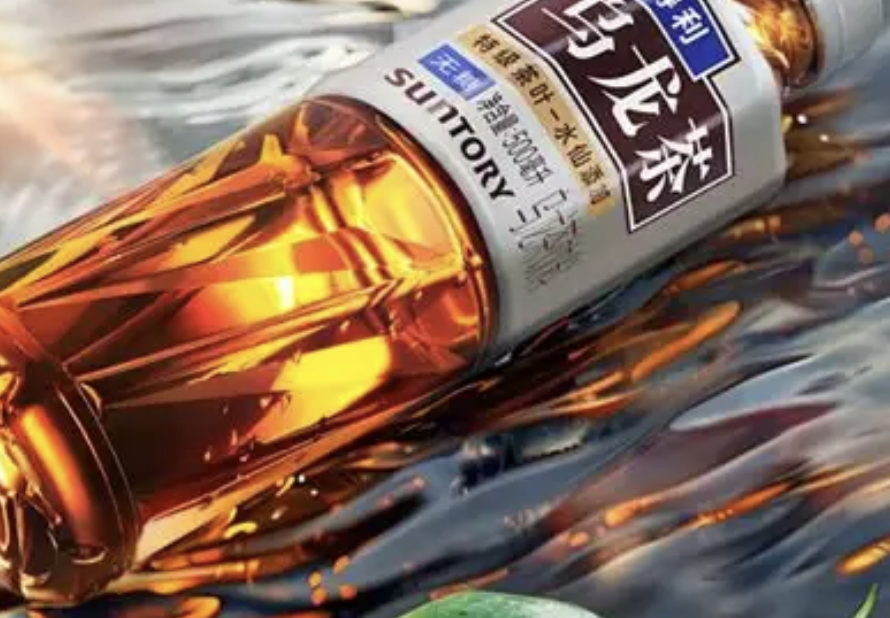
Core Insights - Japanese beverage brands are facing stagnation in growth and declining market share in China due to the rise of local brands that leverage rapid innovation and targeted marketing strategies [1][5][11] Group 1: Market Dynamics - Japanese beverages like Suntory's Oolong tea and Yakult have dominated niche categories in China but are now losing ground to local brands [1] - The Chinese beverage market has become highly competitive, with local brands rapidly innovating and expanding their distribution channels [1][5] Group 2: Localization Strategies - Japanese brands initially adopted localization strategies to resonate with Chinese consumers, incorporating cultural symbols and local language in branding [2][4] - However, the superficial approach to localization has led to consumer skepticism, as many now perceive these brands as "disguised" rather than genuinely integrated [4] Group 3: Product Innovation - Japanese brands have been slow to innovate, with Yakult only introducing a few product variations since its entry into China in 2002, while local brands rapidly launch new products [5][6] - The average R&D investment for Japanese beverage brands is less than 2%, compared to 5.8% and 3.5% for local brands like Yuanqi Forest and Nongfu Spring, respectively [6] Group 4: Supply Chain Efficiency - Japanese brands face higher production costs, estimated to be 15%-20% more than local competitors, due to reliance on imported materials and inefficient supply chain management [11][12] - Local brands have developed efficient supply chains that allow for lower prices and faster market response, further eroding the competitive edge of Japanese brands [12] Group 5: Channel Strategy - Japanese brands have become overly reliant on convenience stores, which has limited their market reach and adaptability to changing consumer preferences [8][9] - Local brands are adopting a multi-channel strategy, expanding into various retail formats and rural markets, which has proven more effective in capturing market share [8][9] Group 6: Consumer Trust and Health Narratives - Japanese brands have struggled to maintain consumer trust as health narratives based on scientific claims have been challenged by consumers' increasing focus on ingredient transparency [10][13] - Instances of product quality issues have further damaged the reputation of Japanese brands, leading to a decline in perceived quality and trust [15][16] Group 7: Future Outlook - For Japanese brands to regain growth in China, they must either fully localize their operations or focus on creating unique value propositions in niche markets [17]

“护城河”理论过时了:“共识平原”时代到来|狮也咨询《思想领袖系列》
Sou Hu Cai Jing· 2025-12-07 13:16
Core Argument - The article argues that the "moat" theory, which has dominated business strategy for the past three decades, is becoming obsolete as the world transitions to a new strategic paradigm called the "consensus plain" [2][3][5]. Group 1: The Decline of the Moat Theory - The moat theory, introduced by Warren Buffett in 1993, emphasized the importance of having a strong competitive advantage to protect investment returns from competitors [2]. - Historical examples illustrate how established companies like Coca-Cola, Kodak, and Walmart have seen their competitive advantages eroded by new entrants that leverage changing consumer preferences and technological advancements [3][5]. - The moat's effectiveness is diminishing as the business landscape shifts from a closed castle model to an open value network model, leading to a strategic paradigm shift [5]. Group 2: Characteristics of the Moat - The moat consists of three essential elements: scarcity, control, and isolation, which were relevant during the industrial era characterized by limited resources [9]. - Brand moats rely on monopolizing consumer perception through significant advertising investments [9]. - Patent moats utilize legal protections to create exclusive advantages based on technological scarcity [9]. - Scale moats achieve cost advantages through high production volumes, allowing companies to dominate pricing [9]. Group 3: Forces Eroding the Moat - Three converging forces are dismantling the moat: the abundance of resources, the networked nature of value creation, and the fluidity of consumer consensus [12][10]. - The abundance of resources, facilitated by cloud computing and open-source movements, has transformed previously scarce resources into accessible infrastructures [12]. - Value is increasingly generated within interconnected ecosystems rather than solely within individual companies, diminishing the relevance of traditional moats [12]. - Consumer loyalty is shifting from static brand recognition to dynamic engagement with values and narratives, making traditional brand moats vulnerable [12]. Group 4: The Consensus Plain Strategy - The "consensus plain" strategy emerges as a new approach when moat logic fails, characterized by an open value creation and exchange environment [13]. - The consensus plain is defined by a shared vision and collaborative rules, attracting participants who contribute to its value [15]. - A strong consensus plain consists of three layers: narrative consensus (the overarching story), rule consensus (operational guidelines), and value consensus (how value is shared) [16]. Group 5: Constructing the Consensus Plain - Building a consensus plain involves a four-step foundational method: identifying value vacuums, crafting a compelling narrative, designing initial rules, and initiating a "cold start flywheel" [22][23]. - Identifying areas with unmet needs is crucial for establishing a consensus plain, as demonstrated by Pinduoduo's focus on price-sensitive consumers [24]. - A powerful narrative serves as the gravitational force for the consensus plain, as seen in Huawei's vision for a unified operating system [29]. - Initial rules must be simple and transparent, facilitating participation and collaboration, as exemplified by BYD's open supply chain model [30]. Group 6: The Evolution of Rules in the Consensus Plain - The power lies in the continuous definition and evolution of rules within the consensus plain, requiring companies to transition from product managers to civilization architects [36]. - Rule definition grants significant commercial power, as illustrated by NVIDIA's dominance through its CUDA ecosystem [37]. - Rules must evolve to maintain vitality and balance, necessitating gradual experimentation and community governance [40]. Group 7: Interactions Between Consensus Plains - As multiple consensus plains coexist, competition and cooperation create a complex landscape, leading to various relationships such as absorption, bridging, and confrontation [50][51]. - The collaboration between national-level and regional plains exemplifies how different levels can resonate and enhance overall value creation [55].