
西门子

Search documents
签约八天就撤资?越南670亿高铁彻底停摆,首富范日旺一天亏20亿
Sou Hu Cai Jing· 2026-01-11 23:46
Core Viewpoint - The Vietnam North-South High-Speed Rail project has faced significant setbacks, leading to the withdrawal of investment by a major company, which has raised concerns about the project's viability and the overall investment environment in Vietnam [1][3][10] Group 1: Project Overview - The high-speed rail project is planned to span over 1,500 kilometers from Hanoi to Ho Chi Minh City, with a design speed of 350 km/h and a total estimated investment of $67 billion [3][5] - The projected annual revenue from the project is only $5.6 billion, with operational costs estimated at $4.2 billion, leaving little room for profit after accounting for maintenance and interest expenses [3][5] Group 2: Company Actions and Decisions - The company, led by Vietnam's richest man, initially signed an agreement with Siemens to test a shorter segment of the rail but later retracted its investment registration, citing a need to focus on other projects [1][3] - The decision to withdraw resulted in a significant drop in the company's stock price, leading to a loss of $2 billion in market value in just one day [3][5] Group 3: Financing Challenges - The main issue hindering the project was the inability to reach an agreement on financing, with the company seeking a 35-year interest-free loan while being required to cover 20% of the funding [5][9] - Previous attempts to secure funding from Japan and other countries failed due to high costs and stringent conditions [5][9] Group 4: Future Implications - The withdrawal of the company has raised concerns about Vietnam's investment climate, as the country relies on outdated infrastructure for transportation, which hampers economic integration [10] - The focus may shift towards more pragmatic projects, such as upgrading existing railways, rather than pursuing ambitious but unrealistic high-speed rail plans [10]

军工本周观点:重视商业航天强辐射效应:国防军工-20260111
Huafu Securities· 2026-01-11 11:47
Investment Rating - The report maintains a "stronger than the market" rating for the defense and military industry [5] Core Viewpoints - The report emphasizes the strong radiation effect of commercial aerospace, highlighting significant developments in the sector, including the approval of satellite frequency resources and the construction of additional satellites by SpaceX [37][38] - The report notes that the military industry index has outperformed the broader market, with a 13.63% increase compared to a 2.79% rise in the Shanghai Composite Index during the same period [10][37] - The report suggests that the commercial aerospace sector will continue to drive asset value reassessment across various industries, particularly in the rocket supply chain and satellite networks [39] Summary by Sections 1. Weekly Market Review - The military industry index rose by 13.63% from January 5 to January 9, outperforming the Shanghai Composite Index by 10.84 percentage points [10][16] - The aerospace sector showed a significant increase of 34.57%, while the low-altitude economy sector performed relatively flat [21][24] 2. Key Developments in the Industry - The report highlights the approval of plans to accelerate the construction of advanced manufacturing in Guangzhou, which includes support for satellite constellation projects [37] - The report mentions the successful launch of SpaceX's Falcon 9 rocket, which deployed an Earth observation satellite [41] 3. Investment Recommendations - The report recommends focusing on specific companies within the rocket sector, overseas commercial aerospace, satellite technology, nuclear fusion, stealth materials, deep-sea technology, engines, unmanned systems, AI, aircraft, and land equipment [40]
申万宏源服务业投资机会梳理专题报告:中国服务业含“科”量持续提升-20260110
Shenwan Hongyuan Securities· 2026-01-10 14:55
Group 1 - The report highlights that the service industry is increasingly merging with technology, leading to the emergence of top-tier listed companies in sectors such as fintech, logistics, enterprise services, and healthcare [2][10] - Countries are exploring unique paths to develop their service industries, with examples including the U.S. focusing on fintech innovation, Germany emphasizing industrial design, and Singapore building digital infrastructure [2][10] - China's national strategy aims to enhance service industry capacity and quality through targeted policies, including the removal of entry barriers in key sectors like telecommunications and healthcare [2][39] Group 2 - The report identifies three main investment directions in the service industry: productive services, lifestyle services, and emerging services [2][45] - Productive services are seen as a core engine, with sectors like testing, industrial software, and financial services highlighted for their growth potential [2][3][45] - Lifestyle services are focused on improving living standards and consumption upgrades, with high growth observed in areas such as gaming, aviation, and tourism [3][45] Group 3 - Emerging services are positioned as key to cultivating new productive forces, with rapid developments in AI and the integration of healthcare and pharmaceutical services [4][45] - The report emphasizes the importance of cross-border e-commerce as a new growth driver for foreign trade, leveraging China's supply chain advantages [4][45] - Specific companies such as Cintas and CVS Health are cited as examples of successful service firms in the U.S., showcasing effective business models and market strategies [1][15][18]
抢攻Wi-Fi 8
3 6 Ke· 2026-01-10 09:03
Group 1 - The CES 2026 showcased products labeled "Wi-Fi 8" from major industry players like MediaTek, Broadcom, and ASUS, indicating a strong interest in this emerging technology despite the standard not being finalized yet [1] - The Wi-Fi technology has evolved significantly since its inception in 1991, with various standards being introduced over the years, each improving speed and reliability [2][3][4] - The introduction of Wi-Fi 7 (802.11be) is expected to revolutionize wireless communication with features like 320MHz channels and a theoretical peak speed of 46Gbps, catering to high-bandwidth applications [5][10] Group 2 - Wi-Fi 8 is being developed to focus on "Ultra High Reliability" (UHR), addressing the need for stable connections in complex environments, which is crucial for applications like remote surgery and industrial automation [13][15] - Major companies are already preparing for Wi-Fi 8, with MediaTek launching its Filogic 8000 series solutions, which enhance signal coverage and reduce latency for various devices [23][25][26] - Broadcom is adopting a dual-track strategy by offering complete Wi-Fi 8 chip solutions and licensing its IP to accelerate the adoption of edge AI technologies [27][30] Group 3 - Qualcomm is leading the standardization efforts for Wi-Fi 8, focusing on enhancing reliability and low latency in complex environments, with plans to release a full suite of Wi-Fi 8 products by 2026 [32][33] - Intel is in the prototype validation stage for its Wi-Fi 8 chips, emphasizing AI integration to improve network performance in high-density scenarios [34] - The successful adoption of Wi-Fi 8 will depend on a robust ecosystem involving chip manufacturers, device makers, and standard organizations, with various companies already showcasing Wi-Fi 8 compatible products [35][36]


这一芯片问题,不容忽视!
半导体行业观察· 2026-01-10 03:37
Core Viewpoint - The article discusses the increasing complexity and challenges of end-to-end security in semiconductor manufacturing, particularly with the rise of multi-chip packaging and edge computing, which complicates supply chain tracking and security measures [1][2][3]. Group 1: Challenges in Multi-Chip Packaging - Multi-chip packaging enhances performance but complicates supply chain tracking, as components may come from different manufacturers [1]. - The aging of chipsets under different workloads can introduce unforeseen vulnerabilities, especially with new components developed using advanced nodes like 3nm [1]. - The fragmentation of chip production among various suppliers increases complexity, making it difficult to ensure compatibility and security across the supply chain [2]. Group 2: Security Measures and Standards - There is a need for comprehensive security measures throughout the supply chain, from chip manufacturing to final product deployment, to mitigate risks associated with malicious chips [3][4]. - The introduction of the EU's Cyber Resilience Act (CRA) mandates companies to assess their security vulnerabilities and supply chain risks, pushing for a more standardized approach to security [5]. - Companies are encouraged to embed unique identifiers in chips to enhance traceability and security [4][5]. Group 3: Long-Term Security Considerations - The longevity of products necessitates ongoing assessments of potential security vulnerabilities that may arise over time [9][10]. - The automotive industry exemplifies the need for long-term security planning, as vehicles may have lifespans of up to 40 years, requiring continuous updates and risk assessments [10]. - Quantum computing poses a future threat to existing encryption methods, necessitating proactive measures during the design phase [9][10]. Group 4: Role of Artificial Intelligence - AI can be utilized to identify security vulnerabilities that are difficult for humans to detect, enhancing the overall security of systems [11]. - However, AI systems themselves require strict controls to prevent independent communication that could compromise security [11][12]. - The development of unified standards for AI in security is still in progress, with organizations working towards establishing comprehensive guidelines [12]. Group 5: Conclusion on Security Landscape - Security has transitioned from a secondary consideration to a primary focus across all stages of electronic system development, with companies facing significant penalties for neglecting security [12]. - Achieving true end-to-end security remains uncertain, but the motivation for companies to pursue it has increased alongside the challenges they face [12].

抢攻 Wi-Fi 8
半导体行业观察· 2026-01-10 03:37
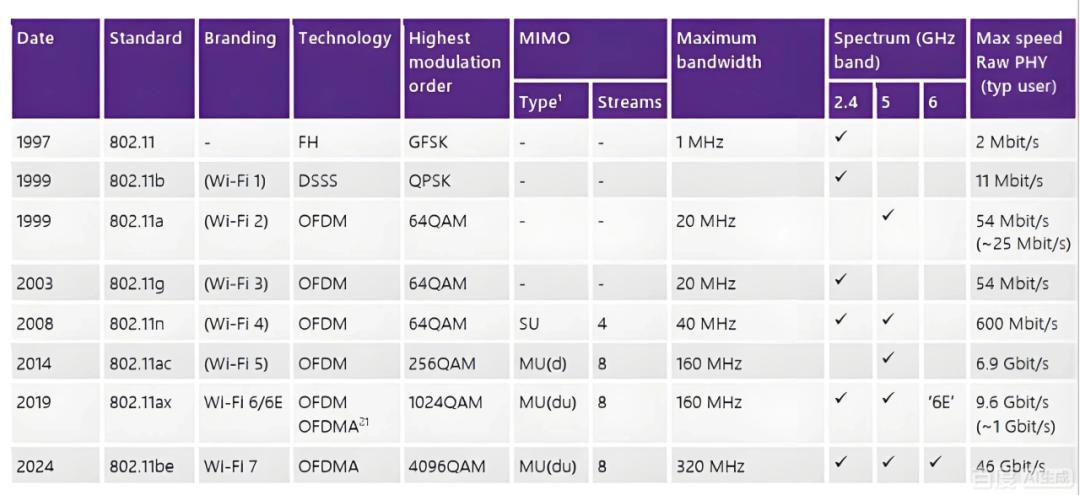
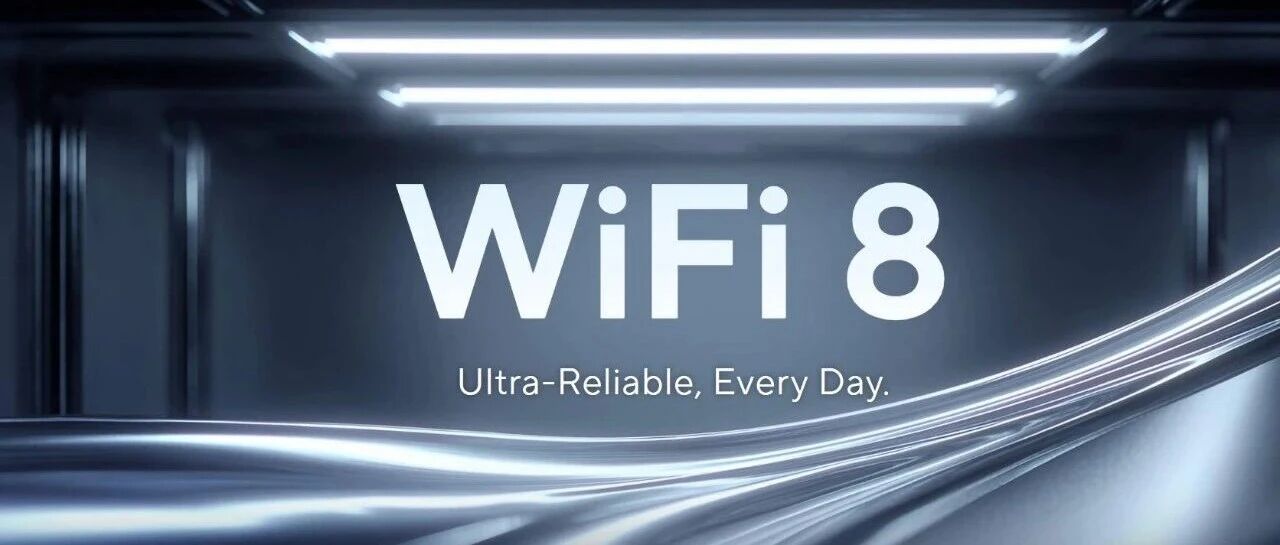
Core Viewpoint - The article highlights the evolution of Wi-Fi technology, focusing on the upcoming Wi-Fi 8 standard, which aims to enhance reliability and performance in wireless communication, addressing the growing demand for stable connections in various applications such as IoT, AR/VR, and industrial automation [11][14][40]. Group 1: Wi-Fi Technology Evolution - Wi-Fi technology originated in 1991 with the creation of "WaveLAN" by NCR, leading to the establishment of the 802.11 standard by IEEE in 1997, which initially offered a maximum speed of 2 Mbps [2]. - The introduction of 802.11b and 802.11g standards in the early 2000s increased speeds to 11 Mbps and 54 Mbps respectively, facilitating the initial adoption of Wi-Fi in home environments [2]. - The 802.11n standard (Wi-Fi 4) released in 2009 significantly improved speeds to 600 Mbps and introduced MIMO technology, paving the way for multi-device connectivity [3]. - The 802.11ac standard (Wi-Fi 5) launched in 2013 further enhanced speeds to 6.9 Gbps, catering to high-definition content needs [4]. - Wi-Fi 6 (802.11ax) introduced in 2019 improved network efficiency by supporting multiple devices simultaneously, achieving speeds of 9.6 Gbps [5]. Group 2: Wi-Fi 7 and Market Adoption - Wi-Fi 7 (802.11be) was officially commercialized in December 2023, supporting theoretical peak speeds of 46 Gbps and low latency for applications like cloud gaming and XR [5][8]. - The adoption of Wi-Fi 7 is expected to accelerate, with shipments projected to rise from 26.3 million units in 2024 to 66.5 million in 2025, and reaching 117.9 million by 2026 [8][9]. - By 2026, total shipments of Wi-Fi 7 devices are anticipated to reach 1.1 billion units, including significant contributions from IoT and healthcare devices [9]. Group 3: Wi-Fi 8 Development and Features - Wi-Fi 8, defined by the IEEE 802.11bn task group, aims to provide ultra-high reliability (UHR) and is expected to address the limitations of previous standards in complex environments [11][14]. - Key features of Wi-Fi 8 include enhanced coordination between access points, congestion avoidance mechanisms, and improved modulation schemes, which collectively aim to ensure stable connections even under high-density conditions [17][18]. - The standard is projected to be finalized by March 2028, with industry players already beginning to develop products based on its draft specifications [19][20]. Group 4: Industry Players and Strategies - MediaTek has launched its Filogic 8000 series for Wi-Fi 8, focusing on applications in gateways and various devices, with plans for mass production by the end of 2027 [21][25]. - Broadcom is employing a dual-track strategy by offering complete Wi-Fi 8 chip solutions while also licensing its IP to accelerate adoption across various sectors [26][31]. - Qualcomm is leading the standardization efforts and plans to unveil a comprehensive Wi-Fi 8 product lineup at the 2026 Mobile World Congress, emphasizing reliability and low latency [33][34]. - Intel is focusing on AI integration within Wi-Fi 8, enhancing network performance in high-density environments through intelligent resource management [35].
燃气轮机专题报告:行业高景气、供需错配,看好国产集成、零部件供应商优先受益
Soochow Securities· 2026-01-09 11:04
Investment Rating - The report recommends an "Overweight" rating for the gas turbine industry, anticipating a strong performance due to high demand and limited supply [5][73]. Core Insights - The gas turbine industry is expected to enter a new upward cycle driven by the accelerating demand for electricity from AI data centers, with a significant supply-demand mismatch [3][11]. - The global gas turbine market is dominated by major players such as Siemens, GE, and Mitsubishi, but there is substantial potential for domestic manufacturers to capture market share through localization and partnerships [3][25]. - The report highlights specific companies that are well-positioned to benefit from this trend, including Jereh, Yingliu, Haomai Technology, and Lande [3][73]. Summary by Sections 1. Industry Overview - The gas turbine industry is experiencing a significant upturn, characterized by a supply-demand mismatch, with global gas turbine orders exceeding 80 GW while actual deliverable capacity is below 50 GW [3][32]. - The demand for gas turbines is being driven by the rapid growth of AI data centers, which require reliable and stable power sources [3][11]. 2. Domestic Manufacturers - Domestic gas turbine manufacturers are expected to benefit from the increasing demand and the potential for localization of production [3][25]. - Jereh has secured substantial orders from leading AI companies, indicating strong market acceptance and growth potential [3][39]. - Yingliu is focusing on high-value turbine blades, which are critical components in gas turbines, and is well-positioned for growth as domestic production increases [3][57]. 3. Investment Recommendations - The report suggests focusing on companies with high order visibility and strong growth potential, such as Jereh for its gas turbine generator sets, Yingliu for turbine blades, Haomai Technology for turbine components, and Lande as a supplier to Caterpillar [3][73]. - The expected growth in the gas turbine market is supported by the increasing electricity demand from AI data centers and the limitations in supply capacity [3][32].


东吴证券:燃气轮机行业高景气&供需错配 看好国产集成&零部件供应商优先受益
智通财经网· 2026-01-09 10:55
Core Viewpoint - The gas turbine industry is expected to enter a new upward cycle due to the accelerating construction of AI data centers, which is leading to a widening power supply-demand gap [1][2] Supply and Demand Dynamics - Demand is rapidly increasing while supply is constrained by supply chain issues and a delivery cycle of 3-5 years, resulting in a clear supply-demand gap; by 2025, global gas turbine order intentions have exceeded 80 GW, but actual deliverable capacity is less than 50 GW [2] - Heavy-duty gas turbines offer advantages in power and long-term stable operation, while medium and small-sized turbines are more flexible and reliable, with stronger demand elasticity in data center scenarios [2] - North America and the Middle East are driving demand, with the U.S. facing increasing constraints on its power system and the Middle East benefiting from low gas prices and data center projects [2] Domestic Equipment Manufacturers' Opportunities - The global gas turbine market is primarily dominated by companies like Siemens, GE, Mitsubishi Heavy Industries, and Caterpillar, indicating significant potential for domestic replacements [3] - Jerry Holdings has secured a $200 million order from a leading U.S. AI company and has sufficient gas turbine production capacity [3] - Haomai Technology focuses on gas turbine power cylinders and components, with a full order book from leading gas turbine companies [3] - Yingliu Technology specializes in high-temperature alloy blades, which are critical components in gas turbines, and is expected to increase its market share [3] - Linde Co. supplies castings for Caterpillar gas turbines and diesel engines, positioning it to benefit directly from market growth [3] Investment Recommendations - The gas turbine industry is recommended for investment due to the combination of explosive demand, supply constraints, and domestic replacement opportunities, highlighting companies like Jerry Holdings, Yingliu Technology, Haomai Technology, and Linde Co. [4]

东海证券晨会纪要-20260109
Donghai Securities· 2026-01-09 05:32
Group 1 - The semiconductor industry continues to recover with rising prices, driven by AI demand and structural opportunities in AI computing, AIOT, semiconductor equipment, key components, and storage price increases [5][7][11] - In December, global semiconductor demand improved, with slight growth in PCs and smartphones, and rapid growth in TWS headphones, wearable devices, smart home products, AI servers, and new energy vehicles [5][7] - The supply side shows high inventory levels, but AI-driven demand in certain segments has led to price increases from upstream wafer foundries, while memory price hikes may slow down shipments of consumer electronics [5][7][11] Group 2 - The mechanical equipment industry has seen some export chain companies announce profit increases for the year, with companies like Juxing Technology and Taotao Automotive projecting significant profit growth [13][14] - Juxing Technology expects a net profit of 2.419 to 2.764 billion yuan for 2025, reflecting a growth of 5% to 20% year-on-year, while Taotao Automotive anticipates a net profit of 800 to 850 million yuan, representing an increase of 85.5% to 97.1% [13][14] - Siemens is undergoing a strategic transformation to integrate industrial AI into its operations, aiming for revenue growth of 6% to 9% in the medium term [15][16] Group 3 - The A-share market showed slight fluctuations, with the Shanghai Composite Index closing down 0.07% at 4082 points, while the Shenzhen Component and ChiNext indices also experienced declines [21][22] - The military equipment sector saw a significant increase of 4.83%, leading the industry gains, while sectors like insurance and securities faced declines [23][25] - The semiconductor sector's valuation remains high, with a PE ratio of 91.50% and a PB ratio of 72.94%, indicating strong market interest despite potential risks [6][7]
冰轮环境:公司联营公司烟台现代冰轮重工有限公司承接韩国现代重工的技术
Zheng Quan Ri Bao Zhi Sheng· 2026-01-08 13:41
Core Viewpoint - The company, Ice Wheel Environment, has a competitive edge in the global market through its joint venture, Yantai Modern Ice Wheel Heavy Industry Co., Ltd., which specializes in producing heat recovery steam generators (HRSG) for combined cycle gas power plants, leveraging technology from South Korea's Hyundai Heavy Industries [1] Group 1 - The joint venture was established in 2004 and has collaborated with major companies such as GE, Siemens, and Mitsubishi [1] - The company is projected to achieve revenue exceeding 700 million in 2024 [1]
