
极氪

Search documents
李书福拼了
Hu Xiu· 2025-06-11 21:16
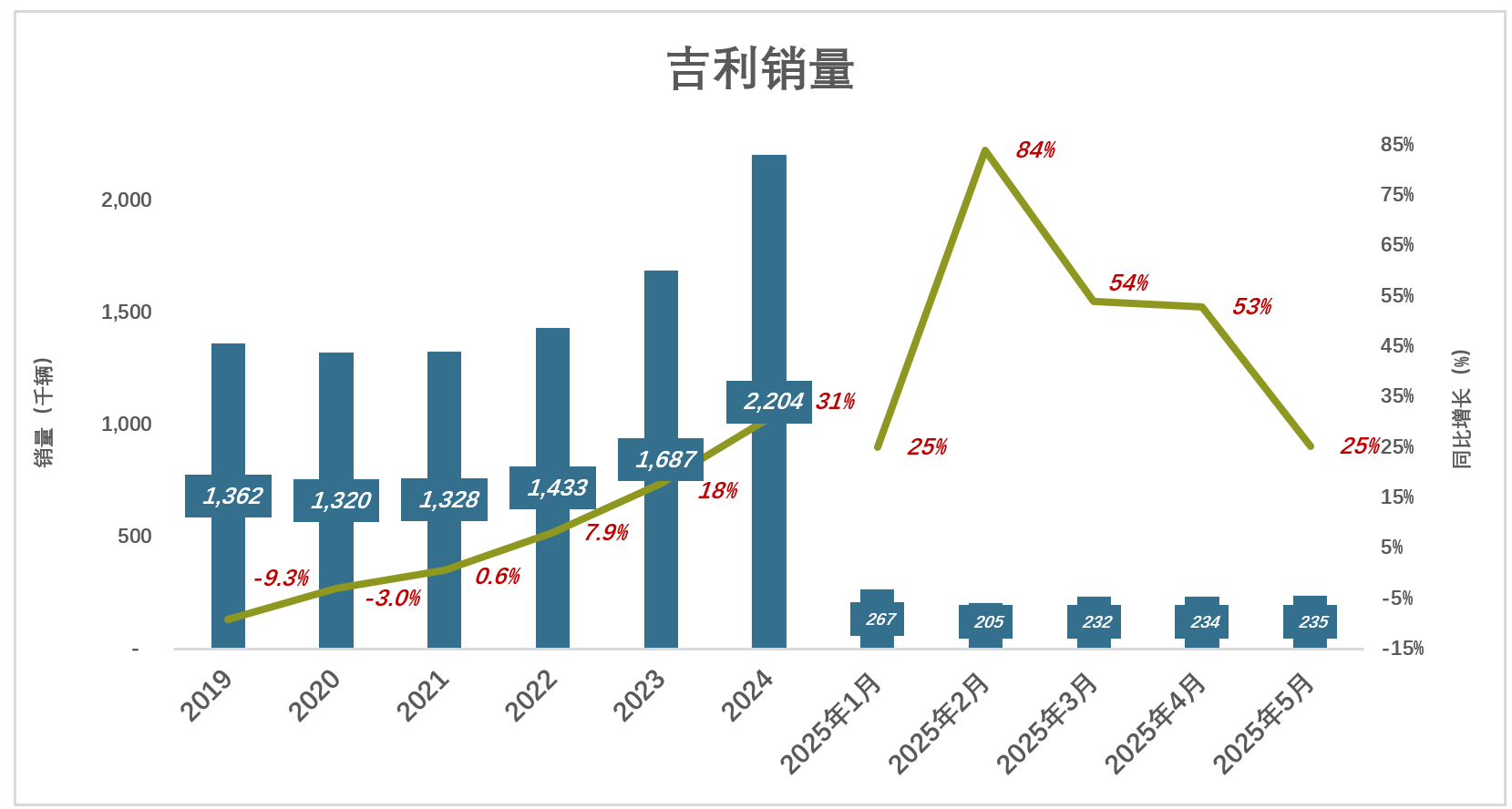
Core Viewpoint - Geely Automobile has shown impressive financial performance in Q1 2025, with revenue of 72.5 billion and a net profit of 2.28 billion, indicating significant growth in both revenue and profit compared to the previous year [1][2]. Financial Performance - In Q1 2025, Geely's revenue reached 72.5 billion, a year-on-year increase of 25% [1]. - The net profit, excluding other income of 35.9 billion, was 2.28 billion, reflecting a 134% year-on-year growth [1][2]. - The company delivered 704,000 vehicles in the quarter, marking a 47.6% increase year-on-year [1]. Market Position and Valuation - Despite strong performance, Geely's price-to-earnings ratio is below 10, and S&P has downgraded its rating to negative due to debt pressure and market competition [2]. - There is speculation that if Geely can challenge BYD's leading position in the new energy vehicle market, its market capitalization could reach 1 trillion, five times its current value [2]. Sales Performance - Geely's sales target for 2023 was 1.65 million vehicles, which was exceeded with actual sales of nearly 1.69 million [5]. - For 2024, the sales target was set at 1.9 million, which was later raised to 2 million, with actual sales reaching 2.18 million, a 29.1% increase [6]. - In the first five months of 2025, Geely's cumulative sales reached 1.173 million, a 48.6% increase year-on-year, representing 43.3% of the annual target [7][9]. New Energy Vehicle Strategy - Geely's new energy vehicle sales have seen significant growth, with a penetration rate approaching 50% by Q1 2025 [11][15]. - The company has adopted a "two-legged" approach, focusing on both pure electric and plug-in hybrid vehicles [16][20]. - In 2023, plug-in hybrid vehicle sales surged, accounting for 45.2% of Geely's new energy vehicle sales by Q4 [17]. Brand Development - Geely's premium brand, Zeekr, has faced challenges, with sales growth slowing in 2025 [30][31]. - The company has acquired a majority stake in Lynk & Co to bolster its market position [34]. - The newly launched Galaxy series has become a key driver of sales growth, contributing significantly to Geely's overall performance [41]. Conclusion - Geely's strong financial results and strategic positioning in the new energy vehicle market highlight its potential for future growth, despite facing challenges in market competition and brand performance [43][44].


自主品牌的设计觉醒不能倒退
Zhong Guo Qi Che Bao Wang· 2025-06-11 09:55
Group 1 - Xiaomi's automotive design strategy involves borrowing elements from high-end brands to create a perception of luxury, as seen with the YU7 model [2][3] - The market for electric vehicles priced above 300,000 yuan has grown by 47% year-on-year, while the segment below 100,000 yuan has shrunk by 19%, indicating a shift towards high-end offerings [3] - The design of Xiaomi's vehicles, such as the SU7 and YU7, has attracted significant attention, with the SU7 achieving over 60,000 orders in its first month, primarily from first-time buyers under 30 [3][4] Group 2 - The automotive industry is witnessing a trend where new brands adopt classic design elements from established luxury brands, leading to a potential challenge of design homogenization [4][6] - A significant portion of consumers, 68%, perceive Xiaomi vehicles as lacking uniqueness, with this sentiment being even stronger among older demographics [4] - The cultural significance of design elements from luxury brands is highlighted, as they represent a brand's heritage and values, which cannot be easily replicated [6][9] Group 3 - The younger generation, particularly those born in the 1990s and 2000s, prioritize unique design over traditional luxury symbols, indicating a shift in consumer preferences [7][10] - The evolution of automotive design is being driven by technological advancements, allowing for more creative freedom and new design paradigms [9][10] - The transition from imitation to original design is crucial for domestic brands to establish their identity and compete on a global scale [10]

汽车早报|多家车企陆续承诺支付账期不超过60天 腾势D9第25万台量产车下线
Xin Lang Cai Jing· 2025-06-11 00:22
Group 1 - Geely, Changan, BYD, and Chery have committed to a payment term not exceeding 60 days [1] - BYD's Tengshi D9 has become the world's first new energy MPV to reach a production milestone of 250,000 units [1] Group 2 - BAIC Group reported a total vehicle sales of 134,700 units in May, a year-on-year increase of 1.61% [2] - BAIC's total vehicle sales from January to May reached 662,700 units, up 6.35% year-on-year [2] - BAIC's premium brand, Arcfox, sold over 13,500 units in May, marking a 200% increase year-on-year [2] Group 3 - SAIC Maxus has increased its registered capital from approximately 5.82 billion RMB to about 10.33 billion RMB, a growth of approximately 77% [3] - The company was established in April 2011 and is fully owned by SAIC Group [3] Group 4 - Zeekr has announced a patent for a vehicle anti-tailgating alert system, which aims to alleviate driving anxiety [4] - The system includes real-time monitoring of vehicle speed and distance to the vehicle ahead, providing dynamic alerts to following vehicles [4] Group 5 - BYD has published a patent for a fire detection method that aims to improve the accuracy of fire identification [5] - The method involves analyzing visible light images and environmental data to determine fire detection results [5] Group 6 - VinFast reported a significant increase in electric vehicle deliveries, with a total of 36,330 units delivered in the first quarter, a year-on-year increase of 296% [6] - The company's total revenue for the first quarter reached approximately 6.57 billion USD, a year-on-year growth of 149.9% [6] - VinFast's net loss for the quarter was approximately 7.12 billion USD [6] Group 7 - General Motors plans to invest approximately 4 billion USD in three manufacturing plants located in Michigan, Kansas, and Tennessee over the next two years [6]

隆利科技(300752) - 投资者关系活动记录表(2025年6月9日-2025年6月10日)
2025-06-10 11:20
Group 1: LIPO Technology and Mini-LED Products - The company's LIPO technology products have received high recognition from clients after three years of R&D and validation, and are now entering mass production, which is expected to positively impact company performance [2] - The Mini-LED technology is rapidly being adopted in automotive displays, with partnerships established with tier 1 clients such as Continental, Faurecia, and Visteon, as well as end customers like BYD, NIO, and Geely, indicating a fast-growing automotive business [3] Group 2: AI Technology and Market Trends - The rapid development of AI technology is driving new market opportunities in smart hardware, with the company actively investing in R&D for emerging products like AR glasses and Micro-LED technology [3] - The demand for precision structural components is expected to increase as electronic devices trend towards lightweight and integrated designs, providing new growth opportunities for the company [3] Group 3: LCD Industry Outlook - The recovery of the macro economy and consumer demand is leading to a resurgence in the consumer electronics sector, with a growing need for intelligent, thin, large, interactive, and ultra-high-definition screens [3] - The traditional LCD display market is anticipated to continue its steady and healthy development due to ongoing domestic and international demand growth and industry optimization [3]

李书福再添IPO,曹操出行通过聆讯,日均出行163万单,市占率跃居中国第二
3 6 Ke· 2025-06-10 10:55
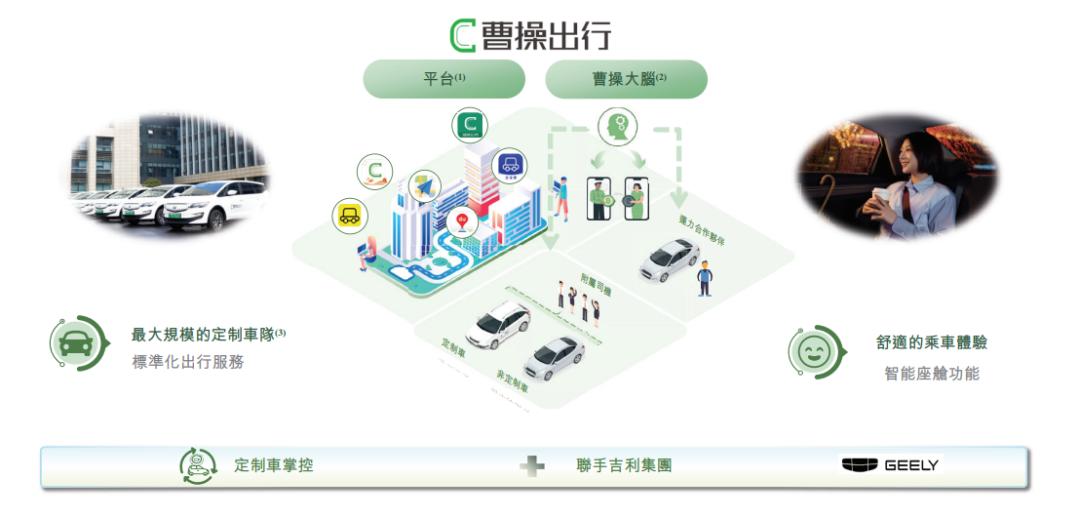
Core Viewpoint - Caocao Travel, a ride-hailing platform under Geely, is set to go public on the Hong Kong Stock Exchange after passing its listing hearing, marking the potential tenth IPO for Geely's chairman Li Shufu [1][2][3] Company Overview - Caocao Travel ranked among the top three ride-hailing platforms in China over the past three years, with a projected market share of 5.4% in 2024, positioning it as the second-largest platform [1][5][15] - The platform processed 598 million orders last year, averaging 1.63 million orders per day, or approximately 19 orders per second [1][15] Business Model - Caocao Travel operates a unique business model combining B2C public transportation with certified drivers, leveraging Geely's automotive manufacturing experience [5][11] - The company has developed a fleet of customized electric vehicles, primarily the Fengye 80V and Caocao 60, and also engages in vehicle leasing and sales to other ride-hailing companies [11][20] Financial Performance - Total revenue for Caocao Travel has shown significant growth, with figures of 7.63 billion RMB, 10.67 billion RMB, and 14.66 billion RMB for 2022, 2023, and 2024 respectively, reflecting a compound annual growth rate of 41.4% [18][20] - The gross profit margin improved from -4.4% in 2022 to 8.1% in 2024, with gross profits of 6.15 billion RMB and 11.86 billion RMB in 2023 and 2024 respectively [22] Market Context - The ride-hailing market in China is highly competitive, with Didi holding approximately 70.4% market share in 2024, posing significant challenges for Caocao Travel [5][30] - The overall travel market in China is projected to reach 8 trillion RMB in 2024, with the shared mobility segment expected to grow to 344.4 billion RMB, indicating substantial growth potential [30][32] Future Prospects - The shared mobility market is anticipated to maintain a growth trajectory, with a projected compound annual growth rate of 17.0% from 2024 to 2029, increasing market penetration from 4.3% to 7.6% [32] - The emergence of Robotaxi services is seen as a new frontier in the mobility sector, with ongoing exploration of technology and business models [35]
2025年汽车生产者责任延伸(EPR)成果分享会成功召开
Zhong Guo Qi Che Bao Wang· 2025-06-10 08:35
Core Insights - The conference focused on sharing the results and experiences of the Extended Producer Responsibility (EPR) pilot program in the automotive industry, promoting excellent cases, and exploring the development direction of EPR management to support the green transformation of the automotive industry [1][3]. Group 1: EPR Implementation and Industry Strategy - The development of a circular economy is a major national strategic decision, crucial for resource security and achieving carbon neutrality goals. Implementing EPR in the automotive sector is both a responsibility and a strategic opportunity to reshape industry competitiveness [3]. - The automotive industry will focus on EPR for new energy vehicles, enhancing government support, deepening policy research, and building collaborative platforms to explore a "Chinese solution" for EPR management [3][4]. Group 2: Pilot Program Achievements - Since the release of the EPR pilot implementation plan in June 2021, participating companies have made significant progress in areas such as recycled materials, remanufacturing, and recycling system construction, resulting in multiple replicable and exemplary cases [4]. - The "EPR Pilot Excellent Case Collection" was released, showcasing 16 typical cases that highlight innovative paths and significant achievements in EPR practice across various enterprises, providing valuable experience and guidance for the industry [4][6]. Group 3: Industry Reports and Research - An industry report titled "Reconstructing the Future: The Sustainable Development Path of Automotive Recycled Plastics" was released, providing a systematic study of the policy environment, technological research, recycling systems, market applications, and supply-demand analysis related to automotive recycled plastics [7][12]. Group 4: Action Plans and Standards - The "New Energy Vehicle EPR Capability Enhancement Action Plan" was launched, encouraging companies to explore EPR implementation paths and business models in a flexible manner, aiming to leverage EPR management for carbon reduction and cost efficiency [13]. - Progress on the EPR supporting standard system was discussed, including the development of guidelines and standards for the automotive industry, which will provide technical specifications and implementation guidance for EPR management [16]. Group 5: International Experience and Collaboration - Experts from Germany and Japan shared insights on EPR frameworks and sustainable development paths in the automotive industry, offering valuable lessons for China's efforts in green transformation and circular economy policy frameworks [17]. - The successful hosting of the conference facilitated information exchange and experience sharing among automotive industry stakeholders, promoting the dissemination and practice of EPR concepts [17].

界面·财经号优质稿件TOP20|2025年5月榜
Xin Lang Cai Jing· 2025-06-10 08:13
Group 1 - The sanitary napkin industry faces a trust crisis after issues were exposed on CCTV's 315 Gala, leading to Huang Zitao's rapid development and launch of the Duowei brand, achieving sales of 40 million in its first live stream, priced at less than 60% of traditional brands [2] - The beauty industry remains strong, with Proya surpassing Shanghai Jahwa with a revenue of 10.778 billion, marking a significant shift as the top ten companies now require a minimum revenue of 2.569 billion, and R&D investments have surged, with companies like Shiseido and Giant Bio seeing over 40% growth in R&D spending [2] - The cruise industry is attempting to recover from a price collapse in the summer of 2024, with some routes seeing price drops of 60%, leading companies like Royal Caribbean and Aida Cruises to introduce cultural crossover themes to attract customers, resulting in a record of 30,000 people entering and exiting Shanghai Port in a single day during the May Day holiday [2] Group 2 - The value of intellectual property (IP) is being reaffirmed, as Light Media's "Nezha: The Devil's Child" grossed 15 billion at the box office, with a net profit increase of 374.79% to 2.016 billion in the first quarter, despite concerns over the film industry's reliance on single IPs [3] - Consumer-facing IP commercialization is booming, with brands like Liangpinpuzi and Qiaqia collaborating over 50 times, generating 7.1 billion in revenue; the Palace Museum's dining experience has become a trend with an average spending of 500 per person, showcasing the overwhelming success of cultural IP in driving consumer behavior [3] - The traditional employment relationship is evolving, as seen in the live stream featuring Dong Mingzhu and Meng Yutong, highlighting a shift from loyalty to a more flexible employment approach among younger generations [3]
汽车行业2025年6月投资策略:RoboX商业化落地加速,关注板块二季度业绩【国信汽车】
车中旭霞· 2025-06-09 02:40
Sales Tracking - In May, the retail sales of passenger cars in China reached 1.93 million units, a year-on-year increase of 13% and a month-on-month increase of 10%. Cumulatively, retail sales for the year reached 8.802 million units, up 9% year-on-year [1] - Wholesale sales for passenger cars in May totaled 2.329 million units, a year-on-year increase of 14% and a month-on-month increase of 6%. Year-to-date wholesale sales reached 10.797 million units, up 12% year-on-year [1] - In May, the cumulative number of new vehicle registrations was 1.7086 million, a year-on-year increase of 12.5%, with new energy vehicles accounting for 911,700 units, up 23.9% year-on-year [1] Market Performance - In May, the CS automotive sector rose by 1.88%, with the CS passenger vehicle index increasing by 1.12%. The CS automotive parts index rose by 2.52%, and the CS motorcycle and others index increased by 1.89% [1] - From the beginning of 2025 to date, the CS automotive sector has increased by 29.05%, outperforming the CSI 300 index by 17.13 percentage points and the Shanghai Composite Index by 16.53 percentage points [1] Cost Tracking - As of the end of May 2025, prices for float glass, aluminum ingots, and zinc ingots decreased by 24%, 3.2%, and 7.6% year-on-year, respectively [2] - The inventory warning index for Chinese automotive dealers was 52.7%, down 5.5 percentage points year-on-year and 7.1 percentage points month-on-month, indicating improved market conditions [2] Industry Dynamics - WeRide announced a strategic partnership with Uber to expand Robotaxi services to 15 new international cities over the next five years, aiming to reshape global mobility [3] - BYD established its European headquarters in Hungary, marking a significant step in its localization strategy [4] - Geely announced a non-binding offer to privatize Zeekr, aiming to acquire all outstanding shares and delist from the NYSE [5] - Geely's Galaxy Star 8 was launched with a price range of 125,800 to 165,800 yuan, featuring advanced design and technology [6] - Nissan announced a significant restructuring plan, including a workforce reduction of approximately 20,000 employees, due to financial difficulties [7] - Audi is planning to sell its design and engineering subsidiary Italdesign as part of cost-cutting measures [8] - XPeng officially entered the Italian market, aiming to capitalize on the country's electric vehicle incentives [9] Government News - Shenzhen established a 7 billion yuan fund to accelerate the integration of AI and embodied robotics technology [25] - Shandong province announced eight new intelligent manufacturing standard application pilot projects to enhance manufacturing capabilities [26]



市场调查:新能源二手车保值率为啥这么低?
Zhong Guo Qi Che Bao Wang· 2025-06-09 01:31
Core Viewpoint - The competition in the automotive market, particularly in the new energy vehicle (NEV) sector, has intensified, leading to significant price fluctuations and concerns regarding the depreciation of used NEVs [2][3]. Group 1: Price Fluctuations and Market Dynamics - In early 2025, predictions indicated that competition in the automotive market would become increasingly fierce, which has proven accurate as 15 automotive brands announced new purchase incentives starting in January [2]. - By May, a new wave of price fluctuations emerged, particularly affecting the used car market, with NEVs being notably impacted [2]. - A report indicated that the top five pure electric vehicles with the highest one-year resale values included models like Xiaomi SU7 (88.7%), AITO M9 (85.2%), and Tesla Model 3 (75.7%), challenging the perception that NEVs depreciate rapidly [2]. Group 2: Used NEV Market Observations - Despite reports of price drops, many used car dealers in Beijing and Nanjing noted that while prices for used NEVs are fluctuating, they have not reached a "collapse" state [3]. - Dealers reported that the price of a 2024 Tesla Model 3 had decreased to approximately 185,000 yuan from a new car price of 231,900 yuan, reflecting a depreciation rate of about 80% [3]. - A significant decline in transaction volumes for used NEVs was observed, with sales dropping from over 20 units per month to around 10, attributed to consumer hesitance and concerns over pricing and vehicle quality [3]. Group 3: Factors Affecting Resale Value - The low resale value of used NEVs is a major factor hindering their market penetration compared to traditional vehicles [5][6]. - Rapid technological advancements in NEVs lead to quicker obsolescence of older models, negatively impacting their resale value [8]. - The lack of standardized assessment criteria for used NEVs results in significant price discrepancies among dealers, complicating consumer purchasing decisions [7]. Group 4: Consumer Concerns and Market Perception - Consumers express concerns regarding the longevity of NEV batteries and the overall condition of used vehicles, which affects their willingness to purchase [3][6]. - The perception of NEVs as having lower resale values compared to traditional fuel vehicles leads many consumers to prefer the latter [6]. - The absence of robust after-sales service for used NEVs further exacerbates consumer apprehension, as many brands do not offer comparable support for used vehicles [7]. Group 5: Future Outlook and Recommendations - Experts suggest that for NEVs to achieve higher resale values, they must establish strong brand recognition, consistent product quality, and comprehensive after-sales service [12]. - The current high resale value of models like Xiaomi SU7 may not be sustainable in the long term due to increasing competition and market saturation [12]. - Companies are encouraged to focus on stabilizing new car prices to positively influence the resale market, as ongoing price wars could lead to further depreciation of used NEVs [14].

新能源汽车市场开启“智能化+性价比”双轨竞争模式
Shen Zhen Shang Bao· 2025-06-08 17:02
Group 1 - The 2025 Guangdong-Hong Kong-Macao Greater Bay Area Auto Show was held in Shenzhen from May 31 to June 8, showcasing a shift in the automotive industry towards high-tech smart terminals, particularly in the electric vehicle (EV) sector [1] - BYD dominated Hall 1, while Huawei's HarmonyOS Intelligent Driving presented four major brands in Hall 2, including the Wenjie and Zhijie series [1] - In May, Leap Motor achieved a sales volume of 45,100 units, marking a year-on-year increase of 148%, securing its third consecutive monthly sales championship among new energy vehicle manufacturers [1] Group 2 - HarmonyOS Intelligent Driving and Li Auto ranked second and third in May sales, each surpassing 40,000 units, with HarmonyOS delivering 44,500 units across its brands [1] - The Wenjie brand, produced by Seres, was identified as the key contributor to HarmonyOS Intelligent Driving's success, with over 36,600 units delivered in May [1] - Li Auto's new vehicle deliveries reached 40,900 units in May, reflecting a year-on-year growth of 16.7%, with expectations to soon return to a monthly delivery level of 50,000 units [1] Group 3 - Xpeng Motors maintained stable performance with a delivery volume of 33,500 units, exceeding 30,000 units for seven consecutive months [2] - Xiaomi's automotive division delivered over 28,000 units in May, while NIO reported 23,200 units, showing a year-on-year increase of 13.1% [2] - Industry experts noted that the auto show highlighted a dual competitive model in the EV market, focusing on "intelligence + cost-effectiveness," with technological integration and ecosystem consolidation being crucial for future success [2]