三星

Search documents
两条8.6代OLED产线今年将量产,高端笔记本将进入OLED时代
Di Yi Cai Jing· 2026-01-09 10:48
Core Insights - The year 2026 is projected to be pivotal for the promotion of affordable AI PCs, driven by the increased application of OLED screens and enhanced CPU capabilities [1][2] Group 1: OLED Panel Development - Two 8.6-generation OLED panel production lines are expected to commence mass production in 2026, accelerating the penetration of flexible and hybrid OLED panels in IT and automotive display sectors [1] - BOE and Samsung's 8.6-generation OLED panels are anticipated to be used in the next generation of Apple's MacBook Pro and will supply Taiwanese IT manufacturers, respectively [1] - TCL Huaxing and Visionox are expected to start mass production of their 8.6-generation OLED panels in Q3 and Q4 of 2027, further supporting the application of OLED panels in laptops [1] Group 2: Market Projections - The penetration rate of OLED panels in laptops is projected to reach nearly 20% by 2030, with OLED screens dominating the high-end laptop market [1] - The shipment volume of OLED laptop screens is expected to reach 45 million units by 2030 [1] Group 3: Technological Advancements - The adoption of OLED screens will enhance laptops' performance in terms of portability and display quality compared to LCD screens [1] - The introduction of new generation chips by Intel and AMD, utilizing 2-3 nanometer processes, is expected to elevate laptop computing power from 40 TOPS to 50 TOPS [2] - The new CPU architectures are anticipated to penetrate mainstream laptop product lines over the next three years, enabling more diverse task processing capabilities [2] Group 4: Market Outlook - Despite rising memory costs, the global laptop market is expected to maintain stable shipment volumes in 2026, with growth anticipated in 2027 [2]


电子行业2026年投资策略:AI全面共振、国产加速出击(附下载)
Xin Lang Cai Jing· 2026-01-09 09:10
Group 1: Semiconductor Globalization Cycle - The semiconductor supply side focuses on long-term capacity planning and capital expenditure, while the short-term view includes equipment procurement and capacity utilization rates [1][9] - The demand side is driven by new technologies and products in the long term, with short-term factors including terminal inventory, corporate inventory, and daily sales orders [1][9] - Chip prices serve as a high-frequency indicator reflecting cyclical fluctuations [1][9] - The global semiconductor cycle is characterized by a 3-7 year cycle, with the current cycle bottoming out in 2023 and showing initial signs of recovery in 2024, with a cumulative year-on-year increase of 21.19% from January to October 2025 [1][10] Group 2: AI and Chip Market Dynamics - AI demand is expected to continue driving growth, with module prices reflecting significant fluctuations based on downstream demand [2][11] - The storage chip market is dominated by a few major players, with prices largely determined by wafer supply and demand dynamics, leading to significant price increases in 2025 due to high AI demand [3][12] - The AI server market is critical, with major investments from both domestic and international companies, where 50-70% of capital expenditure is allocated to AI servers [4][13] Group 3: GPU and AI Chip Market - GPUs account for nearly 90% of the AI chip market share and represent 70-75% of the value of AI servers, making them essential for large-scale parallel computing [5][14] - The Chinese AI chip market is growing, with domestic companies supplying approximately 42% of AI chips, up from 30% in 2024, indicating significant growth potential [6][15] Group 4: Liquid Cooling Technology - Cold plate liquid cooling technology is becoming the mainstream solution, with increasing demand driven by rising TDP of AI chips and stricter energy efficiency regulations for data centers [7][16] - The penetration rate of liquid cooling in server cooling solutions is expected to reach 21% by 2025, with the domestic liquid cooling server market projected to exceed $3 billion [17]

基础化工行业年度报告:周期成长双线轮动,持续看好成长赛道和反内卷大方向
Xin Lang Cai Jing· 2026-01-09 09:00
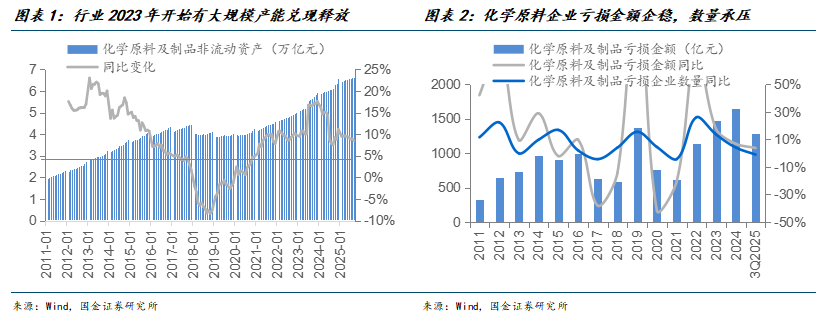
Group 1 - The chemical industry is at the bottom of its profitability cycle, with the chemical PPI showing signs of stabilization, indicating limited further downside risk [1][6][41] - The trend of "East rising, West falling" is evident, with Chinese companies expanding their product and capacity overseas to mitigate risks and enhance market presence [1][23][35] - There is a clear trend of polarization within the industry, where only companies above the industry median can realize profits, while marginal firms face significant challenges [1][36][39] Group 2 - Supply-side constraints are expected to improve industry sentiment, leading to price and profit recovery, particularly in sectors with limited new capacity [2][43][44] - The demand side remains weak, but structural opportunities may arise from new market segments and changes in demand patterns [3][47][48] - Emerging sectors such as AI, robotics, and solid-state batteries are anticipated to drive long-term investment opportunities due to their growth potential [2][48][49] Group 3 - The chemical industry is experiencing a significant shift in its competitive landscape, with European chemical competitiveness declining, allowing Chinese firms to capture more market share [23][25][29] - The export of chemical products from China has been increasing, with a net export value of $24.1 billion, indicating a positive trend in mitigating domestic supply pressures [15][31][33] - Companies are increasingly focusing on overseas resource acquisition, such as phosphate and potassium mines, to secure raw materials and enhance their competitive edge [1][35][36]

每周回顾 沪指16连阳突破4100点;2025年公募基金自购5600亿元
Sou Hu Cai Jing· 2026-01-09 08:40
Economic Indicators - In December, the Consumer Price Index (CPI) increased by 0.2% month-on-month and 0.8% year-on-year, with the core CPI (excluding food and energy) rising by 1.2% year-on-year [1] - The Producer Price Index (PPI) rose by 0.2% month-on-month but decreased by 1.9% year-on-year [1] Stock Market Performance - The Shanghai Composite Index (SSE) experienced a 16-day consecutive rise, closing at 4120.43 points, marking a ten-year high, with total trading volume exceeding 3 trillion yuan [1] - Several brokerage firms expressed optimistic expectations for the stock market in 2026, with CITIC Securities predicting a 5%-10% increase in the full-year performance of the market [1] Commodity Market Regulation - The Shanghai Futures Exchange implemented a series of regulatory measures to cool down the overheating silver futures market, including risk warnings, trading limit adjustments, and margin changes [1] Semiconductor Market Trends - The price of memory chips has surged, with some DDR5 server memory modules priced at over 40,000 yuan each, leading to comparisons with real estate prices in Shanghai [2] - The global demand for AI computing power has created a severe supply-demand imbalance in the memory semiconductor market, prompting significant price increases [2] Corporate Developments - Vanke A announced the retirement of its executive vice president, Yu Liang, who will no longer hold any position within the company [3] - Alibaba plans to increase investment in Taobao Flash Sale in 2026, aiming to become the market leader [4] Fund Industry Insights - Public funds in China engaged in a large-scale self-investment action in 2025, with total self-purchase transactions reaching 562.66 billion yuan, a 51.8% increase from 2024 [5] - Non-monetary public fund self-purchases amounted to 9.34 billion yuan, a 130% increase from the previous year, with bond funds being the primary focus [5][6] IPO Activity - Unigroup Guoxin has entered the counseling phase for its IPO, reflecting a new wave of interest in storage chips driven by AI [6] - MiniMax, an AI model company, successfully listed on the Hong Kong Stock Exchange, achieving a market capitalization exceeding 80 billion HKD [7] - The snack brand "Mingming Hen Mang" is planning to raise 400-500 million USD through an IPO, with significant growth in transaction volume and profit reported [8]
谷歌市值反超苹果,AI竞争向“模型+芯片”双重差异化进化
Quan Jing Wang· 2026-01-09 07:15
Group 1: Alphabet's Market Position - Alphabet's stock price rose by 2.43% to $321.98, increasing its market capitalization to $3.88 trillion, surpassing Apple for the first time since 2019 [1] - Since 2025, Alphabet's stock has surged over 60%, marking its best annual performance since the 2009 financial crisis, while Apple's stock increased by less than 10% [1] - The market's reaction reflects a shift in focus towards AI capabilities, indicating a restructured landscape for tech giants in the AI era [1] Group 2: AI Industry Development - Alphabet's market cap surpassing Apple is seen as a catalyst for accelerated AI industry development, prompting tech companies to invest in AI core competencies [2] - The focus on AI infrastructure and application development highlights the importance of energy as a core bottleneck, with companies like Lenovo leading in liquid cooling technology to address energy challenges [2] Group 3: Computing Power and Infrastructure - Computing power is the primary beneficiary of AI development, with Google aiming to double its computing capacity every six months and achieve a 1000-fold increase in the next 4 to 5 years [3] - Lenovo has established partnerships with major chip manufacturers like NVIDIA, AMD, Intel, and Qualcomm to enhance its AI computing infrastructure [3][4] Group 4: Energy Supply Challenges - The expansion of AI infrastructure necessitates a robust energy supply, leading major tech companies to invest directly in energy solutions [4] - Alphabet's acquisition of Intersect for $4.75 billion highlights the urgency for large tech firms to address energy bottlenecks in AI development [4] Group 5: Liquid Cooling Technology - Lenovo's liquid cooling technology has seen a 154% year-on-year revenue increase, significantly outpacing the server market growth [5] - The technology reduces system power consumption by 40% compared to traditional air cooling, with over 80,000 units deployed globally [5] Group 6: AI Model and Chip Integration - Google's Gemini series has surpassed OpenAI's GPT series, capturing 18% of the generative AI web traffic, indicating a competitive shift in the AI model landscape [8] - Google's TPU chips are now being marketed as alternatives to NVIDIA GPUs, with projected shipments reaching 3.7 million and 5 million units in 2026 and 2027, respectively [9] Group 7: Lenovo's Strategic Positioning - Lenovo's integration of Google's Gemini model into its products, such as the Lenovo Qira personal AI, showcases its strategy to leverage partnerships while maintaining a diverse AI application ecosystem [10] - As a key supplier of AI computing infrastructure, Lenovo's liquid cooling technology aligns well with Google's TPU chip requirements, enhancing its competitive edge [10] Group 8: Future Outlook - Alphabet's stock continued to rise, further solidifying its market lead over Apple, as the tech industry's focus shifts towards AI [11] - Companies like Lenovo are positioning themselves to become core players in the AI landscape by expanding their advantages in both computing power and application development [11]

越南和东盟已成为韩国重要出口市场
Shang Wu Bu Wang Zhan· 2026-01-09 06:38
Group 1 - South Korea's exports to the United States are projected to grow by 28.2% from 2021 to 2025, indicating a significant diversification in export markets [1] - Exports to ASEAN countries increased by 12.5%, with exports to Vietnam specifically growing by 10.8% during the same period [1] - The increase in exports is attributed to major South Korean companies like Samsung and LG establishing factories in Vietnam, which boosts the export of intermediate goods and key components [1] Group 2 - South Korea's exports to ASEAN are expected to rise from $108.8 billion in 2021 to $122.4 billion by 2025 [1] - Exports to Vietnam are anticipated to grow from $56.7 billion to $62.8 billion in the same timeframe [1] - The trend reflects a broader strategy of South Korean firms to enhance investment and industrial cooperation with the U.S. and ASEAN markets [1]
台积电2nm,继续称霸
芯世相· 2026-01-09 06:18
Core Viewpoint - TSMC is set to maintain its leadership in advanced process nodes with the launch of its 2nm process, which will cater to top clients like Nvidia, Apple, AMD, and major cloud service providers [3][4]. Group 1: TSMC's 2nm Process - TSMC's 2nm process (N2) is expected to enter mass production by December 2025, utilizing GAA (Gate-All-Around) technology, which is a first for the company [3][4]. - The N2 technology promises significant improvements in performance and power efficiency, with TSMC emphasizing its leading position in transistor density and energy efficiency [4]. - Analysts predict that TSMC's N2 process could become one of the company's most successful nodes, with over 15 clients already engaged in related projects [5]. Group 2: Competitive Landscape - TSMC currently produces over 90% of the world's most advanced chips, maintaining a dominant market share that exceeds 70% [7][8]. - Geopolitical factors may pose risks to TSMC's advantages, as competitors like Intel and Samsung are also vying for market share [8]. - Intel's 18A process is expected to enter mass production in early 2025, which could allow the company to capture significant market segments in the U.S. [5][8]. Group 3: Future Outlook - TSMC's strategic delay in adopting GAA technology until the N2 process has reduced the risk of repeating Samsung's challenges with GAA implementation [9]. - The successful ramp-up of high-volume customer products on the N2 process by 2026 will be crucial in proving the technology's reliability [9]. - Analysts believe that expecting TSMC to falter and provide opportunities for Intel or Samsung is not a wise bet, given TSMC's historical execution record [9].

江苏百瑞赢:AI浪潮驱动“存储超级周期”,新年伊始芯片价格持续看涨
Jin Tou Wang· 2026-01-09 04:29
Core Insights - The global technology industry is focusing on the storage chip market as prices rebound sharply due to the AI-driven demand surge, marking the beginning of a "super cycle" in the semiconductor industry [1][3] Group 1: Market Dynamics - The primary driver of the price increase is the explosive growth in AI computing power demand, leading to a structural supply-demand imbalance [1] - TrendForce's report indicates that the overall contract price for general DRAM is expected to increase by 55-60% quarter-on-quarter in Q1 2026, while NAND Flash product prices are projected to rise by 33-38% [1] Group 2: Demand Drivers - AI servers are the main engine of demand growth, requiring 5 to 10 times more DRAM and NAND Flash storage capacity than traditional servers [2] - The share of storage devices in data center procurement costs has risen to approximately 40% and is expected to increase to 50% [2] Group 3: Supply Constraints - Major storage manufacturers have implemented strict production cuts since 2024 to focus on high-value products, contributing to a long-term foundation for price increases [2] - Industry inventory levels have dropped to historical lows after significant destocking, and new capacity typically takes 2-3 years to come online, indicating a tight supply situation in the short to medium term [2] Group 4: Future Outlook - The current price increase in storage chips signals the start of a new upward "super cycle" in the industry [3] - The combination of strong AI computing demand, structural adjustments in manufacturer capacity, and healthy inventory levels is expected to sustain a volume and price increase in the storage chip market through 2026 [3] - This technology-driven industrial cycle presents a historic strategic opportunity for the domestic storage industry and domestic substitution [3]
全球首发1.8nm芯片,华人CEO,救活了美国芯片标杆企业?
Sou Hu Cai Jing· 2026-01-09 04:24
Group 1 - The core point of the article highlights that while Samsung and TSMC have not yet mass-produced 2nm chips as promised, Intel has successfully mass-produced 1.8nm chips, which are more advanced than the 2nm offerings from its competitors [1][3]. - Intel officially launched the third generation of its Core Ultra processors, codenamed Panther Lake, at CES 2026, utilizing the Intel 18A process node, which corresponds to a 1.8nm technology [3][5]. - The Core Ultra 300 series boasts significant performance improvements over the previous 288V series, with single-core performance exceeding 40%, multi-core performance also exceeding 40%, and graphics performance up by 77% compared to the previous generation [5]. Group 2 - Intel's resurgence is attributed to its CEO, Pat Gelsinger, who implemented drastic measures including layoffs of over 20,000 employees and the elimination of unprofitable business segments, focusing on core CPU and GPU operations [7][9]. - The company secured substantial funding, including $8.9 billion from the U.S. government, $5 billion from NVIDIA, and $2 billion from SoftBank, which helped streamline its operations and enhance its market position [9]. - Intel's market value surged by 80% last year, indicating a recovery in its business and a significant competitive edge over TSMC and Samsung with the introduction of its 1.8nm chip technology [9].

从显示到全屋:海信以RGB为核,AI驱动智慧生活场景全覆盖
Xin Jing Bao· 2026-01-09 04:18
Core Insights - The CES 2026 marks a pivotal shift in AI technology from conceptual showcases to practical applications in everyday scenarios, with Hisense leading the way in display technology and AI advancements [1] - Hisense's long-term investments in AI algorithms, hardware development, and scene adaptation have positioned the company to capitalize on the current breakthroughs in embodied intelligence [1][8] - Hisense's products create a dual adaptation system between technology and scenarios, indicating a strong alignment with national strategic directions and industry trends [1] Group 1: Display Technology Innovations - Hisense unveiled the world's first 116-inch next-generation RGB-Mini LED TV at CES 2026, establishing a new standard for immersive visual experiences [2] - The company has transitioned from being a technology follower to a rule-maker in the display industry, achieving over 90% market share in the high-end 85-inch TV segment during the 2025 Double 11 shopping festival [2][3] - Hisense's RGB technology, which includes self-developed RGB light-emitting chips and AI picture quality chips, has led to significant advantages in color accuracy, brightness, and energy efficiency [2][3] Group 2: AI and Smart Ecosystem Development - Hisense is not only focusing on hardware but is also deeply exploring software ecosystems and scene experiences, evolving televisions into indispensable companions that understand user intentions [4][5] - The company is leveraging its role as the official sponsor of the 2026 FIFA World Cup to launch customized products that integrate cutting-edge technology into fans' daily lives, enhancing the overall experience [5][6] - Hisense aims to create a comprehensive smart home ecosystem powered by AI, integrating various appliances and technologies to enhance user experience across different household scenarios [6] Group 3: Embodied Intelligence and Future Growth - Hisense is actively developing embodied intelligence, showcasing robots that serve as companions in homes and efficient employees in commercial settings, marking a significant step towards practical applications of AI [7][8] - The company’s experience in display technology and home appliances provides a solid foundation for the development of embodied intelligence, emphasizing both technological advancement and practical applicability [8] - Hisense's exploration in this field positions it as a key player in the smart home and smart city sectors, opening up new avenues for future growth [8][9]