
乖宝宠物

Search documents
从规模扩张到生态重构:中国宠物行业的高质量发展路径与未来趋势
Da Gong Guo Ji· 2026-01-04 05:12
Investment Rating - The report indicates that the Chinese pet industry is in a "golden development period" characterized by high growth and resilience, with a projected market size increase from 725 billion CNY in 2015 to 3,598 billion CNY by 2024, reflecting a compound annual growth rate (CAGR) of approximately 20.66% [2][4]. Core Insights - The Chinese pet industry is experiencing significant structural upgrades, with consumption shifting towards high-value areas such as medical care and smart products, driven by increasing pet ownership and consumer spending [1][2]. - The industry is characterized by a younger, highly educated, and middle-to-high-income demographic, with pet ownership becoming an integral part of family life [13][14]. - The report highlights the rapid rise of domestic brands leveraging local innovation and supply chain advantages, with a focus on high-end and global market expansion [1][19]. Market Structure - The market is expanding rapidly, with the urban pet population expected to exceed 124 million by the end of 2024, and average spending per pet increasing significantly [4][5]. - Pet food remains the largest market segment, accounting for 52.8% of total consumption in 2024, with notable growth in medical care spending, which rose from 19% in 2018 to 28% [7][9]. - The penetration rates for various pet categories are increasing, with pet food and medical services showing strong growth potential, while traditional grooming services face challenges [9][12]. Consumer Demographics - The pet consumer base is predominantly composed of individuals born in the 1990s and 2000s, who represent 66.8% of the market, indicating a shift towards younger pet owners [13][14]. - The report notes a significant increase in married pet owners, reflecting a change in the perception of pets as family members rather than mere companions [14][17]. - Online purchasing channels dominate, accounting for 68.1% of pet product sales, while offline channels are preferred for service-related purchases [18]. Industry Chain and Segmentation - The pet industry chain encompasses food, products, and services, with a clear trend towards brand specialization and lifecycle service upgrades [19][20]. - The pet food segment is projected to grow from 157 billion CNY in 2012 to 1,585 billion CNY by 2024, with a CAGR of 21.2%, indicating strong resilience and potential for growth [21]. - The smart pet products market is rapidly expanding, with significant increases in sales for smart feeding devices and health monitoring products [22][23]. Future Trends - The report anticipates a convergence of technology and emotional consumerism in the pet industry, with smart devices enhancing pet care experiences and emotional services becoming more prevalent [28][29]. - Globalization is expected to create new opportunities, with Chinese pet food exports projected to grow significantly, indicating a shift towards international markets [30]. - Cross-industry innovations, such as pet-friendly travel and integrated home designs, are expected to emerge, providing new growth avenues for the pet industry [31].
农林牧渔行业:牛肉进口实施配额制及配额外关税,看好肉牛价格周期上行
GF SECURITIES· 2026-01-04 01:24
[Table_Page] 跟踪分析|农林牧渔 证券研究报告 [Table_Title] 农林牧渔行业 牛肉进口实施配额制及配额外关税,看好肉牛价格周期上行 [Table_Summary] 核心观点: | [Table_Grade] 行业评级 | 买入 | | --- | --- | | 前次评级 | 买入 | | 报告日期 | 2026-01-04 | [Table_PicQuote] 相对市场表现 -4% 4% 11% 19% 26% 34% 01/25 03/25 05/25 08/25 10/25 12/25 农林牧渔 沪深300 | [分析师: Table_Author]钱浩 | SAC 执证号:S0260517080014 | | | --- | --- | --- | | SFC CE No. BND274 | 021-38003634 | | | shqianhao@gf.com.cn | 分析师: | 李雅琦 | | SAC 执证号:S0260524080006 | 021-68827265 | | | liyaqi@gf.com.cn | 请注意,李雅琦并非香港证券及期货事务监察委员会的注 ...
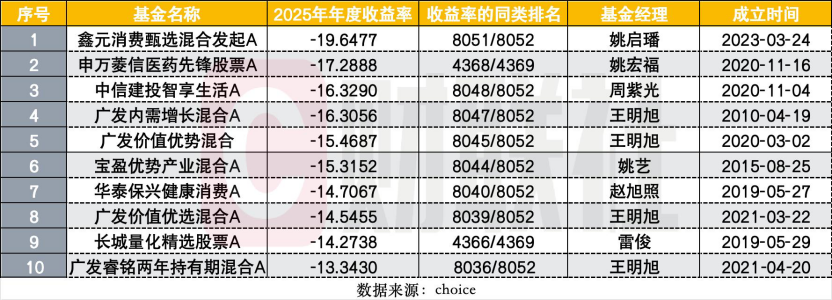
2025年谁流落亏损榜?“亏损王”爱调仓折腾,多位知名老将在列
Feng Huang Wang· 2026-01-03 23:21
Core Viewpoint - The A-share market in 2025 exhibited a clear structural bull market, with significant performance disparities among active equity funds, highlighted by the top-performing fund achieving a record annual return of 233.29% while others faced substantial losses, including the worst performer with a -19.65% return [1][4]. Group 1: Market Performance - The Shanghai Composite Index, Shenzhen Component Index, ChiNext Index, and Sci-Tech Innovation 50 Index rose by 18.41%, 29.87%, 49.57%, and 35.92% respectively in 2025 [1]. - A total of 4888 active equity products from 160 public fund institutions reported positive returns, while 144 products from 68 institutions experienced losses [1][9]. Group 2: Fund Performance Disparities - The top-performing fund, Yongying Technology Smart Selection, achieved a record annual return of 233.29%, surpassing the previous record set by Wang Yawei in 2007 [1]. - The worst-performing fund, Xinyuan Consumption Selection, recorded a -19.65% return, marking a significant gap of 252.94% from the top performer [2][4]. Group 3: Xinyuan Consumption Selection Analysis - Xinyuan Consumption Selection's poor performance is attributed to aggressive trading strategies, frequent personnel changes, and scale challenges, leading to a lack of coherent investment logic [3][5]. - The fund's industry allocation showed erratic shifts, moving from heavy investments in pharmaceuticals to technology and later to media, missing key market trends [5][6]. Group 4: Fund Manager Insights - Notable fund managers, including Wang Mingxu and Han Weijun, saw their products listed among the worst performers, with their total managed assets shrinking by over 70% compared to previous peaks [3][9][12]. - Xinyuan Consumption Selection faced a critical challenge to meet its scale assessment, needing to grow from 0.29 billion to 2 billion within three months [7][8]. Group 5: Institutional Investment Trends - Institutional ownership in Xinyuan Consumption Selection dropped from over 95% to 42.94% by mid-2025, indicating a significant withdrawal of institutional funds [7]. - The trend of multiple products from the same fund manager appearing on the loss list highlights a broader issue within the industry, affecting even previously successful managers [9][10].

农林牧渔展望2026行业报告:周期破晓见曦,成长擎画新篇
GUOTAI HAITONG SECURITIES· 2026-01-03 14:20
Investment Rating - The report assigns an "Accumulate" rating for the agricultural industry [9] Core Insights - In 2026, the pig and beef cattle farming sectors are expected to reach a cyclical turning point, with clear growth potential in the pet sector and significant opportunities in specialty planting [2][13] - Companies with complete production, sales, and research capabilities in the pet industry are likely to succeed amid competitive pressures [8] Summary by Sections Pig Farming - Price: The pig price is expected to remain low in the first half of 2026, leading to continued low profits in the industry [3] - Capacity: Policy and cyclical adjustments are driving capacity reduction, with a focus on cost improvement and growth potential in pig farming enterprises [3][27] - Debt Reduction: The average debt-to-asset ratio for listed pig farming companies has decreased to 56.27%, indicating improved financial health [27] Poultry Farming - White Chicken: The industry is experiencing deep price declines, with a return to supply-demand balance expected to take time [4][30] - Yellow Chicken: Prices may see slight recovery, supported by promotional activities for native chicken varieties [35] Beef Farming - Long Cycle: The beef farming cycle is lengthy, with a fragmented supply structure impacting pricing dynamics [39] - Price Outlook: A supply contraction is expected to support continued price increases for beef from 2025 onwards [46] Feed and Animal Health - Feed: The feed sector is anticipated to see growth in sales, with a positive outlook for 2026 as livestock numbers remain high [49] - Animal Health: Demand for animal health products may face pressure due to low profits in farming, but breakthroughs in key products are worth monitoring [58][59] Planting - Grain Prices: Grain prices are expected to trend upwards, driven by increased focus on food security and innovation in seed varieties [7][64] - Specialty Planting: Opportunities in specialty crops like blueberries and mushrooms are highlighted, with a focus on innovation and market demand [7][70] Pet Industry - Growth Potential: The pet market is thriving, with strong consumer willingness to spend, indicating clear growth prospects [8][13] - Competitive Landscape: Companies with integrated production, sales, and research capabilities are rare and likely to outperform in the competitive environment [8][13]




暴利的宠物,大厂的坟墓
36氪· 2026-01-03 13:08
Core Viewpoint - The pet economy, while appearing lucrative with a market size of 300 billion and gross margins up to 50%, is not a profitable venture for large companies due to high operational costs and reliance on human capital rather than scalable business models [4][10][30]. Industry Overview - The pet economy is characterized by high gross margins, particularly in pet food, where domestic brands can achieve margins of 40%-50% [10][11]. - Service sectors such as grooming and veterinary care also show high potential margins, but the actual profitability for companies is often low due to high operational costs [10][15]. Company Performance - Major players like Pet Fresh and others have faced significant losses, with Pet Fresh closing 18 stores after burning through 178 million RMB in just nine months, averaging losses of over 200,000 RMB per store monthly [5][11]. - Companies like Zhongchong Co. and Petty Co. report low net profit margins, with Zhongchong's gross margin at 28.16% and net margin at only 9.33% [11][12]. Marketing and Sales Costs - The cost of acquiring customers through KOLs (Key Opinion Leaders) and marketing has skyrocketed, with sales expenses for companies like Guibao Pet increasing from under 100 million RMB in 2017 to 500 million RMB in 2024, leading to diminished net profit margins despite increased sales [13][14]. Challenges in Scaling - The pet economy is heavily reliant on personal relationships and trust between pet owners and service providers, making it difficult for large companies to replicate the success of smaller, independent businesses [27][30]. - The high costs associated with maintaining quality service and customer trust, such as expensive store locations and high employee wages, hinder profitability for larger firms [15][28]. Comparison with Other Industries - Similar challenges are observed in other high-margin industries like beauty and medical services, where the core value lies in skilled personnel rather than scalable business operations [19][20][24]. - The pet industry exemplifies a trend where the most profitable segments are those that rely on individual expertise and customer relationships, rather than mass-market strategies [30].

饲料板块12月31日跌1.08%,天康生物领跌,主力资金净流出7586.85万元
Zheng Xing Xing Ye Ri Bao· 2025-12-31 08:56
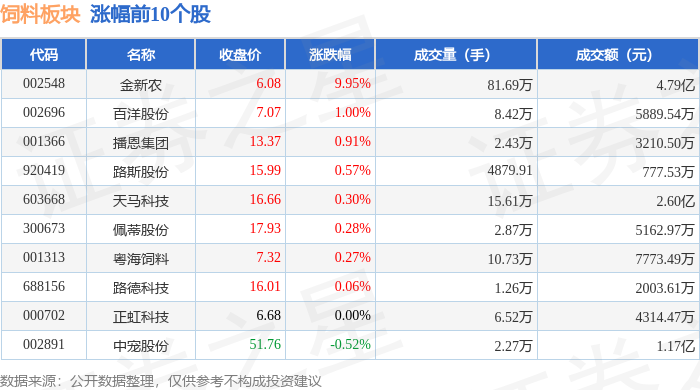
Market Overview - The feed sector experienced a decline of 1.08% on December 31, with TianKang Biological leading the drop [1] - The Shanghai Composite Index closed at 3968.84, up 0.09%, while the Shenzhen Component Index closed at 13525.02, down 0.58% [1] Individual Stock Performance - JinXinNong (002548) saw a significant increase of 9.95%, closing at 6.08, with a trading volume of 816,900 shares and a transaction value of 479 million [1] - TianKang Biological (002100) declined by 3.03%, closing at 7.37, with a trading volume of 337,500 shares and a transaction value of 250 million [2] - Other notable performers include ZhiYang Co. (002696) with a 1.00% increase, and Boen Group (001366) with a 0.91% increase [1] Capital Flow Analysis - The feed sector experienced a net outflow of 75.87 million from institutional investors, while retail investors saw a net inflow of 22.40 million [2] - JinXinNong had a net inflow of 64.54 million from institutional investors, but a net outflow of 36.08 million from retail investors [3] - TianMa Technology (603668) had a net inflow of 11.83 million from institutional investors, while retail investors experienced a net outflow of 13.32 million [3]


渤海证券研究所晨会纪要(2025.12.30)-20251230
BOHAI SECURITIES· 2025-12-30 02:58
Macro and Strategy Research - The profit growth rate of industrial enterprises in China has marginally declined by 1.8 percentage points to 0.1% year-on-year for the period from January to November 2025, with November showing a significant drop of 13.1% compared to October, which is a decrease of 7.6 percentage points [4] - The industrial added value growth rate for November was 4.8%, a slight decrease of 0.1 percentage points from October, influenced by insufficient domestic demand and a high base effect from the previous year [4] - The revenue profit margin for January to November was 5.29%, down by 2.0% year-on-year, indicating a further expansion of the decline compared to the previous months [4] - Among 41 industrial sectors, 18 sectors achieved positive profit growth during the same period, with notable growth in sectors such as black metal smelting and processing, non-ferrous metal mining, and high-tech manufacturing [5] Fund Research - The market saw a continued inflow of nearly 50 billion yuan into the CSI A500 index, with the ETF market scale reaching a new high of over 6 trillion yuan [7][11] - The average return for equity funds was 2.69%, with 87.08% of funds reporting positive returns, while bond funds and other categories also showed positive performance [10] - The ETF market experienced a net inflow of 914.98 billion yuan, with bond ETFs leading the inflow at 599.48 billion yuan [10] Company Research: WuXi AppTec - WuXi AppTec is positioned as a leading integrated CRDMO provider, offering end-to-end drug development and manufacturing services, with a focus on continuous development through both organic and inorganic growth strategies [15] - The CRO industry is thriving due to the high costs and long timelines associated with drug development, leading to increased demand for specialized services [15] - WuXi Chemistry reported a strong performance in its integrated services, with a significant number of new molecules added to its pipeline, indicating robust growth potential [15] - The company has streamlined its operations by divesting its clinical services research business, allowing it to focus on core competencies and enhance its service offerings [16] Industry Research: Light Industry Manufacturing & Textile Apparel - The Chinese government plans to continue funding support for the "old-for-new" consumption policy in 2026, which has already driven over 2.5 trillion yuan in sales for related products in 2025 [19] - Retail sales of clothing and footwear saw a year-on-year increase of 3.5% in November, reflecting a positive trend in consumer spending [19] - The light industry manufacturing sector underperformed compared to the CSI 300 index, indicating challenges in the current market environment [19]
冬虫夏草专题:规模化人工培育重塑产业,传统赛道孕育新机遇
GF SECURITIES· 2025-12-30 02:13
Investment Rating - The industry investment rating is "Buy" [2] Core Insights - The report highlights that the artificial cultivation of Cordyceps sinensis is reshaping the industry, with traditional sectors giving rise to new opportunities [1] - The market for artificial Cordyceps is expected to grow due to its price advantage and increasing consumer demand for health products [1] - The report emphasizes the importance of technological advancements in artificial cultivation to overcome challenges and enhance production efficiency [1] Summary by Sections Section 1: Overview of Cordyceps Sinensis - Cordyceps sinensis, primarily sourced from the Tibetan Plateau, has an industry scale of nearly 400 billion CNY, with a recent decline in wild collection due to ecological and policy constraints [15][16] - The average price of Cordyceps reached a peak of over 220,000 CNY per kilogram in 2013, but has since fluctuated, currently averaging 190,000 CNY per kilogram as of November 2025 [15][36] Section 2: Decline in Wild Collection and Challenges in Artificial Cultivation - The collection of wild Cordyceps has decreased, with an estimated 85 tons harvested in 2023, a 23% decline from 2019 [44] - Artificial cultivation faces high technical barriers, including the need for stable infection rates and complex production processes [48] Section 3: Reshaping the Industry through Scaled Artificial Cultivation - The industry is transitioning towards a dual structure of "wild premium + artificial substitutes," with artificial Cordyceps gaining traction in the health market [55] - Major companies are investing in factory-based cultivation, with significant projects announced by Zhongxing Junye and Xuelong Biological [59][60] Section 4: Investment Recommendations - The report recommends focusing on Zhongxing Junye and Xuelong Biological, which are actively expanding into the factory-based cultivation of Cordyceps [59][60]


乖宝宠物:截至12月10日收盘公司股东人数19595户
Xin Lang Cai Jing· 2025-12-29 14:31
Group 1 - The article emphasizes that the content published by Dongfang Caifu aims to disseminate more information and does not represent the platform's stance, nor does it constitute investment advice [1]
一件宠物冲锋衣500元 运动巨头、A股上市公司纷纷入局
2 1 Shi Ji Jing Ji Bao Dao· 2025-12-29 13:00
宠物服饰,正从一群人的小众爱好,走向一门不可忽视的规模生意。 新年将至,在小红书等社交平台上关于"小狗穿新衣""宠物新年战袍"的讨论日渐火热,如"宠物衣服"这 一关键词,就收获了3.1亿浏览量和311.0万讨论。 美国高端宠物户外品牌拉夫威尔,今年推出了Caeser系列宠物鞋、Apollo宠物户外鞋及Stormhunter宠物 冲锋衣等新品,售价高达500-700元。 打着"每只狗狗都是探险家"的品牌理念,拉夫威尔在国内找到了掘金密码:2023年,该品牌在中国区营 收突破8000万元,2024年营收跃升至1.3亿元,2025年预计将继续增长35%。 除了深耕宠物服饰这一细分赛道的"老玩家",不少服装巨头加入成为"新玩家"。 就在今年6月,运动品牌耐克旗下Jordan By You飞翔定制 "髦孩子" 夏日限定系列正式登陆Jordan乔丹线 下门店,标志着其正式进军宠物赛道。 Jordan此次推出四款宠物产品,涵盖宠物印花T恤、宠物项圈牵引绳、定制印花围兜以及定制宠物铭 牌。 跨界加入的还有运动品牌阿迪达斯。 今年5月,阿迪达斯在上海安福路三叶草旗舰店全球首发宠物支线,据阿迪达斯公布的信息,这是品牌 首个三叶草 ...