
格力电器

Search documents
于东来退休幕后:3年放权,永不上市,接班人须60岁退休
虎嗅APP· 2026-02-14 14:16
Core Viewpoint - The retirement of Yu Donglai, founder and chairman of the Pang Donglai Group, marks a significant shift in the company's governance structure, transitioning to a decision-making committee model that emphasizes institutional continuity over individual leadership [6][11][19]. Group 1: Transition and Governance - Yu Donglai announced his retirement on social media, stating he would become an advisor and that daily operations would be managed by a decision-making committee [6][11]. - The decision to retire is part of a long-term strategy to decentralize power, with Yu retaining his chairman role and 69.96% control but stepping back from daily operations [11][12]. - The decision-making committee consists of core internal members and operates on a rotating management system, allowing for shared leadership responsibilities [15][19]. Group 2: Institutional Reforms - Yu has previously indicated his intention to retire, emphasizing a gradual transition of responsibilities to ensure the company's growth without his direct involvement [14][19]. - The company has implemented a competitive recruitment process for middle management positions, ensuring transparency and fairness in leadership selection [17]. - Key strategic principles have been established, including maintaining a school-like nature, ensuring management exits by age 60, and a commitment to never go public [19][30]. Group 3: Financial Performance and Employee Welfare - By November 2025, Pang Donglai's sales exceeded 20.035 billion, with a cash reserve of 4.1 billion, indicating strong financial health [23]. - Employee compensation is robust, with an average monthly salary of 9,886 yuan and a structured compensation system for violations of personal dignity [23][25]. - The company has established a consumer-centric service model, allowing employees to autonomously resolve disputes up to 200 yuan without needing higher approval [25][26]. Group 4: Challenges and Industry Implications - Despite Yu's retirement, the company faces challenges in maintaining its unique culture and operational efficiency without his personal influence [32][36]. - The transition to a decision-making committee may introduce risks related to decision-making speed and the potential dilution of the company's core values [36]. - The broader implications for the retail industry highlight the difficulties many companies face in transitioning leadership while maintaining operational stability and growth [38][39].


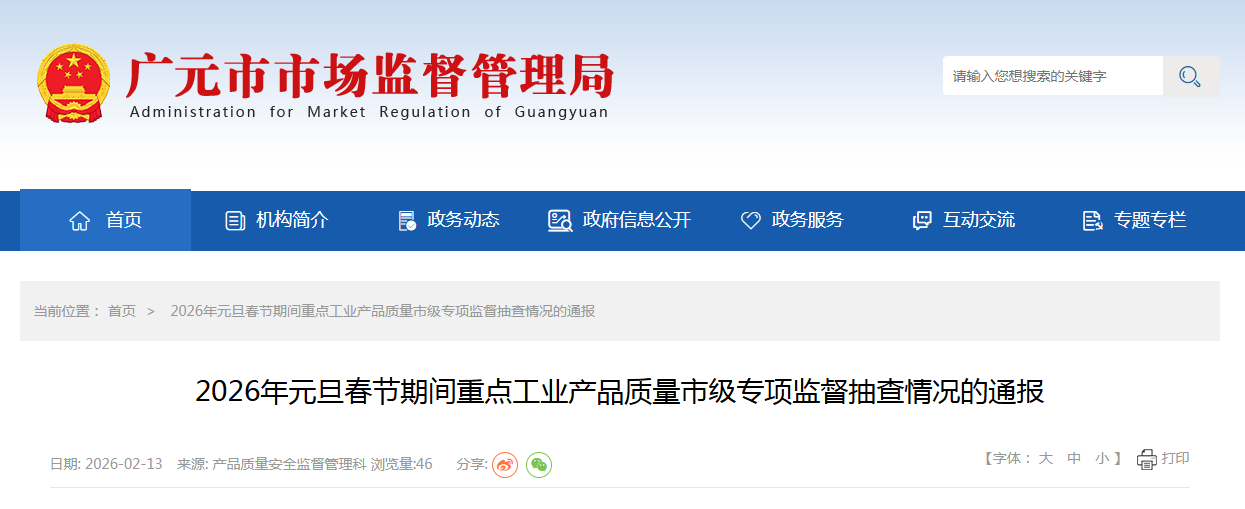
四川省广元市市场监督管理局通报2026年元旦春节期间重点工业产品质量市级专项监督抽查情况
Zhong Guo Zhi Liang Xin Wen Wang· 2026-02-14 09:07
Core Viewpoint - The quality supervision and inspection of key industrial products in Guangyuan City will be conducted during the New Year and Spring Festival periods starting January 2026, focusing on 34 types of products, with 100 batches sampled for testing [1]. Group 1: Inspection Results - A total of 95 batches of products have been tested, with 86 batches passing and 9 batches failing the quality standards [1]. - There are 5 batches of building insulation materials that are still pending inspection due to longer testing cycles [1]. Group 2: Product Categories - The inspected products include household gas stoves, electric blankets, commercial gas stoves, and lithium batteries for electric bicycles among others [1]. - The inspection results will be publicly announced after the objection period for the 9 non-compliant products and the completion of testing for the 5 pending batches [1].





于东来退休幕后:3年放权,永不上市,接班人须60岁退休
Xin Lang Cai Jing· 2026-02-14 08:49
Core Viewpoint - The retirement of Yu Donglai, founder and chairman of the Henan Pang Donglai Trading Group, marks a significant shift in the company's governance structure, transitioning to a decision-making committee model while maintaining his strategic advisory role [4][6][12]. Group 1: Retirement Announcement and Governance Changes - Yu Donglai announced his retirement on February 11, 2026, transitioning to an advisory role while the daily operations will be managed by a decision-making committee [4][6]. - The decision to retire is seen as a long-planned move towards a "功成身退" (successful withdrawal), with Yu retaining his chairman position and 69.96% controlling stake but stepping back from daily operations [6][7]. - The decision-making committee will consist of core internal members, implementing a rotating management system to ensure diverse leadership [7][12]. Group 2: Strategic Vision Post-Retirement - Yu Donglai outlined four long-term strategies for Pang Donglai, emphasizing the company's educational nature, the necessity for management to retire by age 60, the commitment to never go public, and the cessation of expansion once set goals are achieved [12][13]. - The governance model reflects a shift from individual leadership to a system-based approach, indicating that the company's culture and values are embedded in its operational framework [13][20]. Group 3: Employee Welfare and Corporate Culture - Pang Donglai has established a robust employee welfare system, including a monthly average salary of 9,886 yuan and a comprehensive dignity protection policy, which has been legally formalized [16][23]. - The company emphasizes a consumer-centric service model, allowing employees to autonomously handle minor disputes, which contributes to consistent service quality [18][19]. - The cultural ethos of Pang Donglai, characterized by shared values and employee participation in decision-making, is seen as a critical factor in maintaining operational stability post-retirement [20][22]. Group 4: Industry Context and Challenges - The challenges faced by Pang Donglai reflect broader issues in the Chinese retail sector, including founder dependency and the pitfalls of rapid expansion [26]. - The company's model of regional focus and refusal to go public is presented as a viable alternative to the prevalent growth strategies in the industry, promoting sustainable development [26]. - The transition to a committee-led governance structure is viewed as a test case for other Chinese private enterprises facing similar succession challenges [25][26].

核心资产基金池202602:低波动质量投资
Guolian Minsheng Securities· 2026-02-14 05:09
Group 1: Report's Industry Investment Rating - No relevant content provided Group 2: Report's Core View - The report defines core assets in A - shares from four perspectives: track leaders, resource endowments, excellent business models, and technological advantages, and selects core - asset funds for investors' reference. From February 2, 2015, to February 6, 2026, the fund pool had an annualized return of 9.14% and a portfolio annualized Sharpe ratio of 0.51. The core - asset portfolio achieved excess returns in most years, with excess returns mainly coming from industry and stock selection, and a style more inclined to large - cap quality investment. The current long - term industry allocation is mainly in consumption, cycles, and finance, with a significant increase in the latest cycle - sector holdings and a reduction in consumption - sector allocation [7]. Group 3: Summary According to the Directory 1 Core Asset Fund Pool Concept Introduction and Historical Performance 1.1 Core Asset Investment Concept Introduction - Core assets are companies with core competitive advantages, excellent financial indicators, and stable governance. The report looks for core - asset enterprises from four perspectives: track leaders, resource endowments, excellent business models, and technological advantages, aiming to form a regularly updated core - asset stock pool. The industry distribution of the core - asset stock pool follows macro - economic changes, shifting from the financial and cycle sectors to a relatively balanced distribution of consumption, TMT, and manufacturing [10][13]. 1.2 Core Asset Fund Pool: Low Portfolio Volatility - From February 2, 2015, to February 6, 2026, the fund pool had an annualized return of 9.14% and a portfolio annualized Sharpe ratio of 0.51. The core - asset portfolio achieved excess returns in most years, especially in volatile, bear, and structural bull markets. The excess returns mainly came from stock selection and industry allocation, but it was not dominant in dynamic returns. The configuration style is large - cap high - quality investment, with relatively low portfolio elasticity and growth, prominent value attributes, and strong profitability of holdings. The current industry allocation is mainly in cycles and consumption, with a significant increase in the latest cycle - sector holdings and a reduction in consumption - sector allocation [16][18][24]. 2 Core Asset Fund Pool Definition and Screening 2.1 Definition of Core - Asset Type Funds - The definition is based on the relatively low - valuation characteristics of holdings. The research objects are active equity funds, with a sample of fund products and fund managers. The requirements include a tenure of over 1 year, a current scale of over 100 million yuan, exclusion of fixed - open and holding - period products, an average equity position of over 60% since the current fund manager took office, an average proportion of the top ten heavy - holding stocks in stock investment of over 35%, an average proportion of core - asset stocks in heavy - holding stocks of over 50% since the current fund manager took office, an average proportion of core - asset stocks in heavy - holding stocks of over 60% in the past year, and a minimum heavy - holding proportion of over 40% [27]. 2.2 Core Asset Fund Pool Screening - Select funds with low exposure to the heavy - holding beta factor in the past 12 months and a high ratio of operating cash flow TTM to total market value. Construct relevant factor combinations and select the top 10 funds by factor score with equal weight. The current portfolio holding list includes 10 funds such as Southern Component Selection A, with scale data as of December 31, 2025, and performance data as of February 6, 2026 [28]. 3 Multidimensional Analysis of Portfolio Funds - Southern Component Selection A focuses on the growth style, invests in multiple growth tracks such as electronics and machinery, and has outstanding stock - picking ability, suitable for investors who can tolerate short - term market fluctuations [30]. - Dacheng Selective Value - Added A adheres to a value - growth balanced strategy, focuses on consumer leaders, high - dividend technology, and consumer - technology hardware, has stable long - term stock - picking ability and good drawdown control, but is limited in elasticity during extreme style switches [32]. - Penghua Strategy Preferred focuses on the mid - cap growth style, focuses on "cycle + growth" tracks such as non - ferrous metals and power equipment, and is suitable for investors seeking long - term stable returns [35]. - Taiping Flexible Allocation uses a top - down multi - factor analysis method to dynamically adjust the investment ratio of assets such as stocks, bonds, and stock index futures to reduce risks and maximize returns [36][37]. - Nord New Prosperity A advocates a long - term investment concept, focuses on excavating high - quality enterprises with continuous growth potential, and obtains returns through medium - and long - term holding [39]. - ICBC New Blue - Chip A looks for undervalued assets in industries with low market attention, focuses on industry supply - side changes and improvement opportunities in supply - demand relationships, and lays out at the market's expected low point [41]. - Penghua Extended Growth has a bottom - up investment style, dilutes timing, diversifies industries but concentrates on individual stocks, and uses a self - built model to lock in the "certainty" of performance growth [43]. - HSBC Jintrust Consumption Dividend uses a combination of top - down and bottom - up methods, analyzes the macro - economic environment, policy orientation, and industry development trends to judge the prosperity of different consumer sub - industries, and preferentially allocates industries in the upward cycle or with long - term growth potential [46][47]. - Southern Quality Preferred A believes that the essence of investment is to judge the difference between the intrinsic value and market price of assets, and emphasizes finding "undervalued" opportunities through in - depth research [49]. - Dacheng Core Value Selection A adheres to the value - investment concept, looks for high - quality enterprises with intrinsic value through in - depth analysis of enterprise financial conditions, free cash flow, competitive barriers, and long - term profitability, and aims for long - term holding [52].
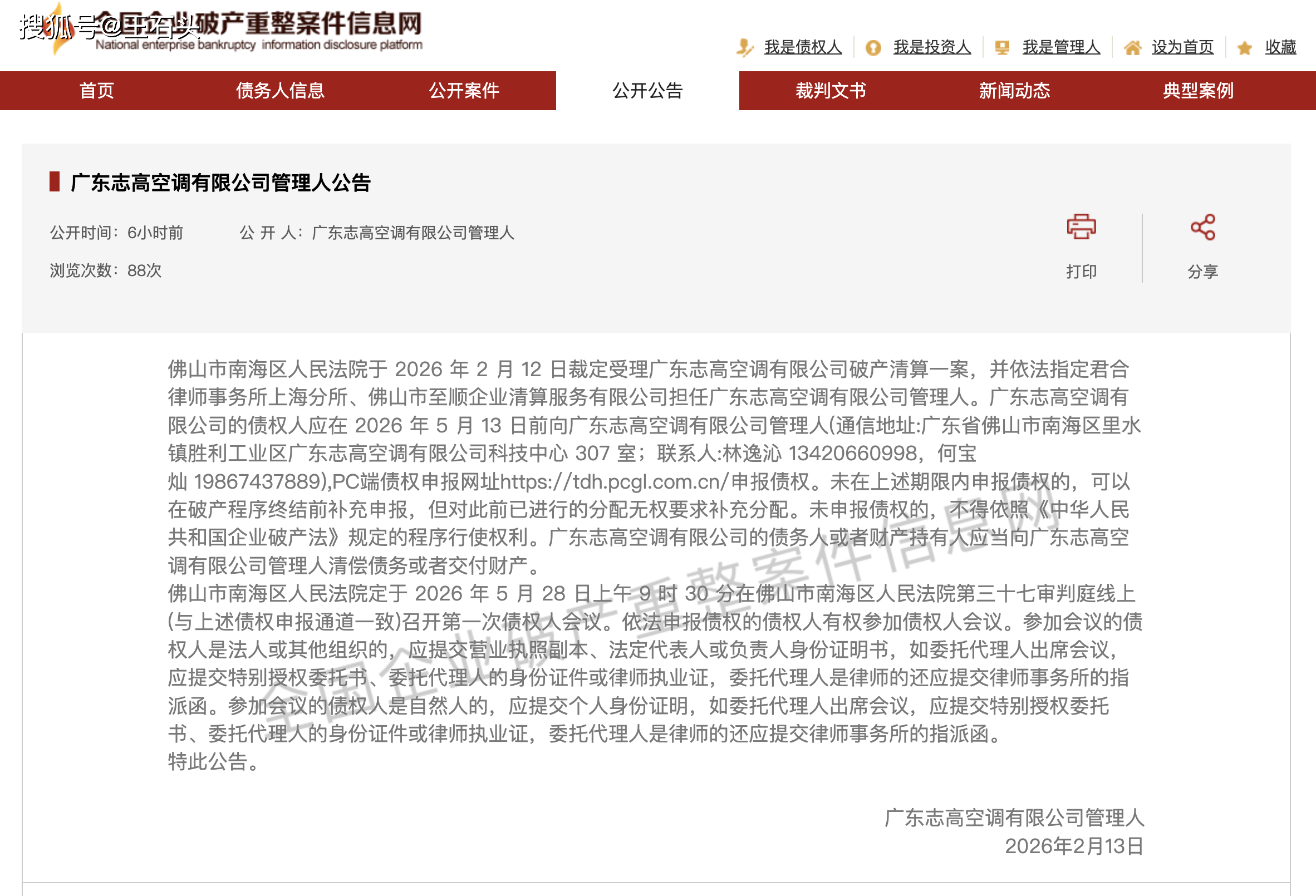
曾叫板董明珠,扬言做世界第一,老牌空调企业倒在了春节前!
Sou Hu Cai Jing· 2026-02-13 15:34
Core Viewpoint - Zhigao Air Conditioning, once a prominent player in the Chinese air conditioning market, has officially declared bankruptcy, marking the end of an era for the brand that once aimed to compete with industry giants like Gree and Midea [1][10]. Company History - Zhigao Air Conditioning was founded in 1994 and quickly rose to prominence, becoming one of the "Four Little Dragons" in the air conditioning industry, alongside Gree, Midea, and Haier [3][6]. - By 2008, Zhigao held the fourth largest market share in China, and in 2010, it even reached the third position, showcasing its rapid growth and success [3][6]. Founder and Business Journey - Founder Li Xinghao transformed Zhigao from a small business into a publicly listed company, leading it to its peak in 2009 when it capitalized on government policies promoting energy-efficient appliances [6][8]. - Li was known for his bold statements, openly challenging competitors like Dong Mingzhu and expressing ambitions to create the best air conditioner in the world [6][8]. Decline and Bankruptcy - The company's fortunes began to decline sharply in 2018, with a reported loss of 480 million yuan, which escalated to 1.4 billion yuan in 2019, leading to its delisting from the Hong Kong Stock Exchange [8][10]. - Despite attempts to revive the brand and achieve a compound annual growth rate of over 80% from 2022, the recent bankruptcy announcement has dashed hopes for a comeback [10]. Market Context - The competitive landscape has intensified, with established players like Gree and Midea dominating the market, leaving little room for Zhigao to recover [10]. - The story of Zhigao serves as a reflection of the challenges faced by companies in a rapidly evolving market, highlighting the risks of aggressive expansion and competition [10].
瑞银深度调研报告:2026年中国两大产业主线:自主可控与海外扩张
Zhi Tong Cai Jing· 2026-02-13 13:31
Group 1: Core Insights - UBS's in-depth research in China identifies two main industry themes for 2026: self-sufficiency and overseas expansion [1] - The research covered various sectors including technology, industrial, healthcare, consumer, and utilities, visiting over 100 companies and industry experts [1] - The report highlights a shift in investor interest, with capital goods, media entertainment, and real estate development seeing increased research focus, while semiconductor and automotive parts sectors experienced a decline [1] Group 2: Technology Sector Insights - The technology sector is a key focus, with advancements in self-sufficiency moving from isolated breakthroughs to industry-wide collaboration [2] - AI capital expenditure is expected to grow steadily in 2026, driven by strong demand for AI applications and local semiconductor production [3] - Despite uncertainties regarding H200 GPU imports, domestic supply chains are adapting through technology substitution and demand upgrades [3] Group 3: Semiconductor Developments - The localization of China's semiconductor industry is accelerating, with significant progress in advanced etching/ deposition equipment, advanced packaging, and high-end analog chips [4] - Capital expenditure for wafer fabrication equipment (WFE) is projected to grow by 10-15% annually, driven by capacity expansion in advanced logic and memory wafer fabs [4] - Domestic manufacturers anticipate a substantial increase in storage capital expenditure in 2026, aligning with a global upcycle in the storage industry [4] Group 4: Overseas Expansion Trends - Multiple industries, including industrial, biopharmaceuticals, and consumer goods, are focusing on overseas expansion as a key growth strategy [6] - In the industrial sector, overseas orders for AIDC and renewable energy storage equipment are increasing significantly [7] - The healthcare sector is also prioritizing global expansion, with biopharmaceutical companies actively pursuing international collaborations and local sales team development [9] Group 5: Key Recommendations - UBS recommends several core stocks in the technology and semiconductor sectors, including Northern Huachuang (advanced etching/ deposition), Changdian Technology (advanced packaging), and Horizon Robotics (edge AI) [5][12] - In the healthcare sector, companies like WuXi AppTec (CRO/CDMO) and 3SBio (biopharmaceuticals) are highlighted as key beneficiaries of global expansion [12] - The consumer sector sees recommendations for Jason Furniture (overseas expansion) and Leap Motor (new energy vehicles), while Gree Electric Appliances is advised to sell due to margin pressures [12] Group 6: Overall Industry Outlook - The report concludes that China's industrial development in 2026 will be characterized by a dual focus on self-sufficiency in technology and overseas expansion in various sectors [13] - The integration of these two themes is expected to enhance China's economic globalization, with technology supporting overseas expansion and vice versa [13] - Investment opportunities are identified in sectors with low crowding and improving fundamentals, as well as in high-growth areas like AI and semiconductors [13]


家用电器行业双周研究观点:把握龙头α:治理提效和海外扩张-20260213
GF SECURITIES· 2026-02-13 12:01
Core Insights - The report emphasizes the importance of governance improvement and overseas expansion for leading companies in the home appliance industry, particularly in the white goods sector [2][11]. Group 1: White Goods - The governance improvements in leading white goods companies are expected to enhance market confidence in sustainable growth, which can lead to a higher valuation [16]. - Midea Group has experienced a significant valuation increase from a PE of 8x to over 20x due to governance reforms and market conditions, despite recent performance challenges [17]. - Haier Smart Home's privatization has led to a notable stock price increase, with a 59% rise following the announcement of its restructuring plan [22][23]. Group 2: Black Goods - Japanese brands like Sony and Samsung are facing significant challenges, with Sony's ET&S department reporting an 8.2% decline in revenue and a 22.6% drop in operating profit [47][49]. - Chinese brands are expected to continue gaining market share globally, with TCL Electronics forming a joint venture with Sony to enhance their market presence [48]. - The Mini LED segment is seeing increased penetration, with a 32.25% online market share, indicating a positive trend for domestic competition [50][56]. Group 3: Small Appliances - The robotic vacuum cleaner market has shown a 10% year-on-year increase in online sales, driven by a low base effect from the previous year and seasonal factors [7]. - The competitive landscape in the small appliance sector is improving, with leading brands like Ecovacs and Roborock increasing their market shares [7]. Group 4: Investment Recommendations - The report recommends investing in white goods companies like Midea Group, Haier Smart Home, Gree Electric, and Hisense Home Appliances due to their stable growth and high dividend yields [7]. - For black goods, TCL Electronics and Hisense Visual are highlighted as beneficiaries of product iteration and improved domestic competition [7]. - In the cleaning appliance sector, Ecovacs and Roborock are expected to see profit margin recovery in 2026, making them attractive investment options [7].



横扫全球三成份额,广货家电出海为何这么猛?
2 1 Shi Ji Jing Ji Bao Dao· 2026-02-13 10:12
米兰冬奥会的高山滑雪场还在上演"冰雪奇迹",细心留意便会发现,中国元素已经遍布赛场乃至城市的 方方面面——运动员从高台上一跃而下划过赛道时,阿里云系统迅速生成全方位慢镜头定格回放;国际 冰雪组织的裁判员和技术人员身着中国户外运动品牌伯希和为运动员提供服务;还有赛事的现场直播大 屏、奥运村和国际广播中心的转播大屏,全都来自广东企业TCL,高清还原雪道上的滑行、冰面上的舞 蹈。 每一个粤系家电品牌拿出来,都是"单打冠军"。美的系冷柜连续两年拿下世界第一,微波炉、移动空调 已做到欧洲销冠。格力稳坐沙特、阿联酋、巴西的空调市场老大。海信系冰箱目前在加拿大、法国等全 球12个国家实现销售量或销售额第一。格兰仕微波炉连续18年保持市占率全球第一;全球每100台滴漏 式咖啡机,就有约40台出自新宝电器。 而TCL身后站着的,是一个庞大的"家电王国"——广东。数据显示,2025年1-11月,广东家电出口额达 3033.5亿元,占全国近半,稳居全球第一。全国每3台空调、2台彩电就有1台"广东造",大湾区产业集 群规模占全球30%。 (文章来源:21世纪经济报道) ...
消费板块的春天到来了吗?
Sou Hu Cai Jing· 2026-02-13 07:57
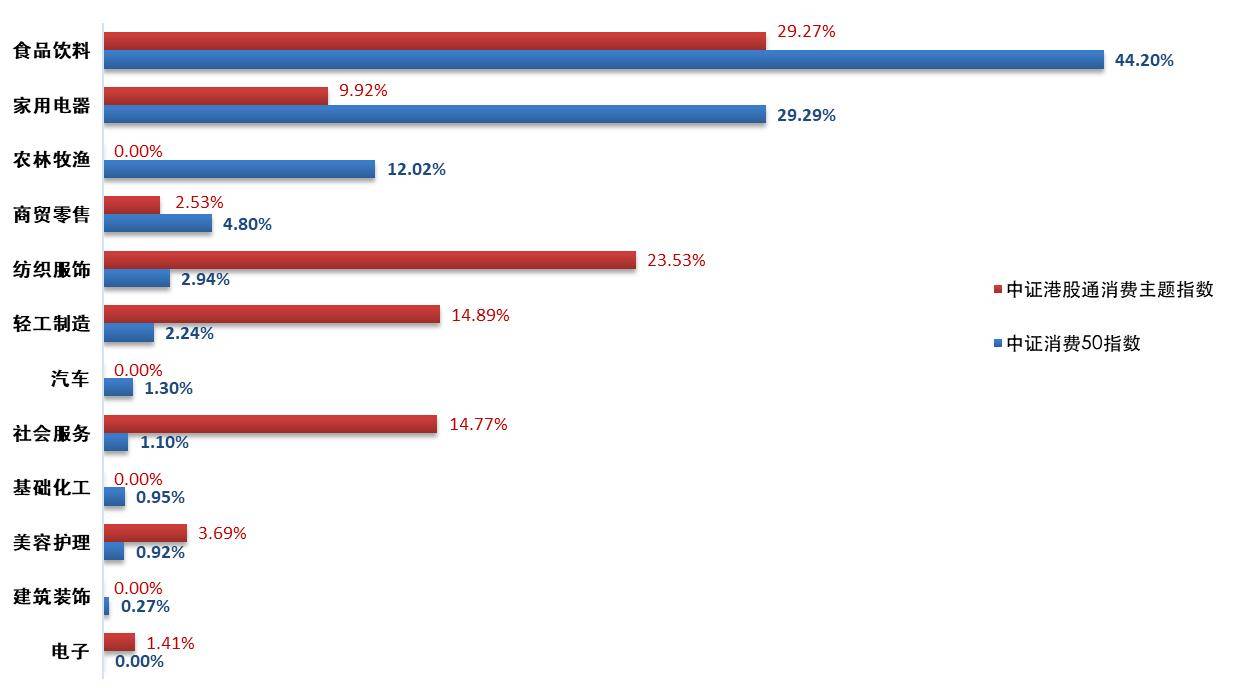
Core Insights - The consumer sector has seen a rise of over 3% in the Wind Consumer Major Index since the beginning of the year, indicating increasing market attention towards this sector. Consumer spending is fundamental to economic growth and serves as a lasting driver of the economy [1] Group 1: Characteristics of Consumer Indices - There are multiple consumer indices in the market, each focusing on different aspects such as traditional consumption (food and beverages) and emerging consumption. The CSI Consumer 50 Index and the CSI Hong Kong Stock Connect Consumer Theme Index are two representative indices, with a combined product scale exceeding 7 billion [2] - The CSI Consumer 50 Index selects large, high-quality listed companies from the A-share consumer sector, while the Hong Kong Stock Connect Consumer Index selects securities from the Hong Kong Stock Connect range. Both indices consist of 50 stocks, with individual stock weights not exceeding 15% [2] - The CSI Consumer 50 Index covers 11 consumer-related industries, with food and beverages and home appliances accounting for 75% of the index. In contrast, the Hong Kong Stock Connect Consumer Index covers 8 industries, with the same two sectors making up only 39.2% [2] Group 2: Composition of Indices - The top ten constituents of the CSI Consumer 50 Index include leading companies such as Kweichow Moutai, Wuliangye, and Midea Group. The top ten of the Hong Kong Stock Connect Consumer Index features companies like Pop Mart, Yum China, and Anta Sports, which complement A-share consumption leaders [4][5] - The CSI Consumer 50 Index has a cumulative weight of 74.81% for its top ten stocks, while the Hong Kong Stock Connect Consumer Index has a cumulative weight of 60.29% for its top ten stocks [5] Group 3: Valuation and Policy Support - As of February 11, the rolling P/E ratios for the CSI Consumer 50 Index and the Hong Kong Stock Connect Consumer Index are 17.0 and 18.6, respectively, both at historically low levels, with valuation percentiles of 7.91% and 3.87% over the past decade [6] - The low valuations are attributed to weak profit expectations for consumer sector companies amid insufficient domestic demand. The government has introduced various policies to stimulate consumption, including subsidies for replacing consumer goods and support for tourism and new energy vehicles [6] - The Central Economic Work Conference has included "deepening the implementation of special actions to boost consumption" as a key task for 2026, indicating ongoing policy support for consumption recovery [6] Group 4: Emerging Trends and Investment Opportunities - Positive structural changes in the consumer market include new consumption trends and overseas expansion, seen as a "second growth curve." Experience-based and emotional consumption led by younger generations is becoming popular, with companies like Pop Mart and Haier seeing over 40% of their revenue from overseas [7] - Index funds are highlighted as convenient and efficient investment tools for gaining exposure to the consumer sector. Given the current low valuations and policy support, investors are encouraged to consider opportunities in this sector, with products like the E Fund Hong Kong Stock Connect Consumer ETF and E Fund Consumer ETF available for tracking these indices [7]
2025 年 12 月厨电品类零售数据点评:25H2 厨电换新高基数压力渐显,26 年补贴聚焦核心品类
Shenwan Hongyuan Securities· 2026-02-13 07:09
Investment Rating - The report maintains a positive outlook on the home appliance industry, with a focus on the "buy" and "outperform" ratings for specific companies within the sector [10]. Core Insights - The "old-for-new" policy implemented in 2024 has significantly stimulated the home appliance market, expanding the subsidy scope to include eight categories, resulting in notable retail growth for certain products [4]. - The report highlights a divergence in performance among kitchen appliance categories, with traditional products facing declining sales while emerging categories show mixed results [4]. - The 2026 "old-for-new" policy is expected to benefit leading brands with superior energy efficiency and performance, particularly in the kitchen appliance sector [4]. Summary by Sections Retail Data Analysis - In 2024, the retail sales of kitchen appliances are projected to reach CNY 362 billion for range hoods (up 14.9% YoY), CNY 204 billion for gas stoves (up 15.7% YoY), CNY 236 billion for electric water heaters (up 1.3% YoY), and CNY 296 billion for gas water heaters (up 8.8% YoY) [4]. - For 2025, the overall retail sales of kitchen and bathroom appliances are expected to decline to CNY 1,613 billion (down 8.5% YoY), with a total volume of 89.77 million units (down 5.3% YoY) [4]. Market Share Insights - In the offline market, leading brands like Boss and Fotile dominate with nearly 60% market share in range hoods and gas stoves, while online competition is intensifying with brands like Midea and Xiaomi rapidly gaining market share [4]. - The report notes that in the dishwasher category, Boss and Fotile each hold close to 20% market share, disrupting the previous dominance of Siemens [4]. Investment Recommendations - The report recommends investing in established brands such as Boss Electric and Huashang Co. in traditional categories, and Wanhe Electric in the water heater segment, which are expected to benefit from the new subsidy policies [4].


