
阿里

Search documents
荣耀交出2025年亮眼成绩单 AI终端生态多点开花
Zheng Quan Ri Bao Wang· 2026-01-20 12:59
Core Insights - Honor has made significant breakthroughs in its three strategic directions: youthfulness, globalization, and high-end positioning, with the launch of three new products showcasing its comprehensive strength in industrial design and technology integration [1] Group 1: Global Expansion and Market Performance - Honor's global market presence has expanded, with smartphone shipments surpassing 71 million units for the first time, and overseas shipments increasing by approximately 55% year-on-year in the first three quarters of 2025, ranking highest among the top ten global brands [2] - The proportion of overseas shipments in Honor's total has risen from less than 10% in early 2021 to nearly half by Q3 2025, marking a strategic shift where international business has become a core pillar for scale and operational resilience [2] - In emerging markets, Honor focuses on the mid-to-high-end segment, prioritizing the $300 to $499 price range, which accounts for 23% of its overseas shipments from early 2025 to date, the highest among major Chinese brands [2] Group 2: Regional Market Achievements - Honor's performance in regional markets is notable, with over 10 million units shipped in Latin America and the Middle East, and market shares exceeding 10% in 17 key countries [3] - Sri Lanka saw a 150% year-on-year increase in shipments, achieving the top market position for two consecutive quarters, while the Philippines also reached the market leader status [3] - Honor's R&D investment is projected to reach 11.5% of revenue in 2025, with over 2,100 AI-related patents filed, covering various cutting-edge fields [3] Group 3: AI Ecosystem Development - In 2025, Honor announced its "Alpha Strategy," transitioning from a smartphone manufacturer to a leading AI terminal ecosystem company, with multiple strategic initiatives launched throughout the year [4] - The company has entered the robotics industry, achieving a record speed of 4 meters per second with its self-developed humanoid robot, and opened a global flagship store to showcase AI smart living [4] - Honor's "1×3×N" ecosystem strategy aims to create a smart interconnected ecosystem across brands and devices, with a focus on empowering partners through various models [4] Group 4: Competitive Positioning and Future Outlook - Under new management, Honor has undergone a comprehensive transformation, positioning itself to compete fairly with global giants by leveraging technological leadership and differentiated advantages [5] - The company aims to transition from a hardware manufacturer to an intelligent ecosystem platform between 2026 and 2028, supported by its AI capabilities and global channel layout [6]
万兴科技入围中国人工智能百强榜
Ke Ji Ri Bao· 2026-01-19 12:47
Group 1 - The core viewpoint of the news is that Wondershare Technology has been recognized in the "Top 100 Chinese Artificial Intelligence Companies" list, ranking in the top 50 due to its continuous innovation in AI digital creative software [1] - Wondershare Technology has made significant investments in AI technology research and development, product application, industry ecosystem collaboration, and AI talent development [1] - The company plans to launch the Wondershare Tianmu Multimedia Model 2.0 by June 2025, which boasts an average performance improvement of approximately 90% compared to version 1.0 [1] Group 2 - Wondershare Technology's overseas version, ToMoviee 2.0 AI, ranks among the top three in the global evaluation list VBench-2.0 for text-to-video models, achieving first place in key metrics related to camera motion and motion rationality [1] - The company has established partnerships with major firms such as Microsoft, Huawei, NVIDIA, and Google to co-build a cutting-edge AI application ecosystem [1] - Wondershare Technology's products cover video creativity, document creativity, and drawing creativity, with several overseas products integrating advanced models from Google and OpenAI [1][1] Group 3 - Wondershare Technology operates in over 200 countries and regions globally, with a cumulative active user base exceeding 2 billion [2] - The company has developed several flagship products, including Wondershare Filmora, Wondershare MindMaster, and Wondershare SelfyzAI, and is regarded as the "Chinese version of Adobe" [2]

新“易中天”来袭,AI的投资方向变了?
虎嗅APP· 2026-01-19 11:07
Core Viewpoint - The article discusses the evolving landscape of AI applications in the stock market, highlighting the emergence of new investment opportunities and the volatility associated with AI-related stocks. Group 1: AI Application Market Dynamics - In 2025, companies representing AI computing power saw significant stock price increases, with gains of 424.03%, 396.38%, and 213.72%, leading to the creation of the "Yizhongtian" investment group [2] - In 2026, a new "Yizhongtian" group emerged, focusing on AI applications, with stocks like Yidian Tianxia, Zhongwen Online, and Tianlong Group experiencing a 20% surge [3][4] - Despite initial optimism, many AI application companies began to issue risk warnings, leading to a decline in stock prices [5] Group 2: Progress and Challenges in AI Applications - The current phase of AI application is seen as a significant technological transformation, with potential opportunities, but it still faces challenges in implementation [7] - AI applications are reshaping consumer decision-making, with 40% to 55% of consumers in key industries relying on AI for purchase decisions [10] - The deployment of AI agents is progressing, but challenges such as the "hallucination" problem and internal organizational adjustments remain [11] Group 3: Market Sentiment vs. Performance - The global GEO market is projected to reach $24 billion in 2026, with expectations of $100 billion by 2030, indicating strong growth potential [13] - Despite the hype around AI applications, many companies have not yet demonstrated substantial revenue from their AI initiatives, leading to concerns about market sentiment driving valuations rather than actual performance [14] - Investors are advised to focus on genuine AI application companies rather than those merely riding the wave of market sentiment [15] Group 4: Competitive Landscape and Future Outlook - Major internet companies like Alibaba and Tencent are leading the charge in AI applications, leveraging their existing user bases and data [16] - The article suggests that once revenue from AI applications materializes, companies like Alibaba may undergo significant valuation adjustments [19] - Historical trends indicate that as AI application revenue increases, companies could see substantial stock price appreciation, similar to the transition from traditional software to cloud computing [20][21]



国信证券晨会纪要-20260119
Guoxin Securities· 2026-01-19 00:55
Group 1: Outdoor Apparel Industry - The outdoor footwear and apparel industry has maintained rapid growth since 2021, with a CAGR of 25.3% for outdoor apparel and 18.4% for outdoor footwear, projected to grow by 24.5% and 16.3% respectively in 2025 [24][26] - Online sales of outdoor footwear are growing at over 40%, while growth in outdoor apparel has slowed to low single digits since Q2 2025; specific categories like down jackets and quick-dry clothing are experiencing strong growth, with some quarterly YoY growth nearing 100% [24][26] - The industry is seeing increased competition among brands, with top brands like Kailas and Berghaus maintaining high growth through specialized product lines, while others like The North Face are underperforming; pricing trends are weakening overall, but some high-demand brands are still able to increase prices [24][26] Group 2: AI Application in Computing Industry - Major international companies are focusing on AI application in vertical scenarios, with OpenAI launching ChatGPT Health and Amazon optimizing cross-border e-commerce operations through AI [28] - Domestic companies are also advancing in AI applications, with Alibaba upgrading health services and ByteDance's Volcano Engine becoming a key AI cloud partner for major events [28] - The market for AI applications is expected to see significant growth, with predictions indicating that the GEO market will reach $24 billion globally by 2026, driven by high consumer trust in AI applications in China [30][32] Group 3: Public Utilities Industry - The public utilities sector, including electricity, gas, and water, is characterized by its "essential" nature, with stable long-term growth prospects; the transition to low-carbon energy sources is expected to increase the share of clean energy consumption to 28.6% by 2024 [32][33] - The global electricity shortage is becoming more pronounced, leading to increased electricity prices and making the sector an attractive investment area, particularly as AI development accelerates [33]
计算机行业周报20260118:计算机行业2025年业绩前瞻-20260118
Guolian Minsheng Securities· 2026-01-18 14:39
Investment Rating - The report maintains a "Recommended" rating for the computer industry [4] Core Insights - A new growth trend driven by the AI technology revolution is emerging, with significant development opportunities in areas such as domestic computing power, AI applications, commercial aerospace, and embodied intelligence [3][12] - The demand for domestic AI computing power remains a key focus, with specific companies recommended for attention, including Cambrian, Haiguang Information, Inspur Information, China Great Wall, and Loongson Technology [3][12] - The report highlights expected revenue or profit growth rates for key companies in 2025, with some companies projected to achieve over 30% year-on-year growth in net profit, such as Zhuoyi Information (yoy +150%) and Zhongke Information (yoy +40%) [12][13] Summary by Sections Weekly Market Review - During the week of January 12-16, the CSI 300 index fell by 0.57%, while the small and medium-sized board index rose by 1.55%, and the ChiNext index increased by 1.00%. The computer sector (CITIC) saw a rise of 4.31% [22] - The top five gainers in the sector included Shiji Information (+28.69%), Guangyun Technology (+28.43%), and Wanxing Technology (+19.64) [22][28] - The top five decliners were Aerospace Changfeng (-21.02%), Aerospace Information (-14.46%), and Haixia Innovation (-13.40%) [22][28] Industry News - The U.S. Department of Commerce has relaxed export restrictions on Nvidia's H200 chips to China, shifting to a case-by-case review mechanism, which marks a significant policy change [16] - Alibaba's Qianwen app has launched a "Task Assistant" feature, enabling AI agents to manage daily tasks across various services [17] - Zhiyuan AI has partnered with Huawei to open-source the GLM-Image model, marking a significant step in the domestic computing power ecosystem [15] Company News - Hanbang High-Tech is progressing with a major asset restructuring plan, intending to acquire a 51% stake in Anhui Yilu Micro-Travel Technology [18] - The report notes various shareholder actions, including share reduction plans by major stakeholders in companies like Anheng Information and Bosi Software, which are not expected to impact company governance [19][20]


人形机器人的淘汰赛:“一些公司已经不行了”
Di Yi Cai Jing Zi Xun· 2026-01-18 09:51
Core Insights - The humanoid robot industry in China is expected to undergo significant consolidation by 2026, with many companies likely to be eliminated due to a lack of commercialization capabilities and financing [2][8][9] - The current bottleneck for humanoid robots is the "brain" technology, which needs to advance before the industry can experience a breakthrough similar to the "electric vehicle moment" [2][12][14] Group 1: Industry Overview - There are over 100 humanoid robot companies in China, with significant differentiation emerging after three years of development [2][4] - The investment enthusiasm in the robotics sector has been high, with 190 financing events totaling 27 billion RMB in 2025 [4] - The customer base for humanoid robots is shifting from academic institutions to industrial enterprises, indicating a growing acceptance and market expansion [5][12] Group 2: Market Dynamics - By 2025, the global shipment of humanoid robots is projected to reach approximately 13,000 units, with a conservative estimate of 30,000 units by 2026 [11] - The market for humanoid robots could potentially reach between 1.4 trillion to 1.7 trillion USD by 2050, but the industry is still in its early stages [12] - The competition among humanoid robot companies is likened to the "battle of the hundred groups" in the food delivery market, with only a few companies expected to survive [8] Group 3: Company Performance - The first-tier companies, such as Ubiquity Robotics, have received significant orders and are preparing for IPOs, while second-tier companies face more challenges [7][9] - First-tier companies have accumulated orders close to 1 billion, while second-tier companies have orders in the low hundreds of millions [7] - Companies that have not secured commercial orders or have faced financing difficulties are at risk of failing [9] Group 4: Technological Challenges - The development of humanoid robots is hindered by the lack of high-quality data and suitable AI models for their "brains" [13] - Current humanoid robot companies primarily rely on existing models that are not specifically designed for their needs, limiting their development capabilities [13] - The expectation is that the breakthrough in humanoid robot technology will not occur within the next five years, as the "electric vehicle moment" is still distant [14]

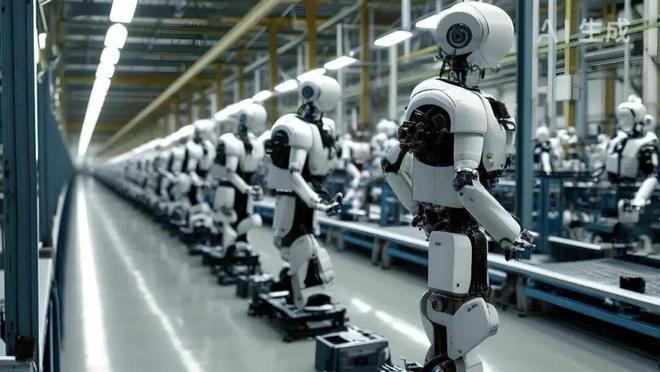
人形机器人的淘汰赛:“一些公司已经不行了”
第一财经· 2026-01-18 09:44
Core Viewpoint - The humanoid robot industry in China is experiencing significant differentiation, with leading companies accumulating more financing and commercial orders, while those lacking commercialization capabilities face potential elimination [3][5][7]. Group 1: Industry Overview - As of now, there are over 100 humanoid robot companies in China, with the market seeing a surge in investment and financing events, totaling 27 billion RMB in 2025 [5]. - The customer base for humanoid robots is shifting from academic institutions to industrial enterprises, indicating a growing acceptance and demand for these robots in practical applications [6][7]. Group 2: Market Dynamics - The first-tier humanoid robot companies, such as Yushun and Zhiyuan, are distinguished by their significant order volumes, with some nearing unicorn status, while second-tier companies face challenges in securing financing and commercial orders [7][9]. - The competition among humanoid robot companies is likened to the "battle of a hundred groups" in the food delivery market, suggesting that many companies may not survive due to high investment requirements and technological barriers [8]. Group 3: Technological Challenges - The primary bottleneck for humanoid robots is the development of their "brain," which is crucial for their functionality and intelligence [12][14]. - Current humanoid robots rely on general AI models that are not specifically designed for their needs, limiting their development potential [13]. Group 4: Future Projections - UBS estimates that global humanoid robot shipments will reach approximately 30,000 units in 2026, with a more conservative outlook compared to other institutions [11]. - The potential market for humanoid robots could reach between 1.4 trillion to 1.7 trillion USD by 2050, encompassing various components and services [11].

人形机器人的2026:落地和出清会同时到来 | 海斌访谈
Di Yi Cai Jing· 2026-01-18 06:40
Core Insights - The main bottleneck for humanoid robots is their "brain," and breakthroughs in this area are necessary for the industry to reach its "electric vehicle moment" [1][10] - By 2026, it is anticipated that some humanoid robot companies will be eliminated due to a lack of commercialization capabilities and financing [1][5] Industry Overview - China currently has over 100 humanoid robot companies, with significant differentiation emerging among them over the past three years [1][3] - The market for humanoid robots has been buoyed by the enthusiasm for multimodal large model technologies, with a total of 190 financing events and a scale of 27 billion RMB in 2025 [3] - The customer base for humanoid robots is shifting from academic institutions to industrial enterprises, indicating a move from laboratory settings to practical applications [3][4] Market Dynamics - In 2025, the global shipment of humanoid robots is expected to reach approximately 13,000 units, with a conservative estimate of 30,000 units by 2026 [9][8] - The first-tier companies in the humanoid robot sector are seeing significant orders, with some nearing unicorn status, while second-tier companies face more challenges [5][6] - The competition landscape is compared to the "battle of the hundred groups" in the food delivery market, suggesting that only a few companies will survive in the humanoid robot sector [6] Technological Challenges - The development of humanoid robots is hindered by the immaturity of hardware components and the lack of suitable AI large models [10] - The "brain" of humanoid robots requires high-quality data for training, which is currently limited [10] - Companies are focusing on developing the "small brain" for motion control, as they lack the resources to develop large models independently [10] Future Projections - The humanoid robot market is expected to grow significantly, with potential market sizes reaching between 1.4 trillion to 1.7 trillion USD by 2050 [9] - The industry is still in its early stages, and a breakthrough in the "brain" technology is essential for the market to mature [10][11] - By 2035, global shipments of humanoid robots could reach 1 million units, primarily in industrial and service sectors, with challenges remaining for household applications [11]
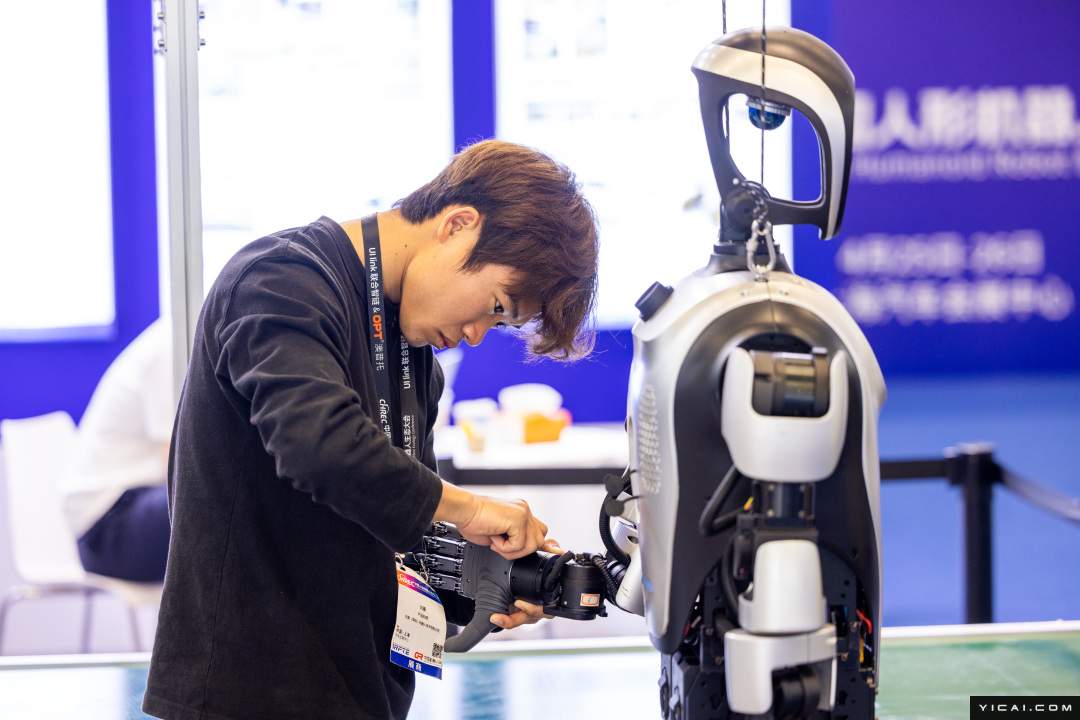
2026光通信“四小龙3.0”
GOLDEN SUN SECURITIES· 2026-01-18 06:32
Investment Rating - The report recommends a "Buy" rating for key companies in the optical communication sector, specifically highlighting the "Four Little Dragons 3.0" [10]. Core Insights - The investment logic in optical communication is shifting from leading companies to high-resilience, high-barrier, or core-positioned quality targets as the global AI computing competition intensifies [1][19]. - The report emphasizes the importance of companies with clear technological positioning and performance delivery capabilities in the emerging "Four Little Dragons 3.0" [1][19]. Summary by Sections Historical Perspective: Growth Logic of "Four Little Dragons" - In 2019, the report recommended the first generation of "Four Little Dragons" including Taicheng Light, New Yisheng, Tianfu Communication, and Quartz Co. [2][20]. - By the end of 2024, the second generation included Taicheng Light, Dekeli, Yuanjie Technology, and Tengjing Technology, benefiting from AIDC construction and optical module iteration [2][20]. Future Outlook: Rise of "Four Little Dragons 3.0" - The report suggests focusing on the new generation of "Four Little Dragons 3.0": Dongtianwei, Kecuan Technology, Huilv Ecology, and Zhishang Technology, as silicon photonics technology penetration increases [3][21]. - Dongtianwei is positioned in the upstream core components of optical communication, with a complete product matrix and proactive capacity expansion [21]. - Kecuan Technology benefits from the continuous penetration of silicon photonics, having launched its first 400G/800G high-speed optical module production line [21]. - Zhishang Technology is expected to benefit from the implementation of CPO, producing high-density optical connection solutions [22]. - Huilv Ecology is expanding into the high-speed optical module sector through acquisitions, establishing a comprehensive product matrix from 10G to 1.6T [24]. Investment Strategy - The report recommends focusing on companies in the optical communication sector such as Zhongji Xuchuang, New Yisheng, Tianfu Communication, Taicheng Light, and Tengjing Technology, among others [8][13]. - It also highlights the importance of companies involved in copper links, computing equipment, liquid cooling, edge computing platforms, and satellite communication [8][13]. Market Performance - The communication sector has shown strong performance, with the optical communication index rising by 2.6% and the IoT sector outperforming with a 4.8% increase [16][18].




每日投资策略-20260116
Zhao Yin Guo Ji· 2026-01-16 03:31
Macro Commentary - The Chinese economy shows signs of moderate monetary policy easing, with a continued slowdown in the growth of social financing stock expected by the end of 2025, and a significant decline in M1 growth, indicating weakened economic activity and private sector confidence [2][6] - The credit structure reveals an imbalance in economic supply and demand, with the corporate sector remaining the main driver of credit expansion, while the household sector continues to deleverage [2] Global Market Performance - Major global stock indices showed varied performance, with the Hang Seng Index closing at 26,924, down 0.28% for the day but up 5.05% year-to-date [3] - The US stock market experienced a rebound, with utilities, industrials, and real estate leading gains, while energy, healthcare, and communication services sectors declined [5] Sector Performance in Hong Kong - In Hong Kong, the consumer discretionary, healthcare, and information technology sectors led declines, while real estate, energy, and industrial sectors saw gains [5] - The Hang Seng Financial Index rose by 0.68% to 50,996, while the Hang Seng Real Estate Index increased by 1.32% to 19,105 [4] Company Analysis - Jitu (1519 HK) is rated as a "Buy" with a target price of HKD 13.4, following a share swap agreement with SF Express, which is expected to enhance product offerings and market reach [6] - WuXi AppTec (2268 HK) is also rated as a "Buy" with a target price of HKD 88.00, anticipating a revenue increase of at least 45% and net profit growth of at least 38% for 2025 [7][10] - WuXi AppTec's strong performance is attributed to a record number of new contracts in drug development and production, with significant growth in XDC projects and a strategic acquisition of Dongyao Pharmaceutical to enhance production capacity [8][9][10]