吉利汽车

Search documents
【重磅深度】乘用车全球化策略:从全面扩张走向分市场/分主体的结构性出海
东吴汽车黄细里团队· 2026-01-08 14:45
Group 1 - The article predicts that Europe, Latin America, and Southeast Asia will continue to contribute significantly to the growth of new energy vehicle (NEV) penetration rates, with Europe expected to exceed previous forecasts due to the release of affordable models and the reintroduction of some subsidies [2][18] - In Southeast Asia, the NEV penetration rate is projected to reach 19% by 2026, driven by contributions from Chinese automakers and local firms like VinFast, despite tightening import incentives [2][18] - Latin America's NEV penetration is expected to increase to 5% by 2026, but the growth will be limited due to a focus on local industrial protection and tax adjustments rather than direct demand stimulation [3][18] Group 2 - The article outlines that the total market size accessible to Chinese automakers is approximately 27 million vehicles, with an export potential market of about 9.08 million vehicles [5][20] - The export market analysis indicates that the share of NEV exports in total exports is expected to rise to 42% by 2025, with BYD being a major contributor to this growth [5][20] - The methodology for assessing market entry potential includes filtering based on trade barriers, bilateral relations, and external uncertainties, leading to the exclusion of markets like North America, Japan, and India [6][22] Group 3 - The article discusses the competitive landscape for Chinese automakers, highlighting that regions like Oceania, the Middle East, Central Asia, and Africa are more favorable for vehicle exports due to less stringent regulatory environments [8][25] - It emphasizes the importance of local production and supply chain investments in Southeast Asia and Latin America, where local market conditions are evolving [8][25] - The analysis of company strategies reveals that BYD has developed a replicable global operation model, while Chery and Great Wall have adopted different approaches to expand their market presence [9][24][27] Group 4 - The article concludes that companies with a strong overseas presence and proven execution capabilities, such as BYD, Great Wall, and Chery, should be prioritized for investment [12][13] - It highlights the need for companies to adapt to local market conditions and regulatory frameworks to ensure sustainable growth in international markets [12][13] - The overall export volume for Chinese automakers is projected to increase significantly, with NEV exports expected to reach 362,000 units by 2026 [30][37]





台州市政府与吉利控股集团签订战略合作框架协议
Xin Lang Cai Jing· 2026-01-08 14:30
Core Viewpoint - The strategic cooperation framework agreement signed between Taizhou Municipal Government and Geely Holding Group aims to enhance investment and industrial layout in Taizhou, focusing on establishing it as a high-end brand manufacturing base for new energy vehicles [1] Group 1: Investment and Industrial Development - Geely Group is encouraged to increase investment in Taizhou and enhance its industrial layout [1] - The goal is to promote the landing of high-end new energy vehicle models in Taizhou [1] - The initiative aims to accelerate the overall high-end transformation of Taizhou's traditional automotive parts industry [1] Group 2: New Energy Vehicle Ecosystem - The collaboration seeks to build a competitive and influential new energy vehicle industry ecosystem in the region [1] - There is a focus on creating a first-class low-altitude economy industrial highland by further developing the low-altitude satellite industry chain in Taizhou [1]
CES 2026 | 从“功能模块”到“整车智能中枢” 车企携“AI整车大脑”竞逐CES
Zhong Guo Jing Ying Bao· 2026-01-08 14:01
Group 1: Core Insights - The automotive industry is shifting its focus from hardware to software-defined vehicles with continuous evolution capabilities, as highlighted by the advancements in AI technology at CES 2026 [1][2][3] - Geely Auto Group introduced its AI technology system, including the WAM model and the G-ASD platform for advanced driving assistance, showcasing its commitment to integrating AI across various vehicle domains [2][3] - The competition in the automotive sector is increasingly centered around the development of intelligent systems that can learn and adapt, moving beyond traditional functionalities [1][3] Group 2: Geely's Innovations - Geely's WAM (World Action Model) represents a significant upgrade to its AI technology, enabling cross-domain integration and the development of a vehicle's "brain" with judgment capabilities [2][3] - The introduction of the Eva super-human emotional intelligence system marks a transition from functional modules to a comprehensive vehicle intelligence hub [3] - Geely's new generation of the G-ASD driving assistance system features high data capacity and advanced hardware, enhancing the overall driving experience [3] Group 3: Other Automotive Players - Great Wall Motors showcased multiple global strategic models and advanced engine technologies, emphasizing its strength in vehicle intelligence and core power technologies [1][4] - Leap Motor announced the world's first cross-domain integration solution featuring Qualcomm's Snapdragon cockpit platform, with its flagship model D19 set to debut this technology [4] Group 4: Supply Chain Innovations - Bosch presented its new AI smart cockpit platform, which integrates personalized features and advanced sensor technologies, enhancing user interaction and driving assistance capabilities [6] - The seventh-generation millimeter-wave radar, launched by Bosch, offers enhanced precision and long-range detection, improving safety in complex traffic environments [6] - Hesai showcased its new L3 automotive-grade lidar solutions, which are set to double production capacity by 2026, reflecting the growing demand for advanced driver-assistance systems [7][8]
雷军抛出55万辆的小目标,流量反噬让小米认清现实?| DA观
Sou Hu Cai Jing· 2026-01-08 12:12
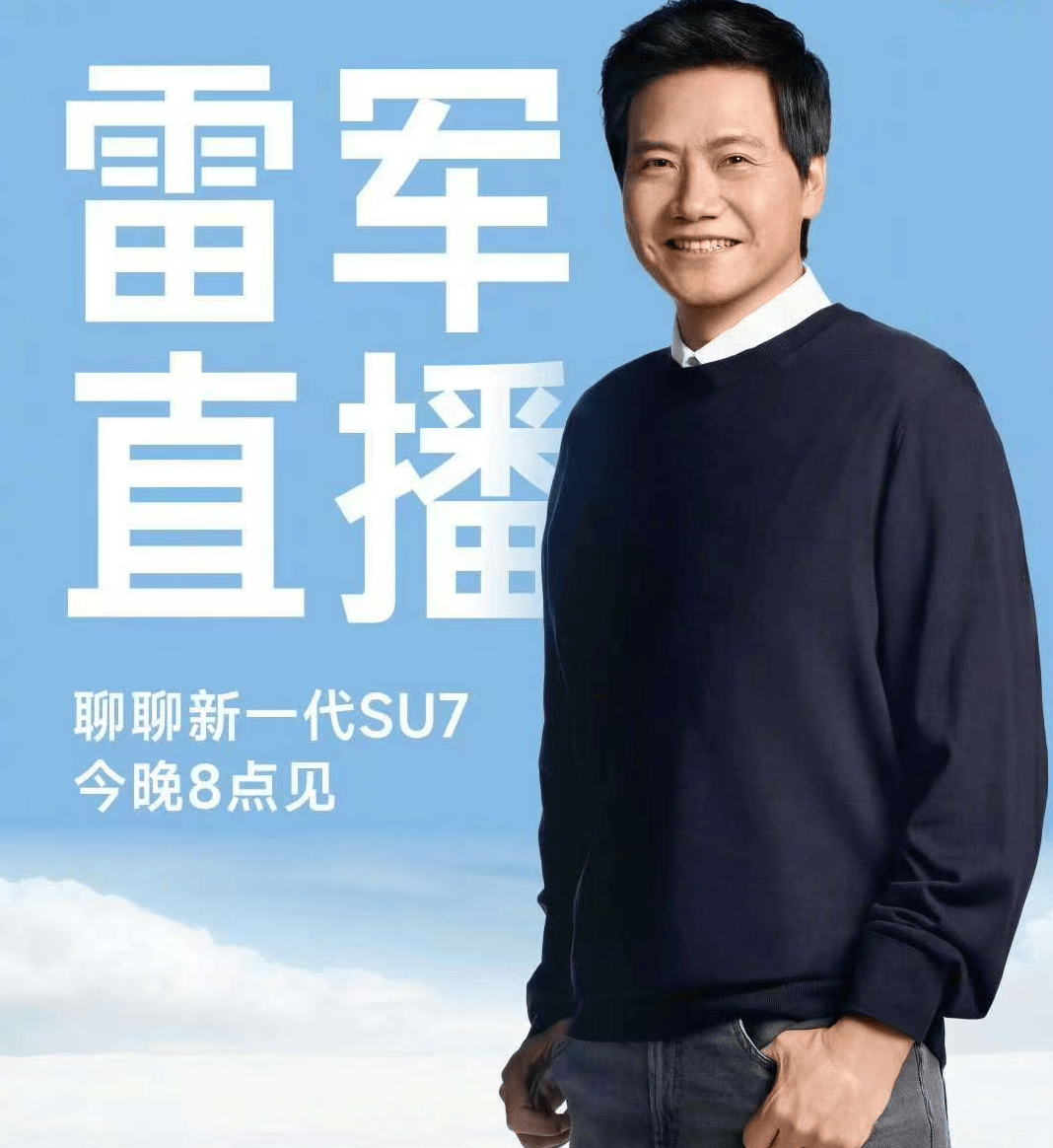
Core Viewpoint - Xiaomi's CEO Lei Jun announced the launch of the new SU7 model expected in April 2026, with a sales target of 550,000 vehicles for the year, which appears conservative compared to previous growth rates [2][3][4]. Sales Targets and Performance - The sales target of 550,000 units for 2026 is only a 34% increase from 410,000 units in 2025, which itself was a significant jump from 135,000 units in 2024 [3][4]. - The internal target may be even lower, around 500,000 units, indicating a cautious approach amidst market uncertainties [4]. - The current main model, YU7, has a monthly sales volume exceeding 30,000 units, suggesting that the target for 2026 may not reflect substantial growth compared to previous years [5]. Market Position and Competition - Xiaomi's sales strategy is being compared to competitors like Leap Motor, which aims for 1 million units in 2026, and Great Wall Motors, targeting 1.8 million units with a 36.4% growth rate [6]. - The company has experienced a significant drop in sales for its Ultra version, which fell from over 3,000 units per month to just 80 units in November 2025 [20]. Marketing and Consumer Sentiment - Xiaomi's marketing strategies have been effective in generating initial interest, with the SU7 achieving 88,898 pre-orders in 24 hours, showcasing the company's ability to leverage its existing consumer base [8][10]. - However, there are signs of consumer backlash, particularly regarding collaborations with KOLs that have not resonated well with Xiaomi's core fanbase, leading to a need for the company to reassess its marketing partnerships [14]. Safety Concerns and Public Perception - The company has faced significant challenges related to safety incidents involving its vehicles, which have raised public concerns about the safety of its products [18][20]. - The negative impact of these incidents has been compounded by a lack of timely responses from the company, leading to increased scrutiny and criticism from consumers [18][22]. Strategic Shifts - Xiaomi may need to adopt a "car sea" strategy, introducing more models to meet sales targets, which contradicts previous statements by Lei Jun about avoiding excessive model proliferation [24].

对标马斯克FSD,印奇CES交卷ASD,L2L4全覆盖,吉利版已量产30万辆
Xin Lang Cai Jing· 2026-01-08 11:46
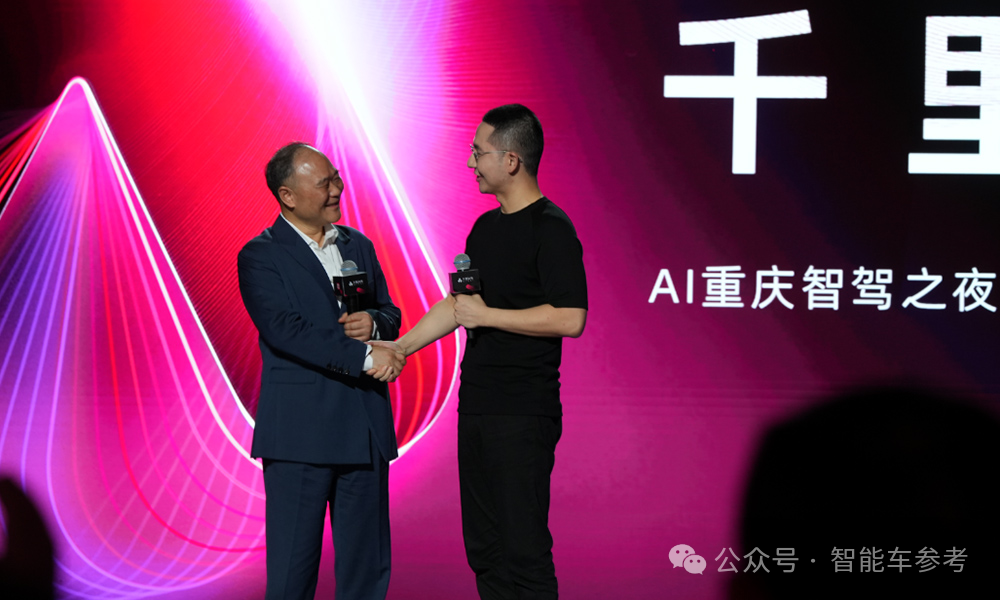
Core Insights - The article discusses the launch of Geely's new advanced driving assistance brand, G-ASD, led by AI expert Yin Qi, which aims to compete with Tesla's Full Self-Driving (FSD) technology [3][27][29] - G-ASD encompasses a full-stack solution from Level 2 to Level 4 autonomous driving, integrating advanced AI models to enhance driving capabilities [5][10][37] - The establishment of Qianli Zhijia as an independent entity signifies a strategic shift for Geely, focusing on AI-driven automotive technology [12][42] Group 1: G-ASD Launch and Capabilities - G-ASD, which stands for Geely Afari Smart Driving, represents a significant advancement in Geely's approach to autonomous driving, moving from basic assistance to more complex functionalities [5][29] - The technology behind G-ASD utilizes a comprehensive model architecture that combines various AI paradigms, reducing reliance on pre-mapped data [7][31] - Demonstrations at CES 2026 showcased G-ASD's ability to navigate complex urban environments, including challenging scenarios like narrow streets and multi-level interchanges [8][32] Group 2: Company Structure and Management - Qianli Zhijia has been established as a separate corporate entity, with a management team that includes experienced leaders from Huawei and other tech backgrounds [12][40][42] - The ownership structure of Qianli Zhijia includes significant stakes from Geely and other partners, indicating a collaborative approach to developing autonomous driving technologies [16][43] - Yin Qi remains the actual controller of Qianli Zhijia, despite its independent status, reflecting a complex ownership arrangement that aims to leverage AI capabilities for Geely's transformation into a tech-driven enterprise [19][46] Group 3: Strategic Vision and Market Position - Geely's strategy aims to position itself as a leader in the AI-driven automotive sector, with a focus on integrating advanced technologies into its production processes [21][50] - The collaboration with Cao Cao Mobility for Robotaxi services highlights Geely's commitment to expanding its autonomous driving offerings beyond personal vehicles [12][39] - The overarching vision is to create a comprehensive AI ecosystem that includes not only autonomous driving but also related services such as vehicle manufacturing and financial solutions [50][24]
黄仁勋大胆预测:未来十年很多汽车是自动驾驶,每一辆车都会由AI驱动【附自动驾驶行业市场分析】
Qian Zhan Wang· 2026-01-08 11:42
Group 1 - NVIDIA's CEO Jensen Huang predicts that a significant portion of cars will be autonomous or highly autonomous in the next decade, estimating that the number of autonomous vehicles could reach one billion, with every car being AI-driven [2][18] - At CES, NVIDIA introduced the Alpamayo series of autonomous vehicle models, which utilize a visual-language-action (VLA) model based on chain reasoning to enhance the development of safe, reasoning-based autonomous vehicles [2][18] - The first vehicle equipped with NVIDIA's technology is expected to be on the road in the U.S. in the first quarter of the year [2][18] Group 2 - In China, the Ministry of Industry and Information Technology announced the first batch of L3 conditional autonomous vehicle licenses, with Changan Deep Blue SL03 and Arcfox Alpha S6 being the first to receive approval, marking a significant step towards commercial application [3][19] - The L3 level of autonomous driving allows the system to perform all driving operations, with human intervention required only when requested by the system [20][22] Group 3 - The global autonomous taxi market is projected to grow from $4.43 billion in 2025 to $188.91 billion by 2034, while China's potential market is expected to increase from $39 million in 2025 to $67.59 billion by 2035 [12][28] - Major automotive manufacturers and ride-hailing platforms are likely to benefit from the growth of the autonomous taxi industry, including BYD, Geely, Great Wall Motors, SAIC, Xiaomi, and Didi [12][28] Group 4 - Autonomous driving technology is becoming an essential application of artificial intelligence, significantly impacting traffic safety, efficiency, and transportation options [9][25] - The performance and stability of autonomous driving systems are expected to improve with advancements in 5G, cloud computing, and the Internet of Things, leading to more breakthroughs and market applications [13][29]

骏成科技:公司产品通过一级供应商交付应用于上汽吉利长安等主机厂
Zheng Quan Ri Bao Wang· 2026-01-08 10:43
Core Viewpoint - Jun Cheng Technology (301106) engages with major domestic automotive manufacturers through first-tier suppliers, indicating a strong position in the automotive supply chain [1] Group 1: Company Overview - Jun Cheng Technology's products are delivered through first-tier suppliers such as Weichai, Visteon (Tianbao Automotive), Tianyouwei (603202), and Xintongda [1] - The company collaborates with leading automotive manufacturers including SAIC Group (600104), Geely Automobile, Changan Automobile, Beijing Automotive, Chery Automobile, and Dongfeng Motor [1]

小鹏开年发布四款新车,今年将规模量产人形机器人和飞行汽车;吉利汽车获L3级自动驾驶道路测试牌照丨汽车交通日报
创业邦· 2026-01-08 10:33
Group 1 - Geely Auto has obtained the L3 autonomous driving road test license in Hangzhou, covering an area of 9,224 square kilometers, including over 1,500 kilometers of dual-direction expressways, making it the largest in the country [2] - Faraday Future announced a cumulative production and sales target of 400,000 to 500,000 vehicles over the next five years, focusing on the FX Super One and FX 4 models, with a goal of achieving positive operating cash flow and a gross margin exceeding 20% [2] - XPeng Motors launched four new models, including the new XPeng G6 and G9, and plans to scale production of humanoid robots and flying cars, aiming for global deliveries of 429,000 vehicles by 2025, a 126% increase year-on-year [2] Group 2 - Chinese automotive brands are performing well in Ecuador, with a projected new car sales volume of 124,500 units in 2025, a 15% increase from the previous year, and BYD's sales expected to grow by 243.1% [3] - The report indicates that electric vehicle sales in Ecuador will reach 4,276 units in 2025, a 202% increase, with significant growth in hybrid vehicle sales from brands like Dongfeng and Great Wall [3]


造车新势力10年沉浮:既分高下,也决生死
经济观察报· 2026-01-08 10:29
Core Viewpoint - The article discusses the evolution of China's new car-making forces over the past decade, highlighting the contrasting fates of companies like Leap Motor and Neta Auto, and the emergence of new players like Xiaomi and Huawei's Hongmeng Zhixing [2][4]. Group 1: Market Dynamics - By 2025, Leap Motor is projected to achieve nearly 600,000 annual sales, becoming the sales champion among new car-making forces, while Neta Auto faces auctioning due to its decline [2]. - The number of new car-making enterprises has drastically reduced from over 60 in 2015 to only a few that still report sales [2]. - The new rankings for 2025 among new car-making enterprises include Leap Motor, Hongmeng Zhixing, Xiaopeng, Li Auto, Xiaomi, and NIO [2]. Group 2: Rise of New Players - Leap Motor's sales reached 597,000 units in 2025, a 103% increase year-on-year, marking its first time at the top of the sales chart [4]. - Hongmeng Zhixing, although not a traditional new car-making force, has seen rapid growth with its AITO brand, achieving 445,000 units in 2024 and 589,000 units in 2025, a 32% increase [5]. - Xiaomi, entering the market later, achieved 120,000 units in its first year of delivery and 412,000 units in 2025, surpassing NIO, which has been in the market for ten years [5]. Group 3: Challenges for Established Players - NIO, once a leader, saw its sales drop to 326,000 units in 2025, despite launching new brands and models to regain market share [8]. - Xiaopeng Motors sold 429,000 units in 2025, a 126% increase, but faced challenges with product positioning and market competition [9]. - Li Auto's sales fell to 405,900 units in 2025, a 19.6% decline, as it struggled to meet its annual target of 640,000 units [10]. Group 4: Industry Consolidation - Many once-prominent new car-making enterprises have disappeared, categorized into three groups: those that failed before mass production, those that made strategic errors, and those that faced funding issues [12][13][14]. - The industry has undergone a brutal elimination process, with only a few companies remaining competitive as they face increasing pressure from new entrants and established brands [14]. - The next decade is expected to be even more complex, testing the operational efficiency and competitive capabilities of the remaining players [15].


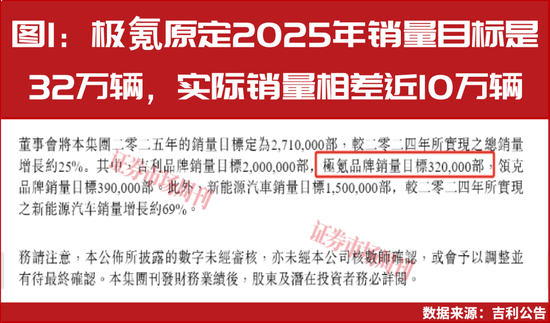
供应商遭索赔,极氪品牌增速承压!一场23亿元电池纠纷的双重冲击
Xin Lang Cai Jing· 2026-01-08 10:04
Group 1 - Zeekr's subsidiary, Weirui, has filed a lawsuit against Aisin Wanda for 2.314 billion yuan due to battery quality issues [1][2][13] - The lawsuit claims that the battery cells delivered from June 2021 to December 2023 had quality problems that caused financial losses [2][15] - Aisin Wanda is currently undergoing IPO guidance while also pursuing a Hong Kong IPO [1][13] Group 2 - The lawsuit is based on numerous complaints from owners of the Zeekr 001 model, reporting issues such as reduced charging speed and inaccurate battery capacity [3][16] - In response, Zeekr initiated a "Winter Care Activity" to offer free battery health checks for affected vehicle owners [4][17] Group 3 - Prior to the lawsuit, the partnership between Geely and Aisin Wanda was seen as a model of industry collaboration, with significant awards and recognition for their joint efforts [5][18] - Aisin Wanda's financial performance has raised regulatory concerns, with reported revenues of 11.12 billion yuan in 2023 and a net loss of 1.56 billion yuan [5][18] Group 4 - Analysts had previously viewed the collaboration with Geely as a positive factor for Aisin Wanda's future performance, with expectations of significant growth in their battery business [6][19] - Following the lawsuit, optimistic profit forecasts for Aisin Wanda may need to be reassessed, as the case has been accepted by the court but not yet formally heard [6][19] Group 5 - Zeekr aims for a 34% increase in sales for 2026, targeting 300,000 units, following a disappointing 2025 performance where actual sales were only 70% of the target [10][21] - The latest subsidy policies for 2026 are expected to positively impact Zeekr, particularly for mid-to-high-end electric vehicles [11][25]