洋河股份

Search documents
高盛:中国白酒_ 政策风险延长周期,拐点尚不明朗;下调四只股票评级
Goldman Sachs· 2025-07-11 01:05
Investment Rating - The report downgrades four stocks: Fen Wine, Luzhou Laojiao, ZJLD to Neutral from Buy, and Anhui Gujing to Sell from Neutral, while maintaining Buy on Kweichow Moutai and Wuliangye [9][36]. Core Insights - The current cycle for the spirits industry is likely prolonged due to the impact of the new austerity policy, with uncertainties on when the cycle will bottom out [1][14]. - The report anticipates policy headwinds to persist from 2Q25 to 2Q26, followed by a modest impact in 2H26 as improper dining restrictions for civil servants normalize [2][14]. - The spirits industry is expected to see a decline in total addressable market (TAM) by 10% to 14% in 2025-27E, with a forecasted decline of over 6% in 2025 and a -2% decline in 2026 [2][14]. Summary by Sections Risk Profiling - A policy impact ranking analysis indicates that upper mid-end and commercial banquet-focused products will face greater pressure, while Moutai is expected to remain resilient due to its gifting demand and limited exposure to government-related banquet consumption [2][12]. Earnings and Valuation Analysis - The report projects +1%/+5% aggregated topline growth for 2025/26E, down from previous estimates of +6%/+9%, with high-end spirits expected to grow by +5%/+5% and upper-mid-high end spirits facing declines of -10%/+2% [2][14]. - A bear case analysis suggests potential earnings downside risks of 6% to 18% for most spirits names compared to the base case [2][14]. Industry Growth Forecast - The spirits industry growth forecast has been revised down to a greater than 6% decline in 2025 and a -2% decline in 2026, compared to prior forecasts of +4%/+3% growth [2][14]. - The report highlights that the spirits industry has been consolidating, with leading players gaining market share, particularly in the super premium segment [2][25]. Company-Specific Insights - Moutai's wholesale price stability is supported by various measures, and the report suggests that a price below RMB 1,800 could hurt distributor profits, leading to market volatility [8][14]. - The report revises down sales and net profit estimates for various companies, including a 1% to 19% reduction for most names, reflecting the impact of the new policy [36][37].






如果茅台酒跌破1000元,你还会买吗?
Sou Hu Cai Jing· 2025-07-10 22:55
Group 1 - The perception of Moutai's price floor is high among consumers, leading them to believe that prices will not drop below certain levels, such as 1500 yuan or 1000 yuan [1][4] - Many consumers purchase Moutai not for consumption but as a status symbol or investment, indicating its luxury brand status [3][5] - The demand for high-end liquor has significantly decreased due to changing consumption scenarios, particularly in business contexts, which has affected the overall market for premium liquor [5][12] Group 2 - The current market environment shows a lack of confidence in the future of high-end liquor, with excess production capacity and reduced consumer demand [6][12] - Liquor manufacturers face two potential strategies: controlling supply to stabilize prices or increasing market supply while lowering prices and quality [8][9] - Historical examples illustrate that many once-premium liquor brands have transitioned to lower-tier products, raising concerns about the long-term value of current high-end offerings [11][12] Group 3 - The recommendation for consumers is to assess their actual need for liquor rather than purchasing for speculative purposes, especially given the current market dynamics [12][13] - If Moutai's price were to drop significantly, it could lead to a shift in its perception as a premium product, impacting its use in high-end business settings [12][13]

“B+C”联名 酒企爆款指向流量渠道
Sou Hu Cai Jing· 2025-07-10 12:08
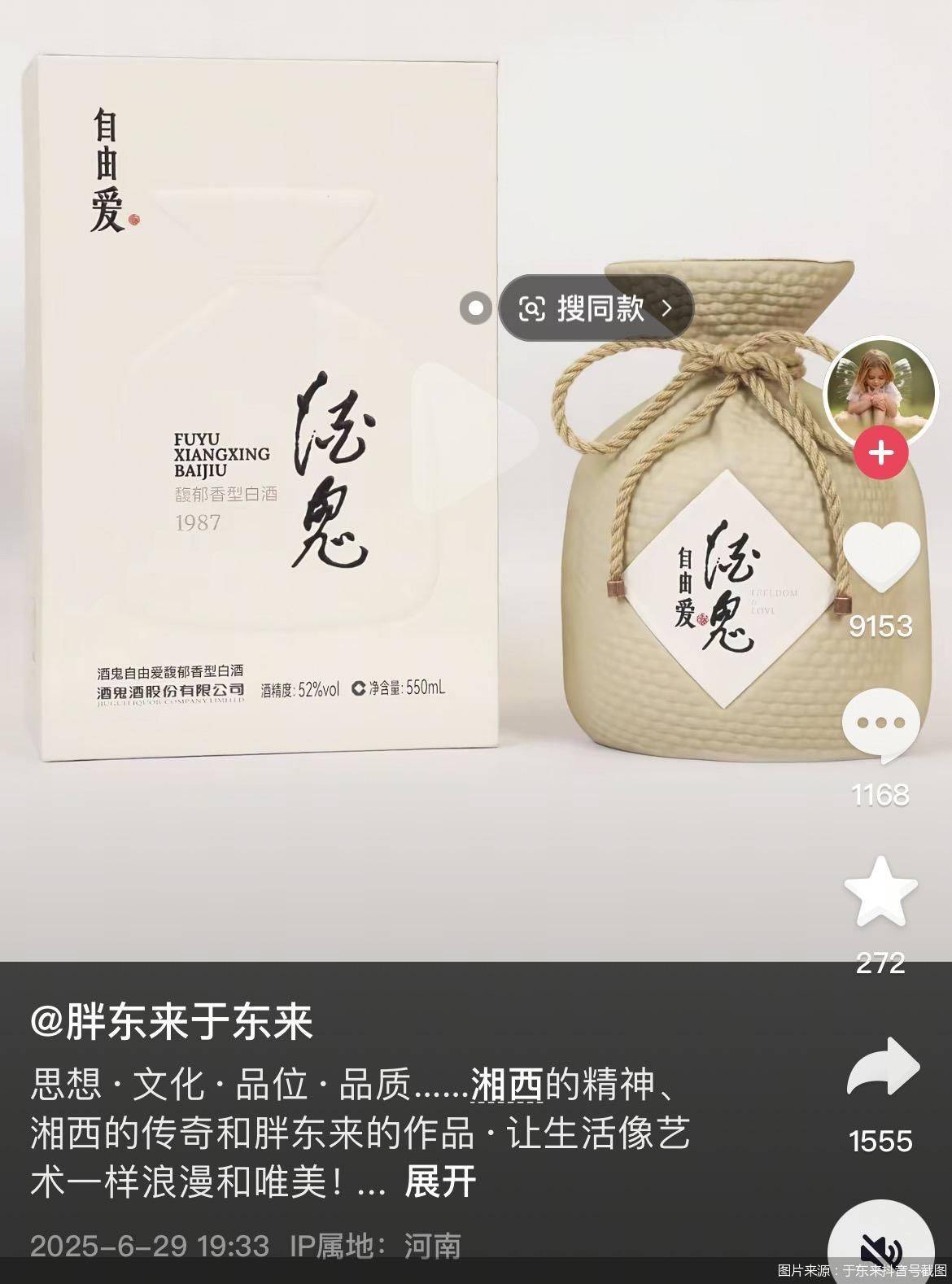
Core Viewpoint - The liquor industry is entering a deep adjustment period, prompting liquor companies to collaborate strategically with "traffic channel merchants" to launch new products, exemplified by the partnership between Pang Donglai and Baofeng Liquor, which is expected to generate approximately 1 billion yuan in revenue within the year [1][3][4]. Group 1: Industry Trends - The collaboration between liquor companies and traffic channel merchants is not an isolated case, with multiple instances of co-branded products emerging, such as "Free Love" by Pang Donglai and Baofeng Liquor, and "Yanghe Daqu" by JD and Yanghe Co. [3][4]. - The "liquor company + traffic channel merchant" model has become a significant strategy for addressing inventory pressure and sales challenges in the industry [3][5]. - The partnership model has shown promising short-term results, with "Free Love" projected to achieve 1 billion yuan in revenue and Yanghe Daqu selling over 10,000 bottles within 48 hours on JD [4][8]. Group 2: Market Dynamics - The collaboration aims to leverage the terminal control and user assets of traffic channel merchants to enhance product sales and reduce customer acquisition costs [5][6]. - The liquor industry faces a critical challenge of high channel inventory and weak terminal sales, necessitating a shift from traditional distribution models to more direct sales approaches [6][7]. - Data from the China Alcoholic Drinks Association indicates that 58.1% of distributors reported increasing inventory levels in the first half of 2025, highlighting the ongoing inventory pressure in the market [6]. Group 3: Future Prospects - The increasing collaboration between liquor companies and traffic channel merchants is expected to evolve, with a focus on creating differentiated products and transitioning from "channel-driven" to "brand-driven" strategies [8][9]. - The historical evolution of this collaboration model reflects a shift from simple supply relationships to strategic partnerships, emphasizing the need for liquor companies to understand consumer demands and develop unique products to stand out in a competitive market [9][10].

白酒再“降度” 年轻人会为“微醺”买单吗?
Sou Hu Cai Jing· 2025-07-10 09:55
Core Viewpoint - The low-alcohol liquor segment is gaining significant attention in the Chinese market, with major liquor companies like Wuliangye, Luzhou Laojiao, Yanghe, and Shui Jing Fang announcing plans to launch low-alcohol products, reflecting a shift in consumer preferences and market dynamics [1][2][6]. Group 1: Industry Trends - Major liquor companies are responding to the trend of low-alcohol beverages, with Wuliangye set to launch a 29-degree product and Luzhou Laojiao developing a 28-degree variant of its popular offerings [2][6]. - Yanghe is targeting younger consumers with a range of low-alcohol products, including fashionable white liquor (33.8 degrees) and fruit wines (15-28 degrees), indicating a strategic shift towards appealing to a younger demographic [2][5]. - The market is witnessing a transformation in consumption patterns, with younger consumers favoring personalized, low-alcohol, and social drinking experiences, leading to a decline in traditional high-alcohol consumption [7][9]. Group 2: Historical Context - The concept of low-alcohol liquor has been explored for years, with the China Alcoholic Drinks Association advocating for lower alcohol content since around 2017, and companies like Wuliangye and Yanghe having initiated low-alcohol product development as early as the 1970s and 2014, respectively [5][6]. - Wuliangye has a long history of low-alcohol product development, having successfully created various low-alcohol variants since the late 20th century, positioning itself as a pioneer in this segment [5][6]. Group 3: Market Challenges - The low-alcohol liquor segment faces challenges such as maintaining flavor saturation and product shelf life, as the dilution process can lead to a loss of aroma and taste [10][11]. - Analysts highlight that while low-alcohol products are gaining traction, the primary consumer base for traditional liquor remains older demographics, who may not find low-alcohol options satisfying [10][11].


中国白酒行业市场经营策略及竞争战略分析报告2025~2031年
Sou Hu Cai Jing· 2025-07-10 09:07
Core Viewpoint - The report provides a comprehensive analysis of the Chinese liquor industry, particularly focusing on the white liquor sector, including its classification, regulatory environment, economic factors, social influences, technological advancements, and market trends. Group 1: Industry Overview - The white liquor industry is defined and categorized based on different aroma types and price ranges [2][3] - The report outlines the authoritative data sources and statistical standards used for the research [2][3] Group 2: Macro Environment Analysis (PEST) - The regulatory framework for the white liquor industry includes various supervisory bodies and self-regulatory organizations [3][4] - Current national and local policies impacting the white liquor industry are summarized, including the "14th Five-Year Plan" for the liquor industry [3][4] - Economic indicators such as GDP growth, industrial output, and retail sales are analyzed to assess their impact on the white liquor market [4][5] Group 3: Market Supply and Demand - The report discusses the supply and demand characteristics of the white liquor market, including production capacity and sales volume [6][7] - It highlights the trends in import and export activities, detailing the scale and pricing of white liquor trade [6][7] Group 4: Competitive Landscape - The competitive dynamics of the white liquor market are examined, including market share distribution among key players and brand rankings [8][9] - The report analyzes the market concentration and competitive forces using Porter's Five Forces model [8][9] Group 5: Investment and M&A Analysis - The investment landscape in the white liquor industry is explored, detailing funding sources, investment events, and trends in mergers and acquisitions [10][11] - The report identifies potential investment opportunities within the industry, including weak links in the supply chain and emerging market segments [10][11] Group 6: Future Outlook - The report forecasts the future of the white liquor industry, predicting production and revenue growth, as well as structural adjustments within the market [12][13] - It emphasizes the importance of cultural marketing and the potential for international market expansion [12][13]

红利国企ETF(510720)涨超1.1%,降准背景下红利资产性价比引关注
Sou Hu Cai Jing· 2025-07-10 06:33
Group 1 - BeiGene announced its first positive GAAP operating profit in Q1 2025, with a net profit of $1.27 million, and reaffirmed its full-year revenue guidance of $4.9-5.3 billion, primarily driven by the increase in global market share of its flagship product, Zanubrutinib [1] - TCL Technology forecasted a year-on-year increase of 81%-101% in net profit attributable to shareholders for the first half of 2025, estimating it to be between 1.8 billion to 2 billion yuan [1] - The Shanghai Stock Exchange emphasized the need for listed companies to increase dividend payouts and frequency, as well as to enrich the dividend index product system to enhance market investment value [1] Group 2 - Guosen Securities pointed out that traditional dividend indices are facing a shift from "true dividends" to "pseudo dividends," with the banking, coal, and transportation sectors accounting for 56% of the index, leading to a high concentration of cyclical stocks [1] - Current dividend assets hold allocation value in a broadly declining interest rate environment, with a recommendation to focus on stocks with a dividend yield above 3% and low ROE volatility, particularly in sectors like refining trade, home appliances, and infrastructure that have seen declines of over 4% since the beginning of the year [1] - Bank stocks have undergone a systemic revaluation, transitioning from a "high-yield undervalued area" to a "dynamic benchmark ballast," making them a core allocation direction among dividend assets due to their low volatility and dividend yields exceeding 6% [1] - Resource-related dividends (such as coal and oil) and financial stability dividends (such as operators) with expected dividend yields greater than 4% are also worth exploring [1] Group 3 - The National State-Owned Enterprise Dividend ETF tracks the China Securities State-Owned Enterprise Dividend Index (code: 000824), which selects stable dividend-paying state-owned enterprises from the Shanghai and Shenzhen markets [2] - The index focuses on financially sound and high-dividend-capable state-owned enterprises, covering multiple industries but leaning towards traditional economic sectors to reflect the overall market performance of high-dividend state-owned enterprises [2]
主要消费ETF(159672)创近1月份额新高,机构预计下半年白酒板块情绪有望进一步改善
Xin Lang Cai Jing· 2025-07-10 06:22
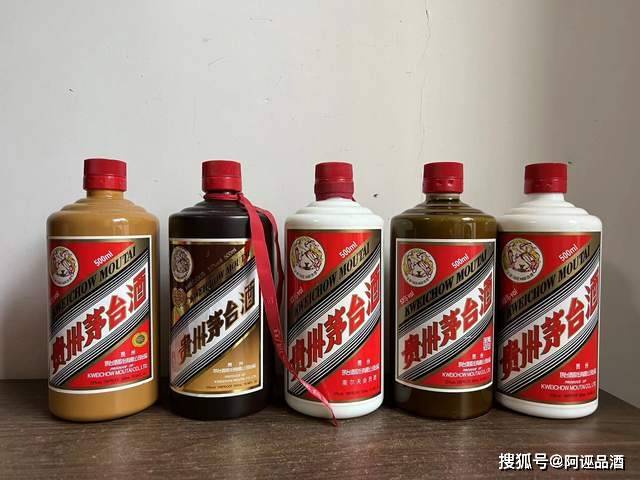
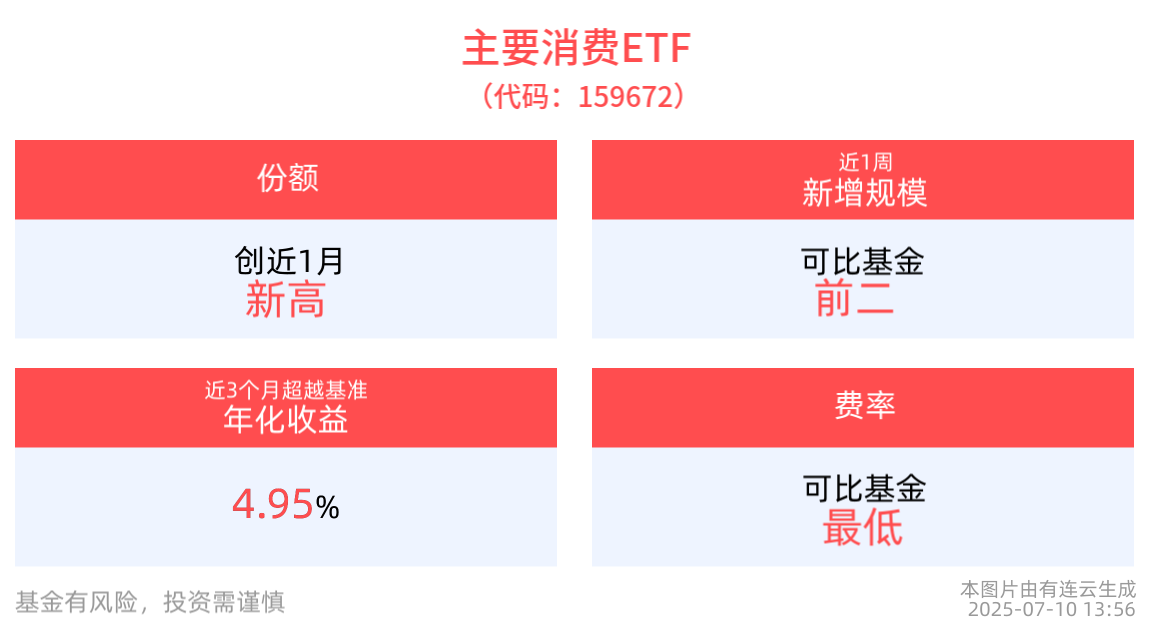
Group 1 - The main consumer index (000932) decreased by 0.23% as of July 10, 2025, with mixed performance among constituent stocks [3] - Hainan Rubber (601118) led the gains with an increase of 1.45%, while Guibao Pet (301498) experienced the largest decline at 9.92% [3] - The major consumer ETF (159672) fell by 0.13%, with a latest price of 0.76 yuan, but saw a cumulative increase of 0.80% over the past week [3] Group 2 - The Ministry of Culture and Tourism is hosting the 2025 National Summer Cultural and Tourism Consumption Season from July to August, featuring over 4,300 events and 39,000 activities, with more than 570 million yuan in subsidies [3] - Regions like Shaanxi, Sichuan, and Zhejiang have announced plans for cultural tourism activities and will issue consumption vouchers to stimulate summer spending [3] Group 3 - Kweichow Moutai's sales company completed its half-year operational tasks, showing stable demand and a shift towards a consumer-centric approach [4] - The price of Feitian Moutai stabilized around 1,940 yuan per bottle as of late June, indicating resilience among leading companies despite a slow industry recovery [4] - The major consumer ETF saw a significant growth of 123.98 million yuan in scale over the past week, ranking second among comparable funds [4] Group 4 - The major consumer ETF's net value increased by 5.47% over the past year, with a maximum monthly return of 24.35% since inception [6] - The ETF's management fee is 0.50% and the custody fee is 0.10%, which are among the lowest in comparable funds [6] - The latest price-to-earnings ratio (PE-TTM) for the index tracked by the ETF is 18.83, indicating a valuation below 92.89% of the past year [6] Group 5 - As of June 30, 2025, the top ten weighted stocks in the major consumer index accounted for 67.93% of the total index weight, including companies like Yili (600887) and Kweichow Moutai (600519) [7]
白兰地入华百余年,国产酒企开始讲自己的故事
Xin Lang Cai Jing· 2025-07-10 03:39
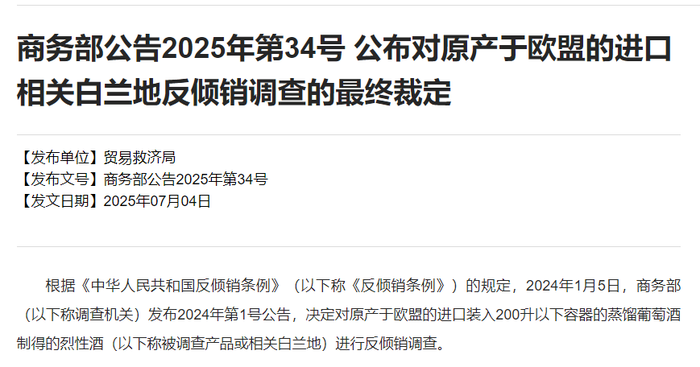
Core Viewpoint - The Chinese Ministry of Commerce announced a 34.9% anti-dumping tax on brandy imported from the EU, which will increase import costs and shrink profit margins for high-end brandy brands in China [1][3]. Group 1: Brandy Market Overview - Brandy has been present in China for over a century, with major imported brands like Hennessy, Martell, and Rémy Martin dominating the market, holding over 80% market share in the high-end segment [4][6]. - Domestic brands such as Zhangyu, Great Wall, Dynasty, and Weilong have emerged over the years, with Zhangyu's Koyak brand leading the domestic market, holding approximately 90% market share [6][14]. - The brandy market in China is evolving, with a shift towards localization and regionalization, as domestic brands seek to capitalize on the current market window [3][6]. Group 2: Domestic Brand Development - The introduction of a new national standard for brandy in July 2024 aims to clarify quality requirements and definitions, including aging periods for various classifications [11][12]. - Domestic brands are increasingly incorporating local cultural elements into their marketing and product design to enhance consumer recognition and acceptance [11][13]. - The concept of brandy production regions is beginning to take shape, with Yantai recognized as the "Brandy Capital of China," accounting for over 80% of domestic production [14][16]. Group 3: Challenges and Opportunities - Despite the growth of domestic brandy, consumer awareness and cultural recognition remain low, with many consumers still uncertain about the quality and value of brandy compared to other alcoholic beverages [11][18]. - The anti-dumping tax on imported brandy presents an opportunity for domestic brands to increase their market share by promoting their products more aggressively [18]. - The industry is encouraged to enhance consumer education and expand consumption scenarios to build brand confidence and recognition over time [18].

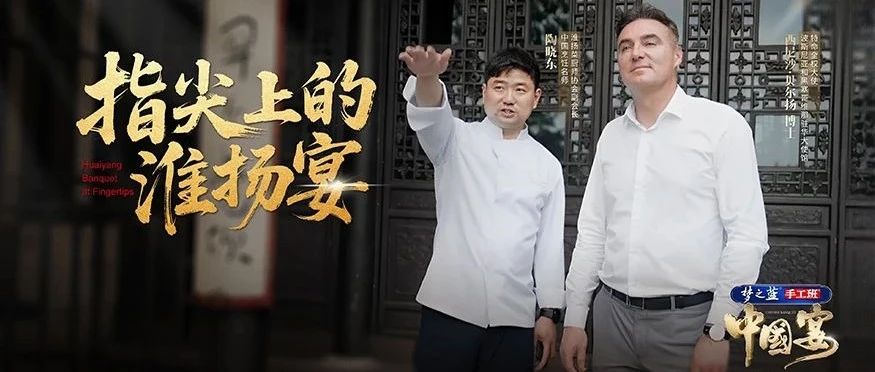
当波黑大使遇见扬州美食,这瓶酒成了文化桥梁
新华网财经· 2025-07-10 03:00
Core Viewpoint - The article highlights a cultural exchange event in Yangzhou, where the Bosnian ambassador experienced traditional Yangzhou cuisine and praised the craftsmanship behind a special aged liquor, showcasing the connection between food, culture, and friendship between China and Bosnia [1][13]. Summary by Sections Culinary Experience - The ambassador was initially skeptical about a simple bowl of Yangchun noodles but was impressed by the rich flavor of the broth, which was made from chicken and pork bones simmered for four hours, enhanced with shrimp roe [3][5]. - A demonstration of traditional knife skills by a young chef left the ambassador in awe, as he witnessed tofu being transformed into delicate strands, and he praised the exquisite taste of the resulting soup [6][8]. Aged Liquor Appreciation - The highlight of the event was the tasting of a handcrafted aged liquor from the Dream Blue Handcrafted Class, which the ambassador found to be one of the best he had ever tasted in China, noting its rich and layered flavor [9][12]. - The liquor's quality is attributed to its production process, which follows national-level intangible cultural heritage techniques and involves over 137 manual steps, with aging for more than ten years [11][12]. Cultural Significance - The event marked the 30th anniversary of diplomatic relations between China and Bosnia, with the chef gifting the aged liquor to the ambassador, symbolizing the warmth of friendship [13][15]. - The combination of exquisite cuisine and fine liquor served as a bridge connecting the hearts of the two nations, demonstrating the charm of Chinese culinary culture and the craftsmanship behind the Dream Blue Handcrafted Class [15].
银华基金焦巍,规模蒸发 150 亿背后的操盘逻辑
Sou Hu Cai Jing· 2025-07-10 01:14
Group 1 - The core viewpoint of the article highlights the challenges faced by Jiao Wei, a veteran fund manager at Yinhua Fund, whose flagship Yinhua Wealth Theme Fund has suffered significant losses over the past four years, with a total loss of 8 billion yuan and a reduction in scale by 15 billion yuan [2][3] - The Yinhua Wealth Theme Fund, established in November 2006, has seen a peak cumulative increase of 1653.50%, making it a prominent product for Yinhua Fund [3] - Jiao Wei's investment strategy initially focused on consumer and pharmaceutical sectors, particularly heavy investments in leading liquor stocks, which were considered cash cows [3][4] Group 2 - The fund's performance deteriorated due to misjudgments in the liquor market and aggressive trading strategies, leading to significant losses, particularly with stocks like Jiu Gui Jiu [4][6] - In response to the declining performance of liquor stocks, Jiao Wei shifted his investment focus to military and semiconductor sectors, but this transition also resulted in losses as the military index dropped sharply [7] - The fund's recent strategy has included investing in high-dividend stocks, which initially showed promise but ultimately led to underperformance compared to benchmarks [7][9] Group 3 - Jiao Wei acknowledged missing out on significant investment opportunities in emerging technologies like AI, which he identified as a major direction for the next decade [7][8] - The new consumption wave, characterized by companies like Pop Mart and others, has outperformed traditional consumer sectors, yet Jiao Wei's fund has remained largely absent from these opportunities [8][9] - The future of the Yinhua Wealth Theme Fund remains uncertain as it continues to focus on dividend stocks, raising questions about whether this strategy will yield better results than previous commitments to liquor stocks [9]