大疆

Search documents
行业首届户储及便携式储能电池技术论坛定档9月26日,深圳举办!
起点锂电· 2025-07-21 10:27
Group 1 - The core viewpoint of the article highlights the significant growth and potential of the home energy storage and portable energy storage markets, with predictions of substantial increases in market size by 2030 [1][2][4] - In 2024, global home energy storage shipments are expected to reach 27.8 GWh, a year-on-year increase of 19%, with China accounting for 75% of the shipments [1] - The global portable energy storage market is projected to see shipments of 11 million units in 2024, marking a 90% year-on-year growth, driven by outdoor activities and emergency power needs due to geopolitical conflicts [2][3] Group 2 - The competitive landscape for home energy storage systems is dominated by Chinese companies, with the top 10 including Huawei, BYD, and Airo Energy [1] - For portable energy storage, leading companies include EcoFlow, BLUETTI, and Jackery, with significant market presence in the US and Europe [3] - The article emphasizes the importance of safety in battery technology, noting that new national standards will be implemented to address safety concerns in portable power sources [4] Group 3 - The 2025 Peak Forum on Home and Portable Energy Storage Battery Technology will take place on September 26, 2025, in Shenzhen, focusing on high safety and the creation of a new ecosystem [4][5] - The forum will feature over 30 core topics, including safety challenges, technological breakthroughs, and market trends, with participation from over 600 key decision-makers [7][8] - Notable companies invited to the forum include major players in home and portable energy storage, as well as battery manufacturers and supporting material and equipment companies [10]


美国麻省理工教授:这次的“中国冲击”,对美构成前所未有的挑战
Sou Hu Cai Jing· 2025-07-21 10:13
Group 1: Overview of "China Shock 2.0" - The concept of "China Shock 2.0" highlights China's advancements in high-tech sectors, posing unprecedented challenges to the U.S. [2][4] - The transition from "China Shock 1.0," which focused on low-end manufacturing, to "2.0," which targets high-tech industries, marks a significant shift in global economic dynamics [6][8] - Key high-tech areas affected include aerospace, artificial intelligence, telecommunications, semiconductors, robotics, nuclear energy, quantum computing, biomedicine, solar energy, and battery technology [6][8] Group 2: Economic and Technological Impact - China's rapid rise in the global value chain is attributed to its technological progress and industrial upgrades, leading to a reassessment of U.S. strategies [4][12] - The shift in focus from low-cost labor to technology-intensive industries requires long-term R&D investment and skilled talent [8][10] - China's electric vehicle industry has emerged as a global leader, with companies like BYD and CATL driving innovation and market share [8][10] Group 3: Policy and Strategic Shifts - The role of local governments and private enterprises has become central in driving China's industrial policy, moving from short-term growth to nurturing strategic emerging industries [10][12] - The competitive landscape has evolved, with Chinese firms like DJI and LONGi Green Energy demonstrating significant advancements in their respective fields [8][10] Group 4: Global Competition and Standards - China's dominance in 5G technology and its control over rare earth resources are critical components of "China Shock 2.0," enhancing its global influence [14][21] - The shift in technological leadership is evident, with China leading in 57 out of 64 frontier technologies by 2023, compared to only 7 for the U.S. [12][19] Group 5: U.S. Response and Strategic Recommendations - The U.S. response has primarily relied on tariffs, which have proven to be ineffective against China's high-tech advancements [17][22] - Recommendations for the U.S. include forming alliances, allowing Chinese firms in non-sensitive sectors, maintaining policy continuity, and improving reemployment systems for affected workers [17][22]





红树林创业营来了!华强北“电子雨林”生态圈吸引全球创客
Nan Fang Du Shi Bao· 2025-07-21 06:45
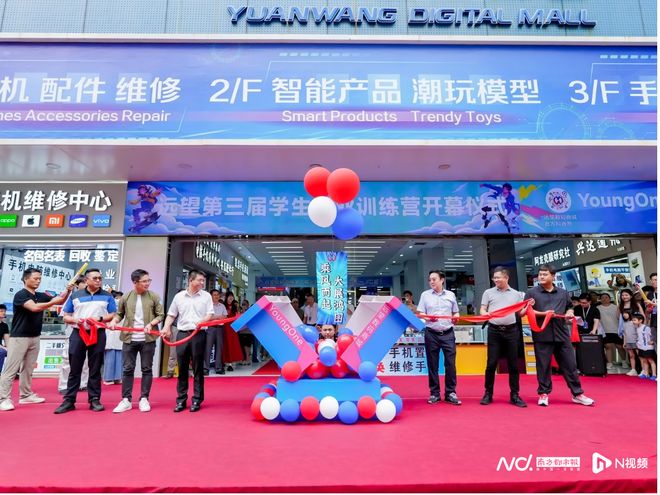
南都讯 记者林敏儿 通讯员黎津慧 7月18日,由福田区华强北街道联合远望数码商城举办的红树林学生 创业训练营正式开营。130余名政企代表、行业导师与青年创客齐聚"中国电子第一街",参与见证华强 北以"湾区红树林式创新创业生态"为蓝图的创新实践落地。 红树林式生态:湾区特色的创新范式 红树林是粤港澳大湾区的标志性生态系统,在净化海水、防风消浪、固碳储碳、维护生物多样性等方面 发挥着重要作用。红树林生长在咸淡水交汇的海岸潮间带,为许多物种提供了栖息地,包括鱼类、甲壳 类、软体动物、鸟类和哺乳动物等。红树林生态,具有开放、包容、协作、韧性、共生的蓬勃意象。 创新创业需要的正是这样的"红树林式"生态。如此生态,能够容纳类型足够多的市场主体,不管是大型 企业还是中小微企业,都可以自由生长。当下的一些"稚嫩幼苗",在经历无数次潮起潮落的历练后,有 可能长成"茁壮红树",结出累累硕果。 华强北:红树林式生态的天然沃土 "湾区红树林式创新创业生态"是华强北基于40余年产业积淀提出的独特发展模式,其核心逻辑源于红树 林"咸淡水交汇生存""根系网络固淤""胎生苗随潮扩散"的生态特性。 如同红树林在河流与海洋交汇处的生存智慧,华强 ...

从“资产荒”角度看“内卷”的深层原因︱重阳荐文
重阳投资· 2025-07-21 06:07
Core Viewpoint - The article emphasizes the importance of understanding the root causes of "involution" in the context of declining investment returns and risk appetite in the capital market, suggesting that addressing these issues is crucial for effective countermeasures against involution [1]. Group 1: Declining Investment Returns - The operating profit margin of large-scale manufacturing enterprises has been on a downward trend, with figures of 5.35%, 5%, and 4.63% for 2022, 2023, and 2024 respectively, further declining to 4.25% in the first five months of this year [5]. - The revenue generated per 100 yuan of assets for large-scale manufacturing enterprises has decreased from 107 yuan in 2022 to 92.3 yuan in 2024, dropping to 85.2 yuan in the first five months of this year [5]. Group 2: Involution in Competition - Increased operational pressures have led to intensified competition among enterprises, characterized as "involutionary competition," where companies resort to price cuts to gain market share, resulting in "increased volume without increased revenue" [10]. - The Producer Price Index (PPI) has been in negative growth for 33 consecutive months since October 2022, despite the value-added growth of large-scale manufacturing enterprises being 3%, 5%, and 6.1% for 2022, 2023, and 2024 respectively, and accelerating to 7% in the first half of this year [10]. Group 3: Supply-Demand Imbalance - The root cause of "involutionary competition" is identified as an oversupply in certain industries, with capacity utilization rates for large-scale manufacturing enterprises at 75.8%, 75.28%, and 75.2% for 2022, 2023, and 2024, further declining to 74.2% in the first half of this year [18]. - Manufacturing investment growth has outpaced overall investment growth since 2021, with manufacturing investment growth rates exceeding overall investment growth by 8.6, 4, 3.5, and 6 percentage points from 2021 to 2024 [19]. Group 4: Government Influence on Investment - Local governments are incentivized to boost manufacturing investment to meet GDP targets, leading to increased investment in new industries, which has resulted in overcapacity in sectors like photovoltaics, lithium batteries, and electric vehicles [31]. - The financial support for manufacturing has increased, with long-term loans for manufacturing growing at rates exceeding 40%, providing substantial funding for investment expansion [28]. Group 5: Consumer Behavior and Economic Structure - Consumer confidence has declined, with the income confidence index dropping from 124.95 in 2019 to 95.42 in 2024, while the average wage growth for urban non-private units has slowed to 2.8% in 2024 [32]. - The high savings rate in China, at 42.49% in 2023, is attributed to a preference for low-risk assets over riskier investments, reflecting a cautious consumer sentiment [40]. Group 6: Comparison with Past Economic Reforms - The current "anti-involution" initiative is likened to the supply-side structural reforms of a decade ago, focusing on enhancing product quality and addressing low-price competition, while also emphasizing the need to stimulate consumer demand [61]. - The article suggests that the strategies for "anti-involution" should prioritize reducing excess capacity and inefficient investments while increasing household income to boost consumption [61].

“链博会让我们看到了‘一带一路’市场的活力”
Zhong Guo Xin Wen Wang· 2025-07-20 04:32
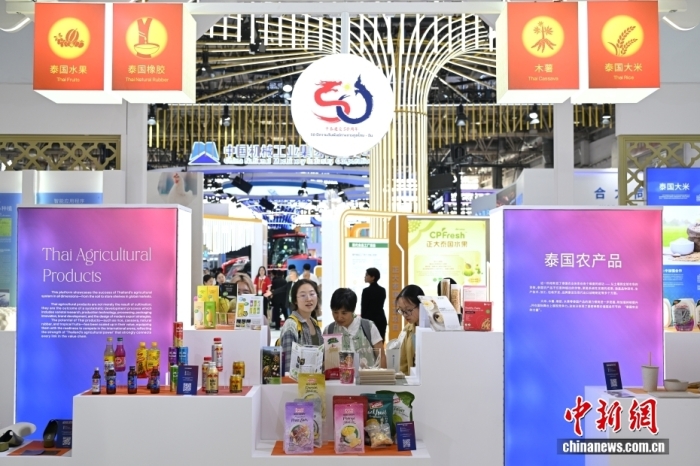
Group 1 - The third China International Supply Chain Promotion Expo was held in Beijing from July 16 to 20, with Thailand as the guest country and Shandong and Guangdong as guest provinces [1][3] - The expo featured six major supply chain categories, including advanced manufacturing, smart automotive, green agriculture, clean energy, digital technology, and healthy living, with participation from 75 countries and regions and 651 enterprises and institutions, of which 35% were foreign exhibitors [3] - Notable companies from Guangdong, such as ZTE, TCL, and Xpeng Motors, participated in the expo, highlighting the historical cooperation between Guangdong and Thailand in key sectors like electronics and new energy vehicles [3][4] Group 2 - Thai durian supplier Gao Feng successfully integrated into the Yum China supplier system through the expo, demonstrating the vitality of the Belt and Road market and the importance of standardized global demand [1] - Xpeng Motors has established a global supply chain layout and formed strategic partnerships in Thailand, marking its entry into the ASEAN market with 12 official partners [4] - The expo facilitated over 300 one-on-one negotiations between Chinese and foreign enterprises, leading to preliminary cooperation intentions, emphasizing the need for deepened open cooperation to build a stable and efficient global supply chain network [4]

丘钛科技(1478.HK)25H1半年报预告点评:垂直整合积极推进 产品结构优化&非手机业务驱动高增
Ge Long Hui· 2025-07-19 11:17
Core Viewpoints - In 2025, the company's vertical integration will advance further, with investments in poLight and the acquisition of TDK's micro-driver solutions enhancing its competitiveness in high-end camera module solutions, laying a foundation for future growth [1][2] - The company's non-mobile business is a growth highlight, with non-mobile camera module shipments increasing by 48% year-on-year in the first half of 2025 [1][4] - The company expects significant improvements in the sales volume and product structure of fingerprint recognition modules, driving positive changes in gross margins [1][5] Financial Performance - The company forecasts a net profit of approximately 288 million to 323 million yuan for the first half of 2025, representing a year-on-year increase of 150% to 180% [1] - Mobile camera module shipments totaled 184 million units in the first half of 2025, a decrease of about 15% year-on-year, while non-mobile camera module shipments reached 8.08 million units, an increase of approximately 48% [1] Vertical Integration Strategy - The company emphasizes the importance of vertical integration for camera module manufacturers, which helps reduce supplier management costs and ensures product quality [2] - The company has invested in Taiwan's New Giant and poLight, becoming the largest shareholder of both, enhancing its competitive edge in customized lenses and zoom lens technology [2][3] Motor Solutions - The acquisition of TDK's micro-driver solutions will strengthen the company's high-end VCM motor competitiveness, leveraging TDK's extensive experience and technology in the micro-motor industry [3] - This acquisition is expected to enhance the company's product innovation capabilities in camera modules, particularly in autofocus, optical zoom, and optical stabilization [3] Non-Mobile Business Growth - The non-mobile camera module business, particularly in the automotive and IoT sectors, is expected to contribute positively to the company's profits due to higher ASP and profitability [4] - The company has become a core supplier for leading brands in the drone and handheld imaging device markets, benefiting from the growing market scale [5] Fingerprint Recognition Module Improvements - The fingerprint recognition module market is experiencing a competitive landscape improvement, with the company achieving a 60% year-on-year increase in shipments in the first half of 2025 [5] - The increase in ultrasonic fingerprint recognition penetration is positively impacting the company's product structure [5]
从“资产荒”角度看“内卷”的深层原因
李迅雷金融与投资· 2025-07-19 06:51
Group 1 - The article discusses the concept of "anti-involution" and its significance in the context of supply-side structural reforms, emphasizing the need to analyze the root causes of involution to effectively address it [1] - The capital market is experiencing two main trends: a decline in risk appetite and a decrease in risk-free investment returns, leading to an "asset shortage" phenomenon [1][2] - The yield on China's 10-year government bonds dropped to a record low of 1.55% in April, indicating a persistent "asset shortage" that affects both capital markets and the real economy [1] Group 2 - The profit margins of large-scale manufacturing enterprises have been declining, with profit rates falling from 5.35% in 2021 to 4.25% in the first five months of 2024 [2][5] - The revenue generated per 100 yuan of assets for large-scale manufacturing enterprises has decreased from 107 yuan in 2022 to 85.2 yuan in the first five months of 2024 [2][5] - The phenomenon of "involution" in competition is characterized by price wars among enterprises, leading to increased volume without corresponding revenue or profit growth [5] Group 3 - The export price index for China's goods has dropped by 15% from January 2023 to September 2024, indicating a significant decline compared to other emerging economies [8] - The average accounts receivable period for large-scale manufacturing enterprises has increased from 54 days in 2022 to 71.7 days in the first five months of 2024, reflecting financial pressures [11] - The capacity utilization rate for large-scale manufacturing enterprises has decreased from 75.8% in 2022 to 74.2% in the first half of 2024, highlighting the oversupply situation [12] Group 4 - The increase in manufacturing investment has outpaced overall investment growth since 2021, with manufacturing investment growth rates exceeding overall rates by 8.6 to 6 percentage points from 2021 to 2024 [15] - Local governments are incentivized to boost manufacturing investment to meet GDP targets, leading to potential overcapacity in certain sectors [21][23] - The manufacturing sector has seen significant investment in new industries, with production in solar batteries, lithium batteries, and electric vehicles exceeding global demand [26] Group 5 - Consumer spending is closely tied to income expectations, with urban non-private unit average wage growth slowing from 6.7% in 2022 to 2.8% in 2024 [29][30] - The high savings rate in China, at 42.49% in 2023, reflects a preference for low-risk assets over riskier investments, contributing to the "asset shortage" [39][40] - The income distribution disparity, where the top 20% of households account for 45.5% of disposable income, hampers overall consumption growth [35][46] Group 6 - The article draws parallels between the current "anti-involution" movement and the supply-side structural reforms of a decade ago, highlighting the need for a shift in focus from supply-side measures to stimulating consumer demand [56][62] - The current economic environment differs significantly from that of ten years ago, with reduced potential in real estate demand and a more cautious consumer sentiment [57][58] - The strategies for "anti-involution" should include reducing excess capacity, minimizing ineffective investments, and increasing household income to stimulate consumption [62]
广东“链主”勇闯链博会:“中国创新”碰撞全球产业
2 1 Shi Ji Jing Ji Bao Dao· 2025-07-18 12:05
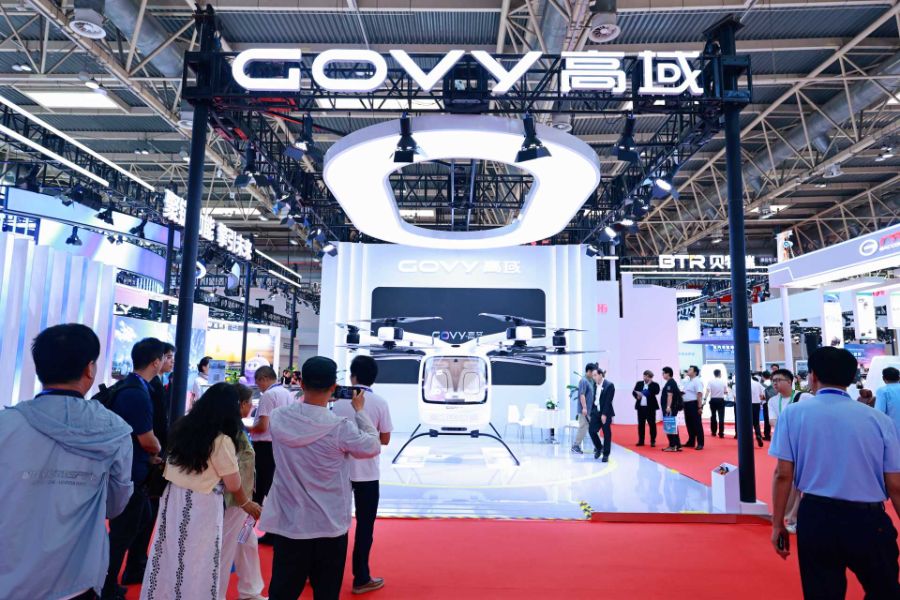
Core Insights - The third China International Supply Chain Promotion Expo (Chain Expo) was held from July 16 to 20 in Beijing, focusing on deepening cooperation and stabilizing supply chains with the theme "Linking the World, Creating the Future" [1] - Guangdong province was the guest province at the expo, showcasing 64 leading enterprises including ZTE, TCL, Xiaopeng Motors, and Guangzhou Pharmaceutical Group, with a record number of exhibitors and an exhibition area exceeding 4,000 square meters [1][2] Group 1: Company Highlights - GAC Group's low-altitude travel technology company, GOVY, showcased its first mass-produced multi-rotor flying car, GOVY AirCab, which has received over 1,000 pre-orders since its price announcement in June [2][3] - GOVY has formed multiple partnerships to enhance its supply chain, including collaborations with Dassault Systems for digital R&D, Junlian Electronics for electric engine controllers, and others to improve production efficiency and reduce costs [3] - The company aims to complete certification and mass production by 2026, marking a significant step in the commercialization of flying cars [2][3] Group 2: Market Expansion - Jiechuang Intelligent Technology Co., Ltd. showcased its AI security products at the expo, attracting over 200 domestic and international clients, and successfully expanding into markets in Africa, Southeast Asia, and the Middle East [4][6] - The company reported significant interest from overseas clients, with a notable increase in European and American customer engagement compared to previous years [6][7] - Jiechuang's AI security system utilizes non-contact electromagnetic net capture technology, enhancing operational safety and efficiency, which is crucial for smart city developments in emerging markets [6] Group 3: Industry Trends - The Chain Expo serves as a vital platform for companies to showcase their supply chain innovations and identify areas for improvement, facilitating better connections between upstream and downstream partners [7][8] - The number of exhibitors focusing on clean energy, green agriculture, and health-related supply chains has doubled compared to previous years, reflecting a growing trend towards sustainability and carbon neutrality [8][11] - Shenzhen enterprises are increasingly participating in the expo, highlighting their strengths in modern service integration with traditional industries, particularly in the agricultural sector [11]


俄罗斯市场留给中国卖家们的时间不多了丨鲸犀百人谈Vol.40
雷峰网· 2025-07-18 10:38
Core Viewpoint - The article discusses the competitive landscape of the robotic vacuum cleaner market in Russia, highlighting the rapid rise of Chinese brands following the exit of Western brands due to the Russia-Ukraine conflict, and the challenges these brands face as the market matures and competition intensifies [2][8]. Group 1: Market Dynamics - The exit of Western brands has created a significant market vacuum in Russia, which Chinese sellers have quickly filled, with local stores now featuring 90% Chinese-made products [2][8]. - The profit margins in the robotic vacuum market have drastically decreased from 60% to around 20% due to increased competition and the end of the "pure dividend era" [2][9]. - Major players like Xiaomi, Roborock, and Midea have emerged, with Xiaomi leading the market with over 30% share, while other brands like Dreame and Ecovacs struggle to maintain their positions [22]. Group 2: Entry Strategies - Companies entering the Russian market must act quickly, as delays can exponentially increase competition and difficulty [4][10]. - A successful entry strategy involves understanding local market dynamics, leveraging existing supply chains, and adapting products to meet local consumer preferences [10][11]. - The current market is still in a phase where competitive products can succeed without significant upfront investment in marketing or promotions [11]. Group 3: Product Localization - Russian consumers have shown a preference for high-quality, aesthetically pleasing products, indicating a need for localized design and marketing strategies [19]. - There is a significant opportunity for small household appliances in the Russian market, as evidenced by successful local brands that have gained traction [23]. - Products that do not consider local consumer habits, such as size and functionality differences, may struggle to succeed [17]. Group 4: Regulatory and Operational Challenges - The Russian market is characterized by complex regulations and a rapidly changing policy environment, which requires companies to stay informed and adaptable [39]. - Companies must navigate various tax regimes and compliance requirements, with a focus on establishing local entities to optimize tax benefits [31][34]. - The choice of service providers is critical, as companies must evaluate the reliability and reputation of logistics and financial service providers to avoid costly pitfalls [35][37].







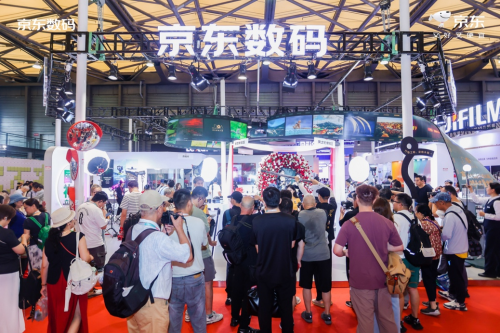
直击P&I2025现场 京东展区人潮涌动摄影发烧友争相上手体验新机
Sou Hu Wang· 2025-07-18 09:28
Group 1 - The 26th Shanghai International Photography Equipment and Digital Imaging Exhibition (P&I 2025) is currently taking place at the Shanghai New International Expo Center, with JD.com as a key exhibitor showcasing various interactive experience zones [1] - JD.com has launched a dedicated event venue for P&I 2025 on its platform, offering consumers the opportunity to purchase exhibition products with a 15% national subsidy in certain regions, along with limited-time coupon activities [3] - The lens display area features renowned brands such as Sony, Fujifilm, Nikon, Tamron, Sigma, Canon, and Panasonic, attracting many photography enthusiasts to experience the unique imaging effects [5] Group 2 - The camera display area includes a "dopamine display wall" featuring high-cost performance domestic cameras, colorful children's cameras, and popular retro CCD cameras, becoming a popular photo spot at the exhibition [7] - The independent booths of DJI and GoPro showcased their latest flagship products, including the DJI Mavic 4 Pro and GoPro HERO13 Black, which drew significant attention from professional photographers and outdoor enthusiasts [9] - The printer display area features portable pocket printers ideal for instant printing, as well as the Anker eufyMake E1 UV printer capable of high-precision printing on over 300 materials [11] Group 3 - The 8th JD Imaging Contest is ongoing, offering participants a chance to win a global trip, along with on-site photography teaching sessions to help attendees find suitable photography equipment [13] - JD.com's 3C digital sales live broadcast room is synchronizing the exhibition, allowing online viewers to experience the latest photography equipment and printing devices while accessing exclusive discounts [13]